博客

  • ‘We have special forces’: Netanyahu unbothered by global threats of arrest

    ‘We have special forces’: Netanyahu unbothered by global threats of arrest

    In a wide-ranging interview with Fox News host Sean Hannity, a long-time personal associate of Israeli Prime Minister Benjamin Netanyahu, the Israeli leader brushed off concerns over the International Criminal Court’s (ICC) November 21, 2024 arrest warrant targeting him, stating that Israeli special operations forces would prevent any attempted detainment if he travels to a state that recognizes the court’s authority.

    When Hannity asked whether the warrant could complicate international travel for Netanyahu amid medical emergencies or official trips, the prime minister acknowledged the scenario had crossed his mind, but noted his own military background and the capabilities of Israeli special units. After Hannity highlighted the strength of the Israel Defense Forces (IDF), Netanyahu joked that the military would be given a new mission to secure his safety.

    The interview came as Netanyahu traveled from Israel to Washington D.C. aboard the official Israeli government jet ‘Wing of Zion’ for talks with U.S. President Donald Trump at the White House. Flight tracking data confirmed the jet transited the airspace of four ICC member states—Greece, Italy, France, and Canada—all signatories to the Rome Statute that established the Hague-based court. This transit prompted widespread criticism from global observers, who accused the four governments of facilitating travel for an internationally wanted suspect.

    The ICC’s arrest warrant cites reasonable grounds to conclude Netanyahu bears criminal responsibility for multiple war crimes and crimes against humanity in Gaza, including the use of starvation as a method of warfare, murder, persecution, and other inhumane acts. Netanyahu dismissed the court as a corrupt, unelected international bureaucracy, warning that the body could eventually target American leaders and service members just as it targeted him, given that the U.S. does not recognize the ICC’s jurisdiction, just as Israel does not.

    The prime minister also confirmed he intends to travel to New York City for the United Nations General Assembly in September regardless of any potential legal action New York Mayor Zohran Mamdani may pursue. Mamdani has called on the U.S. federal government to arrest Netanyahu based on the ICC warrant, a move that has led Israeli officials to accuse him of antisemitism. Netanyahu labeled the mayor a hate-spewing official who is stoking division against Jewish New Yorkers, drawing a parallel to rising antisemitism in 1930s Europe. Mamdani has repeatedly pushed back on these claims, reaffirming his commitment to protecting the safety and rights of all Jewish residents of New York.

    Following his Tuesday White House meeting with Trump, which lasted just under 90 minutes, Netanyahu called the gathering one of the best meetings the two leaders have ever held. However, he clarified to Israeli reporters that the meeting included multiple senior officials, rather than the private one-on-one session many observers had expected. This arrangement has fueled speculation that Trump’s senior advisers sought to limit Netanyahu’s ability to sway the president unilaterally on key policy issues. Netanyahu rejected suggestions of a rift in the U.S.-Israel alliance, telling Hannity that critics looking for fractures would instead find a ‘wall of granite’ holding the partnership together.

    Despite Netanyahu’s framing of the alliance as rock-solid, Trump has publicly expressed frustration with the Israeli leader in recent weeks. Earlier on Tuesday, Trump told Fox News that Netanyahu has pushed him to maintain aggressive action against Iran, a course the U.S. president may no longer favor.

    Netanyahu acknowledged that both the U.S. and Israel share the core goal of preventing Iran from acquiring nuclear weapons that could threaten American interests, global stability, and Israeli sovereignty, noting that this goal could be achieved through either diplomatic or military channels. But the prime minister made clear he remains deeply skeptical of diplomatic outreach to Iran, a stance that has already put him at odds with the Trump administration.

    Shortly after the U.S. and Iran signed a joint memorandum of understanding in June, which included a requirement for Israel to end hostilities against the Iranian-allied militant group Hezbollah in Lebanon, Israel escalated its offensive across southern Lebanon, pushing attacks as far north as the Lebanese capital Beirut. Trump publicly criticized the escalation, saying Israeli strikes were disproportionate and causing excessive civilian casualties.

    Pressed on whether moderate Iranian factions could successfully negotiate a diplomatic solution, Netanyahu repeated his skepticism, arguing that Iranian factional divides are rooted less in ideology than in differing assessments of Western and Israeli resolve. He emphasized that the only path to a successful outcome, whether diplomatic or military, rests on shared U.S.-Israel resolve to block Iran’s nuclear program.

    The trip comes amid lingering tensions from the joint U.S.-Israel war against Iran launched on February 28. Before the war began, the entire U.S. intelligence community under the Trump administration assessed that Iran posed no imminent threat to the U.S. or its allies. This assessment led to the immediate resignation of Joe Kent, director of the National Counterterrorism Center, within hours of the first offensive missile strikes.

  • Watch: Japanese mall explodes after magnitude 6.8 earthquake

    Watch: Japanese mall explodes after magnitude 6.8 earthquake

    A powerful magnitude 6.8 earthquake has rocked parts of Japan, triggering a devastating explosion at a major local Aeon shopping mall and leaving the structure partially collapsed. Emergency response teams have deployed to the disaster site immediately following the seismic event, with search and rescue operations ongoing as crews work to locate any survivors trapped beneath the rubble. Local emergency management officials have not yet released official updates on the number of casualties or the full extent of structural damage caused by the quake and subsequent explosion, but rescue operations are being prioritized to clear debris and reach potential trapped individuals as quickly as possible. The incident has prompted heightened alerts for aftershocks across the affected region, with local authorities urging residents to remain vigilant and avoid damaged built-up areas until safety assessments are completed.

  • Inquiry finds MoD Afghan data breach was foreseeable failure

    Inquiry finds MoD Afghan data breach was foreseeable failure

    More than three years after the Taliban seized control of Kabul, a long-delayed parliamentary inquiry has delivered a scathing rebuke of the UK Ministry of Defence’s management of its flagship Afghan relocation program, concluding that a massive 2023 data breach that exposed the personal information of thousands of at-risk Afghans was entirely preventable.

    The House of Commons Defence Committee published its highly anticipated report on Thursday, which outlines a cascade of institutional failures that led to the breach, saying the MoD lacked the core technical and administrative expertise to run the Afghan Relocations and Assistance Policy (ARAP) — a scheme launched in 2021 to resettle Afghans who had assisted British forces during the 20-year conflict, and who faced grave danger of Taliban reprisal. The report also accuses the department of using excessive secrecy to avoid proper public and parliamentary accountability for the failings.

    Details of the breach first emerged internally in August 2023, but an extraordinary super-injunction — a court-ordered gagging order that not only bans reporting on sensitive information but also bars media from acknowledging the injunction itself exists — prevented any public disclosure of the incident for nearly two years, until July 2025. The inquiry found the injunction, which was originally scheduled to expire after four months, remained in place far longer than necessary, inflicting lasting damage to public trust and democratic oversight.

    Contrary to early claims that the leak was an isolated error by a single staff member, the committee’s investigation confirmed it was a systemic failure rooted in longstanding institutional shortcomings. The breach occurred when an MoD employee shared an unsecure Microsoft Excel spreadsheet containing applicant data with an external trusted third party. The file held personal details for more than 18,500 ARAP applicants — every individual who had applied to the scheme by January 2022. This was not an isolated incident: the committee confirmed the 2023 leak was just one of 19 separate data security incidents reported at the ARAP program between February 2022 and November 2023. Earlier BBC reporting confirmed the breach originated at the headquarters of UK Special Forces (UKSF).

    ARAP was launched in April 2021 to offer safe resettlement in the UK to Afghans who faced mortal risk due to their work with British military forces, including interpreters, support staff and members of Afghan special forces who fought alongside UK troops. The UK government closed the scheme to new applications in July 2025.

    Committee chair Tan Dhesi condemned the core structural decision to put the MoD in charge of an immigration casework program, saying: “The Ministry of Defence should stick to defence – it should never have been left to run immigration casework schemes.” The report singles out the MoD’s reliance on basic Excel spreadsheets to store highly sensitive personal data as a “continuing cultural failure” and labels the entire ARAP program as “utterly and obviously inadequate”.

    Dhesi also criticized the prolonged secrecy around the breach, noting that the two-year super-injunction “imposed serious costs on accountability and trust”. The inquiry further raised questions about the refusal to provide confidential briefings to senior opposition parliamentarians, revealing that then-Defence Secretary Grant Shapps blocked plans to inform then-shadow defence secretary John Healey about the incident. The committee also pushed back against the government’s longstanding policy of declining all comment on special forces matters, arguing that UKSF involvement in the program does not justify hiding administrative failings from Parliament and the public. “Secrecy has been too easily used as a shield against proper accountability in areas far removed from sensitive operations,” Dhesi said.

    The inquiry also amplified longstanding concerns about UKSF’s role in reviewing ARAP applications from Afghan special forces, who served alongside British troops on some of the war’s deadliest missions and are at extremely high risk of Taliban retaliation. A 2024 BBC Panorama investigation revealed that UKSF had been given a de facto veto over applications from their former Afghan counterparts, and internal MoD documents obtained by the BBC showed a single UKSF officer rejected 1,585 Afghan special forces resettlement applications in a matter of weeks in 2023 — approving not a single one.

    Many of those rejected have been left in hiding in Afghanistan, living in constant fear of targeted attacks by the Taliban. Former Afghan special forces members described their desperate situations to the BBC: one said he had been beaten and interrogated by the Taliban before going on the run, while another said, “I’m living in a very bad situation. I am in hiding and mostly my family can’t live together and we cannot go out and we cannot work. I feel I have been left alone in the midst of hell.”

    Following public outcry in 2024, the government ordered a formal review of the rejected applications, and to date 884 of the UKSF-blocked applications have been overturned. The committee’s report notes that the high proportion of overturned decisions demonstrates the severity of the MoD’s failures, and emphasizes that the UK retains a “special responsibility” to the Afghan special forces who were wrongly rejected, many of whom have waited four years for a decision and still remain in danger.

    Currently, the incumbent Defence Secretary is facing a high-profile legal challenge at London’s Royal Courts of Justice, brought by former Afghan special forces who are still trapped in Afghanistan and unable to access resettlement. During this week’s opening hearing, the court was told that one applicant’s family has just $200 left to cover all living expenses.

    In an official response to the report, an MoD spokesperson acknowledged the gravity of the failure, saying: “This incident should never have happened and we acknowledge the significant impact it has had on many people.” The spokesperson noted that thousands of eligible Afghans have already been resettled safely in the UK, and the department is committed to concluding the Afghan resettlement program by the end of the current Parliament. “We are learning the lessons from this incident and important reforms are already in place, including improved data protection standards, strengthened case-working processes and better programme governance,” the statement said. “We welcome the public and parliamentary scrutiny of our actions, so we can learn more and be held to account, and we’ll continue to work closely with the committee on this issue.”

  • Truck and bus drivers face price hike as major fuel discount is axed

    Truck and bus drivers face price hike as major fuel discount is axed

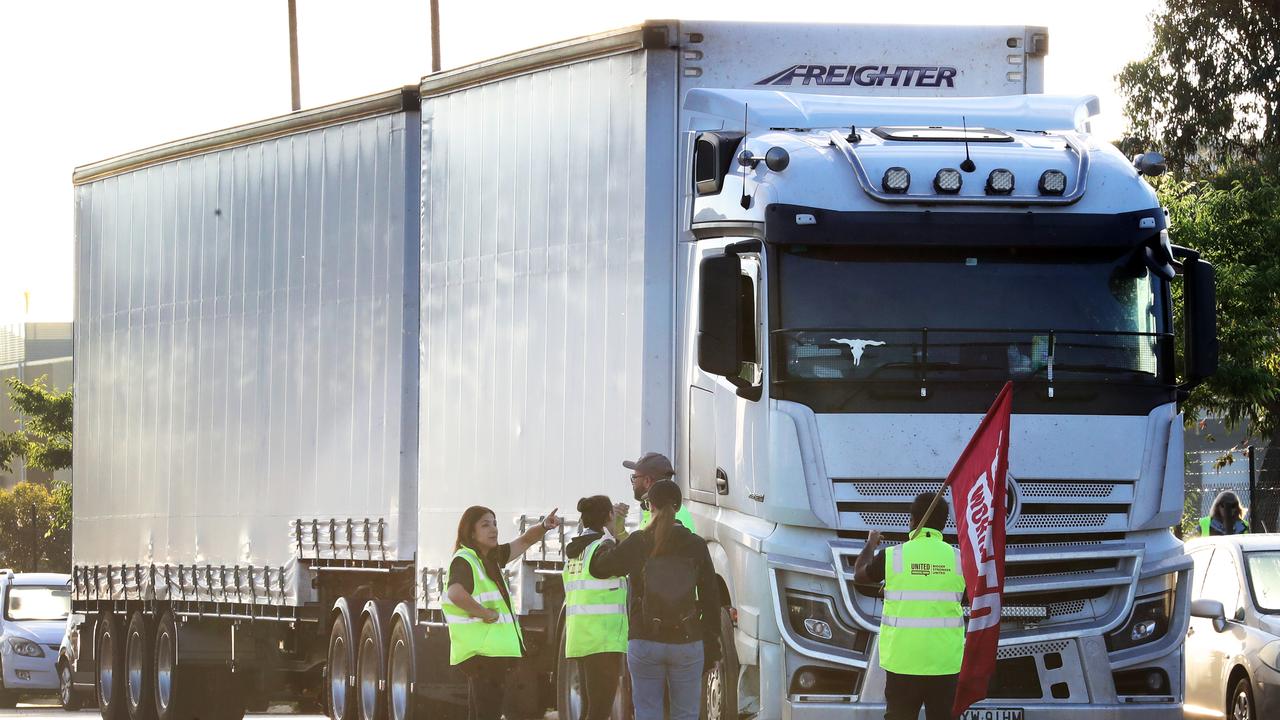
    Almost four months after rolling out emergency fuel relief for Australia’s heavy vehicle operators in response to Middle East war-driven price volatility, the federal government is winding the temporary support measure back next week, with the discount set to expire alongside the national fuel excise cut on August 3.

    Finance Minister Katy Gallagher officially confirmed the end of the Heavy Vehicle Road User Charge (RUC) discount in an interview with ABC Radio National on Friday, making clear that the policy was always designed as a short-term buffer to counter price shocks sparked by the outbreak of conflict in the Middle East earlier this year.

    “They were all temporary measures that were taken at a particular time to deal with what we saw from the initial outbreak of the war in the Middle East,” Gallagher told host Sally Sara. When pressed on whether the government would extend the support amid ongoing cost pressures for motorists, the senator confirmed her statement reflected the official cabinet position, ending speculation that the discount could be extended.

    The relief package, launched on April 1, included two key measures to support heavy transport operators including truck, bus, and coach drivers who faced projected sharp spikes in fuel costs following the escalation of Middle East tensions. The centerpiece was a 32.4 cent per litre discount on fuel, translating to a saving of roughly $64.80 for a standard 200-litre refuel. The government also pushed back the next scheduled statutory increase to the Heavy Vehicle Road User Charge by six months to ease additional cost burdens when fuel markets were at their most volatile.

    At the time the policy was introduced, Transport Minister Catherine King framed the support as a critical investment to protect the essential work that heavy vehicle operators carry out across Australia, noting that the sector forms the backbone of national supply chains that keep grocery shelves stocked and critical goods moving to communities.

    The expiration of the discount means heavy vehicle operators will see fuel costs revert to pre-conflict levels starting Monday, coming even as ongoing global price volatility continues to put upward pressure on transport costs for Australian motorists across all vehicle classes. Industry groups have raised fresh concerns that the end of the discount will flow through to higher freight costs, which could in turn push up consumer prices for everyday goods already stretched by persistent inflation.

    The end of the heavy vehicle discount aligns with the scheduled expiration of the broader national fuel excise cut, another temporary government measure introduced earlier this year to counter Middle East conflict-driven price increases that will also end on August 3.

  • Red Cross declares crisis over blood supply shortage in US for second time its history

    Red Cross declares crisis over blood supply shortage in US for second time its history

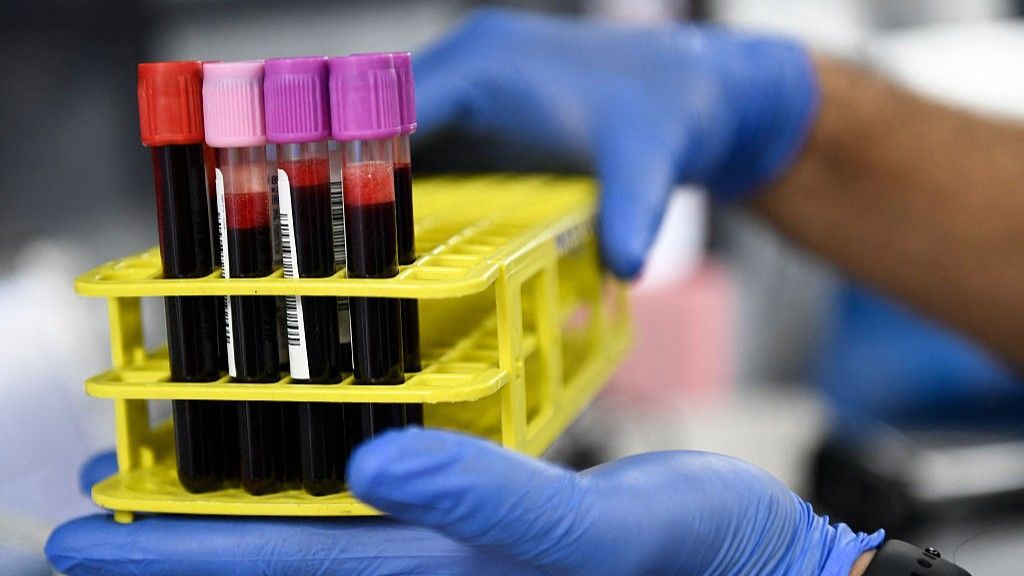
    The American Red Cross, the United States’ largest blood provider, has issued a dire alert that national blood inventories have dropped to a historic crisis level — marking only the second time in the organization’s 141-year history that supplies have fallen this low. What makes this shortage particularly acute is that it has hit during the summer months, a period when demand for blood at hospitals already surges, driven by higher rates of outdoor activity, traffic accidents, and traumatic injuries that require urgent transfusions. Last month alone, available blood supplies fell by 25%, according to Dr. Courtney Lawrence, a medical leader with the American Red Cross, who spoke to the BBC about the unfolding emergency.

    Right now, the organization is distributing roughly 3,500 more units of blood weekly than it typically does at this time of year, forcing it to draw down reserves to critically low levels. Unlike many medical supplies, blood cannot be stockpiled long-term to offset shortages: red blood cells have a maximum shelf life of just 42 days before they degrade and become unusable. While all blood types are in urgent need of replenishment, demand is most pressing for O positive blood, the universal donor type that is critical for emergency care when a patient’s blood type is unknown.

    A perfect storm of overlapping crises has pushed a pre-existing mild shortage into a full-blown public health emergency, Dr. Lawrence explained. Record-breaking extreme heat across much of the U.S. has deterred potential donors from leaving their homes to attend donation events, and many planned blood drives at community and commercial sites have been unable to maintain cool, comfortable environments that meet donor safety standards. Widespread wildfires across North America have further strained logistics and diverted organizational resources away from donation outreach. Additionally, the country is currently facing an unusual outbreak of cyclosporiasis, a foodborne parasitic infection that causes severe gastrointestinal illness, which has ruled out many recently infected people from donating blood under existing safety guidelines.

    The only other time the American Red Cross has declared a blood supply crisis of this magnitude was in January 2022, when surging Covid-19 cases combined with brutal winter weather to collapse donation rates. The current crisis is already starting to impact patient care: hospitals that work with the Red Cross have reported that routine medical procedures may be disrupted, and some facilities are already evaluating whether they will need to redirect emergency trauma patients to other centers if they cannot maintain sufficient blood reserves to handle critical cases.

    The crisis is not limited to the United States. Neighboring Canada is also facing a significant drop in blood donations, with Canadian Blood Services reporting that donations have fallen nearly 20% since the start of June. Over the past six weeks, the organization has seen between 1,500 and 2,500 unfilled donation appointments every week, forcing it to draw on existing reserves to meet ongoing patient needs. While a small seasonal dip in summer donations is expected and accounted for in annual planning, the current decline has fallen far below typical seasonal patterns. Several blood types now have only a few days of reserve stock on hand, a situation that Canadian Blood Services warns is unsustainable for long-term patient care unless donation trends reverse quickly. Unlike in the U.S., Canadian health officials have not identified a clear set of causes for the unexpected drop in donor turnout.

  • World Cup star Vozinha dons Spider-Man jersey. The nickname on his shirt for Chile club up for vote

    World Cup star Vozinha dons Spider-Man jersey. The nickname on his shirt for Chile club up for vote

    Fresh off a breakout performance at the men’s World Cup that turned him from a little-known goalkeeper into a global sports personality, Cape Verde’s Vozinha is navigating unforeseen administrative delays that have pushed back his arrival at Chilean powerhouse club Colo Colo, even as he capitalizes on his skyrocketing fame to front a major Hollywood movie promotion.

    The 40-year-old shot stopper was originally slated to join the Santiago-based club — Chile’s most decorated and successful professional football side — by Wednesday, but the team confirmed this week that routine immigration and player registration paperwork has pushed his expected arrival to Thursday. Even with the delay, Vozinha stepped into the spotlight this week anyway, suiting up in Spider-Man cosplay to headline a Sony Pictures Brazil marketing campaign for the upcoming release *Spider-Man: Brand New Day*. Posting to his Instagram account, which has exploded from fewer than 50,000 followers ahead of the World Cup to 29.6 million today, Vozinha urged his massive new global audience to catch the upcoming film.

    The paperwork delay, however, is not the only challenge Colo Colo is rushing to resolve before Vozinha can take the pitch for his first competitive match. The most high-stakes issue centers on what name will appear on the back of his jersey: rules set by Chile’s National Association of Professional Football (ANFP) mandate that all registered players must use their legal surname on match kits, which would bar Vozinha from using the iconic nickname that made him a household name across the world.

    Vozinha’s real legal name is Josimar José Évora Dias, but the moniker “Vozinha” — which translates to “grandma” in Portuguese, a loving tribute to the grandmother who raised him — is central to both his personal identity and the global personal brand he has built following his World Cup success. Under current ANFP rules, “nicknames, appellations, or sobriquets” are explicitly prohibited from appearing on player jerseys in domestic competition. Non-compliance carries penalties: players receive an administrative yellow card, while their clubs can face fines of up to $875 USD per violation.

    To work around the regulation, Colo Colo has formally submitted a request for a special exemption to the ANFP Council of Presidents, a governing body made up of top executives from all of Chile’s top-flight professional clubs. The council is scheduled to hold a vote on the request this Friday, and the rules require a unanimous decision to grant the exemption for Vozinha to keep his famous nickname on his kit.

    A secondary unresolved issue is Vozinha’s jersey number, as all traditional goalkeeper numbers are already claimed by current squad members. Argentine starting goalkeeper Fernando de Paul currently holds the No. 1 shirt, the most common number for goalkeepers across global football.

    Vozinha’s arrival to Chilean football comes after a stunning World Cup run that cemented his status as one of the tournament’s biggest breakout stars. He backstopped first-time qualifier Cape Verde to a historic opening clean sheet against eventual tournament champion Spain, followed by a series of highlight-reel spectacular saves in a narrow 3-2 Round of 32 loss to Argentina.

    His transfer to Colo Colo has already sent shockwaves through Chilean football, a domestic league starved of international attention after Chile’s national team failed to qualify for its third consecutive World Cup, finishing dead last in South American qualifying. Vozinha’s signing is projected to dramatically raise the global profile of both Colo Colo and Chilean football as a whole, while unlocking major new commercial opportunities for the club.

    As Vozinha’s personal following has exploded, he has already been tapped as the face for multiple major advertising campaigns across global brands. The so-called “Vozinha effect” is already tangible for Colo Colo: in the weeks since announcing the signing, the club has gained nearly 70,000 new followers across its social media platforms, a large share of which come from international fans outside Chile.

    “The whole world is getting to know Colo Colo better,” long-time club supporter Héctor Hermosilla said. “The world’s cameras will be on Vozinha and that’s going to be good for the club.”

  • Victoria appoints Nicole Faltum as its WNCL captain, taking over from Sophie Molineux

    Victoria appoints Nicole Faltum as its WNCL captain, taking over from Sophie Molineux

    After a winless, disappointing 2025-26 season that Victorian cricket fans are eager to put behind them, a new leadership era has begun for the state’s Women’s National Cricket League (WNCL) side. Nicole Faltum, the team’s veteran wicketkeeper, will be officially announced as the squad’s new skipper this Thursday, stepping into the role previously held by Australian national team champion Sophie Molineux.

    Even before her formal appointment, Faltum has already moved quickly to reset team culture and lay the groundwork for a turnaround, bringing a fresh, player-centric philosophy to the struggling side. In one of her first symbolic gestures as captain, Faltum created a blank team canvas emblazoned with every squad member’s initials and a sketch of the WNCL championship trophy, a visual tool she said she used to manifest a successful upcoming campaign that resonated strongly with her teammates.

    Faltum has already held extensive collaborative meetings with players and coaching staff, and says she has never seen the Victorian program more aligned on its core goals heading into a new season. Her leadership philosophy centers on three key pillars: authenticity, enjoyment, and relentless performance.

    “I made a point to be clear from the start about how I want to run things and shape this program,” Faltum explained. “One of my core priorities is encouraging every person in this group to be 100 percent authentic to who they are. We will have shared team values and standards, but there’s no one-size-fits-all way to contribute – that’s something I want every player and staff member to feel.”

    For Faltum, prioritizing fun and passion for the sport is non-negotiable, even at the elite level. “This is our job, and we are here to perform, but so many people would love to be in our position playing professional cricket,” she said. “We can’t lose sight of how lucky we are, and that joy has to come through in how we play.”

    That focus on culture does not come at the cost of ambition, Faltum emphasized: “There’s no hiding it – I want to win every single game we play. At the end of the day, everything we do revolves around performance, and that’s going to be our driving force.”

    Victoria’s disastrous previous campaign, which ended with the squad rooted at the bottom of the ladder without a single win, has given Faltum a clear starting point for improvement. She argues that many of last season’s struggles stemmed from gaps in cricket IQ and game awareness – areas she says are entirely teachable with intentional preparation.

    “People often joke that teams get accustomed to either winning or losing, and while that’s partly just a narrative, there’s a lot of truth to it too,” Faltum noted. “When we reflected on last season, most of our issues came down to decision-making and game awareness that we can actually work on. We’ve already made that a core focus of pre-season.”

    Faltum explained that the team’s pre-season work balances on-field skill development with off-field tactical learning: “Half of our work is hands-on skill work, but the other half is breaking down past matches in the meeting room. When you take the emotion and pressure of a live game out of it, even experienced players can learn new things about the game – that’s been really rewarding for all of us so far.”

    Beyond tactical preparation, Faltum has prioritized building personal connections with every member of the squad. Alongside the shared team canvas, she gifted each player a personalized towel embroidered with their initials, and wrote individual handwritten cards highlighting each player’s unique strengths and value to the team.

    The squad will head to Mildura next week for a pre-season training camp to finalize preparations, and will kick off their 2026-27 campaign under lights against South Australia on September 29. For Faltum and her side, the blank canvas of the new captaincy era offers the chance to build something special after a year to forget.

  • India’s CJP protests: Why tech alone won’t stop exam paper leaks

    India’s CJP protests: Why tech alone won’t stop exam paper leaks

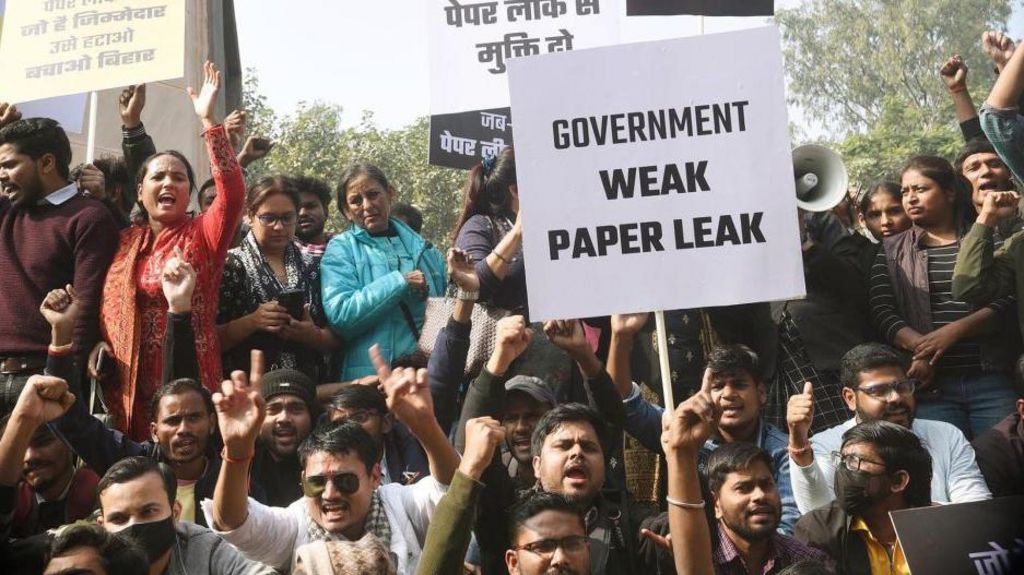
    India’s decades-long battle against entrance exam question paper leaks has boiled over into national crisis in 2026, following widespread countrywide protests over the breach of the National Eligibility cum Entrance Test (NEET), the country’s top medical school entrance exam. The unrest ultimately forced the resignation of India’s education minister, and families of more than 20 students who died by suicide have linked their deaths directly to the uncertainty and despair sparked by the exam scandal.

    In response to the public outrage, Prime Minister Narendra Modi moved quickly to assemble a high-level expert task force led by Nandan Nilekani, co-founder of Indian IT giant Infosys, to overhaul the National Testing Agency (NTA) — the government body that administers the country’s largest national entrance exams. Modi has thrown his support behind a proposal to shift all high-stakes entrance exams from traditional pen-and-paper formats to fully computer-based testing (CBT), framing the digital shift as the most effective path to blocking the recurring leaks that have eroded public trust in India’s education assessment system.

    India’s Supreme Court, which is currently hearing public interest petitions on the proposed reforms, has praised the government’s commitment to addressing the crisis but issued a critical warning: digital testing alone cannot fully eliminate the risk of paper leaks. This caution highlights the core challenge facing the task force: can technology solve a problem that is rooted at its core in weak governance, skewed incentives, and broken public trust, rather than just format?

    Two separate NEET leak incidents, in 2024 and 2026, illustrate just how complicated this issue is, with breaches occurring at very different stages of the exam process to expose systemic flaws. In 2024, the leak occurred after question papers were printed, when sealed transport containers were opened en route to exam centers. Investigators found the breach involved only 40 to 50 connected individuals, and the Supreme Court ruled that the overall integrity of the exam remained intact, rejecting widespread demands for a retest. In contrast, the 2026 leak was traced all the way back to the NTA itself, with internal teachers accused of leaking the papers before they even entered the secure printing and supply chain. Officials confirmed that safeguards for transport, printing, and on-site distribution held firm — the vulnerability existed at the source, long before the secure custody process began.

    V Kamakoti, director of the Indian Institute of Technology (IIT) Madras and a member of the expert task force, explains that these two incidents lay bare where trust in an examination system ultimately lives. “The roots of trust lie in two places: the teachers who set the question papers and the invigilators who supervise candidates. If either is compromised, the system is vulnerable,” he explained in comments to the BBC.

    Officials have already proposed upgrades including widespread CCTV coverage with live central monitoring, and Kamakoti notes that artificial intelligence can add another layer of security, automatically flagging unusual activity such as prolonged unauthorized contact between invigilators and test-takers to allow for real-time intervention. “At least the invigilator part we can certainly handle,” he said.

    But for Kamakoti, the most significant jump in security will come from a full shift to online, computer-based testing. He argues that CBT would make large-scale entrance exams far more resistant to tampering, noting that “compromising the technology would be extremely difficult” — a claim backed by more than 10 years of successful large-scale digital testing run by IIT Madras.

    IIT Madras already manages Swayam, India’s government-backed national online learning platform, and has administered major high-stakes entrance exams including the Graduate Aptitude Test in Engineering (GATE) and the advanced Joint Entrance Examination (JEE) for India’s top engineering colleges via CBT for years. Kamakoti explains that these secure systems use constant red teaming — dedicated teams that continuously probe for vulnerabilities — and air-gapped networks that are physically disconnected from the public internet. “No one can hack into that network,” he says, adding that the systems are built to withstand technical disruptions: if a test-taker’s device crashes or loses power, the exam timer automatically pauses and resumes seamlessly on a replacement machine.

    Even the most robust digital infrastructure, however, cannot eliminate the human element of risk. For Kamakoti, the single greatest challenge remains securing the question-setting process. NEET is one of the world’s largest multilingual entrance exams, administered in 13 languages to more than 2.2 million candidates annually. Creating a single NEET paper requires a large team of subject experts, translators, reviewers, and moderators, numbering around 50 people total. “If even one person in that entire set is compromised, we are gone,” he warned.

    Even with this human risk remaining, CBT does eliminate one major long-standing vulnerability: it removes the need to print, transport, and store millions of physical question papers, the step where many past leaks have occurred.

    So why has NEET not shifted to digital testing already? Kamakoti explains that the test has remained pen-and-paper based to preserve fairness: all test-takers take the exam in a single session to prevent any advantage from question exposure across multiple slots. Currently, India’s national digital testing infrastructure can only accommodate around 300,000 candidates per session, a fraction of NEET’s 2.2 million annual test-takers. A full shift to CBT would therefore require either a massive rapid expansion of testing capacity or splitting the exam across multiple testing sessions, a change that brings its own fairness concerns.

    Not all experts agree that a shift to digital testing alone is enough to solve India’s leak crisis. Debananda Misra, a policy researcher at the IIT Delhi School of Public Policy, agrees that CBT can cut down on opportunities for physical paper leaks, but argues that the current debate has become overly focused on technology as a cure-all.

    “CBT is not a silver bullet,” Misra told the BBC. “It can strengthen exam security and improve efficiency, but it does not address the deeper incentives that drive malpractice.”

    Those incentives are driven by extreme scarcity of high-quality, affordable higher education opportunities. This year, nearly 2.2 million students took NEET, and just over half qualified for medical school admission. But heavily subsidized government medical colleges, where a full degree can cost less than 30,000 rupees (around $313), only have seats for fewer than 6% of qualified candidates — or less than 3% of all students who take the exam. Students who miss out on government seats face private college tuition that can run into hundreds of thousands of rupees, a cost out of reach for most Indian families.

    Investigators say this extreme scarcity has fueled increasingly sophisticated criminal paper-leak networks that connect corrupt insiders, middlemen, and exam center staff. While CBT closes off old vulnerabilities, it creates new ones. Misra notes that even minor technical disruptions can have lasting, unmeasurable impacts on candidate performance: “A non-functional mouse is not just about pausing the timer. It is also about disruption to concentration.”

    Misra also warns that a full shift to CBT risks widening equity gaps in Indian education. Success on digital exams depends not just on subject mastery, but on prior digital experience and access to practice in simulated testing environments — advantages that are heavily concentrated among students who can afford expensive private coaching, and out of reach for many students from low-resourced rural and government schools.

    Most fundamentally, Misra argues that India’s examination system puts too much catastrophic pressure on a single high-stakes test. “As long as a single test determines access to scarce opportunities, there will be strong incentives for exam malpractice, regardless of the testing format,” he said.

    Misra proposes deeper reforms beyond digital testing: stronger governance of exam agencies through tighter protocols, regular independent audits, greater public accountability, and stricter penalties for malpractice. He also suggests structural changes such as random allocation of multiple equivalent question papers, or localized test versions, so that a single breach in one area does not invalidate an entire national exam. Long-term, he argues India must reduce its over-reliance on single high-stakes entrance tests by creating multiple assessment opportunities and broader pathways into higher education.

    “If the purpose is to generate a ranked list and match students to institutions, perhaps we should also think about creating greater diversity on both sides,” he said.

    Prime Minister Modi has repeatedly pledged to crack down on exam fraud, promising since 2023 that the “paper-leak mafia” would be held accountable, saying that “those playing with the future of young people will not be spared,” and framing the government’s response as a “war footing” effort to end leaks. After the 2024 NEET leak, the government appointed a high-level review committee led by India’s former space agency chief that produced the most comprehensive assessment of India’s exam system to date. But reportedly only 57% of the committee’s more than 100 recommendations have been implemented, and leaks have continued to disrupt national exams.

    The task force faces a tight deadline to deliver its overhaul: India’s annual entrance exam season for medicine, engineering, university, and postgraduate programs runs from December through May, so major reforms must be finalized within the next one to two months to be ready for the next cycle.

    Ultimately, experts agree the task force’s success will not be measured by how many exams shift to digital formats, but by whether it can restore the faith of India’s young people that the system that determines their future is fair.

  • Boxer Abdul – grandson of dictator – disqualified for headbutt

    Boxer Abdul – grandson of dictator – disqualified for headbutt

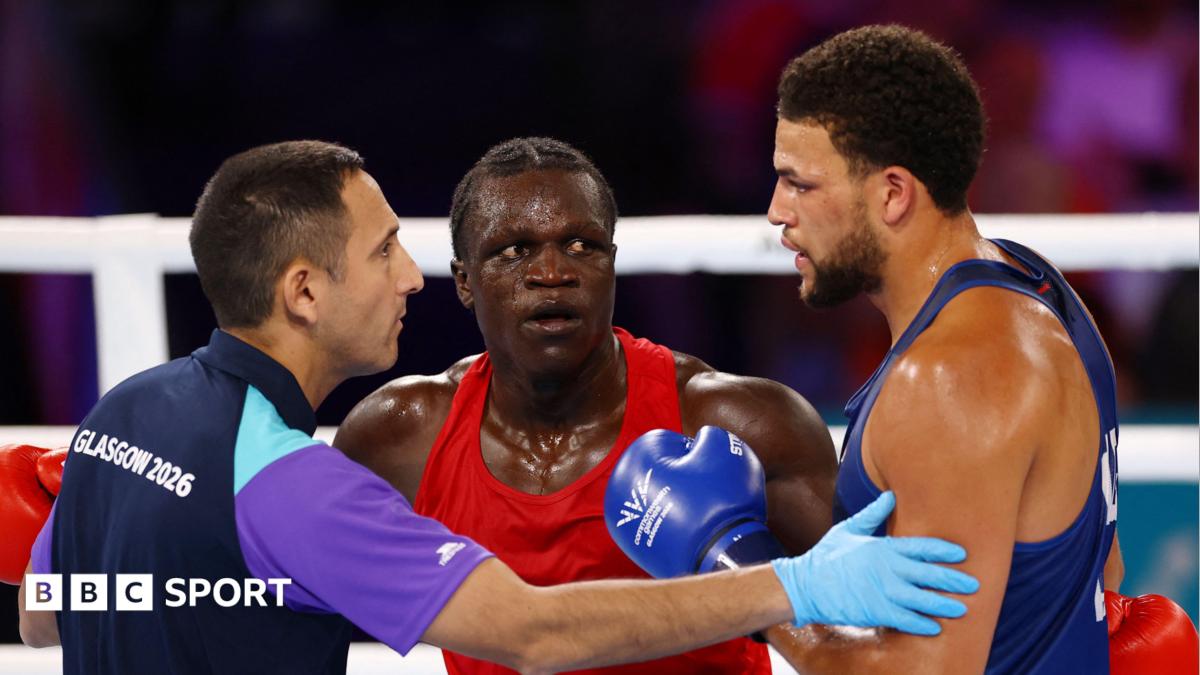
    The 2026 Commonwealth Games in Glasgow has been gripped by a boxing controversy following the disqualification of Ugandan super-heavyweight competitor Aziz Abdul, the grandson of former Ugandan dictator Idi Amin. The 25-year-old fighter was ejected from his third-round bout against England’s Damar Thomas after referees ruled he intentionally headbutted Thomas in the chin during a grappling exchange.

    Abdul had picked up two formal warnings for rule violations in the opening two rounds of the match, and was trailing on all three judges’ scorecards heading into the third round. The controversial disqualification handed Thomas an automatic walkover win, guaranteeing the English fighter at least a bronze medal, and ended Abdul’s bid to make history for his country: a win would have secured Uganda’s first Commonwealth boxing medal since the 1990 Auckland games.

    Speaking to BBC Sport immediately after the decision, Abdul rejected the referees’ call, claiming the head movement was accidental, and accused officials of systemic bias against him as a Black African athlete competing on British soil. He insisted Thomas had used illegal elbow strikes against him unpenalized, and that judges refused to count his clean, heavy landed punches before penalizing him for an accidental clash.

    “How can I headbutt someone? I would not. He was the person they wanted to win. He was the winner before the fight even started,” Abdul said. “I knew going in if I did not get a knockout, I could not win this fight. The decision is not right, I am not happy.”

    Abdul had previously drawn international attention ahead of the bout for echoing his grandfather’s infamous 1976 declaration, telling reporters he aimed to become the “new King of Scotland” during the games. The elder Amin, a one-time amateur boxer himself, was a controversial figure with a long-held fascination for Scotland, developed during his service in the King’s African Rifles in his 20s. After seizing power in a 1971 military coup, he led a brutal eight-year regime responsible for the deaths of an estimated 500,000 Ugandans, earning him the nickname “The Butcher of Uganda.”

    At the height of his rule, Amin regularly wore kilts and played bagpipes, and famously declared himself the “King of Scotland” in 1976, a moment that later became the core premise of the Oscar-winning 2006 drama *The Last King of Scotland*, starring Forest Whitaker as the dictator. Aziz Abdul, who never met his grandfather, has previously stated he draws inspiration from Amin, though he has declined to confirm whether that inspiration relates to Amin’s history as a boxer or his political rule. When asked if he was proud to be related to a figure of such a notorious, sinister reputation, Abdul declined to comment.

    Thomas, for his part, acknowledged the win came in unsatisfying fashion, saying it was “not the way” he wanted to advance in the tournament. “I can’t change what happened today but I can control how I box on Friday,” he added, referencing his upcoming semi-final bout. BBC Sport has reached out to both Commonwealth Games organizing officials and World Boxing for comment on Abdul’s allegations of bias, and had not received a response as of publication.

  • Xi’s odyssey through Western confusion

    Xi’s odyssey through Western confusion

    Scheduled for autumn 2027, the National Congress of the Communist Party of China (CPC) is poised to become one of the most consequential and delicate gatherings in the party’s modern history. The event will formalize a fourth five-year term for General Secretary Xi Jinping, while overseeing a generational turnover of top leadership that will elevate a cohort of cadres born in the 1960s — roughly a decade younger than Xi — to key bodies including the 21-25 member Politburo and its 5-7 member Standing Committee.

    Since rising to the top leadership in 2012, Xi, who was born in 1953, has steadily consolidated authority through three consecutive party congresses, navigating a political landscape long dominated by officials of his own age cohort or older. By any metric, he has achieved unprecedented success in reshaping the country’s power structure. A younger top leadership, personally aligned to Xi, will further expand his influence across the country, as he has more than 18 months to prepare for the congress with no visible political challengers in sight.

    A landmark shift in China’s power dynamics came when Xi completed an unprecedented purge of the People’s Liberation Army (PLA) without facing organized pushback from any party institution. Historically, the PLA has been a foundational political force for the CPC — the party itself grew out of revolutionary armed struggle, and the military long acted as a kingmaker in domestic politics. By neutralizing the PLA’s independent political influence, Xi has concentrated a level of personal authority unmatched by any of his predecessors, including Mao Zedong. Mao’s power was built on the PLA’s support and his victory in the Chinese Civil War, while Xi’s authority stems from his success in overcoming rival factions across the party in a sweeping internal political restructuring.

    Xi has overseen tangible policy achievements that few Chinese leaders in more than a century can claim. He became the first Chinese leader in nearly 200 years to directly confront the United States in a high-stakes tariff dispute, forcing Washington to make concessions with far-reaching political consequences. He also guided China through the global COVID-19 pandemic while maintaining overall domestic stability.

    Under Xi, the core criteria for evaluating governing performance have shifted away from the frameworks established by his predecessors. During Mao’s era, advancement for officials depended entirely on political alignment, ideological purity and adherence to Maoist doctrine. When Deng Xiaoping led China’s reform era, economic growth became the dominant metric for official promotion. Today, the new paradigm blends economic performance with non-negotiable party loyalty and political acumen, a shift that has positioned China as a direct global competitor to the United States.

    Despite these shifts, China faces a web of interconnected short- and long-term challenges that will shape the context of the 2027 congress. While long-term issues are unlikely to disrupt the proceedings immediately, short-term risks could alter the political landscape ahead of the gathering. The article outlines four core long-term challenges for China: democratic governance, strained neighborly relations, expanding military capabilities, and mounting public debt.

    First, the article frames lack of liberal democratic governance as a persistent vulnerability that undermines China’s global standing. It argues that Chinese state media is widely perceived as a mouthpiece for Xi and the party, limiting China’s soft power and international influence. Domestically, expanding domestic consumption requires overhauling the social welfare system and fiscal framework, steps that would force controversial political change. While growing disillusionment with democratic governance in many Western countries may temporarily deflect criticism of China’s system, mounting internal economic pressures will continue to build, the article contends.

    Second, China faces strained relations with nearly all its neighbors and has no formal major power allies, a situation that complicates both commercial and political initiatives. While short-term incentives have kept tensions from escalating dramatically, long-term isolation has bred widespread suspicion and fear of China across the region, creating risks of negative outcomes for Beijing over time.

    Third, China’s massive and growing military arsenal has sparked regional security anxieties and fueled an arms race. Unlike the United States, which operates a large military backed by a broad network of allies that see U.S. power as a guarantor of global security, no country near or far can rule out the possibility that China’s military could be used against their interests. China’s military is structured exclusively to advance its own national security interests, unlike the U.S. military’s stated role in upholding global security order.

    Fourth, and most complex, is China’s mounting internal debt. Data shows that China has injected credit equivalent to nearly three times its total GDP into the economy to achieve annual growth of less than 5%, a trend that predates Xi’s tenure. This massive investment has delivered tangible results: world-leading infrastructure, unparalleled industrial scale, and roughly 30% of global manufacturing output, with no other country matching China’s full range of industrial capabilities from basic commodities to cutting-edge electric vehicles, robotics and semiconductors. But the economic return on this investment remains modest, with many large-scale projects delivering minimal long-term economic value. The article warns that this could create one of the largest public debt black holes in modern history, with the potential to destabilize China and the global economy. Maintenance of existing infrastructure and industrial capacity already represents a major drain on public finances, and China is currently facing deflationary pressures at a time when the U.S. is contending with inflation.

    This debt-fueled growth model has been sustained by high Chinese household savings, incentivized by low bank interest rates, and rapidly growing exports, which hit $1.2 trillion in 2025. But as household incomes stagnate, savings rates are falling, and global markets cannot absorb endless increases in Chinese production. While Xi initially sought to reform underperforming state-owned enterprises early in his tenure, entrenched interests blocked these efforts. Even with no organized opposition to Xi today, the question remains whether he can successfully tackle these debt and reform challenges after 2027.

    The article draws a parallel between contemporary China’s geopolitical moment and the Warring States Period of 4th-3rd century BC China, when the collapse of the Zhou Dynasty’s centuries-old political order created a new system of competing sovereign kingdoms. It traces how political thinkers of the era reworked traditional ideas to fit new practical realities: Hui Shi, chief minister of the state of Wei, engineered the 334 BCE recognition of two rival rulers as kings, abandoning the centuries-old claim that only the Zhou Son of Heaven could hold the title of king. This overhaul created a new system of sovereign interstate relations, reshaping politics to fit practical needs rather than traditional norms. The parallel suggests the 2027 CPC Congress may need to articulate a bold new vision for China’s domestic and global role, rather than fitting into existing frameworks, much as Hui Shi did 2,300 years ago.

    Turning to short-term risks ahead of the congress, the ongoing wars in Ukraine and the Middle East currently benefit China by diverting U.S. and global attention from Beijing. But the situation could shift against China in the next 18 months. If Russia or Iran collapse politically and either become a failed state or realign with the U.S., China could face increased international isolation just ahead of the congress. This dynamic gives Beijing an incentive to push for ceasefires or peace deals to avert a worst-case outcome. China’s support for Russia has already damaged relations with Europe, so resolving at least one of the conflicts could help improve Beijing’s diplomatic position at a time of political uncertainty in the West. If peace talks succeed, China can claim diplomatic credit; if its allies suffer major defeats, China could face significant domestic and international political damage.

    Currently, the article notes, the political landscape in the West is deeply unsettled, which creates opportunities for China. In a recent high-profile interview, billionaire Elon Musk echoed far-right arguments that growing Muslim and immigrant populations threaten UK national security, a framing that many analysts argue exacerbates social divisions rather than solving them. The West is currently grappling with deep internal political and social tensions, and many of the proposed policy solutions are untested and risky. While this chaos creates openings for China, the article warns that the West has a long history of navigating turmoil and emerging with renewed strength. It remains possible that the U.S. will adapt and retain its global dominance into the future, even on a new multiethnic liberal foundation, and China must prepare for all possible outcomes. The article concludes that over the next year, China has a strategic interest in working to end the ongoing wars in Ukraine and the Middle East to shore up its position ahead of the 2027 party congress.