博客

  • Top US admiral warns against coercion, says no nation will dominate Indo-Pacific

    Top US admiral warns against coercion, says no nation will dominate Indo-Pacific

    At a regional security conference hosted in Kuala Lumpur, Malaysia by U.S. Pacific Command on Monday, the leader of the U.S. military’s Indo-Pacific command delivered a stark warning that coercive behavior from Beijing and other global actors poses growing threats to Indo-Pacific stability, stressing that Washington will never permit a single power to seize control of the strategic region.

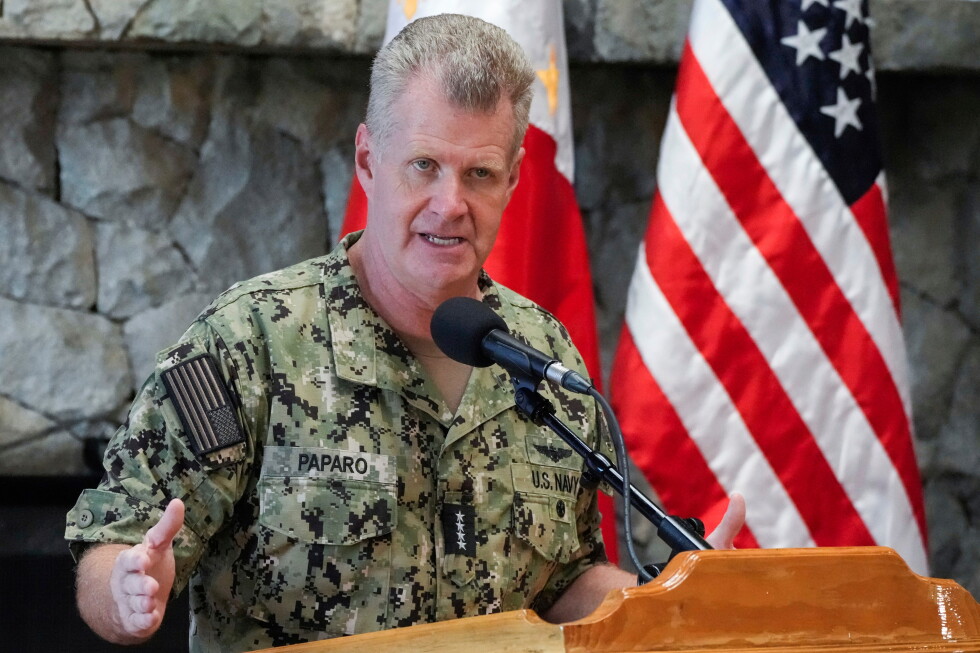
    Admiral Samuel Paparo, commander of U.S. Indo-Pacific Command, spoke via video link to the assembled delegates, arguing that some actors are leveraging manufactured claims of legitimacy to enable intimidation and pressure against neighboring states. He drew a sharp conceptual distinction for the current geopolitical moment: “That’s not the rule of law. That’s the rule by law. That distinction between law as a tool of order versus law as a weapon of raw power, is the defining fault line of our time.”

    Paparo’s comments arrive against a backdrop of sustained heightened tensions in the South China Sea, where China’s expansive territorial and maritime claims overlap with competing claims from multiple Southeast Asian coastal nations. The Philippines has emerged as the primary site of recent standoffs between Beijing and a regional claimant, with repeated confrontations between Chinese and Philippine maritime vessels centered on a contested shoal. Manila has formally accused Chinese crews of carrying out dangerous navigation maneuvers, deploying water cannons against Philippine vessels, and repeatedly attempting to block government resupply missions to Filipino personnel in the disputed area. China has outright rejected all these accusations, and continues to assert its full territorial sovereignty over the contested waterway.

    The United States has repeatedly maintained that it does not take formal sides in the overlapping sovereignty claims in the South China Sea, but affirms its unwavering support for freedom of navigation, adherence to international law, and the right of all nations to operate in accordance with their recognized legal rights. Paparo underlined that open sea access, collective maritime security, and unobstructed global commerce form the foundation of lasting regional stability. He added that peaceful negotiation of disputes and universal respect for national sovereignty are non-negotiable requirements to protect the existing rules-based order in the Indo-Pacific.

    “The United States is clear-eyed about the complex security environment in this region. Our posture and our intent are well defined. The United States is deterring China through strength, not through confrontation,” Paparo stated. “We will not let any nation dominate this region or sweep away the hard-fought sovereign rights of independent states.”

    The U.S. commander further noted that the Indo-Pacific remains the central global hub of geopolitical and economic activity, but rising instability and evolving security challenges have made closer coordination between U.S. allies and regional partners more critical than ever before.

    Opening remarks earlier in the conference came from Philippine Defense Secretary Gilberto Teodoro, who pledged that Manila would continue to resist and push back against what he framed as Chinese aggression in the region. Speaking to reporters after his address, Teodoro expanded on his concerns, noting that Philippine anxiety over China’s actions extends far beyond its activities in the South China Sea. He pointed to Beijing’s recent test of a ballistic missile launched into the Pacific Ocean as clear evidence of China’s expanding regional reach and growing military footprint. “China is everywhere … this is a matter of concern,” he added.

    On the sidelines of the security gathering, Association of Southeast Asian Nations (ASEAN) Secretary-General Kao Kim Hourn offered a more optimistic update on long-running negotiations between ASEAN member states and China over a binding code of conduct to govern interactions in the South China Sea and de-escalate long-running tensions. According to Kao, talks have advanced dramatically in recent months, with negotiators now far closer to finalizing the text than ever before. “The pace has picked up dramatically and I think we are much closer to finalizing the code of conduct,” Kao said. “I have full confidence that we will get it done within this year.”
  • Nauru, the world’s third-smallest country, changes its name to Naoero

    Nauru, the world’s third-smallest country, changes its name to Naoero

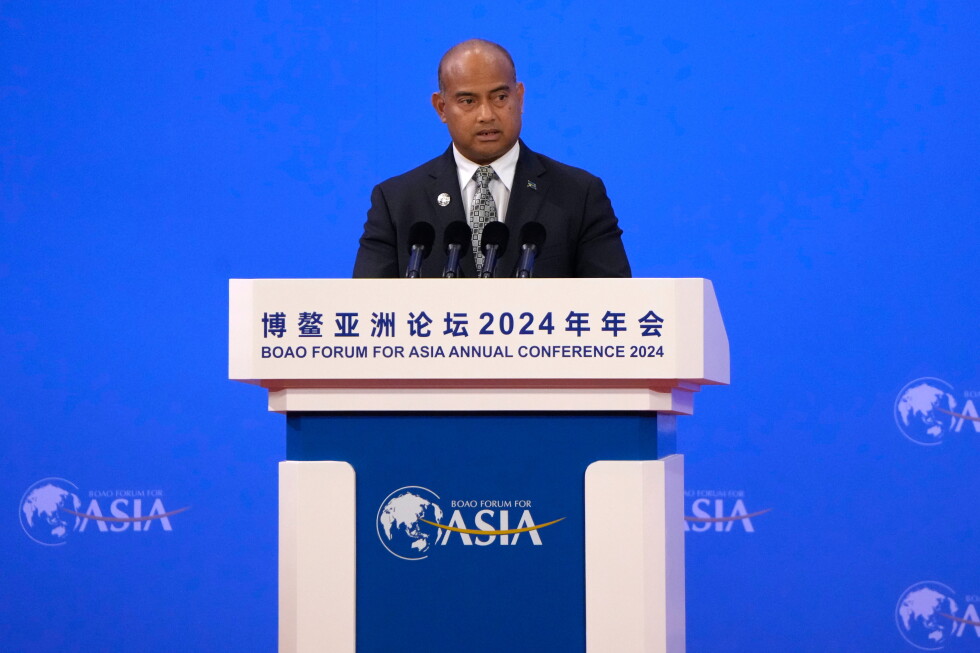
    WELLINGTON, New Zealand — In a landmark step toward reclaiming its Indigenous cultural heritage and distancing itself from colonial-era naming conventions, the small South Pacific island nation previously known internationally as Nauru has formally adopted the traditional name Republic of Naoero, the country’s president has confirmed. The change aligns the nation’s international title with the spelling and pronunciation used in its Indigenous language, bringing a years-long effort to correct a colonial naming compromise to a successful close.

    Per the new designation, the country’s two-letter international code will shift from NRU to NRO, while its citizens will be identified as dei-Naoero, replacing the previous colonial-era term Nauruan. Phonetically, the previous international pronunciation was commonly rendered as “Now-roo” by global audiences, while the traditional Naoero is pronounced “Now-ero.”

    In an official statement published to the government’s Facebook page Thursday, administration officials explained the change returns the remote atoll nation to its original, pre-colonial identity. From the early 20th century, the country was labeled Nauru for international use not as a reflection of local preference, but because colonizers found the traditional Indigenous name too difficult to pronounce, a choice made purely for foreign convenience rather than respect for local culture. President David Adeang first laid out the proposal to parliament in January, framing the amendment as a long-overdue act of respect for the nation’s roots.

    “This proposed change seeks to more faithfully honor our nation’s heritage, our language, and our identity,” Adeang said in his January address to lawmakers. The constitutional amendment required two rounds of parliamentary approval, both of which it has now secured, though formal official updating of the national constitution has not yet been publicly confirmed.

    Naoero, home to roughly 12,000 residents, ranks as the world’s third least populous sovereign state, trailing only Vatican City and neighboring Tuvalu. The tiny coral limestone atoll has a long history of foreign domination: it was first colonized by Germany in the late 19th century, then placed under Australian administration after World War I, before finally gaining full independence as a republic in 1968.

    In the decades following independence, the nation faced severe economic instability after decades of intensive phosphate mining generated extreme wealth for the small state in the 1970s, before the industry collapsed entirely in the 1990s, pushing the country to the edge of economic collapse. Today, Naoero faces an even larger existential threat: it ranks among the nations most vulnerable to sea level rise driven by anthropogenic climate change, prompting its government to launch a paid citizenship-by-investment program to raise funds required to relocate communities and infrastructure inland as ocean waters encroach on coastal areas.

    Adeang described the name change as “the beginning of renewed national pride” in his recent public announcement of the change. When parliament initially approved the shift in May, the president had initially scheduled a public referendum to confirm the change. But the government announced last week that after “extensive discussions” across communities and political bodies, lawmakers concluded a public vote was unnecessary. The administration noted in its statement that the traditional name Naoero has never been absent from national life, and the change simply formalizes what already exists for the country’s people.

    “While a referendum is intended to determine the will of the people, the name Naoero has never been lost, but rather waiting to be fully embraced,” the statement read. “The designation is already the identity of the people, is on the national coat of arms, and spoken in the community; and importantly is allowed by the Constitution.”

    Naoero’s decision to revert to its traditional name makes it the latest sovereign state to distance itself from colonial naming practices in recent years. In 2018, the southern African nation formerly known as Swaziland similarly reverted to its pre-colonial title Eswatini. In 2022, Turkey formally requested the United Nations and global bodies recognize its domestic name Türkiye as the country’s official international title, a shift also rooted in reclaiming national identity.

    The change will require updating the naming of Naoero’s registered national aircraft and civilian ships, and the government has already begun outreach to secure formal recognition from foreign governments and international institutions. Remarkably, the United Nations officially updated its records to reflect the new name in June, shortly after the government submitted the formal request. As of this report, the foreign ministries of Australia and New Zealand, as well as the U.S. and Chinese embassies accredited to the Pacific region, have already updated their official websites to use the new title Republic of Naoero.

  • Two workers told to re-enter quake-hit Japan mall before fatal blast

    Two workers told to re-enter quake-hit Japan mall before fatal blast

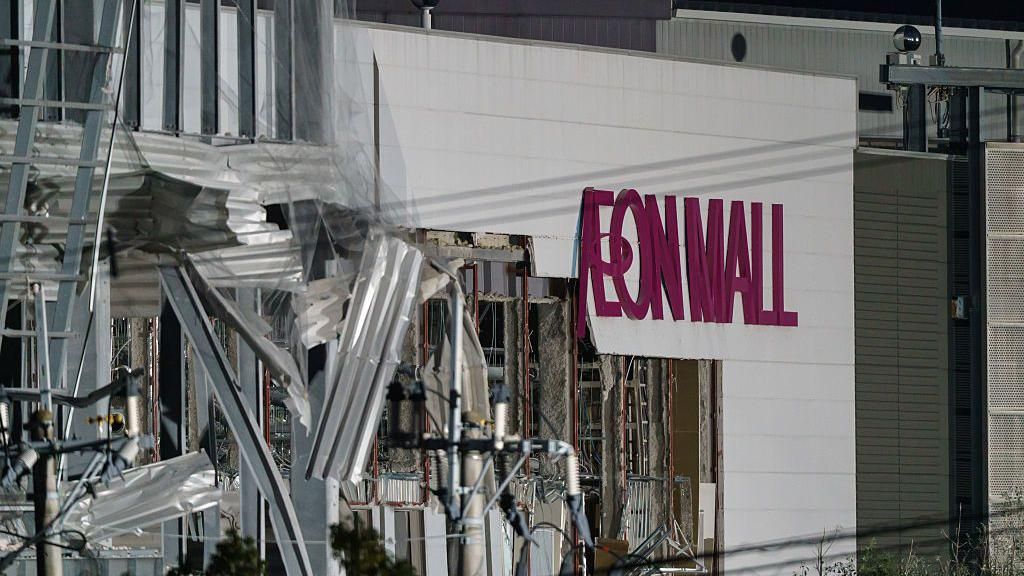
    A devastating magnitude 6.8 earthquake that struck Japan’s Kumamoto Prefecture on July 28 has left an even deeper tragedy in its wake: two employees of a local general goods retailer lost their lives in a subsequent explosion at the heavily damaged Aeon Mall, after being instructed by their employer to re-enter the structurally unstable building to secure store cash. The pair were among 38 total fatalities recorded from the seismic event, with seven of those deaths tied to the Aeon Mall complex.

    One of the fallen workers has been publicly identified as 22-year-old Kurumi Otake, while the second employee’s identity remains private at the request of their family. According to reporting from Japan’s Asahi Shimbun, Otake encountered a family member outside the mall immediately after the initial earthquake struck. She told the relative that her employer, Habita – a 48-year-old retail chain that operates more than 10 locations across multiple Japanese prefectures – had ordered her to return inside to move cash from the store’s registers to a locked safe. This account was confirmed by two Habita representatives, who attended Otake’s wake on Sunday to offer a formal apology to her grieving family.

    In statements to Japan’s public broadcaster NHK, Habita Sales Director Goji Yuse acknowledged that the order given to the two workers was completely inappropriate, and that the company bears full responsibility for the tragedy. “Looking back now, it was not worth a life,” Yuse told reporters at the wake, per reporting from Kyodo News. “The instructions given at the time were inappropriate, and I truly regret the loss of two precious lives,” he added, noting that the company is still evaluating next steps for accountability and support for the victims’ families.

    Otake’s family has shared that the young woman was known for her strong sense of responsibility, and had been supporting her mother financially since her father passed away three years ago. “If she hadn’t gone back inside the store at that time, Kurumi would still be with her family today,” a relative told local media. Otake’s mother echoed the grief of the loss in a statement to reporters, saying simply, “My daughter is not coming back.”

    The timeline of the tragedy reveals a devastating gap between the earthquake and the fatal explosion: while most mall patrons and staff evacuated immediately after the seismic shaking, the explosion that took the workers’ lives struck roughly an hour later, when the pair were carrying out their assigned task inside the damaged building.

  • Water bombers take to skies as Greece battles wildfires

    Water bombers take to skies as Greece battles wildfires

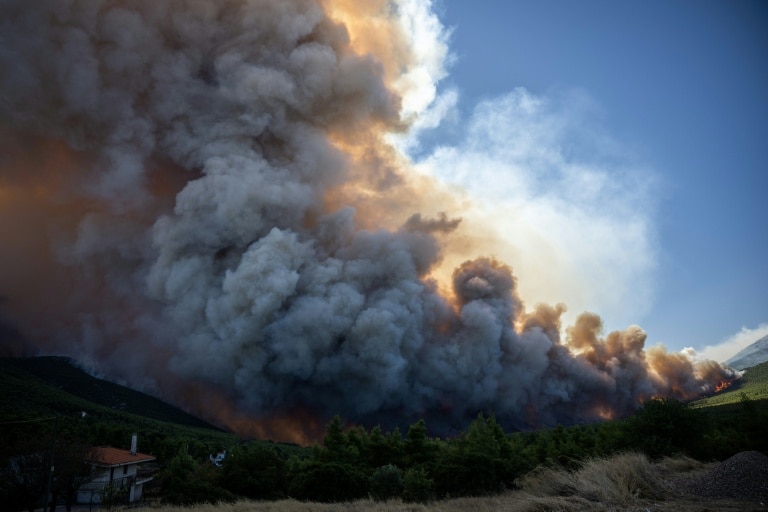
    After a week of relentless, life-threatening blazes that have scorched thousands of hectares of land and claimed five lives, Greece has ramped up its wildfire response, with water-bombing aircraft returning to the skies Monday as dangerous high winds finally subsided.

    Unlike neighboring France and Spain, which faced severe fire events early in the 2024 summer season, Greece escaped major wildfire activity for months. That luck ran out two weeks ago, however, and the country has now been locked in a desperate battle against multiple uncontrolled blazes for 14 straight days. The fires have consumed vast swathes of forest, coastal scrubland, and productive agricultural land west of the Greek capital Athens, as well as destroying areas on the islands of Crete and in the Peloponnese peninsula.

    As of Monday, three major active fire fronts remained the most pressing concern for crews: the areas of Psatha, Kryo Pigadi and Kandyli, all located between 45 and 70 kilometers west of central Athens. With wind speeds dropping after days of gusts reaching up to 80 kilometers per hour — conditions that had forced aerial assets to ground, severely hampering containment efforts — nine water-bombing aircraft were able to rejoin the fight early Monday. They joined nine helicopters and roughly 450 ground-based firefighters working to contain the blazes across the Attica and Boeotia regions.

    Even with the return of aerial support, Greek officials have stressed that the battle against the flames remains far from even. On Monday morning, the country’s Civil Protection agency ordered new mandatory evacuations for several small villages located near the Kandyli fire line, moving residents out of the path of advancing flames ahead of expected high temperatures through the day.

    The crisis has already left a tragic toll. Since wildfires escalated last week, five people have been killed in fire-related incidents, all of them active responders. Three firefighters died last week while battling separate blazes in Crete and the Peloponnese. On Sunday, a mid-air collision between two Bell firefighting helicopters near Psatha killed a Danish pilot and a Greek co-pilot aboard one of the aircraft; the second helicopter’s pilot, a British national, and Greek co-pilot survived with injuries and were transported to a nearby hospital for treatment.

    Following the collision, all Bell helicopters leased for the firefighting campaign have been grounded pending the outcome of a full official investigation, Greece’s public broadcaster ERT reported. The 15 Bell helicopters were leased from Australia’s McDermott Aviation, a company that has provided aerial support to Greek wildfire operations for seven years, according to the firm.

    In a development that points to a potential human cause for one of the most destructive blazes, Greek police have arrested two employees of a national electricity utility in connection with a fire that broke out Friday near Porto Germeno, a coastal village on the Gulf of Corinth approximately 60 kilometers west of Athens. Investigators currently believe the blaze was sparked by a faulty or damaged electrical cable in the area.

    Satellite data from the European Union’s Copernicus Earth observation programme, cited by Greek local media, shows that more than 12,000 hectares of forest and agricultural land have been burned since the outbreak of fires a week ago. That number is expected to rise as containment efforts continue.

    Greek Prime Minister Kyriakos Mitsotakis has warned that the country faces “extremely difficult” days ahead, as sustained high temperatures and record-dry vegetation continue to create ideal conditions for fire ignition and spread. Civil Protection authorities have classified Attica and neighboring Boeotia — the regions currently facing the most active blazes — as level four on a five-point fire danger scale, meaning the threat of destructive fire remains “very high” as the country enters the peak of its summer tourist season. Climate scientists have long warned that the Mediterranean region will see increasingly frequent and intense wildfire seasons driven by rising global temperatures linked to anthropogenic climate change, a trend that is already evident in Greece’s ongoing crisis.

  • New polling reveals Labor maintains ‘election-winning’ lead as One Nation overtakes Coalition as main rival

    New polling reveals Labor maintains ‘election-winning’ lead as One Nation overtakes Coalition as main rival

    Australia’s upcoming federal election landscape has been upended by freshly released polling data from research firm Roy Morgan, which positions right-wing populist party One Nation as the primary opposition to incumbent Prime Minister Anthony Albanese’s Labor Party, pushing the traditional center-right major opposition Coalition into third place. The data, published in mid-2024, paints a startling new picture of voter sentiment, breaking the long-standing two-party duopoly that has dominated Australian federal politics for decades. According to the poll, primary vote support for the ruling Australian Labor Party (ALP) currently stands at 27.5%, enough to deliver a parliamentary majority if an election were held today regardless of whether the ALP faced One Nation or the Coalition as its main competitor for power. One Nation, the nationalist party led by Pauline Hanson, recorded a primary support rating of 24% – a 1.5 percentage point drop from the previous survey, but still enough to place it well ahead of the Liberal Party, the largest member of the Coalition. The Liberal Party saw a 1.5 percentage point rise in support to reach 20%, while its traditional rural coalition partner, the Nationals, held steady at 3.5% aggregate support. Combined, the two Coalition parties sit at just 23.5% primary support, half a point behind One Nation. Beyond voter intention, the polling also tracks a notable dip in public confidence in the federal government, with the overall confidence index falling 1.5 points to 67.5 out of 100. A majority of Australian voters – 59.5%, up 1.5 points from the last poll – now believe the country is headed in the wrong direction, a reading that signals broad underlying voter dissatisfaction with the current political trajectory. The survey also highlighted stark divides in confidence across party bases. Unsurprisingly, ALP supporters recorded the highest confidence rating, at 137.5, far above the baseline 100 mark. Greens supporters came next with a confidence rating of 70, down 16.5 points from the previous survey, followed by Coalition supporters at 50 – up 7.5 points. One Nation supporters, who are among the most dissatisfied with the current government, recorded a confidence rating of just 6.5, a seven-point drop from the last poll. Based on the data, Roy Morgan’s analysis concludes that the next federal election will now be framed as a head-to-head contest between the ALP and One Nation, rather than the long-running ALP-Coalition battle that has defined Australian federal elections for over a century. The research firm acknowledged the fragmented nature of modern Australian politics, noting that multiple three-way and four-way contests will play out across different electorates, with battles also occurring between the ALP and the Coalition, One Nation and the Coalition, and all major parties facing challenges from the Greens, centrist Teal Independents, and smaller regional parties including Katter’s Australian Party (KAP). The shake-up in voter polling comes amid concurrent political controversy for One Nation leader Pauline Hanson, who this week banned three major Australian news outlets – The Guardian, the Australian Broadcasting Corporation (ABC), and The Age – from a public event scheduled for Monday, where the party is set to unveil eight candidates for the upcoming Victorian state election this November. The move has drawn criticism from media freedom advocates, who argue that excluding major independent outlets from public political events undermines transparency in the lead-up to state polling. This realignment in voter support marks a significant shift in Australian politics, reflecting growing voter dissatisfaction with the traditional major parties and the rising influence of right-wing populist messaging ahead of the next federal election, which is scheduled to be held by mid-2025.

  • ‘Stupidity’: Richmond coach unleashes on Luke Trainor after one-game ban for stomach punch against West Coast rival

    ‘Stupidity’: Richmond coach unleashes on Luke Trainor after one-game ban for stomach punch against West Coast rival

    Richmond Tigers have finally broken through an 11-match losing drought, securing their first win in nearly three months against West Coast Eagles on Sunday. But the moment of celebration has been overshadowed by a costly lapse in judgment from young defender Luke Trainor, who received a one-game suspension from the AFL’s Match Review Officer for a deliberate stomach punch on Eagles utility Jack Williams.

    The 20-year-old Richmond prospect’s moment of frustration boiled over in the second quarter of the upset win, after he and Williams had been trading minor, playful on-field jabs for several minutes. Trainor lashed out with a closed-fist strike to Williams’ midsection, leaving the Eagles player crumpled on the ground clutching his abdomen. Williams was able to regain his feet shortly after the incident and leave the field for the team bench.

    Following the match, the Match Review Officer classified the off-the-ball incident as intentional strike with medium impact, resulting in an automatic one-game ban. Trainor will now be forced to miss Richmond’s upcoming away clash against Adelaide this coming weekend, stripping the club of a young developing player just as they are working to build momentum after their long losing run.

    Richmond senior head coach Adem Yze opened up to media after the match, addressing the incident before the official suspension was handed down. Yze noted that he had not reviewed the incident immediately after the final siren, but confirmed the club would hold the player accountable if the strike was proven to be against league rules. The coach did praise Trainor’s overall on-field performance during the win, noting that the young defender had continued to show growth and played a key role in the club’s first victory in months.

    Even so, Yze made clear that avoidable disciplinary suspensions are unacceptable for his side, particularly as the club already deals with a growing list of injured players sidelined for matches. “When we’ve got lack of availability through injury, we don’t want to be losing players through stupidity,” Yze told reporters. The coach added that the club has already held multiple conversations with the entire playing squad about avoiding unnecessary disciplinary incidents, noting that all players have been educated on what counts as acceptable and unacceptable on-field conduct.

    The suspension comes as a disappointing gut punch for Richmond, who were hoping to build on their long-awaited win with a strong performance in Adelaide to continue climbing the AFL ladder.

  • FA set to withdraw support for Fifa president Infantino

    FA set to withdraw support for Fifa president Infantino

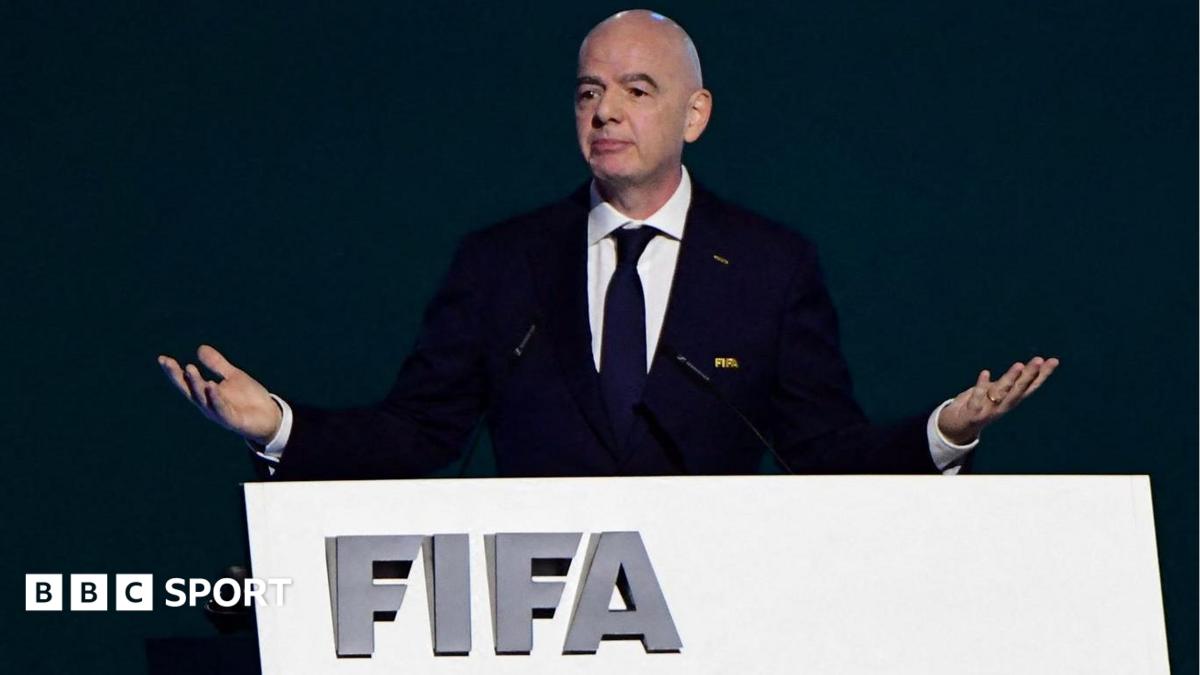
    A growing wave of opposition is engulfing Fifa president Gianni Infantino, just months ahead of his planned run for a fourth and final term in office next March. The latest flashpoint stems from a scrapped controversial proposal to sell minority stakes in Fifa’s top competitions, including the men’s and women’s World Cups, to private external investors.

    The English Football Association has confirmed it will formally send a letter to Fifa withdrawing its existing backing for Infantino, joining Wales, Serbia, Sweden and Finland that have already publicly pulled their support for the incumbent president. Multiple senior European football figures are now calling for a leadership change ahead of the 2026 Fifa presidential election, where Infantino will need 106 votes from the governing body’s 211 global member associations to secure re-election.

    The controversial plan, which has since been abandoned, would have created a new commercial subsidiary called Fifa Forward Enterprise (FFE), which would have opened the door for third-party investors to buy non-controlling minority shares in Fifa’s flagship events. Sources indicate the proposed investor group was set to be led by Thrive Eternal, a U.S.-based venture capital firm founded by Joshua Kushner, brother of former White House senior advisor Jared Kushner, who is Donald Trump’s son-in-law.

    In a sharp escalation of tensions, European football’s governing body Uefa has threatened formal legal action against Fifa over the failed proposal. In a formal letter sent to Infantino, Uefa confirmed it is actively considering arbitration, legal proceedings and regulatory complaints tied to the FFE initiative. The body has also ordered Fifa to preserve all documents and electronically stored data related to the plan, including communications across every major messaging and work platform, correspondence with all involved stakeholders, and detailed records of a proposed $40 million payout structure for member associations that backed the plan. Uefa demanded Infantino acknowledge receipt of the letter within five business days and confirm all required materials have been preserved.

    Scottish Football Association has already aligned its position with Uefa’s public lack of confidence in Infantino, and criticism of the plan and the Fifa president’s leadership has spread beyond Europe: North, Central American and Caribbean governing body Concacaf has also released a public statement condemning the proposal. The Asian Football Confederation has also declared it stands in solidarity with Uefa and Concacaf, though some global confederations including Africa, Conmebol and Oceania have not issued public criticism of the plan or Infantino. To date, Qatar, Lebanon, Kuwait and Sri Lanka have publicly reaffirmed their support for Infantino to continue in his role.

    Uefa vice-president Laura McAllister described the pushback as a defining turning point for global football governance. Speaking to BBC Radio 5 Live, McAllister called the FFE planning process an “abysmal governance process” that has exposed critical gaps in accountability for Fifa leadership. “We cannot keep putting out fires because of unilateral plans,” she said, adding that she hopes the growing rebellion will lead to a change in leadership at the top of Fifa in 2026. “This is a big moment in the history of football.”

    As things stand, the opposition movement faces a key hurdle: Infantino retains significant support among member associations outside of Europe and Concacaf, and opposition limited to those two confederations is not expected to gather enough votes to unseat him. Behind the scenes, opposition figures are working to convince more member associations across other global regions to join the rebellion.

    If the wave of withdrawn support does not push Infantino to step down voluntarily, opponents could trigger an emergency meeting of the 37-member Fifa Council to force a vote on calling for his resignation. Under Fifa rules, an emergency meeting can be called if 19 Council members back the demand, and the meeting must be convened within two weeks of the request. Uefa controls nine seats on the Council, AFC holds seven, Concacaf holds five, Africa holds six, Conmebol holds five and Oceania holds three, with the remaining two seats filled by Infantino and secretary general Mattias Grafstrom. No motion for an emergency meeting will be filed until opponents are confident they have secured the required 19 votes, but that remains the next likely step in the fast-moving crisis.

    BBC Sport has reached out to Fifa for official comment on the growing opposition and legal threats, and no response has been issued as of the latest reporting.

  • Detained Suu Kyi meets Red Cross official in Myanmar: president office

    Detained Suu Kyi meets Red Cross official in Myanmar: president office

    Nearly three and a half years after a military coup ousted Myanmar’s democratically elected government, the detained opposition leader Aung San Suu Kyi has held her first publicly confirmed meeting with an international official, according to the country’s presidency. On Monday morning, Arnaud de Baecque, the ICRC’s Resident Representative to Myanmar, held a face-to-face encounter with the 81-year-old Nobel Peace Prize laureate, the office confirmed.

    The junta-led administration released multiple images alongside the announcement: one captures Suu Kyi shaking hands with a figure that matches de Baecque’s description, while two other images show Suu Kyi cutting a birthday cake inscribed with the message “Happy Birthday Aunty Suu.” While AFP could not independently certify the images’ authenticity, artificial intelligence analysis found no evidence of digital manipulation, and no prior versions of the photos had been circulated online before Monday’s announcement. The AFP has reached out to the International Committee of the Red Cross for further comment on the meeting.

    The February 2021 military coup ended Suu Kyi’s five-year tenure as Myanmar’s state counsellor, after her National League for Democracy won a landslide re-election victory. The junta immediately detained Suu Kyi on a sprawling set of criminal charges that international human rights organizations universally dismiss as politically fabricated, designed to remove her from public life and dismantle her widely popular party. The post-coup uprising against military rule has devolved into an ongoing civil conflict that has killed more than 100,000 people, according to data from the Armed Conflict Location & Event Data Project (ACLED).

    Earlier this year, the junta oversaw a widely boycotted and restricted general election that consolidated its control over the civilian government. In April, former junta chief Min Aung Hlaing was sworn in as the country’s new civilian president, and shortly after the inauguration, he announced he would commute the remainder of Suu Kyi’s combined 27-year prison sentence and transfer her from prison to private house detention in the capital Naypyidaw. To date, junta authorities have refused to disclose the exact location of her detention or confirm how much of her sentence remains in effect.

    For months, Suu Kyi’s family and the international community have called for independent verification that she remains alive. Her son, British national Kim Aris, has repeatedly pushed for independent access to confirm her welfare following the transfer to house arrest. This meeting marks the first time a third-party international representative has been allowed to see Suu Kyi publicly since the coup.

    A senior veteran politician from Suu Kyi’s National League for Democracy, speaking to AFP on condition of anonymity, called the confirmation of her survival a small relief. “We are happy to see her photo like this if it’s really her meeting with the ICRC. We can know now that she’s alive,” the politician said, adding: “However, Aunty should be released immediately as she’s being detained unlawfully.”

    Since the 2021 coup, the Association of Southeast Asian Nations (ASEAN) has suspended Myanmar’s junta leadership from participation in the bloc’s high-level summits, over the military’s failure to implement a peace and reconciliation roadmap agreed with the bloc. In recent months, however, neighboring Thailand has led a diplomatic push to readmit Myanmar back into ASEAN’s regional framework, both through bilateral engagement and bloc-level initiatives.

    Min Aung Hlaing has already undertaken official visits to China, India, and ASEAN member Laos since taking office as president, and he is scheduled to make a high-profile official trip to Thailand later this week. Independent Myanmar analysts and regional policy researchers say the timing of the ICRC meeting, coming just days before the Thailand trip, is no coincidence.

    “It’s the old military game plan to use Suu Kyi as a bargaining chip,” independent Myanmar analyst David Mathieson told AFP. He noted that multiple ASEAN member states have long demanded public proof of Suu Kyi’s status as a condition for normalizing diplomatic relations with the junta. “As a gesture to the international community, it’s the wildcard Min Aung Hlaing was holding close to his chest,” Mathieson added.

    Morgan Michaels, a researcher focused on Myanmar at the International Institute for Strategic Studies, said the junta stands to gain significant diplomatic ground by allowing international access to Suu Kyi. “Releasing her in particular would go a long way to facilitating Myanmar’s re-invitation at the political level,” Michaels said. Even with this latest gesture, Suu Kyi’s continued detention remains a major sticking point for the international community: ASEAN has repeatedly called for its own special envoy to be granted access to meet Suu Kyi, a request the junta has rejected repeatedly to date.

  • Australian stocks recover after US President Donald Trump cancels planned attack on Iran

    Australian stocks recover after US President Donald Trump cancels planned attack on Iran

    Australia’s benchmark share index bounced back from steep early losses to close in positive territory on Monday, after a sudden policy shift from former U.S. President Donald Trump that pulled back from planned military strikes against Iran and calmed global market jitters over energy inflation.

    Heading into the trading day, futures markets had priced in a roughly 1% opening drop for the Australian Securities Exchange, as investors braced for escalating Middle East tensions that threatened to push global oil prices sharply higher. But the market trajectory shifted dramatically mid-morning after Trump announced he had called off what he described as a major planned military strike on Iran, a strike that would have been the largest offensive against the country since World War II. The announcement eased widespread fears that conflict would disrupt global oil supplies and trigger a new spike in global inflation.

    By the closing bell, the benchmark ASX 200 had gained 42.50 points, or 0.47%, to settle at 9019.30. The broader All Ordinaries index followed suit, adding 41.40 points, or 0.45%, to reach 9178.40. The Australian dollar edged lower during Monday’s session but held above the key psychological threshold of 70 U.S. cents, closing at 70.34 U.S. cents.

    Nine out of the ASX’s 11 industry sectors finished the day in positive territory, led by strong gains in utilities, healthcare, and consumer discretionary stocks. The utilities sector posted the strongest performance of any group: Origin Energy climbed 2.88% to $11.07, AGL Energy rose 1.93% to $8.44, and Genesis Energy surged 5.85% to $2.17. Consumer discretionary stocks also posted solid gains, with retail conglomerate Wesfarmers rising 1.45% to $90.66, electronics retailer JB Hi-Fi adding 0.60 points to close at $82.42, and automotive group Eagers Automotive gaining 1.40% to $23.85.

    The only notable drag on overall market gains came from the energy sector, where falling oil prices pushed most major stocks lower. Brent crude futures fell 5.3% to settle at $83.26 a barrel, after dipping as low as $81.55 earlier in the session as tensions de-escalated. Top Australian energy producers reflected the drop: Woodside Energy shares fell 1.37% to $32.50, and Santos slumped 1.91% to $7.89. Refiner and retailer Ampol bucked the trend, posting a marginal 0.08% gain to close at $39.93.

    Speaking to reporters aboard Air Force One on Sunday, Trump explained that he had opted to pause planned strikes to open the door for diplomatic negotiations, set to launch on Monday afternoon. “Obviously, they don’t want to be attacked. They knew the extent of the attack because they saw it forming,” he said. “Now what we’re doing is we’re talking to them in the form of a negotiation. It begins tomorrow afternoon.”

    Tony Sycamore, senior market analyst for IG, noted that the sudden de-escalation removed a key layer of risk that had spooked investors in prior sessions. He added that Trump also signaled a potential deal governing shipping through the Strait of Hormuz — a critical global oil chokepoint — is within reach, with talks on Iran’s nuclear program to follow after initial negotiations. Still, Sycamore struck a cautious note on the long-term outlook for tensions: “Whether this turns into a rinse and repeat of last week — with hopes of a deal collapsing as Iran digs in its heels and continues to leverage its control over the Strait, potentially through an attack on a US base or a tanker transiting the waterway remains to be seen.”

    In individual company news, mining giant Fortescue continued a downward trend from the previous week, sliding another 3.84% to close at $17.80 — a 12-month low for the stock. The drop was driven by falling iron ore prices, with Singapore iron ore futures falling 1.90% to $94.25 a tonne. Elsewhere, Steadfast Group jumped 2.94% to $5.26 after the company issued an update to the market confirming that a KKR-led consortium reaffirmed its planned takeover offer for the business at $6 per share.

  • Survivors recall blasts before deadly Indonesian ferry fire

    Survivors recall blasts before deadly Indonesian ferry fire

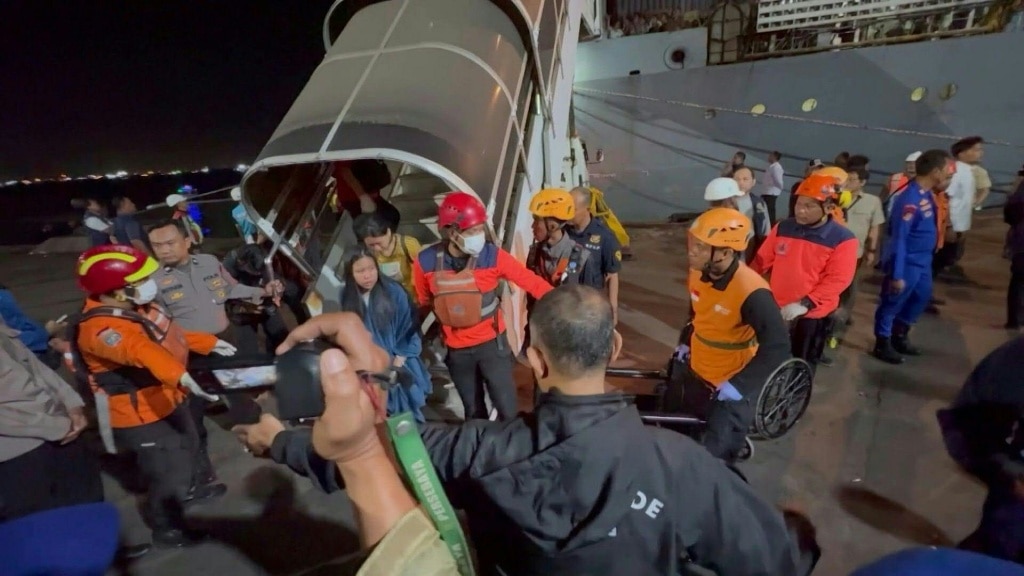
    On Sunday morning, a passenger ferry traveling from Surabaya, Indonesia’s second-largest urban center, to Makassar on Sulawesi Island caught fire, resulting in at least five confirmed deaths and a still-unclear number of missing passengers, with survivors recalling multiple loud explosions moments before the blaze broke out. More than a day after the disaster, search and rescue teams continue to comb the waters around the incident site, which lies approximately six hours by sea from the port of Surabaya.

    Inconsistent official counts have added confusion to the emergency response effort. According to the head of Indonesia’s national search and rescue agency, Nanang Sigit, the vessel carried 236 passengers and crew when it departed port. As of Monday, he confirmed that 229 people had been rescued alive, five bodies had been recovered, and just two people remained unaccounted for, a figure that officials are still cross-checking with the ferry’s operator. However, these numbers differ sharply from earlier reports: on Sunday, officials cited a total passenger manifest of 271 people, with 41 reported missing. East Java police official Arman Asmara Syarifuddin also gave a conflicting count Monday, stating that roughly 28 people are still missing. The root cause of the major discrepancies in official figures has not been explained to date.

    Survivors rescued and brought back to Surabaya have shared harrowing accounts of the disaster. Muhammad Abdul Karim, one of the passengers rescued after seven hours adrift at sea, told reporters that the fire broke out as many passengers were eating their morning breakfast. “Initially, the smoke entered the information room, the sleeping quarters. And then explosions happened,” he explained. The blaze started in the stern section of the ferry, sending panicked passengers rushing toward the bow, where crews distributed life jackets to everyone on board. As the flames spread rapidly toward the front of the vessel, Karim jumped into the sea alongside an elderly passenger, and looked back to see the fire engulf nearly the entire ship. “The waves were big and the ship coming to save us was quite far. Those were our fears when we were about to jump,” Karim said, adding that he did not spot any usable lifeboats on the ferry during the emergency.

    Another survivor, 36-year-old Bambang Susilo, recalled that the rising heat of the ferry’s floor convinced him he had no option but to jump more than 10 meters into the open ocean alongside another passenger. “We had no choice but to surrender” to our fate, he told reporters from Bhayangkara Hospital in Surabaya, where he waited to claim the body of a colleague who died in the incident. Bambang and five other passengers swam roughly five kilometers to reach a waiting rescue vessel. Most rescued passengers have been transported back to Surabaya, with search operations continuing around the clock through Sunday night into Monday. A second rescue vessel was deployed on Monday to expand the search for the missing.

    This latest ferry disaster highlights the persistent risk of marine accidents across Indonesia, a sprawling archipelago nation made up of more than 17,000 islands that relies heavily on maritime transport to connect its population of 270 million. Industry analysts and safety officials have long warned that lax enforcement of marine safety standards, combined with the nation’s often unpredictable tropical weather, creates frequent hazards for passenger ferries. Just one month prior to this incident, another ferry carrying more than 70 people sank near Selayar, a small tropical island south of Sulawesi. That disaster left at least four people dead, with 14 others remaining missing when search operations were called off.