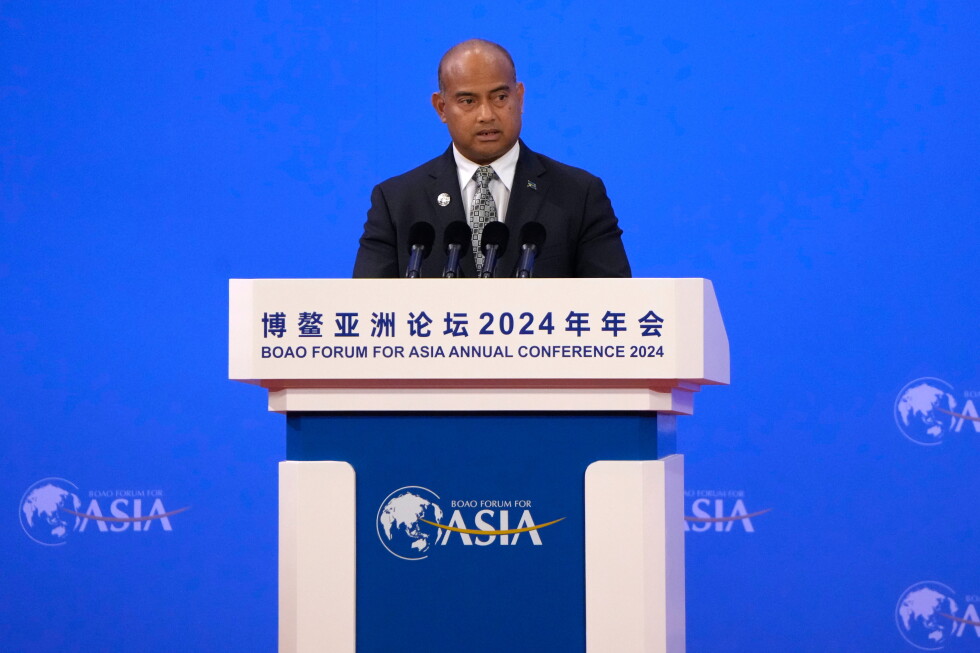
WELLINGTON, New Zealand — In a landmark step toward reclaiming its Indigenous cultural heritage and distancing itself from colonial-era naming conventions, the small South Pacific island nation previously known internationally as Nauru has formally adopted the traditional name Republic of Naoero, the country’s president has confirmed. The change aligns the nation’s international title with the spelling and pronunciation used in its Indigenous language, bringing a years-long effort to correct a colonial naming compromise to a successful close.
Per the new designation, the country’s two-letter international code will shift from NRU to NRO, while its citizens will be identified as dei-Naoero, replacing the previous colonial-era term Nauruan. Phonetically, the previous international pronunciation was commonly rendered as “Now-roo” by global audiences, while the traditional Naoero is pronounced “Now-ero.”
In an official statement published to the government’s Facebook page Thursday, administration officials explained the change returns the remote atoll nation to its original, pre-colonial identity. From the early 20th century, the country was labeled Nauru for international use not as a reflection of local preference, but because colonizers found the traditional Indigenous name too difficult to pronounce, a choice made purely for foreign convenience rather than respect for local culture. President David Adeang first laid out the proposal to parliament in January, framing the amendment as a long-overdue act of respect for the nation’s roots.
“This proposed change seeks to more faithfully honor our nation’s heritage, our language, and our identity,” Adeang said in his January address to lawmakers. The constitutional amendment required two rounds of parliamentary approval, both of which it has now secured, though formal official updating of the national constitution has not yet been publicly confirmed.
Naoero, home to roughly 12,000 residents, ranks as the world’s third least populous sovereign state, trailing only Vatican City and neighboring Tuvalu. The tiny coral limestone atoll has a long history of foreign domination: it was first colonized by Germany in the late 19th century, then placed under Australian administration after World War I, before finally gaining full independence as a republic in 1968.
In the decades following independence, the nation faced severe economic instability after decades of intensive phosphate mining generated extreme wealth for the small state in the 1970s, before the industry collapsed entirely in the 1990s, pushing the country to the edge of economic collapse. Today, Naoero faces an even larger existential threat: it ranks among the nations most vulnerable to sea level rise driven by anthropogenic climate change, prompting its government to launch a paid citizenship-by-investment program to raise funds required to relocate communities and infrastructure inland as ocean waters encroach on coastal areas.
Adeang described the name change as “the beginning of renewed national pride” in his recent public announcement of the change. When parliament initially approved the shift in May, the president had initially scheduled a public referendum to confirm the change. But the government announced last week that after “extensive discussions” across communities and political bodies, lawmakers concluded a public vote was unnecessary. The administration noted in its statement that the traditional name Naoero has never been absent from national life, and the change simply formalizes what already exists for the country’s people.
“While a referendum is intended to determine the will of the people, the name Naoero has never been lost, but rather waiting to be fully embraced,” the statement read. “The designation is already the identity of the people, is on the national coat of arms, and spoken in the community; and importantly is allowed by the Constitution.”
Naoero’s decision to revert to its traditional name makes it the latest sovereign state to distance itself from colonial naming practices in recent years. In 2018, the southern African nation formerly known as Swaziland similarly reverted to its pre-colonial title Eswatini. In 2022, Turkey formally requested the United Nations and global bodies recognize its domestic name Türkiye as the country’s official international title, a shift also rooted in reclaiming national identity.
The change will require updating the naming of Naoero’s registered national aircraft and civilian ships, and the government has already begun outreach to secure formal recognition from foreign governments and international institutions. Remarkably, the United Nations officially updated its records to reflect the new name in June, shortly after the government submitted the formal request. As of this report, the foreign ministries of Australia and New Zealand, as well as the U.S. and Chinese embassies accredited to the Pacific region, have already updated their official websites to use the new title Republic of Naoero.