博客

  • Japan’s beloved last pandas leave for China as ties fray

    Japan’s beloved last pandas leave for China as ties fray

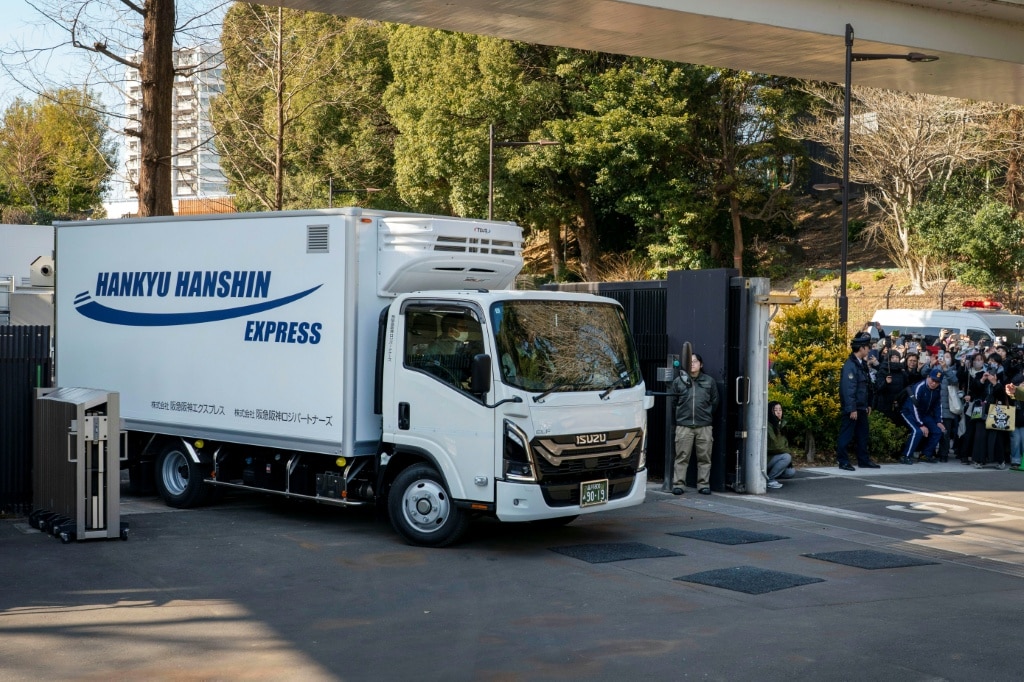
    Tokyo’s Ueno Zoological Gardens bid an emotional farewell to its giant panda residents Lei Lei and Xiao Xiao on Tuesday, marking Japan’s first panda-free period in half a century. The four-year-old twins, born and raised at the prestigious zoo, commenced their journey to China via specialized transport vehicles, leaving behind devoted fans who gathered for final glimpses of the beloved bears.

    The departure coincides with escalating diplomatic strains between the Asian powers, triggered recently by Japanese Prime Minister Sanae Takaichi’s comments regarding potential military intervention concerning Taiwan. Beijing, considering Taiwan part of its sovereign territory, responded with visible diplomatic displeasure. Although the pandas’ repatriation occurs approximately one month before their official loan period concludes in February, the timing appears strategically significant within broader bilateral tensions.

    Since the normalization of Sino-Japanese relations in 1972, giant pandas have served as charismatic ambassadors under China’s distinctive ‘panda diplomacy’ program. These charismatic mammals have consistently drawn massive crowds, generating substantial revenue and cultural goodwill for hosting nations. Despite Japan’s expressed interest in securing a new panda pair, recent polling by Asahi Shimbun indicates 70% of Japanese citizens oppose further negotiations with China regarding additional panda leases.

    Final viewing sessions at Ueno Zoo were limited to lottery-selected visitors, though numerous dedicated admirers without tickets assembled outside the facility wearing panda-themed apparel and carrying memorabilia. Concurrently, China has issued travel advisories cautioning citizens against visiting Japan citing security concerns, while reportedly restricting exports of rare-earth minerals critical for Japanese manufacturing sectors.

    Academic perspectives suggest caution in interpreting the panda recall as purely political retaliation. Professor Masaki Ienaga, an East Asian relations specialist at Tokyo Woman’s Christian University, noted that China routinely rotates pandas internationally and their diplomatic value often manifests in deployment timing rather than removals. He emphasized that while multiple nations employ charismatic fauna in diplomatic engagements, pandas possess unique economic and soft power advantages due to their immense popularity and revenue-generating capabilities.
  • Sabalenka ‘does not understand’ Australian Open fitness tracker ban

    Sabalenka ‘does not understand’ Australian Open fitness tracker ban

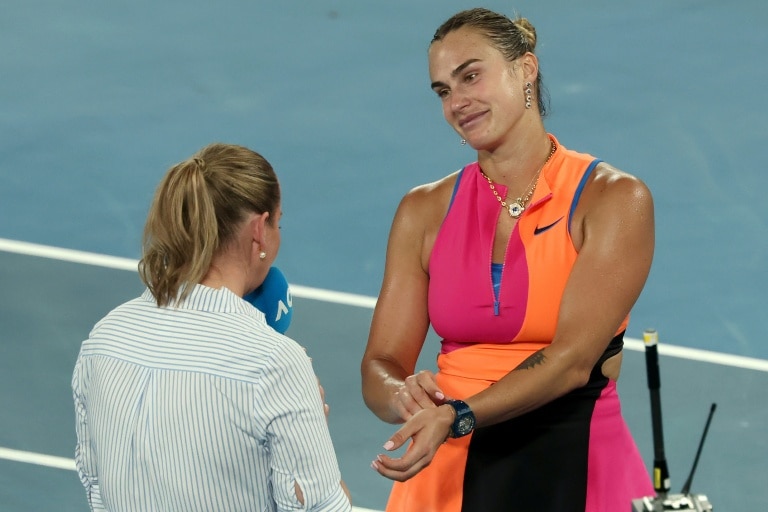
    Reigning world number one Aryna Sabalenka has publicly expressed bewilderment over the Australian Open’s prohibition of wearable fitness technology during competitive matches. The Belarusian tennis star revealed she was instructed to remove her WHOOP performance tracker shortly before her first-round match in Melbourne.

    This regulatory clash highlights a significant discrepancy between Grand Slam tournaments and regular WTA/ATP tour events, where such health monitoring devices receive full authorization. Sabalenka emphasized that players had received prior approval from the International Tennis Federation (ITF), creating confusion about the Grand Slam’s divergent stance.

    ‘We received official confirmation from the ITF permitting these devices,’ Sabalenka stated following her victory. ‘I was unaware that Grand Slam organizers had reached a different conclusion. Throughout the competitive season, we consistently utilize WHOOP technology across WTA tournaments to monitor physiological metrics.’

    The controversy extends beyond Sabalenka, affecting other top competitors including Carlos Alcaraz and Jannik Sinner. The Italian player elaborated on the practical applications, noting: ‘The data collection isn’t for real-time analysis but rather for post-match evaluation of physical exertion, stress responses, and cardiovascular performance.’

    Tournament officials acknowledged ongoing discussions regarding potential policy revisions but provided no substantive explanation for the current ban. This technological limitation prevents athletes from gathering crucial biometric data including heart rate variability, recovery metrics, and exertion levels during some of tennis’s most physically demanding matches.

    The situation underscores growing tensions between athletic technological advancement and traditional tournament regulations, raising questions about how governing bodies will adapt to increasingly data-driven training methodologies in professional sports.

  • Asian shares track Wall Street gains as gold edges lower

    Asian shares track Wall Street gains as gold edges lower

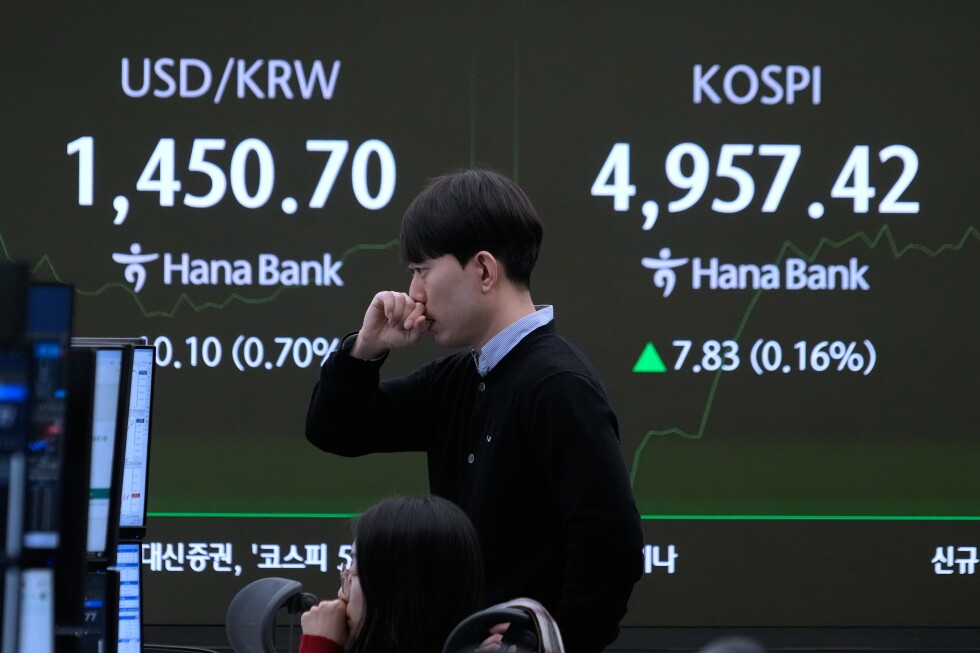
    Asian equity markets demonstrated remarkable resilience on Tuesday, posting broad gains despite escalating trade tensions between the United States and South Korea. The positive momentum followed an upward trajectory on Wall Street, where robust corporate earnings reports continued to fuel investor optimism.

    Japan’s Nikkei 225 advanced 0.9% to close at 53,333.54, while South Korea’s Kospi delivered a particularly impressive performance with a 2.7% surge to 5,084.85. This substantial gain occurred despite former President Donald Trump’s announcement of impending tariff increases on South Korean goods, including automobiles, lumber, and pharmaceutical products. Trump declared via social media that rates on certain goods would escalate from 15% to 25%, citing insufficient progress on trade framework implementation.

    The South Korean government responded with diplomatic urgency, confirming high-level meetings with U.S. officials. Industry Minister Kim Jung-Kwan will engage with Commerce Secretary Howard Lutnick, while Trade Minister Yeo Han-koo prepares for separate discussions with Trade Representative Jamieson Greer. The presidential office reiterated its commitment to implementing last year’s trade agreement.

    Technology stocks emerged as the primary drivers of South Korea’s market performance. Samsung Electronics climbed 4.9%, and semiconductor manufacturer SK Hynix soared 8.7%, effectively counterbalancing losses in the automotive sector where Kia Corp. declined 1.1% and Hyundai Motor Co. dropped 0.8%.

    Other Asian markets showed mixed but generally positive results. Hong Kong’s Hang Seng Index gained 1.3% to reach 27,106.83, while China’s Shanghai Composite added 0.2% to 4,139.90. Taiwan’s Taiex advanced 0.8%, and India’s Sensex edged 0.1% higher. Only Shenzhen’s smaller market benchmark experienced a slight decline of 0.1%.

    Investors now turn their attention to the Federal Reserve’s impending interest rate decision scheduled for Wednesday. While the central bank is expected to maintain current rates, market participants anticipate potential cuts in 2026 to stimulate economic growth. The persistent inflation exceeding the Fed’s 2% target complicates monetary policy decisions.

    This week also brings earnings reports from several technology titans including Meta Platforms, Microsoft, Tesla, and Apple, which could significantly influence market direction. Precious metals continued their ascent with gold adding 0.2% to $5,089.70 per ounce after briefly surpassing $5,100 for the first time, reflecting investor caution amid geopolitical uncertainties.

  • Orkla’s Eastern strengthens UAE leadership as demand for spices and convenience foods surges

    Orkla’s Eastern strengthens UAE leadership as demand for spices and convenience foods surges

    Orkla India’s flagship brand Eastern has solidified its position as the UAE’s leading Indian spice label, with company executives identifying the Emirates as the strategic spearhead of their global expansion ambitions. This market dominance comes amid surging consumer demand for both traditional spices and modern convenience foods across the Gulf region.

    According to Ashvin Subramanyam, CEO of International Business at Orkla India, the GCC accounts for approximately 70% of the company’s international sales, with the UAE alone contributing over one-third of this revenue. The company has demonstrated remarkable growth with a 14% compound annual growth rate over the past three years, a trajectory management expects to accelerate further.

    Initially popular among the Malayali and broader Indian diaspora, Eastern has successfully transcended cultural boundaries to gain significant traction in Arabic and Emirati households. Strategic partnerships with major retailers including Union Coop and Sharjah Coop have been instrumental in mainstreaming the brand beyond its traditional consumer base. Recent market data confirms Eastern’s position as the household reach leader among Indian spice brands in the UAE.

    The brand’s cross-cultural success stems from Orkla’s sophisticated culinary research capabilities through its Cuisine Centre of Excellence. This dedicated facility conducts in-depth studies of regional dishes, reverse-engineers flavor profiles, and drives innovation across spice blends, meal solutions, and convenience food categories.

    This research-driven approach has enabled Eastern to expand beyond Indian flavors into a growing Arabic spice range, supported by locally tailored marketing and product development. The company has particularly focused on younger consumers seeking convenient formats without compromising authenticity, exemplified by innovations like the “5-Minute Breakfast” range that recreates Kerala staples in ready-to-prepare formats.

    With a distribution network spanning over 16,000 outlets, Orkla’s growth strategy centers on innovation, expanded distribution, and consumer insight-led marketing. The UAE’s dynamic food landscape—characterized by global culinary trends, health-driven preferences, and demand for clean-label offerings—provides fertile ground for accelerated expansion.

    Industry events like Gulfood have served as significant catalysts for the brand’s regional visibility and innovation efforts. Subramanyam emphasized the importance of such platforms in fostering the “positive collision of ideas” that drives culinary innovation and international recognition for regional brands.

  • Senegal’s aquagym classes offer hope and healing for people with reduced mobility

    Senegal’s aquagym classes offer hope and healing for people with reduced mobility

    DAKAR, Senegal — Before dawn breaks over Senegal’s capital, an extraordinary scene unfolds along Dakar’s coastline. Approximately 100 participants clad in swimwear and life jackets gather on the beach, preparing for their daily aquatic exercise regimen in the chilly Atlantic waters. This innovative aquagym program has emerged as a transformative healthcare solution for Senegalese citizens grappling with chronic mobility conditions.

  • UK’s Starmer heads to China seeking a thaw in relations but risking a rift with Trump

    UK’s Starmer heads to China seeking a thaw in relations but risking a rift with Trump

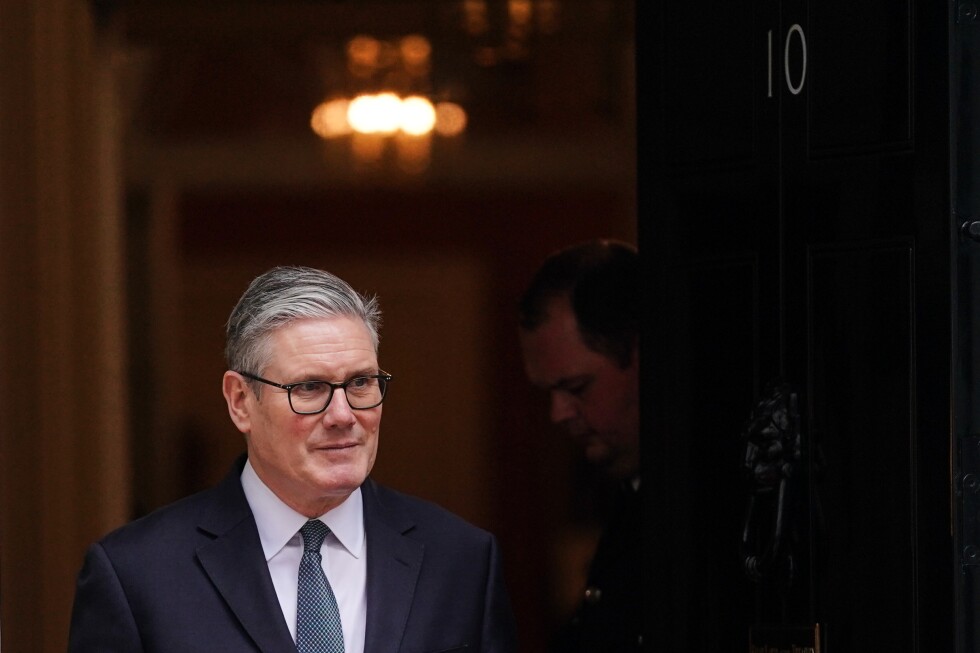
    British Prime Minister Keir Starmer is embarking on a diplomatically sensitive mission to China this Wednesday, marking the first visit by a UK leader since 2018. The trip comes at a pivotal moment as Britain navigates increasingly strained relations with the United States under President Donald Trump, who has imposed tariffs and criticism on traditional allies.

    Starmer’s delegation includes Business Secretary Peter Kyle and numerous corporate leaders, signaling Britain’s intent to secure Chinese technological investment and greater market access for UK financial services, automotive exports, and Scotch whisky. The Prime Minister is scheduled to meet President Xi Jinping directly, seeking to reinvigorate economic ties while managing complex security concerns.

    Professor Zhao Minghao of Fudan University’s Institute of International Studies noted China’s evolving role, observing that “China is no longer just the world’s factory; it is also becoming a global market.”

    The diplomatic landscape has shifted dramatically since the so-called “golden era” of UK-China relations proclaimed in 2015 by Conservative Prime Minister David Cameron. Recent years have seen relations deteriorate over Beijing’s crackdown on Hong Kong’s civil liberties, support for Russia in Ukraine, and growing concerns about espionage and economic interference.

    Kerry Brown, director of the Lau China Institute at King’s College London, characterized the challenging environment: “Starmer is going to be talking to a very skeptical audience. Britain has not been very consistent in its relations with China. We have been very hot and cold.”

    The Labour government, after conducting an 18-month review of China policy, promotes a doctrine of “hard-headed pragmatism”—balancing national security protection against espionage with continued diplomatic engagement and economic cooperation. This approach comes as Britain’s economy, the world’s sixth largest, requires stimulation amid stagnant growth and persistent cost-of-living pressures.

    Starmer’s outreach to Beijing coincides with mounting tensions with Washington. Despite initially avoiding public criticism of Trump’s attacks on London’s mayor, British immigration policies, and his lawsuit against the BBC, Starmer recently condemned Trump’s aspirations regarding Greenland and his disparaging comments about NATO allies in Afghanistan.

    This diplomatic rebalancing extends beyond Britain. Canadian Prime Minister Mark Carney recently visited Beijing, with German Chancellor Friedrich Merz scheduled to follow next month—signaling a broader trend among US allies to hedge against Washington’s unpredictability.

    However, rapprochement with China carries significant risks. Trump has threatened 100% tariffs on Canadian goods following Carney’s recent trade agreement with China, suggesting similar consequences could await Britain.

    Starmer also faces domestic criticism over security concerns, particularly regarding the approval of a massive 20,000-square-meter Chinese embassy near the Tower of London. Critics warn the “mega-embassy” could facilitate espionage and intimidation of dissidents. Additional controversy surrounds the agreement to transfer the Chagos Islands to Mauritius, which some fear could expand Chinese influence near a strategic UK-US military base.

    Human rights considerations present further complications. Former Hong Kong Governor Chris Patten urged Starmer to firmly address issues including treatment of Uyghur minorities and the imprisonment of British citizen Jimmy Lai, a Hong Kong pro-democracy activist.

    According to Brown, the visit will likely be deemed successful if it secures substantial Chinese investment while avoiding major political pitfalls, establishing “consistency, a bit more predictability” in bilateral relations: “Friends where we can be friends, otherwise agree to disagree.”

  • Mandate or defining moment? The UAE’s upcoming eInvoicing regulation is about more than compliance

    Mandate or defining moment? The UAE’s upcoming eInvoicing regulation is about more than compliance

    While July 2026 might appear distant on the calendar, the UAE’s impending eInvoicing mandate demands immediate strategic attention from businesses. Contrary to viewing this as merely another regulatory hurdle, forward-thinking organizations recognize it as a transformative opportunity to revolutionize financial operations and procurement ecosystems.

    This regulatory shift fundamentally differs from previous implementations like VAT or corporate tax. eInvoicing operates at the transactional level in real-time, creating an embedded governance mechanism that validates compliance at the moment of issuance. This transforms compliance from retrospective control to continuous assurance, reconnecting the traditionally fragmented invoicing process into a seamless Source-to-Pay lifecycle.

    Early adopters gain significant competitive advantages beyond compliance. They secure choice in platform selection, alignment with broader digital transformation initiatives, and phased implementation strategies. The automation potential is substantial: where manual processing limits employees to approximately 6,000 invoices annually, automated systems can handle over 90,000—a 1,400% efficiency increase according to Ernst & Young research.

    The strategic value extends far beyond productivity gains. Integrated eInvoicing platforms create a single auditable truth that connects supplier agreements, purchase orders, and payment execution. This ensures automatic validation against agreed terms, reducing disputes while strengthening governance across the entire procurement value chain.

    Financial benefits materialize through accelerated payment cycles—reducing the typical 41-day invoice processing timeline—and access to early-payment discounts up to 2% per invoice. For international operations, early implementation allows organizations to establish global compliance platforms capable of adapting to diverse jurisdictional requirements.

    The current budget planning period presents an ideal opportunity for finance leaders to position eInvoicing as working capital optimization strategy rather than compliance cost. Proactive investment avoids the premium costs of last-minute implementations while future-proofing organizations against evolving regulatory landscapes.

    Ultimately, the July 2026 deadline will distinguish organizations viewing this as a compliance exercise from those leveraging it to build connected, future-ready digital ecosystems. The true mandate represents a watershed moment for financial leadership to replace fragmented processes with integrated digital transformation.

  • Advancing healthcare resilience through innovation in the Middle East

    Advancing healthcare resilience through innovation in the Middle East

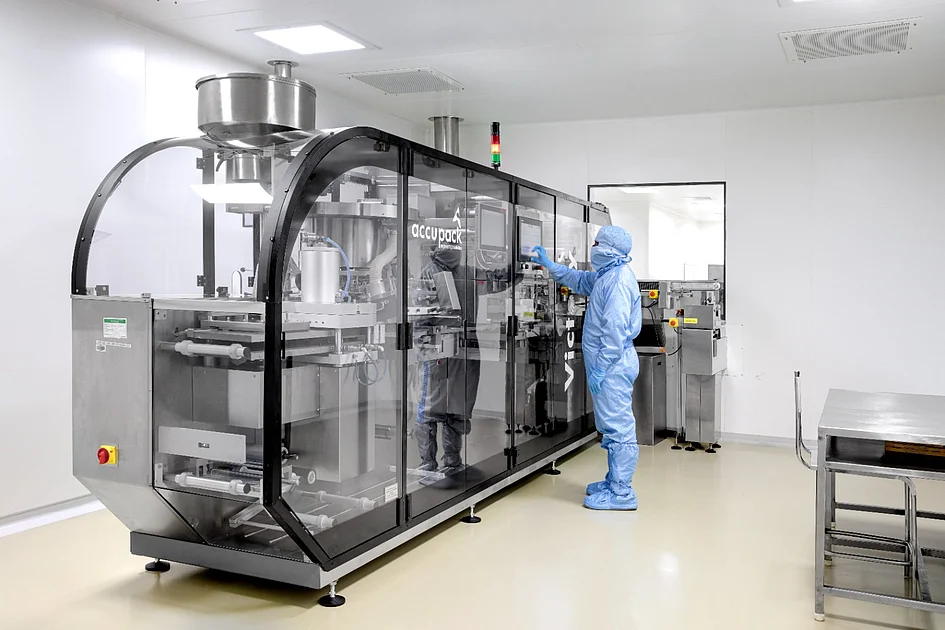
    The Middle East is fundamentally redefining healthcare resilience, moving beyond traditional supply chain security toward advanced biomedical innovation and regional scientific collaboration. Across GCC nations, governments are implementing ambitious long-term strategies that transform healthcare from reactive crisis management to proactive scientific leadership.

    The region’s shifting health demographics, marked by rising rates of diabetes, cancer, and neurodegenerative conditions, have catalyzed this strategic pivot. Rather than merely securing essential medicines, countries are now building sophisticated biomedical ecosystems with genomics, biotechnology, and advanced pharmaceutical manufacturing at their core.

    The UAE’s comprehensive genome program aims to map every Emirati’s DNA, creating the foundation for personalized medicine while supporting nascent biotechnology capabilities. Saudi Arabia’s Vision 2030 incorporates a National Biotechnology Strategy focused on achieving self-sufficiency in vaccines, biomanufacturing, and genomics. Qatar is developing university-industry innovation pathways, while Kuwait advances its healthcare digitalization and health technology assessment frameworks under Kuwait Vision 2035.

    This transformation extends to industrial policy, with sovereign investments creating substantial life sciences platforms. Abu Dhabi’s ADQ consolidated holdings across Swiss, Turkish, and Egyptian entities to form Arcera Life Sciences, now developing over 2,000 medicines across 60+ markets with 40% of its UAE portfolio produced locally. This model maintains global supply chain integration while ensuring predictable medicine access.

    The region’s capabilities are already yielding advanced therapies, including recent introductions of treatments addressing antibiotic resistance and an upcoming Alzheimer’s therapy commercialization across Middle Eastern markets. These developments demonstrate tangible progress in translating scientific innovation into patient access, particularly for areas with significant unmet medical needs.

    Building resilient healthcare systems requires sustained collaboration between governments, industry, academia, and regulators. Investments in talent development, advanced manufacturing, digital infrastructure, and AI-powered insights are proceeding at varying paces but with shared long-term vision across the region.

    The Middle East’s approach leverages complementary strengths across nations, combining robust domestic capabilities with global partnerships. This strategy not only prepares the region for future health challenges but actively shapes innovative solutions, creating opportunities for improved health outcomes for generations to come.

  • Sydney man acquitted of Oxford St club sexual assault

    Sydney man acquitted of Oxford St club sexual assault

    In a significant courtroom verdict, a Sydney man has been cleared of all sexual assault allegations stemming from an incident at an Oxford Street nightclub. After a comprehensive week-long trial, a District Court jury delivered a not guilty verdict for David Charles Massa, 47, on Tuesday regarding two primary counts of sexual intercourse without consent and two alternative charges of non-consensual sexual touching.

    The case centered around events at Universal Nightclub in the early hours of June 1, 2024, where Massa acknowledged physical contact but maintained it was entirely consensual. Through his defense barrister Nicole Carroll, Massa asserted that he never penetrated the complainant’s anus and all interactions occurred with mutual agreement between both parties.

    Court proceedings revealed the two men had met moments before the incident when the complainant allegedly approached Massa, kissed his hand, and invited him to join in the smoking area alongside his girlfriend. Surveillance footage presented as evidence showed the men engaging in kissing, though the complainant claimed he did not reciprocate.

    Defense counsel Carroll characterized the interaction as ‘friendly’ and ‘flirtatious’ throughout the evening, arguing the complainant showed no visible distress immediately following the alleged assault. Carroll suggested the departure from the venue was prompted by the girlfriend pulling him away after witnessing the kiss, rather than due to any non-consensual activity.

    The complainant testified that after having dinner and drinks at the nearby Beresford Hotel, he proceeded to Universal Nightclub where he encountered Massa sitting alone. He described feeling ‘in shock’ about the alleged assault given the public setting with numerous patrons present. Following the incident, he reported undergoing a medical examination at Royal Prince Alfred Hospital before filing a police report.

    Massa consistently maintained his innocence, telling police in a recorded interview: ‘I have no idea what this is about. All I know is I did not sexually assault anyone.’ The jury’s unanimous acquittal concludes this closely watched case that examined complex questions of consent and interpersonal conduct in social settings.

  • Dubai real estate matures into one of the world’s most resilient markets

    Dubai real estate matures into one of the world’s most resilient markets

    Dubai’s property sector has evolved into one of the world’s most robust and resilient real estate markets, driven by pioneering regulation, technological innovation, and shifting investor expectations. According to Riz Ahmed, CEO of SmartCrowd, the market’s maturation stems from early regulatory frameworks that fundamentally transformed investment practices across the United Arab Emirates.

    The implementation of comprehensive regulation established new industry standards that prioritized transparency, governance, and performance accountability. Ahmed emphasized that being the region’s first fully regulated real estate investment platform created a foundation of trust that preceded scale. “Transparency became non-negotiable. Investors now expect real data, audited returns, and full visibility—benchmarks we established from day one,” he stated.

    The market transformation is demonstrated through substantial performance metrics. SmartCrowd has facilitated over 60 successful property exits—triple the combined total of other regional crowdfunding platforms—delivering consistent returns across varying market cycles. Their Buy & Hold properties have generated average net annualized returns of 14.34%, with an overall net return of 43.95% across an average holding period of 3.2 years. The innovative Flip model, designed for shorter investment cycles of 9-15 months, has produced average net returns of 27.40% with annualized returns of 24.01%.

    Ahmed attributes this success to Dubai’s dual appeal: stable rental income combined with significant capital appreciation as the market continues to mature. The recent acquisition of SmartCrowd by Nawy marks a strategic shift toward creating an integrated digital ecosystem for real estate investment throughout the MENA region. This consolidation aims to develop a comprehensive platform where users can invest, finance, manage, and exit properties under a single digital infrastructure.

    The evolution continues through continuous innovation rather than isolated breakthroughs. Ahmed concluded that maintaining leadership requires anticipating market trends and investor needs, ensuring Dubai remains at the forefront of global real estate investment innovation.