博客

  • ‘Animals in a zoo’: Players back Gauff call for more privacy

    ‘Animals in a zoo’: Players back Gauff call for more privacy

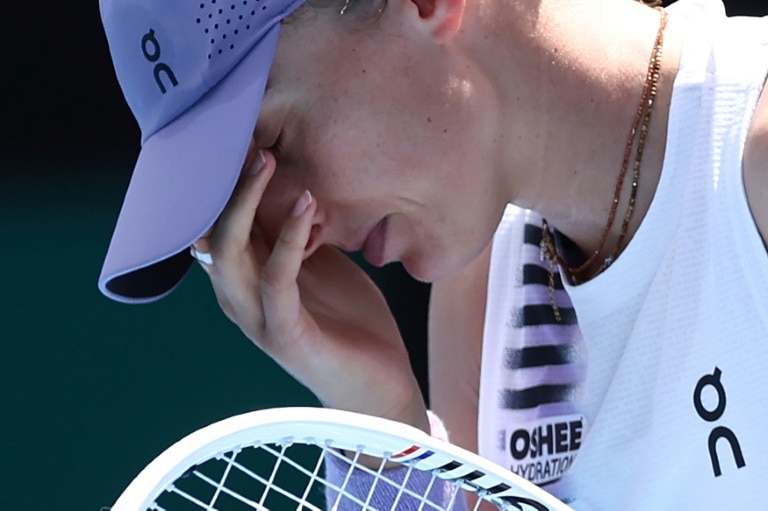
    A coalition of elite tennis professionals has united in support of Coco Gauff’s appeal for enhanced privacy protections during major tournaments, with World No. 2 Iga Swiatek delivering a particularly vivid critique comparing the current surveillance environment to being treated like “animals in a zoo.”

    The movement gained momentum following Gauff’s quarter-final elimination at the Australian Open, where broadcast cameras captured the American player’s private emotional moment after her defeat. The third-seeded athlete had deliberately sought solitude in a secluded stadium area to process her frustration away from public view, only to discover the moment had been televised.

    “I specifically attempted to locate a space where my reaction wouldn’t be broadcast,” Gauff explained. “The fact that this was still captured suggests we need to have serious conversations about privacy boundaries. Currently, the locker room stands as our only truly private sanctuary.”

    Swiatek, who also exited in the quarter-finals, expanded on the metaphor while acknowledging its deliberate exaggeration: “The fundamental question is whether we’re professional athletes or zoo specimens under constant observation, even during our most private moments. While competition viewing is expected, the perpetual monitoring extends beyond reasonable boundaries.”

    The Polish star spoke from recent experience, having herself become unintended social media content when footage circulated of her being denied arena access for forgetting her accreditation. “Our profession involves being watched during matches and press conferences,” Swiatek noted. “Becoming meme material for accidental moments outside that scope feels unnecessary and invasive.”

    Sixth-seeded Jessica Pegula, who advanced to the semi-finals, endorsed her colleagues’ concerns regarding the omnipresent broadcasting apparatus. “Coco’s assessment about locker rooms being our only refuge is unfortunately accurate,” Pegula stated. “The sensation of perpetual surveillance while simply navigating your daily routine creates an uncomfortable environment. I’ve witnessed viewers zooming in on players’ personal devices online—such intrusions cross clear ethical lines.”

    While American player Amanda Anisimova expressed greater personal tolerance for the scrutiny, she acknowledged the problematic nature of broadcasting private distress: “There’s certainly enjoyment in sharing positive moments publicly. However, disseminating footage of athletes during vulnerable periods without consent presents genuine ethical concerns. Coco had no agency in that decision, which makes it particularly difficult.”


  • Pauline Hanson lashes progressives after ‘sold out’ film cancelled

    Pauline Hanson lashes progressives after ‘sold out’ film cancelled

    One Nation leader Pauline Hanson has launched a vehement critique against what she terms ‘super progressives,’ following the alleged last-minute cancellation of screenings for her controversial animated film. The M-rated satirical production, ‘A Super Progressive Movie,’ which lampoons cancel culture through slapstick violence and sexual content, faced abrupt cancellations in Melbourne and Hobart despite previously reported sold-out premieres. Senator Hanson characterized the incident as emblematic of Australia’s descent into excessive political correctness, asserting that the nation has grown ‘frightened of giving imaginary offence to imaginary people.’ She countered critics who labeled the film ‘dangerous’ by describing it instead as a ‘love letter to Australia,’ highlighting that its Sydney premiere reportedly received a standing ovation. The Queensland senator framed the cancellations as an assault on free speech, arguing that suppressing expression only exposes ‘bigotry and weakness’ while paradoxically generating greater public interest. This controversy emerges amid surging polling numbers for Hanson’s party, which recent surveys place ahead of the Coalition for the first time, fueling speculation about her political ascendancy. While online ticketing platforms showed certain screenings as sold out with tickets priced between $99-$129, the film remained conspicuously absent from official cinema listings, creating ambiguity about its actual availability.

  • School launched for interstellar travel

    School launched for interstellar travel

    In a landmark advancement for space education, the University of Chinese Academy of Sciences (UCAS) officially inaugurated its School of Space Exploration on Tuesday in Beijing. The ceremony took place at the prestigious Chinese Academy of Sciences memorial hall honoring the “Two Bombs, One Satellite” project pioneers, symbolically connecting China’s historic aerospace achievements with its ambitious interstellar future.

    UCAS President Zhou Qi declared the establishment responds to humanity’s new era of space exploration. “We have already stepped beyond Earth—building a space stations, exploring the far side of the moon, and launching missions to Mars,” Zhou stated. “It is now time to think strategically about building the interstellar travel enterprise of the future.”

    The school, approved in November 2025, will develop an extensive curriculum spanning 14 first-level disciplines and specialties. Building upon 97 existing courses, it will introduce 22 innovative core subjects including interstellar dynamics and propulsion principles, space environment perception and utilization, planetary dynamics and habitability, and the groundbreaking field of interstellar sociology and governance.

    Academician Zhu Junqiang, director of the CAS Bureau of Strategic High-tech Development, was appointed as the school’s inaugural dean. He emphasized that interstellar navigation represents a complex, systematic engineering challenge that cannot be solved through isolated disciplinary breakthroughs. The school will integrate aerospace engineering, physics, chemistry, biology, and materials science around the grand objective of interstellar travel.

    President Zhou acknowledged the overwhelming public interest following the school’s initial announcement, explaining that the deliberate pace of implementation reflected a commitment to substantial long-term planning rather than “the glamour of the moment.” He paid tribute to the pioneering spirit of the “Two Bombs, One Satellite” generation whose work under challenging conditions laid the foundation for contemporary space achievements.

    The institution is designed to be inherently interdisciplinary and collaborative, with over 100 CAS research institutes connected to its mission. Zhou highlighted that interstellar travel will present multifaceted scientific and practical challenges—from navigation and space weather to spacecraft engineering, space agriculture, and even interstellar diplomacy—requiring unprecedented institutional cooperation.

    A central focus will be talent development, with Zhou emphasizing that “the heart of a school is nurturing people.” He called on all participating institutes and experts to prioritize student growth and provide platforms for them to “see farther and go farther.” The school is positioned to serve as both an innovation source and training base for China’s long-term interstellar navigation development, while simultaneously building a scientific system that addresses humanity’s common future needs in space exploration.

  • Australian PM says man who allegedly tried to bomb rally deserves ‘full force of law’

    Australian PM says man who allegedly tried to bomb rally deserves ‘full force of law’

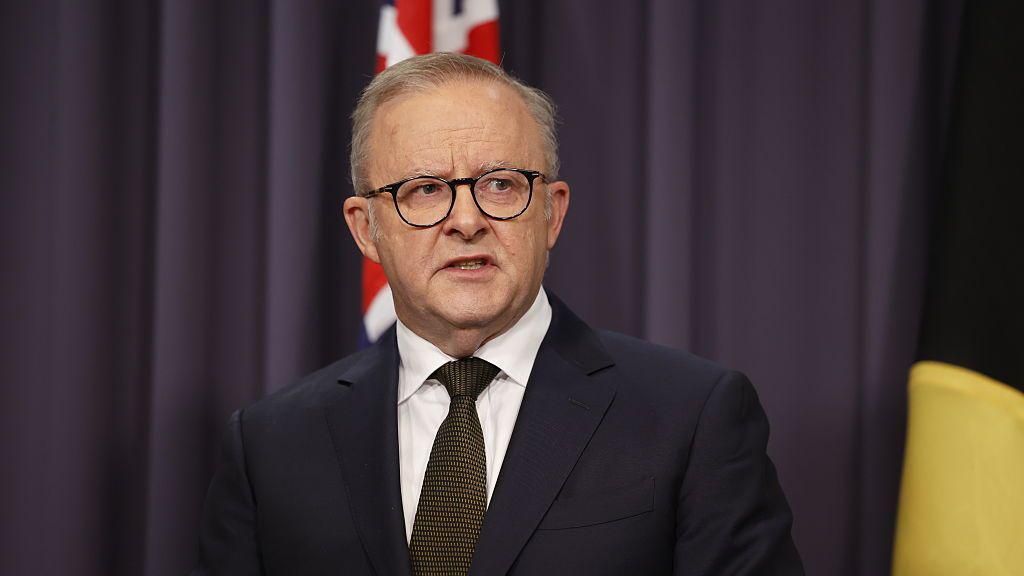
    Australian Prime Minister Anthony Albanese has called for the fullest legal consequences against a 31-year-old man who allegedly hurled a homemade explosive device into a crowd of approximately 2,500 people gathered for an Indigenous rights rally in Perth. The incident occurred during an “Invasion Day” demonstration held on Australia Day, a date that simultaneously represents national celebration for many Australians and colonial trauma for Indigenous communities.

    Authorities confirmed the device—containing a volatile chemical mixture along with nails and metal ball bearings—failed to detonate, preventing potential casualties. Following the incident, police conducted a search of the suspect’s residence and discovered additional chemicals and materials consistent with homemade explosive production.

    The individual, whose identity remains protected under a court suppression order, currently faces charges related to manufacturing explosives with intent to cause harm. Law enforcement officials are investigating whether terrorism charges apply, requiring demonstration of political, religious, or ideological motivation for the attack.

    Western Australia Police Commissioner Col Blanch characterized the act as “hostile” while acknowledging the ongoing investigation into motives. The event has heightened tensions in a nation still processing the trauma of December’s Bondi Beach shooting that claimed 15 lives at a Jewish festival.

    Prime Minister Albanese described the incident as “quite shocking” but refrained from detailed commentary due to the active judicial proceedings. Meanwhile, Western Australian Premier Roger Cook emphasized the importance of respecting diverse perspectives, stating “we can’t let hate win” and highlighting Australia’s strength through diversity.

    The accused remains in custody awaiting his next court appearance scheduled for February 17th, as authorities continue to assess the appropriate charges for this security breach at a peaceful assembly.

  • The EU is seeking new trade partnerships. Here’s why

    The EU is seeking new trade partnerships. Here’s why

    BRUSSELS — In a strategic repositioning of global economic partnerships, the European Union has cemented a transformative free trade agreement with India, signaling a fundamental shift in international alliance structures. This development emerges against the backdrop of evolving trans-Atlantic relations and growing concerns over Washington’s reliability under the Trump administration.

    The comprehensive pact, formally endorsed on Tuesday, represents the EU’s most ambitious trade arrangement to date. It will eliminate tariffs on approximately 97% of European exports to India—including automobiles and premium wines—while facilitating 99% of Indian goods entering EU markets, notably pharmaceuticals and textiles. The agreement potentially impacts nearly two billion people across both economies.

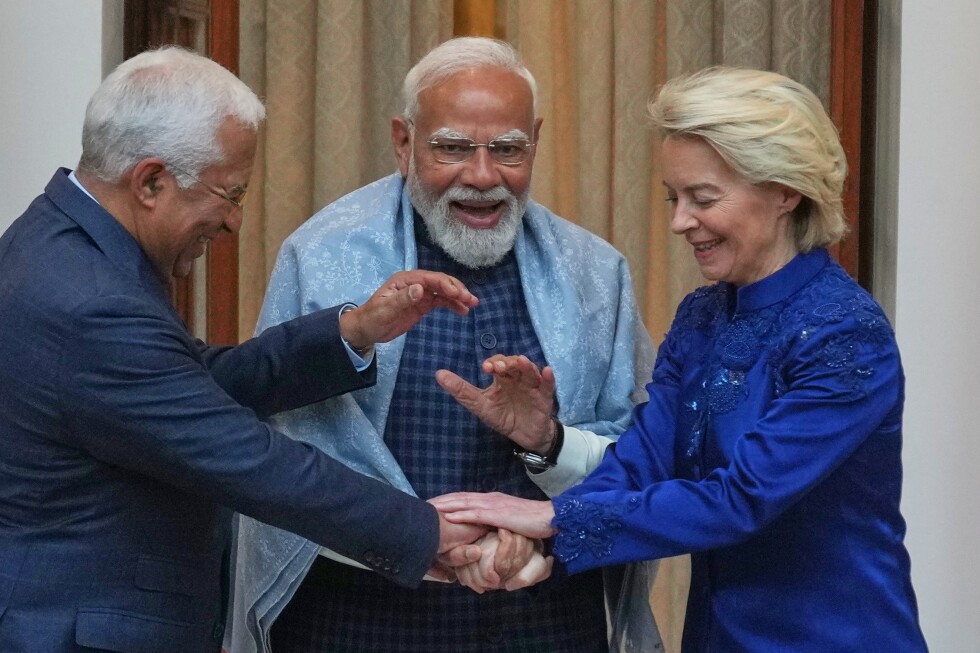
    European Commission President Ursula von der Leyen, during her official visit to New Delhi, characterized the arrangement as “the mother of all deals,” emphasizing its significance in strengthening economic and strategic cooperation between the two powers. The timing of this agreement reflects Brussels’ concerted effort to establish diversified global partnerships following heightened uncertainties in traditional alliances.

    Analysts identify multiple geopolitical factors driving this realignment. Garima Mohan, senior fellow at the German Marshall Fund, noted that “Europe and India need each other today like never before,” highlighting mutual concerns regarding China’s economic ascendancy and recent strains in trans-Atlantic relations. This strategic diversification movement, initially prompted by tensions with Beijing, has been accelerated by fractures in traditional Western partnerships.

    The India agreement constitutes just one component of Brussels’ expanded global outreach. Within the past year, the EU has finalized trade arrangements with Japan, Indonesia, Mexico, and the Mercosur nations of South America—creating a combined market exceeding 700 million people. Additionally, the bloc has enhanced diplomatic ties with Pacific nations including South Korea and Australia, all expressing wariness toward Beijing’s strategic ambitions and Washington’s political volatility.

    Concurrently, European leaders are advancing initiatives to bolster continental security autonomy. Russia’s invasion of Ukraine catalyzed the development of financial mechanisms to strengthen EU defense capabilities, while recent statements from the Trump administration regarding security priorities have accelerated these efforts. France has championed the concept of “strategic autonomy,” gaining increased support among member states.

    EU leaders have collectively committed to elevating defense expenditures, designating €150 billion ($162 billion) toward advanced military capabilities including missile defense systems, artillery, drone technology, and cyber warfare infrastructure. This substantial investment reflects growing recognition that meaningful military self-sufficiency requires overcoming decades-long dependence on American security guarantees.

    The geopolitical repositioning extends to energy security as well. While the EU has reduced energy imports from Russia, it has simultaneously increased dependence on American liquefied natural gas—now accounting for 60% of EU imports according to Eurostat. European Commissioner for Energy Dan Jørgensen cautioned against exchanging “one dependency for another,” advocating for diversified energy sources including potential suppliers in the Eastern Mediterranean and Gulf regions.

    As articulated by Nikos Christodoulides, President of Cyprus, during his European Parliament address: “The international order we relied upon for decades is no longer a given. This moment calls for action, decisive, credible and united action. It calls for a union that is more autonomous and open to the world.” This sentiment captures the essential calculus now guiding European foreign policy: in an increasingly multipolar world, strategic diversification provides crucial leverage in engagements with Beijing, Moscow, and Washington alike.

  • A private plane crashes in western India and kills a deputy chief minister and 4 others

    A private plane crashes in western India and kills a deputy chief minister and 4 others

    A private aircraft transporting Maharashtra’s Deputy Chief Minister Ajit Pawar crashed in western India on Wednesday, resulting in the tragic death of all five individuals aboard. The Learjet 45, en route from Mumbai to Baramati, crash-landed approximately 254 kilometers from its departure point and subsequently erupted in flames, with aviation authorities confirming no survivors.

    The fatal incident occurred as Pawar, aged 66, was traveling to his political stronghold of Baramati to participate in local election campaigning. Initial reports from the Directorate General of Civil Aviation indicated that alongside the prominent politician, two personal staff members and two flight crew perished in the catastrophe. The precise cause of the crash remains under investigation, with television broadcasts capturing disturbing imagery of smoke billowing from the wreckage site in an open field.

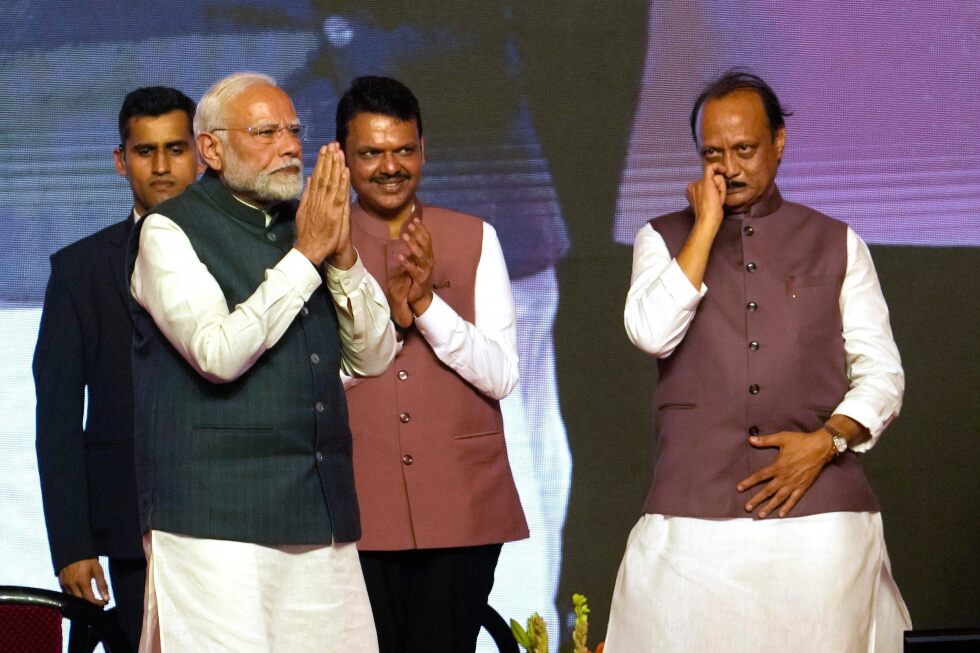
    Pawar stood as a pivotal figure within Maharashtra’s political landscape, serving as the state’s second-highest elected official while operating within Prime Minister Narendra Modi’s ruling coalition framework. His political influence proved particularly formidable within the state’s agricultural regions, where he demonstrated remarkable capacity for mobilizing rural electoral support. Prime Minister Modi publicly expressed profound shock and sorrow regarding Pawar’s unexpected demise, characterizing the late deputy chief minister as a dedicated public servant whose administrative acumen and commitment to impoverished communities left a significant mark on regional governance.

  • Minnesota congresswoman unbowed after attacked with liquid

    Minnesota congresswoman unbowed after attacked with liquid

    In a display of remarkable composure, US Congresswoman Ilhan Omar confronted an assailant who sprayed her with an unidentified liquid during a constituent meeting in Minneapolis before defiantly completing her remarks. The incident occurred Tuesday as the Somali-born lawmaker addressed immigration enforcement concerns.

    According to eyewitness accounts, 55-year-old Anthony Kazmierczak launched the attack from the front row just as Representative Omar called for the resignation of Homeland Security Secretary Kristjen Nielsen. The assailant employed a syringe-like device that emitted a foul-smelling substance before being swiftly subdued by attendees and removed from the venue amid chants of ‘Nazis out.’

    Minneapolis police confirmed the suspect’s arrest on suspicion of third-degree assault, noting the congresswoman sustained no physical injuries. The attack unfolded against a politically charged backdrop of ongoing tensions between local communities and federal immigration authorities.

    Rather than retreating, Omar advanced toward her attacker with raised fist before calming the agitated audience. ‘We are Minnesota strong and we will stay resilient in the face of whatever they might throw at us,’ she declared to applauding constituents.

    The event highlighted deepening political divisions as Minneapolis becomes a flashpoint in the Trump administration’s immigration enforcement operations. Omar, who has frequently been targeted by presidential criticism, previously accused the administration of turning her district into a ‘war zone’ through aggressive deportation tactics.

    Security protocols at the public forum are under review after journalists observed press members entering without screening while civilians underwent checks. Following the incident, Omar posted on social media platform X: ‘I’m OK. I’m a survivor so this small agitator isn’t going to intimidate me from doing my work.’

  • South Korea’s former first lady sentenced to 20 months in prison for corruption

    South Korea’s former first lady sentenced to 20 months in prison for corruption

    In a landmark judicial decision that has captured national attention, the Seoul Central District Court has imposed a 20-month prison term on Kim Keon Hee, former first lady of South Korea. The sentencing on Wednesday concludes a significant chapter in a corruption case that has dominated the country’s political landscape.

    The court found Kim guilty of accepting illicit gifts from the Unification Church in exchange for providing business advantages. This conviction represents a substantial reduction from the 15-year sentence that independent prosecutors had aggressively pursued. The prosecution’s case had encompassed multiple serious charges including bribery, stock manipulation, and campaign finance violations.

    In a notable judicial determination, the court exonerated Kim on allegations of stock price manipulation and political funding law infractions, citing insufficient evidentiary support. This partial acquittal introduces complex dimensions to the case’s legal narrative.

    Kim’s legal representatives issued a measured response to the verdict, expressing appreciation for the court’s deliberation while indicating they would carefully consider potential appellate options.

    The timing of this sentencing carries particular significance as it precedes by approximately three weeks another anticipated verdict involving former President Yoon Suk Yeol. Yoon faces grave rebellion charges related to his controversial imposition of martial law in December 2024, for which prosecutors have astonishingly sought capital punishment. These parallel proceedings represent one of the most consequential judicial moments in recent South Korean political history, with potential implications for the nation’s democratic institutions and governance standards.

  • Italy’s Ladin minority will be sidelined at the Winter Olympics held in their mountain home

    Italy’s Ladin minority will be sidelined at the Winter Olympics held in their mountain home

    In the shadow of the Milan Cortina Winter Olympics, Italy’s ancient Ladin minority is orchestrating an independent cultural showcase after being overlooked by official Games programming. This ethnolinguistic community, whose Dolomite mountain heritage spans two millennia, finds itself excluded from the international platform that has historically celebrated host cultures.

    The Ladin people, numbering approximately 35,000 speakers recognized by UNESCO as an endangered language group, inhabit five valleys across three Olympic territories: Veneto, Alto Adige, and Trentino. Despite comprising half of Cortina d’Ampezzo’s population and producing Olympic athletes like slalom skier Alex Vinatzer and bronze medalist figure skater Carolina Kostner, their distinct cultural identity received no invitation for representation in the February 6 opening ceremony.

    Organizers confirmed the 2.5-hour spectacle will emphasize Italian fashion, design, and music instead. This decision contrasts sharply with previous Olympic traditions, where Lillehammer featured the Arctic Sami people and Beijing showcased China’s 54 ethnic minorities.

    In response, Ladin communities across the Dolomites have launched grassroots initiatives to share their heritage. Elsa Zardini, head of Cortina’s Ladin community, leads a campaign distributing tricolor flags (azure, white, and green representing mountain landscapes) to welcome visitors while subtly protesting their exclusion. Simultaneously, the General Ladin Union produced multilingual mini-dictionaries and historical videos with English subtitles tracing their Roman origins through Napoleonic wars to modern times.

    The cultural displacement echoes deeper tensions: the 1956 Olympics transformed Cortina from a Ladin-majority town into a luxury resort, creating inheritance tax pressures that force young families to leave. While two traditional appearances were permitted—a torch ceremony presence and a non-broadcast parade—community leaders emphasize these token gestures fail to meaningfully represent their linguistic minority status.

    As the world watches the Games, Ladins are leveraging the international attention to assert their enduring presence through self-organized exhibitions of traditional woodcarving, costume displays, and musical events across the Dolomite region.

  • Japan’s last pair of pandas have arrived back in China

    Japan’s last pair of pandas have arrived back in China

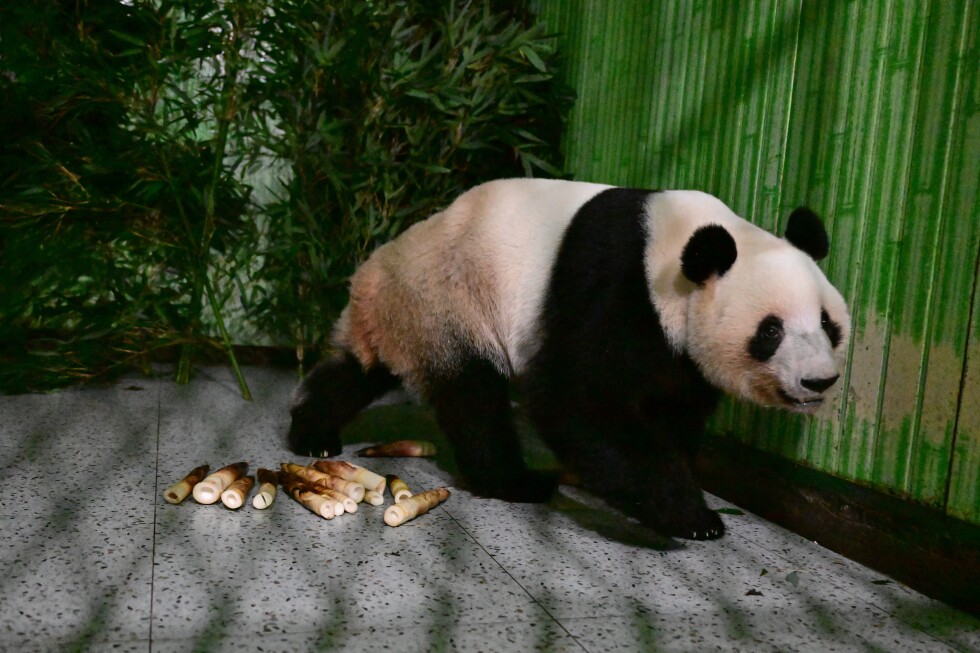
    BANGKOK (AP) — Japan has entered its first panda-free period in fifty years following the departure of its last remaining giant pandas, Xiao Xiao and Lei Lei, who have been repatriated to China. This development occurs during a significant downturn in Sino-Japanese relations, primarily fueled by Japan’s current Prime Minister’s position on Taiwan, which Beijing considers a breakaway province. The strained diplomatic climate suggests that new panda loans to Japan are improbable in the near future.

    The twin pandas, born in 2021 at Tokyo’s renowned Ueno Zoo, garnered a massive and devoted following. Thousands of admirers visited the zoo for a final glimpse before the bears began their journey. This practice of panda diplomacy dates back to 1972 when China first gifted pandas to Japan to commemorate the normalization of diplomatic relations. For decades, China has strategically employed these charismatic animals as instruments of soft power and diplomatic goodwill—a gesture that can be withdrawn when bilateral relations become contentious.

    State broadcaster CCTV documented the arrival of Xiao Xiao and Lei Lei in crates at a facility in Sichuan province, the heartland of China’s giant panda conservation efforts. According to a statement from the China Conservation and Research Center for the Giant Panda, the animals arrived safely early Wednesday morning. They will now undergo a standard quarantine period at the research center. Under China’s long-standing policy, all pandas loaned to foreign nations, including any offspring born abroad, remain the property of China.