博客

  • The Datong Code EP.3 | Intangible cultural heritage micro-drama series | PKU presents

    The Datong Code EP.3 | Intangible cultural heritage micro-drama series | PKU presents

    Peking University has released the third installment of its groundbreaking micro-drama series ‘The Datong Code,’ showcasing China’s intangible cultural heritage through an immersive narrative experience. The latest episode transports viewers to the breathtaking Hanging Temple, an architectural marvel clinging precariously to cliff faces where wooden beams defy gravity and prayer bells resonate through the mountain voids.

    The narrative intensifies as protagonist Kai discovers a crucial clue carved into porous volcanic rock—a silent, watchful representation of the mythical Monkey King Wukong. This discovery occurs just as hunters close in, forcing Kai and his protector Yuwen through a tense chase across the temple’s shifting stairways and shadowed corridors. The cinematic sequence masterfully builds suspense while highlighting the temple’s intricate architecture.

    This innovative series represents a significant advancement in cultural preservation, blending entertainment with educational elements to bring China’s rich heritage to global audiences. The production demonstrates Peking University’s commitment to using contemporary storytelling techniques to safeguard traditional culture, making ancient wonders accessible to modern viewers through dramatic narrative and stunning visual representation.

    The episode concludes with a compelling question about the next elemental discovery, maintaining viewer engagement while promising further exploration of China’s cultural treasures in subsequent installments.

  • Drone video from inside a Fukushima reactor shows a hole in pressure vessel, likely fuel debris

    Drone video from inside a Fukushima reactor shows a hole in pressure vessel, likely fuel debris

    In a groundbreaking exploration, micro-drones have captured unprecedented footage from within the devastated Fukushima Daiichi nuclear power plant, revealing critical new details about the 2011 meltdown’s aftermath. The remotely operated drones, measuring just 12 by 13 centimeters and weighing only 95 grams, successfully navigated the highly radioactive environment of Unit 3’s reactor during a two-week reconnaissance mission.

    The newly released video evidence shows a substantial breach in the steel pressure vessel’s base, with substantial deposits of what experts believe to be melted nuclear fuel debris suspended from the damaged structure. This marks the first direct observation of the reactor vessel’s bottom since the catastrophic meltdown triggered by the March 2011 earthquake and tsunami that crippled Japan’s northeastern coast.

    Tokyo Electric Power Company Holdings (TEPCO), the plant’s operator, deployed these specialized drones to gather visual documentation, radiation measurements, and three-dimensional mapping data from the previously inaccessible containment chamber. The footage reveals extensively damaged internal structures, including ruptured tubes and formations resembling large icicles of solidified nuclear material.

    According to TEPCO spokesperson Masaki Kuwajima, the mission provided ‘valuable data that can be used for our future internal investigations and to develop melted fuel debris removal strategy.’ The three damaged reactors collectively contain approximately 880 tons of highly radioactive melted fuel debris, presenting extraordinary technical challenges for eventual cleanup operations.

    The successful drone deployment represents significant progress from earlier robotic probes, including an underwater investigation nearly a decade ago that yielded limited visual information. TEPCO plans additional remote-controlled missions and sampling operations to analyze the melted fuel composition and develop specialized robotics for the complex removal process, which experts anticipate could require several decades to complete.

  • OpenClaw AI goes viral in China, raising cybersecurity fears

    OpenClaw AI goes viral in China, raising cybersecurity fears

    China is experiencing a technological transformation as OpenClaw, an open-source AI agent, sweeps across the nation with capabilities extending far beyond conventional chatbots. Originally known as Moltbot and Clawdbot, the system can autonomously manage emails, coordinate schedules, and execute financial transactions on behalf of users. This surge in adoption, significantly accelerated by promotional campaigns from tech giants Tencent and Alibaba, reflects a global shift toward action-oriented AI systems first observed in the United States earlier this year.

    The phenomenon, colloquially termed ‘raising lobsters’ in reference to the project’s crustacean mascot, has triggered intense debate within both industry and government circles regarding governance frameworks, security safeguards, and the inherent risks of delegating sensitive tasks to software operating with limited transparency. China’s Ministry of State Security issued unprecedented guidelines Tuesday, warning that while OpenClaw delivers efficiency gains, it simultaneously creates novel vulnerabilities through its broad permissions and cross-platform interactions.

    Security experts emphasize that these AI agents lack professional maintenance protocols and patching mechanisms, making them susceptible to malicious plugins that can bypass controls and exfiltrate sensitive data with stealth exceeding traditional trojans. The National Computer Network Emergency Response Technical Team had previously alerted on March 10 about OpenClaw’s vulnerability to ‘prompt injection’ attacks, where hidden instructions trick the AI into harmful actions.

    Unlike static large language models such as ChatGPT, OpenClaw represents a new class of agentic AI that connects messaging platforms, language models, email accounts, storage devices, and e-wallets to execute end-to-end tasks with minimal human intervention. Its open-source nature and local deployment capability provide greater flexibility than proprietary alternatives like Beijing-based Manus, but also introduce greater complexity and security responsibilities.

    The rapid adoption has exposed critical security gaps, with many users deploying the technology without basic safeguards. Security professionals recommend treating AI agents as digital employees with strict governance, implementing least privilege access, encryption, audit logs, and sandboxed virtual environments. As US tech giants advance similar capabilities through partnerships like Apple-Google’s integration of Gemini models, China faces urgent regulatory challenges in establishing AI governance comparable to the EU’s comprehensive AI Act.

  • New Zealand wins the toss and bowls in the 3rd T20 against South Africa

    New Zealand wins the toss and bowls in the 3rd T20 against South Africa

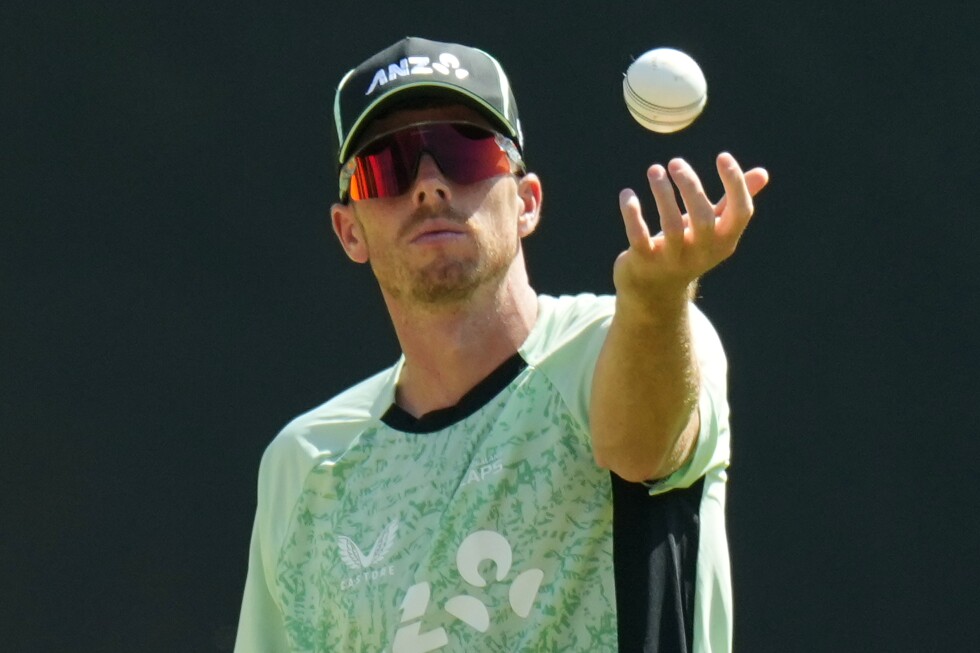
    AUCKLAND, New Zealand — The decisive third match of the Twenty20 cricket series between New Zealand and South Africa commenced at Eden Park on Friday, with the five-game contest perfectly poised at 1-1. New Zealand skipper Mitchell Santner seized the initiative at the toss, electing to field first in a strategic move aimed at utilizing the pitch conditions.

    The series momentum has swung dramatically. South Africa initially dominated, securing a convincing seven-wicket victory in the opening match. New Zealand responded emphatically, leveling the series with a commanding 68-run triumph in the second encounter, setting the stage for a high-stakes showdown in Auckland.

    Team selections revealed tactical adjustments from both camps. The Proteas introduced right-arm pace bowler Lutho Sipamla, replacing Ottneil Baartman in their bowling attack. The Black Caps, meanwhile, made a single change to their lineup, recalling all-rounder Bevon Jacobs to the side in place of Josh Clarkson.

    The confirmed lineups for the crucial fixture are:

    New Zealand: Devon Conway, Tom Latham, Tim Robinson, Nick Kelly, Bevon Jacobs, Mitchell Santner (captain), James Neesham, Cole McConchie, Kyle Jamieson, Ben Sears, Lockie Ferguson.

    South Africa: Wiaan Mulder, Tony de Zorzi, Connor Esterhuizen, Rubin Hermann, Jason Smith, Dian Forrester, George Linde, Gerald Coetzee, Keshav Maharaj (captain), Nqobani Mokoena, Lutho Sipamla.

    The outcome of this match grants the winner a significant psychological and tactical advantage heading into the final two games of the closely fought series.

  • Awesome foursome: Panthers put on terrifying masterclass as wingers combine for five moments of magic

    Awesome foursome: Panthers put on terrifying masterclass as wingers combine for five moments of magic

    The Penrith Panthers have delivered a commanding statement to the National Rugby League (NRL) with a spectacular 40-4 demolition of the Sydney Roosters at Allianz Stadium, solidifying their position as the team to beat in the 2024 premiership race. The match showcased an exhibition of offensive brilliance and defensive mastery that left the Roosters reeling.

    While winger Brian To’o produced an early contender for Try of the Year with an extraordinary double-kick effort that left defenders baffled, it was his counterpart Tom Jenkins who stole the spotlight with a phenomenal four-try performance. Jenkins’ remarkable haul brings his season total to eight tries in just three games, marking an incredible return to form after his disappointing finals demotion last season.

    The Panthers’ offensive explosion was complemented by an impregnable defense that has conceded a mere 10 points across their opening three matches. The team’s strategic dominance was evident during a devastating 12-minute period where they scored four unanswered tries, completely dismantling the Roosters’ game plan.

    Nathan Cleary demonstrated why he remains the league’s premier playmaker, orchestrating attacks with surgical precision while consistently evolving his ball-playing capabilities. The performance was further highlighted by Paul Alamoti’s blistering speed that created scoring opportunities, including a perfectly executed play that resulted in a Dylan Edwards try.

    Despite the Roosters’ early promise with a fourth-minute try from Robert Toia and multiple first-half line breaks, Trent Robinson’s squad proved incapable of penetrating Penrith’s disciplined defensive structure. The highly-touted Roosters spine featuring James Tedesco, Sam Walker, Reece Robson, and Daly Cherry-Evans failed to make significant impact against the Panthers’ relentless pressure.

    The comprehensive victory signals a dramatic resurgence for Penrith, who finished at the bottom of the table after 12 rounds last season, now appearing stronger than ever as they pursue redemption and their fifth premiership title.

  • Australian shares tumble for third week on recession, rate hike fears

    Australian shares tumble for third week on recession, rate hike fears

    Australia’s financial markets concluded their third consecutive week in negative territory as mounting concerns over interest rate hikes and spiraling energy costs triggered recession warnings from leading economists.

    The benchmark S&P/ASX 200 index declined 69.40 points (0.82%) to settle at 8428.40, while the broader All Ordinaries index dropped 62.40 points (0.72%) to 8628.30 during Friday’s trading session. Seven of the eleven market sectors finished in negative territory, with materials and financial stocks leading the downturn with losses of 1.61% and 1.09% respectively.

    Mining giants faced significant pressure, with BHP retreating 1.82% to $47.47, Rio Tinto plunging 2.93% to $146.92, and Fortescue declining 0.42% to $18.96. The banking sector similarly struggled, as Commonwealth Bank fell 0.9% to $175.64, NAB dropped 2.25% to $45.57, Westpac decreased 1.05% to $40.70, and ANZ surrendered 1.13% to $36.60.

    The healthcare sector provided a rare bright spot, advancing 1.20% with CSL gaining 2.88% to $138.50, Sigma Healthcare surging 4.51% to $2.78, and Telix Pharmaceuticals climbing 2.74% to $12.75.

    Market analysts attributed the sustained sell-off to growing anxiety over energy-driven inflation and anticipated monetary tightening. AMP’s Head of Investment Strategy Shane Oliver warned that soaring fuel prices, currently averaging $2.38 per liter in capital cities, could reduce household disposable income by approximately $103 monthly when combined with recent mortgage rate increases.

    IG Market analyst Tony Sycamore noted that money markets now price in 67 basis points of additional rate hikes from the Reserve Bank of Australia by year-end, potentially elevating the cash rate to 4.85%—a level not seen since November 2008. This monetary policy trajectory aligns with hawkish responses from major central banks globally, including the US Federal Reserve and European Central Bank.

    In corporate developments, Coles Group edged 0.75% higher to $21.59 after announcing more frequent fuel levy reviews, while Humm Group shares jumped 2.84% to $0.72 following regulatory review applications regarding takeover disclosures.

  • Israel strikes ‘decimated’ Iran as war roils markets

    Israel strikes ‘decimated’ Iran as war roils markets

    The Middle East conflict entered a dangerous new phase on Friday as Israel launched fresh strikes against Tehran, with Prime Minister Benjamin Netanyahu declaring Iran was being “decimated” in the ongoing hostilities. The Israeli military confirmed targeting “infrastructure of the Iranian terror regime” in the capital, which has endured near-daily bombardment since the war began on February 28.

    Netanyahu asserted at a press conference that the conflict had effectively neutralized Iran’s uranium enrichment capabilities and ballistic missile production as the confrontation approaches its fourth week. “We are winning and Iran is being decimated,” the Israeli leader stated, while predicting the war would conclude “a lot faster than people think” without providing specific timelines.

    The Iranian response has intensified with retaliatory attacks on Israel and Gulf nations, particularly targeting energy infrastructure that has triggered global concerns about potential energy supply disruptions. Several explosions were reported over Jerusalem Thursday night, while the United Arab Emirates, Kuwait, and Saudi Arabia all reported missile and drone attacks during the Eid al-Fitr observances marking Ramadan’s conclusion.

    The conflict’s regional expansion has proven devastating for Lebanon, where health officials report over 1,000 fatalities from Israeli airstrikes targeting Hezbollah strongholds. Lebanese President Joseph Aoun has renewed calls for truce negotiations, which French officials indicated would require Israel’s participation.

    Energy markets have experienced significant volatility following Iranian missile strikes on Qatar’s massive Ras Laffan natural gas complex, which Qatar’s state energy company estimates could cause $20 billion in annual lost revenue and require five years for complete restoration. The attacks have driven natural gas prices upward and maintained oil prices near $100 per barrel, though crude prices saw modest relief during early Asian trading in response to Netanyahu’s optimistic timeline predictions.

    The human toll continues to mount across the region, with many families canceling traditional Eid celebrations amid displacement and economic hardship. Beirut resident Aziza Ahmad captured the somber mood: “There’s nothing to celebrate. Maybe it’s different for the rich, but the joy of Eid is missing here… We have no money, and the displaced people can’t even go back home.”

    International diplomatic efforts remain complex, with former President Trump acknowledging coordination with Israel while distancing himself from specific operations. Pentagon officials indicated no clear endpoint for the conflict, emphasizing that resolution would occur “at the president’s choosing” when strategic objectives are achieved.

  • Nasa’s Moon rocket Artemis rolls back to pad for possible April launch

    Nasa’s Moon rocket Artemis rolls back to pad for possible April launch

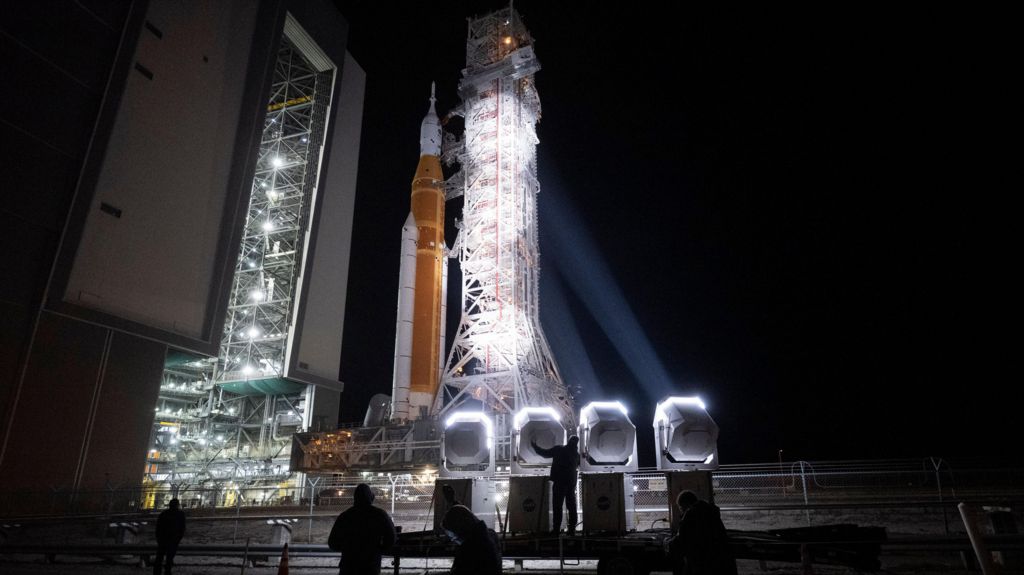
    NASA has initiated the meticulous transport of its colossal Space Launch System (SLS) rocket for a second rollout to Launch Pad 39B at Florida’s Kennedy Space Center. This critical maneuver follows extensive repairs to resolve a technical issue that previously halted launch preparations.

    The 98-meter (322-foot) rocket, paired with the Orion spacecraft, embarked on its slow four-mile journey from the Vehicle Assembly Building (VAB) to the coastal launch complex. The massive Crawler-Transporter-2, a veteran NASA vehicle dating back to 1965, carries the approximately 5,000-tonne assembly at a deliberate pace not exceeding 1 mph. This cautious speed minimizes structural stress on the multi-billion dollar system during transit.

    Engineering teams recently completed repairs addressing a helium system malfunction in the rocket’s upper stage that forced the mission’s postponement in March. Specialists working within the VAB replaced suspect components and renewed batteries in critical systems before conducting comprehensive retests.

    Upon reaching the launch pad, technicians will perform several days of verification procedures including reconnecting the launch tower, conducting pressure tests on the revised helium system, and executing simulated countdown sequences using the actual flight computers and networks.

    The Artemis II mission represents humanity’s first crewed lunar flyby in over five decades, featuring astronauts Reid Wiseman, Victor Glover, Christina Koch, and Jeremy Hansen. The crew has entered pre-flight quarantine protocols and will participate in final rehearsals at Kennedy Space Center as NASA targets early April launch opportunities beginning April 1st.

    Mission managers will review all test data before making a final launch decision. If successful, this ten-day mission will orbit the Moon’s far side before returning to Earth, paving the way for subsequent Artemis missions including planned lunar surface landings.

  • Fire at South Korean auto parts factory injures at least 53

    Fire at South Korean auto parts factory injures at least 53

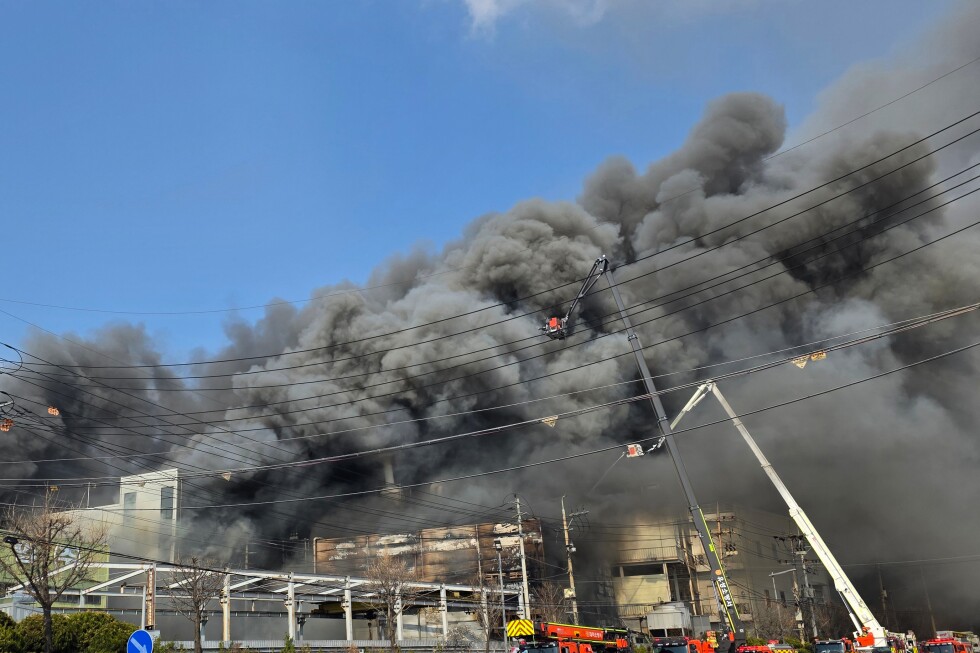
    A major industrial fire erupted at an automotive components manufacturing facility in Daejeon, South Korea, on Friday afternoon, resulting in significant casualties and prompting a large-scale emergency response. The incident, which occurred at approximately 1:17 p.m. local time, has left at least 53 individuals injured, with 24 sustaining serious wounds, according to Daedeok District Fire Chief Nam Deuk-woo.

    Emergency authorities continue search operations for 14 individuals potentially trapped within the facility, utilizing mobile signal tracking technology to locate missing personnel. While officials have not confirmed any life-threatening conditions among the injured, witness accounts describe a rapid escalation of the blaze accompanied by what sounded like an explosion, leading to dense gray smoke enveloping the industrial complex.

    The structural integrity of the affected building has been severely compromised, preventing firefighting teams from entering due to collapse risks. Response efforts have prioritized containing the fire’s spread to adjacent facilities and securing hazardous chemicals present on-site.

    Injury patterns reveal varied trauma mechanisms, with some victims suffering from smoke inhalation while others sustained injuries from emergency building evacuations. The incident has mobilized substantial resources, including over 250 emergency personnel and approximately 100 specialized vehicles deployed to the scene.

    South Korean President Lee Jae Myung has ordered full mobilization of all available personnel and equipment to support containment and rescue operations. The cause of the fire remains under investigation by authorities, who have not yet determined the exact sequence of events that led to the rapid propagation of the blaze.

  • Matildas battle Japan in do-or-die Asian Cup final to chase ‘once in a lifetime’ glory

    Matildas battle Japan in do-or-die Asian Cup final to chase ‘once in a lifetime’ glory

    Australian football stands on the precipice of history as the Matildas prepare for their decisive Women’s Asian Cup final confrontation against Japan at Sydney’s Olympic Stadium. The championship match represents more than mere silverware—it symbolizes the culmination of a sixteen-year quest for major tournament glory for Australia’s celebrated golden generation of women’s footballers.

    The pathway to Saturday’s final saw Australia narrowly overcome reigning champions China 2-1 in a tense semi-final encounter, while Japan delivered a commanding 4-1 victory against South Korea, setting the stage for a classic tactical showdown between two footballing powerhouses.

    Defender Ellie Carpenter articulated the team’s profound motivation, characterizing the occasion as a “once in a lifetime opportunity” for squad members approaching the twilight of their international careers. “It’s been 16 years since we lifted that trophy,” Carpenter reflected. “This will probably be the last semi-final we play on home soil in a major tournament. For us footballers, we want to inspire the next generation and we did that at the World Cup—this is another opportunity for us tomorrow.”

    Head coach Joe Montemurro emphasized the significance beyond athletic achievement, noting: “It’s a real important point for football but also for an amazing generation of players that have an opportunity that they have worked so hard for. I am so excited for them but more importantly for the nation and what it means.”

    The final is anticipated to draw a capacity crowd to the 83,000-seat Olympic Stadium, though ticketing availability scans revealed remaining vacancies hours before kickoff. This follows scrutiny of attendance figures during the Perth semi-final, where 35,170 spectators populated a stadium designed for 60,000, creating visual gaps in broadcasting coverage.

    Montemurro dismissed underdog narratives ahead of the final, asserting: “There are no favorites in the final. Japan seem to find solutions in whatever situation you throw at them. As much of a great team as they are, they do have a couple of weaknesses. If we find some continuity and some rhythm with the ball we could do some good things in the game.”

    The absence of captain Sam Kerr from pre-match media engagements raised eyebrows, but Montemurro assured journalists the team was “sharing the love” with press responsibilities and confirmed Kerr’s full fitness and readiness.

    Transport NSW advised spectators to utilize complimentary public transportation included with match tickets, anticipating significant congestion from concurrent sporting events including the GWS Giants versus St Kilda AFL match at nearby ENGIE Stadium.

    Meteorological conditions may introduce additional challenges, with forecasts predicting intermittent showers throughout Saturday and potential afternoon thunderstorms.

    Victory would provide crucial momentum building toward next year’s FIFA Women’s World Cup in Brazil, cementing the Matildas’ legacy while inspiring future generations of Australian football talent.