博客

  • Macron pledges air defence as 13 killed in Russia, Ukraine strikes

    Macron pledges air defence as 13 killed in Russia, Ukraine strikes

    A sharp escalation of cross-border attacks has sent civilian casualties soaring to their highest level since the early weeks of Russia’s full-scale invasion of Ukraine, with France stepping in Saturday to commit additional air defense interceptor missiles to help Kyiv shore up its vulnerable skies. The new escalation comes as rescuers continued the grim work of clearing rubble from a destroyed Ukrainian shopping center one day after a Russian drone strike left 16 dead and three still missing there.

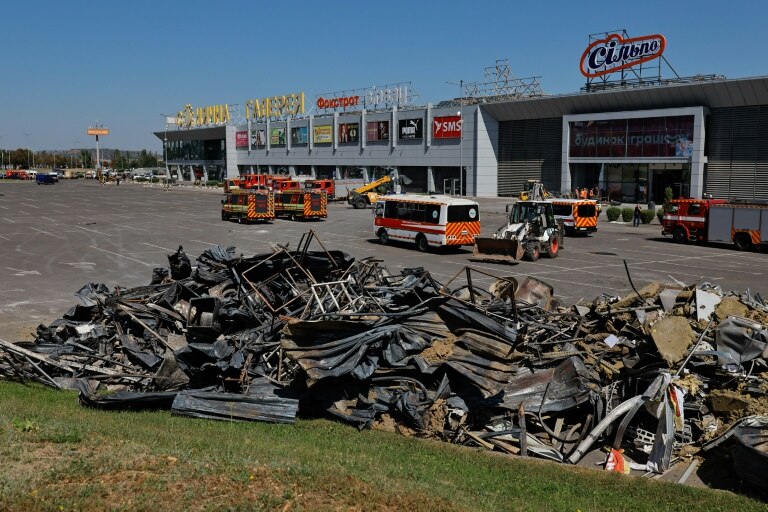
    Across both sides of the frontline, at least 13 people were killed in strikes that unfolded overnight Saturday and through the day: seven fatalities in Ukrainian territory, four inside Russia, and two more in Russia-annexed Crimea. In Kryvyi Rih, President Volodymyr Zelenskyy’s hometown, the aftermath of Friday’s attack on the crowded downtown shopping center stretched into a second day on Saturday. The strike, which the Ukrainian leader has condemned as a “cynical and despicable” double-tap attack, first ignited a massive blaze that sent bloodied survivors fleeing into the streets, then a second drone struck roughly 30 minutes later as first responders were beginning to arrive. On Saturday, mourners had already set up a makeshift memorial outside the gutted building, laying flowers and handwritten notes on the surrounding grass. Photos from the site show blackened goods still stacked on supermarket shelves beneath a cratered ceiling, surrounded by blown-out window frames and piles of twisted, charred metal cleared by recovery crews. Sixteen people have been confirmed dead, more than 100 wounded, and three remain unaccounted for, regional authorities reported.

    Elsewhere in Ukraine on Saturday, four people died in fresh strikes on the frontline Zaporizhzhia region, while two people were killed in attacks on the eastern outskirts of Kyiv near Boryspil. That midday ballistic missile strike came while German Foreign Minister Johann Wadephul was in the capital for meetings with Zelenskyy and his Ukrainian counterpart, highlighting the persistent threat even to the country’s seat of government. In southern Russia’s Krasnodar region, a Ukrainian drone strike hit a residential home, killing two children and hospitalizing their parents, regional governor Veniamin Kondratyev called the attack “vile and cynical.”

    The surge in deadly attacks has underscored Ukraine’s growing critical shortage of advanced air defense systems, particularly the U.S.-made Patriot interceptors capable of shooting down the fast, hard-to-defend ballistic missiles Russia has increasingly relied on in recent months. These super-weapons travel faster than the speed of sound and reach their targets in minutes, leaving Kyiv residents too little time to reach underground shelters in most cases.

    Making the announcement of France’s new support on social media platform X, French President Emmanuel Macron emphasized that “it is crucial to provide Ukraine with all the necessary means to defend its skies and thwart this aggression.” The new interceptors will be brought to Ukraine ahead of a key meeting this coming Monday of the Coalition of the Willing, a air defense initiative co-led by France and Britain that brings together dozens of Kyiv’s international allies. The meeting will focus on new steps to ramp up diplomatic and economic pressure on Moscow to end its illegal invasion.

    Diplomatic efforts to end the conflict have largely stalled in recent months. The United States, which previously brokered multiple rounds of direct negotiations between Kyiv and Moscow, has shifted its focus to other regional tensions, particularly its escalating conflict with Iran, and senior officials have privately acknowledged that the conflict has proven far more intractable than previous U.S. leadership once predicted. The United Nations has confirmed that the total civilian death toll across the conflict zone has climbed to its highest monthly level this year since the first months of the 2022 full-scale invasion, a grim marker of the expanding human cost of the 4.5-year conflict.
  • Japan’s leader Takaichi explains why she spends long hours in seclusion at her official residence

    Japan’s leader Takaichi explains why she spends long hours in seclusion at her official residence

    TOKYO – Japanese Prime Minister Sanae Takaichi has pushed back against growing media speculation about her seclusion from official and parliamentary circles, defending her decision to base more of her daily work out of Japan’s historic prime ministerial official residence to maximize governmental efficiency.

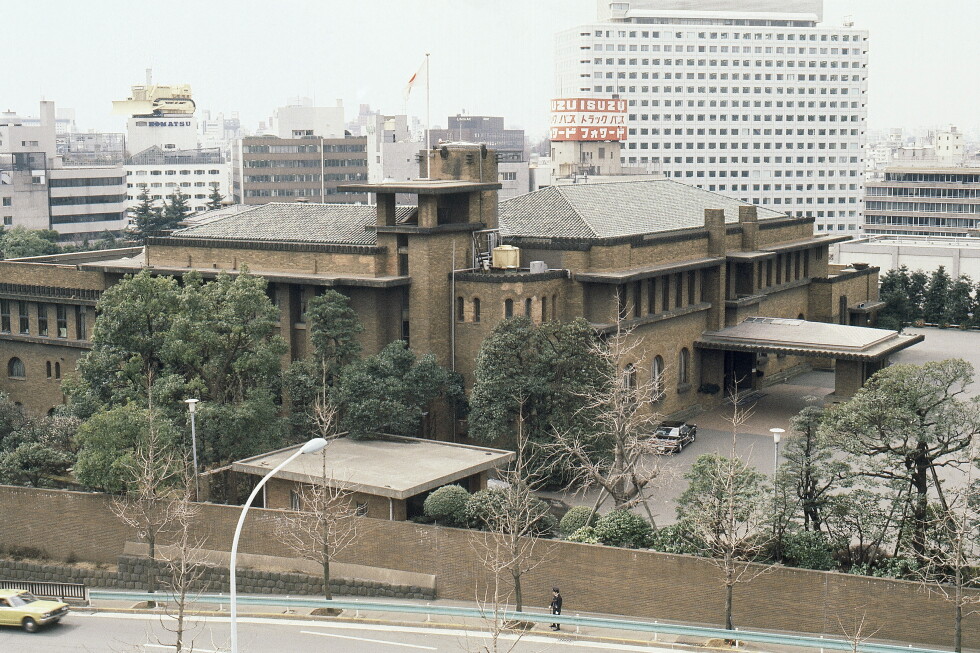
    Takaichi, Japan’s first female prime minister, relocated to the brick-and-stone kotei – the official title for the residence – in December this year. Completed in 1929, the property originally served as Japan’s prime ministerial office before a dedicated modern government building was constructed directly adjacent to it.

    In a post on the social platform X, Takaichi outlined that the residence’s proximity to the main prime minister’s office eliminates her daily commute, allowing her to respond instantly to national emergencies when they arise. She has upgraded the residence’s office infrastructure to accommodate both in-person and remote meetings with her staff at any time, even outside standard government working hours, and still brings briefing documents back to her private home for additional review after hours. “To me, the official residence is also a workplace,” Takaichi emphasized.

    The prime minister’s working arrangement has not come without controversy, however. Recent comments from Takaichi herself have sparked public backlash over her approach to work-life balance and gender equity. After sharing on X that she regularly gets only zero to three hours of sleep each night, balancing her heavy prime ministerial duties alongside homemaking responsibilities, critics argue she is setting an unhealthy, unrealistic standard for working people across Japan that undermines progress on gender equality.

    Takaichi’s approval ratings have already plummeted in recent weeks over a slate of unpopular policy decisions. Most notably, her push to revise Japan’s Imperial House Law to entrench the male-only imperial succession system has drawn widespread condemnation, while she has faced growing pressure for delaying targeted economic relief measures to counter stubbornly rising consumer prices across the country.

    Media reports have further fueled scrutiny of the prime minister, claiming she has increasingly avoided parliamentary sessions, holed up in the official residence during nights and weekends, and engages in far less face-to-face communication with fellow lawmakers and senior government officials than any of her predecessors. Rather than holding traditional press briefings with reporters, Takaichi now mostly shares policy updates and public comments directly through her X account.

    Even the residence itself carries unusual historical context: it was the site of two violent coup attempts in the 1930s, and longstanding local legend holds the building is haunted by restless ghosts. For Takaichi, though, paranormal activity has not been a problem – instead, common household pests have been her biggest surprise. “I’ve never seen a ghost, but I have often screamed because of my encounters with cockroaches,” she admitted. “I was shocked when a cockroach ran past my feet.”

  • Dozens of people abducted in attacks on villages in Nigeria, police say

    Dozens of people abducted in attacks on villages in Nigeria, police say

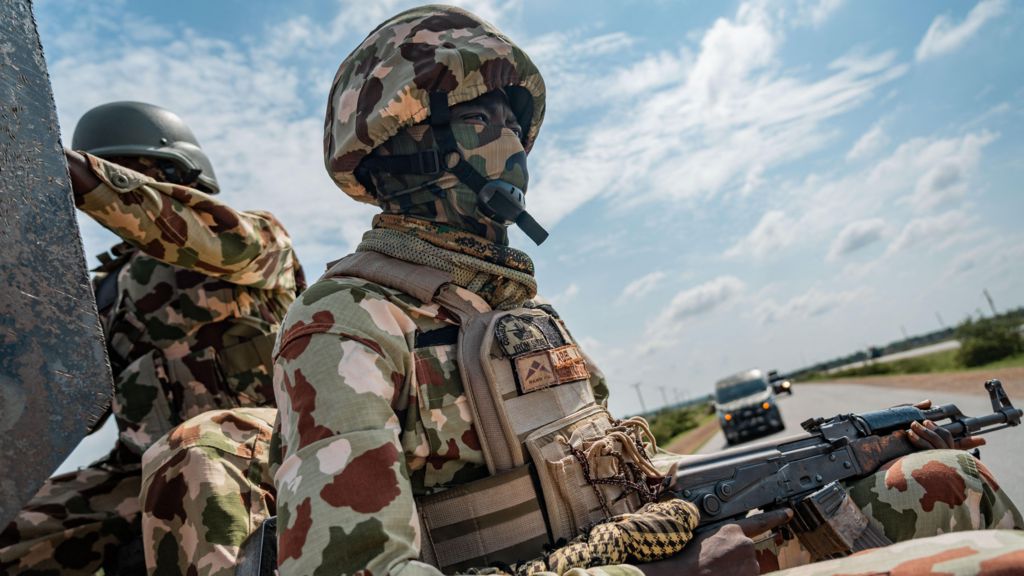
    Fresh coordinated attacks on multiple rural communities in Nigeria’s central Niger State have left at least 40 people dead and more than 100 others abducted, according to official police statements and local resident accounts obtained by the BBC. The violence, which unfolded shortly after Friday congregational prayers in the Borgu Local Government Area, was carried out by assailants dressed in military-style uniforms, targeting four villages: Dekara, Gidan Zana, Sabon Gida, and Masaka.

    Police spokesperson Wasiu Abiodun confirmed that authorities are pointing to criminal bandit gangs as the primary suspects behind the assault. These groups have long operated across large swathes of northern Nigeria, carrying out kidnappings for ransom, looting, and targeted violence against isolated civilian communities. Local resident accounts detail a methodical attack: gunmen first entered Dekara immediately after prayers, rounded up residents, and forced them into nearby forested hideouts before advancing to adjacent villages to repeat the assault. Local state legislator Jafar Muhammad Shetiman Borgu later verified to the BBC that the attacks had indeed taken place.

    This latest incident marks an escalation of violent activity in the remote Borgu region, a strategically located area that shares borders with Kebbi State, Kwara State, and the Republic of Benin. The attack is unrelated to an earlier wave of abductions in the same local government area earlier this month, when Nigerian security forces rescued 145 people kidnapped from four other Borgu villages. That operation was part of a larger nationwide security push that freed a total of 308 abducted people across the region, including more than 160 captives taken from communities in neighboring Kwara State.

    Beyond the persistent threat from criminal bandit gangs, the Borgu area has also increasingly become a hub for activity by jihadist insurgent groups that have expanded their footprint from northwestern Nigeria into cross-border regions. Local officials report that jihadist fighters have begun entering civilian communities in recent months to impose strict religious restrictions, and Shetiman warned that the latest violence has sparked new fears that gunmen are actively working to recruit vulnerable young people into their ranks.

    The security crisis in Borgu has deepened over recent weeks: just seven days before this latest attack, local officials recorded more than 20 civilian deaths in another violent incident in the local government area. The region has long been a hotbed for mass abductions, including a high-profile 2025 November incident where gunmen seized more than 200 school pupils from a secondary school in Papiri, Niger State. Those children were eventually released after a month of captivity.

    Even after multiple sustained military and police counter-insurgency operations, large portions of Niger State remain largely inaccessible to security forces. Vast, unmonitored forested areas provide ideal hideouts for armed groups, who use these safe havens to launch regular raids on undefended, isolated rural communities. This persistent security gap has allowed violence and kidnapping for ransom to become endemic across north central Nigeria, posing one of the most pressing internal security challenges to the Nigerian government.

  • Watch: Moment robot attempts to beat Usain Bolt’s 100m record

    Watch: Moment robot attempts to beat Usain Bolt’s 100m record

    A landmark moment for humanoid robotics development unfolded recently at China’s World Humanoid Robot Games, where a bipedal android came achingly close to beating Usain Bolt’s iconic 100-meter world record, according to Honor, the leading Chinese smartphone manufacturer that backed the project. The unprecedented attempt marks one of the most high-profile milestones in modern humanoid robot mobility, showcasing how far engineering teams have pushed the boundaries of robotic speed and balance over the past decade.

    Footage captured at the competition shows the humanoid robot powering through the 100-meter straight track, with its synchronized leg movements and dynamic balance control allowing it to hit a top speed that came closer to Bolt’s long-standing record than any other humanoid robot in history. While official independent verification of the robot’s final time is still pending, Honor’s announcement has already sent ripples of excitement through the global robotics and tech communities, highlighting the rapid progress in artificial intelligence, actuator design, and locomotion control for humanoid systems.

    The World Humanoid Robot Games, hosted annually in China, brings together leading research institutions and tech firms to test the latest capabilities of humanoid robots across a range of human-centric tasks, from running and jumping to obstacle navigation and complex manipulation. This 100-meter race challenge was designed specifically to push developers to prioritize speed and stability, two of the most persistent technical hurdles for bipedal robots that aim to match human mobility.

    Industry analysts note that advances in humanoid running speed do not just serve as a publicity stunt—they have direct practical implications for the future deployment of humanoid robots in real-world scenarios, including emergency response, industrial logistics, and personal assistance, where the ability to navigate varied terrain quickly is a critical requirement.

  • Fourteen killed in strike on Myanmar monastery

    Fourteen killed in strike on Myanmar monastery

    A devastating early Friday air strike carried out by Myanmar’s military on a rural monastery in central Myanmar has left 14 elderly civilians dead and multiple monks injured, according to accounts from opposition fighters and local emergency responders. The fatal attack, which hit the religious site twice, unfolded around 9 a.m. local time in Chhay Hoe O village, Myaung township of Sagaing region — roughly 70 kilometers west of the country’s second-largest city Mandalay, AFP reports. At the time of the strike, dozens of civilian worshippers had gathered at the monastery to take part in a meditation retreat marking the start of Buddhist Lent, a major annual observance in the majority-Buddhist nation. Local rescue workers confirmed all 14 people killed in the attack were between 50 and 70 years old. The casualty breakdown, shared by pro-democracy opposition fighter Nway Oo Myaung with AFP, counts 11 men and three women among the dead. Five victims hailed from the targeted village itself, while the other nine traveled from a nearby adjacent township. One anonymous opposition fighter who participated in post-strike search and rescue operations described a chaotic, dangerous scene. When first responders arrived to pull survivors from the rubble of the damaged monastery, military aircraft returned to carry out a second bombing run, putting rescue teams directly at risk. Myanmar has been mired in widespread civil conflict since the 2021 military coup that removed the elected government led by Aung San Suu Kyi from power. The entire country has operated under military-imposed martial law since the putsch, and the national military has repeatedly faced accusations of targeting civilian infrastructure and populated areas in its campaign against anti-junta opposition forces. Military officials have consistently denied these claims, asserting that their operations only target what they classify as legitimate military objectives. As of Saturday, Myanmar’s military leadership has not issued any public comment in response to reports of the monastery attack.

  • 7 people, including 2 police officers, die following a head-on collision in northeast England

    7 people, including 2 police officers, die following a head-on collision in northeast England

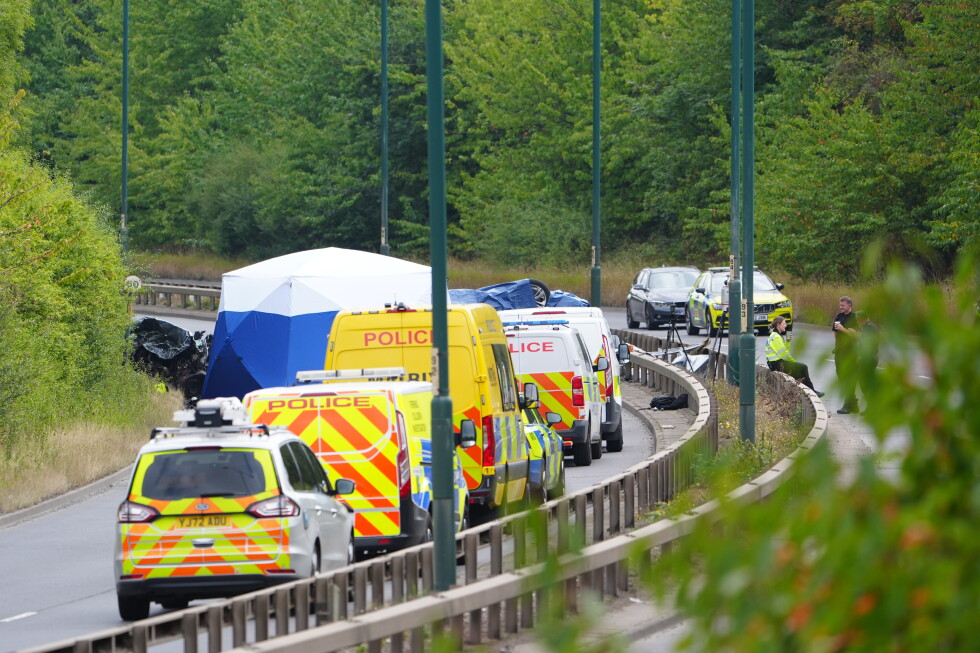
    In the early hours of Saturday, a devastating wrong-way collision on a major highway in northeast England left seven people dead, including two serving police officers, in what has become one of the region’s worst road incidents in recent years.

    The crash unfolded at 3:39 a.m. on the A66 near Middlesbrough, according to a statement from Cleveland Police. Investigators have confirmed that a Volkswagen Passat, which had five civilians on board, was traveling against the flow of traffic when it struck a police vehicle head-on. The police car was moving in the correct direction along the highway at the time of the impact.

    All seven people inside both vehicles were pronounced dead immediately at the crash site. Formal identification processes are still ongoing for some of the deceased, while authorities have already notified the families of those who have been positively identified. The police force confirmed that specialized trauma support is being provided to all affected family members as they navigate this unimaginable loss.

    Local MP Anna Turley has confirmed that two separate bodies are leading a full probe into the incident: Cleveland Police is conducting the core accident investigation, with oversight from the Independent Office for Police Conduct, the national watchdog that oversees police conduct in England and Wales. In a statement following the crash, Turley called for patience and respect for the ongoing investigative process, urging the public and media to refrain from unsourced speculation while families grieve.

    The collision has sent shockwaves through the local community, with tributes already starting to emerge for the two fallen officers, who died in the line of duty.

  • US envoy to Turkey: ‘Israel occupies Golan despite UN resolutions, international order’

    US envoy to Turkey: ‘Israel occupies Golan despite UN resolutions, international order’

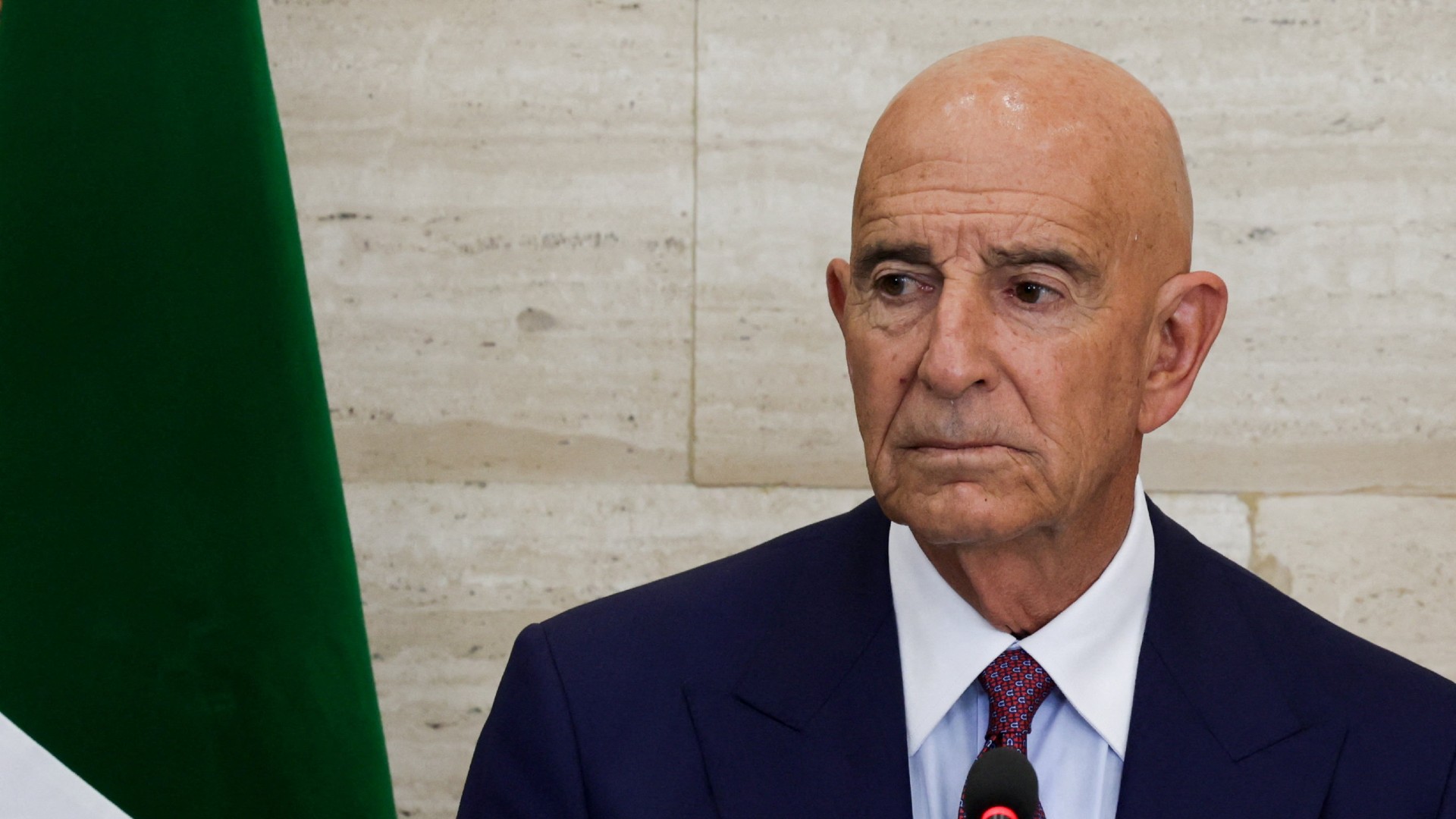
    A rare public split between a senior U.S. diplomatic representative and existing White House policy has emerged after Tom Barrack, the current U.S. ambassador to Turkey, openly labeled Israel’s long-standing control of Syria’s Golan Heights as an unlawful occupation that directly violates United Nations resolutions and global international law.\n\nBarrack’s comments mark a stark departure from the official stance of the U.S. government under former President Donald Trump, who formally recognized Israeli sovereignty over the contested strategic plateau in 2019 — a move that was immediately rejected by most of the international community.\n\nLocated at the intersection of Israel, Syria, and southern Lebanon, the Golan Heights is a strategically critical highland region that Israel first seized from Syrian control during the 1967 Six-Day Middle East War. Israel unilaterally annexed the territory shortly after its capture, but this territorial claim has never received formal recognition from the broader global community. Binding UN Security Council Resolution 242, adopted shortly after the 1967 conflict, explicitly requires Israel to withdraw from all territories captured during the war, including the Golan Heights, the Gaza Strip, and the West Bank. Today, the Golan is home to approximately 20,000 Israeli settlers and 26,000 original Syrian inhabitants, most of whom are members of the Druze ethnic community who retain their Syrian national identity.\n\nBarrack made the contentious remarks during a wide-ranging interview with broadcaster Mario Nawfal, where he also discussed regional tensions over potential Israeli plans to annex additional Lebanese territory. On that topic, he argued that Israeli leaders recognize the international community would never allow such a move, noting that U.S. public and political support for Israel is gradually softening. ‘Even young Democrats are coming against them,’ he stated, adding that even former President Trump sought to carve out a moderate approach to the conflict. He added that upcoming Israeli national elections will likely reshape the country’s political and policy landscape, making any large-scale territorial annexation of Lebanese land even less feasible.\n\nReturning to the question of the Golan Heights, Barrack reaffirmed his assessment: ‘Now saying that, in the Golan with Syria, they still occupy the Golan against the UN resolutions, against all of the international order, which has said the Golan is Syria’s.’\n\nThe ambassador also addressed rising regional tensions following a recent Israeli air strike on Syria’s Abu al-Duhur air base, noting that the operation carried a significant risk of direct military confrontation between Israel and Turkey. He outlined multiple competing theories to explain what prompted the strike, which he described as ‘serious and worrying.’\n\nThe first theory he cited was unconfirmed Israeli intelligence that Turkish military assets were preparing to deploy to the base, a claim that has not been verified by subsequent checks. A second possibility is that Israeli forces detected unusual troop movements that other regional actors failed to pick up. Barrack called a third explanation the ‘probably most likely’ scenario: Israeli intelligence intercepted conversations indicating Turkey planned to expand its military training operations at the Abu al-Duhur base.\n\nHe also raised a more provocative possibility: that Israel deliberately baited Turkey by launching the strike without any prior notification to Ankara, as a test of Turkey’s response to Israeli military activity in the area. A final theory centers on internal coordination failure within Israel’s security establishment, suggesting the Israel Defense Forces, Mossad, and the prime minister’s office may have operated on conflicting intelligence assessments that led to the unplanned strike.\n\nBarrack warned that the risk of accidental escalation in the already volatile region carries severe consequences. ‘The unintended consequence of a mistake could be really consequential,’ he said, noting that Turkish forces could scramble fighter jets in response to an unannounced incursion with no advance knowledge of Israeli intentions, raising the risk of open conflict between the two military powers.\n\nBarrack also noted that reaching a diplomatic de-escalation of ongoing Israeli incursions into Lebanon remains challenging, as key decision-making power in the region is held by Iran and the Lebanese militant group Hezbollah, with no ongoing negotiations between all relevant parties.

  • ‘He was in hospital’: Bulldogs remain in finals hunt after Covid and injuries rock their team

    ‘He was in hospital’: Bulldogs remain in finals hunt after Covid and injuries rock their team

    The lingering impact of the COVID-19 pandemic continues to disrupt professional rugby league, with the Canterbury Bulldogs emerging as the latest club grappling with a wave of virus cases and injury setbacks ahead of a critical late-season clash. What initially looked like a lackluster, underperforming display against South Sydney Rabbitohs last week now has clear context: Bulldogs head coach Cameron Ciraldo has revealed five first-team players were silently battling active COVID-19 during that match, a revelation that explains the squad’s flat energy in a game with major finals implications.

    Against all odds, the injury and virus-stricken side turned in a complete 180-degree performance just seven days later, notching a dominant 44-point victory over the St. George Illawarra Dragons — the highest single-game point total the Bulldogs have put up all season. The dramatic turnaround has kept Canterbury’s faint finals hopes alive heading into the final two weeks of the National Rugby League (NRL) regular season, even as the squad navigated a cascade of off-field and on-field challenges that would have derailed most teams.

    Winger Jacob Kiraz, who turned in a shaky performance against the Rabbitohs with multiple uncharacteristic handling errors, returned to his best against the Dragons after playing through a painful calf tear for three straight weeks without a full training block. “We didn’t tell anyone, but he had a calf tear again and played for the last three weeks without training. So it’s not ideal, but it just shows the toughness of the guy,” Ciraldo told reporters post-match, adding that Kiraz’s first full week of preparation in weeks clearly showed in his performance. Utility Kurt Mann also left the Dragons clash with a groin injury, adding another name to the club’s growing treatment room list.

    Young forward Jacob Preston, who dominated headlines all week after reports emerged that he had rejected a three-year, $1.9 million contract extension from the club, put all off-field speculation aside to turn in a standout performance, scoring one try and setting up a second. What many fans did not know is that Preston spent days in hospital leading up to the match receiving intravenous treatment for an infected elbow, missing the final two full training sessions before game day. Ciraldo joked after the win, “He was in hospital with an infection, so he was on a drip over the last couple of days. Maybe we might have to do that next week as well because he played pretty well.”

    Halfback Lachlan Galvin, who set up Preston’s first-half try with a perfectly weighted short pass, brushed off questions about the contract saga and praised his teammate’s mental toughness. “He’s a gun. I love playing with Presto,” Galvin said. “That (the contract) is his business. I don’t really ask him much about that, but I love playing alongside him. He makes me look good, so that always helps.”

    Preston was far from the only Canterbury player battling illness through the week: team captain Stephen Crichton was among the five players who tested positive for COVID-19, marking the latest virus outbreak to hit an NRL club in the final stretch of the season. Ciraldo noted that mid-season disruptions like this are common across the league, but rarely make headlines, adding that he regretted being harsh on his squad after the poor Rabbitohs performance before learning about the virus cases. “These things happen in a footy season, every team goes through them, but a lot of them you don’t hear about,” Ciraldo said. “I was a bit harsh on the boys last week, and then you rock up Monday and about five of them have tested positive for Covid so no wonder they were a bit flat.”

    The challenges did not end there: playmaker Matt Burton rushed to his hometown of Dubbo mid-week following the death of his grandmother, but returned in time to take the field against the Dragons, shifting to the right edge to turn in one of his best performances of the year with two tries and multiple game-changing defensive stops.

    Canterbury still faces an uphill battle to qualify for the 2024 finals, needing a string of favorable results in the final two weeks to secure a spot. But Ciraldo and his players say the win over the Dragons proves the squad will not make excuses for their challenges, regardless of how severe they are. Galvin echoed that mindset after the match, joking that the sick players may have just earned a few extra rest days, and credited the club’s structured game plan for keeping the team competitive even when key players miss training. “I think we rocked up and a few of the boys were sick, but the way they played tonight, you wouldn’t know. I think a few of them just wanted a few days off training!” Galvin said. “When players come up and train with us in the NRL team, we’ve got a system in place that everyone knows what they’re kind of doing. So I don’t think it was that disruptive. I thought we all trained really well this week and were lucky enough to come out and show it in our performance.”

  • Joao Pedro signs new deal at Chelsea and takes on club’s ‘cursed’ No. 9 shirt

    Joao Pedro signs new deal at Chelsea and takes on club’s ‘cursed’ No. 9 shirt

    LONDON – In a move that cements his long-term future at one of England’s most iconic Premier League clubs, Brazilian striker Joao Pedro has agreed to an upgraded contract extension with Chelsea that will keep him at Stamford Bridge until 2034, the club announced Saturday. The forward has also inherited the Blues’ famed – and notoriously cursed – No. 9 shirt, a jersey that has foiled 13 consecutive attackers since the position was last successfully filled in the early 2000s.

    Pedro originally joined Chelsea from Brighton & Hove Albion just one year ago, on an initial deal that was scheduled to run through 2032 with an optional extra year. The new extension not only adds two additional years to his commitment but also brings improved financial terms, a reward for his standout debut season with the West London side, where he notched 20 goals across all competitions in his first campaign.

    Speaking on the new deal, Pedro expressed his commitment to the club’s ambitions, saying: “I always dreamed of playing for a big club, and it means a lot to me to give my long-term commitment to this club. Chelsea has a long tradition of winning and it has big ambitions for the future.”

    The 24-year-old’s strong form last season came despite a high-profile snub this summer, when he was left out of Brazil’s squad for the 2026 FIFA World Cup – a decision that surprised many football analysts given his consistent goalscoring output.

    Pedro is poised to lead the line as first-choice striker for newly appointed manager Xabi Alonso when Chelsea kicks off its new Premier League campaign away at Fulham on Monday. To clear space for Pedro in the first team, fellow forwards Liam Delap and Nicolas Jackson have been placed on the transfer market, while recent July signing Danny Welbeck, also lured from Brighton, is in contention for a spot in the matchday squad.

    The No. 9 jersey Pedro now wears was vacated by Delap when the latter was put up for transfer. The shirt has gained a reputation for being jinxed over the past two decades: since Jimmy Floyd Hasselbaink delivered prolific, title-winning performances in the number back in the early 2000s, 13 subsequent wearers have failed to make a sustained positive impact in the role.

    The curse even carries the name of one of its most famous victims: Dutch defender Khalid Boulahrouz, who was infamously given the No. 9 shirt despite being a natural center back. Other high-profile flops include former club-record signing Fernando Torres, one of three record-breaking attacking recruits to struggle in the shirt. The “curse of Khalid Boulahrouz” remains a widely discussed quirk of Chelsea’s modern history, one that Pedro will now look to break.

  • Near-total lunar eclipse is coming up with the Americas in prime position

    Near-total lunar eclipse is coming up with the Americas in prime position

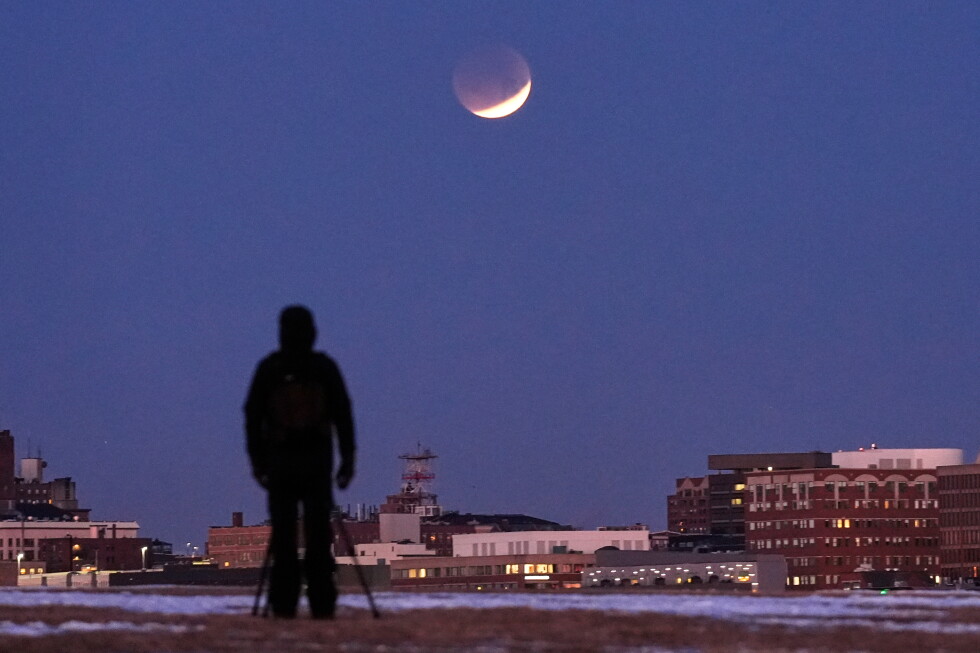
    CAPE CANAVERAL, Fla. – Just two weeks after a total solar eclipse drew crowds across Europe, a rare, deep partial lunar eclipse is set to take center stage in the night sky, offering the best views to observers across the Americas. On Thursday night through early Friday, Earth’s shadow will cover 96% of the lunar surface, marking one of the most striking partial eclipses of recent years. This celestial event falls at a time of renewed global interest in lunar exploration, following NASA’s successful April Artemis II mission that carried astronauts on a record-breaking lunar flyby – the first step in the agency’s long-term plan to land humans on the moon and establish a permanent, crewed base staffed by both people and robotic explorers.

    From his vantage point aboard the International Space Station, NASA astronaut Jack Hathaway emphasized the momentum of modern space exploration in an interview with The Associated Press last week. “This is a great time to be part of the space program, right? We’re not slowing down,” Hathaway said.

    Astronomical events like this follow a consistent pattern: solar and lunar eclipses always occur in pairs, triggered when the sun, moon and Earth align with extraordinary precision. A remarkable cosmic coincidence makes these alignments even more dramatic from Earth’s surface: the moon is 400 times smaller than the sun, and also sits 400 times closer to our planet, leaving the two celestial bodies appearing nearly identical in size to observers on the ground.

    Unlike the recent total solar eclipse, which was only visible along a narrow path across Greenland, Iceland and Spain, this upcoming lunar eclipse will unfold slowly over several hours, and reach a far larger global audience. If skies remain clear, the partially eclipsed moon will be visible to billions of people across North and South America, Europe, Africa and the Middle East. Even the 10 people currently living in orbit – seven crew members on the International Space Station and three aboard China’s Tiangong space station – may get a chance to view the event from their unique orbital perspective.

    ISS commander Jessica Meir noted that space offers an unparalleled view of cosmic phenomena ranging from eclipses to auroras. For this lunar eclipse, Earth will pass directly between the sun and the moon, casting a warm reddish-orange shadow across most of the lunar surface. Because the alignment is not perfectly centered, it will be a partial eclipse rather than a full total eclipse, meaning it will not produce a full “blood moon” effect. The full duration of the eclipse, from the moment the full moon touches the faint outermost edge of Earth’s shadow to when it exits completely, will stretch 5.5 hours, with the partial phase lasting more than three hours. Peak coverage will occur just after midnight Eastern Daylight Time.

    Nearly 1 billion people across the United States, Canada, Central America and South America will have unobstructed views of the entire event. In total, more than 3 billion people – around 44% of the global population – will be able to observe at least part of the eclipse. For skywatchers in Europe, Africa and the Middle East, the eclipsed moon will set before the event concludes, cutting viewing time short. In Hawaii, the northwestern U.S. and western Canada, the moon will rise later, meaning observers will only see the latter stages of the eclipse.

    This event is the second lunar eclipse of 2024, and the fourth total eclipse of any kind this year. The year opened with a total lunar eclipse over the Americas, Australia and East Asia in March. For skywatchers hoping to see a full total lunar eclipse across North and South America, the wait will stretch several years: the next full total lunar eclipse will not grace the skies of the hemisphere until 2029. The next complete lunar blackout anywhere in the world will occur on New Year’s Eve 2028, with the best views reserved for observers in Asia and Australia.