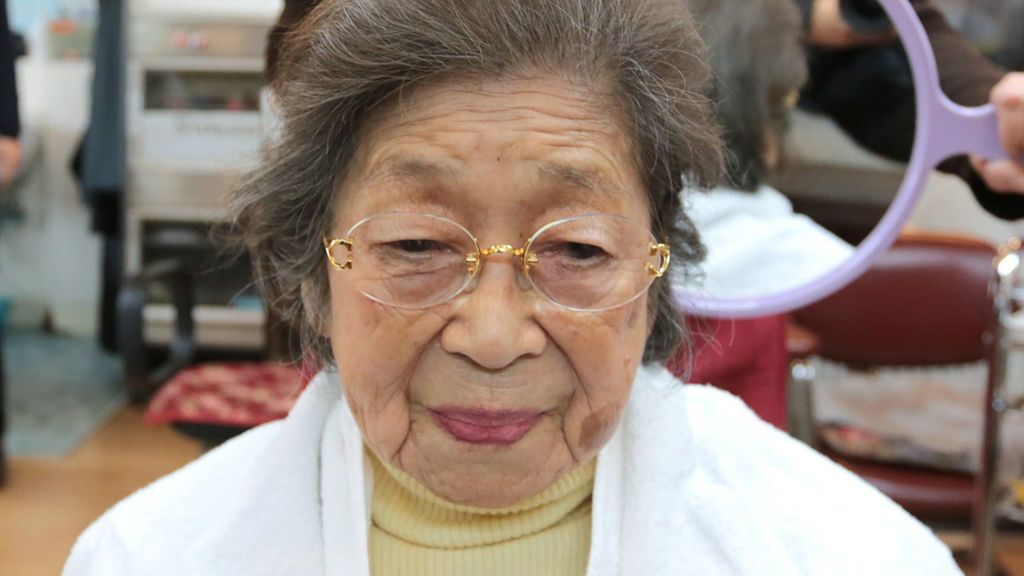
Japan’s population landscape is hitting two historic, contradictory milestones this year: the number of Japanese residents aged 100 or older has crossed the 100,000 threshold for the first time in the nation’s history, even as accelerating population decline and rapid aging have been labeled an existential threat to the country.
New official data released by Japan’s Ministry of Health, Labor and Welfare puts the current national centenarian count at 107,677 — a staggering increase from just 153 recorded centenarians when the government first began systematic tracking in 1963. Of this group, 88% are women. The nation’s oldest person is 114-year-old Fuyo Kishimoto of Kyoto City, while the oldest man is 112-year-old Hikaru Kato from Kumamoto Prefecture.
Health Minister Kenichiro Ueno highlighted the milestone as a public health win ahead of Japan’s annual Respect for the Aged Day, a national holiday that honors centenarians with a personalized letter from the government and a traditional ceremonial sake cup. “I am delighted that so many people in Japan are living long, healthy and active lives,” Ueno said, crediting advances in medical care and public health technology for the extended lifespans. Even so, he acknowledged the severe challenge the aging demographic poses to keeping Japan’s social security system financially and structurally sustainable.
Experts have long pointed to multiple cultural and dietary factors that contribute to Japanese residents’ above-average longevity. Traditional Japanese cuisine is centered on fresh fish, whole vegetables and rice, with far lower levels of saturated fat than most standard Western diets. Additionally, many older Japanese adults maintain active daily routines, regularly walking, cycling, using public transit, and doing gentle stretching exercises rather than leading sedentary lifestyles. The growing centenarian population has also spurred innovation across Japan’s private sector: companies have developed a range of new products tailored to older users, from powered body-supporting exoskeletons to auto-focusing eyewear for people with age-related vision changes. For more than a decade, sales of adult diapers have outpaced sales of baby diapers in Japan, a quiet marker of the nation’s shifting age demographic.
But the record number of centenarians comes alongside a far more troubling demographic trend: Japan’s total population is shrinking rapidly, driven by years of plummeting birth rates that have outpaced any government efforts to reverse the decline. To sustain a stable population, a country needs an average total fertility rate of 2.1 children per woman. Last year, Japan’s fertility rate fell to a new all-time low of just 1.14. Projections from Japan’s National Institute of Population and Social Security Research estimate the total national population will drop to just 87 million by 2070 — a 30% decline from the 2008 peak of 128 million.
Already, adults aged 65 and older make up roughly 30% of Japan’s total population, and that share is projected to climb to nearly 40% by 2070. In 2025, Japan’s population shrank in 45 of its 47 prefectures, and the pace of decline is accelerating. Prime Minister Sanae Takichi has described the ongoing population drop as a “quiet emergency,” and Japanese authorities have repeatedly called the trend an existential crisis for the nation.
For years, the Japanese government has rolled out dozens of programs and subsidies to encourage young couples to have more children, but these policies have yet to move the needle on birth rates. Experts say the causes of low fertility are multifaceted: declining marriage rates, more women pursuing higher education and full-time careers, and the soaring cost of raising and educating children in Japan have all combined to discourage larger families. While immigration levels have risen slightly in recent years, foreign-born residents still make up only 3% of the total population, and public opposition to increasing immigration has grown in recent years, blocking a potential solution to population decline.
It is worth noting that global centenarian data has long faced questions about accuracy, with issues like incomplete birth records, data entry errors and unreported deaths inflating counts in many countries. Japan itself faced a major counting scandal in 2010, when a government audit of national family registries found more than 230,000 people listed as centenarians could not be accounted for — some had died decades earlier. Officials attributed the inaccurate counts to spotty historical record-keeping, and in some cases, deliberate concealment of deaths by family members looking to continue collecting elderly relatives’ pension benefits.