博客

  • Yangtze finless porpoise population increases in China

    Yangtze finless porpoise population increases in China

    China’s landmark conservation efforts have yielded unprecedented success with the Yangtze finless porpoise population reaching 1,426 individuals according to the latest survey data released at a Friday press conference. This represents a significant increase of 177 porpoises since the previous census in 2022, marking a dramatic reversal for the critically endangered species.

    The population recovery is directly attributed to the comprehensive 10-year fishing ban implemented across the Yangtze River basin effective January 1, 2021. This ambitious ecological restoration initiative has created optimal conditions for the species’ natural habitat regeneration and prey population recovery.

    As a national first-class protected wild animal and the only freshwater subspecies within the finless porpoise family, this ancient species has inhabited the middle and lower reaches of the Yangtze River for approximately 25 million years. Conservation biologists consider the porpoise’s population status the most accurate barometer for assessing the overall health of the Yangtze River ecosystem.

    The latest population figures demonstrate the effectiveness of China’s coordinated environmental protection policies and provide encouraging evidence that targeted conservation measures can successfully reverse species decline. Wildlife experts emphasize that continued habitat protection and monitoring will be essential to sustain this positive trajectory for the iconic freshwater cetacean.
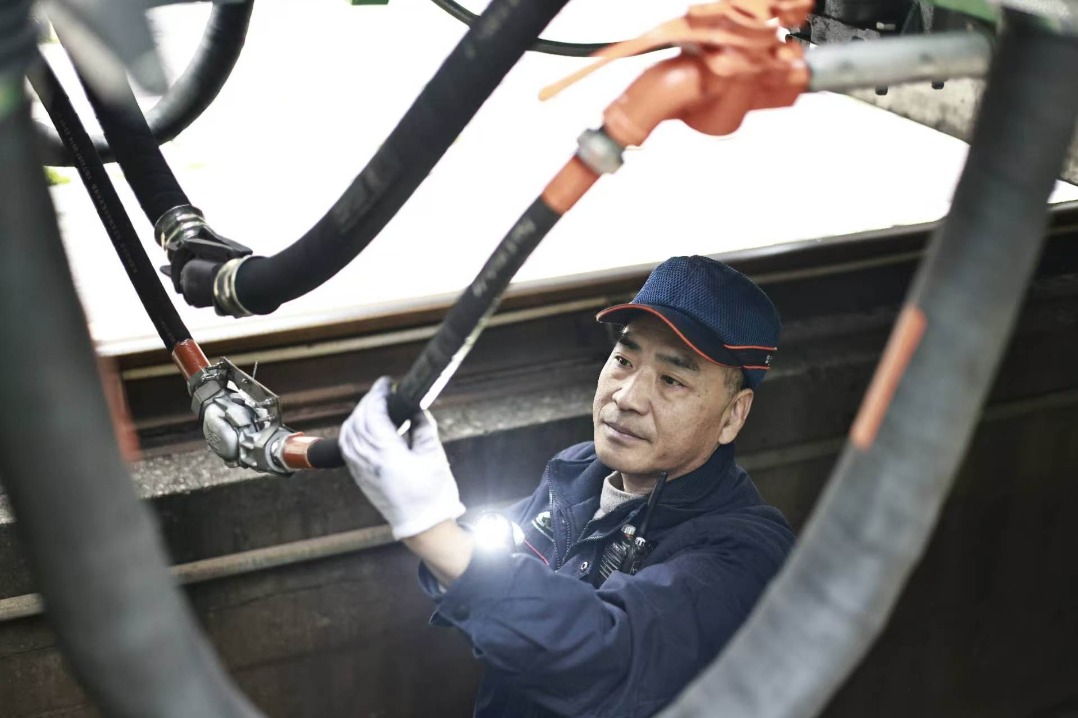

  • Trains undergo inspections ahead of Spring Festival travel rush

    Trains undergo inspections ahead of Spring Festival travel rush

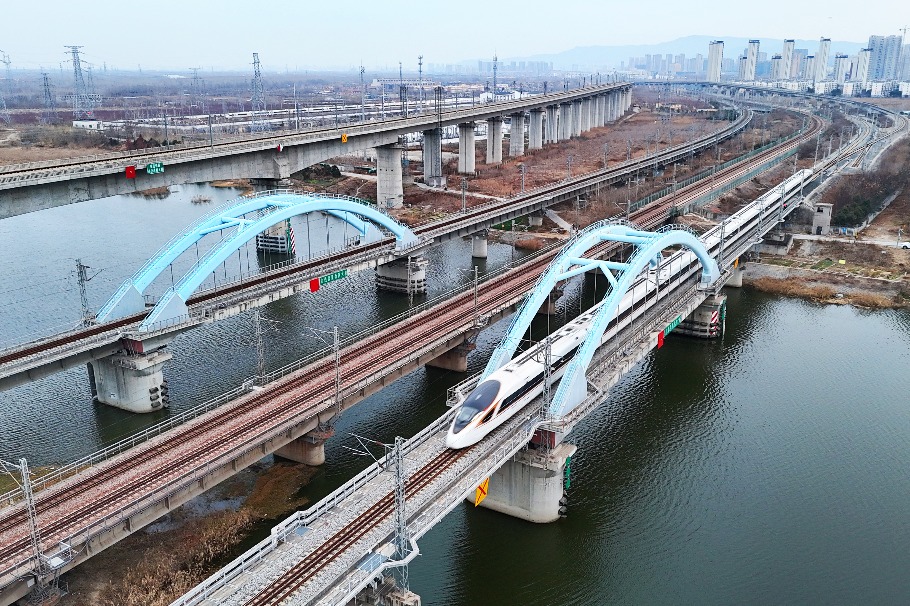
    Chinese railway operators have launched extensive safety inspection campaigns in preparation for the upcoming Spring Festival travel peak, implementing rigorous maintenance protocols to ensure transportation safety during the country’s largest annual human migration event.

    At the forefront of these preparations, the Chongqing North EMU Depot and Chongqing North Depot under China Railway Chengdu Group have deployed specialized maintenance teams to conduct comprehensive examinations of their rolling stock. These inspections focus specifically on CR200J bullet trains and conventional-speed trains that will serve millions of passengers during the holiday period.

    The meticulous verification process encompasses multiple critical systems including upper service facilities, lower suspension mechanisms, running gear components, coupler-buffer apparatus, and passenger carriage electrical equipment. Each system undergoes thorough testing to identify potential issues before they can affect operational safety.

    This year’s Spring Festival travel rush, officially scheduled from February 2 to March 13, 2026, will span 40 days of intensified railway operations. The extended duration reflects both the traditional holiday travel patterns and the continued expansion of China’s railway network capacity.

    Maintenance personnel at the Chongqing facilities have been working extended shifts to complete inspections ahead of the February 2 commencement date. Their efforts represent a critical component of China’s broader transportation strategy to accommodate what authorities predict will be record-breaking passenger volumes during the 2026 holiday season.

    The preventive maintenance initiative demonstrates the railway operator’s commitment to implementing proactive safety measures rather than reactive responses. This approach aligns with China’s ongoing improvements in transportation infrastructure management and passenger safety protocols.

  • Niger’s junta leader accuses France, Benin and Ivory Coast of being behind airport attack

    Niger’s junta leader accuses France, Benin and Ivory Coast of being behind airport attack

    NIAMEY, Niger — Niger’s military leadership has leveled explosive allegations against the presidents of France and two West African nations, claiming they sponsored armed militants who launched a brazen assault on a strategic air force base in the capital. The attack early Thursday resulted in four soldiers wounded and significant damage to military aircraft.

    General Abdourahamane Tchiani, Niger’s military ruler, delivered a fiery address on state television Thursday evening, directly implicating French President Emmanuel Macron, Benin’s President Patrice Talon, and Ivorian President Alassane Ouattara in supporting the mercenary operation. “We have sufficiently heard them bark, and they should now in turn be prepared to hear us roar,” Tchiani declared, though he presented no concrete evidence to substantiate his claims.

    The assault targeted the Diori Hamani International Airport complex in Niamey, a strategically critical installation housing military bases, the headquarters of the Niger-Burkina Faso-Mali Joint Force, and substantial uranium reserves currently at the center of a diplomatic dispute with French nuclear conglomerate Orano. Security footage from the scene captured intense explosions that illuminated the night sky during the two-hour firefight that began around midnight.

    Nigerien defense forces responded with decisive force, neutralizing 20 attackers and capturing 11 others according to official reports. State television additionally claimed one slain assailant was a French national, displaying graphic footage of bloodied bodies at the scene, though verification remained impossible.

    The attack damaged an Air Côte d’Ivoire aircraft parked on the tarmac, with projectiles striking both the fuselage and right wing. No armed group has claimed responsibility for the assault, which occurs amid deteriorating security conditions across Africa’s Sahel region.

    This incident exacerbates already strained relations between Niger’s military junta and former Western allies. Since seizing power in 2023, Niger’s leadership—along with neighboring Mali and Burkina Faso—has severed security ties with France and other Western nations while increasingly embracing Russian military support. The juntas regularly accuse Benin and Ivory Coast, both maintaining close French relations, of acting as proxies for Paris.

    Security analysts note that jihadist violence has intensified dramatically across the Sahel since 2025, with al-Qaida and Islamic State-affiliated militants exploiting the political instability created by military takeovers in Niger, Mali, and Burkina Faso. These nations have experienced worsening security conditions under military rule despite their rhetoric of strengthened sovereignty.

  • Australian base in Italy gives athletes from Down Under a home edge at the Winter Olympics

    Australian base in Italy gives athletes from Down Under a home edge at the Winter Olympics

    In the picturesque lakeside town of Gavirate, northern Italy, Australia has established an unprecedented strategic advantage for winter sports excellence. The Australian Institute of Sport’s European Training Centre, operational for nearly 15 years, has evolved into a comprehensive preparation hub for approximately 3,000 athletes annually traveling through Europe.

    The facility addresses what director Fiona de Jong describes as ‘the tyranny of distance’ – the challenging 24-hour flight from Australia to Europe that previously hindered consistent high-level competition preparation. The center features state-of-the-art training facilities including a fully equipped gymnasium, recovery areas, and recreational spaces with pool tables, creating an optimal environment for both physical preparation and mental relaxation.

    Upon arrival, athletes encounter unmistakable Australian symbolism: statues of kangaroos and emus adorned with national scarves greet visitors at the entrance, while interior spaces showcase abundant imagery of Australian landscapes alongside the nation’s signature green and gold colors. The culinary experience blends Italian cuisine with home comforts, featuring beloved Australian staples like Vegemite and specially imported coffee from Melbourne roasters – a particularly notable detail in the birthplace of espresso.

    Alisa Camplin, Australia’s Olympic team chef de mission and dual Winter Olympic medalist, emphasizes the center’s significance: ‘This place is a haven on the other side of the world for us as Aussies. It’s like we’ve got a home away from home, a little sanctuary where we can prepare to be excellent.’

    The location selection, made years before Milan-Cortina secured the 2026 Winter Olympics, has proven remarkably fortuitous. De Jong notes they evaluated sites in Spain and France before choosing Gavirate for its ideal climate, welcoming community, and exceptional cuisine. The town’s proximity to Milan’s international airports and its lakeside location provide particular benefits for equipment-intensive sports like rowing and canoeing.

    Local integration has been remarkably successful, with Gavirate’s residents enthusiastically embracing their Australian guests. The town’s ice cream shop displays signed athletic jerseys, while pizzerias showcase Australian memorabilia. Mayor Massimo Parola proudly declares Gavirate can now ‘call itself an Olympic city.’

    For athletes like aerial skier Danielle Scott, competing in her fourth Olympics, the center represents ‘the best of both worlds’ – offering both high-performance training facilities and the comforting familiarity of home amidst the pressures of elite international competition.

  • Foreign women linked to IS group in Syrian camp hope for amnesty after government offensive

    Foreign women linked to IS group in Syrian camp hope for amnesty after government offensive

    ROJ CAMP, Syria — Foreign women affiliated with the Islamic State group, currently detained in northeastern Syria’s Roj camp, are expressing renewed hope for potential amnesty following significant territorial shifts in the region’s military balance.

    The camp, housing over 2,300 individuals primarily comprising women and children with IS connections, remains under the guard of the Kurdish-led Syrian Democratic Forces. However, a recent government offensive has substantially weakened the SDF’s control, capturing most of their previously held territories including the massive al-Hol camp which detained approximately 24,000 IS-linked individuals.

    Camp residents interviewed by The Associated Press revealed growing optimism that Syria’s new leadership might offer clemency. This sentiment stems from the political transformation of Ahmad al-Sharaa (formerly known as Abu Mohammed al-Golani), once a designated terrorist linked to al-Qaeda, who now serves as interim president following the toppling of Bashar Assad in December 2024.

    Buthaina, a Tunisian national who has been detained for nine years, articulated the prevailing hope: “The international community gave al-Golani amnesty. I should be given amnesty too. I did not kill anyone or do anything.”

    Camp director Hakmiyeh Ibrahim reported noticeable behavioral changes among residents, who have become increasingly hostile and emboldened by recent developments. “It gave them hope that the Islamic State group is coming back strongly,” Ibrahim observed.

    The situation highlights the complex international dilemma regarding repatriation. While some women express desire to return to their home countries, others like German national Aysha prefer remaining in Syria, stating “Germany is all infidels.” Meanwhile, human rights organizations criticize the prolonged detention without trial as a political failure.

    Beatrice Eriksson of Repatriate the Children in Sweden noted: “The continued existence of these camps is not an unfortunate by-product of conflict, it is a political decision.”

    With Syrian government forces now controlling key detention facilities and part of a ceasefire agreement involving transfer of camp management to Damascus, the future of these detainees hangs in uncertainty as the world watches how Syria’s new leadership will handle this enduring legacy of the IS caliphate.

  • Gaza plan a potential turning point, says UN official

    Gaza plan a potential turning point, says UN official

    A senior United Nations official has characterized the Gaza stabilization initiative as a potential watershed moment for the region, even as humanitarian crises and military operations persist. Ramiz Alakbarov, UN Deputy Special Coordinator for the Middle East peace process, addressed the Security Council on Wednesday, emphasizing that the commencement of the second phase of the Gaza ceasefire agreement represents a crucial advancement in cementing the truce.

    The statement comes alongside Israel’s burial of Ran Gvili, an off-duty police officer killed while combating Hamas militants, whose remains were recently recovered in Gaza. Israeli Prime Minister Benjamin Netanyahu noted that Gvili’s burial “seals the painful reality of the presence of Israeli hostages in the Gaza Strip.”

    Despite these developments, Alakbarov highlighted that nearly Gaza’s entire population requires humanitarian assistance, with Israeli military operations continuing and tensions escalating in the occupied West Bank.

    Palestine’s permanent observer to the UN, Riyad Mansour, asserted that the ceasefire’s success depends entirely on Israel’s complete withdrawal from Palestinian territories and cessation of dictating Gaza’s future. While acknowledging the release of all Israeli hostages and prisoners, Mansour drew attention to the thousands of Palestinian families awaiting the retrieval, identification, and dignified burial of their loved ones killed and buried under rubble.

    Academic experts express skepticism regarding the truce’s prospects. Mehmet Rakipoglu, a researcher at Mardin Artuklu University and the University of Exeter, cited Israel’s repeated violations as evidence that its strategy prioritizes sustained military engagement over genuine political resolution. He further noted that U.S.-led peace frameworks appear to favor Israel due to the absence of penalties for systematic violations.

    Regional dynamics are also shifting, with Gulf states strengthening cooperation with nations like Türkiye in response to Israel’s escalating aggression, which has transformed Gaza from a localized conflict into a catalyst for regional instability.

  • China to foster new quality productive forces in water conservancy sector

    China to foster new quality productive forces in water conservancy sector

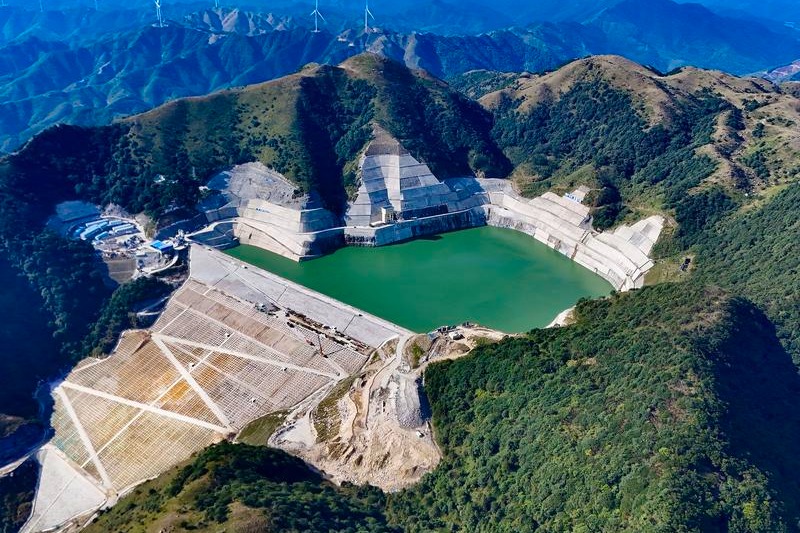
    China is embarking on an ambitious technological transformation of its water conservancy infrastructure, positioning advanced innovation as the cornerstone of modern reservoir management. The Ministry of Water Resources announced Thursday a comprehensive initiative to develop new quality productive forces throughout the nation’s water management sector.

    The strategic plan centers on creating an all-weather intelligent monitoring system that integrates surveillance capabilities across multiple domains: sky, space, land, water, and engineering infrastructure. This sophisticated network will employ an array of cutting-edge technologies including satellite remote sensing, ground-penetrating radar, unmanned aerial vehicles, autonomous marine vessels, and subaquatic robotics.

    Zhang Wenjie, a ministry official, emphasized that these technological advancements will significantly enhance hidden danger detection capabilities while advancing intelligent patrol operations. The integration of these systems represents a fundamental shift toward data-driven water management and disaster prevention.

    The initiative builds on successful technological implementations demonstrated during recent flood seasons. During the 2025 autumn floods along the Hanjiang River, authorities effectively monitored the Danjiangkou Reservoir’s structural integrity in real-time using Global Navigation Satellite Systems and automated surveying robots. This technological support enabled precise, science-based reservoir regulation during critical high-water conditions.

    According to Wang Bao’en, Deputy Head of the Ministry, current efforts are accelerating the development of next-generation infrastructure characterized by enhanced safety, ecological sustainability, and intelligent operation. The ministry will intensify research, development, and deployment of innovative technologies while selecting representative dams with strong foundational conditions for pilot projects.

    This technological push aims to elevate reservoir management standards to unprecedented levels, establishing new benchmarks for modern water conservancy operations worldwide. The initiative represents China’s commitment to leveraging technological innovation for critical infrastructure management and environmental sustainability.

  • New Zealand not to join Board of Peace: PM

    New Zealand not to join Board of Peace: PM

    In a significant diplomatic development, New Zealand Prime Minister Christopher Luxon announced on Friday that his nation would not participate in the newly proposed ‘Board of Peace’ initiative spearheaded by former US President Donald Trump. The decision follows careful governmental consideration of the invitation extended by the Trump administration.

    Prime Minister Luxon’s official statement clarified that while New Zealand appreciated the invitation, the current framework of the proposed board did not align with the country’s international governance principles. ‘After thorough deliberation,’ Luxon stated, ‘our government has determined that we cannot accept membership in the Board of Peace in its present configuration.’

    This position was further elaborated by Foreign Minister Winston Peters through a social media post on platform X. Peters emphasized New Zealand’s historical role as a founding member and consistent supporter of the United Nations, noting that any parallel international governance structure must operate in complete harmony with the UN Charter. ‘For New Zealand, it remains imperative that any new international body’s work complements and reinforces the established principles of the United Nations,’ Peters wrote.

    The Board of Peace was formally established by former President Trump on January 22 during the World Economic Forum in Davos, Switzerland. The initiative represents one of Trump’s most significant foreign policy proposals since leaving office, though specific operational details and membership criteria remain unclear. New Zealand’s decision marks one of the first public rejections by a Western-aligned nation, potentially influencing how other countries approach the controversial initiative.

    Analysts suggest New Zealand’s refusal reflects broader concerns about the board’s potential to undermine existing international institutions and create parallel governance structures that might conflict with established multilateral agreements. The decision also demonstrates New Zealand’s independent foreign policy stance, balancing its traditional alliances with its commitment to multilateral governance through the United Nations system.

  • China sees 66.86 billion cross-regional trips in 2025

    China sees 66.86 billion cross-regional trips in 2025

    China’s transportation networks witnessed unprecedented activity in 2025 with official data revealing 66.86 billion cross-regional trips completed throughout the year. This substantial movement of people represents a 3.5 percent increase compared to the previous year’s figures, underscoring the nation’s rapidly expanding mobility patterns.

  • Ukraine is bracing for brutal weather as Trump says Putin agreed to halt power grid attacks

    Ukraine is bracing for brutal weather as Trump says Putin agreed to halt power grid attacks

    KYIV, Ukraine — As Eastern Europe grapples with an extreme winter cold snap, diplomatic tensions intensify over unverified claims of a temporary ceasefire on energy infrastructure attacks. U.S. President Donald Trump announced Thursday that Russian President Vladimir Putin had acquiesced to a one-week moratorium on targeting Ukraine’s power grid, though neither the Kremlin nor White House provided immediate confirmation of the alleged agreement.

    Ukrainian President Volodymyr Zelenskyy expressed profound skepticism regarding Moscow’s intentions, stating publicly Friday: ‘I do not believe that Russia wants to end the war. There is a great deal of evidence to the contrary.’ His comments came as the conflict approaches its fourth anniversary with no diplomatic resolution in sight.

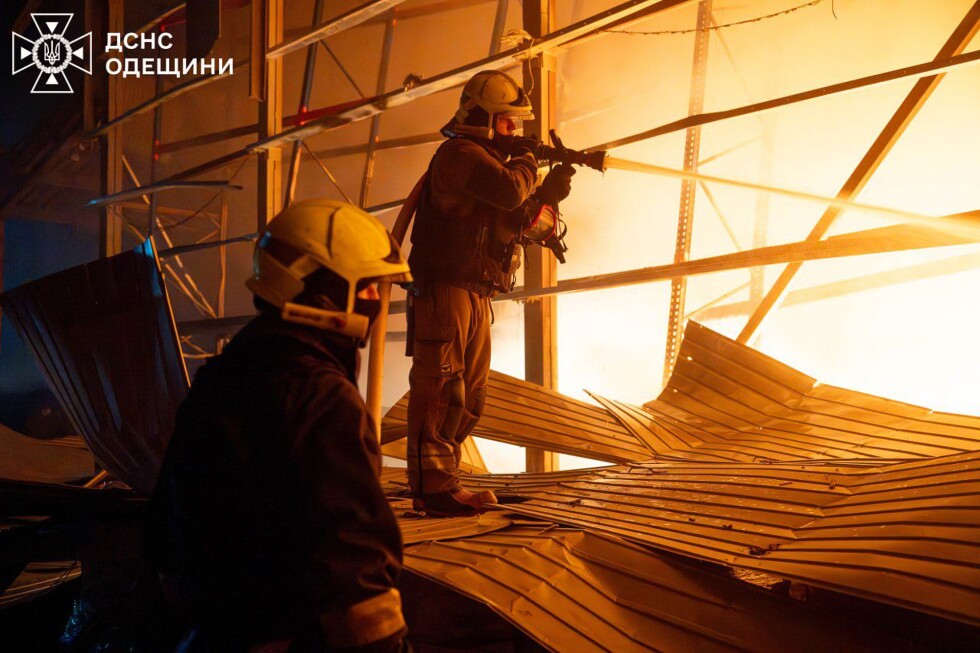
    The purported truce discussion emerged against a backdrop of continued hostilities. Overnight, Russia launched 111 drones and one ballistic missile toward Ukraine, resulting in at least three casualties according to Ukrainian air defense reports. Simultaneously, Russia’s Defense Ministry claimed interception of 18 Ukrainian drones over multiple regions including annexed Crimea and the Black Sea.

    Meteorological conditions compound the humanitarian crisis, with temperatures forecast to plunge to -30°C (-22°F) across Ukraine this week. This severe cold wave threatens millions already suffering from Russia’s documented strategy of weaponizing winter conditions by targeting energy infrastructure.

    The energy truce concept originated during multilateral talks in Abu Dhabi last weekend involving envoys from Ukraine, Russia, and the United States. Zelenskyy confirmed his administration’s willingness to adopt reciprocal measures: ‘If Russia does not strike us, we will take corresponding steps regarding their energy infrastructure.’

    However, the Ukrainian leader clarified that no formal ceasefire agreement exists, emphasizing the absence of direct negotiations between the warring nations. Fundamental disagreements over occupied territories remain the primary obstacle to peace, with Zelenskyy reiterating Ukraine’s stance against compromising territorial integrity while expressing openness to economic compromise solutions.

    Further diplomatic engagements scheduled for Abu Dhabi this weekend face uncertainty due to escalating tensions between the U.S. and Iran, potentially delaying critical dialogue on the conflict.