博客

  • Nvidia boss rejects AI extinction fears as ‘doomsday narratives’

    Nvidia boss rejects AI extinction fears as ‘doomsday narratives’

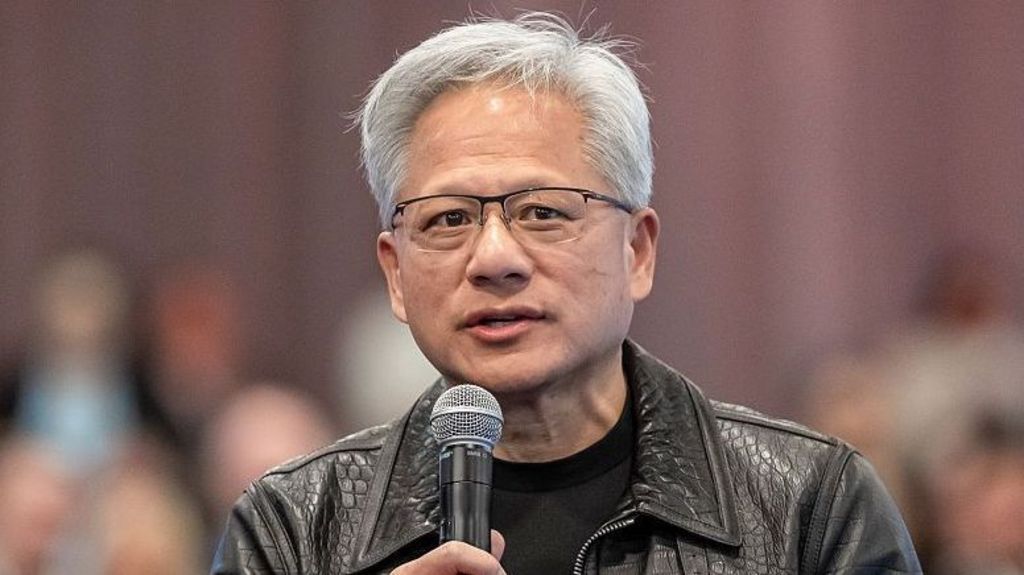
    The global debate over artificial intelligence safety has intensified in recent weeks, fueled by dire warnings from a subset of researchers and industry leaders about the potential catastrophic risk of AI wiping out humanity within the next seven years. Now, the head of the world’s most dominant AI hardware supplier has pushed back sharply against these claims, labeling them unfounded, irresponsible fear-mongering.

    In a recent interview with CBS News, Nvidia CEO Jensen Huang rejected the doomsday narrative that predicts AI could drive human extinction by 2030. “2030 is not going to be the end of the world. There is 0% chance that’s going to be the end of the world,” Huang stated. He went on to argue that spreading such alarmist claims is both unnecessary and irresponsible, adding that these extreme predictions are “not grounded in science.”

    The latest clash of perspectives comes on the heels of explosive claims from former Anthropic researcher Jacob Coxon, who alleged in a social media post that insiders at leading AI development firms privately acknowledge the technology “could kill us all by the end of the decade.” Coxon’s remarks reignited long-simmering tensions over AI risk, prompting several top AI executives—including Anthropic CEO Dario Amodei and OpenAI CEO Sam Altman—to publicly call for a slowdown in advanced AI model development to mitigate potential dangers.

    Huang, whose company produces the high-performance graphics processing units (GPUs) that underpin nearly all cutting-edge large language models and generative AI systems, pushed back on more than just the extinction claims. He suggested that many industry calls for a development slowdown carry hidden motives, specifically that proponents are actually seeking broad liability protections from damages their AI products may cause. “Go and read between the lines,” Huang said. “They’re actually not asking for more laws. They’re asking to be relieved of the laws we do have, and I think that that’s a problem.”

    Huang also emphasized that responsible, safe AI development is core to Nvidia’s own business interests. “Our company’s success is directly connected to the safe deployment of products and services,” he explained. “If we don’t continue to do that, our value would be diminished.”

    Huang’s remarks are the latest input into a rapidly growing global policy conversation around AI governance. Just last week, Huang attended an AI safety summit hosted by King Charles III in the United Kingdom, where the monarch warned assembled tech leaders of the “existential dangers” posed by unregulated AI. “The task before you is not merely to advance technology, but to ensure that it remains firmly in the service of humanity, community and the natural world,” King Charles told attendees.

    Huang’s position also aligns with that of former U.S. President Donald Trump, who has openly downplayed AI safety concerns. Earlier this month, Trump made an unexpected surprise phone call to Huang during the Nvidia CEO’s onstage appearance at a Los Angeles tech conference. During the call, Trump criticized calls to slow AI development and dismissed widespread fears about catastrophic AI risk as a “hoax.”

    As the global AI industry continues its rapid expansion, driven in large part by soaring demand for Nvidia’s AI-optimized chips, the divide between industry leaders over how to address long-term AI risk remains as wide as ever, with no clear consensus on global regulatory frameworks emerging to date.

  • ICE agent shoots and wounds man in Texas as locals demand answers

    ICE agent shoots and wounds man in Texas as locals demand answers

    A shooting involving a U.S. Immigration and Customs Enforcement (ICE) agent in Austin, Texas has ignited public outrage, drawn hundreds of protesters to the streets, and intensified long-simmering tensions over the Trump administration’s aggressive second-term immigration enforcement policies.

    The incident unfolded shortly before 1 p.m. local time on Sunday, when ICE agent opened fire on 28-year-old Venezuelan national Wilber Rafael Garces Perez, striking him in the torso. Garces Perez was rushed to a local hospital for treatment, and was confirmed to be in ICE custody by his attorney, Kate Lincoln-Goldfinch. According to Lincoln-Goldfinch, Garces Perez managed to call his wife from the hospital while screaming in pain from his injury. As of Monday, few additional details about the shooting have been released, and local officials have not been able to confirm whether Garces Perez was an intended target of ICE operations at the time of the incident.

    Local authorities and elected leaders have swiftly called for a full independent probe into the shooting, citing growing community distrust of federal immigration practices. Austin Mayor Kirk Watson, a Democrat, emphasized in a Sunday media briefing that local residents have both a right to transparency and a right to feel secure in their neighborhoods. “They should know the truth,” Watson stated, adding that he welcomed the city’s formal involvement in the investigation. The mayor also confirmed that ICE enforcement operations have increased sharply across Austin in recent weeks. U.S. Representative Greg Casar, a Texas Democrat, joined the call for action, demanding an immediate independent investigation, the public release of all body camera footage from the incident, and legal accountability for any ICE officer found to have violated the law. The Austin Police Department has confirmed that none of its officers were involved in the shooting.

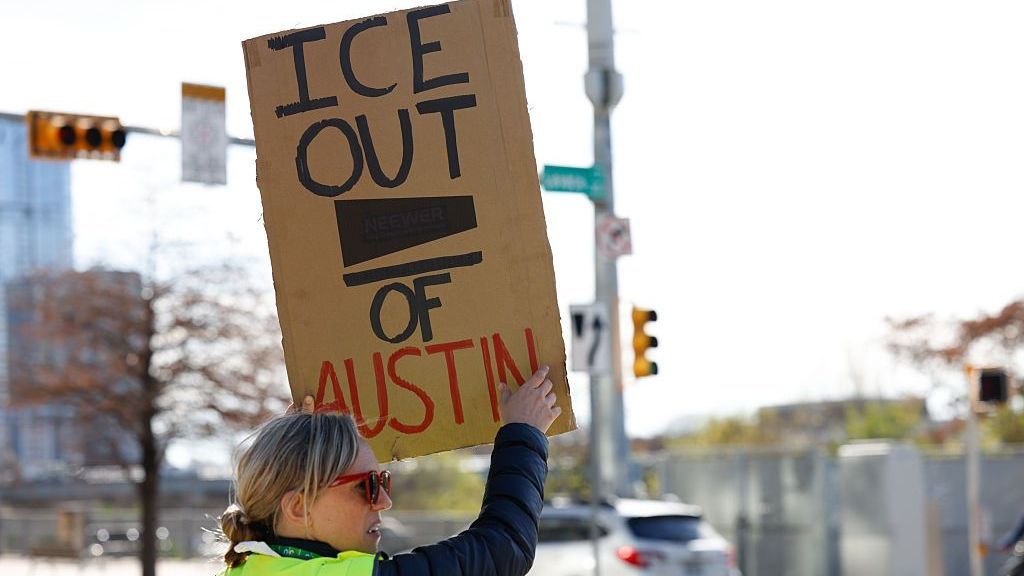
    Within hours of the shooting, dozens of demonstrators gathered at the scene to protest ICE’s expanding presence in the city. Many carried signs calling for ICE to withdraw from Austin, and several waved national flags of Mexico and Guatemala, two of the largest source countries for migrants in Texas. Local media footage captured protesters gathering across the street from a blue Toyota Corolla that sustained visible damage to its passenger-side door, with uniformed ICE agents standing guard nearby. This shooting marks the second high-profile fatal or injurious shooting involving ICE in Texas in just months: back earlier this year, an ICE officer shot and killed Lorenzo Salgado Araujo, a Houston resident who was not the target of the agency’s investigation, during a routine traffic stop, according to U.S. Department of Homeland Security (DHS) records.

    The incident comes as the Trump administration’s second-term immigration crackdown has sparked widespread unrest across multiple U.S. cities. The administration has defended its strict enforcement policies and controversial ICE tactics as critical to protecting public safety and fulfilling Trump’s campaign promise of mass deportations. However, immigrant rights advocates have accused the administration of violating fundamental due process and free speech rights, and congressional Democrats have pushed for sweeping ICE reforms, including mandatory body cameras for all agents and a ban on agents concealing their identities during enforcement operations.

    This Austin shooting also follows a rare federal action against an ICE agent earlier this month: the U.S. Department of Justice charged an agent with lying about a 2025 non-fatal shooting of another Venezuelan migrant in Minnesota, one of the few times the current Justice Department has brought criminal charges against a federal law enforcement officer for on-duty conduct. Even some within the Republican Party have pushed back against the administration’s hardline tactics. Florida Republican Congresswoman Maria Elvira Salazar, who has publicly criticized the mass crackdown, recently released a campaign ad condemning the targeting and detention of migrants with no criminal history. Appearing on CBS’s *Face the Nation* on Sunday, Salazar said she had spoken directly with President Trump about her concerns, and that she believes he will keep U.S. immigration policy on the right track. “He gets it more than anybody,” she said.

    The BBC has reached out to both ICE and the Department of Homeland Security for comment on the Austin shooting, as of this reporting no formal statement has been issued by either federal agency.

  • Russia’s elections had few surprises – but how the Kremlin uses the results is far from clear

    Russia’s elections had few surprises – but how the Kremlin uses the results is far from clear

    For more than four and a half years, Russia’s full-scale conflict in Ukraine has shaped every corner of domestic life in the country, bringing heavy military casualties, widespread economic strain, and repeated infrastructure disruptions from Ukrainian drone strikes, including recent attacks that have triggered widespread petrol shortages across multiple regions. Against this turbulent backdrop, Russia’s latest parliamentary election has delivered the outcome that political observers nearly universally predicted: a sweeping victory for the Kremlin-aligned ruling party United Russia, with no unexpected shifts in the makeup of the State Duma.

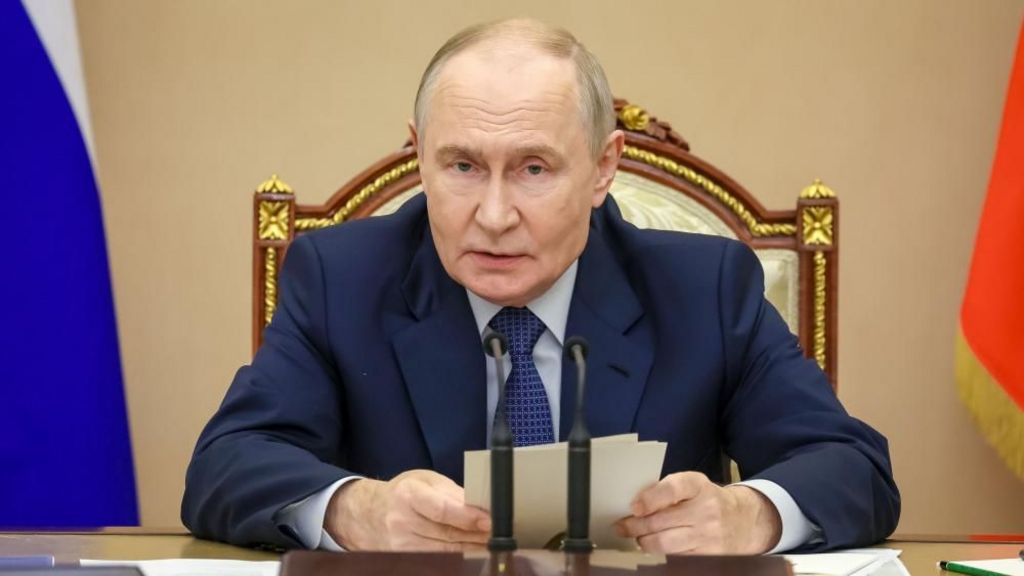
    Under Russia’s tightly centralized political system, controlled firmly by the Kremlin, United Russia was always projected to hold onto its power in the lower house of parliament. Preliminary vote counts confirm the party will retain its constitutional supermajority, enough to pass any constitutional amendment without opposition support. Even more notable is the fact that every party that has cleared the 5% vote threshold to enter the new Duma is the exact same cohort of parties that held seats in the outgoing legislature — a body that uniformly backed the Kremlin’s agenda and the so-called “special military operation” in Ukraine, with zero consistent opposition to the war effort.

    The only anti-war party cleared to appear on the national ballot this cycle, Yabloko, was removed from the party list just 12 days after official registration, in a ruling by Russia’s Supreme Court. The abrupt removal came amid signs the party’s pro-peace messaging was resonating with a growing segment of the Russian public, a development that triggered concern from the Kremlin. Even after being struck from the national party list, roughly 100 Yabloko candidates still ran in individual constituency races, but the party faced relentless official pressure throughout the campaign.

    Yabloko chairman Nikolai Rybakov says the expected pro-Kremlin makeup of the new Duma comes as no surprise to his party. “What other result can there be if there were 10 parties on the ballot and they all support the policies of President Putin?” Rybakov told reporters. “I don’t think the Duma will change. They’ll vote 100% for the policies of Putin just like they did.” Rybakov also outlined widespread barriers to Yabloko’s participation: “Some of our candidates, who should have been running, are in jail, many were barred from running and some of our election observers weren’t registered and were unable to keep an eye on the voting.”

    On the final day of the three-day voting period, Ukraine launched a large-scale drone strike that targeted infrastructure in the Moscow region, hitting a major city oil refinery. Speaking to reporters at a polling station near the damaged facility, local voters displayed little shock at the attack. After more than four and a half years of war, periodic strikes on Russian territory have become a routine part of life, and Muscovites responded with quiet resignation rather than outrage. “People in the Donbas, as well as in Bryansk, and Belgorod near the Ukrainian border, hear this kind of thing every day,” said Viktor, a voter who had just cast his ballot. “They just get on with their lives.”

    While the election outcome was entirely predictable, what comes next for Russia’s war policy remains uncertain. The Kremlin is widely expected to frame the lopsided result as evidence that the Russian public has united behind President Vladimir Putin and the war effort, using the outcome to justify future policy and military decisions. Just days before the vote, Putin publicly ruled out the possibility of a new wave of national mobilization, stating “There is no scenario today that would require it.” But despite that official reassurance, widespread anxiety over a future mobilization persists across Russian society, with many residents questioning whether the policy will remain off the table in the months ahead. Analysts widely agree that the Kremlin will at minimum treat the lopsided election result as a public mandate to continue its military campaign in Ukraine.

  • Brigitte Bardot’s ballet flats and diamond rings to be sold at auction

    Brigitte Bardot’s ballet flats and diamond rings to be sold at auction

    Nine months after the passing of iconic French actress and cultural figure Brigitte Bardot at age 90, hundreds of her personal belongings from three of her former residences are going under the hammer at a Paris auction this Monday, with all net proceeds after costs directed to the animal welfare foundation she founded decades ago.

    Organized by French auction house Millon, the sale features nearly 300 individual lots pulled from Bardot’s two coastal homes in Saint-Tropez and her central Paris apartment. To give visitors a immersive look into her daily life, auction curators have recreated portions of her living spaces at the Drouot sale rooms in central Paris, where thousands of fans and collectors have already turned out in the days leading up to the auction to view the one-of-a-kind collection.

    Unlike high-profile celebrity auctions that often focus only on red carpet gowns and award memorabilia, this sale centers on the intimate, everyday items that traced Bardot’s full life journey, from her early days as a trained ballerina to her decades as one of the world’s most prominent animal rights activists. Highlights range from small everyday objects to deeply personal mementos: two pairs of iconic black leather Repetto ballet flats, which Bardot helped popularize as everyday wear after working with the brand to adapt their dance shoe design; the manual typewriter she used to type personal correspondence and draft her autobiography; two classical guitars; her well-worn Peugeot bicycle; diamond and gold jewelry; Le Creuset cookware; kitchen utensils; religious statuettes; cigarette lighters; and even her personal annotated copy of the Kama Sutra. The collection also includes dozens of original portrait paintings of Bardot, many gifted to her by the artists; though she never hung them in her homes to avoid looking at her own image daily, she kept every piece for decades.

    Many lots in the collection also reflect Bardot’s lifelong, all-consuming passion for animal welfare, the cause that defined her post-acting life. A large number of dog collars that belonged to her own pets, as well as a collection of well-loved stuffed animals, are included in the sale. Frank Guillou, Bardot’s personal secretary for decades, shared that animals were the center of her world: “Brigitte could not live without animals around her. When one of them died, she was totally wiped out with grief. They were all buried according to a strict protocol in the gardens, and their photographs had pride of place in her homes.”

    Starting prices for most lots are set below €100 (£86), making the collection accessible to casual fans as well as high-end collectors, but auction officials expect bidding wars to drive final prices far above these opening estimates. Cecile Dupuis, a representative from Millon, notes that the auction draws a unique audience of people who share two of Bardot’s core legacies: admiration for her cultural impact, and commitment to animal protection. “The room will be full of all these fans,” she said. “It is for all those people who still live with her memory and who keep her cause alive.”

    Guillou echoed that sentiment, emphasizing that every item in the sale carries a unique piece of Bardot’s story, both as a global icon and as a private woman. “Each item on sale bears the trace of an encounter, an involvement, a moment of happiness, a stage of her life,” he explained. “They tell the story of the woman as well as the legend.”

    Bardot, who rose to fame as a model and actress in the 1950s, remains one of the most consequential female cultural figures of the late 20th century, widely remembered as a global emblem of modern femininity and the 1960s sexual revolution. After retiring from acting in the 1970s, she dedicated her life to animal rights advocacy, founding the Brigitte Bardot Foundation for the Welfare and Protection of Animals. Her legacy remains complicated, however: in her later years, she faced repeated fines and public backlash for inciting racial hatred and making homophobic public statements.

    Under the terms of Bardot’s will, her estate was split between her animal foundation and her only son, Nicolas-Jacques Charrier, who will also receive a portion of the proceeds from the auction.

  • Jailed teacher convicted of sexual abuse secretly released early in Indonesia, BBC finds

    Jailed teacher convicted of sexual abuse secretly released early in Indonesia, BBC finds

    A months-long undercover investigation by BBC Eye has pulled back the curtain on a deeply troubling injustice in Indonesia: a high-profile teacher convicted of sexual assault against a student at an elite Islamic boarding school has been quietly released from prison years ahead of his scheduled release date, leaving survivors and advocates reeling and exposing critical gaps in the country’s handling of sexual violence in religious institutions.

    The convicted man, Moch Subchi Azal Tsani, widely known as Bechi, is the son of Kiai Muchtar Mu’thi, one of Indonesia’s most influential Islamic religious leaders whose East Java-based Shiddiqiyyah boarding school draws thousands of loyal followers and has long courted connections to the country’s top political figures. Bechi’s 2022 arrest and subsequent conviction sent shockwaves across the world’s largest Muslim-majority nation, where millions of families entrust Islamic boarding schools with educating and housing their children.

    The 2022 arrest operation was unprecedented in its scale: nearly 1,000 riot police were deployed to the school compound, where hundreds of Bechi’s supporters had gathered in a 15-hour siege to block law enforcement from taking him into custody. By the end of that year, a court convicted Bechi of sexual assault, though he was acquitted of the more severe charge of rape despite multiple allegations from former students; prosecutors had pushed for a 16-year maximum sentence, but the court ultimately handed down a seven-year prison term. Shortly after the conviction, Indonesian authorities revoked Shiddiqiyyah’s operating license, but then-President Joko Widodo personally intervened to reverse the decision, arguing that the wrongdoing was tied to Bechi as an individual, not the institution itself.

    The BBC’s new investigation has uncovered far more than just Bechi’s early release: it reveals a years-long pattern of institutional and family efforts to cover up widespread allegations of abuse, with at least 11 former students coming forward to claim they experienced sexual assault or rape at Bechi’s hands. Only one of these survivors chose to pursue a legal claim that led to Bechi’s conviction, and she has remained anonymous to protect her safety.

    For the first time, another survivor, Ira Puspitasari, has waived her right to anonymity to speak publicly about the abuse she endured. Now, she is speaking out about the shock of seeing Bechi free after decades of silence and trauma. Ira told the BBC she was 15 when Bechi began raping and abusing her repeatedly over more than four years. She described being treated as Bechi’s personal slave, recalled an attempt to escape that ended with Bechi’s private security forces kidnapping her, holding her in a secluded hut, and torturing her before she was ultimately expelled from the school. After reporting the abuse to police, she was intimidated into withdrawing her statement; the BBC has obtained audio of Bechi’s mother urging her to recant, framing the abuse as a private family matter and claiming nothing improper occurred. Even after she reaffirmed her testimony during the trial, the news of Bechi’s early release has left her feeling betrayed by the justice system.

    “It feels as if he has won and I’ve lost,” Ira told BBC reporters after watching undercover footage of Bechi smiling and greeting supporters at a public event earlier this year. “It’s just a complete mockery of the law.”

    Undercover BBC reporters first spotted Bechi in January 2025 at the school’s annual prayer gathering, where he wore a face mask and sat beside his father just off stage; organizers abruptly banned all photography and video moments before he appeared, a sharp break from previous years’ events. Reporters later captured him on hidden camera at an Eid prayer event held at his family’s compound, which is attached to the school, in March 2025. When the BBC reached out to Bechi, his mother, and school leadership for comment on its findings, no party responded.

    Indonesian prison authorities confirmed to the BBC that Bechi was released in August 2025, attributing the early release to sentence reductions granted under existing regulations. They declined to provide further details explaining why the reductions were approved. Court records indicate Bechi would not have been eligible for parole until 2027, and would have completed his full sentence only in 2029; he has served less than half of his original seven-year term.

    Worse, survivors and witnesses who testified against Bechi were never notified of his release, despite Indonesian legal requirements that protected witnesses receive this information. Indonesia’s Ministry of Immigration and Corrections has claimed that notification was not required because Bechi remains on parole, but the country’s witness protection agency has disputed this claim, confirming legal obligations require notification regardless of parole status. Ayu Masuroh, a local activist who gathered more than 10 additional survivor testimonies after learning of abuse allegations from classmates, says she lives in constant fear of retribution now that Bechi is free. “He hates me. His supporters have threatened to kill me many times. I will never feel safe here. I don’t feel safe living in Indonesia,” she told the BBC.

    Nun Sayuti, a former lawyer for the school who ultimately switched sides after investigating the allegations and testified for the prosecution at trial, called the early release a blatant violation of survivors’ rights. The former lawyer, who secretly recorded Bechi boasting “In my position, I can have my way with anyone I want,” said he was deeply disappointed by the decision, noting survivors went through years of intimidation and trauma to hold Bechi accountable.

    The disclosure of Bechi’s early release comes as Indonesia’s National Commission on Violence against Women (Komnas Perempuan) has warned that the country is facing an “emergency” of sexual violence in Islamic boarding schools. The commission argues that the outsized political and social power of religious leaders shields these institutions from adequate oversight and legal accountability, while creating a culture of silence that discourages survivors from reporting abuse. In a May 2025 statement, the commission noted that the cases already made public are likely just the “tip of the iceberg,” with most survivors unable to come forward due to inadequate protection systems. The group has called for sweeping reforms to strengthen government oversight, increase penalties for offenders, and break the culture of unaccountable power held by religious leadership.

    Bechi’s case is particularly high-profile because of his family’s deep political connections. Both former President Joko Widodo and current President Prabowo Subianto have visited the school during political campaigns to court the support of Muchtar’s large base of followers. As recently as August 2024, Indonesia’s national police chief visited the school and met with Muchtar to announce plans to build closer ties between law enforcement and the institution. For survivors like Ira, it is precisely this level of influence that allowed Bechi to secure an early, unpublicized release – and that has left them feeling abandoned by the system they trusted to deliver justice.

  • Watch: BBC tracks down abusive teacher secretly released early

    Watch: BBC tracks down abusive teacher secretly released early

    An undercover investigative project by the British Broadcasting Corporation’s (BBC) Eye team has uncovered a disturbing case of justice mismanagement in Indonesia, after reporters tracked down a teacher who was imprisoned years earlier for sexually abusing a minor student. The investigation, which followed months of source development and on-the-ground tracking, confirmed that the convicted offender was released from correctional custody months before his scheduled sentence completion, in a move that was never publicly announced or communicated to the public.

    The revelation comes amid ongoing global scrutiny of how correctional systems handle sex offender cases, particularly when the convicted individuals hold positions of public trust such as educators. The BBC’s reporting, which includes verified tracking of the former teacher’s current location, has raised urgent questions about transparency within Indonesia’s justice and penal systems, and has sparked calls for a full audit of early release processes for convicted violent and sexual offenders.

    At the time of publication, no official statement has been released by Indonesian correctional authorities addressing why the early release was kept secret, or whether any procedural misconduct enabled the offender’s early release. The BBC has noted that the discovery highlights critical gaps in public oversight of convicted sex offender management, leaving communities at potential risk of repeat harm.

  • Why a new Pakistan-China border pact has irked India

    Why a new Pakistan-China border pact has irked India

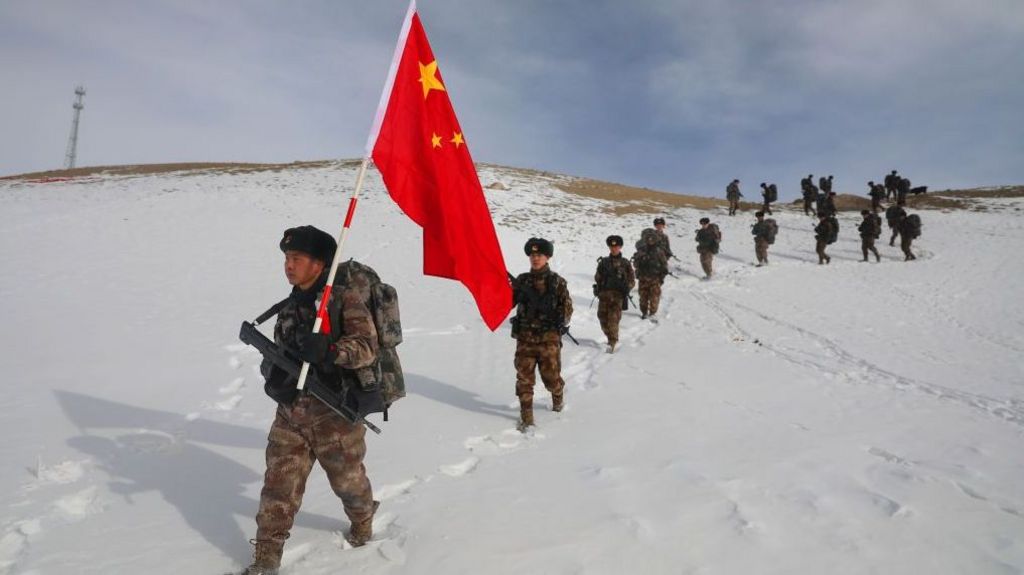
    For decades, India has refused to acknowledge any formal boundary between China and Pakistan across portions of the Himalayan region that New Delhi claims as sovereign Indian territory. That long-running dispute reignited last week after Islamabad and Beijing moved to formally institutionalize their border arrangement through the operationalization of the Pakistan-China Boundary Joint Commission – a step that drew an immediate, harsh rebuke from India.

  • Workers came across human remains – and unearthed a mass grave of 572 people

    Workers came across human remains – and unearthed a mass grave of 572 people

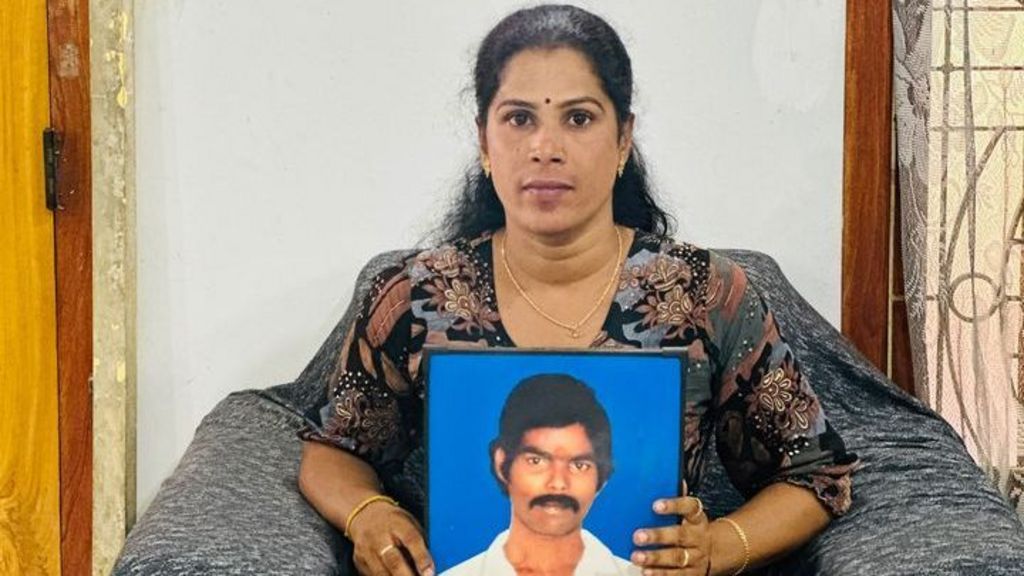
    For nearly three decades, Jeyaruby Jeyabalan has carried the same unanswered question: what happened to her father, Kandaiah Jayapalan, who was taken by Sri Lankan security forces at a Chemmani checkpoint in 1996, when she was just 12 years old. Today, her search for truth intersects with a landmark archaeological discovery that has forced long-buried secrets of Sri Lanka’s 26-year civil war back into the global spotlight.

    Last February, a routine construction project in Sri Lanka’s Tamil-majority Jaffna region unearthed a tragedy no formal investigation had ever confirmed. Workers expanding a local cremation ground in Chemmani stumbled on fragmented human remains, triggering a systematic excavation that by August had uncovered the skeletal remains of 572 people – including children and infants. Personal artefacts found alongside the bodies, from a child’s milk bottle and school bag to women’s bangles, offer quiet, devastating testimony to the lives cut short here. This is now recognized as the largest mass grave ever discovered in Sri Lanka.

    Rumors of a mass burial site in Chemmani have circulated since the late 1990s, when a soldier convicted of the notorious rape and murder of 18-year-old Tamil student Krishanthi Kumaraswamy testified in court that hundreds of executed civilians were buried in the area. Kumaraswamy’s remains, along with those of three family members killed alongside her, were already found in Chemmani in the 1990s, just 100 meters from the newly expanded grave site. A 1998 excavation following the soldier’s testimony recovered roughly a dozen sets of remains, but the investigation stalled amid ongoing conflict and was never followed through on. For decades, the claims of mass extrajudicial killings and enforced disappearances remained unproven – until now.

    Sri Lanka’s civil war, which ran from 1983 to 2009, grew out of decades of systematic ethnic discrimination against the island’s Tamil minority by the Sinhalese-dominated national government. The Liberation Tigers of Tamil Eelam (LTTE) waged an armed campaign for an independent Tamil state in the north and east, leaving an estimated 100,000 people dead and roughly 23,000 more – the vast majority of them Tamil – registered as missing. Both government security forces and LTTE rebels have been credibly accused of widespread atrocities and war crimes, a reality that has left generations of Tamil families waiting for accountability.

    After the Sri Lankan army retook control of the Jaffna Peninsula from the LTTE in 1995, the entire Chemmani region was designated a high-security military zone, dotted with army camps and checkpoints. Locals at the time described Jaffna as an “open prison,” with thousands of Tamil civilians detained or disappearing at security checkpoints – allegations successive Sri Lankan governments have repeatedly denied. Kandaiah Jayapalan, a government employee who ran a small roadside café near Chemmani, became one of those statistics 12 years after the army took control of the peninsula. Like hundreds of other families, Jeyaruby and her relatives searched every military camp and police station across Jaffna after his disappearance, but found no answers. He never returned home.

    Forensic experts examining the newly discovered remains have already drawn damning preliminary conclusions. A 2025 inspection by Sri Lanka’s Human Rights Commission found the burial site does not align with traditional Hindu burial practices, which were standard for the local Tamil population. Most remains were found unclothed, packed tightly into shallow graves just one to two meters below the surface, stacked haphazardly atop one another. Only a small handful of bodies showed signs of formal burial. “There is a reasonable likelihood that the burials were unlawful and pursuant to extrajudicial killings,” the commission concluded in its 2025 report.

    For thousands of Tamil families still waiting for information on their disappeared loved ones, the discovery has brought a painful mix of grief, hope, and anger. Sixty-five-year-old Suseela travels to the Chemmani site searching for clues of her only son, Gnanaseelan Ravi, who was detained by the military in 2007 at age 24. “He was my only son, and I keep crying every day remembering him. My life is empty without him,” she told the BBC. Like Jeyabalan, she left the site without finding any evidence linking her son to the grave, and widespread DNA testing needed to identify remains has not yet begun.

    All recovered remains are currently held in court-ordered custody at the University of Jaffna’s forensic department. Raj Somadeva, the lead archaeologist heading the excavation, told the BBC an interim report will be submitted to court by the end of September 2026. Some bone samples will be sent overseas for radiocarbon testing to confirm the age of the remains, while separate analyses will attempt to determine causes of death. The government has asked families of the disappeared to submit their own DNA for future matching, but progress has been slow, testing the patience of grieving communities.

    Distrust of domestic investigations runs deep among Sri Lanka’s Tamil population. Over the past decades, more than 20 mass graves have been uncovered across the country, but none have resulted in criminal prosecutions, and none have conclusively linked remains to enforced disappearances or extrajudicial killings. The 2018 discovery of a 350-set mass grave in Mannar, another northern Tamil town, ended with inconclusive findings, leaving hundreds of families empty-handed. Many Tamils fear the Chemmani site will follow the same pattern, fading from public attention as political will for accountability fades. The discovery has already become a rallying point for renewed protests across northern Sri Lanka, with families demanding referral of the case to the International Criminal Court for an independent probe.

    President Anura Kumara Dissanayake, who took office in September 2024 on a promise of ethnic reconciliation and justice for wartime victims, has insisted his government is fully cooperating with the Chemmani investigation. Justice Minister Harshana Nanayakkara confirmed the government will allocate full funding for excavation and testing, and that the process will move forward to determine how the victims died. But the administration has firmly rejected calls for any international investigative mechanism, a decision that has disappointed Tamil communities and human rights advocates. Sri Lanka’s military spokesman Brigadier Waruna Gamage also denied allegations that security forces massacred and buried civilians, saying all claims must be proven in court.

    International bodies and human rights groups have repeatedly criticized Sri Lanka’s history of stalled investigations into wartime atrocities. A 2018 government initiative, the Office of the Missing Persons, was created to investigate disappearances after years of international pressure, but affected families say it has made almost no progress. A recent Human Rights Watch report noted that thousands of cases of enforced disappearance, torture, and extrajudicial killing remain stalled, while victim families and human rights defenders routinely face intimidation and threats.

    The United Nations has repeatedly called on Sri Lanka to accept international assistance to build confidence in the investigation. “This is a situation where victims are deeply frustrated, have lived with pain for decades, have come to distrust past investigations,” Rory Mungoven, Asia-Pacific chief for the UN Office of the High Commissioner for Human Rights, told the BBC. “I think involving international assistance would help to bolster confidence in these investigations.”

    Human rights groups say the Dissanayake government now has a unique opportunity to break a decades-long pattern of delay and denial, and deliver long-overdue accountability for crimes committed during the civil war. For the families still waiting, that opportunity cannot come soon enough. Many who spent decades campaigning for truth have already died without ever learning what happened to their loved ones. For those still living, the uncertainty is a daily torment. “I don’t know how long I will live with such uncertainty, but I want closure,” Suseela says.
  • Man, 82, dies after beach fight with 76-year-old over sunlounger in Greece

    Man, 82, dies after beach fight with 76-year-old over sunlounger in Greece

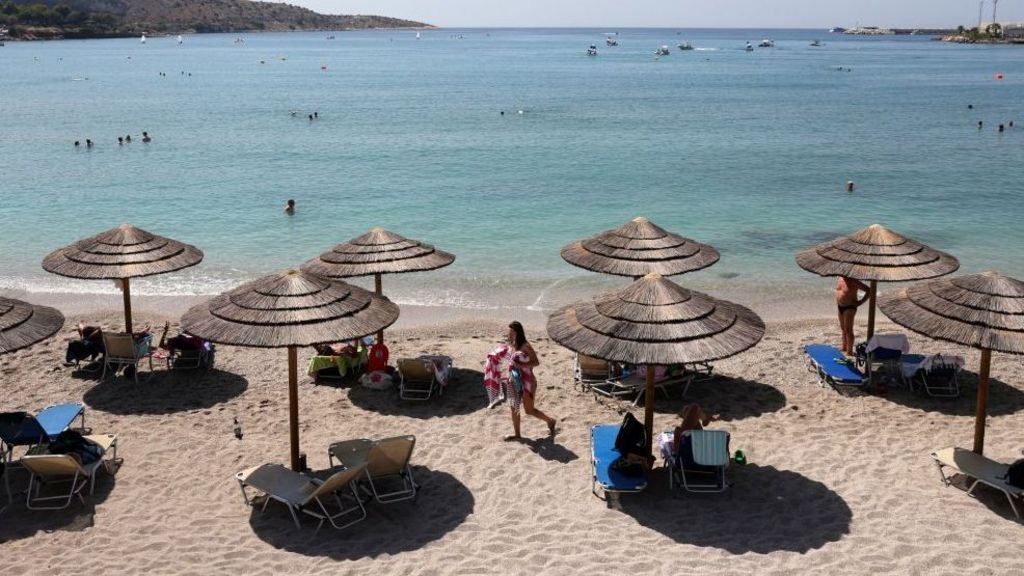
    A trivial dispute over a beach sunlounger has ended in tragedy for two elderly groups visiting the popular coastal spot of Vouliagmeni, just outside the Greek capital of Athens. The violent confrontation, which unfolded on Sunday, has shocked local communities and drawn widespread attention to how minor disagreements can escalate into life-altering incidents.

    According to local Greek media outlets and witness testimony, the conflict began when the 82-year-old victim, who had reserved a sunlounger while waiting for other companions to arrive, clashed with a 76-year-old man over usage rights of the seaside furniture. What started as a verbal argument quickly escalated into a full-blown physical fight, with the chaos drawing in other people connected to both parties.
    One eyewitness who spoke to Greece’s leading Kathimerini newspaper described the scene as shockingly disorderly, saying that the screams from the altercation were loud enough to echo all the way to the opposite end of the long beach. As the fight unfolded, the 82-year-old victim suddenly collapsed on the sand. Bystanders and first responders rushed to provide emergency care: cardiopulmonary resuscitation was administered immediately, and a defibrillator was used to attempt to restart his heart before an ambulance could reach the remote coastal location. Despite these urgent interventions, the man was pronounced dead shortly after being transported to a nearby local hospital.

    The 76-year-old man alleged to have initiated the confrontation has been taken into police custody following the incident. A 21-year-old woman who was accompanying him was also detained for questioning, though she was later released from custody. Witnesses who spoke to Greek daily Ta Nea reported that the woman suffered visible injuries during the fight, including a swollen, bloodied face.

    Greek law enforcement authorities have launched a formal investigation into the incident, with investigators working to determine the exact sequence of events that led to the physical altercation, as well as the precise cause of the 82-year-old victim’s death. The tragedy has prompted local discussions about crowd management and conflict resolution at popular Greek beach destinations, which draw millions of domestic and international tourists every year during the peak summer season.

  • Israeli president pardons soldier convicted for killing wounded Palestinian

    Israeli president pardons soldier convicted for killing wounded Palestinian

    More than a decade after a fatal shooting that split Israeli society and roiled the country’s political landscape, Israeli President Isaac Herzog has issued a full pardon to former Israeli soldier Elor Azaria, overturning his 2017 manslaughter conviction and wiping clean his criminal record. The announcement, first reported by Israeli newspaper Haaretz on Saturday, comes amid deep divisions over the decision, which directly contradicts official advice from Israel’s top military leadership.

    The incident that sparked this long-running debate dates back to 2016, in the occupied West Bank city of Hebron. Azaria, then a young Israeli soldier, shot 21-year-old Palestinian Abdel Fattah al-Sharif in the head moments after al-Sharif had already been wounded by Israeli fire during a reported stabbing attack in the Tal Rumeida neighborhood. A Palestinian photographer working for Israeli human rights organization B’Tselem captured the killing on video, turning the case into an international incident that sparked mass outrage across the occupied Palestinian territories and deep polarization within Israel.

    At the time of the shooting, the Palestinian Ministry of Foreign Affairs labeled the killing an “extrajudicial execution”, while the Israeli military openly acknowledged that Azaria had violated the service’s official code of ethics. In his 2017 military court trial, Azaria was found guilty of manslaughter and sentenced to 18 months in military prison, a term that was later reduced to 14 months by then-military chief Gadi Eisenkot. He ultimately served just nine months of the shortened sentence before being released in May 2018.

    From the moment of Azaria’s arrest, the case became a lightning rod for Israeli right-wing politics. Mass demonstrations were organized demanding his release, and sitting politicians quickly joined the calls for clemency. Just three months after the Hebron incident, then-Defense Minister Moshe Yaalon, who had openly condemned Azaria’s actions, resigned from his post, citing a breakdown of trust in then-Prime Minister Benjamin Netanyahu over his handling of the controversy. Avigdor Liberman, a public supporter of Azaria, was appointed to replace Yaalon, and began pushing for a presidential pardon almost immediately, an effort that former President Reuven Rivlin rejected.

    In justifying his decision to grant the pardon this year, Herzog framed the move around the spirit of Yom Kippur, Judaism’s Day of Atonement and one of its most sacred holy days. In an official statement released Saturday, the president’s office noted that Azaria had already “bore the consequences of his actions” for many years, and that the former soldier had expressed remorse for the harm resulting from the shooting. “This decision was made out of a belief in the importance of repair, reconciliation, and the ability to move forward,” the statement read.

    However, the move runs directly counter to the explicit recommendation of current Israeli military chief Eyal Zamir, who sent a formal letter to Herzog opposing the pardon. Zamir argued that Azaria has never shown public remorse for the killing of al-Sharif. That objection was echoed by Yaalon, now one of Netanyahu’s most prominent political critics, who condemned the pardon as “a disgrace” on social media platform X. Yaalon also accused Herzog of aligning with political attacks on Eisenkot, who is currently leading public opinion polls ahead of Israel’s scheduled October general election. Pointing to Azaria’s own words from the trial, Yaalon noted that the former soldier never claimed he shot al-Sharif out of fear for his life, saying instead that the Palestinian “deserved to die”.

    Defense Minister Israel Katz, who submitted the official pardon request to Herzog, praised the president’s decision as “a correct, humane, and fitting decision”. Katz argued that the pardon sends a clear message to active-duty Israeli soldiers and their families: “We do not abandon soldiers and do not leave them behind.” Far-right Israeli National Security Minister Itamar Ben Gvir, who participated in public protests for Azaria a decade ago, said he was “thrilled” by the ruling, claiming that if the current far-right government’s updated rules of engagement had been in place in 2016, Azaria would never have faced conviction at all.

    Azaria himself reacted to the pardon with open celebration, telling Channel 14 News that it had been “a blessed week”. “Thank God we have reached this moment,” he said, adding that, “It is important that no fighter goes through what I went through.” He also publicly thanked his family, Katz, and Herzog for the outcome.

    The pardon has renewed longstanding concerns over impunity for Israeli security forces operating in the occupied Palestinian territories, highlighted in a recent report from B’Tselem. The group documented that between October 2023 and June 2026 alone, Israeli forces killed 1,087 Palestinians in the occupied West Bank and East Jerusalem, including 242 children and 21 women. B’Tselem described current Israeli policy in Palestinian territories as “a sweeping Israeli assault that is systematically and at an accelerating pace dismantling the foundations of Palestinian existence”, noting that Israeli soldiers, police, and settlers are granted “broad impunity” for violence against Palestinians. Data from the group shows that between 2016 and 2024, just 22.7 percent of formal complaints against Israeli soldiers resulted in investigations, and only 0.9 percent ended in criminal indictments.