博客

  • Singing lemurs use opera technique, study finds

    Singing lemurs use opera technique, study finds

    For years, an international team of researchers spanning the United Kingdom, Italy, and Madagascar has worked to unlock the mysteries of one of nature’s most unique vocalists: the singing indri lemur. Now, their long-running investigation has yielded a surprising discovery that blurs the line between human trained performance and wild animal communication: the endangered Madagascan primate uses the same core vocal technique that professional opera singers rely on to project their voices across large concert halls.

    Led by researchers from the University of Warwick in the UK and the University of Turin in Italy, in collaboration with local partners in the lemurs’ native Madagascar, the new study marks the first time scientists have ever documented this specific level of vocal tract coordination in a non-human primate. To collect their data, the team captured 83 high-resolution video recordings of 19 wild indri individuals, then deployed precision motion-tracking technology to map subtle changes in the primates’ lip and jaw position as they sang. Frame-by-frame analysis confirmed a clear, consistent pattern: every time an indri shifted to a higher pitch, it widened its mouth opening in lockstep, just as a trained human soprano adjusts her vocal tract to hit high notes.

    This coordinated adjustment is called formant tuning, a technique well-known among professional vocalists that amplifies sound frequencies to boost projection and power. For indri lemurs, which live in Madagascar’s dense, thickly forested canopies, this adaptation serves the same core purpose it does for human singers: helping their loud, distinctive songs travel farther across dense vegetation to communicate with other lemur groups across large distances.

    Dr. Chiara De Gregorio, an honorary research fellow at the University of Warwick and a lead member of the study team, emphasized how unexpected the finding was. “We typically associate this fine-tuned coordination between vocal output and body movement with trained human singers, not wild lemurs calling from the forest canopy,” De Gregorio explained. “But frame by frame, we could clearly see that every rise in pitch was matched by a wider mouth opening — it was completely consistent across all the individuals we studied.”

    The research builds on years of work into indri lemur singing behavior that aims to shed new light on the evolutionary origins of human music. A 2025 study from the same research group already revealed that young indri lemurs learn to sing through practice and social learning, a developmental pattern that mirrors how human children acquire language and musical skill.

    While humans and indri lemurs share a distant common ancestor that lived roughly 74 million years ago, the research team notes that the similar formant tuning technique evolved independently in both lineages, a striking example of convergent evolution for effective long-distance communication.

    This discovery not only deepens scientific understanding of primate communication but also opens new avenues of research into the deep evolutionary roots of musical ability across species.

  • Paramount settles lawsuit with US states, helping clear way for $110bn merger with Warner Bros

    Paramount settles lawsuit with US states, helping clear way for $110bn merger with Warner Bros

    After months of legal gridlock that threatened to derail one of the largest media mergers in recent history, Paramount Skydance has reached a settlement with a coalition of U.S. states led by California, eliminating the most significant barrier to its proposed $110 billion combination with Warner Bros Discovery.

    The legal challenge, launched by state regulators, centered on serious concerns that the merger would stifle market competition across the film, television and broadcast sectors, leaving fewer options for creators, industry workers and consumers. California, the epicenter of the U.S. entertainment industry, led the charge against the deal, but the resolution reached this week has resolved state officials’ core objections — without granting explicit approval of the transaction.

    At a press conference announcing the deal, California Attorney General Rob Bonta emphasized that the settlement does not equate to an endorsement of the merger. “I don’t think these two companies should merge,” Bonta clearly stated, adding that the negotiated commitments secured through the lawsuit address the most harmful risks the combination would have posed to competition and industry growth.

    Under the terms of the settlement, Paramount Skydance has agreed to strict production requirements designed to boost domestic entertainment output in the U.S. The company is mandated to release a minimum of 30 feature films annually, with domestic production requirements ramping up over the first five years of the agreement: 20% of all film production must take place within the U.S. for the first two years, rising to more than 30% for the subsequent three years. Bonta projected that these requirements will add between $300 million and $1.5 billion in new investment to U.S. film and television production as a baseline, a figure that could jump by as much as 700% if Congress approves an expanded federal film tax credit. Contrary to common concerns that large media mergers lead to layoffs and industry contraction, Bonta argued the settlement’s terms will actually create new jobs across the entertainment sector, putting unemployed industry workers back to work.

    The settlement comes after tense negotiations that included a threat from Paramount Skydance CEO David Ellison to relocate the company’s core studio operations out of California, a move that would have cost the state billions in economic activity and thousands of jobs. Now that the legal challenge has been resolved, and concerns raised by state attorneys general and the Writers Guild of America have been addressed, the merger has full regulatory clearance to move forward.

    Ellison celebrated the resolution in a public statement, framing the outcome as a win for all stakeholders across the entertainment ecosystem. “Our shared aim was an outcome that best serves consumers, workers and — most importantly — the creative community so vital to the art of visual storytelling,” Ellison said. “We have complete clearance for this merger and look forward to putting these commitments into action.”

    The $110 billion merger, if completed, would reshape the global media landscape, combining two of the biggest players in film production, television content and streaming entertainment into a single industry giant.

  • Iranian military says US preparing to attack again

    Iranian military says US preparing to attack again

    Escalating tensions between Iran and the United States have spiked sharply in recent weeks, after Iran’s top military command issued a stark warning Sunday that it has credible intelligence pointing to an impending new wave of direct American attacks on Iranian territory, ending a months-long period of relatively reduced hostilities between the two nations.

    The alert came from Khatam al-Anbiya Central Headquarters, the top command body that oversees all branches of Iran’s armed forces. In a formal statement released to the public, the military clarified that any nation that allows the United States to stage offensive operations from its territory, or hosts American military or strategic assets used in an attack, will be held legally and militarily accountable as a direct accomplice to the aggression.

    The current escalation comes on the heels of a deadly pattern of low-intensity conflict that the former Trump administration has sought to frame as something short of full-scale war, arguing that occasional intermittent skirmishes do not meet the threshold of an ongoing active conflict. However, official data and on-the-ground reports confirm that dozens of Iranian civilian lives were lost in American strikes carried out as recently as last month alone.

    In response to previous U.S. military action, Iran has already ramped up its own countermeasures: it has stepped up more precisely targeted strikes against U.S. military and energy infrastructure across the Persian Gulf region, while continuing to exercise unchallenged control over the Strait of Hormuz, the strategic chokepoint through which roughly 20% of the world’s global oil supplies pass every day.

    Alongside military pressure, the United States has dramatically escalated its economic campaign against Iran. Last month, U.S. Treasury Secretary announced the launch of what the agency has dubbed “Operation Economic Outcast,” a sweeping initiative designed to cut off Iran’s access to global financial markets and strangle its international economic activity. New sanctions are now being rolled out multiple times every week, with the most recent action coming this Thursday, when the Treasury Department’s Office of Foreign Assets Control (OFAC) added BitBank to its sanctions blacklist. BitBank is a high-priority digital assets venture controlled by prominent Iranian financier Babak Zanjani, and the designation marks one of the first major U.S. sanctions targeting an Iranian digital asset platform.

    Senior officials from the Islamic Revolutionary Guards Corps (IRGC) have further reinforced Iran’s pledge of harsh retaliation in the event of a new attack, warning that the country will enact sweeping and unprecedented changes to its defensive and counteroffensive strategies. “If the United States goes ahead with a new round of attacks, there will certainly be significant changes in our defence and our counteroffensive,” an IRGC spokesperson said in a recent formal statement.

    “We will introduce new weapons with new capabilities into the battlefield, and the world will be surprised,” the spokesperson added. The statement also signaled a shift in Iran’s targeting approach, noting that “Our targets will not necessarily be the same as before either. We have new targets that have not yet been attacked.”

    This report, originally prepared by independent regional outlet Middle East Eye, provides on-the-ground coverage of ongoing developments across the Middle East and North Africa, with unrivaled independent analysis of shifting regional dynamics.

  • Trump’s ‘sweeping’ ICC sanctions over Netanyahu arrest warrant are imminent: Reports

    Trump’s ‘sweeping’ ICC sanctions over Netanyahu arrest warrant are imminent: Reports

    Multiple major international news outlets have confirmed that the Trump administration is moving forward with unprecedented, full-institution sanctions against the International Criminal Court (ICC), with a formal announcement expected as early as this week on the sidelines of the United Nations General Assembly high-level meeting in New York. This escalatory step follows earlier US sanctions targeting individual ICC officials, imposed in retaliation for the court’s 2024 issuance of arrest warrants for senior Israeli leaders over alleged war crimes in Gaza.

    According to reporting from The Wall Street Journal (WSJ), which based its account on internal administration documents and anonymous senior US officials, the proposed sanctions will ban nearly all commercial and financial transactions between US entities and the ICC after a six-to-seven-month grace period. The restrictions will cut the court off from US dollar-denominated financial operations, a move that experts and ICC officials warn could effectively cripple the tribunal’s daily activities. Because most global financial activity relies on the US-led financial system, banks typically over-comply with US sanctions to avoid regulatory penalty, amplifying the damage of the new measures.

    Reuters later corroborated the WSJ’s reporting, confirming that full entity sanctions have been fully drafted by the US Treasury Department, though the exact timing of the announcement remains flexible. Under the framework of the sanctions, US citizens and companies will be barred from providing funds, goods, or services to the ICC without explicit approval from the Treasury’s Office of Foreign Assets Control, with only limited exemptions for communications-related transactions.

    The ICC has long warned that full institutional sanctions would disrupt nearly every core function of the court: from procuring critical IT infrastructure and insurance coverage, to recruiting new investigative staff, to processing routine payroll for dozens of American employees working with the tribunal. These warnings echo longstanding concerns from international law experts that targeting the ICC as an institution rather than just individual officials would constitute a “doomsday scenario” for the court’s ability to operate.

    In response to the looming sanctions, international observers and legal experts have repeatedly called on the European Union to activate its long-dormant Blocking Statute, a regulatory tool designed to shield EU-based entities from the extraterritorial impact of third-country sanctions. If activated, the statute would legally protect EU-based service providers that continue to transact with the ICC, preventing them from being forced to comply with US restrictions that conflict with EU policy. Despite multiple resolutions passed by the European Parliament calling for the statute’s activation in July and September of 2023, the European Commission has yet to trigger the mechanism and has offered no public explanation for the delay.
    Sergey Vasiliev, an international law professor at the Open University of the Netherlands and a leading expert on the ICC, has criticized member states and EU institutions for failing to prepare for this escalation despite advance warning of the Trump administration’s intentions. “States Parties have had ample time to prepare for this and undertake contingency planning,” Vasiliev wrote in a post on X. “Everything must be ready to activate the EU Blocking Statute to shield the ICC from US sanctions targeting it as an institution. The EU Commission and all EU member states that considered this measure premature or too radical must now realise that it can no longer be postponed.”

    This latest round of planned sanctions is the culmination of a months-long campaign by the Trump administration to dismantle the ICC over its investigations into US and Israeli personnel. Washington first imposed sanctions on individual ICC officials last February, starting with then-chief prosecutor Karim Khan, before expanding penalties to two deputy prosecutors and nine judges leading investigations into Palestine and Afghanistan. In August of this year, sanctions were expanded to include ICC president Tomoko Akane and senior trial lawyer Abdoulaye Seye. These individual sanctions have been described as a “financial death penalty” for the affected officials, who have been completely cut off from access to basic global financial services.

    In July, US Secretary of State Marco Rubio laid out the administration’s full agenda in a WSJ opinion piece, announcing a formal US campaign to isolate the ICC globally. Rubio urged all countries to withdraw their membership from the tribunal and warned that Washington would “dismantle it brick by brick” if the court did not alter its activities to align with US demands. Those demands, first revealed by Middle East Eye in December 2023, include requiring the ICC to drop its war crime investigations into Gaza and Afghanistan, and amending the court’s founding document, the Rome Statute, to grant permanent immunity from prosecution to nationals of non-member states such as the United States and Israel. At the ICC’s annual Assembly of States Parties meeting in The Hague last December, member states issued an unprecedented public declaration rejecting these demands and ruled out any amendments to the Rome Statute, without explicitly naming the US.

    The ICC’s 2024 arrest warrants, which triggered the current escalation, targeted Israeli Prime Minister Benjamin Netanyahu, former Israeli defense minister Yoav Gallant, and three senior Hamas leaders over alleged war crimes and crimes against humanity committed during the ongoing conflict in Gaza. The warrants specifically cited the use of starvation as a deliberate method of warfare against Gaza’s civilian population; all three Hamas leaders named in the warrants have since been killed.

    Established in 2002, the ICC is the world’s only permanent international criminal tribunal, mandated to investigate and prosecute the most severe international crimes: genocide, crimes against humanity, war crimes, and crimes of aggression. The court currently maintains more than a dozen active investigations into conflict zones across the globe, including Darfur, Libya, Myanmar, and Ukraine.

    Multiple US-based human rights organizations have already taken legal action to block the Trump administration’s sanctions, arguing that the measures are blatantly unconstitutional and illegal under US law. Last month, four leading groups — the American Friends Service Committee, the Center for Constitutional Rights, Human Rights Watch, and the Open Society Institute — filed a lawsuit against the administration, arguing that the sanctions force the groups to curtail core human rights and legal work in violation of the First and Fifth Amendments of the US Constitution and the Religious Freedom Restoration Act. The groups note that any individual or organization even loosely associated with ICC cases or officials now faces potential legal repercussions for their work. In July, shortly after Rubio published his op-ed, two additional groups — Democracy for the Arab World Now and the Taxpayer Alliance Against Genocide — filed a separate suit in federal court in New York seeking an injunction to halt the enforcement of sanctions against entities and individuals that work with the ICC. Middle East Eye has reached out to the US State Department for official comment on the planned sanctions, but has not yet received a response.

  • Mecca pact faces first trial by fire with Houthi escalation

    Mecca pact faces first trial by fire with Houthi escalation

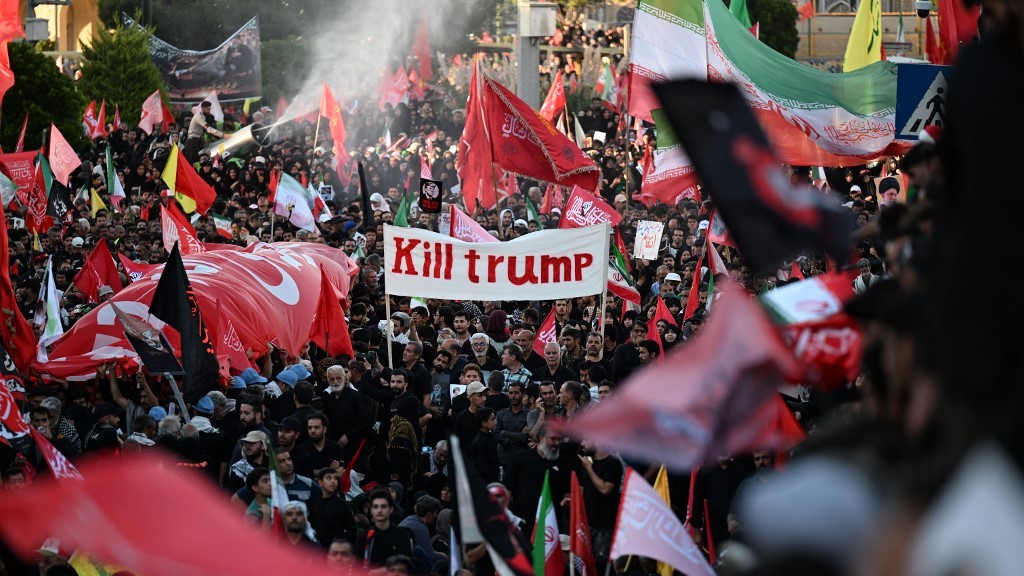
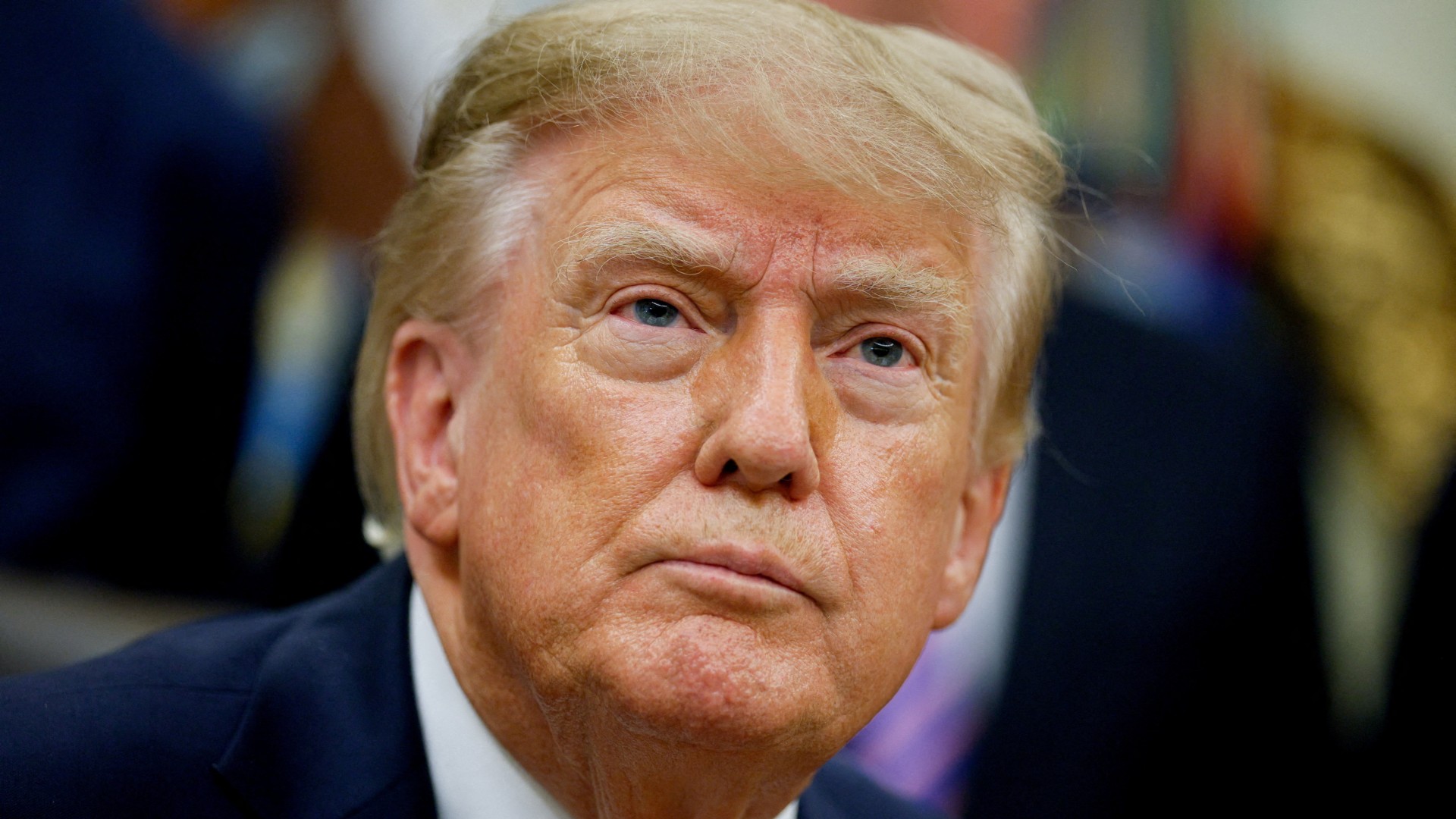
    Last Thursday, former U.S. President Donald Trump made a startling public remark, announcing he faced an imminent ‘big decision’ regarding Iran’s ruling regime: ‘Do I want to go in and annihilate them or do I not? Anything could happen with me.’ This is not the first time the president has issued such an open-ended threat against Tehran, but the comment arrives at a uniquely precarious moment for the Middle East. What Trump once expected to be a short, decisive conflict has now stretched into its seventh month, with growing risks that the fighting will spill across borders and destabilize the entire region.

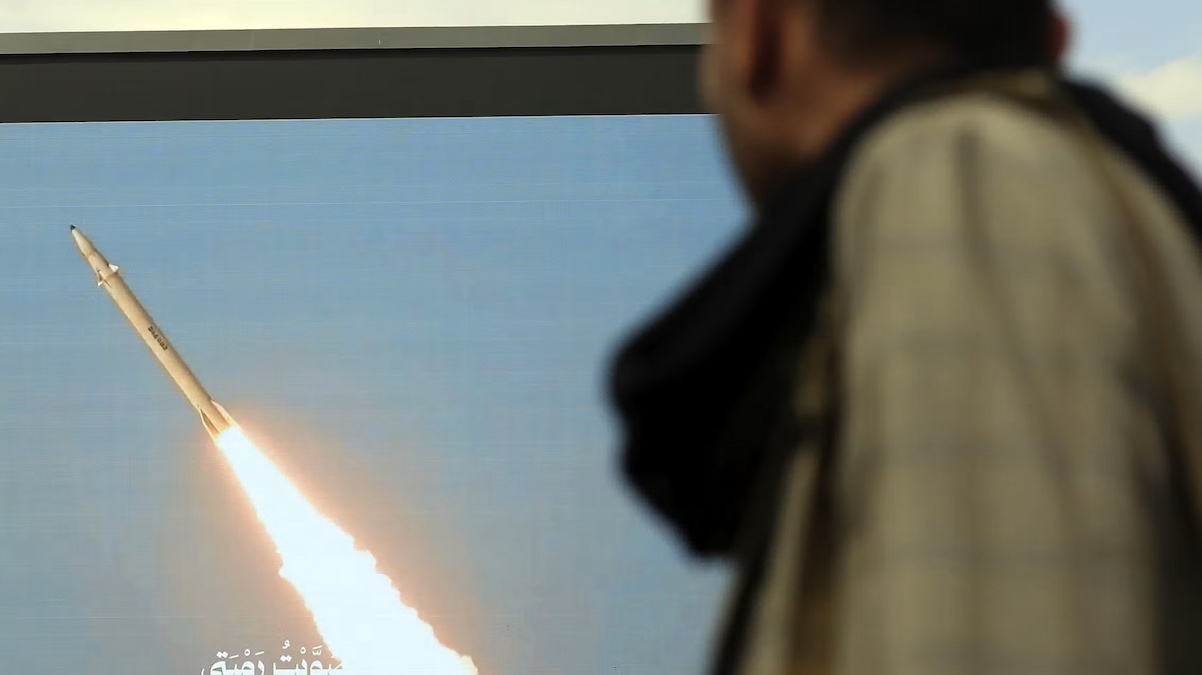
    In the days following Trump’s comment, the Iran-aligned Houthi movement in Yemen announced it had launched a coordinated missile and drone strike targeting ‘sensitive sites’ in Riyadh, Saudi Arabia’s capital. This escalation marks the first major test of the newly signed ‘Mecca Pact,’ a defense agreement between Saudi Arabia, Turkey, and Pakistan that has already upended regional security alignments. For Trump, the stakes of mismanaging this crisis could not be higher: a failure to resolve the conflict threatens both his remaining term in office and the long-term global standing of the United States.

    ## Shrinking Options for the White House

    A confluence of interconnected developments has left Trump with fewer paths forward than ever before. The ongoing conflict has sent global energy prices soaring, inflicting persistent economic pain on consumers across the United States and the rest of the world. Over the same weekend as the Houthi attack, Iran publicly laid out its latest non-negotiable conditions for ending direct hostilities with the U.S.: a full ceasefire across all regional fronts, the unconditional release of billions of dollars in frozen Iranian assets abroad, and an end to the U.S.-led naval blockade of Iranian territorial ports.

    Washington has yet to issue an official response to Tehran’s terms. While accepting the conditions would open the door to a resumption of diplomatic negotiations, the odds of a negotiated deal that quickly reopens the strategically critical Strait of Hormuz remain exceedingly low. The conflict has extracted a devastating human and material toll on the Iranian people, thanks to relentless U.S. military and economic pressure. But that pressure has failed to force Iran’s Islamist government to back down: the regime has maintained aggressive defensive operations, struck U.S. military bases across the region, kept the Strait of Hormuz effectively closed to commercial traffic, and continued to defy the U.S. blockade.

    ## The Conflict Spreads to New Fronts

    What began as a direct U.S.-Iran standoff has steadily expanded across the Middle East. It first spilled into Lebanon, where Iran’s ally Hezbollah has engaged in sustained confrontation with Israel, leaving the country devastated and its civilian population displaced. Now, the fighting has intensified on a second front in Yemen.

    Over the past two weeks, the Iran-backed Houthis, who have battled Yemen’s Saudi-backed internationally recognized Presidential Leadership Council for years, have seized key strategic territory across the country. The group already controls most of western Yemen, a stretch of southern territory, and the capital Sana’a. Its holdings border the Bab al-Mandeb Strait, a chokepoint on the Red Sea that carries roughly 10 to 12 percent of all global maritime trade. The Houthis have tightened their control over traffic through the strait, targeted commercial and military vessels linked to Saudi Arabia, and repeatedly struck Saudi oil infrastructure and critical economic facilities.

    Since the closure of the Strait of Hormuz, up to 70 percent of Saudi Arabia’s oil exports have been routed through a pipeline that carries crude from the Abqaiq oil fields in the country’s Eastern Province to the Red Sea port of Yanbu for global shipment. That key pipeline has now been damaged and shut down, with repairs expected to take several weeks. The disruption is already pushing global oil prices higher, with the potential to trigger ripple effects across the entire global economy.

    ## The Mecca Pact Faces Its First Major Challenge

    Amid the growing chaos, long-time U.S. allies in the Gulf Cooperation Council – including Saudi Arabia, Kuwait, Bahrain, Qatar, Oman, and the United Arab Emirates – have grown increasingly disillusioned with the Trump administration’s leadership. For years, these states have hosted U.S. military bases, but they have now concluded they can no longer rely on Washington as a reliable security partner.

    For Saudi Arabia, the search for alternative security arrangements led to the launch of the Mecca Pact, which entered into force in August. The agreement partners the kingdom with two major Sunni-majority states: Turkey, a NATO member with the alliance’s second-largest standing military, and Pakistan, the only Muslim-majority nuclear weapons state. To date, no other Arab states have joined the pact, and while Iran has publicly welcomed the framework and reports indicate it has been invited to join, Tehran has denied receiving any formal invitation.

    The Houthi attack on Riyadh has already put the new alliance to its first test of credibility. Both Turkey and Pakistan have issued statements affirming their commitment to defending Saudi territorial integrity, but neither has deployed military forces to the conflict yet. Analysts suggest the two countries are hesitant to act, given the Houthi offensive is not formal state aggression against Saudi Arabia. Even so, Turkey’s foreign minister recently indicated the country is prepared to meet any military support requests from Riyadh.

    Both Ankara and Islamabad have also attempted to mediate the crisis, pressuring Tehran to rein in Houthi military operations. Both countries share borders with Iran and maintain constructive working relations with the regime: Ankara has long emphasized unity across the Muslim world, while Islamabad has a long history of acting as an intermediary between Tehran and Washington. These competing priorities make it difficult for either country to fully activate the Mecca Pact’s defense provisions.

    ## Uncertainty Looms Over Trump’s Next Move

    For its part, the Trump administration has so far rejected Saudi requests to launch direct U.S. strikes against Houthi targets, a choice many analysts read as a sign the president has come to recognize the limits of American power projection in the region. Trump’s hesitation to open another active front of conflict has further eroded Riyadh’s confidence in U.S. reliability. U.S. Vice President JD Vance has signaled that Washington is open to mediating negotiations between the Houthis and Saudi Arabia, while the Houthis have committed not to target U.S. commercial or military vessels in the Red Sea.

    Trump has repeatedly stated he is eager to end the conflict and stabilize the Middle East, promising the war will be concluded immediately after November’s U.S. midterm elections. The president has offered no details on how he plans to achieve this goal, leaving observers to assume the outcome hinges on his pending decision on Iran. Hardliners within Iran’s Revolutionary Guard Corps-dominated leadership show no sign of offering Trump an easy out, however: the regime has continued preparations for further escalation rather than de-escalation, even amid crippling economic and financial pressure at home.

    The risk of further escalation remains high. Once midterm elections conclude, Trump could choose to ramp up military action against Iran – unless Democrats retain control of both chambers of Congress and move to block the move under the U.S. War Powers Act. At this juncture, there is no clear indication of where this escalating crisis will lead the Middle East and the broader global order.

    This analysis was contributed by Amin Saikal, Emeritus Professor of Middle Eastern Studies at the Australian National University, University of Western Australia, and Victoria University, and is republished under a Creative Commons license from The Conversation.

  • ‘Our land is not for sale’: Italian activists challenge Israeli-linked solar projects

    ‘Our land is not for sale’: Italian activists challenge Israeli-linked solar projects

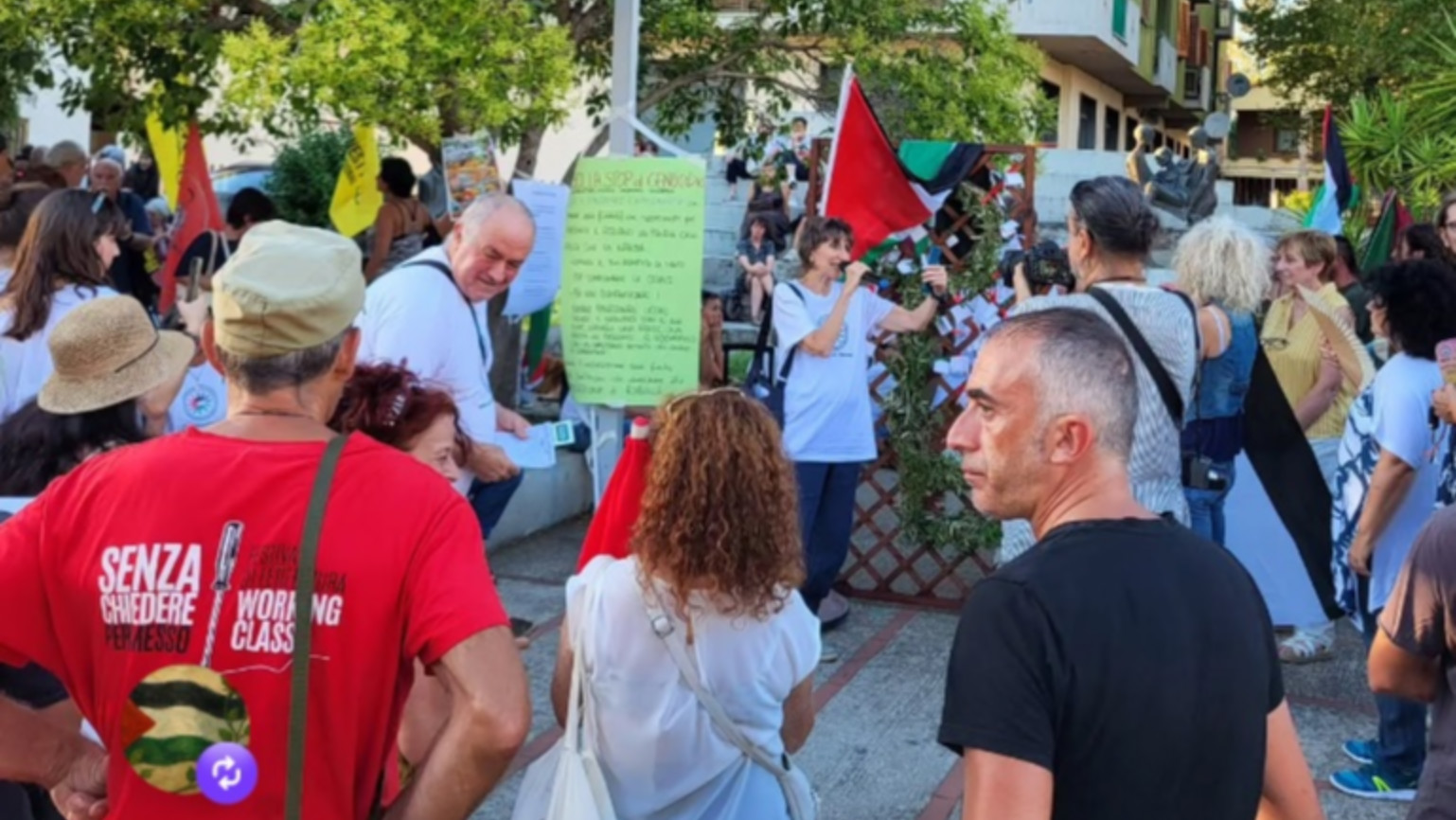
    In the quiet small town of Ribolla in Italy’s Tuscany region, a grassroots movement led by local advocacy group Diritti in Palestina has ignited a widespread campaign against a planned agrivoltaic solar park, after investigators traced the project’s ultimate ownership to an Israeli firm with well-documented ties to Israel’s military and illegal occupation of Palestinian territories.

    The campaign launched in early September, after activists conducting routine scrutiny of the proposed development uncovered that the project was being fronted by a Milan-based special-purpose vehicle (SPV) called SPV Energy 3, a shell company with no registered employees and just €2,500 in share capital. This opaque corporate structure, designed to obscure ultimate ownership, led the team to dig deeper, revealing the firm is a subsidiary of Tel Aviv-based Shikun & Binui, a multinational conglomerate with operations spanning real estate, energy and global infrastructure development.

    Shikun & Binui has ambitious plans to build five utility-scale solar plants across Tuscany, using a network of five separate SPVs registered in northern Italy to hide the company’s ultimate control of the projects. Land lease documents reviewed by Middle East Eye confirm SPV Energy 3 is the formal signatory for the Ribolla development, a structure legal experts say is intentionally designed to limit transparency.

    “This suspicious lack of basic corporate substance prompted us to dig deeper, especially as we have seen a surge of Israeli investments into our region’s renewable energy sector in recent years,” explained 72-year-old Alessandra Bertero, co-founder of Diritti in Palestina, in an interview with Middle East Eye. After the project was first announced in May, Bertero and four fellow activists filed multiple freedom of information requests to map the firm’s operations, uncovering a pattern of Shikun & Binui operating across multiple European Union member states under different local branch and shell company names.

    Critics of the project point to a long record of violations tied to the conglomerate: in September 2025, the UN High Commissioner for Human Rights added Shikun & Binui to its official blacklist of companies operating illegally in Israel’s occupied West Bank and occupied Golan Heights. The firm’s roots stretch even further back, tracing to historic construction firm Solel Boneh, which collaborated with the Israeli military during the 1948 Nakba, the mass violent expulsion of hundreds of thousands of Palestinians from their ancestral land.

    Beyond the occupation ties, the project has sparked fierce local pushback over its strategic location: Ribolla sits roughly 110 kilometers from the port of Livorno, a key transit hub for arms shipments headed to Israel, a detail that has amplified community concerns about the development’s broader implications.

    Activists stress there is still time to block the project, as it has not yet received the required Single Energy Authorization, a permit that falls under the oversight of Tuscany’s regional government. If approved, the development would see 36,000 solar panels installed across agricultural land in the town.

    Michela Arricale, a jurist providing legal support to the campaign, argues that allowing capital linked to Israeli occupation to move forward with the project would directly violate the principle of non-recognition laid out in the International Court of Justice’s landmark July 2024 advisory opinion on Israeli occupation. “We hope we can stop this project, set a legal precedent for communities across other affected regions, and deter similar harmful developments in the future,” Arricale said.

    The controversy also comes amid growing broader criticism of agrivoltaics, a model marketed as a win-win for food production and renewable energy that installs panels high enough to allow crops and grazing to continue underneath. Promoted by European energy lobbies in Brussels as a green solution to land abandonment and climate change, agrivoltaics has expanded rapidly across the continent, but critics warn that poorly regulated projects often amount to greenwashing, delivering few of the promised environmental and social benefits.

    Fabrizio Garbarino, president of Italy’s Rural Association, argues that agrivoltaic projects deployed by foreign multinationals to date have failed to deliver tangible benefits for local farmers or food production. “We have carried out dozens of on-the-ground tests, and none have resulted in meaningful benefits for farmers or viable edible crop production,” Garbarino told Middle East Eye. “This so-called green approach, masked as sustainability, reinforces a neocolonial mindset that exploits crisis-hit rural areas to meet the energy needs of multinational corporations with no connection to local farming – they get praised for their work, but only on paper.”

    Italy’s regulatory landscape has opened the door to this wave of foreign investment: since 2021, permissive national land use rules and generous post-Covid green transition funding have created ample opportunities for international firms to acquire large swathes of Italian agricultural land. In 2023, retail giant Amazon and French energy firm ENGIE launched Europe’s largest agrivoltaics park in Sicily, but three years on, promises of community benefits have yet to materialize.

    At the same time, Israel has positioned itself as a leading player in the global sustainability sector with EU backing and funding, while multiple reports have documented that the country’s green industry contributes to the system of apartheid imposed on Palestinians in the occupied West Bank.

    The unfolding controversy in Tuscany has pushed farmers and campaigners to call for far greater transparency around land ownership and the beneficiaries of Italy’s green transition. “Israel has substantial economic resources, so its investment in profitable greenwashing projects across our country is not surprising,” Garbarino noted, adding that his team has reviewed dozens of contracts from local farmers approached by suspicious foreign investors, most of which use the same shell company structure as SPV Energy 3, with minimal share capital and no prior experience in energy or agriculture.

    Giancarlo Innocenti, head of the retired workers’ association for one of Italy’s largest farming unions and former mayor of Roccastrada, the Tuscan district where the agrivoltaics projects are planned, has also traced a string of recent farmland acquisitions back to Israeli investors or their European front companies. “Recently, a local farmer reached out to me to mediate a conversation in English with an Israeli man who wanted to buy his land,” Innocenti recalled. He has documented a pattern where intermediaries target struggling farmers facing low crop yields and wildfire damage, snapping up land at cut-rate prices during bankruptcy auctions.

    After 40 years working in agriculture across Tuscany’s rolling fertile hills, Innocenti draws a careful parallel between the gradual displacement of Italian farmers by foreign multinationals and the decades-long displacement of Palestinians by Israeli settlement expansion, while acknowledging the profound difference between the two contexts: Palestinians live under direct military occupation and face systematic ongoing land theft. “Our farmland, which is meant to feed our communities, is increasingly exploited for profit,” he said. “Farmers are being quietly, forcibly pushed out of our territories little by little to make room for multinationals, and our historic olive groves are falling to this process. But these protests are our attempt to defend and take back our land – it is impossible not to see this as a metaphor.”

    The Ribolla campaign unfolds against a complex national political backdrop: Italian Prime Minister Giorgia Meloni’s government lists Israel as one of its closest European allies, despite broad grassroots support for Palestinian rights across Italian civil society. The Ribolla project is not an isolated case, but a symptom of a much larger underreported trend of growing Israeli investment in Italy’s agricultural and renewable energy sectors, which is now drawing scrutiny across the country’s southern regions.

    In Puglia, one of Italy’s most productive agricultural regions, foreign investors have targeted large tracts of land for both renewable energy and real estate developments. Across the Strait of Otranto in Albania, widespread public protests have already broken out against real estate projects backed by former US President Donald Trump’s son-in-law Jared Kushner in protected coastal areas, raising broader awareness of how foreign capital – including growing Israeli investment – is targeting vulnerable Mediterranean communities.

    Similar tensions have erupted on the island of Sardinia, where the rapid expansion of large-scale renewable projects has prompted fierce pushback from farming communities and local authorities concerned about uncontrolled land use and irreversible damage to the island’s iconic landscape. Sicily, meanwhile, has become a major magnet for solar development after Amazon’s early investment and public comments from Elon Musk highlighting the island’s potential utility for large-scale energy production. Arricale, the campaign’s legal advisor, says she is currently monitoring two additional Israeli-linked SPVs buying land in western Sicily under local wine grape names Nerello and Nero d’Avola, which are planning large-scale projects with a combined total capacity of 126 megawatts.

    Inspired by the mobilization in Ribolla, residents of the nearby town of Lavaiano have now launched their own campaign to stop a second 22-hectare Shikun & Binui agrivoltaics project, fronted by another shell company called SPV Energy E32. Tuscan regional councillor Lorenzo Falchi has even submitted a national parliamentary inquiry, pushing for the regional government to reject the Israeli-linked projects and set a formal precedent to block similar developments in the future.

    Arricale argues that the controversy exposes the urgent need for clearer national legislation that classifies large agrivoltaics projects as infrastructure, rather than routine agricultural interventions, which would tighten scrutiny and prevent speculative, bad-faith investors from accessing land. “This is a battle that matters to all of us,” she said. “The energy transition is a critical challenge we must overcome, but not at the cost of accepting large-scale speculative projects that hurt working farmers forced to sell their land out of financial desperation – especially when that capital is tied to the illegal occupation of Palestine and violates international and humanitarian law.”

    Bertero echoes this call, urging communities across Italy to increase scrutiny and mobilize to keep foreign speculative projects out of local agricultural land. “Most of the time these deals go through because no one is paying attention,” she said. “The problem is that citizens are not informed, especially in this current political climate, about what is happening right in their own backyards. Our land is the most precious thing we have, and just as Palestinians have shown us, it should not be sold for harmful, self-serving purposes.”

    Middle East Eye, which first reported on this campaign, is an independent media outlet covering the Middle East, North Africa and global issues connected to the region. Requests for republishing this content can be submitted via the outlet’s official contact form.


  • First UK charges brought over 1994 Rwanda genocide

    First UK charges brought over 1994 Rwanda genocide

    For the first time in United Kingdom legal history, a Rwandan man who has resided in north London for years has been formally charged with crimes connected to the 1994 genocide against the Tutsi in Rwanda, the UK’s Crown Prosecution Service (CPS) has confirmed.

    The accused, 65-year-old Dr. Vincent Brown, who previously went by the name Dr. Vincent Bajinya, faces seven criminal counts in total: one charge of aiding genocide, and six additional charges of assisting murder, which prosecutors classify as a crime against humanity.

    According to Frank Ferguson, who leads the CPS’s Special Crime and Counter Terrorism Division, Brown is accused of organizing and encouraging other actors to carry out acts of murder and genocide during the 1994 violence. The defendant is scheduled to make his first court appearance at Westminster Magistrates’ Court this coming Tuesday.

    Ferguson explained that the decision to pursue charges came after a thorough review of evidence compiled by the Metropolitan Police’s specialized War Crimes Team. “We concluded that our legal test for bringing criminal charges had been met,” he stated in an official press statement.

    The investigation traces its origins back to September 2019, when the Rwandan government formally submitted a request to UK authorities to investigate individuals suspected of participating in atrocities in Rwanda’s Rugenge district of Kigali that took place in April 1994.

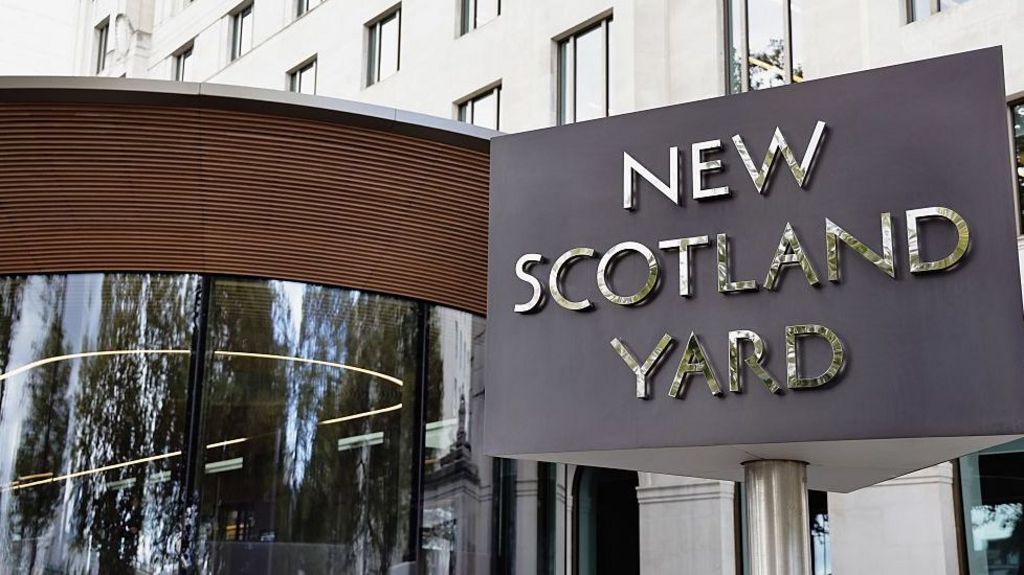
    In a statement released by the Metropolitan Police, the current charges cap off what the department describes as “a complex and extensive seven-year investigation”. Commander Helen Flanagan, who leads Counter Terrorism Policing London, emphasized that this case sends a clear message that the United Kingdom will not serve as a safe refuge for people suspected of perpetrating severe international crimes.

    “The War Crimes Team remains committed to ensuring those suspected of involvement in genocide and other atrocity crimes are held accountable through due legal process,” Flanagan said. She also added that multiple other active investigations are still ongoing targeting other individuals currently located in the UK who are suspected of involvement in similar crimes connected to the 1994 Rwandan genocide.

  • Watch: Timelapse shows typhoon barrelling towards Japan

    Watch: Timelapse shows typhoon barrelling towards Japan

    Striking new timelapse footage has laid bare the relentless advance of a large typhoon as it churns directly toward Japan, bringing with it the threat of widespread disruption and dangerous downpours across the nation’s eastern coastal regions. The captured time-compressed video offers a vivid, big-picture view of the massive storm system’s scale and speed, showing how it has steadily closed the distance to Japan’s shoreline over recent hours. As of the latest updates, the typhoon is currently tracking along Japan’s eastern coast, and its passage has already begun to trigger heavy rainfall that is raising concerns about flash flooding and landslides in vulnerable areas. Beyond the precipitation, the storm’s strong winds and large storm surge are expected to bring major disruption to daily life: transportation networks including regional flights, train services, and ferry routes have already faced widespread cancellations and delays, while local authorities have issued evacuation advisories for tens of thousands of residents in high-risk zones. Weather forecasters are continuing to monitor the typhoon’s track and intensity closely, updating warnings as the system moves across the region, urging residents to stay alert to changing conditions and follow official guidance to stay safe.

  • Why does the US control Iraq’s oil revenues?

    Why does the US control Iraq’s oil revenues?

    For over two decades, nearly all of Iraq’s massive oil wealth has flowed through a financial architecture anchored nearly 6,000 miles away in New York City. The unusual arrangement was born from the chaos of the 2003 U.S.-led invasion, and two decades on, it has evolved into a tool of political leverage that Washington is increasingly wielding to pressure Baghdad to limit Iran’s regional influence and rein in Iran-aligned armed factions operating within Iraq’s borders.

    The standoff over this system burst into public view in April this year, when U.S. authorities halted a $500 million cash shipment of Iraq’s own oil revenues to Baghdad, as part of its pressure campaign against Iran-aligned groups. The move drew immediate condemnation from Muayen al-Kadhimi, a former member of Iraq’s parliamentary Finance Committee, who called on the Iraqi government to cut short what he labeled U.S. domination over the country’s national funds. “The U.S. decision to freeze or delay sending Iraq’s foreign currency entitlements represents a serious violation of the financial and political sovereignty of the Iraqi state,” al-Kadhimi stated at the time. While the shipment was ultimately released after the standoff, the incident laid bare how Iraq’s deep-seated reliance on the U.S. financial system can be weaponized for geopolitical gain.

    To understand how this arrangement took root, one must go back to May 2003, immediately after the collapse of Saddam Hussein’s government. The U.S.-led Coalition Provisional Authority created the Development Fund for Iraq (DFI) to centralize the country’s oil export revenues, directing funds toward post-invasion reconstruction and humanitarian relief. Under UN Security Council Resolution 1483, all Iraqi oil and gas earnings were required to be deposited into a special account held under the Central Bank of Iraq’s name at the U.S. Federal Reserve Bank of New York. Five percent of all revenues were automatically deducted to compensate Kuwait for Iraq’s 1990 invasion, and the account also absorbed frozen assets from Saddam Hussein’s former regime and leftover funds from the UN’s Oil-for-Food programme. A core goal of the setup was to shield Iraq’s new assets from international creditors pursuing decades-old claims dating back to Saddam’s rule, overseen by an international monitoring board with representatives from the UN, IMF, World Bank and Arab Fund for Economic and Social Development.

    The UN-backed formal oversight structure ended in 2011 at the request of the Iraqi government, but the core tie to the New York Fed remained. A new account, codenamed IRAQ2, was established at the New York Fed, and all Iraqi oil revenues still flow into the account before being transferred to Baghdad’s central bank. With the end of the UN framework, however, Iraq lost the broad international legal protection for its sovereign assets, and now depends on annual executive orders from the U.S. government to maintain legal immunity for its funds. Despite the change in formal structure, Iraq’s underlying dependence on the U.S. financial system has remained unchanged.

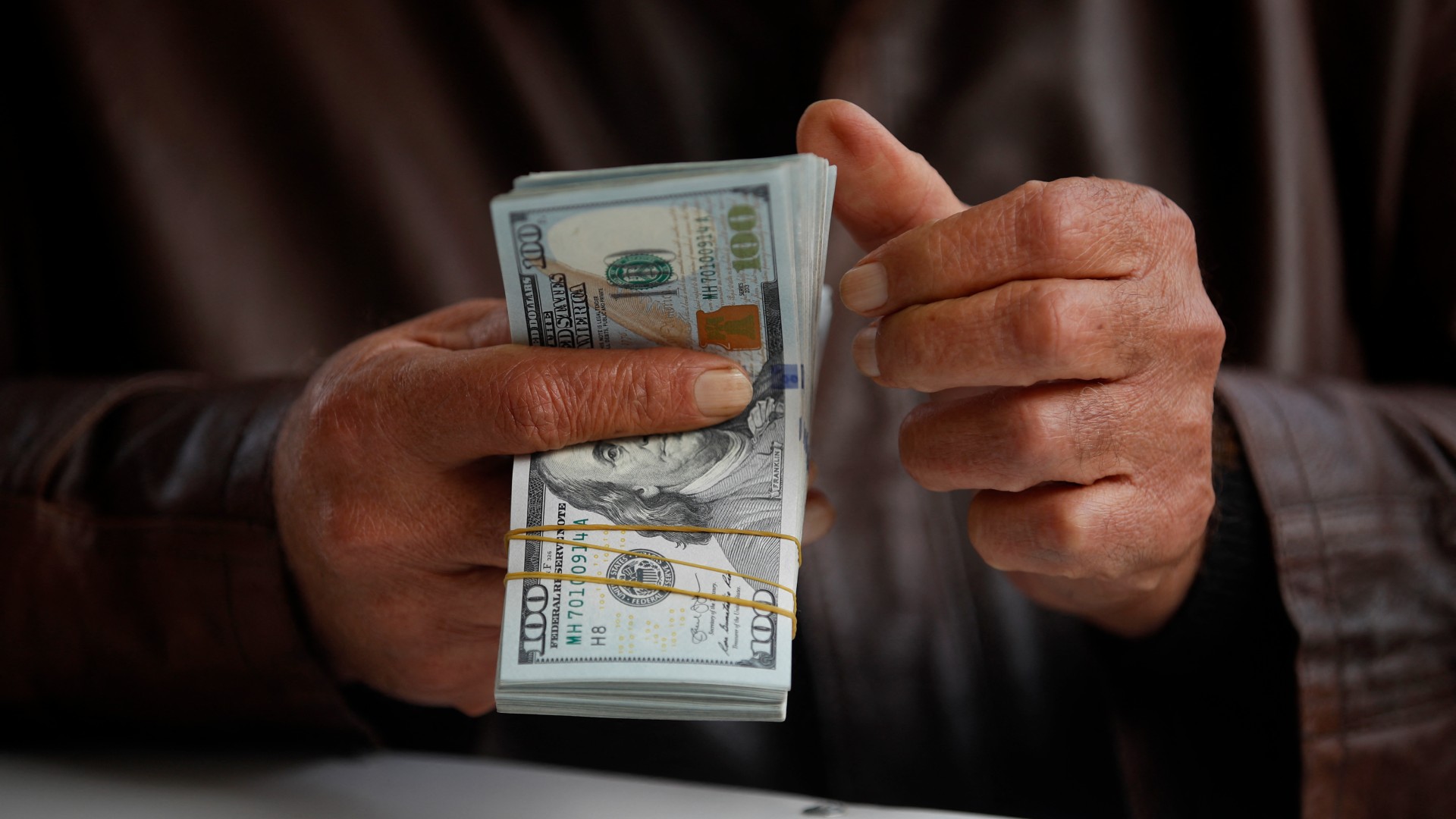
    Today, Iraq’s economy remains deeply tied to the U.S. dollar: nearly all of its oil exports are priced in dollars, and the country relies on the currency for the vast majority of its international trade and imports. It also holds roughly $40 billion in unresolved external debt, leaving policymakers concerned that shifting funds out of the existing system would expose assets to seizure by foreign creditors.
    Ahmed Saddam, an associate professor of economics at the University of Basra, notes that the current arrangement carries tangible benefits for Iraq. “The most important advantages of keeping the Central Bank of Iraq’s account in New York are protecting Iraqi oil revenues from being seized by creditors of the former regime, since the debts are estimated at tens of billions of dollars,” he explained. “The second advantage is facilitating the sale of oil and the settlement of Iraq’s international trade; this account reduces transfer costs, and we should not forget that the dollar is the most widely used currency in international transactions.”

    Yet Saddam also acknowledges that the arrangement leaves Iraq extremely vulnerable to unilateral U.S. pressure, undermining the country’s full financial sovereignty. “As for the most prominent disadvantages, they lie in the ability of the U.S. authorities to impose their influence by restricting access to dollars to Iraq, for example, and this means there is no real financial independence,” he said. While Saddam suggests Iraq could sell a portion of its oil in alternative currencies such as the euro or Chinese yuan, he notes that global oil pricing remains pegged to the dollar, so a full break from the U.S. currency is functionally unfeasible in the short term. Shifting too quickly away from the dollar could also expose Iraq to exchange rate volatility and harsher political retaliation from Washington, he added.
    Instead of an immediate full withdrawal from the New York Fed system, Saddam proposes a gradual diversification strategy. “Financial independence can be achieved by opening multiple sovereign accounts outside the United States while keeping the current account in New York. For example, the Central Bank could open an account with the European Central Bank, as well as with central banks in East Asia,” he said. “Part of Iraq’s oil could also be sold in euros and yuan, let us assume only 15–20 percent, while the remaining 80–85 percent is sold in U.S. dollars. In addition, financial independence requires developing the banking system in Iraq by expanding direct correspondent banking relationships with major banks in Europe and Asia.”

    This long-running financial arrangement has taken on new urgency as Washington ramps up its economic pressure campaign against Iran, targeting Iran-aligned armed groups that operate openly within Iraq. Iraq maintains deep political, economic and security ties with Iran, and Washington has increasingly turned its focus to Iraq’s financial system as a key front to block dollar flows to sanctioned Iranian entities. Since the escalation of tensions between the U.S.-Israel bloc and Iran, Washington has tightened oversight of Iraq’s dollar access and pressured Baghdad to align its financial rules with U.S. sanctions. In early 2025, Baghdad ended its decades-old dollar auction system — formally called the foreign currency window, which allowed private banks and exchange firms to buy dollars from the Central Bank of Iraq in exchange for dinars — after sustained pressure from Washington.

    Washington’s leverage extends beyond regulatory changes to the physical movement of dollar cash into Iraq, as the April 2025 $500 million shipment suspension demonstrated. Even as electronic dollar transfers for international trade continued through the standoff, the incident proved that Washington can block access to physical cash to achieve its political goals, a move that directly impacts Iraq’s domestic liquidity and everyday economic activity.

    The Iraqi government has walked a careful diplomatic line, seeking to maintain positive ties with Washington while preserving its relations with Tehran and local Iran-aligned factions. When asked about potential moves away from the New York Fed system, Iraq’s Oil Minister Basem Mohammed Khudhair deferred the question to the finance ministry, but emphasized that relations with Washington remain constructive. “There has been dialogue with the United States – a very positive dialogue, especially after our trip accompanied by the Prime Minister Ali al-Zaidi there,” he said. “There is great understanding between the Iraqi government and the American government, and the U.S. has provided all support to the Iraqi government for its success in its economic and political dossiers.”

    Beyond high-level diplomatic and policy debates, the arrangement divides ordinary Iraqi citizens, many of whom prioritize curbing widespread state corruption over regaining full financial sovereignty. Hussein Ali, a 35-year-old resident of Baghdad, argued that removing U.S. oversight would not improve living standards for most Iraqis, and would instead open the door to greater graft. “For us, whether Iraq’s money goes to the Federal Reserve in America or comes directly to Iraq, I don’t think our situation as citizens will improve. Instead, the money will be at the disposal of the corrupt, and financial corruption will be even greater than it is now. From my viewpoint, I find it better for the money to remain in New York, under the guardianship and oversight of the U.S. banking authorities,” he said.

    Ali acknowledged that the arrangement undermines Iraq’s national sovereignty, but argued that the country lacks the domestic banking infrastructure and accountable governance to manage the funds independently. “It is true that keeping Iraq’s money in the U.S. bank gives the United States the freedom to control Iraq’s fate politically, financially and in sovereign terms. But Iraq is not ready in terms of banking infrastructure, and the situation requires a strong government to come that cares about the country’s affairs and the interests of its people,” he added. He also echoed widespread concerns that unregulated funds would be diverted to Iran by corrupt officials, exacerbating political and economic tensions.

    Fatima Abdulkarim, a 55-year-old resident of Basra, shared similar views. “I do not believe that Iraq’s oil funds going to Iraq directly instead of going to U.S. banks will help to improve our economic situation,” she said. “Yes, it means Iraqis would dispose of the money without direct U.S. intervention, but corruption will be greater, and the money will go to the same corrupt parties and officials. If the money remains in New York, it is at least under oversight and auditing. But if it comes to Iraqi banks far from any real oversight, I believe Iraq’s situation will be worse off. Keeping the money under the guardianship and oversight of the U.S. banking authorities is better than it reaching the hands of the corrupt.”

  • Merz vows to keep coalition together for Germany’s ‘democratic future’

    Merz vows to keep coalition together for Germany’s ‘democratic future’

    German Chancellor Friedrich Merz is moving to shore up his shaky ruling administration after his Christian Democratic Union (CDU) suffered historic, devastating defeats in two key September state elections, a shakeup that underscores the dramatic realignment of Germany’s political landscape.

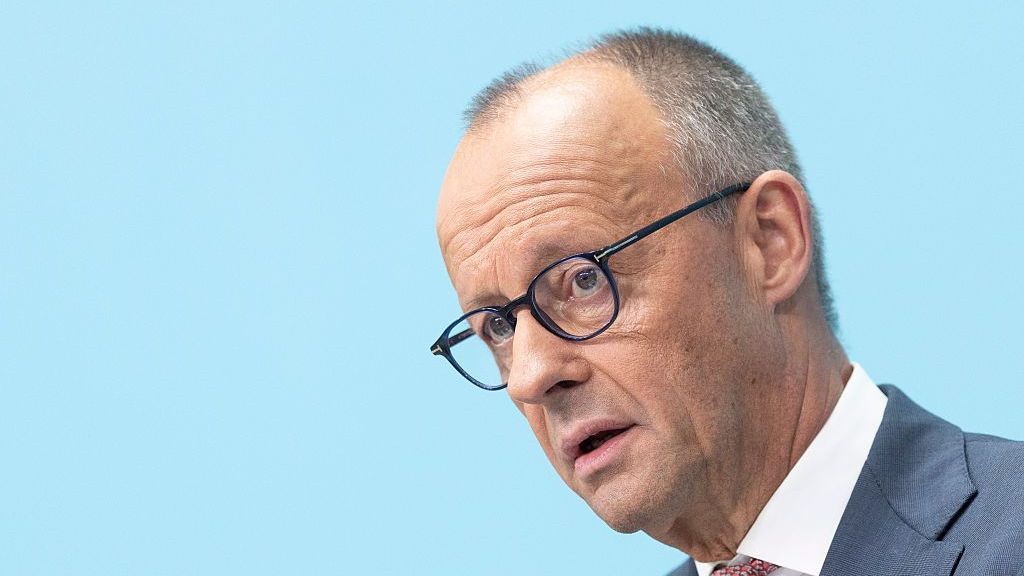
    After a weekend of crushing results that exposed deep voter dissatisfaction with the national CDU-SPD coalition, Merz used a Monday press conference to push back against growing speculation about his political future, insisting he would preserve the three-party grand coalition to safeguard Germany’s democratic future amid unprecedented domestic and global challenges. “We are determined to live up to the historic challenges our country is facing,” Merz stated, referencing the governing pact between his center-right CDU and center-left Social Democratic Party (SPD).

    The results delivered a seismic blow to Merz’s authority, just 16 months after he took office as chancellor. In the northeastern state of Mecklenburg-Vorpommern, the far-right Alternative for Germany (AfD) secured the largest share of the vote — and the CDU failed to clear the 5% vote threshold required to earn a seat in the state parliament, an unprecedented collapse for the long-dominant national party. In the capital Berlin, the CDU finished second, with the hard-left Die Linke party claiming the top spot at the ballot box. The AfD also posted substantial vote gains in the capital, extending its growing electoral momentum across the country.

    Merz did not mince words about the severity of his party’s performance, calling the Mecklenburg-Vorpommern result “a heavy blow” and “a profound turning point” for the CDU. “It is a dramatic, unprecedented result for the CDU in Germany,” he acknowledged. Rejecting claims that his own low personal approval ratings were the sole driver of the electoral backlash, Merz pushed back against growing calls for his resignation or a mid-term “chancellor swap” that has been the subject of growing political speculation. “I know that I as an individual played a role in these state elections,” Merz said, before adding: “But the reasons for the results go far beyond just me. We are witnessing a profound transformation of Germany’s political party system, as is happening in many other countries around the world.” Merz also stressed that there had been no internal discussions about replacing him since the election results were finalized.

    The AfD, which has seen its support surge across Germany’s eastern former communist states in recent years, has already predicted Merz’s ouster is imminent. Asked about Merz’s political future earlier Monday, AfD co-leader Alice Weidel told the BBC: “Pretty soon, he’s going to leave.” The latest electoral losses follow another poor showing for the CDU just two weeks prior, when the party saw its vote share cut in half in Saxony-Anhalt, another eastern state where the AfD secured a major victory.

    While the AfD won a plurality of votes in Mecklenburg-Vorpommern, it remains far short of the majority needed to form a government on its own, and most mainstream German parties have ruled out entering any governing coalition with the far-right party. German domestic intelligence classifies some branches of the AfD as right-wing extremist, a designation the party strongly rejects. The party’s anti-immigration, “Germany First” and Russia-friendly policy agenda has resonated with many voters in the economically depressed eastern states, turning the region into the party’s electoral stronghold.

    In Berlin, the CDU’s second-place finish means Die Linke, which claimed the highest vote share, will have the first opportunity to negotiate a governing coalition in the capital, marking a major ideological shift for one of Germany’s most prominent city governments.