Last Thursday, former U.S. President Donald Trump made a startling public remark, announcing he faced an imminent ‘big decision’ regarding Iran’s ruling regime: ‘Do I want to go in and annihilate them or do I not? Anything could happen with me.’ This is not the first time the president has issued such an open-ended threat against Tehran, but the comment arrives at a uniquely precarious moment for the Middle East. What Trump once expected to be a short, decisive conflict has now stretched into its seventh month, with growing risks that the fighting will spill across borders and destabilize the entire region.
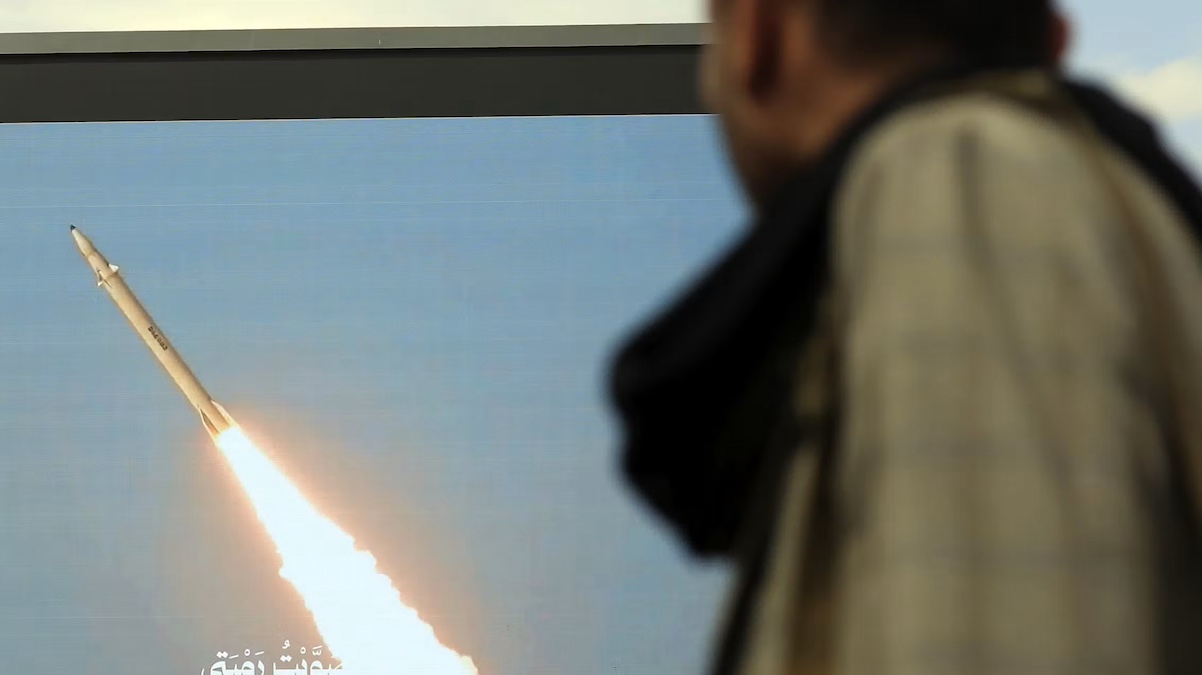
In the days following Trump’s comment, the Iran-aligned Houthi movement in Yemen announced it had launched a coordinated missile and drone strike targeting ‘sensitive sites’ in Riyadh, Saudi Arabia’s capital. This escalation marks the first major test of the newly signed ‘Mecca Pact,’ a defense agreement between Saudi Arabia, Turkey, and Pakistan that has already upended regional security alignments. For Trump, the stakes of mismanaging this crisis could not be higher: a failure to resolve the conflict threatens both his remaining term in office and the long-term global standing of the United States.
## Shrinking Options for the White House
A confluence of interconnected developments has left Trump with fewer paths forward than ever before. The ongoing conflict has sent global energy prices soaring, inflicting persistent economic pain on consumers across the United States and the rest of the world. Over the same weekend as the Houthi attack, Iran publicly laid out its latest non-negotiable conditions for ending direct hostilities with the U.S.: a full ceasefire across all regional fronts, the unconditional release of billions of dollars in frozen Iranian assets abroad, and an end to the U.S.-led naval blockade of Iranian territorial ports.
Washington has yet to issue an official response to Tehran’s terms. While accepting the conditions would open the door to a resumption of diplomatic negotiations, the odds of a negotiated deal that quickly reopens the strategically critical Strait of Hormuz remain exceedingly low. The conflict has extracted a devastating human and material toll on the Iranian people, thanks to relentless U.S. military and economic pressure. But that pressure has failed to force Iran’s Islamist government to back down: the regime has maintained aggressive defensive operations, struck U.S. military bases across the region, kept the Strait of Hormuz effectively closed to commercial traffic, and continued to defy the U.S. blockade.
## The Conflict Spreads to New Fronts
What began as a direct U.S.-Iran standoff has steadily expanded across the Middle East. It first spilled into Lebanon, where Iran’s ally Hezbollah has engaged in sustained confrontation with Israel, leaving the country devastated and its civilian population displaced. Now, the fighting has intensified on a second front in Yemen.
Over the past two weeks, the Iran-backed Houthis, who have battled Yemen’s Saudi-backed internationally recognized Presidential Leadership Council for years, have seized key strategic territory across the country. The group already controls most of western Yemen, a stretch of southern territory, and the capital Sana’a. Its holdings border the Bab al-Mandeb Strait, a chokepoint on the Red Sea that carries roughly 10 to 12 percent of all global maritime trade. The Houthis have tightened their control over traffic through the strait, targeted commercial and military vessels linked to Saudi Arabia, and repeatedly struck Saudi oil infrastructure and critical economic facilities.
Since the closure of the Strait of Hormuz, up to 70 percent of Saudi Arabia’s oil exports have been routed through a pipeline that carries crude from the Abqaiq oil fields in the country’s Eastern Province to the Red Sea port of Yanbu for global shipment. That key pipeline has now been damaged and shut down, with repairs expected to take several weeks. The disruption is already pushing global oil prices higher, with the potential to trigger ripple effects across the entire global economy.
## The Mecca Pact Faces Its First Major Challenge
Amid the growing chaos, long-time U.S. allies in the Gulf Cooperation Council – including Saudi Arabia, Kuwait, Bahrain, Qatar, Oman, and the United Arab Emirates – have grown increasingly disillusioned with the Trump administration’s leadership. For years, these states have hosted U.S. military bases, but they have now concluded they can no longer rely on Washington as a reliable security partner.
For Saudi Arabia, the search for alternative security arrangements led to the launch of the Mecca Pact, which entered into force in August. The agreement partners the kingdom with two major Sunni-majority states: Turkey, a NATO member with the alliance’s second-largest standing military, and Pakistan, the only Muslim-majority nuclear weapons state. To date, no other Arab states have joined the pact, and while Iran has publicly welcomed the framework and reports indicate it has been invited to join, Tehran has denied receiving any formal invitation.
The Houthi attack on Riyadh has already put the new alliance to its first test of credibility. Both Turkey and Pakistan have issued statements affirming their commitment to defending Saudi territorial integrity, but neither has deployed military forces to the conflict yet. Analysts suggest the two countries are hesitant to act, given the Houthi offensive is not formal state aggression against Saudi Arabia. Even so, Turkey’s foreign minister recently indicated the country is prepared to meet any military support requests from Riyadh.
Both Ankara and Islamabad have also attempted to mediate the crisis, pressuring Tehran to rein in Houthi military operations. Both countries share borders with Iran and maintain constructive working relations with the regime: Ankara has long emphasized unity across the Muslim world, while Islamabad has a long history of acting as an intermediary between Tehran and Washington. These competing priorities make it difficult for either country to fully activate the Mecca Pact’s defense provisions.
## Uncertainty Looms Over Trump’s Next Move
For its part, the Trump administration has so far rejected Saudi requests to launch direct U.S. strikes against Houthi targets, a choice many analysts read as a sign the president has come to recognize the limits of American power projection in the region. Trump’s hesitation to open another active front of conflict has further eroded Riyadh’s confidence in U.S. reliability. U.S. Vice President JD Vance has signaled that Washington is open to mediating negotiations between the Houthis and Saudi Arabia, while the Houthis have committed not to target U.S. commercial or military vessels in the Red Sea.
Trump has repeatedly stated he is eager to end the conflict and stabilize the Middle East, promising the war will be concluded immediately after November’s U.S. midterm elections. The president has offered no details on how he plans to achieve this goal, leaving observers to assume the outcome hinges on his pending decision on Iran. Hardliners within Iran’s Revolutionary Guard Corps-dominated leadership show no sign of offering Trump an easy out, however: the regime has continued preparations for further escalation rather than de-escalation, even amid crippling economic and financial pressure at home.
The risk of further escalation remains high. Once midterm elections conclude, Trump could choose to ramp up military action against Iran – unless Democrats retain control of both chambers of Congress and move to block the move under the U.S. War Powers Act. At this juncture, there is no clear indication of where this escalating crisis will lead the Middle East and the broader global order.
This analysis was contributed by Amin Saikal, Emeritus Professor of Middle Eastern Studies at the Australian National University, University of Western Australia, and Victoria University, and is republished under a Creative Commons license from The Conversation.