For over two decades, nearly all of Iraq’s massive oil wealth has flowed through a financial architecture anchored nearly 6,000 miles away in New York City. The unusual arrangement was born from the chaos of the 2003 U.S.-led invasion, and two decades on, it has evolved into a tool of political leverage that Washington is increasingly wielding to pressure Baghdad to limit Iran’s regional influence and rein in Iran-aligned armed factions operating within Iraq’s borders.
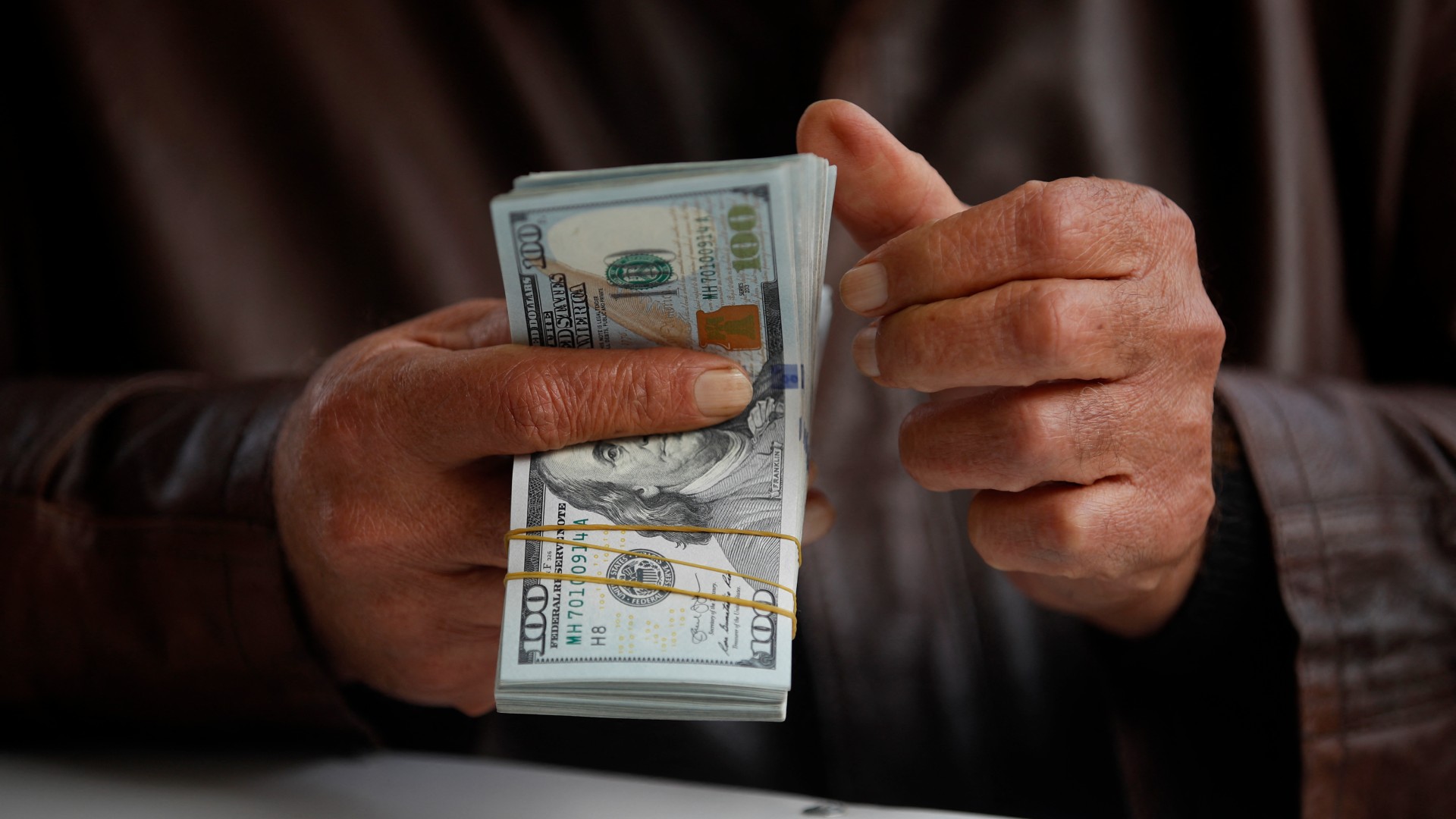
The standoff over this system burst into public view in April this year, when U.S. authorities halted a $500 million cash shipment of Iraq’s own oil revenues to Baghdad, as part of its pressure campaign against Iran-aligned groups. The move drew immediate condemnation from Muayen al-Kadhimi, a former member of Iraq’s parliamentary Finance Committee, who called on the Iraqi government to cut short what he labeled U.S. domination over the country’s national funds. “The U.S. decision to freeze or delay sending Iraq’s foreign currency entitlements represents a serious violation of the financial and political sovereignty of the Iraqi state,” al-Kadhimi stated at the time. While the shipment was ultimately released after the standoff, the incident laid bare how Iraq’s deep-seated reliance on the U.S. financial system can be weaponized for geopolitical gain.
To understand how this arrangement took root, one must go back to May 2003, immediately after the collapse of Saddam Hussein’s government. The U.S.-led Coalition Provisional Authority created the Development Fund for Iraq (DFI) to centralize the country’s oil export revenues, directing funds toward post-invasion reconstruction and humanitarian relief. Under UN Security Council Resolution 1483, all Iraqi oil and gas earnings were required to be deposited into a special account held under the Central Bank of Iraq’s name at the U.S. Federal Reserve Bank of New York. Five percent of all revenues were automatically deducted to compensate Kuwait for Iraq’s 1990 invasion, and the account also absorbed frozen assets from Saddam Hussein’s former regime and leftover funds from the UN’s Oil-for-Food programme. A core goal of the setup was to shield Iraq’s new assets from international creditors pursuing decades-old claims dating back to Saddam’s rule, overseen by an international monitoring board with representatives from the UN, IMF, World Bank and Arab Fund for Economic and Social Development.
The UN-backed formal oversight structure ended in 2011 at the request of the Iraqi government, but the core tie to the New York Fed remained. A new account, codenamed IRAQ2, was established at the New York Fed, and all Iraqi oil revenues still flow into the account before being transferred to Baghdad’s central bank. With the end of the UN framework, however, Iraq lost the broad international legal protection for its sovereign assets, and now depends on annual executive orders from the U.S. government to maintain legal immunity for its funds. Despite the change in formal structure, Iraq’s underlying dependence on the U.S. financial system has remained unchanged.
Today, Iraq’s economy remains deeply tied to the U.S. dollar: nearly all of its oil exports are priced in dollars, and the country relies on the currency for the vast majority of its international trade and imports. It also holds roughly $40 billion in unresolved external debt, leaving policymakers concerned that shifting funds out of the existing system would expose assets to seizure by foreign creditors.
Ahmed Saddam, an associate professor of economics at the University of Basra, notes that the current arrangement carries tangible benefits for Iraq. “The most important advantages of keeping the Central Bank of Iraq’s account in New York are protecting Iraqi oil revenues from being seized by creditors of the former regime, since the debts are estimated at tens of billions of dollars,” he explained. “The second advantage is facilitating the sale of oil and the settlement of Iraq’s international trade; this account reduces transfer costs, and we should not forget that the dollar is the most widely used currency in international transactions.”
Yet Saddam also acknowledges that the arrangement leaves Iraq extremely vulnerable to unilateral U.S. pressure, undermining the country’s full financial sovereignty. “As for the most prominent disadvantages, they lie in the ability of the U.S. authorities to impose their influence by restricting access to dollars to Iraq, for example, and this means there is no real financial independence,” he said. While Saddam suggests Iraq could sell a portion of its oil in alternative currencies such as the euro or Chinese yuan, he notes that global oil pricing remains pegged to the dollar, so a full break from the U.S. currency is functionally unfeasible in the short term. Shifting too quickly away from the dollar could also expose Iraq to exchange rate volatility and harsher political retaliation from Washington, he added.
Instead of an immediate full withdrawal from the New York Fed system, Saddam proposes a gradual diversification strategy. “Financial independence can be achieved by opening multiple sovereign accounts outside the United States while keeping the current account in New York. For example, the Central Bank could open an account with the European Central Bank, as well as with central banks in East Asia,” he said. “Part of Iraq’s oil could also be sold in euros and yuan, let us assume only 15–20 percent, while the remaining 80–85 percent is sold in U.S. dollars. In addition, financial independence requires developing the banking system in Iraq by expanding direct correspondent banking relationships with major banks in Europe and Asia.”
This long-running financial arrangement has taken on new urgency as Washington ramps up its economic pressure campaign against Iran, targeting Iran-aligned armed groups that operate openly within Iraq. Iraq maintains deep political, economic and security ties with Iran, and Washington has increasingly turned its focus to Iraq’s financial system as a key front to block dollar flows to sanctioned Iranian entities. Since the escalation of tensions between the U.S.-Israel bloc and Iran, Washington has tightened oversight of Iraq’s dollar access and pressured Baghdad to align its financial rules with U.S. sanctions. In early 2025, Baghdad ended its decades-old dollar auction system — formally called the foreign currency window, which allowed private banks and exchange firms to buy dollars from the Central Bank of Iraq in exchange for dinars — after sustained pressure from Washington.
Washington’s leverage extends beyond regulatory changes to the physical movement of dollar cash into Iraq, as the April 2025 $500 million shipment suspension demonstrated. Even as electronic dollar transfers for international trade continued through the standoff, the incident proved that Washington can block access to physical cash to achieve its political goals, a move that directly impacts Iraq’s domestic liquidity and everyday economic activity.
The Iraqi government has walked a careful diplomatic line, seeking to maintain positive ties with Washington while preserving its relations with Tehran and local Iran-aligned factions. When asked about potential moves away from the New York Fed system, Iraq’s Oil Minister Basem Mohammed Khudhair deferred the question to the finance ministry, but emphasized that relations with Washington remain constructive. “There has been dialogue with the United States – a very positive dialogue, especially after our trip accompanied by the Prime Minister Ali al-Zaidi there,” he said. “There is great understanding between the Iraqi government and the American government, and the U.S. has provided all support to the Iraqi government for its success in its economic and political dossiers.”
Beyond high-level diplomatic and policy debates, the arrangement divides ordinary Iraqi citizens, many of whom prioritize curbing widespread state corruption over regaining full financial sovereignty. Hussein Ali, a 35-year-old resident of Baghdad, argued that removing U.S. oversight would not improve living standards for most Iraqis, and would instead open the door to greater graft. “For us, whether Iraq’s money goes to the Federal Reserve in America or comes directly to Iraq, I don’t think our situation as citizens will improve. Instead, the money will be at the disposal of the corrupt, and financial corruption will be even greater than it is now. From my viewpoint, I find it better for the money to remain in New York, under the guardianship and oversight of the U.S. banking authorities,” he said.
Ali acknowledged that the arrangement undermines Iraq’s national sovereignty, but argued that the country lacks the domestic banking infrastructure and accountable governance to manage the funds independently. “It is true that keeping Iraq’s money in the U.S. bank gives the United States the freedom to control Iraq’s fate politically, financially and in sovereign terms. But Iraq is not ready in terms of banking infrastructure, and the situation requires a strong government to come that cares about the country’s affairs and the interests of its people,” he added. He also echoed widespread concerns that unregulated funds would be diverted to Iran by corrupt officials, exacerbating political and economic tensions.
Fatima Abdulkarim, a 55-year-old resident of Basra, shared similar views. “I do not believe that Iraq’s oil funds going to Iraq directly instead of going to U.S. banks will help to improve our economic situation,” she said. “Yes, it means Iraqis would dispose of the money without direct U.S. intervention, but corruption will be greater, and the money will go to the same corrupt parties and officials. If the money remains in New York, it is at least under oversight and auditing. But if it comes to Iraqi banks far from any real oversight, I believe Iraq’s situation will be worse off. Keeping the money under the guardianship and oversight of the U.S. banking authorities is better than it reaching the hands of the corrupt.”