博客

  • Cross-Strait ferry trips surge for Qingming holiday

    Cross-Strait ferry trips surge for Qingming holiday

    As the annual Qingming Festival, a traditional Chinese occasion for honoring ancestors and reconnecting with family roots, unfolded in 2026, cross-Strait maritime passenger routes witnessed a sharp uptick in travel volumes, driven by thousands of Taiwan compatriots returning to the Chinese mainland to pay respects at ancestral graves and reunite with relatives.

    Data released by the Fujian Maritime Safety Administration shows that the four core “Mini Three Links” routes — which operate direct ferry services connecting Fujian’s coastal mainland with Taiwan’s Jinmen and Matsu islands — handled 6,655 passenger trips on the Saturday of the holiday weekend alone, marking a 22.5 percent increase compared to the same period last year.

    Among these routes, the Jinmen-Xiamen ferry crossing, which completes the journey in roughly 20 minutes, welcomed nearly 6,000 cross-Strait travelers that Saturday, with Taiwan residents making up more than 70 percent of total arrivals. Border inspection authorities project that total passenger volume on this route across the three-day holiday will reach 20,000, underscoring the sustained demand for cross-Strait family connection during the ancestral commemoration period.

    For many Taiwan travelers, the trip back to ancestral homes on the mainland takes top priority, even over personal plans. Li Yung-hung, a Taiwan compatriot who arrived in Xiamen via ferry, shared that she postponed a scheduled leg surgery to make the journey for this year’s Qingming Festival. “It is an unbroken Chinese tradition to return home for tomb-sweeping, and I want the next generation to understand that our roots are here on the mainland,” Li explained. “When the Jinmen-Xiamen Bridge opens in the future, I hope to drive myself straight back to my ancestral hometown.”

    To accommodate the wave of travelers and create a smooth, comfortable journey, local authorities have rolled out targeted support measures. At Xiamen’s Gaoqi border inspection station, for example, officers fluent in Hokkien — the shared dialect of most Fujian and Taiwan residents — were deployed to assist travelers, a move informed by the fact that 80 percent of Taiwan residents trace their ancestral roots to Fujian, according to Chen Jinlai, deputy chief of the station.

    “Qingming Festival offers the most vivid, tangible proof that people on both sides of the Strait are one family,” Chen noted. “Every trip back is a reaffirmation of our shared ancestral roots and a continuation of collective family memory.”

    Beyond efficient border services, specialized support for root-tracing efforts is also widely available. On Friday, ahead of the holiday peak, the China Museum for Fujian-Taiwan Kinship launched on-site genealogy-matching services at a port in Nan’an, Quanzhou. Since 2006, the museum has helped more than 300 Taiwan compatriots locate their ancestral families and confirm their lineages.

    These root-seeking journeys often lead travelers to iconic ancestral landmarks across the mainland. One notable site is the Jiangxia Ancestral Hall in Xiamen, built in 1910. The hall once served as a departure point for members of the Huang clan who migrated to Taiwan and Southeast Asia, and today it remains a key gathering place for Huang descendants from both sides of the Strait, who gathered there on March 29 to honor their shared ancestors.

    For some younger Taiwan compatriots, the search for origins extends beyond Fujian to deeper ancestral homelands further inland. Huang Chao-jung, a young Taiwan resident, traveled to Jiangxia district in Wuhan, Hubei province — widely recognized as the earliest historical origin of the Huang surname — last month to trace her family’s roots.

    “Growing up in Taiwan, we were often told all Huangs originated from Jiangxia, but most of us only knew our immediate ancestral roots were in Fujian,” Huang explained. “Making this trip all the way to Wuhan gave me an incredible sense of connection, like I’ve finally followed my family’s line all the way back to its source. Setting foot on this land feels so moving and meaningful.”


  • ‘Super veggies’ spread their sales routes

    ‘Super veggies’ spread their sales routes

    At dawn on a spring day in Yunnan’s Dali prefecture, harvesting crews glide across the sun-dappled surface of Erhai Lake, heading out to collect one of China’s fastest-growing trending gourmet ingredients: Ottelia acuminata, a wild aquatic vegetable long cherished as a local hidden gem. By 8 a.m., the first batches of tender, emerald-green stems are pulled from the lake’s clear waters, and the clock starts ticking on a carefully calibrated supply chain designed to get the fragile produce from Erhai to urban dinner tables in less than 24 hours.

    Harvesters immediately submerge the freshly cut Ottelia acuminata in cool lake water to preserve its crisp texture and prevent damage to its delicate stems, before rushing the crop to on-site cold storage facilities for preliminary sorting and processing the same noon. That same afternoon, the packed, temperature-controlled batches depart for Yunnan’s major international airport, bound for Shanghai — a metropolis 2,500 kilometers northeast of Erhai. By early the next day, the vegetable still carries the faint moisture of Erhai Lake when it is unpacked and listed on the digital shelves of leading Chinese fresh e-commerce platform Dingdong Maicai, ready to be ordered and delivered to homes across the city.

    This lightning-fast farm-to-table journey is not an accidental success: it took three years of dedicated work from the team led by Jiang Lichuan, head of spring produce operations at Dingdong Maicai, to turn a logistical impossibility into a scalable, reliable business model. For decades, Ottelia acuminata was only available to diners in the Erhai Lake region, as its high perishability and fragile structure made long-distance transport unfeasible. Even within Yunnan, it was largely unknown outside local gourmet circles, seen as a niche seasonal treat that could never travel beyond the province’s borders.

    Today, that narrative has shifted dramatically. What was once a strictly local specialty is now available to consumers in more than a dozen major Chinese cities, with e-commerce platforms like Dingdong Maicai leading the charge in expanding its market reach. The growing national popularity of Ottelia acuminata is part of a larger trend reshaping China’s fresh produce sector: breakthroughs in agricultural cultivation technology, paired with major upgrades to national cold chain logistics networks and aggressive sourcing strategies from digital fresh grocery platforms, are opening up national markets for hundreds of once-region-locked highly perishable seasonal ingredients.

    These innovations are not only bringing new gourmet experiences to urban consumers, but also creating sustainable new income streams for rural farming communities that have traditionally relied on local, low-margin sales for specialty crops. For cultivators around Erhai Lake, the rising demand for Ottelia acuminata has turned a previously underutilized aquatic plant into a high-value “super vegetable” that supports local livelihoods while introducing regional food culture to a nationwide audience.

  • War in the Middle East: latest developments

    War in the Middle East: latest developments

    The long-simmering conflict between Israel and Iran erupted into open cross-border fire on Tuesday, sending shockwaves through the Middle East and raising urgent international concerns over broader regional destabilization. Multiple coordinated strikes, civilian safety warnings, and high-stakes diplomatic maneuvering have combined to create one of the most volatile moments in the region in decades.

    Pakistan, which has been serving as a neutral mediator between Iran and the United States, has seen its diplomatic efforts to de-escalate the crisis reach a pivotal turning point, according to Iran’s ambassador to Islamabad, Reza Amiri Moghadam. In a post shared Tuesday on the social platform X, Moghadam noted that “positive and productive endeavours in Good Will and Good Office to stop the war is approaching a critical, sensitive stage,” though he offered no additional details on the substance or timeline of the ongoing talks.

    As military operations intensified across the region, the Israeli Defense Force issued an urgent public safety advisory to Iranian civilians, urging them to avoid all rail travel across Iran until 17:30 GMT Tuesday. “For your safety, we ask you to refrain from using trains or travelling by train throughout the country from now until 9 pm Iran time,” the military said via its official Persian-language social media account, warning that “Your presence on trains and near railway tracks puts your life in danger.”

    Neighboring Gulf states have also moved to strengthen security protocols amid rising tensions. Authorities in Saudi Arabia and Bahrain announced a temporary precautionary closure of the King Fahd Bridge, a critical cross-border transportation artery that connects the Saudi mainland to the island Kingdom of Bahrain. The closure came shortly after official security alerts were issued for the border region amid rising threat assessments.

    In the Iranian capital of Tehran, local media confirmed that US-Israeli joint airstrikes carried out early Tuesday completely destroyed the city’s Rafi-Nia synagogue. Iran is home to a small remaining Jewish community, the majority of whose members fled the country in the wake of the 1979 Islamic Revolution.

    Hours after a series of strikes hit energy infrastructure targets across Iran, overnight attacks targeted a major petrochemical complex in the eastern Saudi Arabian industrial city of Jubail. An anonymous witness confirmed the strike to Agence France-Presse (AFP) Tuesday. The strike came shortly after the Saudi Ministry of Defense announced that its air defense systems had successfully intercepted and destroyed seven ballistic missiles launched toward eastern regions of the kingdom.

    The escalating conflict has already claimed the lives of foreign civilians, with the Philippine Department of Foreign Affairs confirming Tuesday that a second Philippine national has been killed in the fighting. The Filipino woman was killed Sunday in a missile strike on a residential building in the Israeli port city of Haifa, dying alongside her Israeli husband and his elderly parents. Israeli rescue services recovered four bodies total from the rubble of the building, which was hit by an Iranian missile a day after the attack was launched.

    Israeli military officials confirmed Tuesday that they had launched a widespread wave of airstrikes across Iran, with local Iranian media outlets reporting loud explosions across multiple neighborhoods in Tehran and the nearby city of Karaj. Simultaneously, the IDF confirmed that its domestic air defense systems had been activated to intercept incoming missiles fired by Iranian forces toward Israeli territory.

    In the autonomous Kurdistan Region of northern Iraq, local authorities reported that a drone originating from Iran crashed into a residential home, killing a married couple. An AFP journalist on the ground also reported hearing two large explosions near Erbil International Airport, which hosts military advisors from the US-led global anti-jihadist coalition. Earlier the same day, a security source told AFP that regional air defense systems had intercepted four missiles targeted at the US consulate in Erbil before they could reach their target.

    At the United Nations headquarters in New York, the UN Security Council is scheduled to hold a key vote Tuesday on a draft resolution addressing Iranian threats to freedom of navigation through the Strait of Hormuz, a top global diplomatic source confirmed to AFP. The latest draft of the resolution, which has been reviewed by AFP, demands that Iran end all attacks on commercial shipping and halt “any attempt to impede transit passage or freedom of navigation in the Strait of Hormuz.” However, objections from multiple veto-wielding permanent Security Council members have forced negotiators to water down the text, and the current draft does not include explicit authorization for the use of military force to enforce its terms. Tehran has effectively closed the strategic waterway to international commercial traffic since US-Israeli strikes on Iranian targets on February 28, a move that has already sent global oil and natural gas prices soaring in recent weeks.

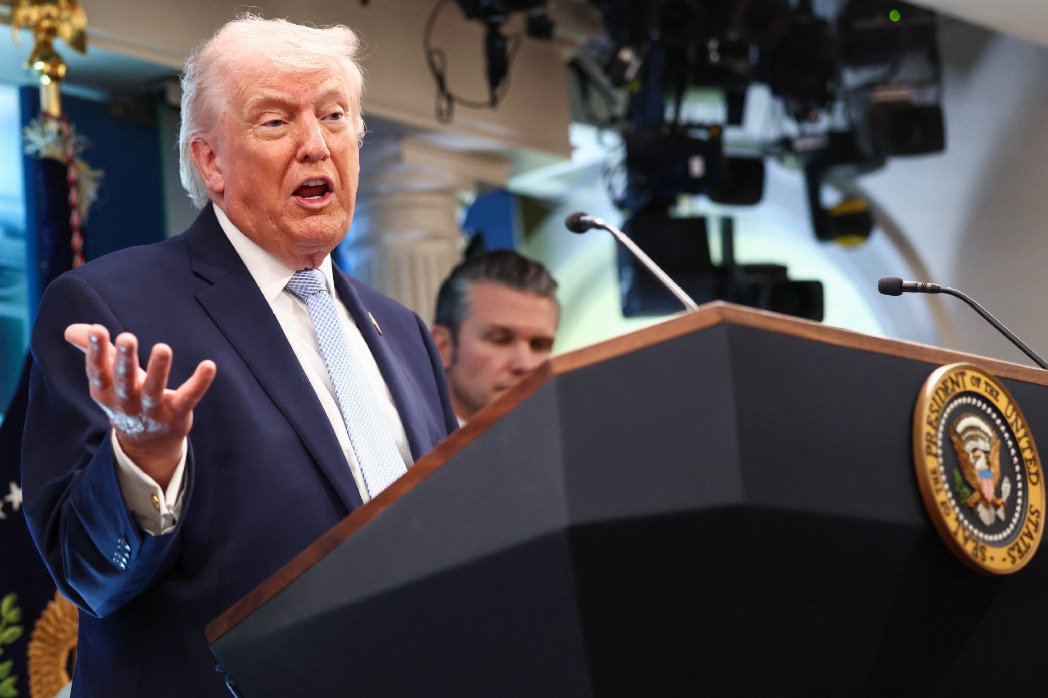
    Tensions between Washington and Tehran further escalated Tuesday after US President Donald Trump doubled down on extreme threats to destroy Iran’s national infrastructure. In response, an Iranian Army spokesperson rejected the threats, saying that Trump’s “rude, arrogant rhetoric” has no impact on Iranian military and political decision-making. Trump doubled down on the threats during a White House press conference, saying that “the entire country” of Iran “could be taken out in one night and that night might be tomorrow night,” if Iran does not meet his ultimatum to reopen the Strait of Hormuz by 00:00 GMT Wednesday. “Every power plant in Iran will be out of business, burning, exploding and never to be used again,” he said, adding that he also threatened to destroy all major bridges across Iran. “I mean complete demolition by 12 o’clock (0400 GMT), and it’ll happen over a period of four hours — if we wanted to.”

  • Australia issues new travel warning for Fiji as separate cyclones loom over Pacific neighbour and north Qld

    Australia issues new travel warning for Fiji as separate cyclones loom over Pacific neighbour and north Qld

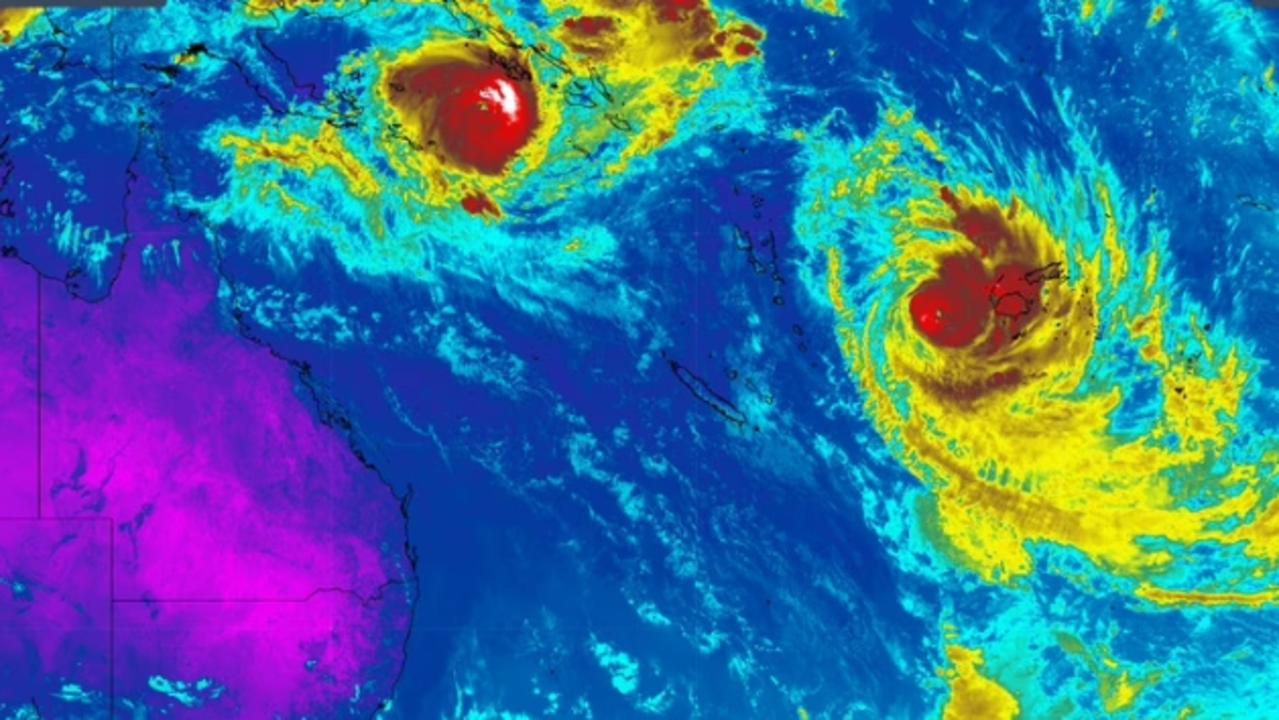
    Two simultaneous Category 3 severe tropical cyclones are churning across the South Pacific, triggering an urgent travel advisory from Australian officials for visitors heading to one of the region’s top tourist destinations, and raising storm preparedness alerts for both Fiji and Australia’s Queensland state.

    In an updated public notice issued through its official Smartraveller service, Australia’s Department of Foreign Affairs and Trade (DFAT) warned Australians with upcoming travel plans for Fiji that Cyclone Vaianu, one of the two powerful storm systems, is projected to bring severe hazardous conditions to the island nation. As the storm tracks southward toward New Zealand, it is expected to dump intense rainfall that will trigger life-threatening flash flooding, alongside destructive sustained winds that can down power lines and damage infrastructure.

    DFAT officials noted that the approaching storm is already poised to disrupt regional travel plans, with widespread potential for flight delays or full cancellations, as well as interruptions to basic essential services across affected areas. The department has urged all current and incoming travelers in Fiji to familiarize themselves with their accommodation’s official evacuation protocols, and to follow direction from local emergency management officials immediately if a storm warning is issued for their area. “If a cyclone is approaching your area, find your nearest shelter and follow the advice of local authorities,” the advisory read.

    Vaianu is currently on track to reach New Zealand’s North Island, including the country’s largest city Auckland, by the weekend. Forecasters project the storm will weaken significantly as it moves across cooler southern waters, dropping below tropical cyclone intensity before it reaches landfall in New Zealand.

    The second cyclone, Maila, the other equally powerful Category 3 storm system, is currently lingering east of Papua New Guinea in the waters near the Solomon Islands. According to updates from Australia’s Bureau of Meteorology (BOM), steering wind currents around the storm are currently balanced, leaving Maila moving slowly across the Solomon Sea. The system is forecast to shift toward the west-southwest by Thursday, and while it will remain well offshore of Queensland’s coast for the next several days, it is projected to track toward far north Queensland from late this week, with potential landfall sometime over the weekend or early next week. Forecasters have not yet confirmed what intensity Maila will maintain when it reaches the Australian coastline.

    This is not the first time Fiji has faced severe cyclone impacts; the island nation suffered one of its deadliest storm events in 2016, when Cyclone Winston made landfall and killed 44 people, leaving thousands homeless and causing hundreds of millions of dollars in damage to the country’s critical tourism infrastructure.

    In addition to the alerts, DFAT has advised all travelers planning trips to Fiji to reach out directly to their airline and accommodation providers to confirm the status of their plans and understand any changes or disruptions that may affect their trip.

  • India’s top court hears challenges to ruling on women’s entry into temple

    India’s top court hears challenges to ruling on women’s entry into temple

    Decades of gender-based exclusion at one of Hinduism’s most revered pilgrimage sites will once again be put under constitutional scrutiny this month, as India’s Supreme Court prepares to hear a high-stakes review of a 2018 ruling that opened the iconic Sabarimala Temple to women of menstruating age.

    Located in the southern Indian state of Kerala, the Sabarimala shrine dedicated to Lord Ayyappa has long enforced a ban on all women between 10 and 50 years of age, a restriction rooted in traditional Hindu beliefs that frame menstruation as a state of ritual impurity. For generations, only prepubescent girls and post-menopausal women have been permitted to enter the temple, which draws millions of male devotees from across India annually.

    That centuries-old practice was upended in 2018, when a five-judge Supreme Court bench delivered a landmark 3-2 verdict striking down the entry ban as discriminatory and unconstitutional. The majority ruled that the constitutional right to practice religion is guaranteed equally to all people regardless of gender, rejecting arguments that long-standing tradition justified the exclusion. The ruling’s lone female justice, Indu Malhotra, who has since retired, issued a notable dissent, arguing that courts should avoid interfering with deeply held religious sentiments, and that secular concepts of rationality have no place in adjudicating religious customs.

    The 2018 verdict sparked widespread, sometimes violent protests across Kerala, with conservative groups mobilizing to block women attempting to access the temple; many women who tried to enter were turned away, and some were physically assaulted. In response, hundreds of thousands of supporters of gender equality in religious spaces held counter-protests, while dozens of petitions for judicial review of the 2018 ruling were filed with the Supreme Court by groups seeking to reinstate the ban.

    The Supreme Court accepted the review petitions in 2019, first convening a seven-judge bench that quickly expanded the scope of the case to include a range of parallel gender and religious freedom disputes across India’s different faith communities. A planned 2020 hearing before a nine-judge constitutional bench was derailed by the onset of the COVID-19 pandemic, leaving the case in limbo for years.

    That changed this past weekend, when Chief Justice of India Surya Kant announced the reconstitution of the nine-judge constitutional bench to finally hear the petitions. The bench’s composition has drawn note for its deliberate diversity: it includes Justice BV Nagarathna, currently the only female judge on the Supreme Court and the justice in line to become India’s first female Chief Justice in 2025, with judges drawn from a cross-section of India’s religious, caste and regional communities. Legal analysts widely view this inclusive selection as an effort to build broader public legitimacy for a verdict that is certain to touch on deeply contested cultural and religious issues.

    Beyond the future of Sabarimala, the bench’s ruling will set a binding precedent for a slate of other pressing questions around gender, religion and constitutional rights across India. These include challenges to entry bans for women in Parsi fire temples and Muslim mosques, the legal authority of religious institutions to excommunicate community members, and the long-debated legality of female genital mutilation practiced within the small Dawoodi Bohra Muslim community.

    In the lead-up to the opening of hearings, the Travancore Devaswom Board, the government body that manages the Sabarimala temple, has urged the court to avoid intervening in faith-based traditional practices. India’s federal government has also formally signaled its support for the review petitions seeking to overturn the 2018 ruling. The hearings are scheduled to conclude on April 22, with a ruling expected in the coming months that will shape the contours of gender equality and religious freedom in India for decades to come.

    Over the past decade, women’s rights activists across India have increasingly challenged centuries-old gender-based restrictions at religious sites, arguing that such exclusions violate the fundamental equal rights guaranteed to all citizens under India’s constitution. The outcome of the Sabarimala review is widely expected to either advance or set back that movement for equal access to religious spaces across the country.

  • Trump threatens Iran could be ‘taken out’ in one night

    Trump threatens Iran could be ‘taken out’ in one night

    On April 6, 2026, U.S. President Donald Trump delivered a stark public warning to Iran during a White House press briefing in Washington D.C., standing alongside newly appointed Defense Secretary Pete Hegseth. The president set a firm 8 p.m. Eastern Time deadline on Tuesday for Iran to reach a negotiated agreement and reopen the strategically critical Strait of Hormuz, threatening that the entire Iranian nation could be “taken out” in a single night of military action — a night that could fall as soon as the deadline passes.

    “The entire country could be taken out in one night, and that night might be tomorrow night,” Trump told reporters gathered in the James S. Brady Press Briefing Room. Despite the escalated threats, the president acknowledged that indirect negotiations through intermediaries have made progress, framing Iran as an “active, willing participant” in talks aimed at resolving the ongoing standoff.

    “I can’t talk about ceasefire, but I can tell you that we have an active, willing participant on the other side. They would like to be able to make a deal. I can’t say any more than that,” Trump added, confirming that the Tuesday evening ultimatum remains final. Beyond broad threats of full-scale elimination of Iranian state capacity, the president revealed his administration has a detailed operational plan to demolish critical infrastructure across Iran, targeting key bridges and power plants by midnight Tuesday if no deal is reached. “I mean complete demolition by 12 o’clock. And it will happen over a period of four hours if we wanted to. We don’t want that to happen,” he claimed, emphasizing that military action remains a preventable outcome.

    Defense Secretary Hegseth backed up the president’s threats, confirming that U.S. military forces have already ramped up offensive operations. He told reporters that Monday’s airstrikes would be the largest single wave of attacks launched since the U.S. military campaign against Iran began on February 28, with even heavier strikes scheduled for Tuesday ahead of the deadline. “Per the president’s direction, today will be the largest volume of strikes since Day One of this operation. Tomorrow, even more than today. And then Iran has a choice,” Hegseth stated.

    The escalating exchange has ratcheted up fears of a full-scale regional conflict in the Middle East, centered on control of the Strait of Hormuz — a chokepoint through which roughly 20% of global oil supplies pass, making its closure a major threat to global energy markets and international economic stability.

  • Minnesota deny Rodriguez has rare muscle wasting condition

    Minnesota deny Rodriguez has rare muscle wasting condition

    Veteran Colombian playmaker James Rodriguez is at the center of swirling health rumors that have been firmly rejected by his current club, Major League Soccer side Minnesota United. The 34-year-old, who boasts a decorated career spanning European giants Real Madrid, English Premier League outfit Everton and his national side Colombia, was recently hospitalized after falling ill during an international fixture, sparking widespread concern across the global football community.

    Rodriguez first displayed visible symptoms of illness during Colombia’s 2025 March 29 international friendly against France, a match that ended in a 3-1 defeat for the South American side. Immediately after the match, the midfielder was admitted to hospital for three days to receive treatment for severe dehydration. He finally made his return to Minnesota United’s training complex on Monday to begin a gradual return to football activity.

    Following his hospitalization, the Colombian Football Federation released an official statement on April 2 confirming that Rodriguez was being monitored for an underlying medical condition unrelated to his football career, while adding that his medical outlook remained favorable. Despite this reassuring update, unsubstantiated rumors began circulating widely across social media platforms, and were picked up by some United States media outlets, claiming the midfielder was suffering from rhabdomyolysis – a rare and potentially fatal muscle-wasting disorder.

    Rhabdomyolysis, a condition that can be triggered by extreme overexertion, causes muscle tissue to break down and release toxic fibers into the bloodstream, which can in turn cause permanent kidney damage or even death if left untreated. However, Minnesota United has pushed back firmly against these claims in an official statement issued by the club.

    “The club and our medical professionals can unequivocally state there has been no clinical or laboratory evidence of rhabdomyolysis,” the MLS side said. Since his return to the training ground on Monday, Rodriguez has completed a supervised low-intensity return-to-activity session, and his progression back to full group training will be managed step-by-step by the club’s specialist medical team to protect his long-term health.

    A seasoned international, Rodriguez made his Colombia debut back in 2011, and has gone on to earn 124 senior caps for his country to date. Since joining Minnesota United in February 2025, he has made two appearances in MLS competition as he settles into his new role in the North American league.

  • Laughter, tears: historic day for astronaut Jenni Gibbons in Houston

    Laughter, tears: historic day for astronaut Jenni Gibbons in Houston

    On a momentous Monday inside NASA’s Houston mission control center, Canadian astronaut Jenni Gibbons stood at the center of a landmark moment for human space exploration, remotely guiding her Artemis II crewmates through their groundbreaking voyage around the Moon. Handpicked as the mission’s backup astronaut, Gibbons spent months training alongside the four primary crew members: NASA astronauts Christina Koch, Victor Glover, Reid Wiseman, and Canadian Jeremy Hansen. On flight day, her core role was managing real-time communications between ground teams and the crew as they checked off a long list of historic milestones during their lunar flyby.

    In an exclusive interview with AFP, Gibbons shared her firsthand account of the emotional, electric atmosphere inside the control room, more than 50 years after humanity first reached the Moon. The air was thick with tangible, contagious excitement, she recalled, a once-in-a-generation moment punctuated by tears, warm hugs, and unbridled laughter. “Every flight controller in that room grew up inspired by the Apollo missions, and many have spent their entire careers working toward this day,” Gibbons explained. “When the crew called down their descriptions of the space and views around them, the energy in the room was unmatched.”

    Over the course of nearly seven hours, the Artemis II crew fixed their gaze on the lunar and deep space landscape outside their capsule windows, shattering long-standing records and making modern space history. Most notably, the team broke the 54-year-old distance record set by Apollo 13, which had stood as the farthest humans have ever traveled from Earth. When Artemis II reached its maximum distance from our home planet, it clocked in at 252,756 miles (406,771 kilometers) – more than 4,000 miles (6,400 kilometers) farther than Apollo 13’s 1970 record. “That moment was so special,” Gibbons said. “At one point, people were crying, people were hugging, people were laughing out of joy. It’s one of the most cherished moments of my entire career.”

    When asked why this lunar flyby will go down as a defining chapter in space exploration history, Gibbons outlined two key breakthroughs beyond the distance record. First, all previous Apollo missions flew much closer to the Moon than Artemis II, meaning the crew experienced a unique perspective of Earth that no human had ever witnessed firsthand. The flyby also brought the crew to the far side of the Moon, where terrain features had never been illuminated for direct human observation during the Apollo era. “We’ve mapped these areas with remote imaging before, but this is the first time human eyes – the most sensitive cameras in existence – have been able to observe these landscapes directly,” she noted.

    One specific observation from the crew stood out to Gibbons above the rest: thanks to the timing of the mission’s launch and unique orbital mechanics, the crew witnessed a solar eclipse as they completed the final leg of their lunar flyby. The alignment of the Sun, Moon, and capsule allowed the team to see faint deep space and lunar features that are usually hidden by bright sunlight, including fine details of the Sun’s corona as it passed behind the Moon. The crew carried eclipse glasses for safe viewing, a small detail that Gibbons says helps connect their out-of-this-world experience to eclipse watchers here on Earth.

    The crew also made a rare scientific observation while the Moon was fully shadowed: they spotted four to five impact flashes on the lunar surface, created when space material collides with the Moon to form new craters. While Apollo astronauts occasionally reported seeing similar events, such observations are extremely rare and hold high scientific value. “The fact that they saw multiple impact flashes during the flyby is just outstanding,” Gibbons added.

  • JD Vance travels to Hungary days before election, hoping to boost Orbán’s campaign

    JD Vance travels to Hungary days before election, hoping to boost Orbán’s campaign

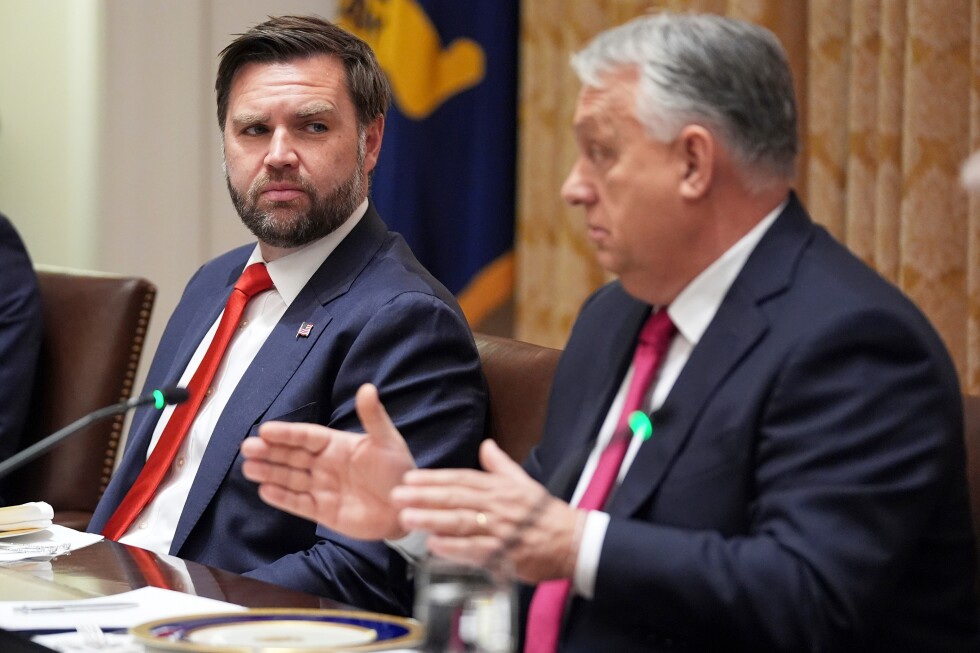
    On Tuesday, U.S. Vice President JD Vance touched down in Budapest, Hungary, capping a sequence of high-profile displays of backing from the Trump administration for incumbent Prime Minister Viktor Orbán, a long-time conservative ally who is locked in a tight race that threatens to end his 16 consecutive years in power.

    Orbán, who has led Hungary since 2010, is vying for a fifth straight term at the helm of his nationalist-populist Fidesz party. Ahead of the April 12 general election, most independent opinion surveys put Fidesz more than 10 points behind among committed voters, trailing the center-right Tisza party led by challenger Péter Magyar. This race stands as the toughest electoral test Orbán has faced in two decades, with many political analysts forecasting a possible end to his grip on national governance.

    For years, critics have levied accusations against Orbán that he has systematically consolidated control over Hungary’s state institutions, restricted independent press freedom, and allowed systemic political corruption to take root — all claims the prime minister has repeatedly and categorically denied. Despite this controversy, Orbán has emerged as a defining figurehead for the global far-right movement, drawing widespread admiration from conservative populist factions across the Western world.

    President Donald Trump has repeatedly thrown his full support behind Orbán’s re-election bid, and ranks of the MAGA movement have widely lauded the Hungarian leader’s hardline stances on immigration, rollbacks of LGBTQ+ protections, and consolidation of control over domestic media and academic institutions.

    Trailing in polls, Orbán has turned to appearances with high-profile international supporters to shore up his campaign’s momentum, and Vance’s two-day visit marks the most public demonstration of the Trump administration’s all-in commitment to securing an Orbán victory this weekend. During the trip, Vance is scheduled to hold an official bilateral meeting with Orbán before making an unprecedented public appearance at one of the prime minister’s campaign rallies.

    This direct involvement in another nation’s electoral campaign marks a break from longstanding diplomatic norms, where most foreign leaders avoid openly campaigning for domestic political candidates in other countries. The irony of Vance’s visit has not gone unnoticed: Orbán has frequently lashed out at any comment on Hungary’s election from European Union leaders, framing even mild expressions of support for his challengers as an unacceptable violation of Hungarian sovereignty and foreign meddling.

    Vance’s stop in Budapest is far from the first show of U.S. support for Orbán from the second Trump administration. Hungary has long stood at odds with the vast majority of the European Union, refusing to provide military or financial aid to Ukraine following Russia’s full-scale 2022 invasion, and continuing to import large volumes of Russian energy despite EU sanctions and efforts to diversify away from Moscow-supplied fuel. Last November, following a White House meeting between Orbán and Trump, Hungary secured a rare exemption from U.S. sanctions on Russian oil and gas. In February, U.S. Secretary of State Marco Rubio traveled to Budapest, where he openly praised Orbán and highlighted the close ties between the prime minister and Trump, telling Orbán that “President Trump is deeply committed to your success because your success is our success.”

    Last month, Orbán hosted the Hungarian iteration of the Conservative Political Action Conference (CPAC), drawing dozens of far-right allies from across Europe and beyond, alongside a gathering of the Patriots for Europe, the third-largest parliamentary grouping in the European Parliament. Trump delivered a pre-recorded video address to the conference, reiterating his “complete and total endorsement” of Orbán and calling him a “fantastic guy.”

    The Trump administration’s enthusiastic backing of Orbán aligns with its broader strategy of building close ties with far-right populist parties across Europe, a relationship that has been reciprocated by conservative nationalist leaders from Spain, France, Germany and the Netherlands. Still, Trump’s unconventional foreign policy approach has created tensions in many European relationships in recent months, with disputes over Greenland, Venezuela and Iran straining bilateral ties with multiple U.S. allies on the continent. Orbán, however, has remained one of Trump’s most unwavering international supporters, even echoing the U.S. president’s false claims that the 2020 U.S. presidential election was stolen through widespread voter fraud. Shortly before Trump’s second inauguration, Orbán told state-run Hungarian radio that Democrats “took the presidency away from Donald Trump through fraud.”

  • Kon Gob, Yahye Abas: Pair charged over alleged Lygon St machete attack on New Year’s Eve

    Kon Gob, Yahye Abas: Pair charged over alleged Lygon St machete attack on New Year’s Eve

    Two months after a brazen New Year’s Eve group machete attack that left two young men hospitalized with severe injuries on one of Melbourne’s busiest entertainment strips, two of the accused have appeared before the Melbourne Magistrates’ Court, with one receiving a stern final warning over case delays.

    On Tuesday afternoon, 20-year-old Kon Tong Gob made his first court appearance since being charged over the December 31 incident on Lygon Street, Carlton, a popular pedestrian strip lined with restaurants and bars that was packed with revellers ahead of midnight. To avoid press photography, Gob covered his entire head with a jacket as he entered and exited the courtroom, keeping his face hidden from view.

    Authorities allege Gob, 21-year-old co-accused Yahye Abas, and a 17-year-old minor carried out the targeted attack outside The Balcony Shisha Bar, which was captured in full by local closed-circuit television. Investigators confirm the two groups involved were already known to one another, and the three offenders fled the scene in motor vehicles after the assault. Two victims, an 18-year-old and a 20-year-old, were rushed to emergency care with serious wounds. All three accused face three identical charges: violent disorder, affray, and intentionally causing serious injury. Two additional men arrested in connection with the case in January – a 19-year-old from Carlton and a 21-year-old from Reservoir – have since been released without any charges being laid.

    During Tuesday’s hearing, Alana Reader, Gob’s legal representative, requested an adjournment of the case. Magistrate Gerard Lethbridge granted a one-month delay but issued an unambiguous final warning that no further extensions would be permitted. “It’s not going to be further adjourned after that date,” Lethbridge told the court.

    Abas also appeared before the court on the same day, and his case was also adjourned following reports he has made a legal deal offer to prosecuting authorities. The court confirmed prosecutors have asked for a four-week window to review and assess the proposal. Both Gob and Abas are scheduled to return to Melbourne Magistrates’ Court for their next hearing on May 6.