博客

  • Irish fuel protests enter fourth day as government seeks to head off shortages, open blocked roads

    Irish fuel protests enter fourth day as government seeks to head off shortages, open blocked roads

    DUBLIN, Ireland – Anti-high-fuel-price demonstrations across Ireland have stretched into their fourth consecutive day on Friday, leaving the nation bracing for worsening supply disruptions and risks to critical emergency services, after three days of road blockades and targeted access restrictions to energy infrastructure. The unrest, which first erupted on Tuesday, has been fueled by relentless upward pressure on gasoline and diesel prices, a trend that traces its roots to tightened oil exports from the Middle East amid ongoing regional conflict.

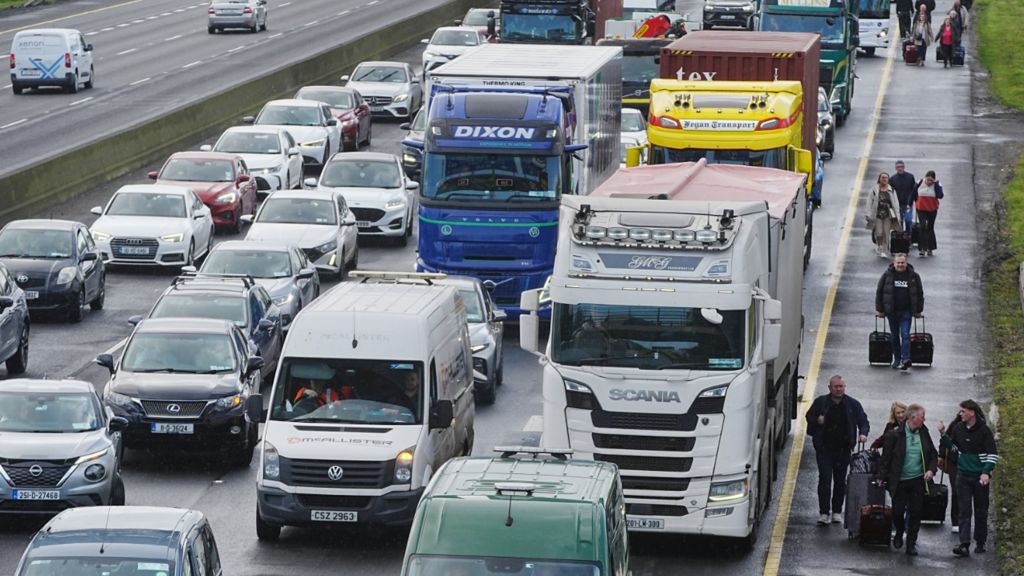
    When the protests launched, demonstrators organized slow-moving vehicle convoys that choked traffic on key thoroughfares in Dublin, Ireland’s capital, and successfully cut off access to major fuel depots – facilities that collectively distribute around half of the nation’s entire fuel supply. Many participants remained overnight, sleeping in their vehicles, to maintain their blockades and amplify their core demand: direct negotiations with the Irish government over relief from spiking energy costs.

    Per local industry data, the disruptions have already triggered widespread fuel scarcity. Ireland’s national public broadcaster RTE, quoting data from Fuels for Ireland, the country’s leading fuel industry association, reported Friday that more than 100 service stations have already completely run out of stock. If blockades continue to prevent deliveries, industry analysts project that number could surge past 500 by the end of Friday.

    Worsening supply chaos has already put critical emergency response operations at risk. With police, fire crews, and ambulance services facing growing delays reaching urgent calls, the Irish government took the unusual step Thursday of authorizing the national army to clear blocked roads and remove demonstrator vehicles. The government has already highlighted that it previously implemented a slate of policy measures to rein in skyrocketing fuel costs: these include a temporary cut to excise taxes on motor fuels, expanded rebate programs for commercial diesel users such as trucking and bus companies, and an extension of energy assistance initiatives for low-income households struggling with heating bills.

    A key development is scheduled for Friday, with Irish government leaders set to hold talks with representatives from the key protesting groups: farmers, long-haul truckers, and agricultural contracting firms. While protest organizers have publicly stated they will stand down their coordinated blockades immediately if the government agrees to open negotiations, uncertainty remains over whether all participating groups will earn a seat at the table in the planned talks.

  • Australian man dies after being found unconscious on balcony at a Bali hotel

    Australian man dies after being found unconscious on balcony at a Bali hotel

    A 30-year-old Australian tourist has died in Bali, Indonesia after his girlfriend found him unconscious on their accommodation’s balcony, triggering an ongoing official investigation into the unexpected death. The incident unfolded early Wednesday morning in the popular coastal resort area of Seminyak, with the girlfriend locating the unresponsive man at approximately 4:15 a.m. immediately after discovering him, she alerted hotel management and emergency response teams.

    According to official statements from Gede ADI Saputra Jaya, a public spokesman for the Denpasar Police Department, first responders confirmed the victim was still breathing when they arrived at the hotel to render aid. “He was unconscious when taken to Siloam hospital,” Jaya confirmed to local media outlets. Despite emergency medical intervention, the Australian man passed away several hours after being admitted to the hospital.

    Investigators have outlined key timeline details from the night preceding the death: the couple had spent the evening at a local bar, returned to their hotel around 1:30 a.m., and engaged in a verbal argument. Following the disagreement, the man told his girlfriend he would sleep on the open balcony, a choice that preceded the morning’s emergency discovery.

    As of press time, law enforcement teams have not announced a confirmed cause of death, with the spokesperson noting that officers are still conducting a thorough investigation into the circumstances surrounding the incident. Australia’s Department of Foreign Affairs and Trade has been contacted by media outlets seeking comment on the case, and has not yet released an official statement.

  • Travellers told to allow more time for journeys as Irish fuel protests continue

    Travellers told to allow more time for journeys as Irish fuel protests continue

    Four straight days of disruptive fuel price protests have thrown transportation across the Republic of Ireland into chaos, with gridlock forcing travelers to take drastic measures and triggering a fierce standoff between protesters and government officials.

    On Thursday, the disruption reached a striking new level when commuters heading to Dublin Airport were captured on camera walking their carry-on and checked luggage along the northbound lane of Dublin’s busy M50 motorway. Persistent blockades had left traffic at a complete standstill, leaving many with no other option to make their flights on time. In response to the ongoing unrest, Dublin Airport issued an urgent advisory Friday urging all passengers to allocate far more time than usual for their trips to and from the terminal.

    The demonstrations, organized by farmers and transport workers, are rooted in skyrocketing fuel costs driven by geopolitical instability in the Middle East. The ongoing conflict between the United States, Israel and Iran has disrupted global energy trade, with an estimated 20% of global oil supply held up by the closure of the Strait of Hormuz, a critical global shipping chokepoint. In recent weeks, this disruption has pushed diesel prices in Ireland from roughly €1.70 per litre to €2.17, while petrol prices have jumped as much as 25 cents per litre at many retail outlets. Protesters are calling for major government intervention, including cuts to fuel taxes and a reevaluation of overly rapid climate policy rollouts that they say have added to cost burdens.

    As protests entered their fourth day, the Irish government has moved toward a hardline response. On Thursday, officials requested military support to remove vehicles blocking public roads, with Gardaí (the Irish national police service) classifying blockades at fuel storage depots as illegal obstructions. In a statement Thursday, a Gardaí spokesperson warned that the force would enter an active enforcement phase if protesters did not step back and disperse from critical infrastructure, noting that ongoing blockades already threaten access to essential supplies including food, drinking water, fuel and animal feed. Irish Justice Minister Jim O’Callaghan has also warned that participants in illegal blockades will face legal consequences, including potential impacts on their driving licenses, saying penalties may not be immediate but will be enforced over time.

    The mounting disruption has already put severe strain on Ireland’s fuel supply network. Fuels for Ireland, the national fuel industry body, confirmed that as of Friday, 100 retail garage forecourts — mostly in the Munster region and western Ireland — have already completely run out of fuel. Chief Executive Kevin McPartlin told national broadcaster RTÉ that the total number of dry forecourts could reach 500 by Friday night, with half of the country’s incoming fuel shipments currently trapped behind protest barricades.

    Government officials have moved to open talks with industry representative groups Friday, with Agriculture Minister Martin Heydon and Minister of State Timmy Dooley set to meet with sector leaders. The Irish Road Haulage Association, one of the groups participating in the talks, has drawn a line at the disruptive blockades: while the association supports the protest over unsustainable costs, Deputy Vice President Eugene Drennan confirmed the group will not bring participating protesters to Friday’s meeting, and called for an immediate end to road blockades, noting they are hurting ordinary Irish citizens more than decision makers. Sinn Féin, Ireland’s main opposition party, has criticized the government’s handling of the crisis, with leader Mary Lou McDonald calling on the Taoiseach (Prime Minister) and Tánaiste (Deputy Prime Minister) to open direct talks with protesters rather than leaning on enforcement.

    For ordinary Irish residents, the crisis is already spilling over into critical public services. The Health Service Executive has issued an urgent appeal for all access routes to medical facilities to be kept clear, to ensure patients can reach life-saving treatment. Across the country, key transport routes including the M50 and N1 remain heavily congested, with traffic updates published continuously on the Transport Infrastructure Ireland website for affected travelers. Speaking Thursday, Taoiseach Micheál Martin called the blockades of public infrastructure an unfair form of protest, while Defence Minister Helen McEntee said the actions of some demonstrators have already crossed into criminal behavior.

    One participating protester, Mark Maguire, a farmer based on the Monaghan-Fermanagh border, told BBC Radio Ulster that demonstrations are a last resort for working producers facing unmanageable costs. “There’s not one farmer in Ireland or Northern Ireland that wants to be out protesting. They have enough to do,” Maguire explained, adding that the only demand from participating farmers is an end to punitive fuel taxation that has made operating impossible for many small operations.

  • China warns of digital AI ‘token’ risks

    China warns of digital AI ‘token’ risks

    As artificial intelligence integration accelerates across China’s digital economy, a core technical component of large AI models has quickly moved from behind-the-scenes infrastructure to the center of a national security alert, as authorities warn of widespread fraud, data theft and systemic risks tied to the unregulated handling of AI tokens, known locally as ciyuan.

    Defined as the smallest unit of data processed by large generative AI models, tokens serve multiple critical functions in modern digital ecosystems. Beyond measuring computing power usage for AI services ranging from text generation to image and video editing, tokens also act as digital credentials for identity verification, access control to protected platforms and payment authorization for AI API calls. Their rapid proliferation has mirrored the boom of China’s generative AI sector, with official data showing average daily token call volumes surpassed 140 trillion as of March 2026 — a more than 1,000-fold increase from the start of 2024.

    This explosive growth caught the attention of China’s Ministry of State Security, which released a public warning on April 8 detailing three major categories of token-related threats facing individual users and national infrastructure alike: token theft and hijacking, unauthorized forgery and tampering, and large-scale fraudulent investment schemes.

    Unencrypted tokens, the ministry explained, are highly vulnerable to exploitation through common cyber threats including malware injections, coordinated network attacks and connections over insecure public networks. Once stolen, tokens allow criminals to impersonate legitimate users, gain illegal access to sensitive personal and institutional data, and carry out unauthorized financial transactions without detection. For platforms with insufficient verification protocols, attackers can also easily forge or alter token credentials to bypass built-in security checks, gaining entry to restricted systems.

    Fraudulent schemes have emerged as one of the most pervasive threats to the general public, as scammers capitalize on low public awareness of what tokens actually are. On popular social media platforms, bad actors have been promoting low-cost token packages, unlimited usage plans and unauthorized token agency resale schemes, marketing tokens as a high-profit investment opportunity similar to the hyped virtual currency schemes of previous years. Many of these promotions use standardized, persuasive scripts to frame the emerging “token economy” as a quick path to wealth, when the operations are actually pyramid schemes designed to recruit new participants rather than generate legitimate returns.

    Huang Daoli, a senior researcher at the Third Research Institute of the Ministry of Public Security, noted that what was once a niche technical term confined to AI development circles has now become a foundational building block of China’s digital economy. “In practice, tokens are used to measure generative AI computing power and bill API calls,” Huang explained. “In many applications, they also serve as credentials for identity verification and access control, giving them simultaneous technical, transactional and security functions.”

    With daily usage already crossing the 140 trillion threshold, Huang emphasized that token security risks can no longer be dismissed as isolated, minor technical issues. “If token security is breached at scale, the impact may spill over from personal privacy violations and individual financial loss to broader threats to national data security and even overall economic security,” she warned.

    Scams that repackage tokens as legitimate investment products exploit the public’s limited technical understanding, Huang added, and pose direct risks to personal privacy and identity security. Widespread token forgery, meanwhile, could undermine data governance protocols in critical sectors including government administration and financial services, creating systemic risks for the country’s digital infrastructure.

    China already has a robust legal framework in place to govern digital security, including existing cybersecurity and data protection laws that cover token-related activities. According to Huang, the top priority moving forward is strengthening enforcement of these rules, particularly through tighter identity management and increased oversight of unregulated high-risk API resale markets.

    Both the Ministry of State Security and industry experts have issued clear guidance for the public to avoid token-related risks. Authorities stress that tokens function exclusively as digital credentials for AI services, not as investable financial products. Users are advised to steer clear of get-rich-quick token schemes, only access AI services through verified trusted platforms, and strictly protect token credentials and account passwords just as they would for online banking tools.

    Huang emphasized that tokens should be classified as highly sensitive digital assets on par with critical payment tools. “The key is to change the mistaken belief that an API key is merely a trivial technical parameter,” she said. “It should be treated as what it is: a critical data asset that requires rigorous protection.”

  • Slimmer, sleeker marathons see survival of fittest

    Slimmer, sleeker marathons see survival of fittest

    When 22,000 runners line up at Beijing’s Tian’anmen Square this Sunday for the capital’s annual Half Marathon, they will step into a rapidly changing landscape for long-distance running events across China. This shift, driven by new safety and quality standards, has already rolled out at high-profile spring races in Wuxi and Wuhan, setting a new benchmark for how marathons are organized and experienced nationwide.

    Ahead of the Beijing race, the Chinese Athletics Association released the 2025 China Marathon Races Blue Book on April 4, which laid out the tangible effects of the regulatory overhaul. For the first time in the modern boom of Chinese marathons, the total number of marathon-related events across the country dropped significantly in 2025, falling to 594 from 696 recorded in 2024. This marks the sport’s first large-scale industry “slimdown”, as authorities cull unregulated, low-quality events to raise overall standards.

    But fewer events do not equal a shrinking industry. The blue book data reveals that the economic impact and overall quality of remaining events have grown sharply. A-class certified events alone generated a direct economic output of 18.51 billion yuan (equivalent to $2.68 billion) in 2025, drove a total national economic benefit of 45.4 billion yuan, and supported more than 183,000 jobs across related sectors from hospitality to retail.

    Shen Hui, an associate professor in the Department of Physical Education at Southeast University and an international-level athletics judge, explains that marathons have long outgrown their identity as purely competitive sporting events. Today, they function as multifaceted platforms that drive local city tourism, polish regional brand images, stimulate domestic consumer spending, and fuel broad-based economic development.

    Interviews with industry insiders deeply involved in event execution show a clear industry trend toward more standardized, refined, and accountable event management. “While gaps still remain between cities with different infrastructure foundations, and some small niche events still struggle with limited resources, the overall direction is undeniable,” Shen noted. “The sector is moving from rough, scattershot growth to precise, intentional operation, and from perfunctory event planning to responsible, participant-centered organizing.”

    Analysis of 284 A-class certified events included in the blue book confirms this trend: the intentional reduction in event quantity has directly sparked a surge in overall quality, reshaping not only the experience for long-distance runners but also the contributions marathons make to urban economies and national public health across China.

  • In Congo, an unconventional Christian movement has existential lessons for the troubled nation

    In Congo, an unconventional Christian movement has existential lessons for the troubled nation

    KINSHASA, DRC — For half a century, one of the most influential religious and liberation movements in modern African history has operated in relative global obscurity, even as it grew to count millions of followers across the continent and beyond. Its founder, Simon Kimbangu, spent 30 years behind bars, dying in exile after Belgian colonial rulers labeled his work a threat to their rule. Today, as the Democratic Republic of Congo grapples with its worst territorial crisis since independence in 1960, Kimbangu’s legacy of nonviolent, homegrown Black liberation is being reclaimed as a guiding light for the nation.

    Kimbangu, a former lay Baptist catechist, launched his ministry in 1921, when what is now the DRC was the personal colony of Belgium’s ruling monarchy, its rubber, timber, and mineral resources plundered to rebuild Europe after World War I. Rejecting colonial representations of God as a white European figure, Kimbangu framed the divine through the traditional Kikongo deity Nzambi, positioning himself as God’s earthly envoy and the Black embodiment of the Holy Spirit. His message of self-determination and spiritual liberation drew tens of thousands of oppressed Congolese plantation workers, who flocked to his base in the small village of Nkamba, southwest of Kinshasa, seeking healing and hope.

    Alarmed by the movement’s rapid growth, colonial authorities arrested Kimbangu after just five months of public ministry, charging him with inciting insurrection. Though sentenced to death, Belgium’s King Albert I commuted the sentence to life imprisonment, and Kimbangu was exiled more than 1,600 kilometers to what is now Lubumbashi in the country’s southeast. He died in prison in 1951 at the age of 64, never having tasted freedom after his arrest. Today, only a handful of official photos exist, showing a bald, stern-faced prisoner in plain, austere prison garb.

    Against all odds, the movement Kimbangu founded survived and thrived. Officially named the Church of Jesus Christ on Earth Through the Prophet Simon Kimbangu, it is now estimated to have between 6 and 17 million members, most based in the DRC, with congregations as far afield as Belgium. Nkamba, the small village where Kimbangu began his work, is now recognized as the church’s spiritual seat, dubbed the “New Jerusalem” by believers, who make regular pilgrimages there to honor their founder. In 2023, the Congolese government officially designated April 6 a national public holiday, Kimbangu Day, to celebrate his lifelong struggle for African self-consciousness and liberation. Many Congolese now draw parallels between Kimbangu and Nelson Mandela, noting both endured decades of imprisonment for fighting oppression, even as Kimbangu remains largely unknown outside Central Africa.

    Distinct from both traditional Christianity and imported African religious movements, the Kimbanguist Church has retained its core founding principles of independence, nonviolence, and equity. It prohibits polygamy, a practice widely accepted in many Congolese communities, prioritizes peaceful conflict resolution, and invests heavily in local schools and community social programs. Unlike many older Christian denominations in the region, it also elevates women to positions of senior leadership, a practice rooted in the critical role Kimbangu’s wife Marie Muilu played in keeping the movement alive during her husband’s three decades of imprisonment. “Women are ministering in the church. They have a key role to play because the church is so thankful for what the wife of Simon Kimbangu did when her husband was in prison,” explained André Kibangudi, a senior church elder. “We should have more female leadership.”

    Today, as Congo confronts a devastating armed rebellion in its eastern provinces, Kimbangu’s legacy has taken on new urgency. Since January 2025, the Rwanda-backed M23 rebel group has seized control of Goma, the largest city in North Kivu, and occupied much of the mineral-rich province, displacing hundreds of thousands of civilians and stoking fears of national fragmentation. President Félix Tshisekedi, who has positioned his administration as a champion of Congolese sovereignty, has courted the Kimbanguist movement, and his prime minister, Judith Suminwa, is a member of the church, a reflection of the group’s massive political influence and voter base. Tshisekedi has recently offered U.S. companies unprecedented access to eastern Congo’s untapped mineral reserves, estimated to be worth more than $24 trillion, in exchange for American support to counter the M23 rebellion. The move has drawn fierce criticism from activists and opposition figures, who warn it risks eroding Congolose sovereignty and intensify great power competition for resources in the region, where Chinese firms already dominate mineral extraction.

    For Congolese analysts and religious leaders, the current crisis demands a return to Kimbangu’s core values of self-sacrifice and commitment to collective liberation. “The first challenge for African leaders, or Congolese leaders, is that they are not free,” said Bwatshia Kambayi, a prominent Congolese historian and former higher education minister who has drawn parallels between the struggles of Mandela and Kimbangu. “African leaders, they do not realize that they have a slavery mindset. We are independent, but we are not free.” Kambayi argues that today’s Congolese political elite, many of whom prioritize personal wealth over public good, have fallen far short of Kimbangu’s example: “The elite running Congo are poor men who want to live as rich people. This is not the fight of Simon Kimbangu. None of them has reached the level of fighting for people’s freedom, for people’s liberty.”

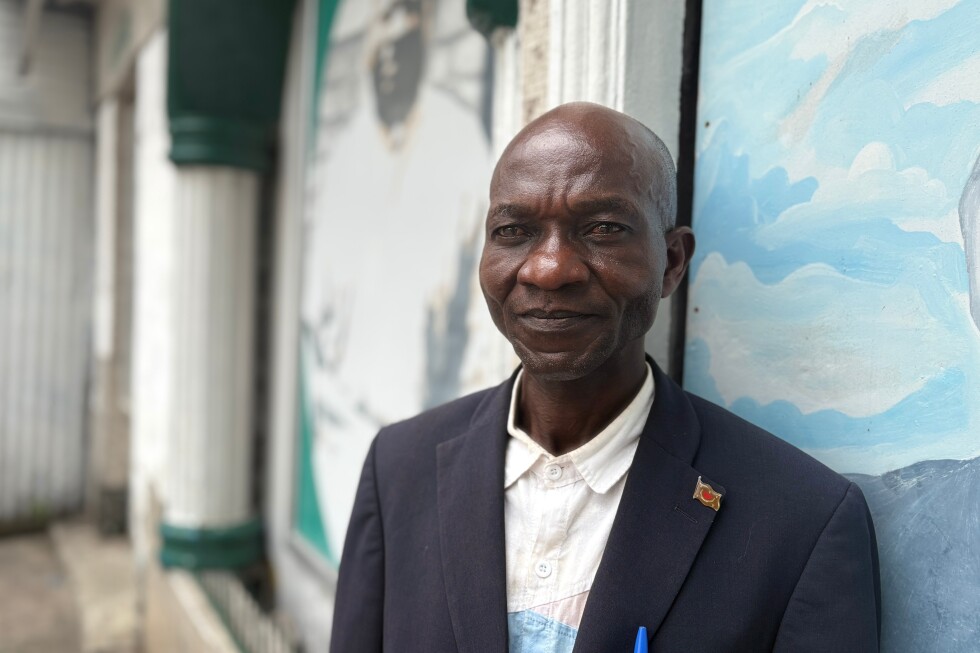
    Kimbanguist pastors across the country echo that sentiment, framing the movement’s nonviolent, community-centered ethos as a model for a nation divided by conflict. “What Congo’s leaders can learn from Kimbangu is that the guy didn’t work for himself. He sacrificed himself to free people who had been in slavery, who had been suffering,” said Paul Kasonga, a Kimbanguist pastor who serves millions of adherents in Mongala province. For ordinary believers, Kimbangu’s message of liberation for all Congolese remains as urgent today as it was a century ago. “The lesson that people can learn from the church is that the prophet, the founding prophet, fought for people’s rights,” said Toussaint Mungwala, a Kimbanguist pastor in Kwilu province who converted to the movement from Catholicism in the 1980s. Even decades after his death, Kimbangu’s unheralded struggle continues to shape the identity and future of the Congolese nation.


  • Bronny James sets up father LeBron in Lakers win

    Bronny James sets up father LeBron in Lakers win

    The NBA’s regular season delivered a one-of-a-kind milestone this week, as 19-year-old Bronny James recorded the first son-to-father assist in league history, finding his 41-year-old father LeBron James for an easy breakaway dunk during the Los Angeles Lakers’ 119-103 victory over Pacific Division rival Golden State Warriors. The historic play marked the second time the father-son duo have made NBA history in the span of a month: just four weeks prior, LeBron notched the first father-to-son assist against the Brooklyn Nets, cementing their place as the first parent-child pairing to share the court in NBA history.

    In the Warriors game, LeBron turned his 26 points into a dominant offensive performance, adding 11 assists to lead the Lakers to a critical late-season win. Young Bronny held his own against the playoff-bound Warriors, putting up 10 points and three assists of his own. Both the Lakers, now fourth in the Western Conference, and the 10th-place Warriors have already locked in their spots for the 2026 postseason, which tips off on April 18.

    The night brought a slate of other consequential late regular season matchups across the league. The New York Knicks pulled out a 112-106 win over the Boston Celtics, with Josh Hart leading all scorers with 26 points. The result puts mounting pressure on the Celtics, who enter the final two games of the regular season second in the Eastern Conference standings, while the Knicks climb to third. The Toronto Raptors earned a comfortable 128-114 win over the Miami Heat, and the Houston Rockets held off the Philadelphia 76ers 113-102 to boost their own playoff positioning. For teams already eliminated from postseason contention, the Chicago Bulls defeated the Washington Wizards 119-108, and the Indiana Pacers cruised to a 123-94 win over the Brooklyn Nets.

    Off the court, women’s basketball reached a major expansion milestone this week, with the Women’s National Basketball Association board of governors approving three new expansion franchises in Cleveland, Detroit, and Philadelphia that will grow the league to 18 teams by 2030. The Cleveland team will be the first of the three to take the court, making its debut in the 2028 WNBA season, with Detroit joining the league in 2029 and Philadelphia following a year later in 2030.

    The latest expansion marks the latest in a series of growth moves for the WNBA, which has added four new franchises in a five-year window. The Golden State Valkyries are set to make their debut in 2025, with the Toronto Tempo and Portland Fire launching their inaugural seasons this coming year. The 2026 WNBA regular season is scheduled to tip off on May 8 and run through September 24, kicking off what will be a historic period of growth for the league.

  • South Korean minister vows to expand legal remedies for adoptees and other rights victims

    South Korean minister vows to expand legal remedies for adoptees and other rights victims

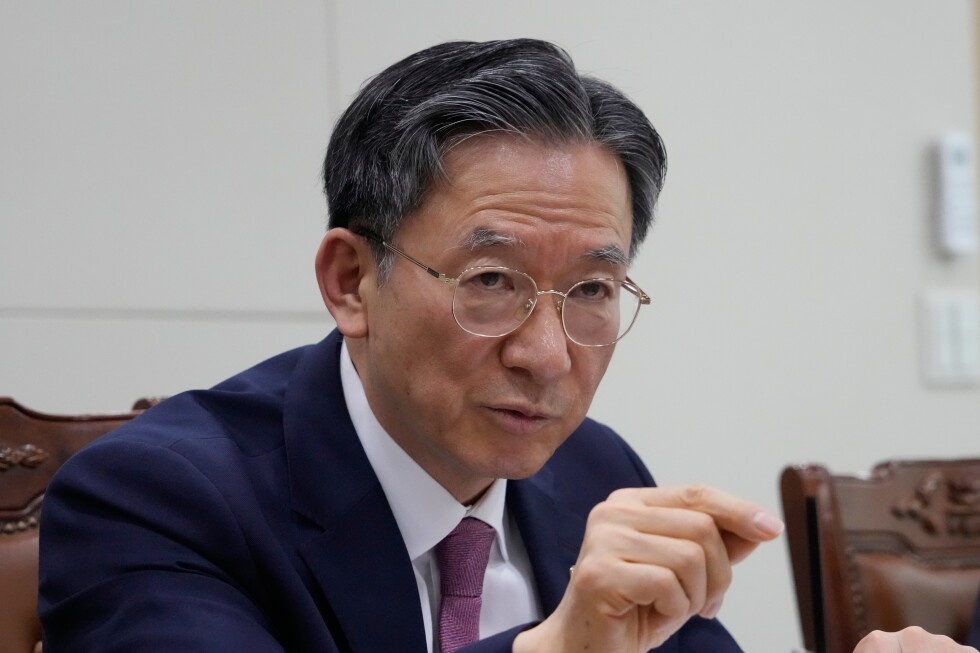
    GWACHEON, South Korea — In a rare, frank acknowledgment of historical state wrongdoing, South Korean Justice Minister Jung Sung-ho has announced sweeping new measures to expand access to justice for survivors of government-sanctioned human rights abuses, most notably the mass, fraudulent overseas adoption scheme operated under decades past military regimes. Speaking to a group of journalists at a roundtable discussion Thursday, Jung used blunt, uncharacteristically strong language for a top South Korean official, describing the country’s mid-to-late 20th century overseas adoption program as nothing less than “forced child trafficking.” He added that the national government will largely stop appealing court rulings that favor abuse survivors seeking financial compensation for state misconduct. The announcement marks a major shift from decades of legal obstruction that has left many verified victims fighting for redress for years.

    The issue of fraudulent Korean adoptions has reemerged as a national reckoning after South Korea relaunched its Truth and Reconciliation Commission (TRC) in February, following the expiration of the body’s original investigative mandate last November. Hundreds of Korean adoptees now residing in Western countries have already submitted requests for the TRC to investigate their cases, seeking official confirmation of government responsibility that they can use as legal backing for damage claims against the state or private adoption agencies that facilitated their adoptions. The first iteration of the TRC had already concluded that the South Korean government bore clear accountability for a corrupt adoption system rife with systemic fraud and misconduct. Backed by military leaders who saw the program as a tool to cut public welfare spending and reduce population growth, state-authorized private agencies systematically falsified children’s birth records, fabricated consent documentation from biological parents, and obscured their true origins to speed up international placements.

    Prior to Jung’s announcement, victims who secured favorable court rulings after being recognized by the TRC often faced years of prolonged litigation, as state prosecutors routinely appealed positive rulings on the grounds of expired statutes of limitations or questioned the conclusiveness of the commission’s findings. That pattern is now set to change. Under a new law that came into force in February, survivors of verified state abuses have a three-year window to file damage claims even if the original statute of limitations for their case has already expired. Last week, Jung’s ministry — which represents the South Korean government in all civil legal claims against the state — announced it would withdraw time-limit-based appeals in more than 800 ongoing cases, and Jung confirmed Thursday that the same cooperative approach will be extended to adoptees’ future lawsuits. “Once the truth commission firmly establishes the basic facts (regarding the abuses), we intend to cooperate to ensure the process moves swiftly,” Jung stated.

    The push for greater accountability builds on an apology issued by South Korean President Lee Jae Myung, a close political ally of Jung, for the historic adoption abuses last October. While the new framework clears major legal barriers for many survivors, some adoptees and advocates still point to ongoing delays in processing direct compensation claims. Yooree Kim, who was sent to a French adoptive family in 1984 without her biological parents’ consent and has spoken publicly about abuse at the hands of her adoptive parents, is one of the adoptees who has filed for compensation under South Korea’s State Compensation Act. This law theoretically allows survivors to secure damages without extended, costly court battles, but the Justice Ministry has missed its statutory 4-week deadline to rule on Kim’s and other adoptees’ claims, leaving them waiting more than six months for a decision, according to Choi Jung Kyu, a lawyer representing the group of adoptees. Jung responded to these concerns by saying he would order ministry officials to address backlogs and delays, though he stopped short of creating a new, standalone expedited process as some advocates have demanded.

    Between the 1970s and early 2000s, South Korea facilitated the overseas adoption of roughly 200,000 Korean children, with annual placements peaking at more than 6,000 per year throughout the 1980s. At the time, the country was ruled by an authoritarian military government that framed rapid population growth as a major barrier to its ambitious economic development goals, and framed international adoption as a low-cost solution to reduce public welfare spending. The original TRC’s findings align with an independent investigation published by the Associated Press and PBS Frontline, which drew on thousands of government documents and dozens of survivor interviews to expose how South Korea’s government, Western adoption intermediaries, and receiving countries collaborated to move children overseas despite widespread documentation of corrupt and illegal procurement practices.

    Beyond addressing the legacy of adoption abuses, Jung also outlined the government’s new commitments to root out human trafficking and forced labor in South Korea’s agricultural sector, particularly at remote salt farms off the country’s southwest coast, where decades of abuse against vulnerable migrant workers have drawn widespread international criticism. These efforts have gained new urgency in recent weeks, after the Trump administration launched investigations into dozens of countries accused of failing to curb forced labor, a move that paves the way for new tariffs and trade restrictions. The policy shift came after the U.S. Supreme Court struck down Trump’s earlier emergency power-based tariffs, clearing the way for this new enforcement structure. Last year, the U.S. already blocked all imports from one major South Korean salt farm over well-documented claims of slave labor, marking the first punitive trade action taken against the long-running abuse crisis in the country’s salt industry.

    Jung said the South Korean government will strengthen its enforcement of anti-trafficking and labor laws, including directing prosecutors to pursue harsher criminal penalties for violators and increasing regulatory oversight of businesses that hire foreign migrant workers. “We cannot monitor every corner of the private sector, but I think we are capable of supervising these matters more thoroughly than almost any other country,” Jung said.

  • This coat cost $248 in illegal tariffs. Will he ever get the money back?

    This coat cost $248 in illegal tariffs. Will he ever get the money back?

    When Massachusetts personal trainer Alex Grossomanides ordered a French down jacket last year, he thought he had locked in a solid deal. That excitement quickly faded when a $400 bill for tariffs and processing fees landed in his inbox — a charge that came close to matching the purchase price of the coat itself. The unexpected cost stemmed from a little-known detail: the parka was manufactured in Myanmar, which at the time fell under a 40% US tariff rate, adding $248.04 in duties alone. Months later, the U.S. Supreme Court overturned the controversial 40% tariff and dozens of other levies first introduced by former President Donald Trump, triggering what is set to become the largest tariff refund program in U.S. history. But even as authorities prepare to launch the repayment process, thousands of consumers and small business owners like Grossomanides fear they will never see their money returned.

    The court’s ruling only extends eligibility for refunds to importers who paid the duties directly to U.S. Customs. This narrow scope excludes the vast majority of people who ultimately bore the cost of the tariffs through indirect channels: higher retail prices, hidden processing fees, and supply chain markups. Grossomanides, who paid his tariff through global shipping firm DHL, says he wants to believe he will recoup his funds, but he has received no communication from the company and is not optimistic. “They should be refunding people,” the 37-year-old said. “It’s all my money and I took the hit for it, which I don’t think is fair.”

    In March, the U.S. Court of International Trade ordered U.S. Customs and Border Protection to return the more than $160 billion in duties the federal government collected from the invalidated tariffs, opening the door for roughly 330,000 direct importers to claim back at least a portion of their costs. Fears that the Biden administration would challenge the court order have not come to pass, and customs officials working on the program say the refund portal is scheduled to go live this month, with a progress update due to the Court of International Trade on April 14. Even so, economic analysts warn that fully reversing the financial damage of the tariffs is functionally impossible. Multiple independent studies confirm that most importers already passed the bulk of tariff costs on to consumers in the form of higher prices — a cost shift that the court’s ruling does nothing to address.

    For small businesses across the country, the pain is particularly acute. Sue Johnson, owner of Sue Johnson Lamps, a small lighting design firm based in Berkeley, California, says her business suffered a major blow when the tariffs forced her mica supplier to double the price of the raw material she uses for her Art Deco-inspired lamp designs. Despite the Supreme Court ruling, Johnson says she has no expectation of receiving any compensation for the extra costs she absorbed. “Maybe big direct importers will get repaid, but I have no hope they’re going to refund me,” she said.

    Small importers note that the issue is far more complex than the refund program acknowledges. While many raised prices to offset tariff costs, most could not raise them enough to cover the full expense, eating into already thin profit margins. Beyond direct duty costs, the tariffs triggered a cascade of secondary financial harm: many small businesses took on high-interest debt to cover unexpected duty bills, lost sales from price-sensitive customers, and spent thousands of dollars on administrative work just to navigate the claims process. Kacie Wright, who works for Houghton Horns, a small Texas-based importer of musical instruments, told a forum hosted by small business advocacy group We Pay the Tariffs that even if her firm ultimately receives a refund, it will not make the business whole. “Just making sure our business was lined up to receive a refund has been costly, requiring more than six months of back-and-forth with customs officials to properly register in the agency’s online system,” Wright explained.

    Jared Slipman, chair of the tax department at law firm Obermayer, which advises dozens of small businesses on the refund process, says U.S. Customs has placed the full burden of gathering documentation and filing claims on the claimants themselves. For many small businesses, Slipman says, the administrative requirements are so burdensome that many will conclude the potential payout is not worth the time and cost of applying. Other businesses, he predicts, will be forced to file additional litigation just to recoup the funds they are owed. Most of all, Slipman says, ordinary consumers get the worst end of the deal. “It may very well be the case that this is an orchestrated theft from the American consumer… and that would be very unfortunate,” Slipman said.

    For consumers like James Tak, a 41-year-old Washington resident who paid a $24 tariff fee to UPS last year when he received a shipment of video games as a gift from a friend in Japan, even small charges add up. Tak says he understands that processing refunds for millions of indirect payers would be a logistical nightmare, but he still believes he is owed his money back. “I just think it’s money I shouldn’t have to pay,” Tak said.

    A small number of shipping firms, including global logistics giant FedEx, have publicly stated they intend to pass any refunds they receive back to the consumers and small businesses that originally paid the charges. But most importers have issued only vague, limited promises, especially for firms that passed tariff costs through to consumers as general price hikes rather than separate line-item charges. The dispute over unclaimed refunds has already sparked a wave of class-action lawsuits against major U.S. retailers and brands, including warehouse club Costco, eyewear maker EssilorLuxottica (parent company of Ray-Ban), and activewear brand Fabletics, founded by actress Kate Hudson. Fabletics previously broke out tariff charges as a separate line item on customer receipts, leading plaintiffs to accuse the firm of “unjust enrichment” — collecting extra tariff costs from customers and now standing to collect the same funds again from the federal government.

    Adrian Bacon, head of litigation at the Law Offices of Todd Friedman, which brought the class-action suit against Fabletics and is investigating multiple other firms, says while government watchdogs like the Federal Trade Commission typically handle consumer protection issues, the involvement of federal trade policy means private legal action is the only available avenue to force companies to pass refunds on to consumers. That has not stopped current Trump administration officials from weighing in on the debate. U.S. Trade Representative Jamieson Greer last month called on companies that receive “windfall” refunds to pass the money on to workers in the form of performance bonuses. Last February, Treasury Secretary Scott Bessent cast doubt on the likelihood that ordinary consumers would ever see any of the refund money. “I got a feeling the American people won’t see it,” Bessent said.

  • Djibouti holds presidential election with longtime ruler favored for a sixth term

    Djibouti holds presidential election with longtime ruler favored for a sixth term

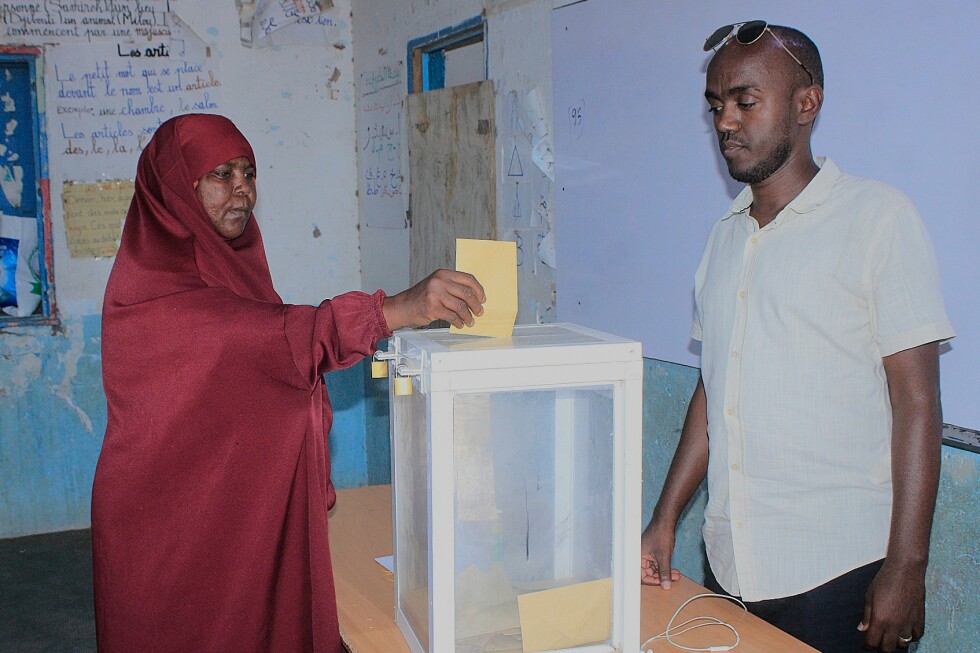
    In the tiny Horn of Africa nation of Djibouti, presidential polling got underway on Friday, setting the stage for what analysts widely predict will be another term in office for the country’s 26-year incumbent leader Ismaïl Omar Guelleh. The 78-year-old Guelleh, who has governed Djibouti’s population of roughly 1 million since 1999, stands poised to claim a sixth consecutive term after national legislators eliminated the country’s previous presidential age cap last year.

    Guelleh’s path to reelection has been largely unobstructed. In the 2021 presidential contest, he secured nearly 99% of the popular vote, and this year he faces only one challenger: Mohamed Farah Samatar, a one-time member of Guelleh’s ruling party. Political analysts widely characterize the race as lacking meaningful competitive tension, a pattern that has defined Djibouti’s electoral politics for years. Opposition blocs have regularly boycotted national elections, citing systemic restrictions on political organizing and civil liberties. Critics maintain that the country’s political system is tightly controlled by the ruling establishment, while government officials counter that centralized governance has delivered consistent stability to a region plagued by conflict and unrest.

    Guelleh’s rise to the presidency followed the retirement of his uncle, founding leader Hassan Gouled Aptidon, cementing a decades-long family-led political order that remains the backbone of Djibouti’s public life today.

    Beyond its internal politics, Djibouti holds outsized global strategic importance, thanks to its location along the critical shipping corridor connecting the Red Sea and the Gulf of Aden. It currently hosts foreign military bases for major global powers including the United States, China, France, and Japan. Economic activity in the country relies heavily on two core revenue streams: income from hosting these military installations, and port service fees for landlocked neighboring Ethiopia, which depends on Djibouti’s infrastructure for nearly all its international trade.

    Yet this narrow economic model leaves Djibouti uniquely vulnerable to external disruptions. Overreliance on Ethiopia’s port usage means any economic or political volatility in Addis Ababa directly impacts Djibouti’s national income. The ongoing crisis of shipping insecurity in the Red Sea has further amplified these risks, while growing great power geopolitical competition in the region and high levels of national debt, much of it owed to China, have added long-term uncertainty to the country’s outlook.

    The election was monitored by regional observer delegations from the African Union and the Intergovernmental Authority on Development, the Horn of Africa’s leading regional bloc. Speaking to the Associated Press, Mohamed Husein Gaas, a senior analyst with the Raad Peace Research Institute, framed the elimination of presidential age limits as a move rooted in preserving the status quo rather than expanding democratic contestation. Gaas noted that while the change has sparked widespread concern about democratic backsliding in Djibouti, foreign powers are almost certain to prioritize political stability over democratic progress, given the country’s non-negotiable role in securing Red Sea trade routes and regional security at a time of escalating Middle East tensions.