博客

  • NASA’s Artemis II crew splashes down in Pacific Ocean

    NASA’s Artemis II crew splashes down in Pacific Ocean

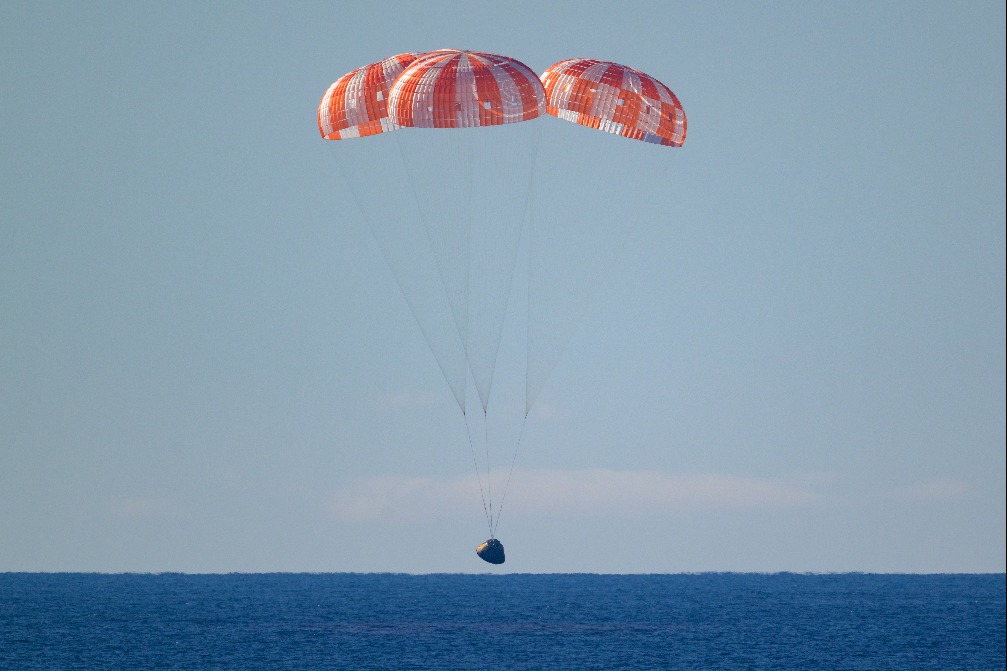
    After a groundbreaking 10-day journey around the moon that set new human spaceflight records, NASA’s Artemis II mission crew has completed a successful return to Earth, splashing down safely in the Pacific Ocean off the coast of San Diego, California, at 8:07 pm Eastern Time on Friday evening. The parachute-assisted landing marked a major milestone for the United States’ deep space exploration program, bringing the four-person international crew home without incident.

    Shortly after the capsule touched the ocean surface, mission commander Reid Wiseman confirmed that all crew members were in excellent health, easing pre-landing concerns tied to known technical vulnerabilities on the spacecraft. By 10 pm ET, recovery teams had helped the astronauts exit the Orion capsule, and they were airlifted by helicopter to the USS John P. Murtha, an amphibious transport dock stationed nearby. U.S. media reports confirm all four crew members walked across the ship’s flight deck unassisted to begin routine post-mission medical checks.

    Following the completion of initial health screenings aboard the vessel, the crew will undergo a more comprehensive series of medical evaluations before traveling back to shore. They will then fly to NASA’s Johnson Space Center in Houston, where they will continue debriefing and analysis of their mission. Parallel recovery operations are already underway for the Orion capsule itself: Navy divers will lift the spacecraft from the Pacific and transport it first to U.S. Naval Base San Diego, before it is shipped to NASA’s Kennedy Space Center in Florida for full engineering inspections and post-mission analysis.

    The mission’s atmospheric re-entry carried higher-than-usual safety risks, stemming from documented design flaws in Orion’s heat shield — the critical component that protects the crew from thousands of degrees of heat generated during descent through Earth’s atmosphere. To reduce this risk, NASA engineers adjusted the capsule’s re-entry trajectory ahead of landing, opting for a steeper, faster descent that cut down the capsule’s exposure to peak re-entry temperatures.

    Launched from Kennedy Space Center on April 1, Artemis II marked the first crewed lunar flyby mission humanity has launched in more than 50 years. The 10-day mission did not include a lunar landing, instead focusing on testing core systems for future crewed lunar missions. The crew includes three NASA astronauts — commander Wiseman, pilot Victor Glover, mission specialist Christina Koch — and one Canadian Space Agency astronaut, Jeremy Hansen, making the mission a truly international collaborative effort.

    Early in the mission, the crew set a new world record for the farthest distance human beings have ever traveled from Earth, reaching a peak distance of 406,771 kilometers from our planet. That mark surpasses the previous 400,171-kilometer record set by the Apollo 13 mission in 1970, a record that had stood for more than half a century. During the mission’s lunar flyby segment, the Orion capsule passed within 6,550 kilometers of the lunar surface, and the crew carried out nearly seven hours of direct lunar observation. The mission marked a rare opportunity for human observers to study the moon’s far side, a hemisphere never visible from Earth and rarely seen by humans directly.

    As the first crewed mission of NASA’s broader Artemis lunar exploration program, which was first announced in 2019, Artemis II was designed to test and validate the full range of technologies and operational procedures needed for future deep space and lunar missions. Key objectives included verifying the functionality of Orion’s life support systems and practicing mission operations that will be critical for upcoming crewed landing missions. Before Artemis II, NASA completed the uncrewed Artemis I lunar orbiting mission in November 2022, laying the groundwork for this first crewed flight.

    The original Artemis program roadmap set a goal of landing the first woman and first person of color on the lunar surface by 2024, but NASA revised the program’s timeline in February this year, adding an extra interim mission and pushing back the targeted landing date. Under the updated plan, Artemis III will now focus on testing new systems and operational capabilities in low Earth orbit in 2027, clearing the way for the Artemis IV crewed lunar landing mission to take place in 2028.


  • Luoyang invites creators to reimagine its legacy through AI

    Luoyang invites creators to reimagine its legacy through AI

    In a groundbreaking move that bridges millennia of cultural heritage and cutting-edge digital technology, the central Chinese city of Luoyang, Henan province, has launched the “Peony Capital” Global AI Creators Competition, an open call to artificial intelligence practitioners and digital artists across the world to reimagine the city’s iconic historical legacy through innovative AI-generated works. Running through an extended submission period, the competition invites participants to craft original digital artworks rooted in Luoyang’s thousands of years of cultural history, drawing inspiration from everything from its status as one of China’s ancient Four Great Capitals to its world-famous peony cultivation, UNESCO-listed Longmen Grottoes, and centuries-old imperial traditions. Organizers framed the initiative as a deliberate effort to unlock fresh, contemporary avenues for sharing and reinterpreting traditional Chinese culture for modern global audiences. Beyond celebrating creative talent, the event also aims to cultivate a cross-border, internationally recognized hub for AI creative collaboration, where technologists, artists, and cultural scholars can connect, exchange ideas, and explore the evolving intersection of artificial intelligence and cultural preservation. By centering Luoyang’s unique cultural identity in an AI-focused global competition, organizers hope to demonstrate how emerging technology can breathe new life into ancient heritage, making it accessible and engaging for younger, digitally native audiences while fostering global dialogue around cultural innovation through AI.

  • A 9-year-old was found locked in a van since 2024, malnourished and unable to walk

    A 9-year-old was found locked in a van since 2024, malnourished and unable to walk

    In a shocking case of child mistreatment that has rocked a small border village in eastern France, local authorities announced Saturday that a 9-year-old boy has been rescued after being held locked in his father’s utility van since late 2024. The child, who was found in deplorable conditions, has been hospitalized for urgent care, and both his father and his father’s partner have been charged in connection with the ordeal, local prosecutor Nicolas Heitz confirmed in an official statement.

    The disturbing situation came to light this week, after a concerned neighbor contacted police on Monday to report repeated child sounds emanating from a parked van in Hagenbach, a quiet village located just steps from the French borders with Switzerland and Germany. When law enforcement officers forced entry into the vehicle, they made a gruesome discovery: the young boy was lying naked in a fetal position, covered only by a thin blanket atop a pile of trash, with human excrement nearby. Years of severe confinement left him profoundly malnourished, and extended time holding a seated position had left him unable to walk, Heitz said.

    In initial interviews with investigators, the boy’s father claimed he locked the child inside the van starting in November 2024 as an act of protection. He told authorities his partner wanted the then-7-year-old, who was reportedly doing well in school at the time, to be admitted to a psychiatric hospital. Prosecutors, however, have found no official medical records indicating the child ever had any psychiatric health issues prior to his disappearance. He had earned strong grades before he was removed from school, local records confirm.

    The boy himself told investigators he struggled to get along with his father’s partner, and believed his father had no other option but to lock him away. He also shared that he had not had a shower or any proper hygiene care since he was first confined in 2024.

    The father is currently being held in pretrial custody, facing preliminary charges of kidnapping and other child endangerment offenses. His partner has denied any knowledge of the boy being held in the van, but she still faces preliminary charges including failure to render assistance to a minor at risk. She has been released from custody and placed under judicial supervision as the investigation proceeds.

    Two other children in the household — the boy’s 12-year-old biological sister and his father’s partner’s 10-year-old daughter — have been placed into the care of French social services, per official protocol.

    Prosecutors have launched a broader investigation to determine whether any other friends or family members knew about the boy’s confinement. For years, those outside the household were given conflicting cover stories: relatives and friends were told the boy was receiving treatment in a psychiatric institution, while his school was notified that he had transferred to a different campus. No one raised alarm about the conflicting information until the neighbor’s tip prompted police intervention.

    Authorities have not released the names of the victim or any family members involved, in keeping with French privacy protections for minors. When reporters from The Associated Press visited Hagenbach Saturday, local residents expressed deep shock at the revelation, saying they had no idea the boy was being held in the village. Most declined to speak on the record about the ongoing case. Prosecutor Heitz also declined to share additional details, noting that the investigation is still active and ongoing.

  • Woman allegedly tried to kill 10yo girl with poison in Queensland

    Woman allegedly tried to kill 10yo girl with poison in Queensland

    A shocking alleged poisoning incident in a Queensland community has led to a 43-year-old woman facing an attempted murder charge connected to domestic violence, local law enforcement has confirmed. The alleged incident unfolded on March 12 in Yarrabilba, a suburban area located roughly 40 kilometers southeast of Brisbane’s central business district.

    Authorities say the woman, who is known to the 10-year-old victim, allegedly poisoned both the child and herself. Shortly after the poison was administered, both individuals began experiencing severe illness including persistent vomiting, prompting emergency responses from local medical services.

    Both the woman and the 10-year-old were immediately transported to Logan Hospital for urgent treatment. According to Queensland police updates, the young victim was assessed by medical staff and discharged from the facility the same day the incident occurred. The accused 43-year-old, however, required ongoing inpatient care and remained in the hospital until Friday, when she was medically cleared and transferred directly into police custody.

    Following her release from medical care, the woman was formally charged with one count of attempted murder, classified as a domestic violence offense. She has since been remanded in custody ahead of her first court appearance, which is scheduled for May 12 at Beenleigh Magistrates Court. No further details about the motive behind the alleged attack or the identity of the victim have been released publicly as the investigation continues.

  • Experts warn of ‘hasbara’ and disinformation in digital battle over Palestine

    Experts warn of ‘hasbara’ and disinformation in digital battle over Palestine

    On April 7, a virtual gathering organized by the Global Alliance for Palestine brought together researchers, grassroots activists and digital rights specialists to sound the alarm about coordinated state-backed propaganda and disinformation operations that are actively skewing global public narratives about Palestine. Titled “Countering Israel’s 2026 Hasbara Industry”, the webinar centered its discussion on what panelists characterized as structured, well-resourced digital messaging campaigns run by the Israeli government.

    Hasbara, Israel’s official national public diplomacy directorate, is the body that oversees the country’s widespread propaganda operations. In a sign of internal friction around these efforts, the directorate has already faced legal action from private companies and contractors that provided services for the campaigns in the early months of Israel’s military campaign in Gaza. To amplify its messaging following the outbreak of large-scale conflict in Gaza, Israel launched a covert initiative codenamed the “Esther Project”, which relies on secret public relations campaigns and contracted corporate firms to manage a sprawling network of paid social media influencers.

    Since the October 2023 escalation of hostilities, Israel’s propaganda push has expanded beyond Hasbara, with the country’s foreign ministry and diaspora ministry also committing massive budgets to distributing Israeli-aligned content. The core goal of these efforts, panelists confirmed, is to shift global public opinion, push back against and deny widespread allegations of war crimes, crimes against humanity, and genocide perpetrated by Israeli forces in Gaza.

    During the webinar, panelists emphasized that modern Israeli disinformation operations increasingly leverage cutting-edge digital tools, micro-targeted advertising, and artificial intelligence to shape public perception. Anas Ambri, a researcher with The New Arab Investigative Unit, presented new findings on Israel’s online ad campaigns and industry transparency requirements, noting that promotions tied to the Israeli government rarely disclose their official affiliations. He detailed how untargeted disclosures and hidden funding for targeted ad campaigns can reshape public narratives across major social media and digital platforms.

    Tariq Kenney-Shawa, a policy analyst with the Palestinian think tank Al-Shabaka, outlined the critical role open-source intelligence plays in documenting on-the-ground events in Gaza and pushing back against false Israeli messaging. He explained that open-source verification methods have been instrumental in confirming the details of violent incidents, challenging unsubstantiated Israeli claims, uncovering mass grave sites in Gaza, and exposing disinformation campaigns on social media platforms.

    Hala Hanina, a Gaza-born political activist and doctoral researcher based in the United Kingdom, analyzed long-standing patterns of media coverage throughout the current conflict. She argued that a core pillar of Israeli state disinformation involves outright denial of attacks on civilian infrastructure and populations, shifting blame to Palestinian groups for Israeli violence, and framing narratives that deliberately downplay or obscure the devastating impact of military operations on Palestinian civilians. Her presentation detailed how these manipulated messages spread across both traditional legacy media and digital platforms, derailing calls for accountability and confusing audiences seeking accurate information about the conflict.

    Another panelist, identified only as Lujane, focused her remarks on the intersection of artificial intelligence and digital influence, explaining how curated content ecosystems can skew AI-generated outputs to amplify and entrench pro-Israeli narratives. She noted that hidden funding networks and targeted amplification strategies are key to ensuring these skewed narratives reach broad global audiences.

    Noted digital rights advocate Nadim Nashif raised urgent concerns about unequal platform governance, pointing to repeated past incidents where content from Palestinian creators and journalists was removed or algorithmically restricted. He argued that current algorithmic moderation frameworks and major platform policies systematically create unequal visibility for Palestinian and Israeli perspectives, amplifying pro-Israeli content while suppressing Palestinian voices.

    Not all discussion focused solely on the challenge of disinformation, however. Miriyam Aouragh, a professor at the University of Westminster, noted that the open digital ecosystem has also created new space for counter-narratives, allowing Palestinian voices to reach wider global audiences than ever before. She pointed to growing public dissent among technology workers at major platforms, as well as increased public scrutiny of platform content moderation practices, as positive shifts that have helped level the information playing field.

    Webinar organizers emphasized that the event’s core goal was to provide attendees with the analytical tools needed to trace how information is produced, circulated, and manipulated during armed conflict. They stressed that addressing systemic disinformation and expanding global media literacy will remain critical priorities, as digital platforms continue to be the primary venue where global public perceptions of the Palestine-Israel conflict are formed.

    This reporting builds on independent, on-the-ground coverage of the Middle East and North Africa from Middle East Eye, a publication focused on unaffiliated, in-depth analysis of the region.

  • Britain beats Australia to advance to Billie Jean King Cup finals

    Britain beats Australia to advance to Billie Jean King Cup finals

    MELBOURNE, Australia – In a decisive Saturday doubles clash at Melbourne’s John Cain Arena, Great Britain booked its place in the 2025 Billie Jean King Cup finals after Harriet Dart and Jodie Burrage pulled off a straight-sets win over Australian pair Storm Hunter and Ellen Perez, sealing a 3-1 overall victory in the best-of-five qualifying tie. The British squad had already built a commanding 2-0 advantage on the opening day of play, thanks to two gritty singles wins from rising star and 17-year-old Mika Stojsavljevic and veteran Harriet Dart. Stojsavljevic overcame Australia’s Talia Gibson in a tight two-set battle, closing out the match 7-6(4), 7-5, while Dart bounced back from a slow first set to defeat Kimberly Birrell 4-6, 6-3, 6-3, putting Britain just one win away from qualification. Australia picked up a consolation win in the reverse singles, where 17-year-old homegrown talent Emerson Jones defeated Britain’s Katie Swan 7-5, 6-3 to adjust the final tie score to 3-1. The Billie Jean King Cup, the premier global women’s national team tennis tournament previously known as the Fed Cup, will host its 2025 finals in Shenzhen, China this coming September. As the host nation, China has already earned an automatic qualification spot for the finals stage. Six more spots in the 8-team finals lineup will be decided by the end of Saturday, with six high-stakes qualifying ties still wrapping up around the globe: defending champion Italy faces Japan, Kazakhstan takes on Canada, Switzerland goes head-to-head against the Czech Republic, Slovenia meets Spain, Belgium battles the United States, and Poland clashes with Ukraine. Teams that fall short in this round of qualifying will not go home empty-handed: they will move on to the Billie Jean King Cup playoffs scheduled for November, where spots for the 2027 tournament qualification will be determined. For more coverage of professional tennis, visit the Associated Press’ dedicated tennis hub at https://apnews.com/hub/tennis.

  • Djibouti’s president wins unprecedented sixth term with 97.8% of vote

    Djibouti’s president wins unprecedented sixth term with 97.8% of vote

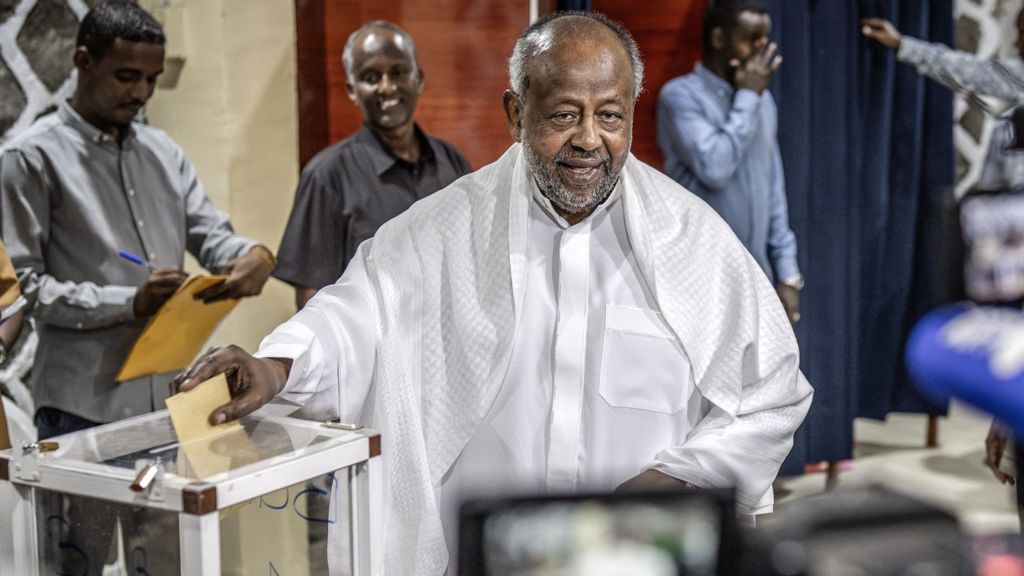
    In a decisive landslide victory that cements nearly three decades of rule for the Horn of Africa nation, Djibouti’s incumbent President Ismail Omar Guelleh has won a sixth five-year term in office, preliminary official results from the country’s recent presidential election confirm. The 78-year-old leader secured a staggering 97.8% of the popular vote, with his only opponent, small-party candidate Mohamed Farah Samatar, taking just 2.19% of ballots cast.

    The result was widely anticipated after most of Djibouti’s major opposition coalitions announced a boycott of the poll, repeating longstanding claims that the country does not permit free and open political competition. Leading opposition figures including Dahir Ahmed Farah have boycotted every presidential election since 2016, a pattern that held for this 2025 contest.
    Samatar, who ran as the candidate of an unrepresented small opposition faction with no seats in Djibouti’s national parliament, has not issued any public response to the preliminary results as of the latest updates.

    Guelleh’s ability to run for another term came after a controversial constitutional amendment passed last November. The amendment removed a 75-year age cap for presidential candidates that would have disqualified him from running; the age limit was itself introduced in 2010, when Djibouti’s parliament already scrapped the previous two-term limit for the presidency and shortened presidential terms from six to five years to accommodate Guelleh’s extended tenure. The incumbent had previously publicly pledged to step down ahead of this election cycle, reversing that promise after the constitutional change was approved.

    Located on the strategic Bab el-Mandeb Strait, a critical chokepoint connecting the Red Sea to the Gulf of Aden and serving as the primary maritime gateway to the Suez Canal — one of the world’s busiest and most economically vital shipping lanes — Djibouti holds unique geostrategic importance. It hosts military bases for five major global powers: the United States, China, France, Italy, and Japan, making it a key hub for regional security and counter-terrorism operations.

    During his election campaign, Guelleh centered his platform on his track record of maintaining political stability in Djibouti, a rare constant in a region marked by ongoing armed conflict and political upheaval across neighboring states and nearby Middle Eastern nations. The 78-year-old leader is only the second president Djibouti has had since it gained full independence from France in 1977, and he has already held the presidency for 27 years. He won the 2021 election by a similarly overwhelming margin.

    Election officials reported that more than 80% of registered voters turned out to cast ballots in Friday’s vote. While the interior ministry has released the preliminary results, the outcome still requires formal validation by the Constitutional Council’s judiciary before Guelleh can be sworn in for his new five-year term. Celebrating his projected victory at his private residence, Guelleh framed the win as a success for the entire Djiboutian nation.

  • ‘You are my god’, Japan’s PM tells British rock band Deep Purple

    ‘You are my god’, Japan’s PM tells British rock band Deep Purple

    On a crisp Friday in central Tokyo, one of the world’s most influential hard rock acts crossed paths with their most high-profile admirer – Japan’s first female prime minister, Sanae Takaichi, a decades-long Deep Purple superfan.

    The legendary British rock group, currently on a Japanese tour commemorating their historic 1972 live album *Made in Japan* – widely ranked among the greatest live rock records ever cut – met Takaichi at her official office ahead of their Saturday headline set at Tokyo’s iconic Nippon Budokan arena. For 65-year-old Takaichi, the encounter was the fulfillment of a fandom that began when she was a primary school student, when she first picked up the band’s breakthrough 1971 studio album *Machine Head*.

    A skilled amateur percussionist herself, Takaichi cut her musical teeth performing with a Deep Purple tribute act as a teenager; she started on keyboards before switching to drums during her university years. In a playful revelation to the band, the conservative leader shared that she still turns to the band’s raw, high-energy sound to blow off steam today: “These days, when I fight with my husband I drum to *Burn* and cast a curse on him,” she told the group, laughing. Greeting founding drummer Ian Paice with a broad smile, Takaichi presented him with a custom pair of hand-signed Japanese-made drumsticks, telling him “You are my god.”

    Through an interpreter, Takaichi expressed profound admiration for the band’s enduring five-decade career, noting: “I have the deepest respect for the way you continue to make rock history while embracing new challenges and creating captivating music to this day.” She added that she hoped the band’s cross-country tour would not only thrill Japanese rock fans but also strengthen cultural ties between the United Kingdom and Japan.

    Formed in Hertfordshire, England, in 1968, Deep Purple holds a place as one third of the “unholy trinity” of foundational British heavy metal, alongside fellow icons Black Sabbath and Led Zeppelin. The band is best known for their era-defining hit *Smoke on the Water*, whose iconic guitar riff remains one of the most recognizable in rock history. The group’s current tour marks a homecoming of sorts: it was in Japan that Deep Purple recorded *Made in Japan* over 50 years ago, a record that cemented their global stardom.

    Paice, the band’s founding drummer, called the meeting with the prime minister an unexpected delight, describing it as a special “added bonus” to the band’s already anticipated return to Japan. In an Instagram post documenting the meeting, the band highlighted that Takaichi has long been open about her love for hard rock and heavy metal, and has repeatedly named Deep Purple as one of her all-time favorite acts. Takaichi’s history with drumming is well-documented: she was known for carrying multiple sets of drumsticks to performances early on, thanks to her intense playing style that often left sticks broken mid-set.

    The lighthearted meeting comes as a rare break for Takaichi, who has navigated a series of pressing political and economic challenges since taking office last October, including strained diplomatic relations with neighboring China, persistent domestic inflation, and a stagnant national economy.

  • UK to shelve Chagos handover after Trump criticism

    UK to shelve Chagos handover after Trump criticism

    The United Kingdom has formally paused its controversial plan to transfer sovereignty of the Chagos Archipelago to Mauritius, a decision triggered by fierce public pushback from U.S. President Donald Trump, a British government spokesperson confirmed Saturday. The archipelago is home to the strategically critical Diego Garcia joint U.S.-UK military base, a key defense outpost for both nations that has played a role in Western military operations in the Middle East and Indian Ocean region.

    Downing Street has long maintained that any finalized agreement to hand over the Indian Ocean territory would only move forward with explicit backing from Washington. “Diego Garcia is a key strategic military asset for both the UK and the US. Ensuring its long-term operational security is and will continue to be our priority – it is the entire reason for the deal,” the spokesperson said in an official statement, adding that British officials will continue diplomatic engagement with both the U.S. and Mauritius moving forward.

    The draft legislation needed to formalize the 2024 Chagos Agreement, originally reached between London and Port Louis in May of that year, was already facing an imminent deadline: the UK Parliament is set to dissolve in the coming weeks for a general election, and the bill will not have enough time to pass through all required parliamentary stages. Government sources told the BBC that the plan is not being completely scrapped entirely, but no new legislation is expected to be introduced after the election, effectively putting the deal on ice indefinitely.

    Under the original terms of the 2024 agreement, Britain would have transferred full sovereignty over the entire archipelago – located roughly 1,200 miles northeast of Mauritius – to its former colonial possession, in exchange for a 99-year lease on Diego Garcia to maintain the military base, with an option to extend the lease for a further term. Unconfirmed reports put the annual lease payment at £90 million ($111 million), a figure the UK government has neither confirmed nor denied. Former Prime Minister Keir Starmer had previously argued that the agreement was the only viable path forward, noting that international legal rulings had cast doubt on Britain’s longstanding claim to the territory and that a formal deal with Mauritius was the only way to guarantee the base could remain operational long-term.

    President Trump’s opposition to the deal marked a sharp reversal from his initial position: he had endorsed the agreement after it was signed, before launching a scathing public attack on the plan in posts to his Truth Social platform in January. He slammed London’s proposal as “great stupidity” and “an act of total weakness” that would be noticed by major geopolitical rivals China and Russia. In the same post, Trump went so far as to argue that the episode justified his longstanding call for the U.S. to take control of Greenland from NATO ally Denmark. The Diego Garcia base has long held major strategic importance for the U.S. and UK; most recently, the British government confirmed the base was used to launch what it described as “defensive operations” in its conflict against Iran.

  • Hundreds of Irish petrol stations run out of fuel as protests continue

    Hundreds of Irish petrol stations run out of fuel as protests continue

    As demonstrations against skyrocketing fuel prices stretched into a fifth consecutive day on Friday, large swathes of the Republic of Ireland faced crippling travel disruption, with hundreds of retail fuel outlets entirely out of stock and major transport routes blocked by slow-moving protest convoys led by agricultural tractors.

    The unrest stems from dramatic fuel price increases triggered by the ongoing US-Israeli conflict with Iran, which has shuttered the Strait of Hormuz — a critical chokepoint that carries roughly 20% of global oil trade. This global supply shock has sent Irish fuel costs surging: in recent weeks, average diesel prices have jumped from around €1.70 per litre to €2.17, while petrol prices have risen by as much as 25 cent per litre at many forecourts across the country. As of Friday, state broadcaster RTÉ confirmed that approximately 500 petrol and diesel outlets have been completely drained of fuel by panic buying and supply chain blockades.

    Protest organizers, drawing participants from the farming and haulage sectors, have deployed slow-moving convoys and tractor-led blockades across key national infrastructure. Blockades are currently in place across multiple major motorways, including closed sections of the M50, full both-way closure of the M7 at Portlaoise, a northbound blockage on the M8 at Cashel South, and disruptions at multiple locations across County Clare, County Limerick and Monaghan town. Three key national fuel storage facilities are also blocked by protesters, and central Dublin’s busiest corridors — including O’Connell Street and South Quay — remain closed to general traffic.

    The disruption has spilled over into public transport, with multiple services suspended across Dublin and major delays for airport passengers. State-owned transport operator Bus Éireann has confirmed it is working to maintain limited access to Dublin Airport, and has advised all passengers heading to Dublin and Shannon Airports to allocate extra travel time for altered routes and long delays.

    In response to the escalating crisis, Ireland’s national police service An Garda Síochána has officially declared the protests an “exceptional event”, a designation that allows the force to double the number of active officers deployed to manage the unrest and clear blockades. The National Emergency Coordination Group, the inter-agency body tasked with managing national crises, has warned that fuel supplies for critical emergency services including fire brigades and ambulance fleets are facing growing strain as blockades cut off supply chains.

    Following days of constructive talks between government officials and representatives from the haulage and farming sectors, Irish leaders have confirmed that a targeted fuel support package is in the final stages of preparation. Tánaiste and Finance Minister Simon Harris told reporters on Friday that the incoming support package will be “substantial and significant” for key impacted sectors of the Irish economy, noting that negotiations have been progressing well, with intensive talks set to continue through the weekend. But Harris stressed that the ongoing blockades cannot continue, saying “The blockade has to end.”

    Taoiseach Micheál Martin echoed the urgency of lifting the blockades, warning that the continued disruption comes at a particularly precarious moment for global energy markets, saying the country is “on the precipice of turning oil away from the country” during an ongoing global oil supply crisis. Protests first launched on Tuesday morning, and demonstration leaders have shown no immediate indication of lifting blockades ahead of this weekend’s negotiations.