博客

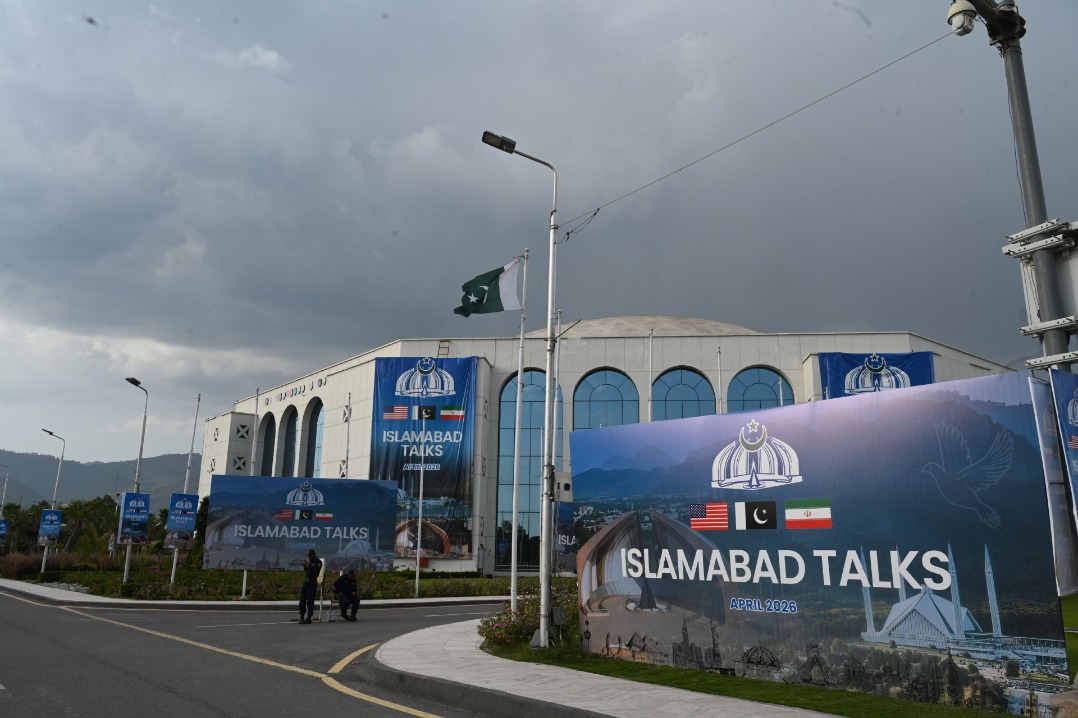
  • US-Iran talks begin in Pakistan’s Islamabad

    US-Iran talks begin in Pakistan’s Islamabad

    Diplomatic efforts to defuse long-running tensions between the United States and Iran have moved into a new phase, with direct talks aimed at ending ongoing hostilities officially kicking off in Pakistan’s capital city of Islamabad this Saturday, multiple regional and international media outlets have confirmed.

    The meeting, hosted by Pakistan, marks a rare high-level diplomatic engagement between the two nations that have been locked in a decades-long adversarial standoff. For years, open hostilities and broken diplomatic channels have contributed to widespread instability across the Middle East and broader South Asian region, raising global concerns about escalated conflict. The decision to launch negotiations in Islamabad reflects Pakistan’s ongoing role as a neutral diplomatic intermediary between Tehran and Washington, leveraging its long-standing bilateral relationships with both governments to create space for dialogue.

    While details of the negotiation agenda and initial discussions have not been released to the public at this early stage, the launch of direct talks itself marks a significant shift from the open confrontation that has defined US-Iran relations for much of the past decade. International observers have broadly framed the talks as a critical opportunity to de-escalate tensions that have already spilled over into regional conflicts in recent years, with stakeholders across the globe closely watching for developments out of the Islamabad negotiations.

  • England beats Ireland in front of record Women’s Six Nations crowd at Twickenham

    England beats Ireland in front of record Women’s Six Nations crowd at Twickenham

    The 2024 Women’s Six Nations kicked off this weekend with a landmark moment for women’s rugby, as a record-breaking sell-out crowd packed London’s Twickenham Stadium to watch newly crowned world champions England open their title defense with a dominant 33-12 victory over Ireland on Saturday.

    Saturday’s attendance hit 77,120 fans, falling just 4,700 short of the all-time women’s rugby attendance record set at last September’s World Cup final, also hosted at Twickenham when England defeated Canada to claim the global title. This figure shattered the previous Women’s Six Nations attendance record of 58,498, set during a 2023 England-France clash, with organizers projecting that total cumulative attendance for this year’s tournament will far outpace the 151,506 fans that turned out across all matches in 2023. The sustained surge in ticket demand comes directly on the heels of England’s 2023 World Cup victory, which has dramatically boosted mainstream interest in elite women’s rugby.

    Playing their first test match since lifting the World Cup trophy, England showed early rust but still outmatched Ireland in physicality, extending their unprecedented global winning streak to 34 consecutive test matches. By halftime, England held a commanding 21-0 lead, with front-row forwards Amy Cokayne and Sarah Bern each crossing for tries off set-piece lineouts. Two key England players — lock Morwenna Talling and scrumhalf Natasha Hunt — finished the match on crutches after picking up injuries, but the reigning champions closed out the game with two late spectacular tries: Jess Breach marked her 54th test appearance with her 54th career try in the 54th minute, a fitting statistical milestone, before Ellie Kildunne finished off a blistering 60-meter counterattack to extend the lead.

    Ireland earned a moral victory by adding two late tries from Anna McGann and new captain Erin King, securing their narrowest defeat to England in a decade. Megan Jones, who made her debut as England’s new full-time captain in the match, was named player of the match for her standout performance. “There’s always going to be nerves going into a big campaign off the back of an amazing World Cup,” Jones told reporters after the game. “To have this crowd is phenomenal. We want to play but sometimes it gets a bit unstuck like that. But we found ways, that’s what a winning team does.”

    Across the other opening weekend fixtures, second-ranked France pulled away from Italy for a 40-7 victory in Grenoble, extending their winning streak against Italy to six consecutive matches. The match featured six French debutantes, three of whom started in the lineup, including standout tackle machine Mathilde Lazarko. Prop Assia Khalfaoui earned player of the match honors for her dominant performance up front. France held only a narrow 5-0 halftime lead after winger Anaïs Grando scored a try on her international debut, but broke the game open in the second half when flyhalf Carla Arbez sliced through Italy’s defensive line to trigger a try-scoring flood. Tries from props Yllana Brosseau and Khalfaoui, a setup for winger Léa Murie from new fullback Pauline Barrat, and a late try from Barrat herself pushed France to a 40-0 lead by the 76th minute, before Italy’s Gaia Buso scored a converted consolation try — Italy’s first points against France in three and a half years of play. The match ended on a sour note for France, however, as star center Joanna Grisez left the pitch with a serious-looking knee injury.

    In the final opening match at Cardiff, Scotland pulled off a narrow 24-19 comeback win over Wales. Wales held a 12-10 halftime lead after powerful tries from front-rowers Kelsey Jones and Sisilia Tuipulotu, backed by rugged defensive play. Scotland capitalized on gaps in Wales’ backfield, with tries from Shona Campbell and Lucia Scott set up by well-placed kicks behind the Welsh defense. Accurate goalkicking from Helen Nelson put Scotland up 24-12 heading into the final minutes. Wales’ substitute reserves lifted the team’s tempo, and captain Kate Williams scored a converted try after a setup from Seren Lockwood, cutting Scotland’s lead to just five points. In the 87th minute of stoppage time, with Scotland reduced to 14 players, Wales worked their way out of their own 22-meter line to within 35 meters of the Scottish try line, but a misplayed trick lineout play ended their dramatic late fightback with the ball on the turf.

  • Hungarian election rivals Orbán and Magyar make final push for votes on eve of poll

    Hungarian election rivals Orbán and Magyar make final push for votes on eve of poll

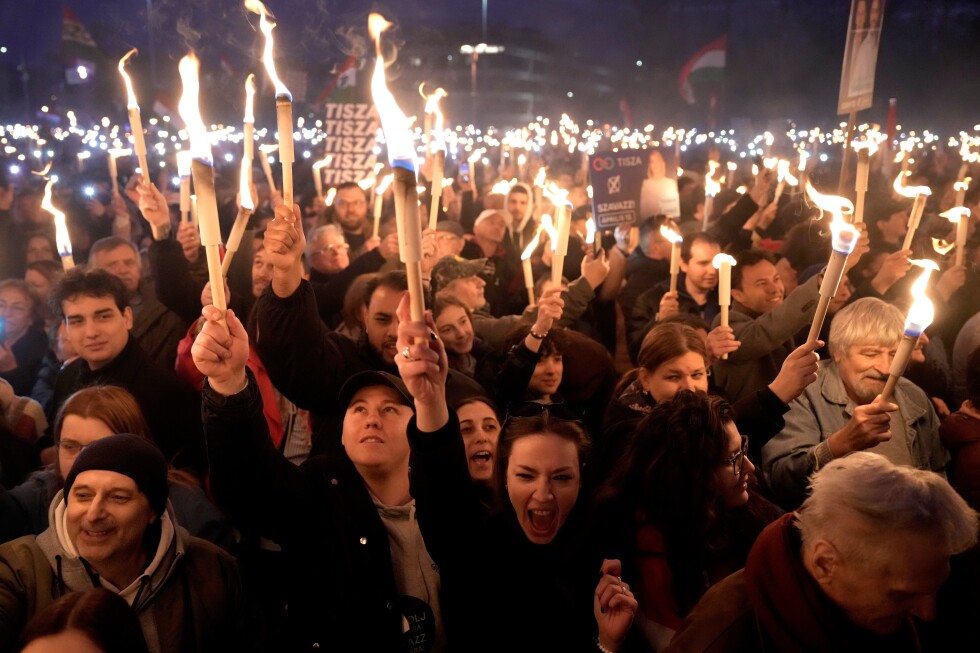
    On the eve of Hungary’s most consequential national election in over a decade, the country’s two largest political factions wrapped up chaotic, high-stakes campaign seasons Saturday with closing rallies that laid bare the stark divides shaping Sunday’s vote. For incumbent Prime Minister Viktor Orbán, the ballot box marks the greatest existential threat to his 16-year grip on national power, as challenger Péter Magyar’s upstart center-right Tisza Party has surged to double-digit leads in most independent public opinion surveys. A Tisza victory would oust Orbán in one of the most dramatic political upsets in modern Hungarian history, though many analysts caution the final result could be far closer than polling suggests, noting Orbán’s ruling Fidesz party retains a deeply loyal, highly mobilized base across rural Hungary.

    Magyar, a 45-year-old lawyer and one-time insider within Fidesz’s own political circle, has spent the past two years crisscrossing the country, stopping in hundreds of small towns and rural communities to court voters who have long backed Orbán. Saturday, he brought his closing argument to Debrecen, Hungary’s second-largest city and a longstanding Fidesz stronghold, where thousands of cheering Tisza supporters packed University Square to hear him speak.

    Striking an optimistic, defiant tone, Magyar framed Sunday’s vote as a defining turning point for the nation. “This election will enter Hungarian history books as the day of resurrection, the renewal of the Hungarian nation, and of the real change of regime,” he told the crowd. Rejecting the divisive rhetoric that has defined Orbán’s tenure, Magyar extended an olive branch to Fidesz voters, promising his first act in office would be to pursue national reconciliation. “As the winner of the election, we will have to extend a hand to our fellow countrymen,” he said, outlining a plan to reunite a country split by years of polarized rule.

    Addressing one of the core pillars of his campaign, Magyar reaffirmed his commitment to keeping Hungary anchored in the European Union, reversing Orbán’s gradual shift toward closer political and economic ties to Moscow. As supporters waved Hungarian flags and chanted “Európa! Európa!”, he declared, “many millions” of voters would confirm on Sunday that “Hungary’s place was, is, and will be in Europe.”

    Annamária Matkovics, a 50-year-old farmer and local Tisza activist in the eastern Hungarian town of Balmazújváros, who joined the party when it launched in 2024, said even in traditional Fidesz heartland, discontent with the incumbent has reached a breaking point. While many voters report fears of retaliation — including losing their state-supported jobs — if they are caught backing the opposition, Matkovics said most dissidents are still prepared to vote for change. “When we’re campaigning on the street, people tell us that they’re worried that they’ll lose their jobs if they don’t vote for Fidesz, and they’re still planning to vote for Tisza,” she said. “They’ve had enough of the division.”

    A few hundred kilometers away in Budapest, Orbán closed his campaign to thousands of supporters on the city’s historic Castle Hill, doubling down on the core message that has defined his reelection bid: framing the election as a choice between stability and risky change, amid what he calls a wave of external threats endangering the Hungarian people. With Russia’s ongoing full-scale war in neighboring Ukraine top of mind, Orbán warned the country could not afford to hand power to an inexperienced newcomer.

    “We are in an age of danger,” Orbán told the crowd. “Hungary is facing serious challenges. We need to say no to major power groups in the world in order to defend ourselves, and this requires knowledge, experience and routine. Now is not the time to take risks, to change, to renew and to adventure. Now we need to protect and secure what we have.”

    Orbán’s campaign has been hobbled by multiple headwinds this cycle: stubbornly poor economic performance that has driven high inflation and rising living costs for ordinary Hungarians, growing public scrutiny of his administration’s increasingly close ties to the Kremlin, and persistent allegations of systemic corruption that benefit a small circle of political allies close to the prime minister. To shore up support, Orbán has leaned heavily on his high-profile relationship with former U.S. President Donald Trump, who has repeatedly endorsed his reelection. Earlier this week, U.S. Vice President JD Vance traveled to Budapest for a two-day campaign stop, headlining a publicly funded rally alongside Orbán to boost his bid for a fifth term.

    In contrast to Orbán’s focus on external threats and geopolitical risk, Magyar has centered his campaign on bread-and-butter issues that directly impact Hungarian households: soaring inflation, skyrocketing living costs, and the crumbling state of public healthcare and transportation infrastructure. He has also made a core campaign promise to root out what he calls endemic government corruption that has enriched a tiny elite at the public’s expense — allegations Orbán has repeatedly denied. With turnout expected to be high across the country, all eyes now turn to Sunday, when Hungarian voters will decide whether to extend Orbán’s 16-year tenure or usher in the most sweeping political change the country has seen in a generation.

  • Germany’s far-right AfD adopts ‘radical’ manifesto ahead of key polls

    Germany’s far-right AfD adopts ‘radical’ manifesto ahead of key polls

    As Germany prepares for regional elections this September, the far-right Alternative für Deutschland (AfD) is positioned to make unprecedented political history, holding a strong lead in opinion polls in the eastern state of Saxony-Anhalt that could deliver the party its first outright state-level majority since the end of World War II.

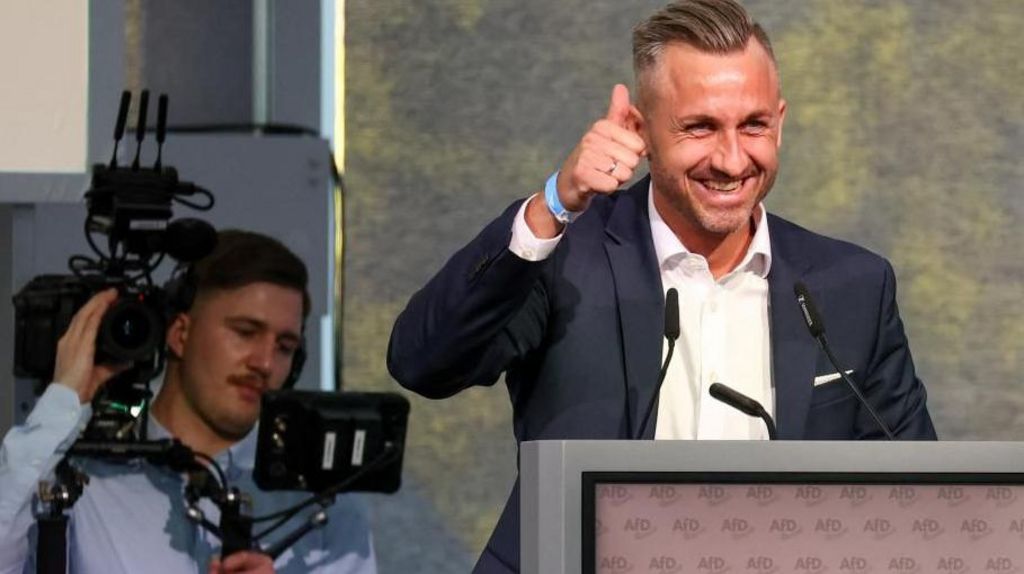
    At a party conference held this weekend in Magdeburg, the state’s capital, AfD delegates formally adopted a 150-page government platform widely labeled as radical and centered on pro-ethnic German policy priorities. Leading the party’s state ticket is Ulrich Siegmund, a popular TikTok political personality who received a standing ovation from conference attendees, framed the upcoming vote as a turning point for not just Saxony-Anhalt, but the entire nation and beyond.

    “The whole of Germany is watching this historic election. Parts of Europe are watching this historic election. Parts of the world are watching this historic election, because from here, finally, the political turnaround can also happen here in Germany,” Siegmund told the crowd. He emphasized that AfD is the only major party willing to openly address widespread public grievances, stating, “that we don’t feel safe anymore, that we scarcely feel at home anymore, that we don’t recognise our homeland anymore.” Closing his remarks, he issued a rallying cry: “Let’s take back our country.”

    The party’s policy platform lays out sweeping changes for Saxony-Anhalt, with hardline restrictions on immigration and targeted support for ethnically German families at its core. A central pillar of the plan is aggressive implementation of deportation and “remigration” policies — a controversial term referring to the mass relocation of people with non-German backgrounds, which has been openly embraced by the party following a 2024 leak revealing senior AfD figures attended a private discussion on mass expulsion proposals. Notably, the platform even calls for an end to recognizing Ukrainians as war refugees and demands their remigration, a policy that directly clashes with the federal German government’s staunch support for Kyiv amid Russia’s ongoing invasion.

    Beyond immigration, the platform takes a strongly pro-Russia stance, calling for an immediate end to energy sanctions on Moscow, expanded Russian language education in German schools, and argues that the current Berlin-led anti-Russia policy runs counter to German national interests. To address Saxony-Anhalt’s status as Germany’s oldest state with a rapidly aging population, AfD proposes tax breaks for large ethnically German families and universal free childcare, framed as a push to prevent what the party calls the “extinction of the German people.” The platform also enshrines a conservative vision of the nuclear family as “a father, a mother and as many children as possible,” blames low birth rates on what it terms “sexual deviations and non-reproductive lifestyles,” and proposes a ban on gay pride flags in public schools. Additional proposals include cutting public funding for regional public broadcasting.

    While some of AfD’s proposals require federal approval and cannot be implemented at the state level alone, a large portion of the platform’s provisions are feasible under state governance. Political opponents have issued stark warnings about the party’s agenda. Eva von Angern, parliamentary group leader for the left-wing Die Linke party in Saxony-Anhalt, described AfD’s plans as a “nightmare scenario for Saxony-Anhalt and for our democracy.” She accused the party of advancing an authoritarian vision that would severely erode fundamental civil rights, saying, “the public must be made aware of the AfD’s ‘ugly truths’ and the ‘very negative consequences for them personally if the AfD were to govern in Saxony-Anhalt.’”

    The AfD has held major support in former East German states including Saxony-Anhalt for years, but the party has seen rising support across the entire country in recent cycles. In last year’s federal elections, AfD secured a second-place finish, winning a historic 20.8% of the national vote and 152 seats in the 630-seat Bundestag. Domestically, intelligence officials have flagged the party as an extremist threat: the Saxony-Anhalt state branch of AfD was formally classified as a “far-right extremist organisation” by the state’s Office for the Protection of the Constitution in 2023, and the national party received the same classification from federal domestic intelligence last year. That federal classification drew criticism from the White House, and AfD has since mounted a legal challenge, resulting in a temporary court injunction that bars use of the label until a final ruling is issued.

    Outside the Magdeburg party conference this weekend, hundreds of demonstrators gathered to protest the AfD and its agenda. Political observers across Europe now view the Saxony-Anhalt election and the party’s newly released platform as a clear indication of the national agenda AfD would pursue if it continues to gain power across Germany.

  • Chinese fringe trees drape Yunnan village in spring white

    Chinese fringe trees drape Yunnan village in spring white

    Every spring, a remote village in southwest China’s Yunnan province undergoes a breathtaking transformation that draws nature lovers and curious visitors alike: hundreds of native Chinese fringe trees burst into full bloom, wrapping Huzi village of Qujing in a soft, luminous blanket of pure white.

    Known for their delicate, cascading flower clusters that resemble fine snow when packed along branches, these blooming specimens create an almost ethereal landscape. When soft spring winds stir through the village, petals drift gently through the air like slow-falling snowflakes, while a faint, sweet fragrance lingers in the breeze, turning the entire settlement into a dreamlike natural retreat.

    Beyond its visual beauty, the spectacle carries important ecological significance: the Chinese fringe tree is officially classified as a national second-class protected plant species in China. The tree earns its evocative name from the distinctive shape of its blooms, which closely mimic the silk tassels that decorated the traditional robes of ancient Chinese noblewomen.

    Local residents report that the peak blooming window for the trees lasts roughly 15 days each year, with mid-April marking the height of the display. For visitors seeking to experience the one-of-a-kind seasonal scene, this window offers the ideal window to visit and see the village draped in its iconic spring white bloom. Today, the blooming fringe trees have turned little-known Huzi village into an unexpected hidden gem for spring eco-tourism, highlighting how conservation of native plant species can also bring new attention and opportunity to rural communities.

  • Pakistani PM meets US JD Vance: statement

    Pakistani PM meets US JD Vance: statement

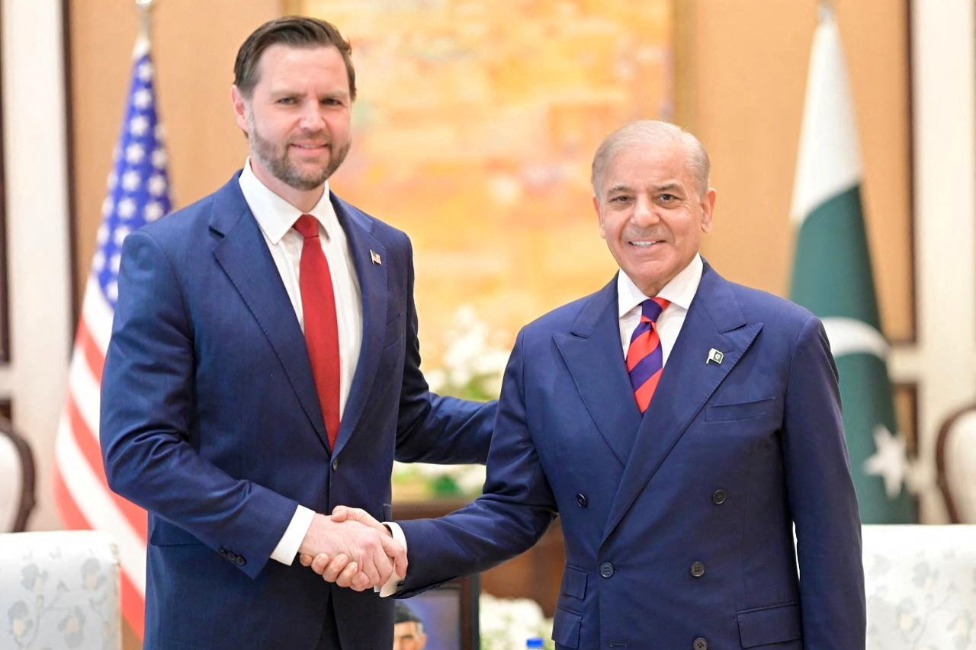
    ISLAMABAD, April 11, 2026 – A high-stakes diplomatic push to de-escalate soaring tensions in the Middle East moved through Pakistan’s capital on Saturday, as US Vice President JD Vance held a formal meeting with Pakistani Prime Minister Shehbaz Sharif, according to an official statement released by the Prime Minister’s Office.

    Vance touched down in Islamabad Saturday to participate in newly arranged talks with an Iranian delegation, a diplomatic initiative aimed at ending the recent wave of armed hostilities that have roiled the broader Middle East region. The gathering marks a significant step in international efforts to open a diplomatic pathway out of escalating conflict, with Pakistan stepping in to host the critical negotiations.

    During his meeting with Vance, Prime Minister Sharif praised both negotiating teams for their willingness to enter dialogue in good faith, and offered a forward-looking message on the potential of these talks to deliver long-term stability. He emphasized that the discussions represent a critical opening to build momentum toward lasting, durable peace across the Middle East.

    Sharif made clear Pakistan’s continued commitment to the diplomatic process, reiterating that the country stands ready to keep supporting both the US and Iranian delegations as they work toward tangible progress on sustainable regional peace. Just hours before his meeting with Vance, the Pakistani prime minister had already held separate talks with the Iranian delegation, which arrived in Islamabad earlier the same day to prepare for the negotiations.

    The talks in Islamabad come as the international community has grown increasingly alarmed by recent hostilities in the Middle East, pushing regional and global powers to pursue urgent diplomatic intervention to prevent further escalation. Pakistan’s role as host and facilitator underscores its position as a key stakeholder in regional stability and a neutral party willing to bridge divides between negotiating sides.

  • Knifeman calling himself ‘Lucifer’ slashes three at NYC’s Grand Central

    Knifeman calling himself ‘Lucifer’ slashes three at NYC’s Grand Central

    A violent, unprovoked attack at one of the United States’ busiest transportation hubs left three people injured and the assailant dead on a recent Saturday morning, sending shockwaves through New York City’s transit system and prompting a major law enforcement response. The incident, which unfolded across two platforms at New York’s iconic Grand Central-42 Street subway station, forced service disruptions for thousands of commuters and drew swift comment from top city and state officials.

    According to official statements from the New York Police Department (NYPD), the attacker — identified as 44-year-old Anthony Griffin — entered the city’s subway network at the Vernon Boulevard–Jackson Avenue station in Queens early that morning. He traveled aboard the 7 train east into Manhattan, disembarking at Grand Central, the country’s largest rail hub, before launching his attack. NYPD Police Commissioner Jessica Tisch shared details of the rampage at a press briefing shortly after the incident, confirming that Griffin first stabbed one passenger on the initial platform before moving upstairs to a second platform, where he attacked two more people.

    The three victims, all older adults, suffered serious but non-life-threatening injuries: an 84-year-old man sustained deep lacerations to his head and face, a 65-year-old man suffered matching cuts alongside an open skull fracture, and a 70-year-old woman was left with cut wounds to her shoulder. All three were quickly transported to local medical facilities for treatment.

    Two transit officers who were already in the area were alerted to the attack at 9:40 a.m. Eastern Daylight Time, and arrived on scene within minutes to confront the attacker. Tisch confirmed that Griffin was carrying a large machete recovered by investigators at the scene, was acting in an extremely erratic manner, and repeatedly told responding officers he was Lucifer. Even after officers issued more than 20 separate verbal demands for him to drop his weapon, Griffin refused to comply and advanced toward the officers with the blade extended. One officer opened fire, striking the suspect twice. First responders administered emergency life-saving care at the scene before transporting Griffin to Bellevue Hospital, where he was pronounced dead.

    In the wake of the attack, NYPD urged local residents and commuters to avoid the Grand Central area while investigators processed the crime scene, leading to temporary service diversions for trains passing through the major transit hub. Officials later confirmed that Griffin had three prior arrests on his record, but had no documented history of being flagged as an Emotionally Disturbed Person (EDP) in NYPD records. City officials also announced plans to release full body camera footage of the entire incident to the public as the investigation moves forward.

    New York Governor Kathy Hochul issued a formal statement condemning the attack, calling it a “senseless act of violence” targeting innocent members of the public. She also praised the quick action of responding officers, saying “I’m grateful to our brave officers who acted quickly to stop the suspect.” New York Mayor Zohran Mamdani echoed that praise, commending law enforcement for their rapid response that prevented additional violence from occurring. “Our officers put themselves in harm’s way to protect New Yorkers, and their quick thinking likely saved more lives,” Mamdani’s statement read, confirming the upcoming release of body camera footage to maintain transparency with the public.

  • In fiery speech, Pope Leo says ‘Enough to war!’

    In fiery speech, Pope Leo says ‘Enough to war!’

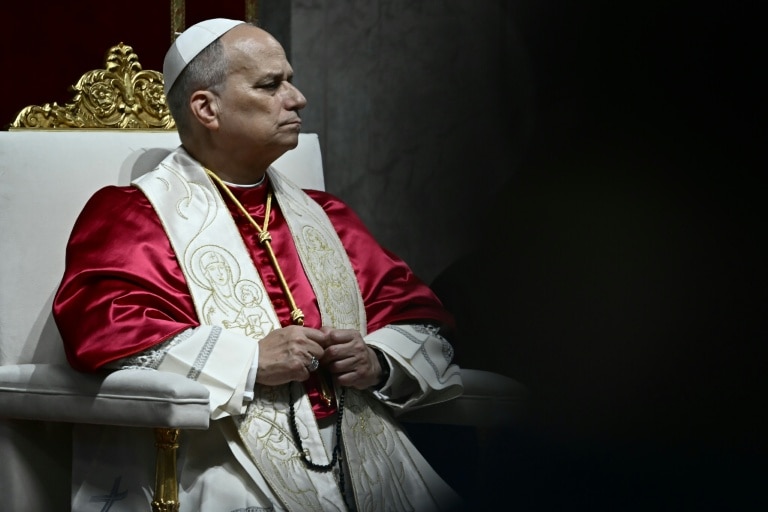
    In one of the most forceful addresses of his early papacy, Pope Leo used a global peace prayer vigil at Vatican City’s St. Peter’s Basilica on Saturday to issue a searing condemnation of warmongering and an urgent call for global unity around dialogue. The 70-year-old American pontiff, elected to the papacy last May following the passing of Pope Francis, has emerged as a prominent voice against the rising tide of armed conflict across the globe, most recently doubling down on his criticism just one day prior, when he decried the “senseless and inhuman violence” roiling the Holy Land.

    Speaking to gathered worshippers and a global audience of more than 1.4 billion Catholics, Pope Leo did not name specific politicians or nation states, a consistent practice in his public remarks, but his words landed as a sharp rebuke to global leaders pursuing military escalation. In characteristically measured but impassioned tones, he laid bare the human cost of unending conflict, painting a stark portrait of a world “where there never seem to be enough graves, for people continue to crucify one another and eliminate life, with no regard to justice and mercy.”

    “Enough of the idolatry of self and money! Enough of the display of power! Enough of war! True strength is shown in serving life,” the pontiff implored. Directing his message first to global heads of state, he urged an immediate end to hostilities and a return to diplomatic negotiation: “To them we cry out: Stop! It is time for peace! Sit at the table of dialogue and mediation, not at the table where rearmament is planned and deadly actions are decided!”

    Beyond national leaders, Pope Leo extended responsibility for building peace to ordinary people across the world, calling on the “immense multitude” that rejects war to cultivate a culture of peace in everyday spaces: homes, schools, neighborhoods, and both civil and religious communities. He framed this grassroots work as a counter to what he called the “delusion of omnipotence” that has grown increasingly aggressive and unpredictable across the global stage.

    “A Kingdom that counters polemics and resignation through friendship and a culture of encounter. Let us believe once again in love, moderation and good politics,” he said, describing the Kingdom of God as a bulwark against the dehumanizing forces of war: “It also is a place with ‘no sword, no drone, no vengeance, no trivialisation of evil, no unjust profit, but only dignity, understanding and forgiveness.’”

    Known as a moderate bridge-builder since his election, Pope Leo has repeatedly pushed for de-escalation in ongoing conflicts, most notably the U.S.-Israeli campaign against Iran, where he has consistently emphasized that a diplomatic solution is the only sustainable path forward. Saturday’s vigil marked one of his most passionate public entreaties to date, as he called on billions of people worldwide to reclaim shared values of compassion and cooperation in what he described as a “dramatic hour in history.”

  • London police arrest more than 200 at protest backing banned group Palestine Action

    London police arrest more than 200 at protest backing banned group Palestine Action

    LONDON – A mass demonstration against the UK government’s controversial classification of the protest group Palestine Action as a terrorist organization ended with over 200 people taken into custody by London’s Metropolitan Police on Saturday.

    Law enforcement confirmed that 212 protesters, ranging in age from 27 to 82 years old, were detained on charges of supporting an outlawed proscribed group. The demonstration was organized by Defend Our Juries, a grassroots group that had been publicly warned ahead of time by police that any participation in support of Palestine Action would lead to arrest. Hundreds of demonstrators converged on central London’s iconic Trafalgar Square, many carrying handmade placards reading statements such as “I oppose genocide. I support Palestine Action” to signal their solidarity with the banned group.

    The legal battle over the government’s ban has been fraught with tension since February, when Britain’s High Court ruled that the Home Office’s decision to designate Palestine Action as a terrorist organization was unlawful. Despite the ruling, the ban remained in effect while the government pursues an appeal to the higher courts, creating a confusing legal landscape that left protesters vulnerable to arrest despite the original ruling against the ban.

    Among the high-profile participants was Robert Del Naja, a founding member of the renowned British trip-hop collective Massive Attack. Del Naja told reporters he chose to openly hold a pro-Palestine Action sign despite the clear risk of arrest, which could impact his ability to cross international borders for work and travel. “I thought this is ridiculous and then the police making that U-turn to arrest people again, I thought that is even more ridiculous,” he said, explaining his decision to participate. “So I’m going to hold a sign today.”

    As officers led detained protesters away to waiting police vans, crowd members jeered law enforcement, chanting “shame on you” and calling out the arrest of elderly and disabled demonstrators. When police escorted an elderly protester using a walking stick to custody, one attendee shouted to officers, “Yeah, she looks like a terrorist, doesn’t she mate?” highlighting what protesters see as the excessive and unreasonable nature of the government’s crackdown on pro-Palestine advocacy.

  • KMT chairwoman hails meeting between party leaders as pivotal

    KMT chairwoman hails meeting between party leaders as pivotal

    During an official visit to the Chinese mainland, chairwoman of the Chinese Kuomintang (KMT) Cheng Li-wun framed a recent meeting between the top leaders of the Communist Party of China (CPC) and the KMT as a pivotal moment for cross-Strait relations in remarks made in Beijing on Friday. Cheng emphasized that when both sides anchor cooperation in a shared, correct starting point that upholds cross-Strait peace and the one-China principle, the outlook for stable, positive development across the Taiwan Strait remains distinctly optimistic. This high-stakes meeting marks a key step in renewed cross-party dialogue between the two major political groups across the Taiwan Strait, coming amid ongoing efforts to foster communication and reduce tensions in the region. The meeting, which was officially confirmed in State Council announcements, caps Cheng’s activities in Beijing that also included a tribute to Sun Yat-sen at the city’s cenotaph, reinforcing shared historical foundations between the two parties.