博客

  • US justice department seeks to throw out Capitol riot convictions

    US justice department seeks to throw out Capitol riot convictions

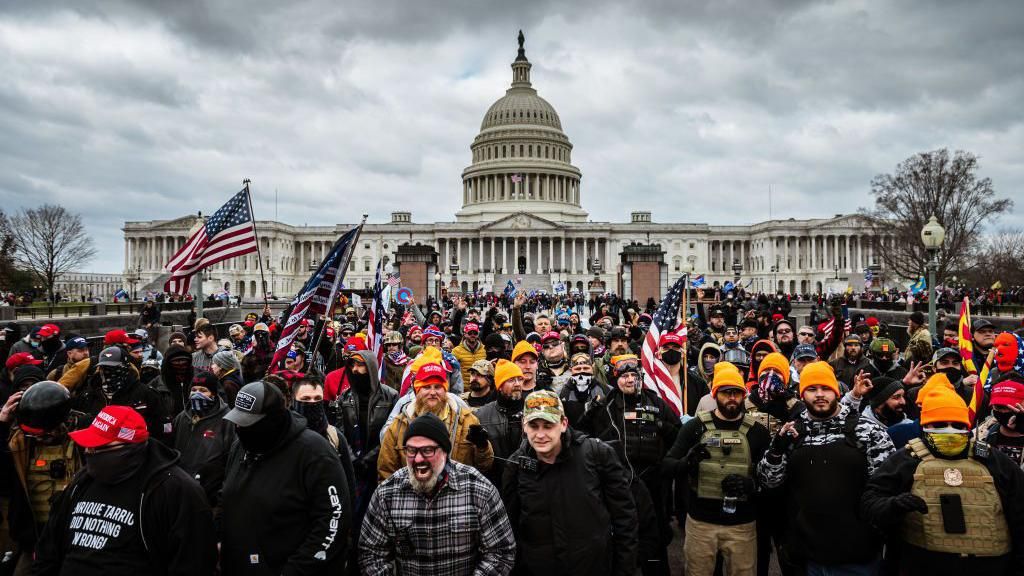
    In a major legal shift aligned with former President Donald Trump’s 2024 campaign pledges, the U.S. Department of Justice has formally requested a federal appeals court to dismiss the seditious conspiracy convictions of 12 individuals connected to the January 6, 2021, U.S. Capitol riot.

    When Trump took office for his second term, he moved quickly to grant clemency to hundreds of people charged or convicted over their roles in the insurrection, issuing full pardons or sentence commutations to more than 1,500 individuals on his first day in office. Though Trump issued over 1,000 full pardons to January 6 rioters, he opted only to commute the sentences of the 12 rioters—most of whom are affiliated with the far-right militia groups the Oath Keepers and Proud Boys. This commutation allowed the defendants to secure early release from prison, but left their felony convictions intact on their official criminal records.

    In a court filing submitted to the U.S. Court of Appeals for the District of Columbia Circuit on Tuesday, the U.S. Attorney’s Office for the District of Columbia stated that “The United States has determined in its prosecutorial discretion that dismissal of this criminal case is in the interests of justice.”

    Among the 12 individuals seeking full expungement of their convictions is Stewart Rhodes, the founder of the Oath Keepers militia. A former U.S. Army paratrooper and Yale-trained lawyer, Rhodes led a contingent of Oath Keepers members to Washington, D.C., on the day of the riot, where the group plotted to disrupt Congress’s formal certification of Joe Biden’s 2020 presidential election victory over Trump. Prosecutors proved during Rhodes’ 2023 trial that the group stored weapons in a Virginia hotel room across the Potomac River, and that while Rhodes never entered the Capitol building himself, he directed his followers’ actions from outside the building during the melee. He was originally sentenced to 18 years in federal prison after a jury found him guilty of seditious conspiracy, the charge of attempting to overthrow the lawful U.S. government. The D.C. Circuit has set an April 17 deadline for all parties to submit formal filings in the expungement cases. If the court grants the DOJ’s request to throw out the convictions, it will eliminate the need for the Trump administration’s DOJ to defend the original convictions in ongoing expungement proceedings.

    Notably, former Proud Boys national chairman Enrique “Henry” Tarrio, who was also convicted of seditious conspiracy over his role in organizing the riot and was originally sentenced to 22 years in prison, received a full pardon from Trump rather than a commutation, so he is not included in this latest request.

    A successful ruling dismissing the convictions would mark a key symbolic victory for Trump, who centered a major campaign promise on supporting and pardoning rioters who participated in the insurrection aimed at overturning his 2020 election loss.

  • IMF warns Trump’s Iran war could unleash global recession

    IMF warns Trump’s Iran war could unleash global recession

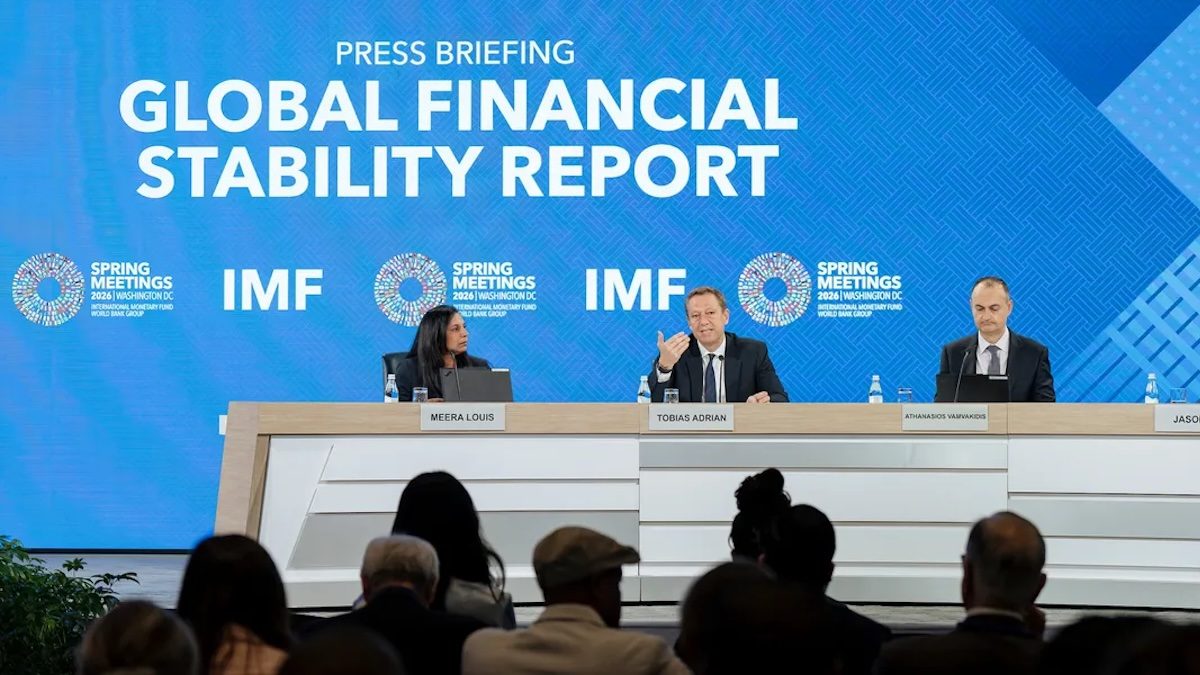
    As international financial leaders gather in Washington D.C. for the International Monetary Fund’s annual Spring Meetings, the institution has issued a stark warning: the ongoing US-Israeli military conflict in Iran threatens to derail global economic momentum, trigger a new energy crisis, and push vulnerable economies into deep recession. The grim update, included in the IMF’s latest *World Economic Outlook*, comes as independent analysts and policy experts warn the long-term financial cost of the conflict to US taxpayers alone could top $1 trillion, with disproportionate harm falling on low-income and vulnerable communities worldwide.

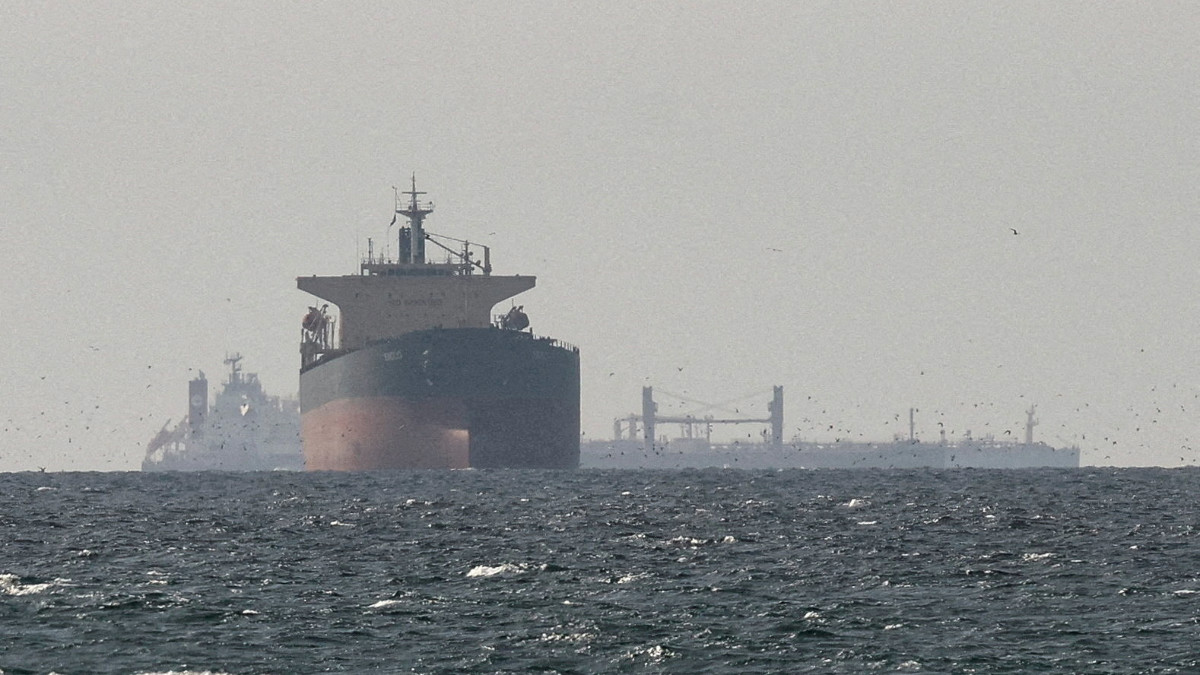
    Prior to the outbreak of hostilities, the IMF had upgraded its 2026 global growth forecast to 3.4%, buoyed by private sector adaptation to ongoing trade shifts, lower-than-expected US tariffs, targeted fiscal support, favorable financing conditions, and a productivity boom driven by emerging artificial intelligence technologies. That positive momentum has now come to a sudden halt, according to Pierre-Olivier Gourinchas, the IMF’s director of research. The conflict has already closed the Strait of Hormuz, a critical chokepoint through which roughly 20% of the world’s daily oil supplies pass, and damaged key energy infrastructure across the hydrocarbon-rich Middle East. If hostilities continue, the region’s central role in global energy markets makes a full-blown energy crisis increasingly likely.

    Even in the best-case scenario of a quick end to fighting, the IMF projects lasting damage to the global economy. Under a limited conflict framework, global growth is forecast to hit just 3.1% in 2026 and 3.2% in 2027, figures that fall below recent growth outcomes and sit well below pre-pandemic averages. Global inflation, which had been on a downward trajectory, is projected to tick back upward in 2026 before resuming its decline in 2027. The brunt of the impact will fall on emerging market and developing economies, particularly commodity-importing nations that already faced preexisting financial vulnerabilities. Downside risks dominate the forecast: a prolonged conflict, deepening geopolitical fragmentation, underperformance of AI-driven productivity gains, or renewed trade tensions could further weaken growth and roil global financial markets. High public debt levels and eroded policy space leave many nations with little buffer to absorb new shocks. The IMF urges policymakers to prioritize economic adaptability, policy credibility, and strengthened international cooperation to mitigate harm.

    The severity of the ultimate economic shock will depend on how long the conflict lasts and its geographic scale, as well as how quickly global energy production and shipping normalize once hostilities cease, the IMF notes. Impacts will vary sharply across regions: net energy-importing nations face the highest exposure, while low-income countries will see reduced tourism, slowing business activity, and falling remittances from migrant workers employed in the conflict region. Eric LeCompte, executive director of Jubilee USA Network and a United Nations finance expert, called the IMF’s new forecast deeply alarming, noting that the world’s poorest and most vulnerable populations will bear the worst of the crisis. “World leaders coming to Washington are receiving a very dark picture of the global economy,” LeCompte said. “The war is causing greater poverty and increases in our fuel and food costs.”

    Beyond macroeconomic disruptions, a leading Harvard public policy expert who specializes in calculating the true long-term costs of US military conflicts says the total price tag for American taxpayers will almost certainly reach at least $1 trillion once all indirect and long-term expenses are accounted for. Linda Bilmes, the Daniel Patrick Moynihan senior lecturer at Harvard Kennedy School who co-authored *The Three Trillion Dollar War: The True Cost of the Iraq Conflict* with Nobel Prize-winning economist Joseph Stiglitz, estimates that just the first several days of the US-Israeli assault cost US taxpayers a minimum of $16 billion, nearly $5 billion higher than the Pentagon’s official $11.3 billion estimate.

    Bilmes explains that the Pentagon understates short-term costs by valuing used munitions and equipment at their historical book value, rather than the much higher current cost to replace depleted stockpiles. She also points to multi-year, multibillion-dollar contracts the Trump administration has already signed with major defense contractors including Lockheed Martin that will add to long-term costs. Most significantly, the long-term costs of veterans’ care will create a decades-long financial burden. Roughly 55,000 deployed US troops have been exposed to toxins, burning fuel residues, and other environmental hazards linked to chronic long-term illness. Even if only one-third of these troops file for disability and medical benefits, Bilmes projects those costs alone will reach tens to hundreds of billions of dollars. “We are borrowing to finance this war at higher interest rates, on top of a much larger national debt base,” Bilmes explained. “The result is that the interest costs alone will add billions of dollars to the total cost of this war. And unlike the upfront costs, these are costs we are explicitly passing on to the next generation.” She added that she would not be surprised if the total cost has already surpassed the $1 trillion mark.

    The Washington Post reports the Trump administration is expected to request between $80 billion and $100 billion in emergency war funding from Congress, as part of a broader fiscal 2027 budget proposal that calls for $1.5 trillion in annual military spending. If the request is fully approved, Bilmes notes, total US military spending will rise to levels roughly 20% higher than the peak spending of World War II. Even if Congress rejects the full increase, she projects the conflict will lock in a permanent $100 billion annual increase to the baseline defense budget – a change that compounds to $1 trillion in additional spending over the next decade.

    Other independent economic analysts share the IMF’s warnings of severe global harm. A recent report from Oxford Economics analysts Ben May, Bridget Payne, and Paul Moroz found that an extended conflict in Iran could push the entire global economy into recession. In that scenario, Gulf economies would contract by more than 8% in 2026 before a gradual recovery, while advanced Asian economies heavily dependent on Gulf oil would face steep cost increases from more expensive energy imports and widespread supply chain disruptions. Europe would face a painful squeeze on natural gas and electricity prices, while the US – though buffered by its own domestic energy production – would still see a nearly 20% drop in equity markets that would weigh heavily on consumer spending.

    Domestically, US policy experts have highlighted the conflict’s toll on American household finances and social spending. Dean Baker, senior fellow at the Center for Economic Policy Research, emphasized that the massive military spending required by the conflict comes at the expense of critical domestic social programs. “To be clear, the main reason to oppose this pointless war is its impact on the people of Iran and elsewhere in the region. But it also has a huge economic cost that is seriously underappreciated,” Baker said. Trump’s proposal to spend 5% of US GDP – or $1.5 trillion annually – on the military works out to $12,000 per household annually, he noted. To offset this record military spending, the Trump administration has proposed $73 billion in cuts to non-defense domestic spending, on top of historic cuts to Medicaid and the Supplemental Nutrition Assistance Program that already serve tens of millions of low-income Americans. “It is striking to see that Congress might be willing to quickly cough up this money for military funding when it has refused far smaller sums that could have made a huge difference in the lives of tens of millions of people,” Baker added.

  • Iran may opt to abide by US blockade in hopes of a deal, experts say

    Iran may opt to abide by US blockade in hopes of a deal, experts say

    Washington’s maximum pressure campaign via a naval blockade of Iranian energy exports was designed as a short-term leverage tool to force Tehran into concessions at the negotiating table, but experts warn the gambit could backfire — with China positioned to quietly test the restrictions without triggering open military conflict, and energy markets already signaling growing confidence that a diplomatic breakthrough between the two rivals is within reach.

    In theory, cutting off Iran’s 1.5 million barrels per day of crude exports, much of which flows through the strategically critical Strait of Hormuz, should send global energy prices soaring. Yet since the US blockade officially took effect this Monday, Brent crude, the global benchmark for oil, has defied expectations and fallen sharply, dropping 4.3% to trade at $95.08 per barrel as of mid-week.

    Diplomats and industry analysts interviewed by Middle East Eye say the unexpected price dip stems from widespread optimism that both Washington and Tehran are committed to a two-week ceasefire and renewed negotiations, overshadowing immediate fears of disrupted energy supplies. US President Donald Trump announced Tuesday that talks between the two sides could resume as soon as within 48 hours in Islamabad, Pakistan, the site of earlier negotiations that ended without a final agreement.

    Aaron David Miller, a former US Middle East peace negotiator now with the Carnegie Endowment for International Peace, told MEE that the coming days will be a critical test of the blockade’s durability. “The test right now is whether in the next several days we see a return to kinetic activity on the part of the Iranians to challenge the US blockade or US kinetic action against Iran,” Miller said.

    The Trump administration has claimed the blockade is already successfully halting Iranian oil shipments, and initial analysis of global ship tracking data appears to back that assertion, according to maritime analysts. On Tuesday, two vessels linked to Iranian energy exports — the Panama-flagged *Elpis* and Chinese-owned *Rich Starry*, a regular carrier of Iranian methanol — drew international attention after crossing the Strait of Hormuz but idling in the Gulf of Oman rather than exiting toward global markets.

    Matthew Wright, principal freight analyst at energy analytics firm Kpler, explained that the exit from the Gulf of Oman is the key metric for tracking compliance, since US naval forces are positioned outside the Strait of Hormuz. “We haven’t seen any Iranian-linked vessel transiting the Strait of Hormuz and exiting the Gulf of Oman. That is what we are waiting on,” Wright said. Experts add that US warships have deliberately stayed outside the narrow strait and away from the Iranian mainland, recognizing they remain vulnerable to Tehran’s fleet of drones and short-range anti-ship missiles.

    As the largest buyer of Iranian oil, purchasing roughly 90% of Tehran’s total exports, China is the only global power with the capacity to undermine the US blockade. In the aftermath of the June 2025 US-Israeli war against Iran, Beijing has already supplied Tehran with air defense systems and drones, and The New York Times reported over the weekend that China may have also delivered shoulder-fired missiles to Iranian forces. Beijing has denied all reports of arming Iran, and issued a public statement Tuesday calling the US blockade “dangerous and irresponsible” while urging an immediate ceasefire and a return to normal shipping traffic through the Strait of Hormuz.

    Yun Sun, director of the China Program at the Stimson Center, told MEE that Beijing will avoid direct military confrontation with Washington over the blockade, even as it pursues quiet efforts to prop up the Iranian government. “The Chinese will not pick a fight with the US over Iran. They might do things behind the scenes to rebuild and rearm Iran, but not directly confront the US militarily,” Sun said. “The Strait of Hormuz is so far from China, and the geographical distance is a key barrier to any Chinese plan for effective military intervention.”

    Still, one senior Arab diplomat told MEE that the entire US blockade ultimately relies on China’s quiet willingness to comply, pointing to a recent precedent where Washington allowed a Russian oil tanker to reach Cuba despite long-standing US sanctions on the Caribbean nation. The diplomat added that Tehran is well-positioned to outlast the restrictions: Iran pre-positioned massive volumes of crude ahead of the blockade, boosting loadings at its key Kharg Island export terminal before the February 28 US-Israeli attack. Kpler data shows Iran currently holds roughly 38 million barrels of crude stored on tankers at sea, much of it already anchored near the Chinese coast, with enough storage capacity to continue production for weeks before being forced to shut down operations. Iran also has alternative trade routes, including access to the Caspian Sea and overland land borders that reduce its reliance on open sea lanes for imports, unlike Cuba, which the US has targeted with a similar energy blockade.

    Many foreign policy experts argue the US has based its blockade strategy on flawed timelines and miscalculations. Alan Eyre, a former senior State Department Iran expert, told MEE that the slow-acting restrictions will fail to pressure Tehran into making concessions within the timeframe the Trump administration needs for a diplomatic win ahead of any planned political milestones. “For any sort of time frame the US cares about to inflict pain on Iran’s economy, the blockade is just too slow-acting,” Eyre said. “It’s a short-term tool that will fail to move the Iranians at the negotiating table.” Eyre added that Iran already holds hundreds of millions of dollars in recent oil export revenue, giving it ample financial breathing room to wait out the standoff.

    Experts note that if Tehran chooses not to immediately challenge the blockade, it is likely because Iranian leadership believes a negotiated deal with Washington is achievable. Earlier talks in Islamabad broke up without an agreement after US Vice President JD Vance walked away over disputes about the future of Iran’s nuclear program, but multiple regional and US media outlets have reported that the two sides came surprisingly close to reaching a framework agreement. Eyre compared Vance’s walkout to traditional Middle Eastern bazaar haggling, noting that it is a common negotiating tactic rather than a sign that talks are dead. “Vance walking away is like negotiating for a rug at a market in the Middle East. You ask the price, say it’s too high and walk away. But then you come back the next day,” Eyre said.

    A key breakthrough in the earlier talks was a US concession offering Iran a 20-year moratorium on uranium enrichment, a significant shift from earlier US demands that Iran end all enrichment activities permanently. Iran has long maintained its right to enrich uranium for peaceful civilian energy purposes, and its late supreme leader Ayatollah Ali Khamenei issued a binding religious decree against developing nuclear weapons back in 2003, a position Tehran has repeatedly reaffirmed.

    Miller noted that the US shift to accepting a moratorium, or temporary pause, rather than a permanent end to enrichment is a major step forward that makes meaningful negotiation possible. “If the administration has conceded to using the word ‘moratorium’, which means ‘pause’ and not ‘permanent ending’ – that’s a significant concession, and you might actually have a negotiation,” Miller said.

    Despite the progress, several major sticking points remain to be resolved. These include Iran’s demand to charge transit tolls for commercial vessels passing through the Strait of Hormuz, the status of Iran’s existing stockpiles of enriched uranium, and the maximum level of enrichment that Washington will agree to allow Tehran to maintain. Experts add that Trump faces political pressure to secure a high-profile foreign policy win, and opening the strait to shipping is not enough to meet that goal. “I don’t think the Iranians will agree to a 20-year moratorium, but if they agree to a pause in single digits, that could open things up,” Miller said.
  • Trump’s McDonald’s stunt with DoorDash grandma sparks backlash over US healthcare costs

    Trump’s McDonald’s stunt with DoorDash grandma sparks backlash over US healthcare costs

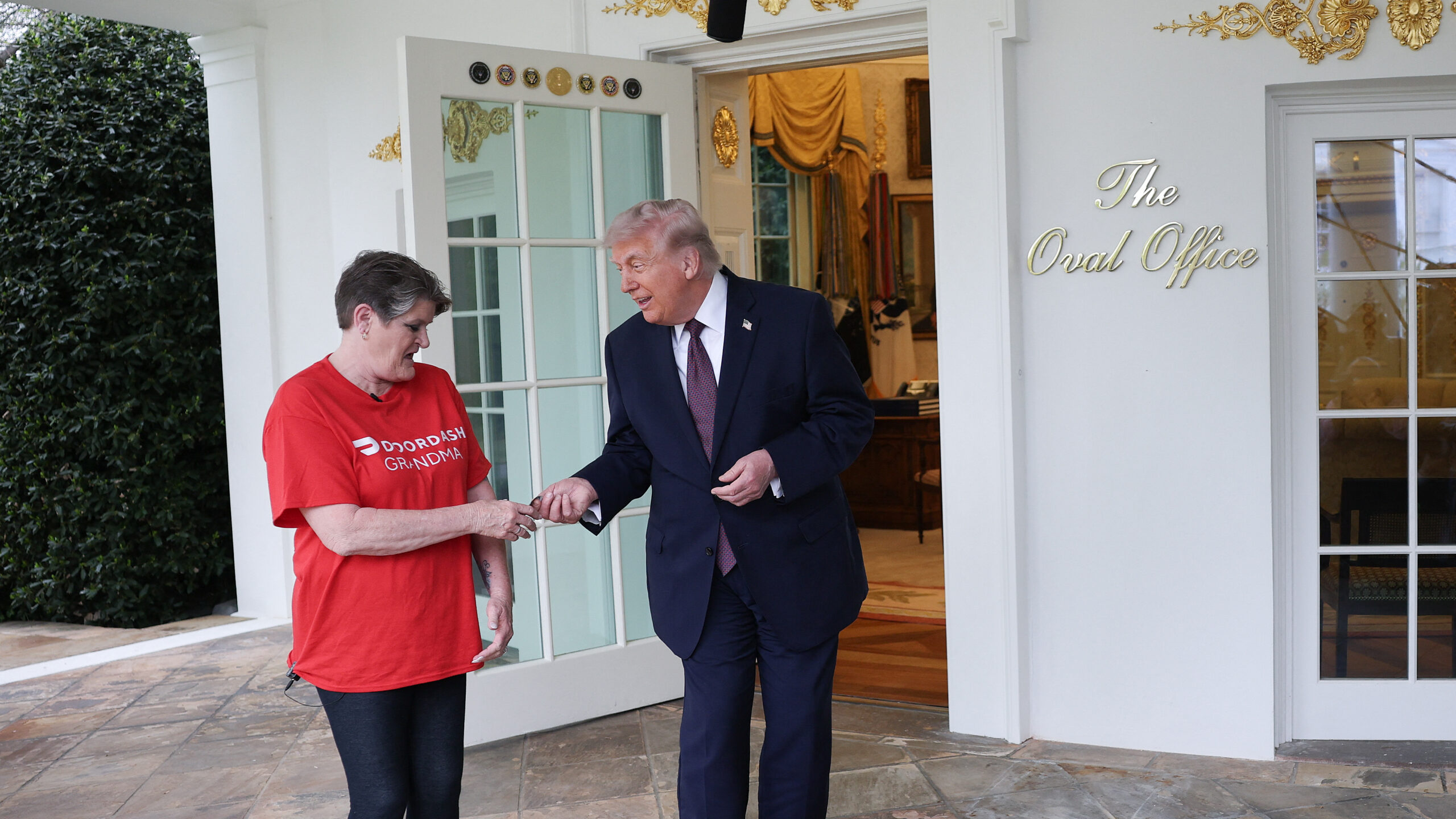
    What was meant to be a carefully crafted public relations win for the Trump administration has instead ignited a fierce national conversation about systemic gaps in the United States’ healthcare and gig economy systems. In April 2026, the White House orchestrated a viral event to mark the one-year anniversary of former President Donald Trump’s signature “No Tax on Tips” policy, bringing 58-year-old Arkansas gig worker Sharon Simmons to Washington D.C. to deliver McDonald’s fast food to the Oval Office.

    Simmons, a DoorDash driver from Fayetteville who took up the gig in 2022 to cover her husband’s stage-three cancer treatment costs, quickly became the face of a debate no PR team planned for. Trump himself joked about the staged nature of the moment as Simmons arrived, quipping to reporters, “This doesn’t look staged, does it?” DoorDash later confirmed the delivery was pre-planned as part of the anniversary celebration, and social media users quickly uncovered evidence of the coordinated collaboration between the company and the White House.

    According to Simmons’ own public comments, the elimination of federal taxes on tipped income saved her roughly $11,000 in the first year of the policy, a sum that directly helped cover her husband’s mounting medical bills. That statement was picked up by supporters of the policy, who framed the “No Tax on Tips” measure as a critical win for working Americans, putting much-needed extra take-home pay into the pockets of gig and hospitality workers who rely heavily on gratuities to make ends meet.

    But for critics, the viral moment was not a celebration of policy success—it was a damning indictment of long-standing structural failures in the U.S. healthcare system. As an independent contractor for DoorDash, Simmons does not qualify for employer-sponsored health insurance, paid medical leave, or other core benefits that traditionally protect workers from catastrophic medical costs. Since her husband’s 2025 cancer diagnosis, Simmons has completed more than 14,000 deliveries, leaning on the gig’s flexible hours to balance work and caregiving.

    Commentators and political opponents quickly pointed out that the image of a grandmother in her late 50s making thousands of fast food deliveries just to afford her spouse’s life-saving treatment perfectly encapsulates the crisis facing millions of uninsured and underinsured Americans. The Democratic-led Ways and Means Committee summed up this perspective in a social media post, arguing that Simmons should not be forced to rely on delivery tips to cover healthcare costs, blaming Republican policies for driving up medical expenses for U.S. households.

    Many online observers also criticized the ethics of staging the event, noting that Simmons was flown across the country to Washington to be used as a prop in a political photo op. Critics argued that the orchestrated nature of the moment undermined any claim that it was an authentic, spontaneous example of the policy’s benefits, instead turning a family’s medical hardship into political theater.

    While there was scattered praise for the policy’s tangible financial benefit for Simmons, much of the national discourse that followed the viral clip centered on the broader reality it exposed: millions of older Americans are forced to work well past traditional retirement age, not by choice, but to cover basic needs including life-saving healthcare that their incomes otherwise cannot support. What began as a lighthearted viral moment of fast food delivered to the Oval Office ultimately transformed into a high-profile flashpoint for ongoing debates over healthcare access, gig worker rights, and economic inequality in the United States.

  • US lawmaker demands FIFA pay World Cup transport bill amid ticket hikes

    US lawmaker demands FIFA pay World Cup transport bill amid ticket hikes

    The 2026 FIFA World Cup, the world’s biggest football tournament, has sparked a growing political controversy in the United States over proposed public transport fare hikes that would charge visiting fans and local commuters exorbitant prices to reach match venues. On Tuesday, Senate Minority Leader Chuck Schumer, a leading New York Democratic lawmaker, became the most prominent voice calling on football’s global governing body to cover all public transit costs tied to the tournament, arguing the multi-billion dollar organization should not pass its hosting expenses onto local communities.

    Schumer’s public call to action came in response to an exclusive report first published by sports outlet The Athletic, which revealed that New Jersey Transit, the state’s main public transit agency, was considering charging fans more than $100 for a single round-trip ticket between Manhattan’s Penn Station and MetLife Stadium in East Rutherford, New Jersey. MetLife Stadium is set to host eight World Cup matches, including the tournament’s final on July 19, making it one of the most high-profile venues in this summer’s iteration of the World Cup.

    For context, a standard off-event round-trip ticket on the same route currently costs just $12.90, meaning the proposed hike would represent a more than 675% increase over regular fares. Schumer took to social media platform X to outline his argument, noting that FIFA projects it will earn a record $11 billion in total revenue from the 2026 tournament. “FIFA is set to reap nearly $11 billion from this summer’s World Cup, yet New York area commuters and residents are being handed the bill,” Schumer said in his statement. “The least FIFA can do is ensure New York residents can go to the stadium without being gouged at the turnstile. I am demanding FIFA step up and cover transportation costs for host cities and states. New York commuters and residents should not subsidize an $11 billion windfall.”

    Schumer was not alone in criticizing the proposed fare increases. New York Governor Kathy Hochul also joined the pushback, saying that exorbitant transport costs run counter to the goal of making the World Cup accessible to all fans. “The World Cup should be as affordable and accessible as possible,” Hochul wrote on X. “Charging over $100 for a short train ride sounds awfully high to me.”

    When contacted by Agence France-Presse for comment on the controversy, NJ Transit did not issue an immediate response. The Athletic had previously obtained an official statement from an agency spokesperson noting that no final pricing decision has been confirmed. “The ticket prices for match day travel have not been finalized and any reference to cost would be unconfirmed speculation,” the spokesperson told the outlet. Still, unnamed NJ Transit sources cited by The Athletic estimate that arranging extra transit services for the eight matches at MetLife Stadium will cost the agency approximately $48 million, creating a major budget shortfall that officials are looking to offset.

    New Jersey Governor Mikie Sherrill has already ruled out using state taxpayer funds to cover the additional costs. “We are not going to be paying for moving the people who are viewing the World Cup on the back of New Jersey taxpayers and New Jersey commuters,” Sherrill said Monday, leaving agency officials looking for alternative ways to cover the costs.

    The transit fare controversy is not limited to New Jersey. Earlier this month, officials in Massachusetts confirmed that the Massachusetts Bay Transportation Authority will charge $80 for a round-trip ticket from downtown Boston to Gillette Stadium, which is hosting multiple World Cup matches. That price marks a 300% increase over the standard $20 off-event fare, highlighting a nationwide trend of host transit agencies looking to pass extra World Cup costs onto fans. As of Tuesday, FIFA has not issued a public response to Schumer’s demand to cover the transit costs.

  • ‘Listening bars’ bloom as hottest new nightlife trend

    ‘Listening bars’ bloom as hottest new nightlife trend

    Across major cities from Paris to New York to London, a one-of-a-kind new nightlife concept is rapidly growing in popularity, offering music lovers a radically different alternative to crowded club nights and noisy gig venues: the ‘listening bar.’ Born from Japan’s iconic cozy jazz kissa culture, this trend prioritizes high-fidelity audio quality that allows audiences to connect with recorded music in a way that modern streaming and cheap portable audio gear rarely can.

    The core of every authentic listening bar is an investment in top-tier audio equipment purpose-built to deliver unparalleled sound. At Listener, a popular venue in central Paris, co-founder Jerome Thomas notes the underground soundproof listening room boasts a system that retails for roughly €200,000, featuring handcrafted speakers from niche Greek manufacturer Tune Audio. The result is an audio experience that reveals hidden layers of familiar recordings: crisp, clear treble and rich, resonant bass that listeners can feel in their chest.

    Venues split into two broad models to suit different guest preferences. Some focus on active listening sessions, where guests pay admission to gather in a quiet, acoustically treated space, with full attention directed to the music and the sound system. Others pair high-quality audio with a more traditional social setting, allowing guests to enjoy drinks and conversation with elevated music as a backdrop. Many venues stick to vinyl records, rather than compressed digital streams, and rely on high-end cabling and tube amplifiers to maximize audio quality, though some use premium lossless streaming services like Tidal or Qobuz for digital offerings.

    For regular guests, the experience fills a gap left by modern music consumption habits. Thirty-one-year-old Camille Calloch, who recently attended a dedicated listening session focused on British neo-soul artist Sampha at Listener, explained the concept has become a core part of how she enjoys music. “It really makes you listen to every word, every instrument, every note,” she said, adding that it complements other experiences from concert attendance to personal headphone listening.

    Thomas, a former medical industry worker, says the most rewarding part of running his venue is watching guests rediscover music they have loved for years. “They come to me saying ‘I thought I knew that track by heart, I’ve been listening to it for 15 years, but I heard new instruments, I could hear the mix from the sound engineer’,” he shared. The trend directly pushes back against the low-quality compressed audio that defines most modern listening: while recorded music is more ubiquitous and portable than ever, most consumers stream compressed tracks through Bluetooth headphones or cheap portable speakers, losing much of the detail captured in the original recording.

    The boom in listening bars also comes as traditional nightlife shifts. Many cities have seen a steady decline in club attendance, driven by soaring commercial rent costs and changing leisure preferences among younger generations. In contrast, the listening bar scene is expanding exponentially. Dan Wissinger, co-owner of Eavesdrop, a Brooklyn listening bar that opened in 2022, says growth in the sector has been explosive in recent years. Wissinger notes that proper acoustic treatment is a non-negotiable for any legitimate listening bar: “If they don’t have acoustic treatment, then they’re just fake listening bars. In a hospitality space, if you don’t have good damping, you’re not going to be hearing music first.”

    London’s fast-growing scene includes both long-running European pioneers like Brilliant Corners and new entries from major hospitality brands. One of the newest additions is Hidden Grooves, launched by the Virgin Hotels group at its Shoreditch location. The venue curates a collection of 5,000 vinyl records, worked with London-based sound engineering firm Project Audio (which has designed systems for top Ibiza clubs) to tune the space, and installed £50,000 Tannoy speakers from the 100-year-old British audio manufacturer. Neil Aline, Virgin’s head of cultural entertainment and a former DJ, first fell in love with the concept while touring in Japan, where the original jazz kissa bars invented the intimate, music-focused model. “If I’m going out to experience music, the concept of a good listening bar checks all the boxes for me,” Aline said. “As a music lover, it’s a whole different way of experiencing music outside of live venues or clubs.”

  • 250 missing after migrant boat sinks in Indian Ocean

    250 missing after migrant boat sinks in Indian Ocean

    A devastating maritime disaster off the coast of Southeast Asia has left around 250 people, including dozens of children, unaccounted for after an overloaded migrant trawler sank in the Andaman Sea last week, United Nations agencies for refugees and migration confirmed in a joint statement. The vessel, which departed from southern Bangladesh with the final destination of Malaysia, capsized amid heavy wind and rough sea conditions, a disaster exacerbated by the extreme overcrowding on board, according to the agencies.

    The Bangladesh Coast Guard told AFP that one of its patrol vessels pulled nine survivors from the water on April 9, though the exact timing of the capsizing remains unconfirmed. One of the survivors, 40-year-old Rafiqul Islam, described his harrowing experience of drifting adrift for nearly 36 hours before rescue, saying he suffered severe burns after being exposed to oil that leaked from the sinking vessel. He told reporters that the prospect of securing stable employment in Malaysia was the key factor that convinced him to undertake the risky crossing.

    This tragedy comes amid a years-long humanitarian crisis that has forced hundreds of thousands of Rohingya, a predominantly Muslim ethnic minority from Myanmar, to flee their homes. Since a brutal military crackdown in 2017, more than 700,000 Rohingya have crossed the border into Bangladesh, where they are hosted in sprawling refugee camps. Rohingya people are constitutionally denied citizenship in Myanmar, a Buddhist-majority nation, leaving them effectively stateless with no access to basic rights or protection in their home country.

    While Bangladesh has provided refuge to the displaced population, dire living conditions in the overcrowded camps, combined with shrinking international humanitarian funding and ongoing violence in Myanmar’s Rakhine State, have eliminated most hope of a safe voluntary return home in the near future. These pressures have pushed growing numbers of refugees to attempt dangerous irregular sea crossings to neighboring Malaysia, which many see as a potential safe haven in the region.

    Irregular migrant vessels operating this route are almost always small, severely overcrowded, and lack basic necessities including clean drinking water, sanitation, and emergency safety equipment. The crossings are consistently deadly: many vessels never reach their destination, with passengers dying of exposure, dehydration, or shipwreck. Those who do complete the crossing are often detained and deported, while many others are turned away by authorities or coastal communities in Malaysia and Indonesia. Most recently in January 2025, Malaysian authorities turned away two boats carrying approximately 300 refugees after providing only limited emergency food and water.

    One Rohingya refugee based in Bangladesh’s Cox’s Bazar, the site of the world’s largest Rohingya refugee camp, previously explained to Reuters the desperate logic driving these journeys. “People are dying in the fighting, dying from hunger. So some think it’s better to die at sea than to die slowly here,” they said.

    In their joint statement, the UN High Commissioner for Refugees (UNHCR) and the International Organization for Migration (IOM) framed the Andaman Sea disaster as a tragic symptom of a larger unresolved crisis. “This tragic incident reflects the dire consequences of protracted displacement and the absence of durable solutions for the Rohingya,” the statement read. The agencies called on the international community to immediately increase and sustain funding to support Rohingya refugees and their host communities in Bangladesh, and renewed calls for urgent action to address the root causes of displacement inside Myanmar. As Bangladesh prepares to mark its new year, the agencies said the disaster is a stark reminder of the urgent need to create conditions that allow Rohingya refugees to return to their home country voluntarily, safely, and with dignity.

  • ‘Blindsided’: US farmers strained as fertilizer costs surge on war

    ‘Blindsided’: US farmers strained as fertilizer costs surge on war

    As spring planting gets underway across the American heartland, farmers in North Carolina and beyond are grappling with an unprecedented crisis spurred by escalating tensions in the Middle East. Skyrocketing fertilizer prices, paired with unexpected delivery delays and supply chain disruptions triggered by the closure of the Strait of Hormuz, have left agricultural producers blindsided and squeezed between mounting input costs and uncertain harvest outcomes.

    On Andy Corriher’s North Carolina farm, where corn and soybean seedlings are starting to take root, the crisis has hit at the worst possible moment. Weeks after placing an order for liquid nitrogen, one of the most critical inputs for spring planting, he still has no clear timeline for when his shipment will arrive. Since U.S.-Israeli strikes on Iran prompted Tehran to block the key shipping waterway that carries much of the world’s fertilizer and energy exports, Corriher estimates the price of the nitrogen he relies on has jumped by at least 40 percent. At the Port of New Orleans, a major hub for fertilizer imports, urea prices have surged by roughly 50 percent overall.

    To adjust, Corriher has cut his fertilizer application by one-third—a move he fears will translate to lower crop yields at harvest time. He is far from alone in facing this double blow of soaring costs and restricted supply. Forty-year-old Russell Hedrick, who tends 1,000 acres of corn and soybeans near Hickory, North Carolina, purchased around 75 percent of his fertilizer after prices spiked following the closure of the strait. Like most small to mid-sized American farmers, he lacks the on-farm storage capacity and upfront capital to stock up on fertilizer months in advance of planting season, leaving him fully exposed to the market shock. He has dialed back his usage to the bare minimum, holding out for an opportunity to top-dress crops later if prices and supply stabilize.

    Even before the current conflict, Hedrick noted, steadily rising input costs had forced farmers to stretch every bag of fertilizer as far as possible, joking that “farmers have essentially become like Breaking Bad chemists with fertilizer, to get the most out of it.” Now, the sudden disruption has pushed that balancing act to breaking point. “This year, we just kind of got blindsided,” he said, adding that past supply chain shocks, such as China’s 2021 phosphate export restrictions, gave farmers months of advance warning to prepare—something this crisis completely lacked.

    For 55-year-old Marshville farmer Derrick Austin, comments from U.S. Agriculture Secretary Brooke Rollins that 80 percent of American farmers had purchased spring fertilizer before the conflict broke out offered little relief. Austin was among the 20 percent who could not afford to buy early, and the announcement felt like a “gut shot,” he said. He only managed to secure enough nitrogen for his wheat crop at pre-crisis prices after a supplier gave him a break, calling the overall situation “devastating.”

    The crisis carries significant political weight, as the farming community forms a core support base for President Donald Trump, who won 78 percent of the vote in 2024 in counties dependent on agriculture. Trump has attempted to address the anger, blaming “price gouging from the fertilizer monopoly” in a Saturday statement and vowing “American Farmers, we have your back!” But the disruption has left even some of his long-time backers questioning the administration’s handling of the Middle East conflict, and its failure to anticipate the blowback for American households.

    Corriher, a long-time Trump supporter, said the crisis felt like an avoidable “collateral damage” of the conflict. “It didn’t seem like we had really thought out all the consequences to the American people,” he said. Austin, meanwhile, said he is “starting to question some of (Trump’s) reasoning” even as he still prefers the current administration to opposing alternatives. Hedrick, who has voted for Trump three times, struck a more measured tone: “He’s human like the rest of us. I think he makes good calls, I think he makes mistakes. If the conflict’s resolution brings long-term peace and a reopened Strait of Hormuz, that’s all I can hope for.”

    Beyond the immediate political fallout, agricultural economists warn the crisis could deepen the prolonged slump facing the U.S. farm sector. Iowa State University professor Chad Hart noted the U.S. agriculture economy “has been in a recession for the last couple of years,” with net farm income declining while business costs have stayed persistently high. This year, the overall impact on yields and farm profits may be muted, as some farmers did lock in fertilizer supplies early, either in the fall of 2024 or early this spring. But if the conflict drags on and the Strait of Hormuz remains closed, Hart warned the 2027 crop could face far more severe disruption, as farmers will no longer have the buffer of pre-purchased fertilizer to draw on.

    The pain is not limited to farms either. Soaring diesel and energy costs tied to the Middle East conflict have pushed up prices for all American households, with Corriher noting “Everybody seems to be suffering.”

  • Diplomacy on ice: Mark Carney and Alexander Stubb play hockey

    Diplomacy on ice: Mark Carney and Alexander Stubb play hockey

    In a striking fusion of athletic competition and high-level diplomacy, Canada’s Prime Minister Mark Carney and Finland’s President Alexander Stubb took to the ice together for a friendly hockey game during Carney’s first official bilateral visit to Canada’s capital. The unlikely pairing of two heads of state on a hockey rink, with both leaders suiting up to join the Ottawa Charge amateur team, turned a routine diplomatic meeting into a memorable display of cross-national connection.

    Diplomatic summits and formal bilateral talks often rely on carefully staged photo opportunities and rigid policy discussions, but this event broke with tradition. Carney, a Canadian leader with longstanding ties to the country’s beloved national sport, joined Stubb – an avid hockey enthusiast – for the casual game, showcasing the shared cultural love of hockey that unites both Nordic and North American nations.

    The visit marks Carney’s first formal one-on-one bilateral engagement with a European head of state since taking office, making the informal athletic interlude more than just a recreational activity. Analysts view the moment as a deliberate, approachable gesture to strengthen people-to-people ties between Canada and Finland, two nations that already cooperate closely on Arctic security, climate action, and trade. By meeting on the ice rather than just in a cabinet room, the leaders signaled a willingness to build a more personal, open working relationship ahead of formal policy negotiations scheduled during the visit.

    Local spectators at the Ottawa rink called the event a welcome break from typical stuffy political events, with many fans capturing photos of the two leaders skating alongside amateur teammates. The game itself remained low-stakes, focused on fun rather than competition, but the symbolic weight of the moment resonated far beyond the rink’s boards: it demonstrated how shared cultural passions can serve as a foundation for deeper diplomatic cooperation in an increasingly divided global political landscape.

  • Chinese slimmers trade lost fat for beef

    Chinese slimmers trade lost fat for beef

    As obesity emerges as one of China’s fastest-growing public health crises, local governments across the country have rolled out a creative, incentive-driven strategy to encourage residents to lose weight: trading lost body mass for free groceries, from premium beef to fresh produce. One of the most high-profile of these programs, launched in the eastern Chinese city of Wuxi, has already drawn massive public interest since kicking off in March.

    At Wuxi’s local community center, hundreds of participants like 44-year-old Shu Fangqiang, a man with a BMI of 30 that qualifies him as obese, have already signed up. The program’s rules are simple: for every 500 grams a participant loses by the final weigh-in scheduled for January 2027, they earn 500 grams of boneless beef, or 1.5 kilograms of bone-in beef. Those who exceed weight loss targets can even earn premium cuts such as oxtail, with a maximum total reward capped at 10 kilograms of free meat. Organizers reported that more than 1,000 eligible local residents have registered, with thousands more turned away due to local residence requirements. When an AFP correspondent visited the site, queues for initial measurements stretched to a dozen people in both men’s and women’s lines, with staff logging height, weight, BMI and waist measurements, offering encouraging notes, and on-site doctors providing personalized health guidance. Event banners also emphasize safe, sustainable weight loss over rapid results, warning against dangerous practices such as unregulated diet drugs, self-induced vomiting and extreme fasting.

    For many participants, the program offers a welcome extra push to stick to long-planned health goals. “Even without the beef, I wanted to lose weight for my health,” Shu said, noting that his excess weight has disrupted his sleep, hurt his productivity at work and impacted his overall quality of life. He aims to lose 20 kilograms through the program. Forty-four-year-old participant Zheng Haihua added that the incentive helps hold her accountable to her goal of moving more and cutting back on overeating, admitting that “when you see delicious food, it’s hard to resist.”

    Wuxi’s “Trade Fat for Beef” initiative is far from unique. Similar community-led programs have popped up across China and gone viral on Chinese social media. In southwestern Yunnan province, a “Flab for Potatoes” program rewards participants for shrinking their waistlines, with top performers eligible for free chicken instead of potatoes. National supermarket chain Yonghui Superstores has launched its own version, allowing customers to trade 1.5 kilograms of weight lost over 10 days for 500 grams of beef, crayfish or kiwifruit.

    Public health data underscores the urgency of China’s obesity challenge. The World Health Organization estimates that as of 2022, more than one-third of Chinese adults are overweight, and 8.3 percent meet the WHO’s definition of obesity. While those rates are far lower than the United States’ 72.4 percent overweight and 42 percent obesity rates, China’s obesity crisis has grown at an alarming pace: the Chinese Center for Disease Control and Prevention reports the national obese population tripled between 2004 and 2008. By 2021, a study published in *The Lancet* found China had 402 million overweight or obese adults over 25 — the largest obese population of any country worldwide. The 2021 study attributed the trend to China’s rapid urbanization, which has pushed more workers into sedentary office jobs, shifted national diets toward processed, high-sugar and high-fat foods, and reduced average daily physical activity. If current growth rates continue, China’s National Health Commission (NHC) projects that 70.5 percent of Chinese adults could be overweight or obese by 2030, using the commission’s stricter national obesity criteria.

    National public health officials have already launched nationwide anti-obesity campaigns, driven by concerns over rising rates of chronic obesity-linked diseases and growing healthcare costs. Local community programs like Wuxi’s are widely seen as a complementary effort to boost public engagement. Local physician Wu Changyan called the incentive model “a fun way to get people motivated” to adopt healthier habits, noting that modern life’s conveniences and chronic workplace stress have made it easier than ever for people to gain excess weight. Still, some public health experts urge tempered expectations. Li Sheyu, a clinical professor at Sichuan University’s West China Hospital, noted that these programs are fundamentally a traditional incentive-based approach to weight loss, not a transformative solution for the national obesity crisis. “I would not consider it a gamechanger in the big picture,” he said. “But it is a good example of disseminating weight-loss ideas to the public.”