博客

  • Albanese government considering exempting new houses from capital gains reform

    Albanese government considering exempting new houses from capital gains reform

    As Australia’s Albanese government prepares for its upcoming May federal budget, a key policy debate over capital gains tax (CGT) reform has moved to the forefront, with new residential properties emerging as a potential candidate for exemption from planned cuts to the controversial CGT discount.

    CGT is a levy applied to profits earned from the sale of assets including stocks and real estate, which is counted toward a taxpayer’s annual income. Current rules grant a 50% discount on capital gains for assets held longer than 12 months, with an automatic full exemption for an individual’s primary place of residence.

    Ahead of potential changes expected to be outlined in the budget, the Business Council of Australia (BCA) has formally called on the government to carve out an exception for newly built dwellings if it proceeds with rolling back the existing 50% CGT discount. BCA chief executive Bran Black argued that any adjustment to the CGT discount must be structured to avoid discouraging critical investment in new housing supply, a core priority of the current government’s economic agenda. Black also pushed back against any retrospective application of CGT changes, noting that any alterations to the tax code are best implemented as part of a broader, comprehensive tax reform effort rather than isolated adjustments.

    Prime Minister Anthony Albanese this week confirmed to Nine Entertainment publications that the government is exploring policy changes that go beyond simply increasing overall housing supply, amid ongoing political pressure to address rising wealth inequality. The Labor government is currently facing growing pressure from populist party One Nation, which has sought to mobilize voter anger over widening income and wealth gaps. Albanese pushed back against populist framing, arguing that meaningful change comes from giving all Australians a tangible stake in the national economy, not divisive rhetoric.

    The push for CGT reform lines up with recent comments from Treasurer Jim Chalmers, who said last week he would be “pretty happy” if the 2026-27 budget is remembered as a landmark tax reform budget. The budget’s finalization has been delayed compared to typical timelines, a knock-on effect of economic volatility stemming from the ongoing war in the Middle East.

    This is not the first time Labor has pursued changes to property-focused tax arrangements: prior to the 2016 and 2019 federal elections, the party proposed adjustments to negative gearing that were intentionally structured to avoid retrospective application and exempt new housing, in a bid to protect investment in new supply.

    Ahead of the May budget, the government faces competing pressure from both the opposition crossbench and major political parties on the CGT debate. Greens Senator Nick McKim argued last month that Labor holds a historic opportunity to pass ambitious, progressive tax reform through the current parliament, saying that if the government is serious about cutting inequality and addressing the national housing crisis, now is the time to modify CGT. On the opposite side of the debate, the center-right Coalition has raised repeated concerns that any changes to CGT will increase the overall tax burden for Australian investors and homeowners.

    Independent voices have also weighed in to the Senate Select Committee on the Operation of the Capital Gains Tax, which has been collecting submissions on the current system. Prominent financial journalist and author Alan Kohler told the committee earlier this year that the current tax structure sends a clear signal that capital income is prioritized over labor income in Australia, a dynamic he described as one of the foundational drivers of national inequality. Kohler argued that the current CGT framework over-adjusts for inflation, unlike income tax, and that the 50% discount is larger than needed to account for inflation while unnecessarily distorting investment choices toward existing assets.

  • The ‘becoming Chinese’ meme shows China’s soft power moment is here

    The ‘becoming Chinese’ meme shows China’s soft power moment is here

    Across TikTok and other major global social media platforms, a viral new trend has taken Gen Z by storm in recent months: users from around the world are declaring they are “becoming Chinese” or “Chinamaxxing,” celebrating their adoption of everyday Chinese cultural habits. From sipping hot water infused with boiled goji berries and regularly eating homemade dumplings to wearing comfortable house slippers indoors and singing praises of China’s cutting-edge modern infrastructure during trips to the country, short-form videos tagged with this trend have accumulated hundreds of millions of views globally.

    What makes this wave of cultural fascination particularly remarkable is that it has outperformed every official soft power outreach campaign the Chinese government has launched over decades of work to expand China’s global cultural footprint. Even senior Chinese diplomatic leaders have taken note of the grassroots phenomenon: China’s Ambassador to the United States Xie Feng recently referenced the internet craze while promoting a new visa-free transit policy, urging more American travelers to visit China and experience the country’s dynamic reality firsthand.

    Scholars of global affairs say this viral meme represents the most clear-cut example to date of Chinese culture and lifestyle gaining an unprecedented level of organic global cultural cachet that official efforts never managed to achieve. “China is gaining real soft power, and you can see it most clearly in how Chinese culture and ‘Chineseness’ are becoming familiar, repeatable, and globally consumable in everyday life,” explained Shaoyu Yuan, a professor at New York University’s Center for Global Affairs. “That legitimacy is earned through taste, utility, and entertainment.”

    This grassroots soft power growth has been enabled by decades of expansion across multiple core Chinese industries. China holds a record $1.2 trillion annual trade surplus with the rest of the world as a global manufacturing powerhouse, it developed the algorithmic technology that turned TikTok into a global social media giant, and domestic Chinese consumer brands now compete on equal footing with established global giants in nearly every market segment.

    The trend traces its origin to content created by young Chinese diaspora creators. Sherry Zhu, a 23-year-old creator from New Jersey, posted a pair of lighthearted videos last year joking about common habits that signal “being Chinese” — loving noodles and hotpot, wearing slippers around the home — that racked up nearly a million shares in December 2024, sparking the broader viral meme. However, the trend has also sparked complex debate within Chinese diaspora communities over questions of cultural appreciation versus appropriation.

    For many Chinese people who have faced systemic anti-Asian racism in Western countries, the sudden global fascination with Chinese cultural traits feels like a superficial trend that ignores long histories of discrimination. “Appreciation does not erase the racism that many Chinese people grew up with,” said Elise Zeng, a 28-year-old Brooklyn-based creator whose critical video about the trend has earned more than 36,000 likes. Zeng recalled the fear her family experienced during the COVID-19 pandemic, when anti-Asian hate crimes surged and many Asian Americans avoided public spaces for safety. “Those experiences don’t just disappear because Chinese culture is suddenly cool and trendy,” she noted. Zhu, who has also faced identity-based bullying, disagrees, arguing that increased cultural visibility and open sharing will reduce cross-cultural misunderstanding over time.

    The “Chinamaxxing” trend is not an isolated moment, but rather the latest peak of a years-long groundswell of global embrace of Chinese popular culture. Last year, the fuzzy, “ugly-cute” Labubu toy dolls from Chinese brand Pop Martin became a global obsession among A-listers including Rihanna, driving a 300% jump in the company’s annual profit. Cantonese rapper Skaii isyourgod (also known as Lanlao) has amassed a massive global TikTok following despite rapping in a thick regional accent that even many Mandarin speakers struggle to understand; his hit single “Blueprint Supreme” has earned billions of global views since going viral last summer. Animated blockbuster *Ne Zha 2* became the highest-grossing animated film of all time in China before it even debuted in North American theaters, and action role-playing game *Black Myth: Wukong*, based on the classic Chinese legend of the Monkey King, broke Steam’s record for concurrent single-player players with 2.4 million users online at launch just months after its release. Most recently, Chinese digital mapping app Amap has gone viral globally for offering more detailed features than mainstream options like Google Maps and Apple Maps, including the ability to tell users whether a route will be in shade or full sun.

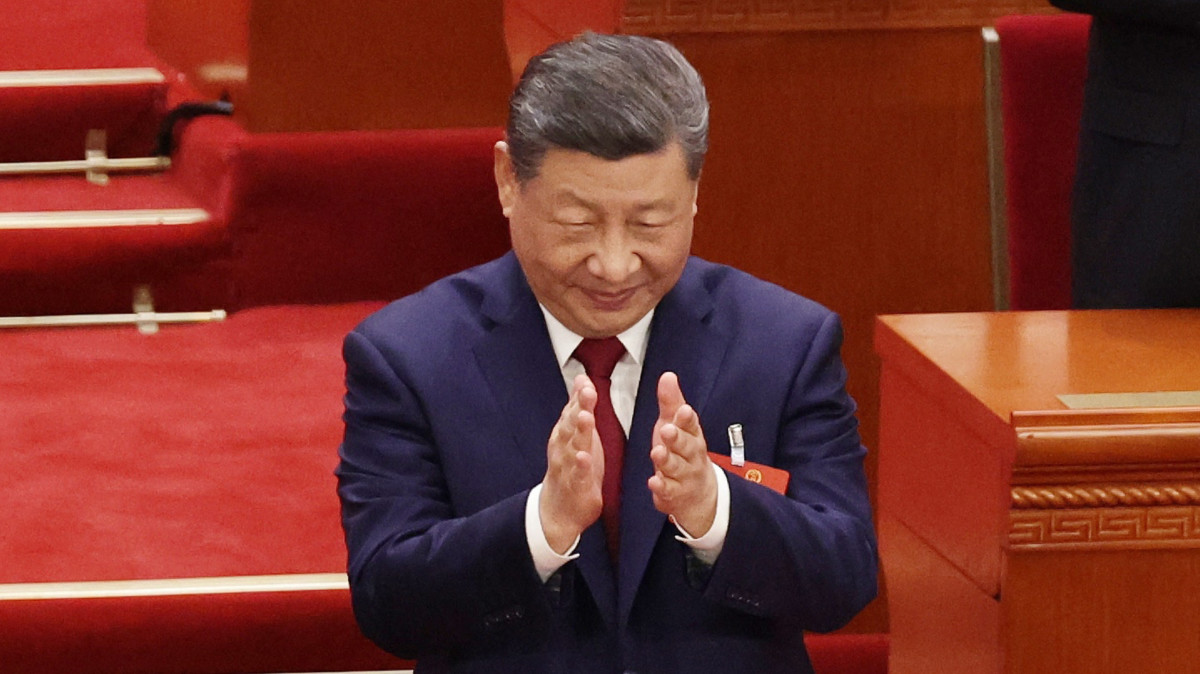
    For more than a decade, Chinese President Xi Jinping has pushed the government to expand Chinese soft power globally, calling on officials to “tell China’s story well” starting in 2013. Official efforts have included massive infrastructure projects like the multi-billion-dollar Belt and Road Initiative and investments in hundreds of Confucius Institutes designed to teach Chinese language and culture around the world. However, many of these state-led projects have faced headwinds in the West: dozens of Confucius Institutes have closed over unsubstantiated concerns that they serve as propaganda and espionage fronts, while Belt and Road has faced repeated criticism from Western governments that frame it as a “debt trap” for developing nations.

    While China’s growing hard power — from its dominance of global green energy manufacturing, including electric vehicles and solar panels, to its position as the world’s second-largest military and top manufacturing export powerhouse — has been widely documented, organic soft power is far harder to manufacture or measure. State media outlets like the Global Times have already attempted to tie the popularity of the “Chinamaxxing” meme to official policy successes, but Professor Yuan argues that overly loud official claims of victory may actually trigger more public skepticism of the trend. As Yuan puts it: “Cultural influence travels farther when it is chosen rather than announced.”

  • Viva Energy halts trading after major fire engulfs Geelong oil refinery

    Viva Energy halts trading after major fire engulfs Geelong oil refinery

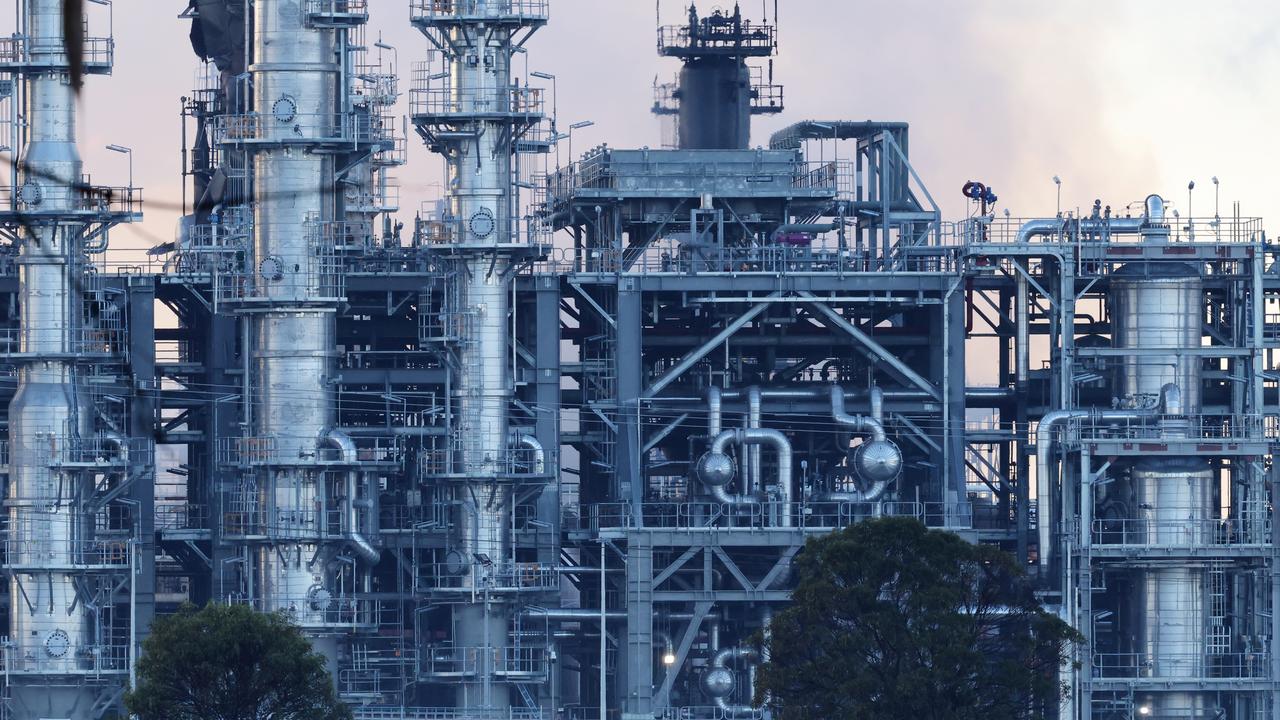
    A sudden out-of-control fire at Viva Energy’s Corio oil refinery near Geelong, Victoria, has prompted the Australian fuel giant to request a temporary suspension of its shares on the Australian Securities Exchange (ASX), sending ripples through domestic energy markets amid already volatile global supply conditions. The blaze erupted overnight following a reported equipment failure, with multiple eyewitness accounts confirming successive explosions at the site, one of only two operating oil refineries remaining in Australia.

    In an official filing to the ASX, Viva Energy, a leading domestic refiner, importer and distributor of petroleum products, confirmed it had applied for a trading halt that will remain in effect until either the company issues a detailed public update on the incident or markets open on Monday, 20 April 2026. The request comes at a time when Viva Energy’s shares have already seen significant upward momentum, surging 21.63% over the past month as escalating Middle East conflicts disrupt global oil production and shipping routes.

    Addressing reporters at a press conference on Thursday, Viva Energy chief executive Scott Wyatt confirmed that the fire has hit critical infrastructure within the refinery’s petrol production complex. “The units that are impacted are in the petrol complex and are part of the collection of units that do make petrol,” Wyatt said. He added that while some petrol production units remain undamaged, output of the fuel will almost certainly be affected in the coming period, with the full scale of disruption dependent on damage assessments and adjustments to refinery operations.

    The incident comes just one week after Australian Prime Minister Anthony Albanese announced a new government-backed support scheme for the nation’s two remaining refineries – owned by Viva Energy and competitor Ampol respectively. Under the scheme, Export Finance Australia will provide underwriting for domestic fuel imports, a policy designed to shore up national fuel security after decades of refinery closures across the country left Australia reliant on just two domestic production facilities. Analysts warn that any extended outage at the Corio refinery could put additional pressure on national fuel supplies and push petrol prices higher for Australian consumers, at a time when global energy markets are already facing significant uncertainty from geopolitical tensions.

  • Nebraska police shoot knife-wielding woman who abducted child from Walmart

    Nebraska police shoot knife-wielding woman who abducted child from Walmart

    A harrowing alleged kidnapping attempt outside a Walmart in Omaha, Nebraska, has left a young child injured and the suspect dead after police opened fire on the knife-wielding attacker, according to local law enforcement. The incident, which unfolded on a Tuesday afternoon, has sparked renewed conversation about public safety and the handling of individuals with untreated mental illness in communities across the United States.

    According to official police accounts, 31-year-old Noemi Guzman first shoplifted a knife from the Walmart location before targeting a 3-year-old boy and his unsuspecting babysitter. Surveillance footage from inside the store confirms that after stealing the blade, Guzman approached the pair as they shopped, brandished the weapon, and forced the babysitter to move ahead of her while the boy remained secured in his shopping trolley. She then led the two through the store and out into the adjacent parking lot, where bystanders quickly alerted local authorities.

    When officers arrived on the scene, body-worn camera footage captured Guzman holding the knife directly against the young boy. Officers repeatedly ordered her to drop the weapon, but she refused to comply. Before the two responding officers opened fire, Guzman sliced the boy across the cheek, leaving a visible wound that required medical attention. Guzman was pronounced dead at the scene by first responders, while the young child was transported to a local hospital for treatment of injuries that medical officials confirmed were not life-threatening.

    The child’s parents, Sara Hillman and Casey Hillman, spoke publicly about the traumatic ordeal in an interview with CBS, the BBC’s US partner network. “I almost lost him,” Sara Hillman said, describing the lingering shock of the random attack. She added that she has repeatedly replayed the incident in her head, asking herself what could have happened if police had not arrived in time. Casey Hillman issued a urgent plea to other parents to remain vigilant in public spaces, urging them to keep a close eye on their children at all times. “Hold your kids tight, because you never know how it can turn out,” he said. “Pay attention to what’s going on around you.” The couple also shared that their son, who typically loves playing outside, was too frightened to leave the family home the day after the attack, a sign of the emotional trauma the incident has left.

    Public records have since revealed that Guzman had a long documented history of mental illness and violent offenses prior to Tuesday’s attack. In 2024, a woman matching Guzman’s name and description was arrested on charges of attempted arson and assault with a deadly weapon after she allegedly started a fire inside a private residence and injured her father with a knife. Following that incident, she is accused of breaking into a local Catholic church while still armed with a knife, where she destroyed property inside the building, forcing a priest to barricade himself in a locked room to escape harm.

    After the 2024 arrest, Guzman was found not responsible for her actions by reason of insanity. Court documents confirm that a judge diagnosed her with schizophrenia and ordered that she remain under continuous court-ordered psychiatric supervision. It is unclear as of this reporting whether Guzman was compliant with her supervision requirements and treatment plan at the time of the Walmart kidnapping attempt.

    Local law enforcement has not yet announced any further updates to the investigation, and the two officers who opened fire on Guzman have been placed on standard administrative leave while the shooting undergoes an internal review, a common policy for officer-involved shootings in the United States.

  • ‘A disgrace’: Why Australia’s oil refineries were shuttered before Geelong fire

    ‘A disgrace’: Why Australia’s oil refineries were shuttered before Geelong fire

    A dramatic overnight explosive fire at one of Australia’s only two remaining oil refineries has reignited fierce political debate over the nation’s decades-long erosion of domestic fuel refining capacity, with critics slamming the current state of sovereign energy capability as a national disgrace.

    The blaze broke out Wednesday night at Viva Energy’s Corio Refinery in Geelong, a facility that supplies 10% of Australia’s total fuel demand and meets half of the state of Victoria’s consumer and commercial fuel needs. Emergency crews worked through the night to contain the fire, bringing it under control after hours of intensive response. The incident has thrown a harsh spotlight on how far Australia’s domestic refining sector has shrunk since the turn of the century, a shift that has left the country heavily dependent on imported fuel from large-scale Asian refineries.

    In 2000, Australia maintained a network of eight operational oil refineries spread across multiple states. Today, only two remain: Viva’s Geelong site and Ampol’s Lytton Refinery in Brisbane. Labor party figures confirm six of the six closed facilities were shut down during previous Coalition federal governments, with a decades-long trend of closures driven by rising domestic operating costs and intense competition from larger, newer, more cost-competitive refineries across East and Southeast Asia.

    The first major closure came in 2003, when ExxonMobil began winding down operations at its Port Stanvac refinery in South Australia, permanently ceasing production in 2009 after years of mounting losses that made the facility economically unviable. Just a few years later, Shell followed suit by closing its Clyde refinery on Sydney’s Parramatta River, citing steep upgrade and maintenance costs plus unbeatable competition from Asian operations. Caltex closed its Kurnell refinery at Botany Bay just 12 months later, marking the start of a steady contraction that would continue for nearly two decades.

    As early as 2013, a House of Representatives Economics Committee report warned of the risks of shrinking domestic capacity even as the federal government’s 2012 Energy White Paper took a more relaxed stance on fuel security. The white paper argued that open, competitive global supply chains would reliably meet Australia’s fuel needs, and framed the goal of full national self-sufficiency as unnecessary and economically inefficient. The report acknowledged that Australian refiners had poured $9.5 billion into facility upgrades over the 10 years to 2012, but noted structural pressures: larger Asian refineries had set a far lower break-even price benchmark that domestic operations could not match, while high local labor and operational costs and a strong Australian dollar kept the sector under persistent financial pressure.

    Closures continued long after the 2013 report: BP shut its Bulwer Island refinery in Queensland in 2015, then converted its Kwinana refinery in Western Australia to a fuel import terminal in 2021, a move matched by ExxonMobil at its Alton, Victoria facility that same year. Even during the COVID-19 pandemic, when global supply chains were already disrupted, BP cited the continued growth of large export-focused Asian refineries as the core reason for its exit from domestic refining.

    The issue of national fuel security only returned to the top of the political agenda in early 2025, after geopolitical tensions disrupted global crude supplies. Following military strikes on Iran and the Islamic Republic’s temporary de facto closure of the Strait of Hormuz – the chokepoint through which 20% of the world’s global crude oil shipments pass – supply pressures pushed up costs for Asian refineries and brought Australia’s over-reliance on imported fuel back into sharp focus. In response, the Albanese government has moved to strengthen regional energy trade agreements, with Prime Minister Anthony Albanese visiting Malaysia, Singapore and Brunei to shore up supply relationships, and has pursued diversification by increasing fuel imports from the United States.

    In the wake of the Geelong fire, political parties have traded blame over who is responsible for the nation’s vulnerable refining capacity. Former Labor Environment Minister Tanya Plibersek said the incident had reaffirmed the party’s longstanding commitment to maintaining domestic refining self-sufficiency, noting that the current Albanese government has made keeping the two remaining refineries operational a core policy priority.

    But Opposition Leader Angus Taylor, of the Liberal-National Coalition, claimed credit for his party’s previous government, saying it was the Coalition that “saved the last two refineries.” Taylor criticized the current government’s energy policies, arguing that Australia needs to expand domestic fuel production and drilling, a goal he says the Labor government has no interest in pursuing.

    Australian Workers’ Union Victorian Branch President Ross Kenna, who spoke to media Thursday from the Geelong refinery site, called the current state of Australia’s refining sector “a disgrace.” “We do need to invest in this sort of sovereign capability,” Kenna told Sky News. “The union movement has been pushing that entire time to try to ensure that these sort of industries don’t go by the wayside.”

  • Iran used Chinese spy satellite to attack US bases in Gulf: Report

    Iran used Chinese spy satellite to attack US bases in Gulf: Report

    A Wednesday report from The Financial Times has unveiled new details of a military space cooperation deal that is roiling geopolitics across the Middle East, revealing that Iran acquired a high-resolution Chinese surveillance satellite late in 2024 specifically to aid in targeting US military installations across the region ahead of recent missile and drone strikes.

    According to the FT investigation, Iran’s Islamic Revolutionary Guard Corps Aerospace Force purchased the TEE-01B spy satellite system for approximately $36.6 million, with the transaction settled entirely in Chinese renminbi. Cross-referenced data including time-stamped geographic coordinates, captured satellite imagery, and independent orbital trajectory analysis confirms that Iranian military commanders leveraged the satellite to continuously monitor key US military facilities in the weeks surrounding the March strikes, both before and after the attacks were carried out.

    The surveillance targets documented in the report span five Middle Eastern countries: the Prince Sultan Air Base in Saudi Arabia, Muwaffaq Salti Air Base in Jordan, areas adjacent to the US Fifth Fleet’s naval headquarters in Manama, Bahrain, and Erbil International Airport in Iraq. Official logs obtained by the FT show that Prince Sultan Air Base was placed under sustained surveillance on March 13, 14 and 15, and just days after the final day of monitoring, US President Donald Trump publicly confirmed that American warplanes stationed at the base had sustained damage in an Iranian strike.

    Following the strike, separate reporting from Middle East Eye outlined subsequent US moves to reposition its regional military footprint: Washington lobbied Riyadh to grant US forces access to King Fahd Air Base in the western Saudi province of Taif, as US officials privately signaled they were considering a partial drawdown of forces from the Persian Gulf. Saudi Arabia ultimately granted the US request, but the advanced Chinese satellite has extended Iran’s surveillance reach far beyond the new Taif location, allowing it to track activity at the sprawling Camp Lemonnier US base in Djibouti, Camp Buehring and Ali Al Salem Air Base in Kuwait, and Duqm International Airport in Oman.

    The FT’s findings upend long-held assumptions about military intelligence asymmetry in the Middle East. For decades, the US has held a decisive military advantage over rival powers rooted in cutting-edge intelligence gathering and space technology, a capability it has openly shared with Ukraine to enable precision strikes against Russian targets. Compared to Iran’s previous most advanced military satellite, the Noor-3, which only captured imagery at a 5-meter resolution, the TEE-01B can deliver half-meter resolution imagery – a capability on par with leading commercially available Western surveillance satellites.

    Further scrutiny of the satellite’s supply chain reveals clear links to Chinese military entities. The satellite was manufactured by Earth Eye, a private Chinese firm that publicly highlights its partnerships with leading Chinese universities that have long-standing research collaborations with the People’s Liberation Army. Emposat, the Chinese company that provided the ground control infrastructure and operational software for the system, is formally tied to the PLA Aerospace Force, according to a previous public report released by the US Congress.

    This disclosure is not an isolated development; it adds to a growing body of reporting outlining China’s quiet military support for Iran amid escalating tensions with the US and Israel. As early as July 2025, Middle East Eye reported that China had supplied Iran with advanced surface-to-air missile systems to help Tehran rebuild air defenses damaged by US and Israeli strikes during a 12-day regional conflict. Before the joint US-Israeli offensive launched in February, MEE also revealed that Iran had received suicide drones and other small offensive weapons from Chinese suppliers. Just this week, The New York Times added another layer to the picture, reporting that China may have also delivered man-portable air defense systems (Manpads) to Iran during the ongoing conflict.

    Beijing has repeatedly denied all allegations that it is providing lethal military assistance to Iran. For his part, Trump has responded to the new reports by threatening to impose a 50% tariff on all Iranian goods. In a Wednesday interview with Fox News, Trump noted that Chinese leader Xi Jinping has denied arming Iran. The US president’s planned March visit to Beijing for a bilateral meeting with Xi was delayed until May amid the regional conflict, and Trump sought to downplay rising bilateral tensions in a post to the social platform X, writing that Xi would give him “a big, fat hug” when he finally arrives in the Chinese capital.

  • Australia to boost defence spending citing growing threats

    Australia to boost defence spending citing growing threats

    Against a backdrop of intensifying global armed conflict and mounting diplomatic pressure from the United States, the Australian government announced Thursday a sharp upward revision of its long-term defence spending target, pledging to lift military expenditure to 3.0 percent of gross domestic product by 2033.

    The new policy marks a significant jump from the previous projection, which forecast defence outlays would reach only 2.3 percent of GDP by the same year. Department of Defence officials confirmed the adjusted target will inject an extra AU$53 billion (equivalent to US$38 billion) into national defence over the coming decade, compared to the 2024 defence strategy framework. In the immediate four-year period, an additional AU$14 billion will be allocated to military programs.

    To align with the new target and meet international accounting standards, Australia has revised its defence budget calculation methodology to adopt the NATO definition, which includes items such as military pensions in official spending tallies. The announcement comes after years of consistent pressure from successive U.S. administrations urging Canberra to increase the share of GDP dedicated to defence. Notably, the new 3.0 percent target still falls short of the 3.5 percent of GDP demand issued by U.S. Defence Secretary Pete Hegseth last year.

    In justifying the substantial spending increase, Defence Minister Richard Marles emphasized the shifting global security landscape in a pre-prepared speech obtained by Agence France-Presse. “International norms that once constrained the use of force and military coercion continue to erode,” Marles said. “More countries are engaged in conflict today than at any time since the end of World War II, and this is occurring across every region of the world.”

    As a U.S. ally positioned in the Indo-Pacific, Australia has increasingly centered its defence planning on countering perceived military risks tied to China’s naval expansion in recent years, reshaping its force structure to prioritize long-range missile strike capabilities and deterrence along its northern strategic approaches. The elevated defence budget will accelerate ongoing high-priority projects, most notably the expansion of a major shipbuilding facility in Western Australia built to accommodate nuclear-powered submarines under the landmark AUKUS trilateral security pact with the United States and the United Kingdom. Under the 2021 agreement, Washington and London have committed to delivering nuclear-powered submarine technology to the Royal Australian Navy within 15 years, though the deal has drawn sharp criticism from opponents who argue it provides no guarantee Australia will ever take delivery of the vessels and leaves a critical capability gap in Australian defence for the next decade.

    Australia’s unique geographic characteristics — a vast coastline paired with a relatively small population — have also driven the development of indigenous autonomous military systems, including the large autonomous Ghost Shark submarine and Ghost Bat fighter drone. In a related announcement earlier this week, Canberra confirmed it would allocate up to AU$5 billion to expand drone development and procurement, a move framed as a response to evolving warfare tactics observed in ongoing conflicts in Ukraine and the Middle East. In an additional indication of Australia’s expanding global military posture, Prime Minister Anthony Albanese confirmed March 10, 2026 that Canberra will deploy a long-range military reconnaissance aircraft to the Gulf region to support civilian protection efforts.

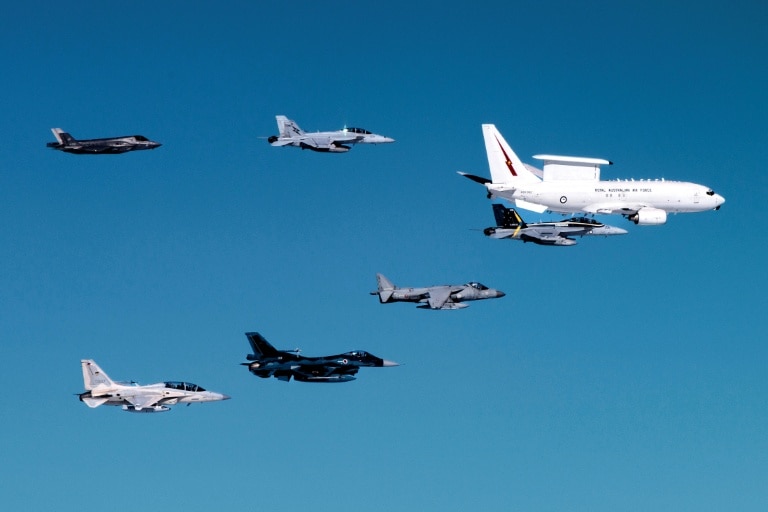
    The revised defence spending plan comes as the Australian Defence Force hosts Exercise Pitch Black 2024, a large-scale multinational air exercise over northern Australia that has brought together military aircraft from Australia, Japan, the Philippines, Spain and other partner nations to practice integrated air operations.

  • Trump’s triumphal arch gets official name

    Trump’s triumphal arch gets official name

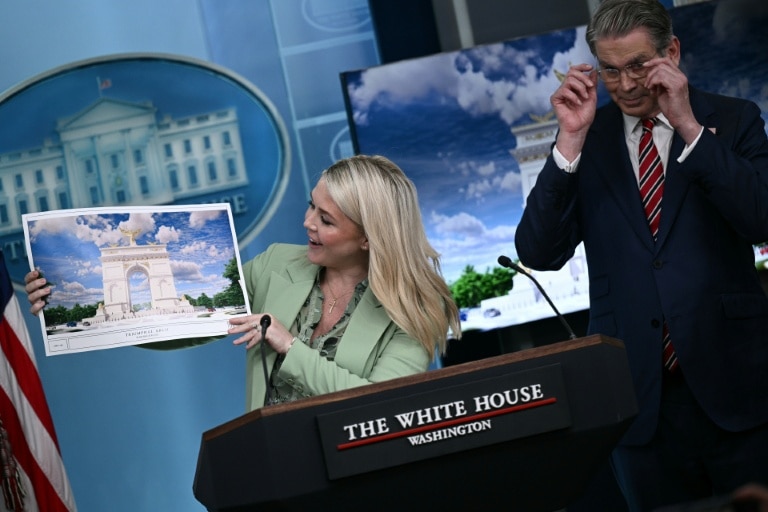
    A planned monumental arch initiated by U.S. President Donald Trump, long informally nicknamed the “Arc de Trump” by national media, has been assigned its formal, official name: the United States Triumphal Arch. White House Press Secretary Karoline Leavitt made the formal announcement to reporters on Wednesday, confirming that the towering structure is being developed to commemorate the 250th anniversary of U.S. independence.

    “In honor of this historic occasion, President Trump and the Department of Interior will submit plans for the United States Triumphal Arch,” Leavitt told the press corps. Alongside the announcement, she shared an artist’s rendering of the proposed monument — an introduction that made headlines after she initially held the image upside down.

    According to Leavitt, the “monumental” arch will reach 250 feet (76.2 meters) in total height, a measurement intentionally selected to mirror the 250 years of U.S. nationhood. Topping the colossal structure will be a large golden statue of Lady Liberty, a design that will make it far taller than the world’s most famous existing triumphal arch: Paris’ Arc de Triomphe, which stands just 164 feet tall. In fact, the U.S. monument will claim the title of the largest arch of its kind globally, outstripping Mexico City’s Monument to the Revolution to take the top spot and pushing Pyongyang’s Arch of Triumph down to third place. It will also tower over Washington D.C.’s iconic Lincoln Memorial, which reaches only 99 feet in height.

    Plans for the arch first came to public attention in October, when AFP reporters spotted a scale model of the structure on Trump’s Oval Office desk. The unofficial nickname “Arc de Trump” quickly spread across U.S. media outlets following the discovery, and Trump publicly released the first full architectural renderings of the project last Friday.

    The arch is just one of several high-profile architectural initiatives Trump is advancing during his second presidential term, all designed to leave a lasting physical legacy in the nation’s capital. Other projects include the construction of an expansive new ballroom for the White House and major renovations to the Kennedy Center for the Performing Arts.

    The proposal has drawn sharp criticism from opponents, who argue that the gold-accented monument is nothing more than a vanity project for the 79-year-old president. Funding details have also sparked debate: ABC News reports that the project will draw partial support from U.S. taxpayer dollars, including $2 million in special allocations from the National Endowment for the Humanities, alongside a $13 million matching fund program for private donations.

    Leavitt pushed back against criticism on Wednesday, framing the arch as a celebration of American national pride. “Long after everyone in this room is gone, our children and grandchildren will remain inspired by this national monument,” she told reporters.

  • Arsenal survive tense Sporting stalemate to reach Champions League semis

    Arsenal survive tense Sporting stalemate to reach Champions League semis

    Arsenal has secured its place in the 2024–25 UEFA Champions League semi-finals, holding out for a nervy goalless draw against Sporting CP at the Emirates Stadium on Wednesday to seal a 1–0 aggregate victory over the two legs. The result comes at a time of growing unease around Mikel Arteta’s side, who have struggled for consistency in recent weeks across all competitions, but survived a string of late scares to progress.

    The north London club carried a narrow one-goal advantage into the second leg of the quarter-final tie following their first-leg win in Lisbon, but Arteta’s men were far from their fluent best on home soil. Missing key attacking starters Bukayo Saka and Martin Odegaard through injury, Arsenal failed to replicate the cutting edge that has seen them lead the Premier League for much of the campaign, and spent much of the 90 minutes clinging to their aggregate lead.

    Arteta had delivered an unusually impassioned pre-match press conference on Tuesday, urging his players to take the field with “pure fire” and “zero fear” to silence growing criticism. While Arsenal launched a high-intensity press in the opening 10 minutes, the early attacking urgency fizzled out quickly, leaving the side exposed at the back. A sloppy misplaced pass from center-back William Saliba put Sporting winger Francisco Trincao in on goal, though the Portuguese attacker curled his effort just wide of the target.

    Summer signing Viktor Gyokeres, who has endured an inconsistent first season in north London since moving from Sporting, again failed to make a telling impact in attack. The striker’s only clear opening came after a burst into the six-yard box, but he was unable to get his shot away in time before defender Goncalo Inacio cleared the danger.

    Arsenal grew increasingly edgy as the first half wore on, drawing anxious groans from the frustrated home crowd. Gunners goalkeeper David Raya nearly gifted Sporting an equalizer when a dangerous mispass was intercepted by Trincao, but the winger’s misplaced cross toward Luis Suarez let Arsenal off the hook. Just before halftime, Geny Catamo came inches within giving Sporting the aggregate lead, volleying against the far post from a tight angle, leaving the hosts still clinging to their advantage.

    After the break, Arsenal carved out several half-chances to put the tie to bed: Eberechi Eze’s long-range drive whistled just past the post, Gabriel Martinelli blasted a half-volley narrowly over the crossbar, and Noni Madueke curled an effort into the side-netting. Arteta responded to his side’s lack of attacking punch by bringing on Kai Havertz for the underperforming Gyokeres, with Max Dowman replacing the injured Madueke later in the half.

    Sporting thought they had a late penalty when Maxi Araujo went down under a slight challenge from Cristhian Mosquera, but referee waved away appeals to the frustration of the visiting side. Though Arsenal creaked under sustained late pressure from Sporting, the defense held firm to see out the clean sheet and the aggregate win.

    The result marks a historic milestone for Arsenal: it is the first time the club has reached the Champions League semi-finals in consecutive seasons in its history. Up next, Arteta’s side will face Atletico Madrid for a place in the final, after the Spanish club progressed with a 3–2 aggregate win over Barcelona on Tuesday. Arsenal crushed Atletico 4–0 at the Emirates in the group stage back in October, but Arteta will know his side must drastically improve to reach their first Champions League final since 2006.

    The progression comes amid a worrying run of form that has raised questions about Arsenal’s ability to end their long trophy drought. The Gunners have lost three of their last five matches across all competitions, claiming just one win in that stretch. Recent setbacks include a defeat to Manchester City in the League Cup final, an FA Cup quarter-final exit to second-tier Southampton, and a shock 2–1 home Premier League loss to Bournemouth at the weekend that has intensified scrutiny of the side’s mental strength.

    Arsenal currently sit six points clear of second-placed Manchester City at the top of the Premier League, though Pep Guardiola’s side has a game in hand, and the two sides face a decisive title showdown at City’s Etihad Stadium this Sunday. Arsenal have finished as runners-up for the past three consecutive seasons, having blown sizeable title leads to City in both 2023 and 2024, and nerves around the club’s title bid are already growing. The club has not won a Premier League title since 2004 and has never lifted the Champions League trophy, leaving Arteta’s side chasing two historic milestones amid an untimely late-season slump.

  • YouTube suspends pro-Iran channel posting Lego-style clips mocking Trump

    YouTube suspends pro-Iran channel posting Lego-style clips mocking Trump

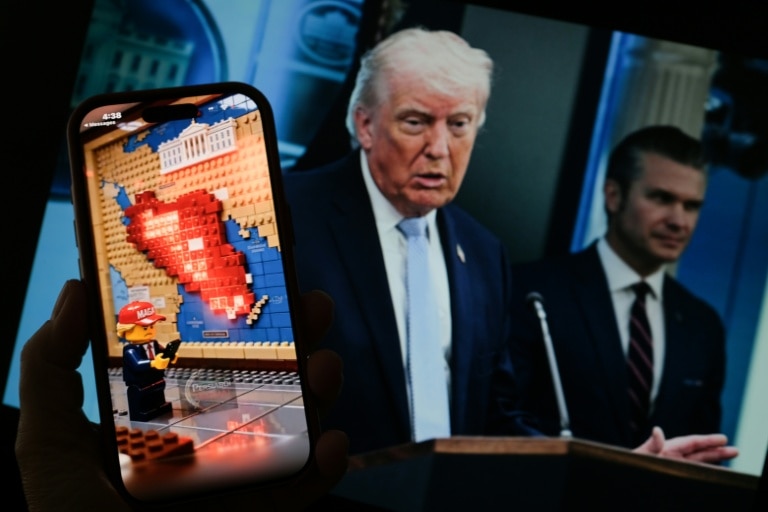
    In a move that has reignited conversations about content moderation and the evolving nature of modern information warfare, Google-owned YouTube announced Wednesday that it has permanently terminated the channel of Explosive Media, a pro-Tehran creative collective behind viral Lego-inspired animated videos that mocked former U.S. President Donald Trump amid escalating U.S.-Iran tensions.

    While the group describes itself as an independent satirical project, widespread industry and media speculation has long linked Explosive Media to the Iranian government, a connection the organization has repeatedly denied. The channel gained global internet fame over recent weeks, racking up millions of views for its cartoonish, toy-based takes on the ongoing U.S.-Iran conflict, which targeted top American political figures for ridicule.

    A YouTube spokesperson confirmed to Agence France-Presse that the channel was removed on March 27 for violating the platform’s policies prohibiting spam, deceptive practices, and coordinated scams, but declined to provide additional specific details about the violation. The crackdown on Explosive Media does not end at YouTube: U.S. media reports confirm that Meta-owned Instagram has also taken down the group’s official account, though a secondary account operating under the same name remained accessible to users as of Wednesday. Meta has not yet responded to AFP’s request for comment on the decision.

    Despite the removal from two major platforms, Explosive Media has continued publishing its satirical clips mocking U.S. foreign policy and military actions in the Middle East on other major social platforms, including Elon Musk-owned X and encrypted messaging app Telegram. In a public post responding to YouTube’s ban, the group pushed back against the platform’s decision, writing: “Seriously! Are our LEGO-style animations actually violent?”

    So far, the YouTube suspension has done little to curb the spread of Explosive Media’s content. Clips from the removed channel continue to circulate widely on YouTube itself, reposted by independent content creators and sympathetic accounts across the platform.

    The group’s satirical format leans heavily into accessible American pop culture tropes to reach global audiences: its videos caricature Trump with a signature oversized yellow Lego-style head, depicting him as an elderly, isolated leader prone to childish outbursts and detached from real-world events. In one of the group’s most recent viral posts, shared on X shortly after a two-week ceasefire was announced between Israel and Hamas (a move framed by the group through an anti-Trump lens), the video carried the caption “TACO will always remain TACO” — an acronym for “Trump always chickens out.”

    Set to dramatic cinematic background music, the clip shows a Lego-style Trump figurine huddling with Arab leaders, throwing a chair at U.S. military officials, while animated Iranian generals press a red button marked “Back to the Stone Age,” triggering a wave of cartoon destruction across the Middle East. Other popular clips from the group reimagine the strategic Strait of Hormuz as a cartoon toll booth controlled by Iran, depict fictional Iranian military victories over U.S. forces, and show global leaders in subservient positions, dependent on Iran for oil exports.

    Security analysts have identified this new format of Lego-inspired, cartoonish political satire and propaganda as an increasingly effective tool for information warfare amid rising geopolitical tension between the U.S. and Iran, coining the term “Legofication” to describe this new style of conflict messaging. The clips are rapidly amplified across social media by Iranian diplomatic missions and other pro-Tehran accounts, helping them reach millions of viewers outside of Iran quickly.

    Unlike much of the group’s target audience, which is based outside the country, Iranians inside Iran have been subjected to what internet monitor NetBlocks describes as a widespread “internet blackout” in recent weeks. Explosive Media’s ability to consistently produce polished, high-quality content and upload it to global platforms amid this blackout has only fueled further suspicion of official Iranian government backing. The group has pushed back against these claims, dismissing them as deliberate media misrepresentation.

    The removal of the channel has sparked mixed reactions online, with some critics arguing that YouTube’s decision constitutes unfair censorship of political satire, while others defend the move as a necessary step to curb coordinated state-backed disinformation operations on the platform.