博客

  • China’s economy grows at 5% in first quarter, shrugging off initial impact of Iran war

    China’s economy grows at 5% in first quarter, shrugging off initial impact of Iran war

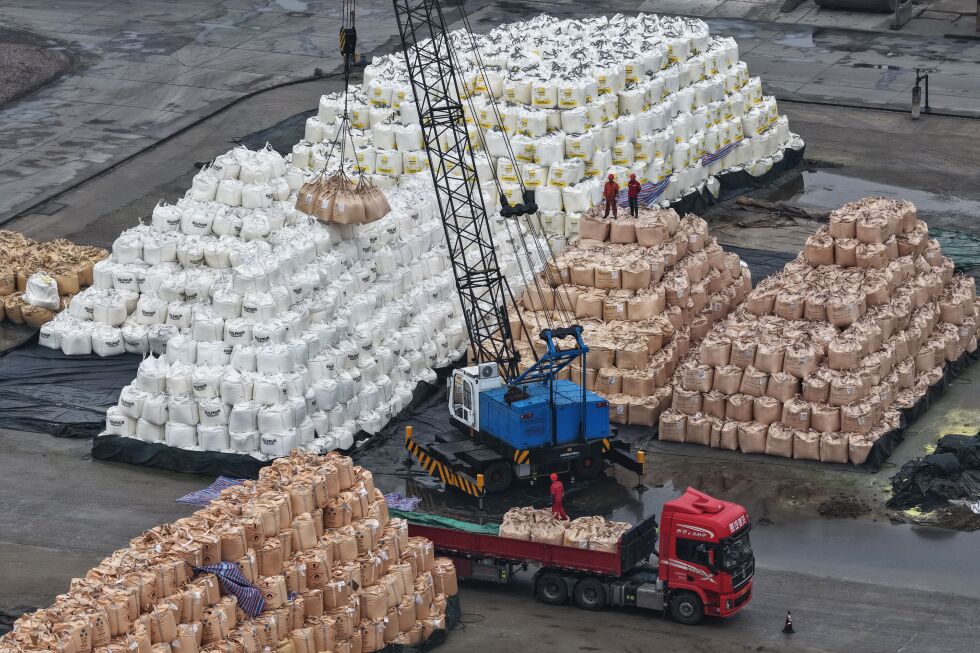
    HONG KONG, April – Newly released official data shows China’s economy outperformed market projections in the first three months of 202X, logging a 5% year-on-year expansion that marked an acceleration from the 4.5% growth recorded in the final quarter of last year. The strong quarterly performance comes even as the ongoing Iran conflict, now in its seventh week, has roiled global energy markets and dragged on worldwide economic momentum, with China proving more resilient to short-term disruptions than many analysts initially predicted.

    Economists broadly agree that China is well-positioned to absorb the immediate shocks stemming from the Iran war, which has driven a sharp uptick in global energy costs and worsened already persistent inflationary pressures across major economies. Still, the conflict carries clear longer-term risks for China’s growth trajectory, particularly through its impact on global demand for Chinese manufactured exports.

    Fresh trade data published earlier this week already signaled a notable cooling in China’s outbound shipments: exports rose just 2.5% year-on-year in March, a sharp slowdown from the faster growth recorded in the first two months of the year. Cornell University economics and trade policy professor Eswar Prasad noted that as nations around the world prioritize shielding their domestic industries, households and economies from the Iran war’s spillover effects, global appetite for Chinese imports is clearly contracting. “A prolonged conflict, paired with elevated energy prices that stick around longer than expected, will dent overall global growth, and that will directly undermine other economies’ capacity to purchase Chinese goods,” Prasad explained.

    Last month, Chinese leadership set a 202X full-year growth target of 4.5% to 5%, the lowest official annual growth target the country has announced since 1991. The International Monetary Fund this week revised down its 2026 growth forecast for China to 4.4%, marking a downgrade from earlier projections. Even so, most economists believe China remains on track to hit this year’s growth target via targeted policy stimulus measures. However, additional structural risks persist beyond the Iran conflict’s spillover effects.

    The country has been grappling with a multi-year slump in its real estate sector, which has dragged down both consumer and investor confidence for the past several years. Despite this headwind, China still hit its “around 5%” growth target in 202X-(last year), powered by surprisingly robust export performance that pushed the country’s annual trade surplus to a new record of nearly $1.2 trillion – even in the face of elevated punitive tariffs imposed by the U.S. under former President Donald Trump.

    Lynn Song, chief economist for Greater China at ING Group, noted that while near-term disruptions are manageable, a drawn-out conflict and sustained higher energy prices will likely start to erode China’s growth by the second half of the year. Prasad added that while ramping up public sector investment can help stabilize headline growth to hit the official target this year, the approach carries its own downsides. Without a meaningful strengthening in household consumption demand, increased public investment could intensify underlying deflationary pressures and leave the Chinese economy even more dependent on export-driven growth in the long run.

  • Report: Newly crowned UFC champ Carlos Ulberg says he lost title belt while celebrating the win

    Report: Newly crowned UFC champ Carlos Ulberg says he lost title belt while celebrating the win

    MIAMI – In a dramatic turn of events at UFC 327, New Zealand’s 35-year-old Carlos Ulberg defied a painful right knee injury to claim the promotion’s coveted light heavyweight crown with a knockout victory over former titleholder Jiri Prochazka in the event’s main event. Just hours after his career-defining win, however, Ulberg made an unexpected, embarrassing admission: he had lost his brand-new championship belt entirely.

    In an interview with Fox Sports Australia published Monday, the newly crowned champion opened up about the chaotic post-fight celebrations that led to his belt going missing. “I’ve lost the belt, bro,” Ulberg told the outlet. He explained that he originally planned to stay sober after the high-stakes match, but the excitement of the moment got the better of him. “But you know how these things go, right? First, someone gives you a champagne to celebrate. Then one thing leads to another and you’re doing shots.”

    To add another layer of complexity to Ulberg’s historic win, the knee injury he sustained during the fight is expected to keep him out of competition for up to a full year. Per UFC regulations, that extended layoff will force the promotion to strip him of his active champion status and organize an interim title fight to fill the vacancy in the division.

    Despite the dual setbacks of his injury and the missing belt, Ulberg remains upbeat about the situation. He expressed confidence that the golden championship belt will be located before he travels to Las Vegas for a full medical evaluation of his knee. After the assessment, Ulberg plans to complete a period of rehabilitation and training at the UFC Performance Institute before returning home to New Zealand to reunite with his family.

    Reflecting on where the belt could be, Ulberg joked that he set the belt down to avoid carrying it around during celebrations, meaning it is likely still in the rented accommodation the team used for fight week. “I didn’t want to be carrying the belt around so I think it’s still there at the apartment somewhere. One of the boys probably has it in bed with him,” he said.

  • Former US Marine pilot loses appeal against extradition from Australia

    Former US Marine pilot loses appeal against extradition from Australia

    Nearly two and a half years after his dramatic arrest at the request of U.S. authorities, former U.S. Marine Daniel Duggan has lost his final legal bid to block extradition from Australia, setting the stage for his transfer to the United States to face arms trafficking charges.

    The 57-year-old Australian citizen, who renounced his U.S. citizenship years ago, was first taken into custody in October 2022 in the New South Wales regional city of Orange. U.S. prosecutors allege that between 2010 and 2012, Duggan violated American arms trafficking laws by providing unauthorized flight training to Chinese fighter pilots in South Africa. Duggan has repeatedly denied all accusations against him.

    On Thursday, a Federal Court of Australia judge dismissed Duggan’s appeal against an earlier extradition approval, a ruling that paves the way for his removal to the U.S. The decision marks a significant turning point in a high-profile transnational legal case that has strained the family’s finances and personal well-being.

    Duggan’s legal team had long argued that the extradition request did not meet Australia’s requirements, noting that the charges Duggan faces in the U.S. do not have a matching equivalent under Australian law – a core condition for approving cross-border extradition. Despite that pushback, then-Attorney General Mark Dreyfus signed off on the extradition in 2024, a decision Duggan appealed to the Federal Court.

    Outside the courtroom after the ruling, Duggan’s wife Saffrine spoke publicly about the family’s devastation. She described her husband, a father of six currently held in an Australian maximum-security prison, as an ordinary Australian resident who never violated any Australian laws. She called on the Australian federal government to step in and halt the extradition process.

    Since Duggan’s arrest in a supermarket parking lot – moments after he dropped his children off at school – the family has endured more than 1,200 days of ongoing trauma, Saffrine told the Australian Broadcasting Corporation. She added to the Australian Associated Press that the multi-year legal battle has cost the family roughly half a million Australian dollars. A court injunction placed on the family’s home has prevented them from selling the property to cover legal fees, leaving them in severe financial strain.

    Under the terms of the Federal Court’s ruling, Duggan has been ordered to cover the Australian government’s legal costs related to the case. He retains the right to launch a new appeal within the next 28 days. If the extradition moves forward and Duggan is ultimately convicted on all U.S. charges, he faces a maximum sentence of 65 years in American federal prison.

  • Doubt cast over One Nation seat as ‘absent votes’ found

    Doubt cast over One Nation seat as ‘absent votes’ found

    A razor-thin election victory for Australia’s One Nation party in the state of South Australia has been thrown into uncertainty after election officials uncovered dozens of overlooked ballots that could overturn the initial result.

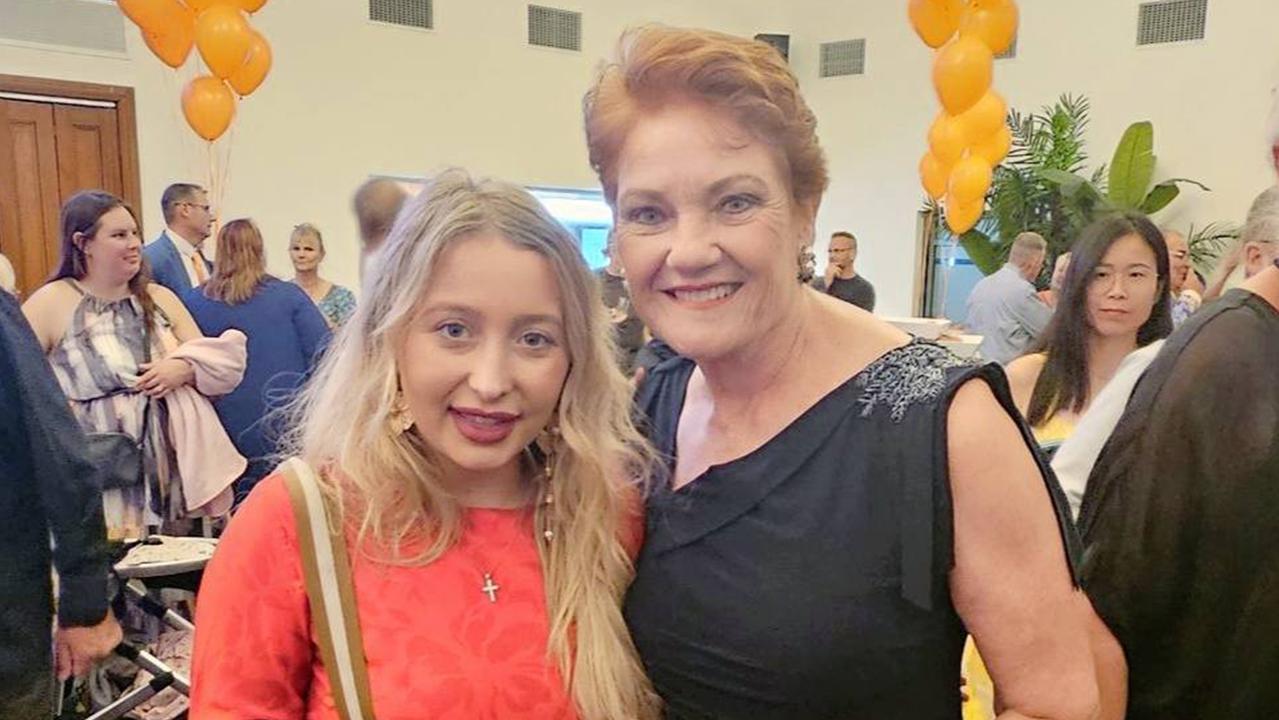
    Chantelle Thomas, running on behalf of Pauline Hanson’s right-wing populist party, was officially declared the winner of the regional Narungga seat in last month’s state election, holding a wafer-thin 58-vote advantage over her closest competitor, Liberal Party candidate Tania Stock. That narrow margin, the smallest of any contest across the entire election, meant Thomas’s victory was not finalized until April 2, nearly two full weeks after polling closed on March 21. The Narungga electorate covers most of South Australia’s rural Yorke Peninsula region.

    The entire outcome was upended this week when election administrators discovered 77 uncounted absent ballots that had not been included in the original final tally. Critically, the number of uncounted votes exceeds Thomas’s winning majority by 19 votes, opening the door for the result to be reversed.

    On Thursday, the Electoral Commission of South Australia officially notified all competing candidates of the discovery and ordered a full recount scheduled for Friday April 17. “Following the discovery of votes that have not been counted, I have secured the unopened ballot papers and have ordered a further count for the district of Narungga,” explained Leah McLay, the commission’s acting commissioner. “I have informed all candidates and will oversee the count on Friday, April 17 and nominated scrutineers are invited to attend.”

    Reaction to the administrative blunder has been sharp, with One Nation’s South Australian leader Cory Bernardi launching a scathing attack on the electoral commission’s competence. “How can we rely on the integrity of what has transpired?” Bernardi told local outlet The Advertiser. “Now there’s plenty of questions to be asked and I think the answers need to be forthcoming, but this is very shaky territory for democracy right now.”

    For the opposition Liberal Party, leadership has called for rapid transparency from election officials to clear up widespread public confusion. “Who knows what this will mean for the seat of Narungga, but that’s why I think the electoral commission needs to provide some clarity to people quickly,” said Ashton Hurn, leader of the South Australian Liberals, in comments to the Australian Broadcasting Corporation. Stock, the Liberal candidate who placed second in the original count, told reporters she had not yet been contacted by the commission and was unaware of the planned recount when approached for comment.

    All parties and local voters are now bracing for an anxious 24 hours as the recount gets underway, with the final result of the closely contested seat hanging in the balance. The unforeseen error has sparked broader questions about the integrity of South Australia’s election administration, even as officials move quickly to correct the mistake and confirm a definitive final result.

  • LIV Golf reassures players over Saudi withdrawal rumors

    LIV Golf reassures players over Saudi withdrawal rumors

    As swirling rumors of imminent Saudi Arabian funding withdrawal sparked fears of an imminent collapse for the breakaway LIV Golf tour, league executives moved swiftly this Wednesday to reassure players and staff that operations and funding remain fully intact. The Saudi-backed circuit has roiled global men’s professional golf since its controversial 2022 launch, when it lured dozens of the sport’s top stars away from the established PGA Tour and DP World Tour with nine-figure guaranteed contracts that split the golf community.

    Over the past week, speculation has grown that Saudi Arabia’s deep-pocketed backers, the Public Investment Fund (PIF), the kingdom’s $1 trillion sovereign wealth fund, have grown weary of the high-cost venture. To date, the project is estimated to have cost PIF more than $5 billion, with no path to near-term profitability. Multiple major outlets including the *Financial Times*, *New York Times*, and *Wall Street Journal* all reported this Wednesday, citing unnamed anonymous sources, that PIF’s exit from the tour was imminent.

    But in an internal email to all players and staff obtained by Agence France-Presse, LIV Golf CEO Scott O’Neil sought to quash the uncertainty. “I want to be crystal clear: Our season continues exactly as planned, uninterrupted and at full throttle,” O’Neil wrote. The executive’s statement came as players gathered in Mexico City ahead of the tour’s upcoming event at Club de Golf Chapultepec, where organizers have doubled down on maintaining a business-as-usual posture. Tour officials published first-round tee times on schedule as planned, and even leaned into humor to address the speculation on social media. “Slow news day? We are ON,” read one social post, paired with a graphic reading “BREAKING NEWS. TUNE IN TOMORROW” alongside the tournament’s full starting schedule.

    Unnamed sources close to LIV Golf’s operations also pushed back on the exit rumors to AFP, noting that the tour projects its revenue will double between 2024 and 2025, and pointing to record-breaking spectator turnouts at recent events held in Australia and South Africa. Still, questions remain: the *Telegraph* of London reported that top LIV Golf executives were summoned to a New York meeting this week to discuss contingency plans for a potential PIF withdrawal.

    The speculation comes on the same day PIF unveiled a new five-year strategic plan that will restructure the fund’s global investment portfolio, an announcement that comes against a backdrop of rising geopolitical instability across the Middle East. The region has faced escalating security risks following a wave of Iranian strikes on military, energy, and transportation infrastructure that came after a joint U.S.-Israeli strike on Iranian targets in late February. Even before the current outbreak of conflict, Saudi Arabia’s domestic economic reform agenda faced pressure, as years of sustained low global oil prices have cut into government revenues.

    Signs of internal instability have already emerged on LIV Golf’s player roster. Two high-profile golfers, five-time major champion Brooks Koepka and 2018 Masters winner Patrick Reed, have recently left the breakaway tour to secure a return to the PGA Tour. For the hundreds of remaining players still under LIV contract, the full implications of a potential PIF exit remain unclear. Speaking to reporters in Mexico City, LIV veteran and 2017 Masters champion Sergio Garcia noted that players have received no official communication of any funding shift. “We haven’t heard anything” since the start of the year, Garcia said, when PIF governor Yasir al-Rumayyan reassured golfers that the fund remained committed to the circuit as a long-term project.

    In his Wednesday email, O’Neil did not directly refute the claims of an impending Saudi withdrawal, instead framing the current speculation as a growing pain common to new disruptive ventures. “The life of a startup movement is often defined by these moments of pressure,” he wrote. “We signed up for this because we believe in disrupting the status quo. We are pioneers, and while the road isn’t always smooth, the destination is worth every mile.”

  • Much-hyped Alzheimer’s drugs do not help patients, review finds

    Much-hyped Alzheimer’s drugs do not help patients, review finds

    For decades, the global medical community has pinned its hopes on the amyloid hypothesis as the foundation for breakthrough treatments for Alzheimer’s disease, the progressive neurodegenerative condition that impacts millions of older adults worldwide. On Thursday, a gold-standard systematic review upended that long-held consensus, concluding that the much-touted class of anti-amyloid Alzheimer’s medications fails to deliver meaningful clinical benefits to patients – a finding that has already sparked fierce debate across the neuroscience and pharmaceutical sectors.

    The analysis was conducted by the Cochrane Collaboration, an independent research organization widely recognized as the global gold standard for evidence-based synthesis of existing clinical data. The review focused on the entire class of drugs designed to target and clear amyloid beta plaques, the sticky protein clumps that accumulate in the brains of people living with Alzheimer’s, a hallmark of the disease that researchers have long theorized is its root cause.

    After decades of expensive high-stakes research that yielded little progress, two newer anti-amyloid medications – lecanemab (marketed as Leqembi, developed by Biogen and Eisai) and donanemab (sold as Kisunla by U.S. pharmaceutical giant Eli Lilly) – were celebrated as transformative gamechangers when they debuted. Both secured regulatory approval from the United States Food and Drug Administration and the European Union within the last three years, bringing new hope to patients and their families grappling with the currently untreatable condition.

    Even before the review was published, however, growing concerns about the drugs’ real-world effectiveness, exorbitant pricing, and dangerous side effects – including elevated risks of brain swelling and cerebral bleeding – had led to widespread caution. In the United Kingdom and France, for example, national public health systems have already declined to cover the treatments for most patients.

    To conduct the most comprehensive analysis to date of this drug class, Cochrane researchers aggregated pooled data from 17 separate clinical trials involving more than 20,000 total participants, all of whom had either mild cognitive impairment or early-stage Alzheimer’s dementia. Across an 18-month average follow-up period, the trials evaluated seven distinct anti-amyloid drugs, with one trial focused on donanemab and another examining lecanemab.

    While the drugs did successfully reduce amyloid plaque buildup in patients’ brains, as confirmed by brain imaging, that biological change did not translate into tangible, clinically meaningful improvements for patients, lead study author Francesco Nonino from Italy’s IRCCS Institute told reporters during a press briefing. “Even though early smaller trials reported statistically significant changes in disease progression markers, that improvement does not add up to a noticeable benefit for people living with Alzheimer’s,” Nonino explained.

    Co-author Edo Richard, a neurologist at Radboud University Medical Center in the Netherlands, emphasized that the study’s findings directly challenge decades of core thinking in Alzheimer’s research. “The long-held hypothesis that removing amyloid plaques will improve patient outcomes is refuted by our results,” he said, adding that he hopes the findings will redirect research funding toward other potential biological mechanisms driving Alzheimer’s, which could yield more effective treatments down the line. “The current generation of these drugs is simply not delivering on the transformative promise that has been used to promote them,” Richard added.

    Not all leading experts agree with the review’s conclusions, however. John Hardy, the British biologist who first proposed the amyloid hypothesis back in the 1990s, issued a scathing rebuke of the work. Hardy, who disclosed he has worked as a paid consultant for Eli Lilly, Biogen, and Eisai, argued that the review’s methodology was fatally flawed: it pooled data from the newer, more promising lecanemab and donanemab alongside older anti-amyloid drugs that were already known to be ineffective, dragging down the overall average of measured benefit. “This is a silly paper which should not have been published,” Hardy told AFP in an interview.

    In response to the criticism, Richard defended the review’s approach, noting that while the included drugs may use slightly different mechanisms to attack amyloid, they all share the same core target: amyloid beta proteins, so grouping them for analysis is methodologically sound.

    Other independent experts have struck a more moderate middle ground. Bryce Vissel, an Australian neuroscientist who was not affiliated with the research, noted that the review does not definitively prove that amyloid plays no role in Alzheimer’s development, nor does it rule out the possibility that future, improved amyloid-targeted therapies could one day help patients. Even so, Vissel acknowledged that the analysis delivers a clear, sobering conclusion: the current generation of widely hyped anti-amyloid drugs has not lived up to the lofty expectations that surrounded their arrival to the market.

  • China raises pressure on underground Catholics to join official church, Human Rights Watch finds

    China raises pressure on underground Catholics to join official church, Human Rights Watch finds

    In a detailed new report released Wednesday, New York-based international rights organization Human Rights Watch has documented a sharp escalation in pressure from Chinese authorities on underground Catholic communities to align with the state-controlled official church, alongside expanded surveillance and movement restrictions targeting China’s estimated 12 million Catholic believers. The report frames the intensifying crackdown as an extension of a 10-year government campaign designed to enforce the loyalty of all religious groups and independent religious communities to the officially atheist Chinese Communist Party.

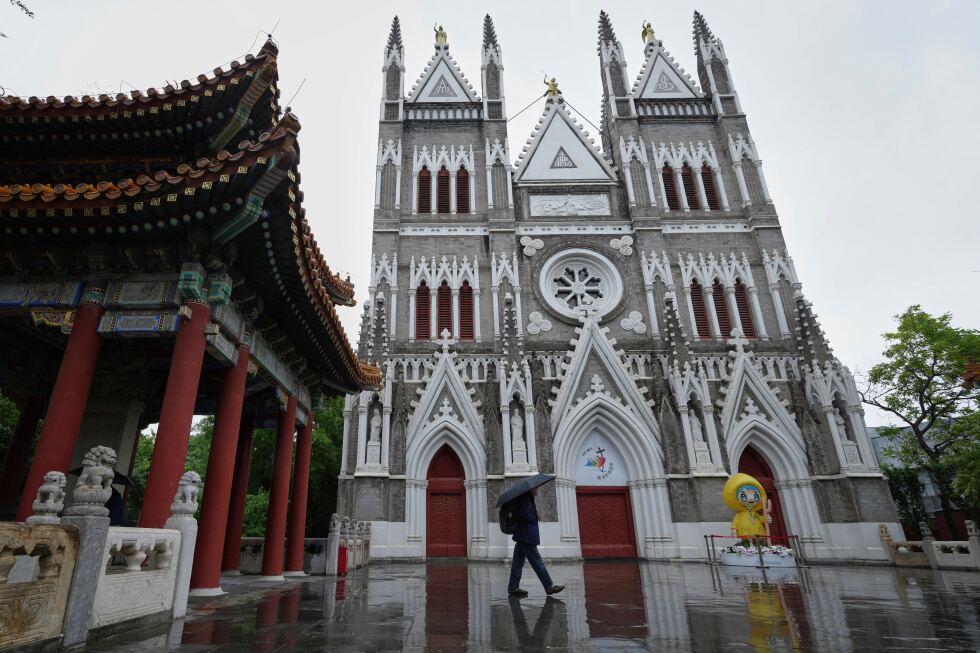
    For decades, China’s Catholic population has been split along two distinct paths: the state-sanctioned Chinese Catholic Patriotic Association, which does not recognize the Vatican’s papal authority, and an underground network of congregations that have maintained unbroken loyalty to Rome even amid sustained persecution. In 2018, Pope Francis brokered a landmark agreement with Beijing aimed at easing decades of bilateral tensions between the Vatican and China. Under the terms of the deal—whose full text has never been disclosed to the public—Beijing puts forward candidates for bishop positions, while the Pope retains the power to veto unacceptable nominees, a departure from centuries of tradition that gave the Vatican exclusive control over bishop appointments.

    Despite the 2018 accord, Human Rights Watch senior China researcher Yalkun Uluyol emphasized that Catholics across China continue to face mounting repression that systematically violates their fundamental right to religious freedom. The organization is calling on Pope Leo XIV, who assumed the papacy last year, to launch an urgent full review of the agreement and pressure Beijing to end ongoing persecution and intimidation targeting underground clergy, church leaders and ordinary worshippers.

    Since the 2018 deal was signed, Human Rights Watch found, Chinese authorities have used a range of coercive tactics to force underground Catholic communities into joining the state-controlled Patriotic Association. These tactics include arbitrary detention, enforced disappearances, and long-term house arrest targeting underground Catholic bishops and priests. The report also notes that ideological control and digital surveillance have been tightened within the official state-approved church, alongside new restrictions on religious activities and foreign connections. A regulatory change adopted last December now requires all Catholic clergy to obtain explicit state approval before traveling abroad.

    Because Human Rights Watch researchers are barred from entering mainland China, the organization based its findings on firsthand accounts from individuals with direct knowledge of Catholic life inside China who now reside outside the country, as well as input from leading experts on religious freedom and Chinese Catholicism. Specific testimonies included in the report are attributed to anonymous sources who left China to avoid government retaliation.

    Pope Leo made his first appointment of a Chinese bishop under the 2018 agreement just one month after taking office last year, and in subsequent public comments, he confirmed he would maintain the agreement “in the short term.” “I’m also in ongoing dialogue with a number of people, Chinese, on both sides of some of the issues that are there,” Leo stated in an interview. “It’s a very difficult situation. In the long term, I don’t pretend to say this is what I will and will not do, but after two months, I’ve already begun having discussions at several levels on that topic.” As of Wednesday, Vatican spokesman Matteo Bruni had not issued any immediate response to requests for comment on the Human Rights Watch report, and China’s Foreign Ministry also declined to immediately answer queries from the Associated Press on the findings.

    The broader crackdown on Catholic communities is part of a larger national policy launched by Chinese President Xi Jinping in 2016, centered on the “Sinicization” of all religion. The policy seeks to expand state oversight and ideological control to bring all religious practice into alignment with Communist Party ideology and leadership. Under this campaign, Human Rights Watch found, authorities have demolished hundreds of church buildings and crosses, banned gatherings at unregistered unofficial churches, restricted access to religious texts including the Bible, and seized unauthorized religious materials. The Sinicization drive has already led to severe repression of other religious communities, including Tibetan Buddhism and Uyghur Islam, according to the report.

    The escalating pressure on independent religious groups extends beyond Catholic communities. Last October, Pastor Ezra Jin Mingri, leader of one of China’s largest unregistered underground Protestant congregations, Zion Church, was detained at his home in Guangxi Zhuang Autonomous Region, alongside dozens of other unregistered church leaders across the country, according to his family and China-based religious monitoring groups. In April, U.S.-based religious freedom advocacy group ChinaAid called on former U.S. President Donald Trump to demand Jin’s release during a planned scheduled meeting with Xi Jinping in May. Bob Fu, president of ChinaAid, argued that the Chinese Communist Party has accelerated its systematic campaign to eliminate independent religious life entirely, and called on the U.S. government to impose tangible consequences rather than only issuing expressions of concern.

  • Albanese government considering exempting new houses from capital gains reform

    Albanese government considering exempting new houses from capital gains reform

    As Australia’s Albanese government prepares for its upcoming May federal budget, a key policy debate over capital gains tax (CGT) reform has moved to the forefront, with new residential properties emerging as a potential candidate for exemption from planned cuts to the controversial CGT discount.

    CGT is a levy applied to profits earned from the sale of assets including stocks and real estate, which is counted toward a taxpayer’s annual income. Current rules grant a 50% discount on capital gains for assets held longer than 12 months, with an automatic full exemption for an individual’s primary place of residence.

    Ahead of potential changes expected to be outlined in the budget, the Business Council of Australia (BCA) has formally called on the government to carve out an exception for newly built dwellings if it proceeds with rolling back the existing 50% CGT discount. BCA chief executive Bran Black argued that any adjustment to the CGT discount must be structured to avoid discouraging critical investment in new housing supply, a core priority of the current government’s economic agenda. Black also pushed back against any retrospective application of CGT changes, noting that any alterations to the tax code are best implemented as part of a broader, comprehensive tax reform effort rather than isolated adjustments.

    Prime Minister Anthony Albanese this week confirmed to Nine Entertainment publications that the government is exploring policy changes that go beyond simply increasing overall housing supply, amid ongoing political pressure to address rising wealth inequality. The Labor government is currently facing growing pressure from populist party One Nation, which has sought to mobilize voter anger over widening income and wealth gaps. Albanese pushed back against populist framing, arguing that meaningful change comes from giving all Australians a tangible stake in the national economy, not divisive rhetoric.

    The push for CGT reform lines up with recent comments from Treasurer Jim Chalmers, who said last week he would be “pretty happy” if the 2026-27 budget is remembered as a landmark tax reform budget. The budget’s finalization has been delayed compared to typical timelines, a knock-on effect of economic volatility stemming from the ongoing war in the Middle East.

    This is not the first time Labor has pursued changes to property-focused tax arrangements: prior to the 2016 and 2019 federal elections, the party proposed adjustments to negative gearing that were intentionally structured to avoid retrospective application and exempt new housing, in a bid to protect investment in new supply.

    Ahead of the May budget, the government faces competing pressure from both the opposition crossbench and major political parties on the CGT debate. Greens Senator Nick McKim argued last month that Labor holds a historic opportunity to pass ambitious, progressive tax reform through the current parliament, saying that if the government is serious about cutting inequality and addressing the national housing crisis, now is the time to modify CGT. On the opposite side of the debate, the center-right Coalition has raised repeated concerns that any changes to CGT will increase the overall tax burden for Australian investors and homeowners.

    Independent voices have also weighed in to the Senate Select Committee on the Operation of the Capital Gains Tax, which has been collecting submissions on the current system. Prominent financial journalist and author Alan Kohler told the committee earlier this year that the current tax structure sends a clear signal that capital income is prioritized over labor income in Australia, a dynamic he described as one of the foundational drivers of national inequality. Kohler argued that the current CGT framework over-adjusts for inflation, unlike income tax, and that the 50% discount is larger than needed to account for inflation while unnecessarily distorting investment choices toward existing assets.

  • The ‘becoming Chinese’ meme shows China’s soft power moment is here

    The ‘becoming Chinese’ meme shows China’s soft power moment is here

    Across TikTok and other major global social media platforms, a viral new trend has taken Gen Z by storm in recent months: users from around the world are declaring they are “becoming Chinese” or “Chinamaxxing,” celebrating their adoption of everyday Chinese cultural habits. From sipping hot water infused with boiled goji berries and regularly eating homemade dumplings to wearing comfortable house slippers indoors and singing praises of China’s cutting-edge modern infrastructure during trips to the country, short-form videos tagged with this trend have accumulated hundreds of millions of views globally.

    What makes this wave of cultural fascination particularly remarkable is that it has outperformed every official soft power outreach campaign the Chinese government has launched over decades of work to expand China’s global cultural footprint. Even senior Chinese diplomatic leaders have taken note of the grassroots phenomenon: China’s Ambassador to the United States Xie Feng recently referenced the internet craze while promoting a new visa-free transit policy, urging more American travelers to visit China and experience the country’s dynamic reality firsthand.

    Scholars of global affairs say this viral meme represents the most clear-cut example to date of Chinese culture and lifestyle gaining an unprecedented level of organic global cultural cachet that official efforts never managed to achieve. “China is gaining real soft power, and you can see it most clearly in how Chinese culture and ‘Chineseness’ are becoming familiar, repeatable, and globally consumable in everyday life,” explained Shaoyu Yuan, a professor at New York University’s Center for Global Affairs. “That legitimacy is earned through taste, utility, and entertainment.”

    This grassroots soft power growth has been enabled by decades of expansion across multiple core Chinese industries. China holds a record $1.2 trillion annual trade surplus with the rest of the world as a global manufacturing powerhouse, it developed the algorithmic technology that turned TikTok into a global social media giant, and domestic Chinese consumer brands now compete on equal footing with established global giants in nearly every market segment.

    The trend traces its origin to content created by young Chinese diaspora creators. Sherry Zhu, a 23-year-old creator from New Jersey, posted a pair of lighthearted videos last year joking about common habits that signal “being Chinese” — loving noodles and hotpot, wearing slippers around the home — that racked up nearly a million shares in December 2024, sparking the broader viral meme. However, the trend has also sparked complex debate within Chinese diaspora communities over questions of cultural appreciation versus appropriation.

    For many Chinese people who have faced systemic anti-Asian racism in Western countries, the sudden global fascination with Chinese cultural traits feels like a superficial trend that ignores long histories of discrimination. “Appreciation does not erase the racism that many Chinese people grew up with,” said Elise Zeng, a 28-year-old Brooklyn-based creator whose critical video about the trend has earned more than 36,000 likes. Zeng recalled the fear her family experienced during the COVID-19 pandemic, when anti-Asian hate crimes surged and many Asian Americans avoided public spaces for safety. “Those experiences don’t just disappear because Chinese culture is suddenly cool and trendy,” she noted. Zhu, who has also faced identity-based bullying, disagrees, arguing that increased cultural visibility and open sharing will reduce cross-cultural misunderstanding over time.

    The “Chinamaxxing” trend is not an isolated moment, but rather the latest peak of a years-long groundswell of global embrace of Chinese popular culture. Last year, the fuzzy, “ugly-cute” Labubu toy dolls from Chinese brand Pop Martin became a global obsession among A-listers including Rihanna, driving a 300% jump in the company’s annual profit. Cantonese rapper Skaii isyourgod (also known as Lanlao) has amassed a massive global TikTok following despite rapping in a thick regional accent that even many Mandarin speakers struggle to understand; his hit single “Blueprint Supreme” has earned billions of global views since going viral last summer. Animated blockbuster *Ne Zha 2* became the highest-grossing animated film of all time in China before it even debuted in North American theaters, and action role-playing game *Black Myth: Wukong*, based on the classic Chinese legend of the Monkey King, broke Steam’s record for concurrent single-player players with 2.4 million users online at launch just months after its release. Most recently, Chinese digital mapping app Amap has gone viral globally for offering more detailed features than mainstream options like Google Maps and Apple Maps, including the ability to tell users whether a route will be in shade or full sun.

    For more than a decade, Chinese President Xi Jinping has pushed the government to expand Chinese soft power globally, calling on officials to “tell China’s story well” starting in 2013. Official efforts have included massive infrastructure projects like the multi-billion-dollar Belt and Road Initiative and investments in hundreds of Confucius Institutes designed to teach Chinese language and culture around the world. However, many of these state-led projects have faced headwinds in the West: dozens of Confucius Institutes have closed over unsubstantiated concerns that they serve as propaganda and espionage fronts, while Belt and Road has faced repeated criticism from Western governments that frame it as a “debt trap” for developing nations.

    While China’s growing hard power — from its dominance of global green energy manufacturing, including electric vehicles and solar panels, to its position as the world’s second-largest military and top manufacturing export powerhouse — has been widely documented, organic soft power is far harder to manufacture or measure. State media outlets like the Global Times have already attempted to tie the popularity of the “Chinamaxxing” meme to official policy successes, but Professor Yuan argues that overly loud official claims of victory may actually trigger more public skepticism of the trend. As Yuan puts it: “Cultural influence travels farther when it is chosen rather than announced.”

  • Viva Energy halts trading after major fire engulfs Geelong oil refinery

    Viva Energy halts trading after major fire engulfs Geelong oil refinery

    A sudden out-of-control fire at Viva Energy’s Corio oil refinery near Geelong, Victoria, has prompted the Australian fuel giant to request a temporary suspension of its shares on the Australian Securities Exchange (ASX), sending ripples through domestic energy markets amid already volatile global supply conditions. The blaze erupted overnight following a reported equipment failure, with multiple eyewitness accounts confirming successive explosions at the site, one of only two operating oil refineries remaining in Australia.

    In an official filing to the ASX, Viva Energy, a leading domestic refiner, importer and distributor of petroleum products, confirmed it had applied for a trading halt that will remain in effect until either the company issues a detailed public update on the incident or markets open on Monday, 20 April 2026. The request comes at a time when Viva Energy’s shares have already seen significant upward momentum, surging 21.63% over the past month as escalating Middle East conflicts disrupt global oil production and shipping routes.

    Addressing reporters at a press conference on Thursday, Viva Energy chief executive Scott Wyatt confirmed that the fire has hit critical infrastructure within the refinery’s petrol production complex. “The units that are impacted are in the petrol complex and are part of the collection of units that do make petrol,” Wyatt said. He added that while some petrol production units remain undamaged, output of the fuel will almost certainly be affected in the coming period, with the full scale of disruption dependent on damage assessments and adjustments to refinery operations.

    The incident comes just one week after Australian Prime Minister Anthony Albanese announced a new government-backed support scheme for the nation’s two remaining refineries – owned by Viva Energy and competitor Ampol respectively. Under the scheme, Export Finance Australia will provide underwriting for domestic fuel imports, a policy designed to shore up national fuel security after decades of refinery closures across the country left Australia reliant on just two domestic production facilities. Analysts warn that any extended outage at the Corio refinery could put additional pressure on national fuel supplies and push petrol prices higher for Australian consumers, at a time when global energy markets are already facing significant uncertainty from geopolitical tensions.