博客

  • BP sued in Kenya over alleged toxic waste from 1980s oil exploration

    BP sued in Kenya over alleged toxic waste from 1980s oil exploration

    NAIROBI, Kenya — In a landmark decision that opens the door for affected communities to seek accountability for decades of alleged environmental harm, Kenya’s High Court ruled Thursday that a high-stakes class action lawsuit against global energy giant BP can proceed to trial. The legal challenge centers on claims of widespread toxic contamination of northern Kenya’s drinking water from negligent waste disposal practices during 1980s oil exploration activities.

    The suit was first brought in February by 299 local petitioners to the Land and Environment Court in Isiolo, the regional administrative hub for the affected area in northern Kenya. At the heart of the allegations is the claim that waste generated during oil exploration operations, including hazardous radioactive materials, was improperly handled, resulting in severe and long-lasting damage to local ecosystems and public health.

    The exploration work at the center of the dispute was originally conducted by U.S.-based Amoco Corporation, which drilled multiple dry wells in the Chalbi Desert near the remote communities of Kargi and Kalachi in the 1980s. BP acquired all of Amoco’s global assets and operations, including its Kenyan exploration holdings, in a 1998 merger, leaving BP as the primary corporate defendant in the current case.

    Court documents detail damning allegations: contaminants including radioactive radium isotopes, arsenic, lead, and nitrates were allegedly dumped in unlined, uncovered pits rather than being disposed of according to regulated safety standards. Over decades, these toxins have leached into the region’s groundwater, the primary source of drinking water for local residents and their livestock. The petition claims this contamination has directly caused the death or illness of hundreds of local people and thousands of area animals. More than 500 resident deaths are linked to cancers and other chronic conditions tied to exposure to heavy metals and carcinogens in the contaminated water supply.

    Beyond the corporate defendant, the lawsuit also names multiple Kenyan national government agencies — including the ministries and regulatory bodies overseeing environment, water resources, mining, and public health — accusing them of negligence for failing to intervene and address the contamination even after receiving clear evidence of the public health risk.

    BP has not issued any public statement addressing the allegations, and did not respond to requests for comment from media ahead of the court’s ruling. The case is scheduled to resume for further proceedings in May.

    This reporting, part of the Associated Press’ global climate and environmental coverage, receives financial support from multiple private philanthropic foundations. The AP maintains full editorial independence over all its reporting, and public details of its partnership standards, funding sources, and covered areas are available on AP.org.

  • Former Arsenal goalkeeper Alex Manninger dies after car reportedly hit by a train

    Former Arsenal goalkeeper Alex Manninger dies after car reportedly hit by a train

    The global football community is mourning the sudden passing of Alex Manninger, the 48-year-old former Austria and Arsenal goalkeeper who lost his life in a collision between his car and a local train at a level crossing near Salzburg, Austria, on Thursday. The tragic incident has drawn tributes from football clubs and governing bodies across the continent, honoring the decorated shot-stopper’s decorated decades-long career.

    Local law enforcement confirmed the timeline and details of the crash, which unfolded shortly after 8 a.m. in Nußdorf am Haunsberg, a municipality close to Salzburg. First responders pulled the 48-year-old driver, who was alone in the vehicle, from the wreckage and immediately began cardiopulmonary resuscitation, with police officers joining the life-saving efforts and deploying an automated external defibrillator. Despite the coordinated intervention from emergency workers, paramedics and an on-site emergency doctor could not revive Manninger, and he was pronounced dead at the scene. The train operator was not injured in the incident, police confirmed.

    While Salzburg police have not officially released the victim’s name publicly, Austria’s national public broadcaster ORF was first to identify Manninger as the deceased driver. The Associated Press has reached out to law enforcement for full official confirmation of the identity.

    Manninger built a standout 18-year professional career across top European leagues, rising to prominence as part of Arsenal’s iconic 1997-98 squad that won the historic Premier League and FA Cup double. He later moved to Italy’s Juventus, where he claimed a Serie A title, and also played for his hometown club Red Bull Salzburg, alongside stints at multiple other European sides. On the international stage, he earned 33 caps for the Austrian men’s national team, establishing himself as one of the country’s most recognizable football exports of his generation.

    In the hours after news of his death broke, former clubs and national football leadership shared heartfelt tributes across social media. “We mourn our former goalkeeper Alexander Manninger, who tragically lost his life in a traffic accident. Our thoughts are with his family and friends. Rest in peace, Alexander,” Salzburg club officials wrote in a post on X.

    Peter Schottel, sporting director of the Austrian Football Association, lauded Manninger’s legacy both on and off the field. “Alexander Manninger was a great ambassador for Austrian football both on and off the pitch who set a benchmark in his international career and inspired and shaped so many young goalkeepers,” Schottel said. “His professionalism, calmness and reliability made him an important part of his teams and the national team. His achievements are worthy of the highest respect and will be remembered.”

  • China carefully navigating Iran’s tighter Hormuz grip

    China carefully navigating Iran’s tighter Hormuz grip

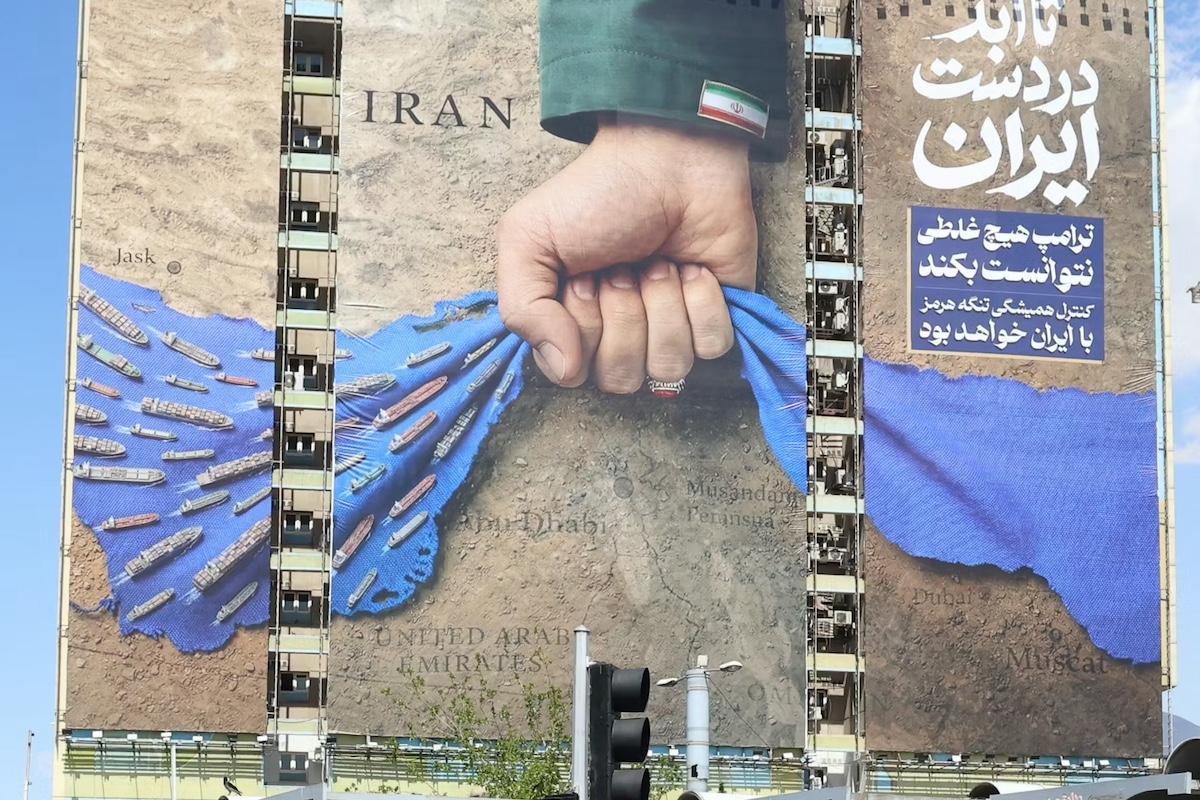
    A months-long standoff over one of the world’s most critical energy chokepoints has shifted dramatically, with Tehran emerging as the clear long-term power holder in the Strait of Hormuz despite an ongoing U.S. blockade effort. The Trump administration has claimed early progress for its blockade, reporting that nine vessels, including the Chinese-owned tanker Rich Starry which reversed course in the Gulf of Oman Wednesday, have complied with its turn-around orders. But Iranian officials have pushed back forcefully, reiterating that Tehran retains full authority over the strait and reserves the right to approve all transiting vessels. In a stark warning, Iran added that if its own ports come under threat, every port across the Persian Gulf and Sea of Oman will lose security protections.

    For decades, Iran has brandished the Strait of Hormuz as a potential bargaining chip against its adversaries, but it never moved to formalize control over the waterway until the current existential conflict with the U.S. and Israel. In an ironic turn, the joint U.S.-Israeli campaign to cripple Iran’s nuclear and missile programs has instead handed Tehran a transformative new strategic asset: unchallenged de facto control over the strait, through which 20% of global oil consumption passes daily. Tehran has already embedded this new control into its long-term strategic planning, going so far as to add formal recognition of Iranian sovereignty over the strait to its negotiating demands during recent indirect peace talks with Washington.

    This new leverage delivers three key strategic and economic benefits for Iran. First, it opens a substantial new stream of revenue from transit tolls already imposed on vessels passing through the waterway. With tolls set at roughly $1 per barrel of oil and up to $2 million per fully loaded tanker, independent estimates project Iran could collect up to $600 million monthly from oil shipments and an additional $800 million from natural gas transits. Economists note that roughly 80% of these costs will ultimately be borne by Gulf Arab states, adding up to as much as $14 billion annually from oil tolls alone.

    Second, control of the strait acts as a powerful asymmetric deterrent. By proving its ability to disrupt the world’s most vital energy artery, Iran has dramatically raised the economic cost of any future large-scale military action against it, creating deterrence through global economic risk rather than relying solely on its own military capabilities.

    Third, the strait delivers major geopolitical clout, particularly for Iran’s outreach to Global South nations. Control over energy flows through the waterway allows Tehran to negotiate with energy-dependent states, offering reliable transit access in exchange for cooperation that circumvents U.S. sanctions and deepens bilateral economic ties.

    The U.S. has moved to counter Iran’s new leverage with its own blockade, but this reciprocal campaign faces deep structural limitations that undermine long-term success. Unlike Iran, which can enforce its rules from its own adjacent coastline, the U.S. must maintain a blockade in open international waters, a logistically and financially draining operation that requires widespread allied support which has yet to materialize. Even with backing, sustaining a long-term blockade would impose massive costs on the U.S. military and trigger cascading disruptions to the global economy, making the status quo unsustainable for Washington. Many analysts now warn the strait could become “America’s Suez moment” — a strategic turning point that exposes the limits of U.S. power projection in the Middle East, rather than demonstrating its dominance.

    A key question hanging over the standoff is how China, which purchases more than 80% of Iran’s crude oil exports and sees 40% of its total oil imports pass through the strait, will respond. So far, Beijing has shown no willingness to pressure Iran to roll back its new control regime, instead placing full blame on the U.S. for the crisis and rejecting the blockade as illegitimate. This week, Chinese Foreign Ministry spokesperson Guo Jiakun called the U.S. operation “dangerous and irresponsible” in blunt remarks. While one Chinese-owned tanker complied with U.S. orders to turn around, multiple other Chinese-flagged and Chinese-owned vessels have already completed transits through Iran’s new toll system, signaling Beijing’s willingness to abide by Tehran’s rules for the time being.

    Although China is heavily dependent on Hormuz transit for its energy supplies, it has spent years preparing for this exact scenario. Beijing has systematically diversified its oil import sources to reduce overreliance on any single supplier, and is estimated to hold enough strategic petroleum reserves to replace Hormuz shipments for up to seven months. Even so, it remains unclear whether Beijing will support Iran’s permanent toll system long-term; while it has not publicly opposed the measure to date, many experts note China has repeatedly called for a return to unrestricted, normal passage through the strait as soon as possible.

    Beyond the immediate standoff, the crisis is accelerating long-term geopolitical shifts in the Middle East that play to China’s expanding influence in the region. The ongoing conflict has convinced many Gulf Arab states that longstanding security alignment with the U.S. and normalization with Israel do not guarantee their national security, pushing regional leaders to diversify their diplomatic and economic partnerships. This trend was highlighted by this week’s visit of the Abu Dhabi Crown Prince to Beijing, a trip that underscores growing Gulf interest in deeper ties with China.

    Bilateral trade between Gulf Cooperation Council states and China already hit roughly $257 billion in 2024, a total that narrowly outpaced the Gulf’s combined trade with major Western economies. Beijing has also steadily expanded its diplomatic footprint in the region, mediating the 2023 normalization agreement between longtime rivals Saudi Arabia and Iran, and playing an indirect facilitating role in recent indirect U.S.-Iran peace talks held in Pakistan to end the current conflict. Looking ahead, experts project Iran could push for a new region-led security framework with Gulf Arab states, with China stepping in as a neutral guarantor or facilitator — a shift that would end decades of U.S. dominance as the primary security provider in the Persian Gulf.


  • World Athletics rejects 11 athlete transfers to Turkey

    World Athletics rejects 11 athlete transfers to Turkey

    Global track and field’s governing body, World Athletics, has formally rejected nationality transfer applications from 11 top-tier athletes seeking to compete for Turkey, in a high-profile decision that exposes controversy over state-sponsored athlete recruitment in international sport.

    Among the high-profile names turned away are Brigid Kosgei, the former women’s marathon world record holder who claimed Olympic silver for Kenya at the 2020 Tokyo Games, and Roje Stona, the Jamaican athlete who shocked the field to win men’s discus gold at the 2024 Paris Olympics. The cohort of applicants also includes four other Kenyan athletes: Catherine Relin Amanang’ole, Brian Kibor, Ronald Kwemoi and Nelvin Jepkemboi; three additional Jamaican competitors: Rajindra Campbell, Jaydon Hibbert and Wayne Pinnock; Nigerian sprinter Favour Ofili; and Russian athlete Sophia Yakushina.

    In its official statement on the ruling, World Athletics argued that all 11 applications formed part of a coordinated, government-backed recruitment strategy designed by Turkey to attract elite foreign athletes to the country with highly lucrative financial contracts. The transfers were organized through a club fully owned and funded by the Turkish government, with the explicit goal of having these athletes represent Turkey at major international competitions, most notably the 2028 Los Angeles Olympic Games.

    The decision follows a lackluster performance for Turkey at the 2024 Paris Olympics, where the country secured eight total medals but failed to claim a single gold medal, a outcome widely interpreted as pushing Turkish authorities to accelerate efforts to recruit established foreign talent. World Athletics’ review panel, which assessed all 11 applications together due to their shared structural characteristics, ruled that approving the transfers would directly undermine the core principles and regulatory objectives of the organization’s rules on athlete eligibility and nationality transfers.

    “Such an approach is inconsistent with the core principles of the regulations,” the panel concluded in its final ruling. As a result of the decision, none of the 11 athletes are currently eligible to represent Turkey in national team competitions or any other relevant international track and field events, leaving their future competitive careers in limbo as they weigh potential next steps.

  • Chinese Embassy in Japan says authorities fail to act on threats

    Chinese Embassy in Japan says authorities fail to act on threats

    Amid rapidly escalating bilateral friction between Beijing and Tokyo, the Chinese Embassy in Tokyo issued a formal statement Thursday accusing Japanese law enforcement authorities of failing to take adequate, effective action to counter a string of violent threats targeting Chinese diplomatic facilities and Chinese nationals based in Japan.

    Shi Yong, China’s acting ambassador to Japan, detailed the sequence of alarming incidents in his remarks. The first major threat arrived on March 5, in the form of a letter sent to the embassy from an anonymous group claiming to consist of former Japanese police and military personnel. The message contained overtly hostile threats: the group pledged to carry out violent attacks against Chinese diplomatic missions across Japan and threatened to “wipe out all Chinese” residing in the country.

    Immediately after receiving the threatening correspondence, embassy officials filed a formal report with Japanese police, according to an official post the mission made on the social media platform X. The embassy criticized Japanese law enforcement for failing to treat the threat seriously, declining to implement tangible protective measures, and falling short of launching a full, thorough investigation to clarify the facts of the case.

    The string of threats continued after a high-profile trespassing incident in late March, when an officer from the Japan Ground Self-Defense Force was arrested for illegally entering the Chinese Embassy compound in Tokyo while armed with a knife. Following a formal diplomatic protest from Beijing over the incursion, Japanese police increased visible security deployments around the embassy’s premises.

    Just one week after the trespassing incident, the embassy received a separate bomb threat via social media. This threat was issued by another individual claiming to be a member of the Japan Self-Defense Force reserve, prompting local authorities to launch a two-hour bomb sweep across the embassy compound. Shi did not confirm whether any explosive devices were located during the search.

    While the acting ambassador acknowledged that Japanese police have boosted external security around the diplomatic mission, he emphasized that the embassy and its personnel remain in an unsafe position, still “exposed to threats” that have not been fully resolved.

    Tensions between China and Japan have steepened since November last year, when Japanese Prime Minister Sanae Takaichi made controversial remarks stating that any Chinese military operation targeting the self-governed island of Taiwan could qualify as a national security emergency justifying a Japanese military response. In response to the comments, China implemented a series of diplomatic and economic countermeasures against Japan.

    As of Thursday, Japan’s Foreign Ministry has not issued any response to the Chinese Embassy’s new accusations, and declined to comment on the record when approached for statement.

  • AFL 2026: Collingwood highlighted Carlton’s record of capitulations at 3QT before comeback

    AFL 2026: Collingwood highlighted Carlton’s record of capitulations at 3QT before comeback

    Ahead of the opening bounce of the final term in their Australian Football League clash, Collingwood Magpies already banked on a familiar Carlton Blues collapse to turn their 18-point deficit around. That confidence, forged from Carlton’s well-documented history of surrendering leads late in matches, was front and center of Collingwood’s three-quarter time huddle, where players and coaches explicitly highlighted the Blues’ trend of letting strong positions slip away. What followed was a thrilling, momentum-shifting final quarter that delivered one of the most dramatic wins of the 2025 AFL season so far.

    Fuelled by a masterclass performance from young star Nick Daicos, Collingwood piled on seven unanswered goals in the final stanza to claw their way back into the contest, sneaking across the line with a narrow five-point victory. Speaking after the match, Magpies head coach Craig McRae opened up about the tactical and mental framing that shaped the comeback, revealing his side entered the final quarter questioning whether Carlton could maintain their intensity across all four quarters.

    “We spoke about playing the full minutes right in front of us,” McRae told reporters post-game. “They’d been in front most games, I think Carlton have been in front for four of the five. We were questioning whether they could do it for four quarters and that’s the evidence they put in front of everyone. We want to play it out, you’ve still got to take your chances, make the most of it.”

    The catalyst for Collingwood’s stunning turnaround was Daicos, who put on a clinic in the final quarter, racking up 13 disposals and slotting a spectacular freakish goal that shifted the entire energy of the match. The young star played every second of the final term, and finished the match marking his 100th AFL game with a career-defining performance that drew high praise from his coach.

    “He’s a remarkable talent, we didn’t want to get him off in the last quarter (and) he played 100 per cent game time I am pretty sure,” McRae said. “He does some remarkable stuff, that first goal in the fourth quarter when he just runs contest to contest to contest and ends up in the goalsquare. 100th game, if you break the stats down they’re pretty amazing, not many players can do that in a game.”

    Even with the dramatic comeback, McRae cautioned against overconfidence, noting his side still has areas to improve ahead of coming fixtures: “I am not naive to think we don’t still have work to do.”

    For the Blues, the result extends a worrying early-season slump that has cast doubt over their 2025 campaign. The collapse marks yet another late-game lead surrendered by Carlton, leaving the side with just two wins from their opening six matches. For Collingwood, the crucial win keeps the club firmly in contention for a top-eight finish, keeping their postseason hopes alive heading into the middle phase of the regular season.

  • How many people did Vlad actually impale?

    How many people did Vlad actually impale?

    For centuries, the name Vlad the Impaler has been synonymous with brutal violence and legendary cruelty, thanks in no small part to his infamous signature execution method that gave him his haunting nickname. For historians, enthusiasts of medieval history, and casual curious readers alike, one persistent question has outlasted the centuries: exactly how many people did Vlad actually impale? This query is far more than just a morbid thought experiment; it sits at the intersection of medieval historical record, propaganda, and mythmaking that has grown up around one of Wallachia’s most controversial rulers. Vlad III, better known by his moniker, ruled the 15th-century Romanian principality of Wallachia multiple times during a turbulent political era marked by ongoing conflict between the Ottoman Empire and Christian European states. Contemporary accounts from the period often wildly inflated his death toll, with some chronicles claiming he slaughtered tens of thousands, even hundreds of thousands of people, many via impalement. Modern historians have pushed back against these inflated numbers, noting that many contemporary records were written by political enemies or foreign propagandists seeking to frame Vlad as a monstrous tyrant to justify their own political claims to the region. Verifiable archival evidence is sparse, making it difficult to pin down an exact count that separates fact from exaggerated myth. Some recent scholarly analyses suggest the actual number is likely far lower than the legendary claims, falling somewhere in the thousands rather than tens or hundreds of thousands. Even so, the lack of surviving definitive records means the question of how many people he actually impaled will likely remain a topic of ongoing debate among historians and history enthusiasts for years to come.

  • Cheaper Doritos and Lays helps PepsiCo win back struggling snackers

    Cheaper Doritos and Lays helps PepsiCo win back struggling snackers

    Global food and beverage conglomerate PepsiCo has delivered a robust first-quarter financial performance, driven by strategic price cuts on popular snack lines including Doritos and Lay’s that reversed declining consumer sentiment after years of controversial price hikes. The company announced its results Thursday, reporting that total quarterly sales climbed 8.5% year-over-year to hit $19.4 billion (£14.4 billion), far outpacing many analyst expectations.

    The aggressive pricing moves, which rolled out in advance of this year’s Super Bowl in early February, trimmed prices by as much as 15% on a range of core snack products: along with Doritos and Lay’s (sold under the Walkers brand in the UK), Tostitos and Cheetos also saw price adjustments. For the snack industry, the Super Bowl is one of the highest-revenue annual events, as millions of consumers stock up on snacks for watch parties, making the timing of the cuts particularly strategic.

    This reversal came after PepsiCo faced significant consumer backlash starting in 2022, when the company imposed repeated price increases to offset its own soaring input and production costs. Those hikes pushed many price-conscious shoppers to switch to cheaper store-brand alternatives, cutting into PepsiCo’s market share. In a statement accompanying the earnings release, PepsiCo Chairman and Chief Executive Ramon Laguarta credited the targeted “affordability initiatives” for turning around the company’s performance and winning back lapsed customers.

    Beyond the top-line sales growth, PepsiCo also reported a 25% jump in operating profit, which reached $3.2 billion for the quarter. Markets reacted positively to the strong results, with the company’s share price rising 2% in early morning trading following the announcement.

    Even as the pricing strategy delivers short-term growth, PepsiCo is navigating longer-term shifts in consumer behavior, most notably the rising popularity of appetite-suppressing weight loss jabs that have reduced overall food consumption and shifted demand toward smaller, portion-controlled servings. Many patients who start using these injectable medications report a sharp drop in hunger, leading to significant decreases in their overall grocery and snack spending.

    To adapt to this trend, Laguarta noted that PepsiCo is not only focusing on affordable pricing but also “betting a lot on portion control.” The company has increasingly prioritized multipack offerings of single-serve snacks, which align with changing consumption patterns; currently, more than 70% of PepsiCo’s food products sold in the United States are single-serve portions.

    Looking ahead to the second half of 2026, Laguarta is also counting on the upcoming men’s FIFA World Cup — co-hosted by the United States, Mexico and Canada — to drive further sales growth. The company, a major tournament sponsor, plans to roll out targeted “Fan of the Match” promotions centered on its Lay’s chip brand to capture consumer attention during the global sporting event.

  • AFL 2026: Carlton coach Michael Voss has addressed a ‘shattered’ Elijah Hollands

    AFL 2026: Carlton coach Michael Voss has addressed a ‘shattered’ Elijah Hollands

    In a tense Australian Football League clash that ended in a narrow defeat for Carlton at the hands of Collingwood on Thursday night, 22-year-old young talent Elijah Hollands emerged as an unexpected talking point after a match that left him struggling for any meaningful on-field impact, prompting public displays of disappointment and a supportive intervention from senior coach Michael Voss.

    Hollands, who had earned 75% of game time through the first three quarters, failed to register a single disposals or statistical contribution for the entire match, a rare outcome for a player with that much on-field involvement. He was ultimately benched for the majority of the final quarter as Collingwood clawed back to secure the win over the Blues. Footage of Hollands drifting out of play and failing to impact contests circulated widely online on social media immediately after the final siren, amplifying scrutiny of his off-night.

    Following the final whistle, Voss found a visibly distraught Hollands, who described the young midfielder as “shattered” and “pretty emotional” in post-game press comments. “I spoke to him after the game, he was really disappointed with how he started the game, really upset, he feels like he’s let me down,” Voss shared. The coach confirmed he held an extended supportive conversation with the young player, noting that Hollands carried strong disappointment over his inability to work his way into the flow of the high-stakes match.

    Addressing the decision to bench Hollands in the final minutes of the game, Voss explained the tactical call was made to adjust the team’s on-field mix for the closing stretch. “It comes to the last quarter, you obviously have to work out what mix you want out on the field with five minutes to go. He wasn’t having a great night, so (we had) conversations with him, but we obviously thought the best mix was not have him out there,” Voss said.

    Late drama unfolded after the siren when a review gave Carlton a last-gasp chance to force a draw, with fourth-year player Talor Byrne stepping up for the decisive kick that ultimately skewed wide. Voss emphasized that blame for the loss does not rest solely on the shoulders of young players like Hollands and Byrne, pointing to the team-first culture the club has built.

    “It’s understanding it’s not all on the young man’s shoulders,” Voss said. “He’s probably rehearsed that 2000 times… he didn’t quite obviously get the job done but the boys rallied. You win together, you lose together.” The coach added that the club would continue to support Hollands through the tough moment, rejecting any concerns over the young player’s effort on the night, and confirming the program would stand by him as he works to bounce back from the off-night.

  • WADA is challenging India to clean up doping issues

    WADA is challenging India to clean up doping issues

    NEW DELHI — As India prepares to host the 2030 Commonwealth Games and vies for the right to hold the 2036 Olympic Games, the World Anti-Doping Agency (WADA) has announced tangible progress in its coordinated effort to address India’s persistent and high-profile doping crisis, which has seen the country top WADA’s global list of doping violations for three straight years.

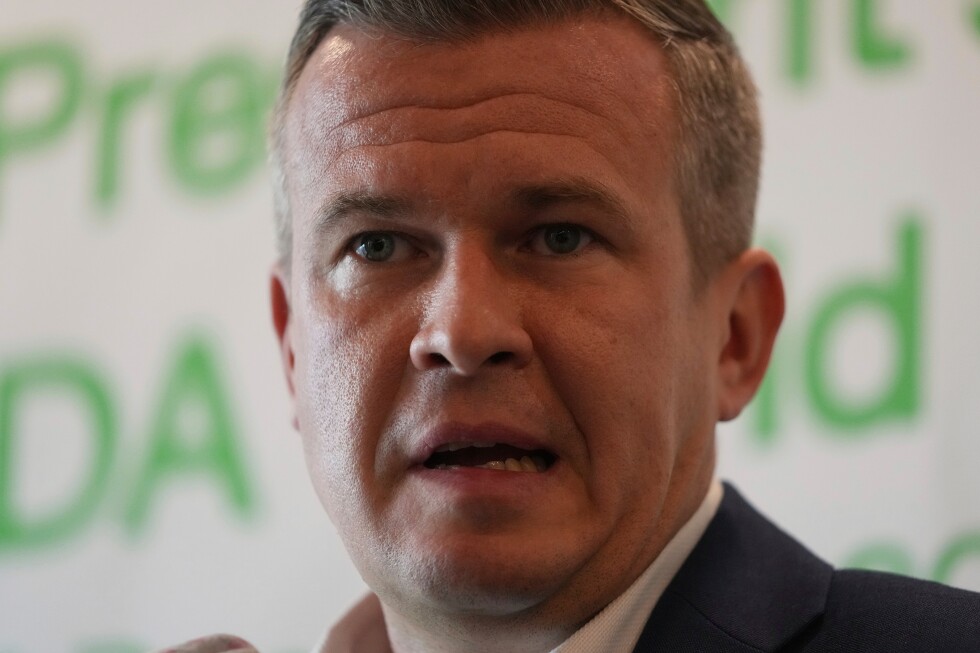
    India currently holds the unenviable title of reporting the highest rate of positive doping tests among all major sporting nations, a status that has cast a shadow over its aspirations to lead major international competitions. Speaking Thursday at a press conference for WADA’s global anti-doping intelligence and investigations network, WADA President Witold Bańka laid out the scale of the challenge the country faces. “Performance-enhancing drugs and steroids are readily accessible across India, and the country stands as one of the world’s largest manufacturers of these substances. This is a deeply serious problem,” Bańka stated.

    Despite the gravity of the issue, Bańka emphasized that recent dialogues with Indian stakeholders have opened a path for meaningful collaboration. He noted that his talks with India’s national sports minister, the country’s National Anti-Doping Agency (NADA), and the Central Bureau of Investigation (CBI) have been productive, with all parties agreeing to strengthen joint efforts to dismantle transnational doping supply networks operating within India.

    Anant Kumar, director of NADA, outlined the Indian agency’s new two-pronged approach to tackling the doping menace. The strategy focuses first on upgrading national doping detection and testing infrastructure, and second on building greater trust among Indian athletes by boosting the transparency and efficiency of anti-doping processes.

    Under this new framework, NADA has doubled its annual testing volume from roughly 4,000 samples collected in 2019 to a projected 8,000 samples by 2025. Even with this increase, India’s testing scale remains lower than that of many peer nations: for example, China conducts more than 15,000 athlete tests each year. Even so, Bańka argued that a growing number of positive doping outcomes should be interpreted as a sign of improving system effectiveness, not a worsening crisis.

    “I would actually be pleased to see that number rise, because it tells us our detection systems are working better, and that we are carrying out more targeted, effective enforcement,” Bañka explained. “A lower number of positive cases does not mean success — it often means systems are failing. A sharp drop in detected violations can signal weak testing or poor oversight.”

    Another key shift in anti-doping strategy in India is a move away from penalizing athletes as the primary target of enforcement, with greater focus placed on holding suppliers and enabling actors such as coaches and team managers accountable. Gunter Younger, WADA’s director of intelligence and investigations, noted that athletes are often manipulated into doping, rather than acting as masterminds of the scheme. “Athletes are sometimes victims in this whole process. You will always have isolated individuals who choose to cheat and gain an unfair advantage, but we do not believe most athletes should be charged with criminal intent,” Younger said.

    Bańka echoed this framing, adding that modern doping is a transnational, increasingly sophisticated criminal enterprise. “We do not want to see athletes jailed. Only the people who supply these drugs and destroy athletic careers deserve to face serious legal consequences,” he emphasized.

    When asked about expanded testing for cricketers, following the announcement that cricket will return to the Olympic program for the 2028 Los Angeles Games, both WADA and NADA officials pushed back against the idea of targeting the sport specifically. Bańka noted that WADA’s work covers all Olympic sports, and it would be inappropriate to single out cricket for extra scrutiny despite its massive popularity in India. Kumar added that cricket is classified as a low-risk sport for doping within India’s current framework, and that NADA’s focus remains on targeting high-risk disciplines across all sports, while continuing collaborative work with the International Cricket Council.