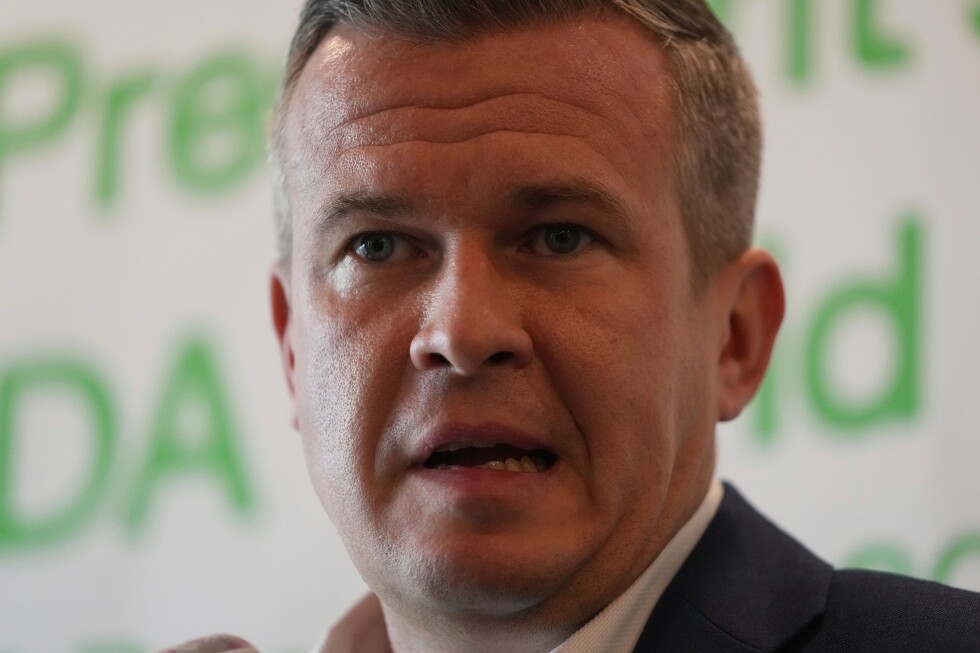
NEW DELHI — As India prepares to host the 2030 Commonwealth Games and vies for the right to hold the 2036 Olympic Games, the World Anti-Doping Agency (WADA) has announced tangible progress in its coordinated effort to address India’s persistent and high-profile doping crisis, which has seen the country top WADA’s global list of doping violations for three straight years.
India currently holds the unenviable title of reporting the highest rate of positive doping tests among all major sporting nations, a status that has cast a shadow over its aspirations to lead major international competitions. Speaking Thursday at a press conference for WADA’s global anti-doping intelligence and investigations network, WADA President Witold Bańka laid out the scale of the challenge the country faces. “Performance-enhancing drugs and steroids are readily accessible across India, and the country stands as one of the world’s largest manufacturers of these substances. This is a deeply serious problem,” Bańka stated.
Despite the gravity of the issue, Bańka emphasized that recent dialogues with Indian stakeholders have opened a path for meaningful collaboration. He noted that his talks with India’s national sports minister, the country’s National Anti-Doping Agency (NADA), and the Central Bureau of Investigation (CBI) have been productive, with all parties agreeing to strengthen joint efforts to dismantle transnational doping supply networks operating within India.
Anant Kumar, director of NADA, outlined the Indian agency’s new two-pronged approach to tackling the doping menace. The strategy focuses first on upgrading national doping detection and testing infrastructure, and second on building greater trust among Indian athletes by boosting the transparency and efficiency of anti-doping processes.
Under this new framework, NADA has doubled its annual testing volume from roughly 4,000 samples collected in 2019 to a projected 8,000 samples by 2025. Even with this increase, India’s testing scale remains lower than that of many peer nations: for example, China conducts more than 15,000 athlete tests each year. Even so, Bańka argued that a growing number of positive doping outcomes should be interpreted as a sign of improving system effectiveness, not a worsening crisis.
“I would actually be pleased to see that number rise, because it tells us our detection systems are working better, and that we are carrying out more targeted, effective enforcement,” Bañka explained. “A lower number of positive cases does not mean success — it often means systems are failing. A sharp drop in detected violations can signal weak testing or poor oversight.”
Another key shift in anti-doping strategy in India is a move away from penalizing athletes as the primary target of enforcement, with greater focus placed on holding suppliers and enabling actors such as coaches and team managers accountable. Gunter Younger, WADA’s director of intelligence and investigations, noted that athletes are often manipulated into doping, rather than acting as masterminds of the scheme. “Athletes are sometimes victims in this whole process. You will always have isolated individuals who choose to cheat and gain an unfair advantage, but we do not believe most athletes should be charged with criminal intent,” Younger said.
Bańka echoed this framing, adding that modern doping is a transnational, increasingly sophisticated criminal enterprise. “We do not want to see athletes jailed. Only the people who supply these drugs and destroy athletic careers deserve to face serious legal consequences,” he emphasized.
When asked about expanded testing for cricketers, following the announcement that cricket will return to the Olympic program for the 2028 Los Angeles Games, both WADA and NADA officials pushed back against the idea of targeting the sport specifically. Bańka noted that WADA’s work covers all Olympic sports, and it would be inappropriate to single out cricket for extra scrutiny despite its massive popularity in India. Kumar added that cricket is classified as a low-risk sport for doping within India’s current framework, and that NADA’s focus remains on targeting high-risk disciplines across all sports, while continuing collaborative work with the International Cricket Council.