博客

  • Israeli soldiers suspected of raping Palestinian detainee allowed to return to service

    Israeli soldiers suspected of raping Palestinian detainee allowed to return to service

    In a decision that has drawn international condemnation and reignited debates about systemic human rights violations against Palestinian detainees, the Israeli military has authorized the return to reserve duty of five soldiers linked to the severe torture and sexual assault of a Palestinian detainee at the Sde Teiman detention facility in 2024.

    According to a Thursday report from Israeli outlet Haaretz, Israel’s army chief Eyal Zamir greenlit the return of the service members from Unit 100, the specialized unit tasked with guarding detainees in Israeli custody. The move comes just one month after all criminal charges against the soldiers were unexpectedly dropped, with no internal military probe ever launched into the brutal incident.

    The full scope of the abuse was first exposed when surveillance footage of the attack was leaked to Israeli media in August 2024, one month after a far-right Israeli mob rioted to protest military police questioning of the implicated soldiers. The leaked footage shows multiple Palestinian detainees bound and blindfolded on the facility floor, before a group of reservists pulls one detainee aside and uses riot shields to block the camera view of their assault.

    Following the attack, the detainee was rushed to hospital with life-altering injuries: broken ribs, a punctured lung, a ruptured bowel, and severe anal trauma. Initially filed in February, the original indictment detailed 15 minutes of unrelenting violence: the accused repeatedly kicked the detainee, stomped on his body, struck him with clubs, dragged him across the ground, and deployed a taser on multiple areas including his head. One soldier also stabbed the detainee in the buttocks, causing a full tear in the rectal wall. Two of the suspects failed polygraph tests when asked about inserting an object into the detainee’s anus and covering for the perpetrator, with examiners confirming their denials were deceptive.

    Professor Yoel Donchin, a former medical officer at Sde Teiman, told Haaretz he was stunned by the brutality of the attack. “He arrived, and we saw he had a stab wound in the anus,” Donchin said. “I saw how the soldiers behaved there, how they brought in detainees and forced them to sing songs. I saw a wounded man who had been abused and beaten severely.”

    Despite the overwhelming evidence captured on camera and detailed in the original indictment, Military Advocate General Itai Ofir ordered all charges withdrawn last month. Ofir justified the decision citing a “defense of justice” argument tied to what he called improper conduct by senior military prosecution and IDF law enforcement officials, as well as “complexities regarding the existing evidentiary basis.” He also noted that after the detainee was released back to the Gaza Strip, additional legal barriers emerged for the case.

    This decision is far from an isolated incident. Human rights investigators and UN experts have documented that the Israeli military almost never holds service members accountable for accusations of abusing Palestinian detainees, and reports of abuse, torture, and sexual violence have spiked dramatically since the outbreak of the Israel-Gaza war in October 2023.

    Last month, a group of UN experts warned that torture has become “state doctrine” in Israel, enabled by decades of systemic impunity and political protection for perpetrators. “Since the onset of the genocide, the Israeli prison system has degenerated into a laboratory of calculated cruelty,” said Francesca Albanese, the UN Special Rapporteur on Palestine. A UN inquiry has confirmed that “Sexual and gender-based violence is increasingly used as a method of war by Israel to destabilise, dominate, oppress and destroy the Palestinian people.”

    Earlier this month, Euro-Med Human Rights Monitor released a groundbreaking report compiling hundreds of testimonies from former detainees, concluding that the sexual torture of Palestinian detainees from Gaza constitutes an “organised state policy.” The report details widespread abuses including rape with foreign objects, the use of trained dogs to assault detainees, and repeated sexual assault. One 42-year-old female former detainee from northern Gaza, who was held at Sde Teiman, gave harrowing testimony of being bound naked to a metal table and raped repeatedly by two masked soldiers over two days. She was left shackled naked and bleeding overnight before the assault resumed, and the entire ordeal was filmed. During interrogation, while she was suspended by her wrists, soldiers threatened to release the footage publicly if she refused to cooperate. She described her experience as “another genocide behind walls” and said she repeatedly wished for death to end her suffering.

    Multiple independent investigations by rights groups and media outlets, including Middle East Eye, have corroborated these claims, documenting widespread, systemic sexual violence against Palestinian detainees across Israel’s prison system.

  • US lawmakers reject measure to block Trump from striking Iran

    US lawmakers reject measure to block Trump from striking Iran

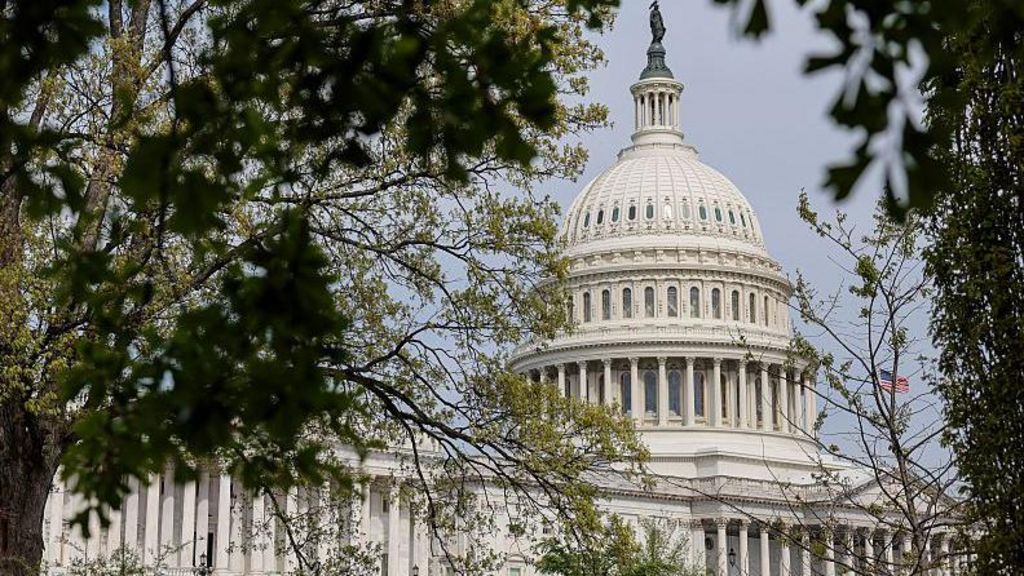
    A second attempt by congressional Democrats to limit President Donald Trump’s authority to launch expanded military action against Iran has collapsed in the U.S. House of Representatives, falling by just a single vote one day after an identical measure was blocked in the Senate.

    The War Powers Resolution, which sought to reassert congressional oversight over U.S. military engagement connected to the ongoing Iran-related conflict, failed in a razor-thin 213-214 vote Thursday. Long viewed as largely symbolic by legislative observers, the measure faced steep procedural barriers even if it had cleared the House: passage in both chambers would still have been almost certain to be defeated by a presidential veto from Trump.

    Party lines largely held on the vote, echoing the pattern seen one day earlier in the Senate. Only one Republican, Representative Thomas Massie of Kentucky, broke ranks to join Democrats in supporting the measure. On the opposite side, Representative Jared Golden of Maine was the sole Democrat to vote against the resolution. Ohio Representative Warren Davidson, who backed a similar Democratic-led effort back in March, chose to vote “present”, a procedural move that counts as an official abstention.

    Following the unsuccessful vote, New York Representative Gregory Meeks, the sponsor of the resolution, told reporters he planned to begin outreach to Golden and other on-the-fence lawmakers to build more support for future attempts. Meeks confirmed he would introduce a new War Powers Resolution in the coming weeks, as Democrats continue their long-running push to reclaim Congress’s constitutionally granted authority over decisions to enter armed conflict.

    This latest failure comes just one month after a near-identical measure fell by a narrow margin in the House. In that first vote, two Republicans supported the resolution while four Democrats opposed it. Even if Thursday’s vote had flipped to a majority in favor, the measure was already facing long odds in the Senate, where a matching resolution was voted down Wednesday in a 47-52 vote that broke almost entirely along party lines.

    Republican opposition to the resolution is not necessarily set in stone, however. Multiple GOP lawmakers have signaled that they are open to reconsidering their positions if the ongoing U.S.-Israel military campaign, which launched on February 28, expands geographically or drags on past the end of this month. Trump has offered inconsistent timelines for how long the engagement will last, most recently claiming the conflict was “close to over”.

    The push for the resolution comes directly out of requirements laid out in the 1973 War Powers Resolution, the landmark federal law passed to limit executive authority during the Vietnam War, when then-President Richard Nixon continued U.S. military involvement without full congressional approval. The 1973 law mandates that Congress must grant explicit approval for any military action that extends longer than 60 days. With the current campaign having launched on February 28, that 60-day window is rapidly approaching.

  • Tianjin students escort war veterans on ‘Heroes, Hello’ trip to Henan

    Tianjin students escort war veterans on ‘Heroes, Hello’ trip to Henan

    A moving cross-province journey honoring veterans of the 1950-1953 War to Resist US Aggression and Aid Korea concluded recently, after dozens of students and faculty members from Tianjin Binhai Vocational Institute of Automotive Engineering escorted two Tianjin-based veterans to Luoyang, Henan, for the institute’s ongoing ‘Heroes, Hello’ program.

    Spanning four days, the excursion brought the Tianjin delegation together with 34 local Henan-based veterans for a series of commemorative and recreational activities, including tours of Luoyang’s world-famous peony gardens, open shared storytelling sessions where veterans recounted their wartime experiences, and one-on-one support for veterans with mobility impairments. Collectively, the 36 veterans in attendance have an average age of 92, carrying decades of memories from the conflict that shaped modern East Asia.

    Launched two years ago by the vocational institute, the ‘Heroes, Hello’ program has rapidly expanded its scope across China, reaching more than 20 provinces and connecting with over 40,000 people, including surviving war veterans and family members of soldiers who died in service. The initiative was designed to move beyond traditional classroom-based ideological and political education, creating opportunities for young people to interact directly with national heroes in person.

    “Ideological and political education should not be locked inside four classroom walls,” explained Jia Xiufang, chairperson of the Tianjin Binhai Vocational Institute of Automotive Engineering. “Our students need to engage with living history, and meet the heroes who built our country’s safety in person.”

    For participating students, the experience transformed abstract textbook history into a tangible, deeply personal lesson. Wang Yuchuan, an automotive service and marketing major at the institute, shared that his prior understanding of the war came entirely from course materials before the trip. “Meeting these veterans face to face made the spirit of that generation feel real, not just words on a page,” he said.

    Ninety-four-year-old veteran Wang Lanju, one of the attendees, shared a harrowing firsthand account of his service: he recalled working to construct an airfield in North Korea while facing constant enemy bombing raids. “No matter how heavy the attacks were, none of us retreated,” he stated firmly.

    Beyond the excursion, the institute has already worked to preserve these veterans’ stories for future education: it has compiled hundreds of hours of oral history interviews into official teaching materials for its students. Looking ahead, the institution has scheduled a special campus event for May 18, where it will host 25 surviving female Korean War veterans to share their experiences with the student body.

  • China-Europe freight train services surge in Q1 2026

    China-Europe freight train services surge in Q1 2026

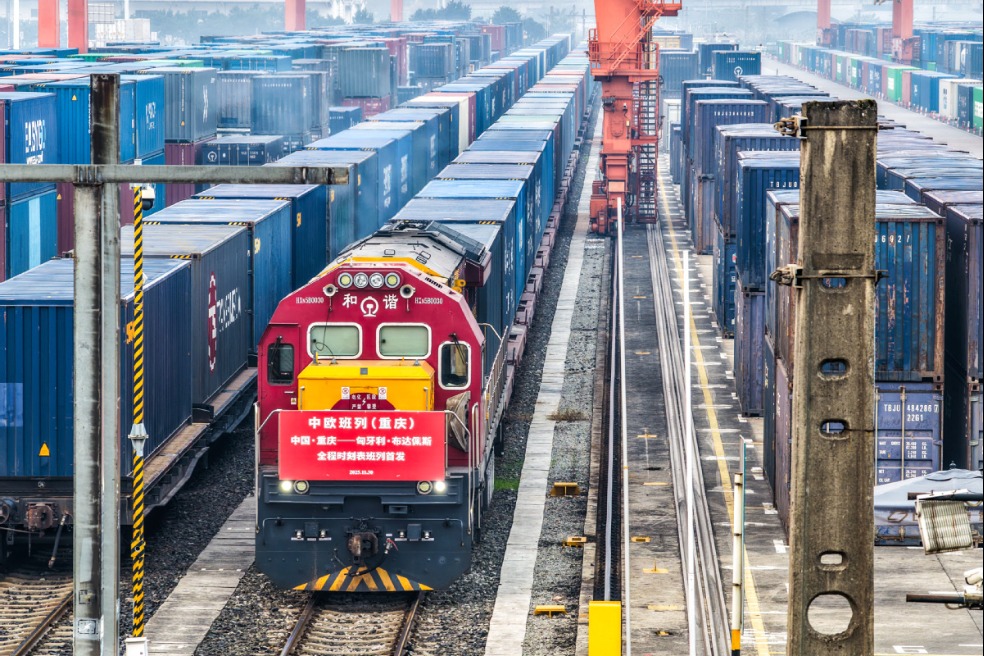
    Strong double-digit growth marked China-Europe freight train operations in the opening three months of 2026, with official data from China State Railway Group revealing substantial gains in both service volume and cargo capacity.

    Released on April 16, the data shows the service completed 5,460 cross-border train trips and transported 546,000 twenty-foot equivalent unit containers between January and March 2026. This represents a 29 percent year-on-year increase in trips and a 22 percent jump in container volume compared to the same period last year.

    The state-owned railway operator attributes this robust expansion to targeted upgrades in cross-border transport coordination and logistics streamlining, which have collectively boosted the overall efficiency of the entire Eurasian rail network. Today, the China-Europe freight train network connects 235 cities across 26 European countries, extending its reach across nearly the entire Eurasian continent to meet rising demand for reliable cross-border cargo transport.

    To further expand connectivity, transport authorities are actively developing new alternative trade corridors, including a new service route that traverses the Caspian Sea and ongoing trial operations of a Baltic Sea corridor running through Russia. Significant efficiency gains have also been achieved at key border crossing checkpoints: the adoption of digital management systems and simplified customs clearance procedures have cut the minimum clearance time for cross-border trains to less than 30 minutes, drastically reducing wait times that previously slowed transit.

    Rail officials have also launched upgraded, faster scheduled services between major economic hubs in China and Europe. These improved services cut total transit time by more than 30 percent compared to traditional standard freight services, making rail transport far more competitive against slower ocean shipping for time-sensitive cargo. Additionally, multimodal logistics solutions that integrate rail and road transport are being scaled up, offering customers seamless end-to-end delivery under a single service contract to reduce operational complexity.

    Service quality has also been elevated through the adoption of new digital and specialized infrastructure. Electronic cargo seals now enable real-time tracking of freight shipments across the entire journey, while purpose-built containers have expanded the range of cargo that can be transported, including high-value goods such as finished automobiles and lithium batteries for electric vehicles.

    Earlier this month, railway authorities introduced a new high-quality development index specifically designed to track and publish the performance of China-Europe freight train services on an ongoing basis. The index assesses overall service performance across three core metrics: operational scale, network efficiency, and service quality, with a new monthly publication schedule to keep industry stakeholders and the public updated on the service’s evolving development.

  • Iran war: What has the war done to the cost of humanitarian aid?

    Iran war: What has the war done to the cost of humanitarian aid?

    While the United Kingdom has drawn public attention to potential domestic food shortages linked to threats blocking the Strait of Hormuz, a far more devastating crisis is unfolding for the world’s most vulnerable populations, whose access to life-saving support has been crippled by the ongoing US-Israeli war on Iran. The conflict has thrown global humanitarian logistics into disarray, and the international community has moved far too slowly to address the cascading harms hitting at-risk communities across the Middle East, South Asia and the Horn of Africa.

    One of the least visible but most damaging outcomes of the conflict has been a sharp surge in the cost of delivering aid to crisis zones. As global oil prices skyrocket in the wake of regional instability, already tight international aid budgets have been squeezed even further, eroding the capacity of humanitarian organizations to reach people in need. In a new analysis released this week, UK-based international charity Save the Children laid out the staggering human cost of these rising costs: every $5 increase in global oil prices driven by Middle East conflict eliminates enough funding to deliver one month of life-saving aid to nearly 40,000 children. For Save the Children alone, the organization now needs an extra $340,000 per month just to cover the cost of shipping critical aid supplies.

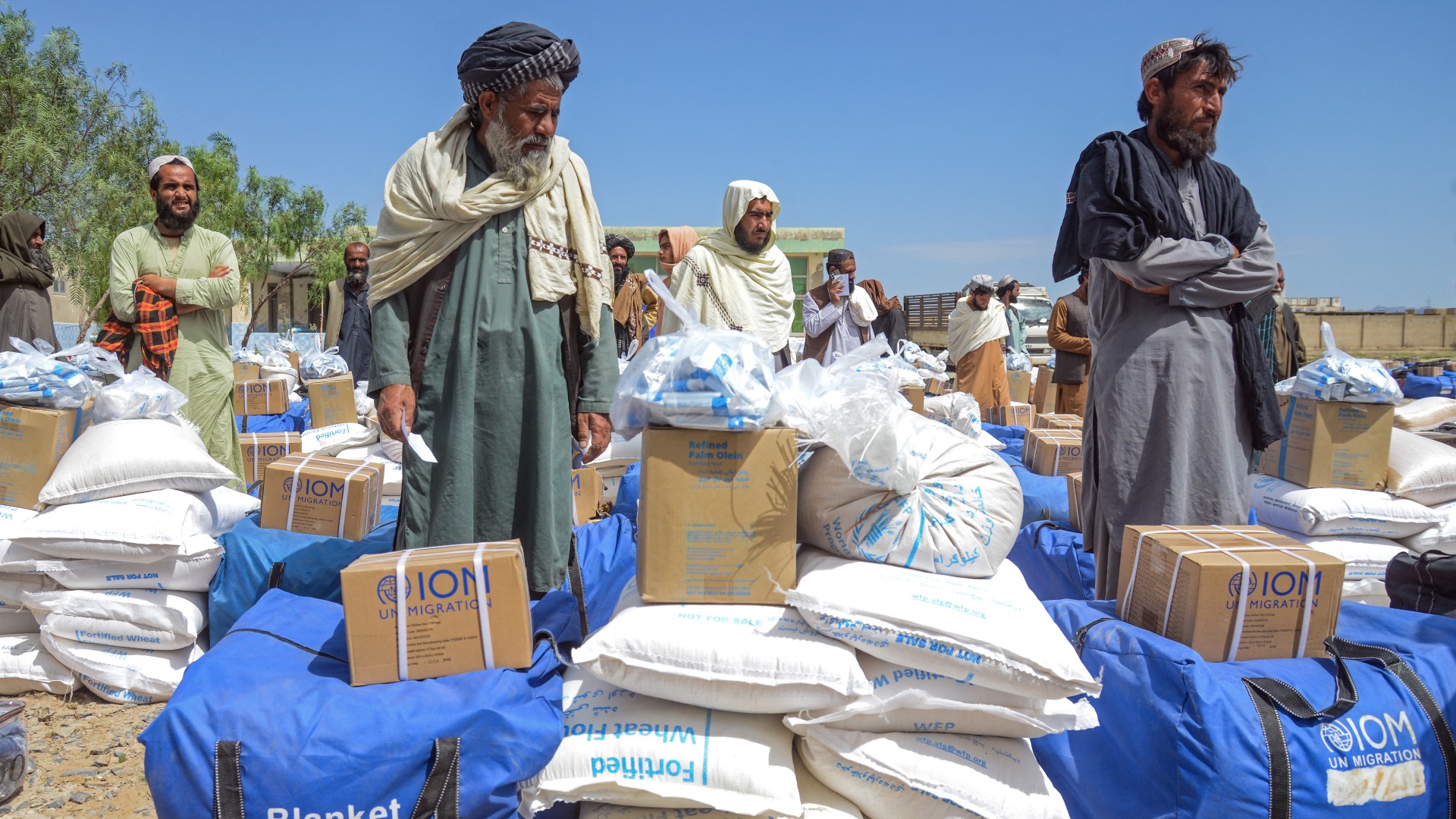
    One urgent case already unfolding is a stalled shipment of nutritional support bound for Afghanistan, where more than 21.9 million people rely on humanitarian assistance. The supplies, meant to serve 5,000 children and 1,400 pregnant and breastfeeding women, were sourced from a New Delhi supplier but have been held up by war-related disruptions to global shipping. Since March, air freight costs for the shipment have jumped from $240,000 to $435,000 — now more than double the actual value of the nutritional supplies themselves. Save the Children teams are currently scrambling to lock in lower-cost delivery options, but Willem Zuidema, the organization’s global supply chain director, warned that Afghanistan could run out of critical life-saving supplies by the end of the month. “This is a race against the clock,” Zuidema told Middle East Eye.

    While the recent ceasefire in the region has offered a small measure of relief, Save the Children stressed that the economic and logistical ripples of the war will linger for months. Even if commercial shipping through key chokepoints like the Strait of Hormuz returns to normal, freight operators have made clear that oil carriers will receive priority loading and routing, leaving humanitarian aid shipments waiting at ports. Compounding these pressures is the Trump administration’s “trade over aid” policy framework, which prioritizes private business opportunities over humanitarian resourcing, forcing non-profit organizations to adapt rapidly to shrinking budgets and growing logistical barriers.

    Facing these constraints, aid groups have been forced to rethink longstanding supply chain routes to get critical support to where it is needed. For example, medical equipment and supplies bound for Yemen and Sudan — where Sudan hosts what the United Nations describes as the world’s worst ongoing humanitarian crisis — are currently stuck in Dubai. Save the Children is now pursuing alternative routes: driving aid overland into Yemen, or moving supplies across the border to Jeddah, Saudi Arabia, before arranging final shipment to Sudan.

    Even though U.S. officials have given repeated assurances that humanitarian aid will be exempt from its regional blockade, the indirect impacts of the conflict are still driving sharp increases in food and essential commodity prices worldwide. In Somalia, where 70 percent of the country’s food supply comes from imports or international aid, the World Food Programme reports that prices of essential goods have jumped by at least 20 percent since the war began, with the cost of key agricultural fertilizers such as urea surging by as much as 70 percent in just a few weeks.

    This week, the international community pledged 1.3 billion euros (equivalent to $1.53 billion) in new aid for Sudan, as the country’s own internal civil conflict enters its fourth year. While the pledge was broadly welcomed by humanitarian groups, it comes as global aid efforts are already failing to keep up with the exploding demand for support across multiple crisis zones. Long before the outbreak of the war on Iran, global humanitarian funding had already fallen by almost a third since 2023, with major donor nations including France, Germany and the United Kingdom all scaling back their official aid commitments. The war has accelerated this crisis dramatically: in Iran alone, 3.2 million people have been displaced by the conflict since attacks began, and the first large shipment of aid to the country since February 28 only arrived this Tuesday, with aid workers on the ground reporting overwhelming unmet need.

    Amid these growing gaps, independent observers note that the cascading effects of regional conflict are hitting vulnerable populations that are already reeling from years of underfunded crises, raising the risk of widespread hunger, preventable illness and child mortality in the coming months if the international community does not step up emergency support.

  • Beijing reading campaign week kicks off on April 20

    Beijing reading campaign week kicks off on April 20

    Beijing is preparing to welcome book lovers across the capital for its annual citywide reading campaign week, running from April 20 to 26, 2026. Organizers have curated a diverse lineup of themed literary and cultural events spread across every urban district, designed to cater to a wide range of reading preferences and bring literature out of libraries and into public spaces.

    In Dongcheng District, the historic Longfu Temple market will open a curated book fair, where attendees can browse new releases and browse physical copies while soaking up the iconic, beloved aroma of freshly printed books. Xicheng District is leaning into the seasonal spirit of spring with its ongoing Centennial Lilac Poetry Gathering, an event series that ties the soft fragrance of blooming lilacs to poetic appreciation, blending natural beauty with literary art.

    For readers who prefer outdoor literary experiences, Chaoyang District has planned a series of relaxed reading sessions along the banks of the Liangma River, where attendees can enjoy leisurely reading with the gentle spring breeze off the water. In Haidian District, Beijing’s hub of higher education and scientific research, leading academicians and scientists will take part in a special book donation event, gifting their personal book collections to local public libraries to expand public access to academic and literary resources.

    Beyond district-specific events, independent and chain bookstores across the entire city are hosting special literary exhibitions to coincide with the campaign week. A major recurring attraction, the annual Spring Book Market, will be open from April 18 to 26 across four iconic Beijing locations: Chaoyang Park, Nanyuan Forest Wetland Park, Shougang Park, and the Old Summer Palace. For those who cannot attend the main campaign week, a follow-up book display tour will run from April 26 to May 17, with booksellers setting up pop-up displays in top-tier shopping malls and leading universities across the capital, extending the celebration of reading to more Beijing residents and visitors.

  • Naples bank robbers hold 25 people hostage then vanish through tunnel

    Naples bank robbers hold 25 people hostage then vanish through tunnel

    In a brazen broad-daylight heist that shocked southern Italy, a group of armed men carried out a well-planned robbery at a Naples branch of Crédit Agricole, holding 25 people hostage before vanishing through a hand-dug tunnel connecting the bank to the city’s sewer system. The incident unfolded shortly before midday local time, 10:00 GMT, triggering an immediate massive emergency and law enforcement response across the region.

    Local police moved quickly to cordon off the entire bank block within minutes of the robbery being reported. For nearly two hours, negotiators held closed-door talks with the armed robbers to secure the release of all trapped hostages, before tactical teams prepared a final assault. Graphic footage circulated on social media captured firefighters using heavy battering rams to break through reinforced bank windows, assisting escaping hostages to climb out of the damaged building.

    Witness accounts paint a varied picture of the captives’ experiences: many hostages remained composed enough to brush glass shards off their clothing and walk away from the scene unassisted, while others were visibly traumatized, weeping and clinging tightly to waiting family members. Six people suffering from acute shock were evaluated and treated by on-site paramedics, though authorities confirmed no one suffered serious physical injuries during the standoff. One hostage who spoke to Italian local news outlet Fanpage.it confirmed that while the robbers were all heavily armed, they did not resort to physical violence against any of the people trapped inside.

    Regional official Michele di Bari praised first responders in an official statement, crediting their swift, coordinated intervention for the safe release of all hostages by shortly after 1:30 p.m. local time. As the crisis unfolded, hundreds of local residents and onlookers gathered in the adjacent public square to follow developments, while tens of thousands of people tuned in to live social media streams broadcasting the standoff in real time.

    Elite special operations units from Italy’s carabinieri national armed police were airlifted to Naples from the central region of Tuscany to assist in the raid. Several hours after the initial hostage release, tactical teams stormed the bank through a broken exterior window; live broadcasts captured the sound of multiple gunshots and deafening stun grenade detonations during the assault. However, when forces secured the building, they discovered the robbers had already fled through an underground tunnel that investigators believe links the bank basement to the city’s extensive public sewer network.

    Footage captured after the raid shows carabinieri and firefighters leaning into a nearby open manhole, launching an ongoing manhunt for the escapees. Investigators have not yet been able to calculate the total value of what the robbers stole, as the gang specifically targeted private safety deposit boxes rather than withdrawable cash stored in the bank’s main vault. The well-executed escape has raised questions about security protocols for Italian bank branches, as law enforcement continues to comb through the sewer network and surrounding neighborhoods for any trace of the attackers.

  • Philippine president says key suspect in corruption scandal has been arrested in Prague

    Philippine president says key suspect in corruption scandal has been arrested in Prague

    In a major development that has rippled through Philippine politics, President Ferdinand Marcos Jr. announced Thursday evening that a central figure at the heart of a massive corruption scandal that ignited widespread public fury across the nation has been taken into custody by authorities in the Czech Republic. Zaldy Co, the former House of Representatives member who stepped down from his legislative post in September after being linked to systemic financial irregularities in national flood control infrastructure projects, was detained in Prague after entering the Central European country without valid travel documentation, Marcos confirmed in an official statement. The president did not provide additional details surrounding the circumstances of the arrest.

  • Vessels cross Hormuz destined for Iran despite US blockade

    Vessels cross Hormuz destined for Iran despite US blockade

    Tracking data released Thursday has confirmed that multiple sanctioned cargo and tanker vessels have successfully traversed the Strait of Hormuz en route to Iranian ports, directly defying a new U.S. blockade imposed amid the ongoing seven-week Middle East conflict. The breach of the U.S. restrictions comes just days after Washington implemented its counter-blockade, which followed the collapse of regional peace talks aimed at ending the sustained hostilities.

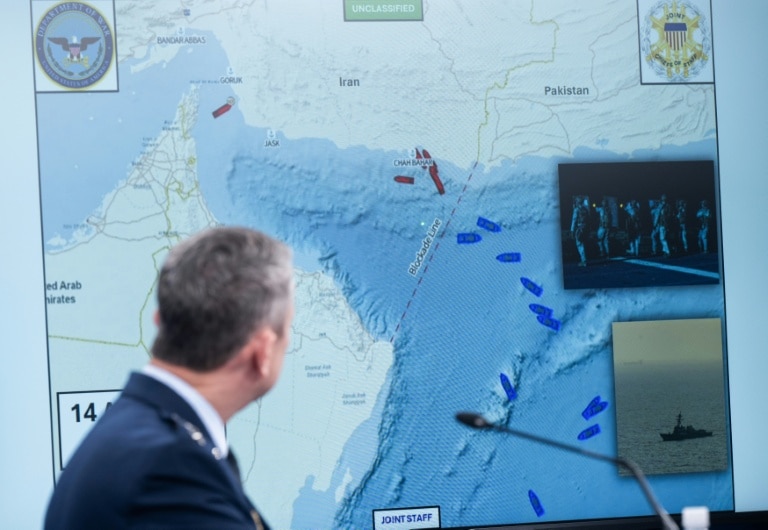
    In an update posted to the social platform X Thursday, the U.S. military claimed that over the first 72 hours of enforcement, 14 vessels had altered their courses to comply with the blockade at U.S. forces’ direction. Notably absent from this update, however, was the military’s previous assertion that it had stopped all vessel traffic heading to or departing from Iranian ports, a change that experts say hints at growing gaps in enforcement.

    Marine Traffic, a leading global vessel tracking platform, has documented the journeys of two sanctioned vessels that have already reached waters adjacent to their intended Iranian destinations. The sanctioned container ship Zaynar 2 completed its westward passage through the strait into the Persian Gulf late Wednesday, with its destination listed as Larak Island — a key logistics hub just off the coast of Iran’s major Bandar Abbas port. The ship’s last transponder signal placed it near the island by Wednesday evening. A second sanctioned cargo vessel, the Neshat, followed the same general route early Thursday, sailing close to the Iranian coastline while transiting the strait, also bound for Bandar Abbas. As of 15:00 GMT Thursday, its signal showed it anchored roughly 16 kilometers off the port.

    In addition to the smaller cargo vessels, two large U.S.-sanctioned very large crude carriers (VLCCs), the RHN and the Alicia, have also broken through the blockade, crossing westward through the strait via Iran’s officially approved shipping lane. As of Thursday, both tankers continued sailing west through the Gulf, listing their destination only as “For Order,” leaving their final port of call unclear. Industry analysts note this vague designation follows a pattern seen in recent weeks with other sanctioned Iranian-linked vessels, which often falsely list Iraq as their destination to avoid U.S. enforcement — a loophole that allows them to cross without intervention. Two more vessels, the VLCC Agios Fanouris I and the liquefied petroleum gas tanker G Summer, are currently sailing toward what tracking data indicates is a likely Iraqi destination, putting them outside the scope of the current U.S. blockade.

    Maritime experts have voiced confusion over how easily vessels have been able to breach the blockade, given the U.S. military’s significant regional presence. “There’s evidence that ships are perhaps breaking through” the U.S. blockade, Tom Sharpe, a former commander with the UK’s Royal Navy, told a Thursday briefing hosted by maritime analytics firm Windward. “That I don’t understand particularly, because from a military perspective, from a tactical perspective, this blockade is not that hard to do. They’ve got the ships there to do it,” he added.

    While Bridget Diakun, senior risk and compliance analyst at Lloyd’s List Intelligence, confirmed that some Iran-linked vessels have halted their voyages or reversed course to avoid running afoul of the blockade, she also acknowledged that the restrictions have not stopped all traffic. “We’ve also seen ships that have reached Iranian ports and that have departed as well,” she told the briefing. Summing up the chaotic state of shipping through the strategic waterway, Lloyd’s maritime risk analyst Tomer Raanan noted that after 24 hours of the new blockade, “Confusion reigns.”

  • Weifang of Shandong to take over April sky

    Weifang of Shandong to take over April sky

    The eastern Chinese city of Weifang, located in Shandong Province, is gearing up to welcome thousands of participants and spectators from across the globe for its annual iconic sky celebration. The 43rd Weifang International Kite Festival and 2026 Weifang Kite Carnival are scheduled to officially kick off on April 18, transforming the clear April skies above the city into a vibrant, moving fair where hundreds of unique kites will dance with the wind.

    Long recognized as the ‘Kite Capital of the World’, Weifang has turned this annual gathering into far more than a recreational flying event. Beyond the visual spectacle of diverse kites ranging from traditional handcrafted designs to cutting-edge innovative creations taking to the air, the festival functions as a dynamic platform for cross-cultural dialogue and international exchange. Organizers emphasize that the event showcases the coastal city’s long-standing spirit of openness and cultural inclusiveness, creating space for global visitors to connect with Chinese traditional culture while sharing their own cultural heritages.

    For those unable to attend the festival in person, an immersive preview experience is already available through the latest episode of the AI-powered program *Weifang Weekly Insights*. The show’s virtual host, Douglas, guides audiences through an early look at the upcoming event, inviting people around the world to join the kite-themed adventure remotely and experience the unique charm of Weifang’s signature cultural celebration.