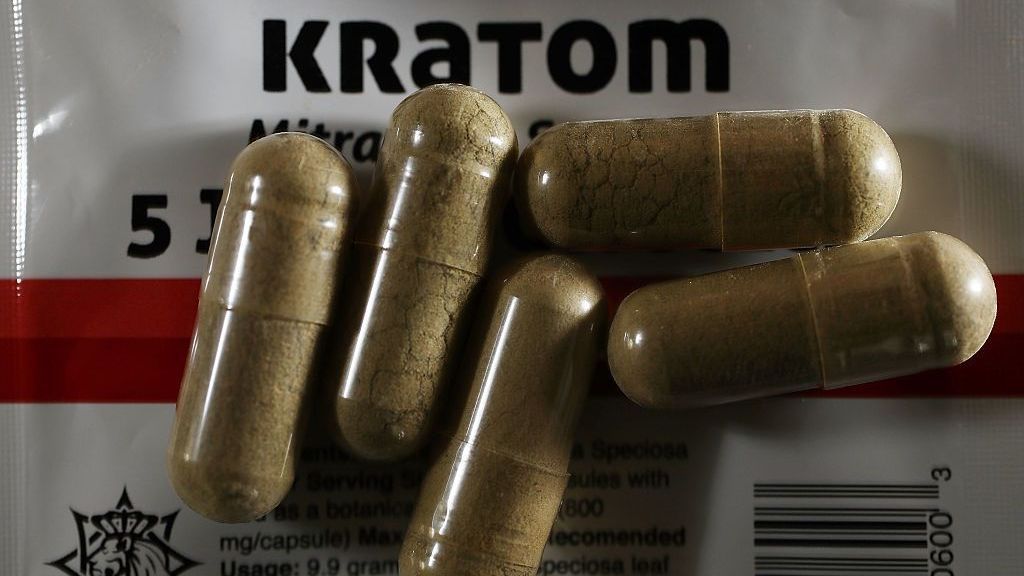
For millions of Americans living with unmanaged chronic pain, the herbal product kratom has emerged as a controversial, unregulated lifeline — but a recent incident involving two deceased college students has reignited long-simmering debates over its safety and legal status across the country.
Jeffrey Deaver, a 58-year-old retired timber cutter from Washington state, is one of many kratom users who swear by the plant’s pain-relieving effects. After years of severe, unrelenting hip and knee pain that failed to respond to conventional medical treatments, and while he waited for scheduled joint replacement surgeries, Deaver turned to kratom on a recommendation. Wary of its unknown effects at first, he began with small doses, gradually increasing his intake until his pain subsided. Describing the outcome as nothing short of a miracle, Deaver said the herb allowed him to sleep through the night and return to daily function, adding that he cannot imagine managing his condition without access to it.
Kratom, a tropical tree native to the rainforests of Southeast Asia including Thailand, Malaysia, and Indonesia, has a centuries-long history of traditional use as a natural stimulant, typically brewed as a tea for workers to combat fatigue. It was first introduced to the U.S. consumer market as a dietary supplement around 2016, and its popularity has skyrocketed over the past decade, with users purchasing over-the-counter kratom in pill, powder, or concentrated liquid form from convenience stores, gas stations, vape shops, and online retailers.
This week, new public warnings have been issued after investigators found packaged kratom in the possession of two deceased University of Mississippi students. While authorities have not linked the herb directly to the students’ deaths, the discovery has drawn renewed attention to the risks of unregulated kratom consumption. Unlike pharmaceutical drugs, kratom is not overseen by the U.S. Food and Drug Administration (FDA), and its legal status varies widely across the country, with 11 states having enacted full bans, including Massachusetts, which issued a temporary emergency ban just last month.
Medical experts warn that the unregulated nature of the U.S. kratom market poses the greatest threat to public health. Dr. Shane Speights, dean of the New York Institute of Technology College of Osteopathic Medicine at Arkansas State University, explained that unlike the low-concentration loose-leaf kratom used traditionally in Southeast Asia, most products sold in the U.S. are highly concentrated formulations. Because they are classified as dietary supplements rather than controlled substances, there is no federal oversight of ingredients, dosing, or manufacturing standards. “There’s no way to know exactly what you’re getting,” Speights said. “An unregulated producer could mix any compound into a product, market it as kratom, and no authority would check its contents before it reaches consumers.”
Kratom’s active chemical compounds, such as 7-Hydroxymitragynine, interact with the brain’s dopamine system to produce effects similar to narcotic opioids. At low doses, it acts as a stimulant, producing a caffeine-like energy boost, which has led some users to turn to it to wean off of harder opioids like fentanyl. At higher doses, it produces intense euphoria and a sense of being high, and can also trigger hallucinations. The most serious risk, Speights noted, is central nervous system depression at high doses, which can lead to cardiovascular collapse and respiratory failure — the primary cause of kratom-related deaths.
Addiction treatment specialists add that dependence and withdrawal are common side effects of regular kratom use. Jana Wu, director of clinical integration at Mountainside addiction treatment center, explained that users quickly develop a tolerance to kratom, requiring increasingly larger doses to achieve the same effect, leading some to consume up to 20 pills per day. “Kratom addiction destroys personal relationships and careers,” Wu said. “I’ve seen patients lose their jobs and spend thousands of dollars a month to support their habit.”
Efforts to enact a federal ban have stalled for years. In 2016, the U.S. Drug Enforcement Agency (DEA) moved to classify kratom as a Schedule 1 controlled substance, the same category as heroin and LSD, citing “an imminent hazard to public safety.” But the agency abandoned the plan months later after the Department of Justice received tens of thousands of public comments opposing the ban from chronic pain patients and advocacy groups.
Since the failed federal ban, regulatory action has been left to individual states. Recent efforts include a lawsuit filed by Arizona against a company selling kratom-infused beverages, and anti-kratom advocacy groups are pushing for more state-level bans, calling unregulated kratom a “gas-station drug that is poisoning American communities.” On the other side of the debate, pro-kratom groups such as the American Kratom Association support bans only on synthetic products mislabeled as natural kratom, rather than a full ban on the herb itself.
Internationally, regulatory frameworks also vary: kratom is fully illegal in the United Kingdom, legal status differs across European Union member states, and even in its native Malaysia, sale and consumption have been banned under the country’s 1952 Poisons Act. For users like Deaver, however, the debate over regulation leaves their access to pain management in limbo, highlighting the deep divide over how to balance individual access to alternative pain treatment with public health safety.