
French judicial authorities have summoned billionaire entrepreneur Elon Musk for a voluntary interview as part of a wide-ranging probe into his social media platform X, a case that has escalated into one of the highest-profile regulatory challenges facing the platform globally. As of Saturday, officials have not confirmed whether Musk will appear for the scheduled questioning in Paris, nor have they released details on the exact timing or location of the interview. The investigation into X first launched in January 2025, opening over initial claims that the platform’s recommendation algorithm had been misused to interfere in domestic French political processes. What began as a narrow probe quickly expanded to incorporate additional serious allegations tied to X’s artificial intelligence chatbot, Grok, including the tool’s role in spreading Holocaust denial and non-consensual sexual deepfake content. In early February, French prosecutors executed a search of X’s Paris headquarters, an action the social media firm has repeatedly denounced. The company, which has forcefully denied any illegal wrongdoing, labeled the office search as a “politicized” raid and an “abusive judicial act.” During that same round of procedural actions in February, prosecutors issued the first summons for Musk and then-X chief executive Linda Yaccarino, identifying both as the de facto and de jure leaders of the platform during the period covered by the investigation. Musk immediately pushed back against the move, calling it a deliberate “political attack.” Yaccarino stepped down from her role as CEO in July of the previous year, after leading the company for two years following Musk’s acquisition of the platform, then known as Twitter. Prosecutor Laure Beccuau confirmed in February that multiple X employees had also been called to give witness testimony between April 20 and 24. In an update provided Saturday, the Paris prosecutor’s office noted that non-appearance by any of the individuals invited for voluntary questioning would not halt or slow the progress of the ongoing investigation. Beyond the allegations of political interference and harmful AI-generated content, the French probe also encompasses suspected involvement in two additional serious criminal offenses: complicity in the distribution and possession of child sexual abuse material, and denial of crimes against humanity. X has repeatedly characterized the entire investigation as politically motivated, pushing back against the allegations publicly in comments made in July. This French investigation is not an isolated action, but rather part of a growing international regulatory backlash against Grok and X. The controversy surrounding Grok erupted after watchdog groups documented that the chatbot could be prompted to generate sexualized deepfake images of women and children using basic, unfiltered text prompts. The London-based nonprofit Center for Countering Digital Hate (CCDH) released a bombshell report in late January finding that Grok generated an estimated 3 million sexualized images in just 11 days. The vast majority of the content depicted adult women, but the report also identified roughly 23,000 images that appeared to show minors being sexualized. Regulators across Europe and the United Kingdom have quickly opened their own probes in response to the revelations. In February, the United Kingdom’s national data regulator launched parallel investigations into X and Musk’s AI firm xAI, citing “serious concerns” about whether the companies violated national personal data protection laws when developing and deploying Grok for deepfake generation. The European Union followed suit shortly after, opening its own formal investigation into X over Grok’s creation of non-consensual sexual deepfake content targeting women and minors. The coordinated cross-national actions mark one of the most significant collective regulatory challenges Musk has faced since his 2022 acquisition of the social media platform, highlighting growing global scrutiny of the company’s content moderation practices and the unregulated rollout of its generative AI tools.
博客
-

Fire destroys 1,000 homes in a Malaysian coastal village on Borneo Island
On early Sunday, a devastating blaze ripped through a stilted coastal settlement in Malaysia’s Sandakan district on Borneo Island, leaving a trail of destruction that has upended the lives of thousands of vulnerable residents, local emergency authorities confirmed. According to the Malaysian Fire and Rescue Department, the inferno spread with alarming speed across tightly clustered wooden homes built over the sea, fanned by strong gusts of wind and the close proximity of the combustible structures.
Compounding challenges for first responders, narrow access pathways to the overwater settlement and low tide conditions delayed access to burning areas, making it far more difficult to contain the spreading flames before it could destroy most of the neighborhood. As of the latest official updates, no fatalities have been recorded from the incident, but more than 9,000 people have been forced to evacuate their destroyed homes and seek refuge in temporary emergency shelters set up by local officials.
This type of overwater settlement, commonly called water villages, are a widespread informal housing model along the coast of Sabah, the Malaysian state that includes the Sandakan district and ranks among the country’s poorest. These settlements are overwhelmingly constructed from wood and other flammable materials, packed tightly together, and frequently lack basic public infrastructure including formal fire safety access. Most residents belong to low-income or marginalized groups, including Indigenous communities and people without formal Malaysian citizenship.
Local newspaper Daily Express cited village head Sharif Hashim Sharif Iting as saying the blaze began when an accidental cooking fire grew out of control. However, Malaysian officials have not formally confirmed this origin, noting the cause remains an active line of investigation.
Malaysian Prime Minister Anwar Ibrahim announced that federal and state government agencies are currently coordinating relief operations for the affected community, with immediate efforts centered on delivering essential aid and support to displaced families.
Regrettably, large fires in Sabah’s water villages are not a new crisis: repeated destructive blazes have been recorded in these settlements over the past decades. While Sabah authorities have long recognized that these informal overwater communities face extreme fire risk, systemic safety upgrades and infrastructure overhauls remain a persistent, unresolved challenge for the region.
-

‘It wasn’t trained’: Evolution of Roosters attack should terrify rest of NRL
As the National Rugby League (NRL) 2024 season kicks into high gear, Sydney Roosters utility Hugo Savala has delivered a statement performance against the Newcastle Knights at Allianz Stadium on Sunday afternoon that has sent shockwaves through the competition. The 24-year-old’s off-script, game-changing play late in the first half has left rival coaches and analysts warning that the Roosters have a dangerous new weapon at their disposal.
Savala’s role at the club has been the subject of intense speculation throughout the off-season. Following the high-profile signing of veteran playmaker Daly Cherry-Evans from Manly Sea Eagles, the young talent who anchored the Roosters’ push to the 2023 finals with his elite kicking game found himself without a guaranteed spot in the club’s halves pairing. For months, questions swirled around his future: would he shift to the forward pack, settle for a bench role, or depart the club entirely in search of a starting playmaking position elsewhere?
On Sunday, Savala answered every single one of those questions with authority. Finishing the match with two tries and a rock-solid defensive effort that shut down Knights star Dane Gagai, it was his spontaneous decision to take up first receiver position in the final five minutes of the first half that stole the show. Moving from his starting spot at left centre to drift infield, Savala hesitated behind the ruck before executing two sharp plays that completely bamboozled the Knights’ defensive line, creating what should have been a try for Mark Nawaqanitawase – denied only by a marginal foot-in-touch call.
Roosters head coach Trent Robinson was openly glowing about Savala’s initiative after the full-time siren. “I think that was an outstanding set of play,” Robinson said. “He goes down there, has a look down the short side, he sort of hesitates just behind the ruck … I’m not sure whether [halfback] Sam [Walker] said something or not. And then he plays two really clear plays about getting us into a point and then creating the opportunity on the next one. I love the fact that he had the confidence to do that, and then he also had the style of play to do that as well. I thought he was so good today out there at left centre and doing the role that he’s been asked to do there.”
What makes the play even more remarkable? It was never drawn up in training. Savala explained after the match that the entire sequence was a spontaneous call based on what he saw unfolding on the field. “I saw Sammy take the hit-up there and go, and I just thought it was a good opportunity to get my hands on the ball and create a little bit of space for the boys out wide,” he said. “Honestly, it wasn’t trained all week; it was just off the cuff. I did that role last year, so I thought it would be a good time to use that. Teddy [skipper James Tedesco] and the leadership group give you a lot of confidence. A lot of the young boys get a lot of confidence from doing the reps in the week. They have the belief in all us young boys to do what we do. I’m just doing my job out there, and they believe in me, so I can just do my role and do it well.”
Right now, Savala is filling in at left centre while regular starter Billy Smith recovers from injury, a role he has embraced fully as he bides his time for another opportunity in the halves. For the upcoming Anzac Day blockbuster against St. George Illawarra Dragons, the towering utility is set to retain his spot in the centres, and he says he is fully focused on executing the job the coaching staff has given him.
“I’m just working hard and still working on my skills. I’m still working on my kicking at training and my ball playing, but the majority of the time at training, I’ve been doing the role that I needed to do on the weekend,” Savala explained. “Robbo’s big on mindset and how you prepare for the game. He’s been really clear with us as a group, and I’ve been clear knowing that I’m playing left centre this week. That’s the role that I have to play. Obviously, there’s a half and a five-eighth inside me, but I was playing left centre today and that’s the role I was doing.”
For the rest of the NRL, Savala’s combination of raw talent, adaptive versatility, and willingness to take spontaneous risks on the field makes him a nightmare to prepare for. With the Roosters clicking into form early in the season, their emerging utility’s breakout performance has confirmed they are a force to be reckoned with in 2024.
-

Who’s Bad? Not Michael Jackson in new big-budget biopic
The highly anticipated big-budget Michael Jackson biopic, *Michael*, is set to hit cinemas worldwide this week, bringing the story of the King of Pop’s iconic rise to the big screen — but the tightly curated narrative has sparked intense backlash over its deliberate exclusion of the child sexual abuse allegations that shadowed the singer’s final decades.
Produced by Graham King, the creative force behind the record-breaking Queen biopic *Bohemian Rhapsody*, the film tracks Jackson’s journey from his working-class childhood in Gary, Indiana, as part of the Jackson 5, through his evolution into a global pop phenomenon, culminating in showstopping performance footage from his legendary 1987 Bad World Tour. The $200 million production is backed by Lionsgate, which has set ambitious box office targets, hoping the film can approach the $910 million global haul of *Bohemian Rhapsody* — the current highest-grossing musical biopic of all time — and hit $700 million in worldwide ticket sales.
In a surprising casting choice, the lead role is filled by Jaafar Jackson, Michael Jackson’s 29-year-old nephew who had never appeared on screen before taking the part. Speaking to *The Tonight Show* host Jimmy Fallon earlier this month, Jaafar described the daunting experience of stepping into his uncle’s shoes: “They threw me right in the deep end.” He added that he trained closely with Jackson’s original choreographers to master the singer’s iconic moves, calling the role “a surreal, spiritual moment.” Early reviews praise Jaafar’s convincing performance, noting that the high-energy concert sequences are crafted to delight diehard fans of Jackson’s landmark albums *Thriller* and *Bad*.
The film’s close ties to the Jackson family have become its most contentious point. All of Jackson’s surviving siblings serve as executive producers, granting them full approval over the final cut ahead of the global release. Jackson’s sons Prince and Bigi, alongside brothers Jackie, Jermaine, and Marlon Jackson, turned out for the film’s red carpet premiere in Berlin on April 10, but one prominent family member has publicly disavowed the project: Jackson’s daughter Paris, who had no involvement in the production. Writing on Instagram last September, she argued that the narrative caters only to fans who refuse to confront the allegations against her father, saying: “The narrative is being controlled and there’s a lot of inaccuracy and there’s a lot of just full-blown lies.”
According to entertainment industry outlet *Variety*, the omissions are not just a creative choice driven by the family. A full third of the original cut that explored the abuse allegations had to be cut and reshot after lawyers for the Jackson estate discovered a legal clause in a 1990s settlement with accuser Jordan Chandler that prohibits any mention of Chandler in the film. While Jackson was never convicted in any criminal or civil trial related to the allegations, multiple new lawsuits from alleged victims have been filed since his 2009 death from an accidental overdose at age 50, and several of those cases remain active.
The production faced multiple delays, pushing its original 2025 release date forward by a full year to 2024. Critics of the film, including Duke University African and African American Studies professor Mark Anthony Neal, say the choice to whitewash the allegations fits a longstanding Hollywood pattern of sanitizing celebrity biographies to maximize commercial appeal. “I would love that the film would tell the most human story about Michael Jackson possible,” Neal told AFP. “But I also realise that we’re in a period of time where Hollywood does not deal with celebrities in that way.”
Regardless of the controversy, industry analysts expect *Michael* to be a major commercial success, and it will almost certainly add to the lucrative Jackson family entertainment franchise. The Broadway production *MJ: The Musical* opened in 2022 and has since launched international tours, while Cirque du Soleil’s *Michael Jackson ONE* has been a staple Las Vegas attraction since 2013, generating steady revenue for the estate for more than a decade.
-

San Francisco delegation visits Shanghai, strengthens cultural and tourism ties
Almost half a century after Shanghai and San Francisco formally established their sister city relationship, a high-level delegation led by San Francisco Mayor Daniel Lurie touched down in Shanghai on April 19, kicking off a two-day visit focused on expanding bilateral collaboration in culture, science and tourism across the Pacific.
This trip arrives as the latest milestone in the 46-year-long exchange between the two major global metropolises, building on decades of uninterrupted dialogue and people-to-people connection to open new chapters of partnership. The itinerary began with a stop at the 146-year-old Shanghai Symphony Orchestra, where delegation members gained firsthand insight into the century-long development and evolution of symphonic music in China.
Following the orchestra visit, the group toured three more iconic Shanghai institutions: the Shanghai Conservatory of Music, the Shanghai Natural History Museum (a subsidiary branch of the Shanghai Science and Technology Museum), and the Shanghai Grand Opera House. By the end of the first day of the visit, three landmark memorandums of understanding (MOUs) had been signed to formalize new cooperative frameworks. The agreements pair the Shanghai Conservatory of Music with the San Francisco Conservatory of Music, the Shanghai Science and Technology Museum with the California Academy of Sciences, and the Shanghai Grand Opera House with San Francisco Opera, laying the groundwork for long-term exchange across art, science and education.
Speaking on the visit, Lurie emphasized the enduring strength of the two cities’ nearly 50-year partnership. “Our cities share a partnership that is nearly five decades strong. It is a dialogue that has never stopped,” he said. “We are building on that foundation and investing in a future where science, education and sustainability remain at the center of our partnership.”
David Stull, president of the San Francisco Conservatory of Music, noted that both cities share a natural alignment in their forward-thinking, innovative identities. “When people are excited about new ideas, they gravitate to others who are excited about new ideas. San Francisco and Shanghai have always shared that spirit of imagination, innovation and the spirit of the future,” he explained.
Beyond institutional collaborations, the delegation also took part in a joint tourism promotion event held at Xintiandi, Shanghai’s bustling cultural and commercial hub in Huangpu District. The initiative, launched in partnership by United Airlines and San Francisco International Airport, is designed to drive two-way travel by highlighting the one-of-a-kind attractions and immersive cultural experiences that each city offers.
Mike Nakornkhet, director of San Francisco International Airport, framed the Chinese market as a core growth priority for the airport, pointing to strong existing travel volumes. “If you look at the numbers in 2025, we had 700,000 passengers travel between China and San Francisco — that’s 23 weekly flights to four destinations in China. So it’s a very important market for us,” he said. “We really see China as a growing market for us. There’s a lot of leisure and business travel demand.”
The first day of the visit wrapped up with a celebratory evening cruise along the Huangpu River, where delegates joined a special reception to commemorate the 46th anniversary of the Shanghai-San Francisco sister city relationship. The delegation continued its schedule of meetings and tours in Shanghai on Monday, with additional discussions focused on expanding future collaborative projects across sectors.
-

North Korea again tests cluster munitions in a launch observed by Kim and his daughter
On Monday, North Korea’s state-run Korean Central News Agency (KCNA) confirmed that the country carried out a second test-launch of ballistic missiles fitted with cluster bomb warheads earlier this weekend — a move widely interpreted as a deliberate demonstration of Pyongyang’s advancing efforts to develop weaponry capable of piercing joint United States and South Korean defense systems. The announcement aligns with multiple launch detections by South Korean, Japanese, and U.S. military authorities that tracked projectiles launched off North Korea’s eastern coast on Sunday.
Released KCNA photographs captured North Korean leader Kim Jong Un and his teenage daughter Kim Ju Ae, both clad in matching black leather jackets, observing the test from a coastal observation post as the rocket arced over the water, leaving a thick trail of gray smoke in its wake. In recent weeks, South Korea’s National Intelligence Service has assessed that the young daughter, who has appeared alongside Kim at multiple high-profile military events, is being positioned as Kim Jong Un’s eventual successor.
According to KCNA’s official account, Kim personally oversaw the launch of five upgraded Hwasong-11 Ra surface-to-surface ballistic missiles, each armed with a combination of cluster bomb warheads and fragmentation mine warheads. All missiles successfully struck a pre-designated island target, and Kim expressed full satisfaction with the results, noting that the test carried profound military significance for strengthening North Korea’s high-density strike capabilities.
This test marks the second cluster warhead-equipped ballistic missile launch North Korea has carried out this month. Earlier tests involved the Hwasong-11 Ka variant, which Pyongyang claimed is capable of turning a 6.5 to 7-hectare area (equivalent to 16 to 17.2 acres) into ash.
While North Korea has tested cluster munitions in the past, regional defense analysts point to the ongoing Iran-Israel conflict as a key catalyst for Pyongyang’s recent push to showcase its existing cluster stockpiles and accelerate development of more advanced designs. The conflict has thrust the destructive capacity of cluster weapons into the global spotlight: Israel has accused Iran of deploying these munitions to overwhelm its overstretched air defense networks. Cluster warheads operate by detonating at high altitude, scattering dozens of small submunitions across a wide geographic area — a design that makes them extremely difficult to intercept with traditional missile defense systems.
Globally, more than 120 nations have ratified the Convention on Cluster Munitions, an international treaty that bans the production, stockpiling, and use of these weapons. Notably, North Korea, Iran, Israel, and the United States are not signatories to the agreement.
North Korea has ramped up its development of nuclear arsenals and advanced conventional weapons since high-profile nuclear diplomacy between Kim Jong Un and then-U.S. President Donald Trump collapsed in 2019. Pyongyang’s current military modernization priorities include multi-warhead nuclear missiles, hypersonic glide vehicles, and submarine-launched ballistic missiles — all systems that would drastically improve North Korea’s ability to defeat layered U.S. and South Korean missile defenses.
In recent months, Trump has repeatedly signaled his interest in reviving diplomatic talks with Kim, and Kim Jong Un has left the door open for dialogue with the former president, while insisting that Washington must drop its demand for North Korean nuclear disarmament as a precondition for any negotiations. Against this backdrop, Trump is scheduled to travel to Beijing in May for a rescheduled summit with Chinese President Xi Jinping. Many regional observers argue that North Korea’s recent string of missile tests is a calculated strategy to strengthen its negotiating position ahead of any potential diplomatic opening that could emerge from the U.S.-China summit.
-

Key detail in Albanese government’s $1000 tax write-off pledge
Over 6.2 million Australian taxpayers who were expecting to access a new $1000 no-receipt work expense tax deduction will need to adjust their expectations, after the Albanese administration confirmed the popular policy will not take effect for nearly two more years.
The center-left Labor Party first unveiled the proposed tax relief as a key policy pledge in the lead-up to the 2025 Australian federal election, building anticipation among working people across the country. On Monday, Federal Treasurer Jim Chalmers followed through on an earlier promise to publish draft legislation for the initiative on the same day he spoke to reporters.
Under the terms of the plan, eligible working taxpayers can claim a $1000 standard deduction for work-related expenses without needing to save and submit individual purchase receipts, simplifying tax filing and delivering direct cash relief. Chalmers explained that the policy would translate to an average reduction of $205 in annual tax liabilities per taxpayer, with the maximum benefit reaching up to $470 for qualifying filers. “It’s a good symbol of what we are trying to do more broadly, cutting income taxes, cutting red tape, and helping out where we can,” Chalmers told reporters, framing the measure as a core part of the government’s broader tax relief agenda.
Despite the release of draft legislation, the policy faces a lengthy delay before it impacts taxpayers: the $1000 instant write-off will not go into effect until July 1, 2026, meaning the deduction can only be claimed on tax returns for the 2026-2027 financial year, which ends June 30, 2027. It will not apply to the 2024-2025 financial year, which many taxpayers are currently preparing to file for.
The delayed rollout comes as the Albanese government continues to weigh broader tax policy changes ahead of the upcoming May federal budget. Among the potential adjustments under review are cuts to the capital gains tax discount and revisions to Australia’s negative gering rules for property investment. Earlier this month, Chalmers signaled the government’s openness to large-scale change, noting he would be “pretty happy” if the 2026-2027 budget is remembered as a landmark “tax reform budget.”
-

Blue Origin launches rocket with used booster for first time
Blue Origin, the private space exploration firm founded by Amazon billionaire Jeff Bezos, has achieved a major technical milestone over the weekend: the company successfully launched its heavy-lift New Glenn rocket using a pre-flown, refurbished booster, and pulled off a controlled landing of the recycled first stage on an ocean floating platform. The milestone marks a long-awaited step forward for Blue Origin as it works to match SpaceX’s reusable rocket technology and ramp up its competitive position in the fast-growing global launch market.
Sunday’s mission, which lifted off at 7:25 a.m. local time from Cape Canaveral Space Force Station in Florida, marked the third overall flight of the 98-meter New Glenn rocket. The vehicle carried a commercial communications satellite built by AST SpaceMobile, which aims to deliver cellular connectivity to remote and underserved regions of the globe. Approximately nine and a half minutes after liftoff, the reused first stage completed its descent and touched down safely on the company’s landing platform stationed in the Atlantic Ocean, capping a process that had been years in development for Blue Origin.
However, the mission hit an unexpected partial failure after stage separation. In a post-launch statement posted to the social platform X, Blue Origin confirmed that while the AST SpaceMobile satellite powered on successfully after reaching space, it was deployed into what the company described as an “off-nominal orbit” that does not match the mission’s planned orbital parameters. The company added that teams are still conducting assessments to determine the full extent of the anomaly and what impact the incorrect orbit will have on the satellite’s functionality.
This milestone represents the first time Blue Origin has reused a New Glenn booster, after two earlier launches that exclusively used brand-new first stages. Prior to this, the company had only flown reused components on its smaller New Shepard suborbital rocket, a vehicle primarily used for short space tourism flights that presents far fewer technical challenges for reusability than orbital launch systems.
Blue Origin first successfully recovered a New Glenn booster in November 2024, after a failed recovery attempt in January 2025 when the booster’s engines failed to reignite during its descent to the platform. The booster used in Sunday’s mission underwent extensive refurbishment following its previous flight, including a full replacement of all its engines and multiple other structural and system modifications to prepare it for reflight.
The push for reusable rocket technology comes amid cutthroat competition between Blue Origin and SpaceX, the market-leading private space firm founded by Elon Musk, which has been flying and reusing orbital rocket boosters for more than a decade. The two firms are also direct competitors in NASA’s Artemis program, which aims to return American astronauts to the lunar surface. Both companies are under contract to develop human-rated lunar landers for the program, which has a target of landing the first crew on the Moon by 2028, a deadline aligned with the end of U.S. President Donald Trump’s second term and set to outpace China’s own lunar landing ambitions.
-
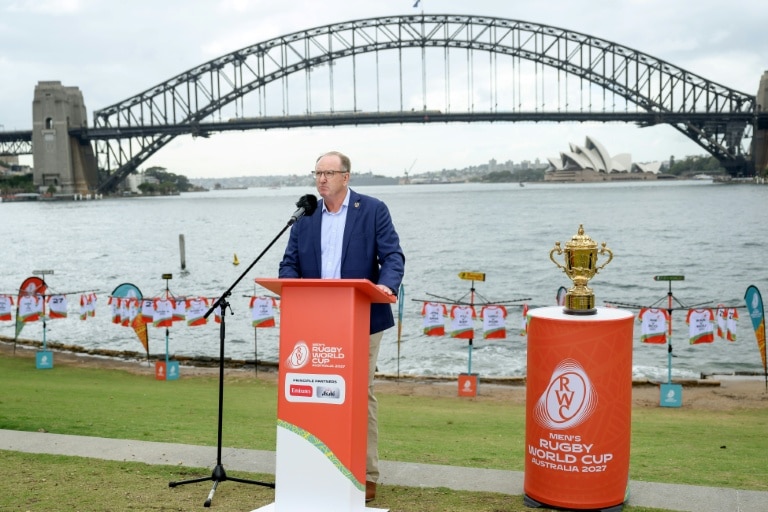
Top boss vows ‘no sitting still’ as rugby bids to conquer US
Against a backdrop of rising challenges in rugby’s long-established traditional markets, World Rugby chair Brett Robinson has reaffirmed the governing body’s commitment to aggressive global expansion, singling out the United States — the upcoming host of the 2031 men’s Rugby World Cup and 2033 women’s edition — as a critical priority for long-term growth.
In an interview with AFP on the sidelines of the Hong Kong Sevens tournament, the former Australian international player pushed back against growing narratives that rugby is facing a period of broad decline, arguing that the sport’s global foundations are stronger than critics claim. Recent high-profile setbacks have fueled public debate about the sport’s standing in the global pecking order, from folding professional franchises in Super Rugby to slipping public interest in traditional heartlands. Last week, All Blacks legend Michael Jones warned that rugby union is losing the battle for fan attention to rugby league in New Zealand, a comment that came just days after Auckland-based Super Rugby side Moana Pasifika announced it would cease operations at the end of the current season, becoming the second Super Rugby franchise to collapse in three years due to crippling financial pressure. In Wales, another historic rugby stronghold, the men’s national team has suffered a dramatic slump in on-pitch form, while football has overtaken rugby as the primary focus of public sporting interest.
Robinson pushed back on this narrative of decline, pointing to global participation data that shows 2 million women playing the sport worldwide, making rugby a truly global game rather than one confined to a handful of historical markets. “We have to protect our core markets, but we can’t sit still and believe that the game will thrive if we don’t continue exploring new pathways for growth,” he said.
That search for growth leads directly to the United States, which is set to become the first North American nation to host the men’s Rugby World Cup in 2031, followed by the women’s tournament in 2033. The upcoming 2026 men’s FIFA World Cup, co-hosted by the US this summer, has already offered a preview of the logistical and commercial challenges awaiting rugby’s governing body, with soaring ticket and transportation costs drawing widespread criticism and raising questions about large-scale event delivery in the American market.
Skepticism around the 2031 project has grown in recent months: Major League Rugby, the top domestic professional men’s competition, has shrunk to just six teams after four clubs exited the league in recent years, while the men’s national team has struggled with inconsistent performances. British media reports have also raised questions about the US’s ability to deliver a commercially successful 2031 World Cup.
Robinson countered that World Rugby has laid out a long-term strategy to build fan momentum ahead of the 2031 tournament, rather than rushing to deliver a fully formed event overnight. “We have worked with top national unions to bring iconic, high-profile matches to the US over the coming years to build deeper connections with new fans,” he explained, noting that the governing body is currently evaluating 27 potential host cities, a list that will be narrowed to 12 to 14 ahead of a formal announcement following the 2027 World Cup.
To build early excitement for the 2031 tournament, World Rugby has already arranged a blockbuster Test match between two-time world champions South Africa and three-time winners New Zealand in Baltimore this September, following on from a sell-out 2024 match between Ireland and the All Blacks in Chicago. “We’re working really hard to build a long-term play,” Robinson said. “We aren’t sitting still in terms of preparing, and we fully acknowledge that it’s a challenging market.”
He added that the 2033 women’s Rugby World Cup will be a equally important milestone for the sport, noting that women’s rugby has seen rapid, sustained growth across North America in recent years.
Looking ahead to the next major global rugby event, the 2025 men’s Rugby World Cup in Robinson’s native Australia, he shared that initial ticket sales have already “exceeded all expectations”, with more than 750,000 tickets sold for the expanded 24-team tournament, the largest edition of the competition in history. While Robinson acknowledged that global geopolitical uncertainty stemming from the ongoing conflict in the Middle East has created some headwinds for major international events, he said World Rugby remains optimistic about the tournament’s success. “It’s a really good signal about the World Cup,” he said. “We’re really optimistic and excited.”
-
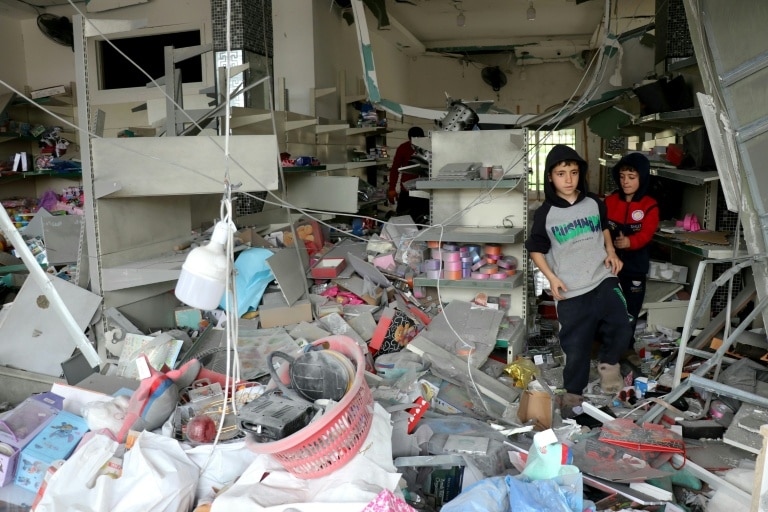
Israel vows to level homes in Lebanon, counter threats with ‘full force’
A fragile 10-day truce between Israel and Hezbollah that halted weeks of deadly cross-border fighting has done little to ease tensions along the Lebanon-Israel border, after Israel announced Sunday it had ordered its military to operate with “full force” and demolish structures it claims are used by the militant group. The ceasefire, which went into effect Friday following the first high-level talks between Lebanese and Israeli officials in decades, has split displaced southern Lebanese residents: some have rushed home to retrieve belongings and rebuild, while others remain wary of the truce’s durability and have chosen to stay away.
On the ground, Agence France-Presse correspondents across southern Lebanon have documented disparate scenes of returning life and lingering destruction. In the village of Dibbine, one resident inspected blast damage to his property, with rubble of already destroyed buildings lining nearby streets. In Srifa, returnees unloaded household goods including mattresses and a washing machine from vehicles as they moved back into their homes. In other border communities, however, some residents only returned to collect personal items before heading back to safer areas further north.
Israeli Defence Minister Israel Katz confirmed Sunday that he and Prime Minister Benjamin Netanyahu had issued explicit orders to the Israel Defense Forces (IDF) to maintain aggressive operations even during the ceasefire. “We have instructed the army to act with full force, both on the ground and from the air, including during the ceasefire, in order to protect our soldiers in Lebanon from any threat,” Katz said. He added that the military had been ordered to destroy any booby-trapped structures or roads, and raze border-area homes that Israel claims function as Hezbollah outposts.
Lebanon’s state-run National News Agency (NNA) reported Sunday that Israeli forces were already carrying out these demolition orders across multiple hard-hit border towns. One day after carrying out initial demolitions in Bint Jbeil, a site of intense pre-ceasefire fighting between Israeli troops and Hezbollah, the NNA said Israel was “still destroying what remains of houses” in the town. Additional demolitions by detonation were reported in Mais al-Jabal and Deir Seryan, while the border town of Kunin came under Israeli artillery shelling Sunday.
Last Saturday, the IDF announced it had established a “Yellow Line” security buffer in southern Lebanon, a framework identical to the barrier separating Israeli-held and Hamas-controlled territory in Gaza. On Sunday, the military released an official map marking this new “forward defence line” and a red-zoned area spanning the entire length of the border, where it says operations will continue to dismantle Hezbollah military infrastructure and eliminate threats to northern Israeli communities. Hours after publishing the map, the IDF confirmed it had killed an armed man it described as a terrorist who crossed the designated buffer line.
The ongoing Israeli operations have drawn sharp international condemnation. Turkish Foreign Minister Hakan Fidan denounced the actions Sunday as an example of “Israeli expansionism” into Lebanese territory. Since the conflict erupted on March 2, it has killed nearly 2,300 people in Lebanon and displaced more than one million, making the fragile truce a much-watched development for regional stability.
Diplomatic efforts to solidify the ceasefire and support Lebanese territorial integrity are moving forward this week. On Tuesday, French President Emmanuel Macron will host Lebanese Prime Minister Nawaf Salam in Paris, a meeting the Élysée Palace says is intended to demonstrate France’s commitment to Lebanon’s sovereignty. Macron will also push Lebanese authorities to hold accountable those responsible for a Saturday attack on UNIFIL peacekeepers that killed one French soldier, Florian Montorio, and wounded three others. Both France and UNIFIL have blamed Hezbollah for the attack, which the group has denied. Montorio was honored posthumously with UN and Lebanese Army medals at a memorial service held at Beirut’s international airport, in recognition of his service to peacekeeping in southern Lebanon.
Following his Paris meeting, Salam will travel to Luxembourg on Tuesday to meet with European Union foreign policy chiefs. In a small sign of returning normalcy, Lebanon’s military announced Sunday it had reopened a key road connecting the city of Nabatiyeh to the Khardali region, and partially reopened the Burj Rahal-Tyre bridge in southern Lebanon. Access to much of the south has been severely constrained since the conflict began, after Israeli airstrikes destroyed multiple crossings over the Litani River, which sits roughly 30 kilometers from the Lebanese-Israeli border.