博客

  • Nigerian wins global prize for trying to save bats in a country that shuns them

    Nigerian wins global prize for trying to save bats in a country that shuns them

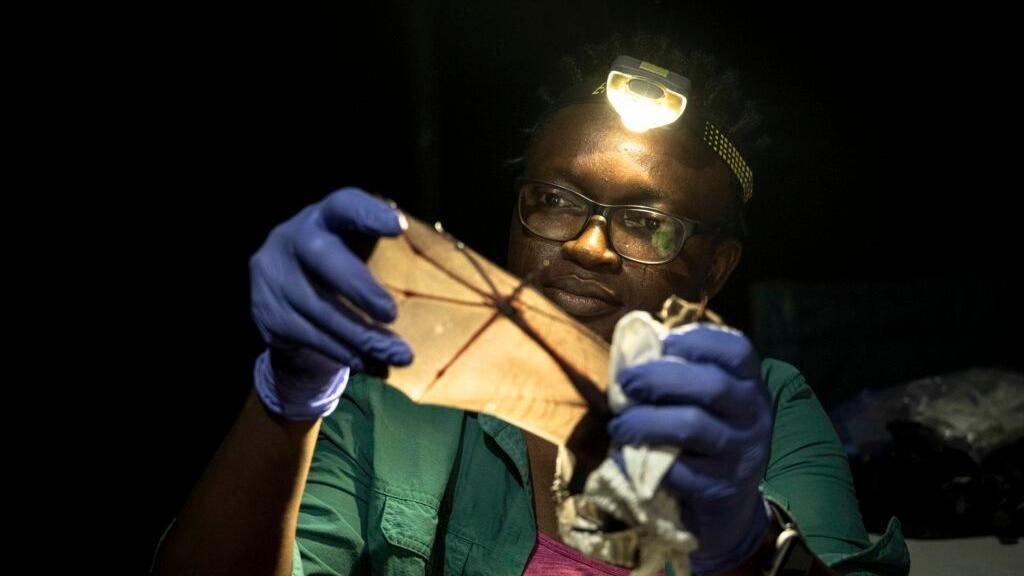
    In a historic milestone for both African conservation and gender representation in environmental leadership, Nigerian ecologist Iroro Tanshi has been awarded the 2026 Goldman Environmental Prize — one of the world’s most prestigious honors for grassroots environmental advocates — for her groundbreaking work protecting endangered bats and curbing destructive human-caused wildfires in southern Nigeria. This year’s award marks the first time in the prize’s 37-year history that all six recipients are women, a shift that underscores the growing impact of female-led conservation across the globe.

    Tanshi’s journey to the prize began with a moment of excitement quickly overshadowed by crisis: just days after she and her team rediscovered the elusive short-tailed roundleaf bat in Afi Mountain Wildlife Sanctuary, a protected 24,700-acre reserve in southeastern Nigeria, a large wildfire tore through the species’ only known habitat. The rediscovery, which marked the first confirmed sighting of the bat in nearly 50 years, was set to be a landmark moment for bat biology, but the uncontrolled blaze threatened to wipe the species out before it could be formally protected.

    “Seeing that bat for the first time after half a century should have been huge, headline-making news,” Tanshi shared in an interview with the BBC’s *Focus on Africa* podcast. “But we immediately faced a serious, urgent problem: the wildfire that was swallowing their home.”

    In Nigeria, widespread cultural stigma has long framed bats as connected to witchcraft, making public support for their protection an uphill battle. Rather than pushing conservation as a distant, disconnected goal, Tanshi centered her campaign on a shared community priority: addressing the damage that unregulated wildfires cause to both local farms and forest ecosystems. This community-centered approach won broad buy-in, turning local residents into core partners in bat and habitat protection.

    Tanshi, currently a postdoctoral researcher specializing in chiropterology (bat research) at the University of Washington in the United States, identified human-caused wildfires — most often set by farmers clearing land for cultivation — as the single greatest threat to the endangered short-tailed roundleaf bat. The 2021 fire that pushed her to launch her campaign burned uncontrolled for three straight weeks, only extinguished by seasonal rainfall. “We couldn’t put it out; all we could do was watch it burn day after day,” she recalled.

    Under Tanshi’s leadership, local community fire brigades were trained and organized to monitor, prevent, and respond to wildfires across the sanctuary and its surrounding areas. According to Goldman Environmental Prize organizers, the initiative has successfully prevented all major wildfire outbreaks in the region between 2022 and May 2025, a major win for both wildlife and local agricultural livelihoods that suffer from unregulated fire spread.

    Beyond fire management, Tanshi’s work has prioritized shifting harmful cultural perceptions of bats through sustained community outreach. She and her team use multiple accessible media platforms to educate local residents — with a particular focus on schoolchildren — on the critical ecological roles bats play, from seed dispersal to plant pollination. Highlighting tangible local benefits, Tanshi often notes that the shea trees that produce the globally traded shea butter, used in food and cosmetics worldwide, rely on bats to disperse their seeds.

    “We don’t avoid the hard conversations about the myths people believe,” Tanshi explained. “Instead, we show people that bats are integral to the ecosystems and the resources they depend on every day. Once you see how many critical roles they play, it’s impossible to ignore how important they are to protect.”

    Reflecting on receiving the award, Tanshi called the honor “incredible”, saying it serves as a powerful confirmation that local, community-led conservation work has global impact. “There are very few things in this world that signal to you that the work you’re doing has global relevance than an honor like this,” she said.

    The 2026 all-women cohort of Goldman Environmental Prize winners highlights the outsized, often underrecognized contribution of women environmental leaders working at the grassroots to protect vulnerable ecosystems and endangered species across the world.
  • Google denies involvement in $125 million Chromebook graft case in Indonesia

    Google denies involvement in $125 million Chromebook graft case in Indonesia

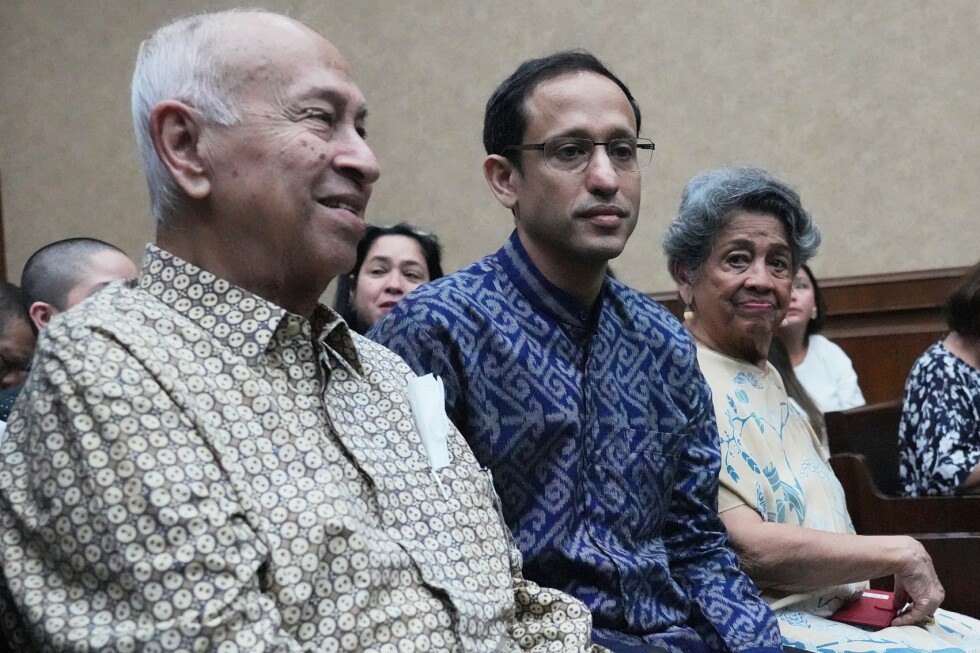
    JAKARTA, Indonesia – In a high-profile corruption trial unfolding at Jakarta’s Corruption Court, three former Google executives have formally rejected claims that the tech giant was complicit in a massive Chromebook procurement scheme at Indonesia’s Ministry of Education that prosecutors allege cost the state $125 million in losses.

    The case centers on Nadiem Anwar Makarim, the 41-year-old co-founder of Indonesian super app Gojek and Indonesia’s former education minister, who was taken into custody in September following a months-long investigation into alleged graft tied to the 1.2 million-laptop procurement. Prosecutors accuse Makarim, who led the education ministry from 2019 until 2024, of abusing his executive authority to skew the 2020–2021 national procurement contract entirely toward Google’s Chromebook devices, despite internal ministry research findings that the devices would be ineffective for many rural regions of the country that lack consistent broadband internet access.

    The three former Google leaders – Scott Beaumont, who served as Google Asia Pacific president between 2014 and 2019; Caesar Sengupta, a former general manager and vice president at the company from 2018 to 2021; and ex-executive William Florence – testified remotely via Zoom on Monday. All three pushed back on prosecution claims that Google structured a $787 million investment into Gojek’s parent company PT Aplikasi Karya Anak Bangsa (PT AKAB) as a quid pro quo for the lucrative procurement contract.

    “There was no connection at all between Google’s investment in GoTo and any of the conversations with the Ministry of Education,” Beaumont told the three-judge panel hearing the case. Sengupta echoed this denial, rejecting all allegations of coordinated corruption tied to the deal.

    Lead prosecutor Muhammad Fadli Paramajeng has alleged the bulk procurement of Chromebooks was intentionally designed to cement Google’s market dominance in Indonesia’s fast-growing educational technology sector, with the $787 million Google investment into PT AKAB serving as the payout for Makarim’s favor. Prosecutors further claim that Makarim received roughly $48.2 million (809 billion rupiah) in personal benefits tied directly to the contract.

    Google has pushed back on the claims in previous statements, noting that Chromebooks are specifically engineered to meet classroom needs, including in low-connectivity regions. While the devices are optimized for cloud-based functionality, the company confirms they are fully functional offline when internet access is unavailable. Google also emphasized that it only licenses software for Chromebooks and does not control the pricing of devices sold by third-party manufacturers.

    Makarim, a Harvard graduate who co-founded Gojek in 2009, stepped down from the company in 2019 when it was valued at more than $10 billion to join former Indonesian President Joko Widodo’s cabinet. Gojek merged with Indonesia’s largest e-commerce platform Tokopedia in 2021 to form the GoTo Group, the entity referenced by Beaumont during his testimony.

    Prosecutors argue that Makarim’s exit from PT AKAB and Gojek was a deliberate “strategic concealment” to hide his ongoing conflict of interest. They claim he retained indirect control over the company by appointing close personal associates to key director roles as beneficial owners, allowing him to still benefit from the Google investment.

    Makarim has consistently denied all wrongdoing, asserting he never received any personal funds from the procurement deal or associated services. His defense team argues that he fully divested his stake in PT AKAB when he took public office, that his personal net worth dropped by more than 50% during his tenure as minister, and that all procurement decisions were made by technical ministry teams and career officials, not by the minister himself.

    If convicted, Makarim faces a potential sentence of life imprisonment. A verdict is expected as early as this month. Two former Education Ministry officials and one ex-technology consultant have also been charged in connection with the scheme, while a fourth accused individual remains at large.

  • Pope Leo blasts ‘exploitation’ on visit to resource-rich Angola

    Pope Leo blasts ‘exploitation’ on visit to resource-rich Angola

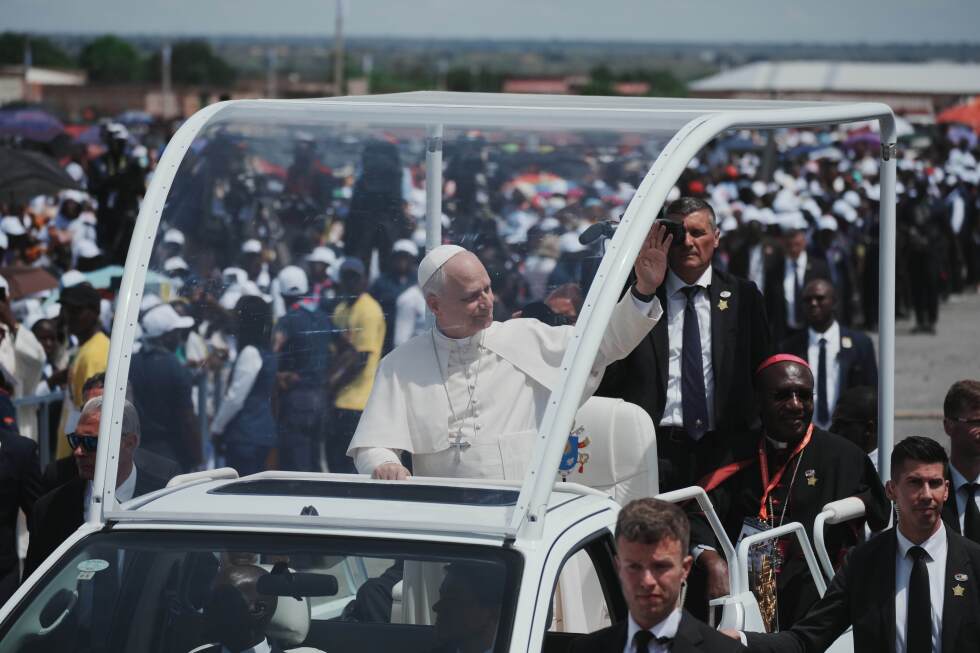
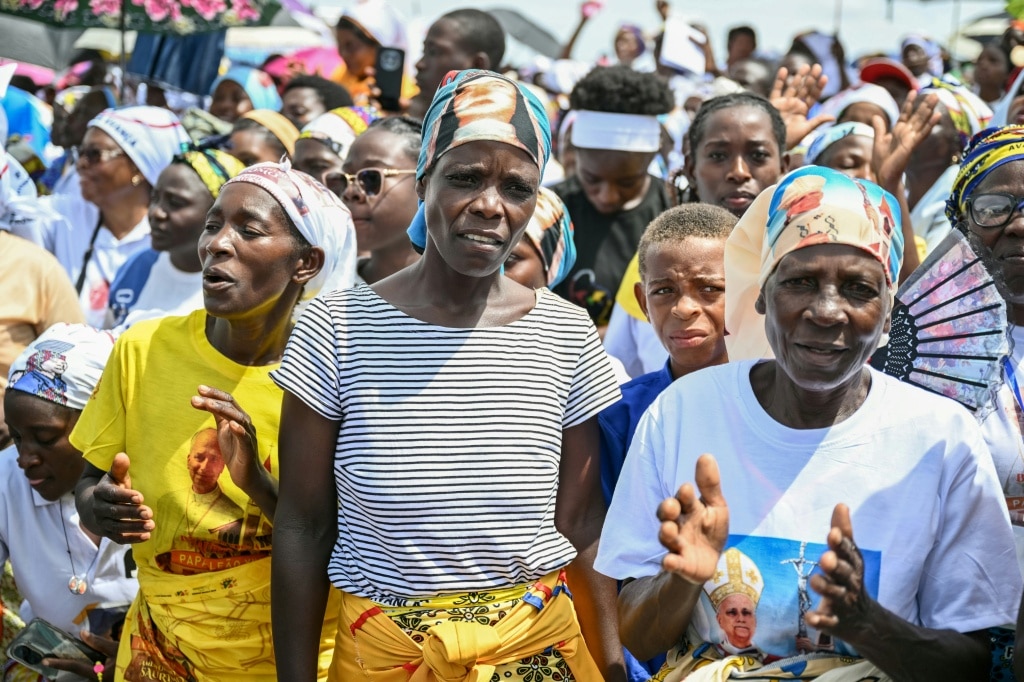
    On the eighth day of his ambitious 11-day tour across four African nations, Pope Leo XIV brought his message of economic justice to Angola’s remote, diamond-abundant northeastern region, doubling down on a core theme that has defined his trip: calling out systemic exploitation and corruption by wealthy, powerful actors.\n\nArriving in Saurimo, the capital of historically marginalized Lunda Sul province located 800 kilometers east of Angola’s capital Luanda, the pontiff processed through the city of 200,000 residents under sweltering tropical heat, flanked by heavy security details. Lining his route were hundreds of local residents, clad in vibrant traditional clothing and waving white scarves, who greeted the first American pope with rousing songs and enthusiastic cheers.\n\nSaurimo sits just a short distance from Catoca, Angola’s largest diamond mine, which accounts for roughly 75 percent of the nation’s total diamond output. Despite being one of Africa’s leading producers of both crude oil and diamonds, Angola faces stark socioeconomic inequality: approximately one-third of its population lives below the World Bank’s poverty line. Lunda Sul, which shares a border with the Democratic Republic of the Congo, exemplifies this gap: even with its extensive mineral wealth, the province grapples with extreme poverty, while unregulated mining has been linked to widespread environmental degradation and the forced displacement of local communities.\n\nSpeaking to a crowd of an estimated 60,000 people — 40,000 gathered on-site for the giant open-air Mass, and another 20,000 joining from surrounding neighborhoods — Pope Leo delivered his remarks in Portuguese, the country’s official language. “We can see today how the hope of many people is frustrated by violence, exploited by the powerful and defrauded by the rich,” he told the assembly. “Consequently, when injustice corrupts hearts, the bread of all becomes the possession of a few.”\n\nBefore celebrating Mass, the pontiff paid a visit to a local care home that houses 60 elderly residents, many of whom were abandoned by their families or left displaced by regional violence. “Your presence in this home is a blessing from God,” 72-year-old resident Antonio Joaquin told him during the welcome.\n\nThis stop in Angola marked the third leg of Pope Leo’s African journey, following earlier visits to Algeria and Cameroon. Across both previous stops, the pontiff has already spoken out against tyranny and systemic exploitation, marking a sharper, more assertive tone than the more reserved approach many observers expected from him early in his papacy. He first addressed the harms of resource extraction on the African continent shortly after arriving in Angola Saturday, speaking directly to top government officials including President Joao Lourenco. “How much suffering, how many deaths, how many social and environmental disasters are caused by this logic of exploitation,” he said during that address.\n\nOn Sunday, the pope led a Mass in Luanda attended by more than 100,000 worshippers, where he urged Angola to move past the deep divisions left by its 27-year civil war, which broke out immediately after the country gained independence from Portugal in 1975 and left the nation deeply scarred. He called on Angolans to build a new future “where the scourge of corruption will be healed by a new culture of justice and sharing.” According to 2024 census data, Catholics make up roughly 44 percent of Angola’s population of 34 million, equal to around 15 million adherents. Pope Leo is only the third sitting pope to visit the country, following Pope John Paul II in 1992 and Pope Benedict XVI in 2009.\n\nBack in Luanda later Monday, the pontiff was scheduled to meet with local clergy to discuss pressing challenges facing the Catholic Church in Angola, including limited institutional resources and the growing popularity of evangelical Protestant denominations across the country. He is set to depart for Equatorial Guinea on Tuesday to wrap up his 18,000-kilometer transcontinental journey.

  • Japan on high alert for ‘huge’ second quake after issuing tsunami warning

    Japan on high alert for ‘huge’ second quake after issuing tsunami warning

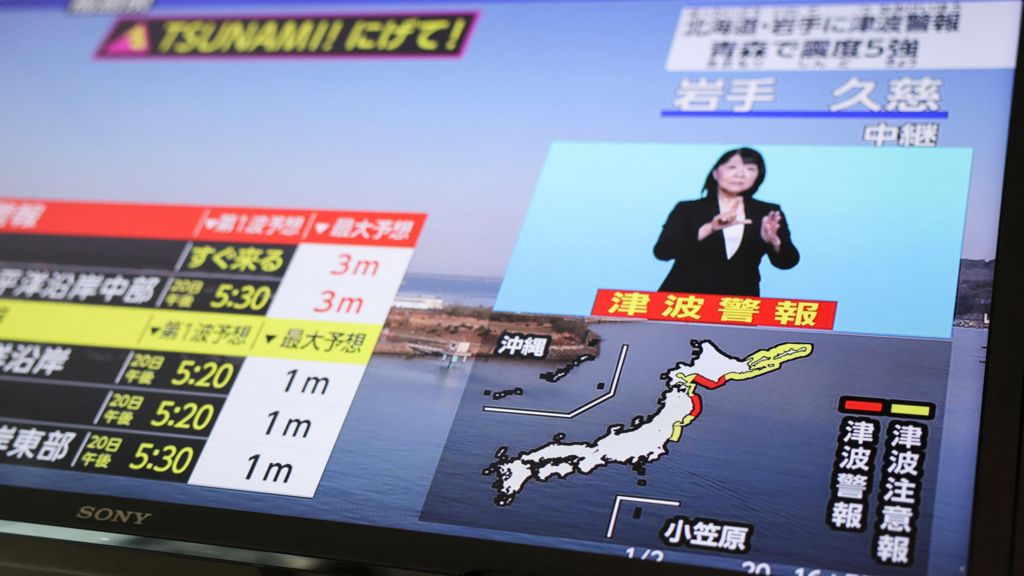
    A powerful 7.7-magnitude undersea earthquake has shaken waters off Japan’s northeastern coast, prompting immediate evacuation orders and triggering warnings of potential 3-meter tsunami waves that have put the nation on high alert for aftershocks and major seismic activity in the coming week.

    The temblor, registered at a depth of 10 kilometers, struck at 16:52 local time (08:52 BST) approximately 530 kilometers north of Tokyo off the coast of Iwate Prefecture. Shaking from the quake was felt as far south as the capital, prompting thousands of coastal residents across Honshu’s northeast and Hokkaido to immediately move to higher ground in line with official emergency protocols.

    While initial monitoring showed the largest tsunami waves reached only 80 centimeters — far below the projected maximum — Japan’s Meteorological Agency (JMA) quickly issued an unprecedented warning: the risk of a catastrophic magnitude 8.0 or larger earthquake occurring within the next seven days remains “relatively higher than during normal periods.” Officials added that future quakes could generate far more destructive shaking and larger, more dangerous tsunami surges.

    The 7.7 magnitude quake triggered a level two tsunami warning, the second-highest tier in Japan’s three-tier alert system, which was later downgraded to a lower-level advisory. Two hours after the quake, active tsunami alerts remained in place across parts of Hokkaido. Local authorities used street loudspeakers to circulate emergency updates, urging residents to stay vigilant, and many employers allowed office workers to dismiss early to allow staff to reach safe locations.

    Chaw Su Thwe, a Myanmar national residing in Hokkaido, told reporters that the community moved swiftly once the earthquake alert was issued. “As soon as we heard the earthquake alert, everyone ran downstairs,” she said. “However, this time the shaking was relatively mild. Right now, local authorities are using loudspeakers in the neighbourhood to warn people about a possible tsunami and to stay alert.”

    As of Monday evening, Japanese government officials confirmed there were no immediate reports of fatalities, major structural damage, or severe injuries. A total of 100 residential properties were left without power, and multiple high-speed bullet train services were temporarily suspended to conduct infrastructure safety inspections.

    Prime Minister Sanae Takaichi echoed the JMA’s emergency guidance, urging at-risk residents to prioritize safety and move to elevated, secure locations immediately. “Tsunami waves are expected to hit repeatedly. Do not leave safe ground until the warning is lifted,” the JMA emphasized in its official post-quake briefing.

    Japan’s location along the Pacific Ring of Fire leaves it uniquely vulnerable to seismic activity: the nation records roughly 1,500 earthquakes annually, and accounts for 10 percent of all global magnitude 6.0 or larger tremors. The new earthquake and warning come amid lingering national trauma from the 2011 Great East Japan Earthquake, a 9.0-magnitude undersea quake that struck south of Iwate Prefecture, triggering a massive tsunami that killed more than 18,000 people and caused a catastrophic nuclear meltdown at the Fukushima Daiichi Nuclear Power Plant — one of the worst nuclear disasters in recorded history. Since 2011, Japan has overhauled its emergency early warning and evacuation protocols to reduce casualties from future seismic and tsunami events.

  • Here’s what to know about Timmy, the humpback whale that’s sick and stranded in the Baltic Sea

    Here’s what to know about Timmy, the humpback whale that’s sick and stranded in the Baltic Sea

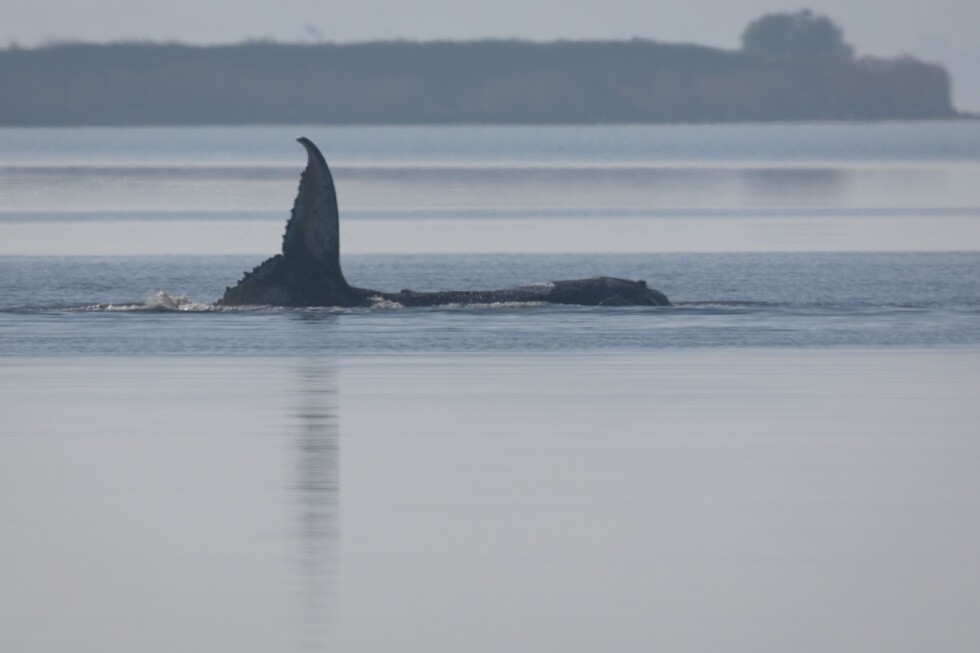
    BERLIN – A global audience has watched the likely final days of a lost humpback whale, nicknamed Timmy by local media, via continuous livestream after repeated attempts to guide it back to open ocean have failed, leaving the disoriented marine mammal growing increasingly frail and ill in the shallow Baltic Sea off Germany’s northern coast.

    The endangered animal, which naturally inhabits the nutrient-rich waters of the Atlantic Ocean, was first spotted wandering the Baltic on March 3. To date, researchers have not reached a consensus on what drove the 12 to 15-meter, 12-metric ton whale hundreds of kilometers off its intended migration path. The most common working theory among marine specialists is that Timmy lost its bearings while chasing a school of herring or veered off course during its annual seasonal migration.

    Since its initial sighting near the eastern German town of Wismar, Timmy has repeatedly become stuck in shallow coastal waters, showing clear signs of severe distress. For days, the giant mammal has barely moved, breathing in irregular patterns that have alarmed observers. The Baltic Sea’s far lower salt concentration compared to the whale’s natural Atlantic habitat has also caused a painful, progressive skin condition, which rescue teams have attempted to treat by applying multiple kilograms of medicinal zinc ointment. Compounding its dangerous disorientation, every time Timmy does move, it consistently swims further inland, farther from the open North Sea passage that would lead it home.

    Timmy’s plight has gripped the German public, sparking round-the-clock media coverage and fierce public debate over how to respond to the stranded whale. Local news outlets have streamed footage of the animal 24/7 to meet overwhelming public demand, while major national online publications send push notifications for even the smallest updates on Timmy’s changing condition. Environmental activists have organized peaceful protests on Wismar’s beaches calling for urgent action to save the mammal, and social media influencers have clashed over whether continued interventions do more harm than good, with some arguing the whale should be allowed to die peacefully in its current location rather than endure further stress from rescue attempts.

    Public curiosity grew so intense that local law enforcement was forced to establish a 500-meter exclusion zone around the whale’s location to prevent overcrowding that would add to the animal’s stress. Even with this restriction in place, a 67-year-old woman made headlines over the weekend when she jumped from a private boat in an attempt to get closer to Timmy before authorities intercepted her.

    Early rescue attempts, which mobilized police boats, inflatable craft and even heavy excavators, managed to temporarily refloat the whale after it became stranded on sandbars. But each time, the disoriented mammal failed to find the route to the North Sea and eventually returned to shallow coastal waters off Wismar.

    Rescue teams later developed a complex, large-scale intervention plan: inflatable air cushions would lift the whale onto a reinforced tarp, which would then be secured to two large pontoons and towed out to open ocean by a tugboat. German state officials approved the privately funded initiative, but the plan was thrown off schedule when the whale began moving again as high tide rose on Monday. Vessels were immediately deployed to guide Timmy toward the exit route, but many involved in the operation have already abandoned all hope of a successful rescue.

    Opinions among marine experts remain deeply divided over the ethics and effectiveness of continued intervention. Thilo Maack, a marine biologist with the environmental organization Greenpeace, told the Associated Press that repeated attempts to move and guide the whale are only causing it additional, severe stress that accelerates its decline. “I believe the whale will die very soon now. And I would also like to raise the question: What is actually so bad about that?” Maack said. “Yes, animals live, animals die. This animal is really, really very, very, very sick. And it has decided to seek rest.”

  • Did Pope Leo find his voice in Africa? Or did America and the world finally hear him

    Did Pope Leo find his voice in Africa? Or did America and the world finally hear him

    LUANDA, Angola — During his landmark multi-nation tour across Africa, Pope Leo XIV has emerged with a forceful rebuke of long-standing oppression holding the continent back, but his blunt words have ignited a transatlantic firestorm tied to the ongoing U.S.-Israeli war in Iran and escalating tensions with the Trump administration.

    The pontiff, a reserved Midwestern Augustinian, drew global attention for denouncing the “handful of tyrants” and “chains of corruption” that have kept African nations trapped in instability for centuries. While many observers framed this address as a direct rebuke of former President Donald Trump and Vice President JD Vance’s inflammatory rhetoric around the Iran conflict – particularly after Trump’s unprecedented social media attacks and Vance’s claims of American theological superiority – Vatican insiders insist the message was crafted long before the current controversy flared.

    Cardinal Michael Czerny, a senior Vatican official and close aide to Pope Leo, told the Associated Press that the pope’s homilies and public remarks during the Africa trip were developed well in advance, tailored specifically to local contexts and the lived experiences of African Catholic communities. “If they seem relevant to the current wars, controversy, this reminds us of Jesus saying, ‘Whoever has ears to hear, let them hear!’” Czerny said, adding in a colloquial addendum: “Or in popular idiom, ‘If the shoe fits, wear it!’”

    Pope Leo himself pushed back against the narrative of a public feud with Trump during his flight from Cameroon to Angola on April 18, arguing that his criticism of tyrannical rule and religiously justified war had been misinterpreted. He clarified that his remarks were intended specifically to address the long-running separatist conflict in western Cameroon, and broader systemic harms across Africa, not the U.S. president or the Iran conflict.

    Yet analysis from leading Vatican observers suggests the pontiff is walking a careful line between addressing local African issues and making clear his long-held opposition to Trump’s approach to the Iran war. Long before arriving in Africa, Pope Leo had already publicly broken with Trump over the conflict. Two weeks prior to the Africa tour, during an appearance at his Castel Gandolfo country residence, the pope called Trump’s threat to annihilate Iranian civilization “truly unacceptable,” and issued an unprecedented call for Catholic faithful across the world to pressure their elected representatives to end the war.

    Massimo Faggioli, a theology professor at Trinity College Dublin, described that public appeal to voters as “the Vatican’s nuclear option.” Never before in modern history has a pope directly urged American citizens to pressure their lawmakers over an ongoing conflict – not even during the 1962 Cuban Missile Crisis, when Catholic U.S. President John F. Kennedy stood on the brink of nuclear war with the Soviet Union. At that time, Pope John XXIII issued a public plea for peace and worked behind the scenes through diplomatic channels to de-escalate tensions, but never called on American voters to take sides between their president and the church. Faggioli noted that the current unprecedented approach stems from genuine Vatican alarm that Trump is prepared to escalate the Iran war into a catastrophic conflict.

    Faggioli added that Pope Leo’s attempt to distance himself from interpretations linking his Africa remarks to Trump was a deliberate de-escalation tactic: the Vatican aims to preserve diplomatic space to push for a ceasefire, and avoid an open public clash that would undermine that goal. He also noted that the ongoing tension between the American pope and American political leaders will create lasting complications for Catholic politicians seeking national office on both sides of the aisle, from Republican JD Vance to Democratic California Governor Gavin Newsom, as long as Pope Leo leads the church.

    Kathleen Sprows Cummings, director of the Global Catholic Research Initiative at the University of Notre Dame, observed that many American Catholics are unaccustomed to seeing the Vatican frame foreign policy as a core moral issue, having grown accustomed to church leadership focusing primarily on social issues like abortion, gender and sexuality. When Vance argues the pope should “stick to morality,” Cummings points out that war and peace have been central moral questions for the faith for millennia.

    Vatican officials emphasize that Pope Leo has not shifted his stance or adopted a new, more confrontational approach – the shift is in the context, not the man. Rev. Antonio Spadaro, secretary of the Vatican’s culture department, said the pontiff is simply continuing the long-standing papal tradition of preaching the Gospel’s call to peace. The reaction, he said, originated from Washington, not the Vatican.

    “It’s very dangerous to imagine that the pope is fighting with Trump, because it means demeaning the pope to a level of contrast, one against the other, which Trump may want but that the pope has no intention of doing,” Spadaro said. From his perspective working alongside Pope Leo, the pontiff remains the same steady, direct leader he has always been – it is the chaotic global political backdrop that makes his calm, unflinching words stand out so sharply today.

    Amid the transatlantic political firestorm, the core purpose of Pope Leo’s four-nation Africa tour has not been overshadowed for the millions of African Catholics who have turned out to greet the first American pope in history. The polyglot pontiff has adapted his messaging to local communities, delivering speeches, homilies and prayers in French for Algerian audiences, English and French for Cameroonians, Portuguese for Angolans, and will switch to Spanish for his upcoming stop in Equatorial Guinea.

    Thirty-thousand pilgrims gathered at Angola’s iconic Shrine of Mama Muxima on Sunday to join Pope Leo for a rosary prayer. Lucineia Francisco, one of the pilgrims in attendance, left her children at home to make the spiritual journey alone. “My kids were crying to come, but I said no,” she explained from the crowded pilgrimage field. “This is a spiritual journey that I’m really going to face on my own.”

  • Are insider traders making millions from the Iran war?

    Are insider traders making millions from the Iran war?

    An investigation by the British Broadcasting Corporation (BBC) has uncovered a striking pattern: large, unexplained spikes in trading activity occurred on financial markets in the immediate lead-up to key public announcements from the United States president related to the conflict with Iran. The findings have reignited long-simmering questions about whether individuals with access to non-public intelligence about escalating tensions and potential military action exploited their insider advantage to generate millions of dollars in illegal profits.

  • Man allegedly mowed down by out-of-control car outside Melbourne Supanova & Comic Con identified

    Man allegedly mowed down by out-of-control car outside Melbourne Supanova & Comic Con identified

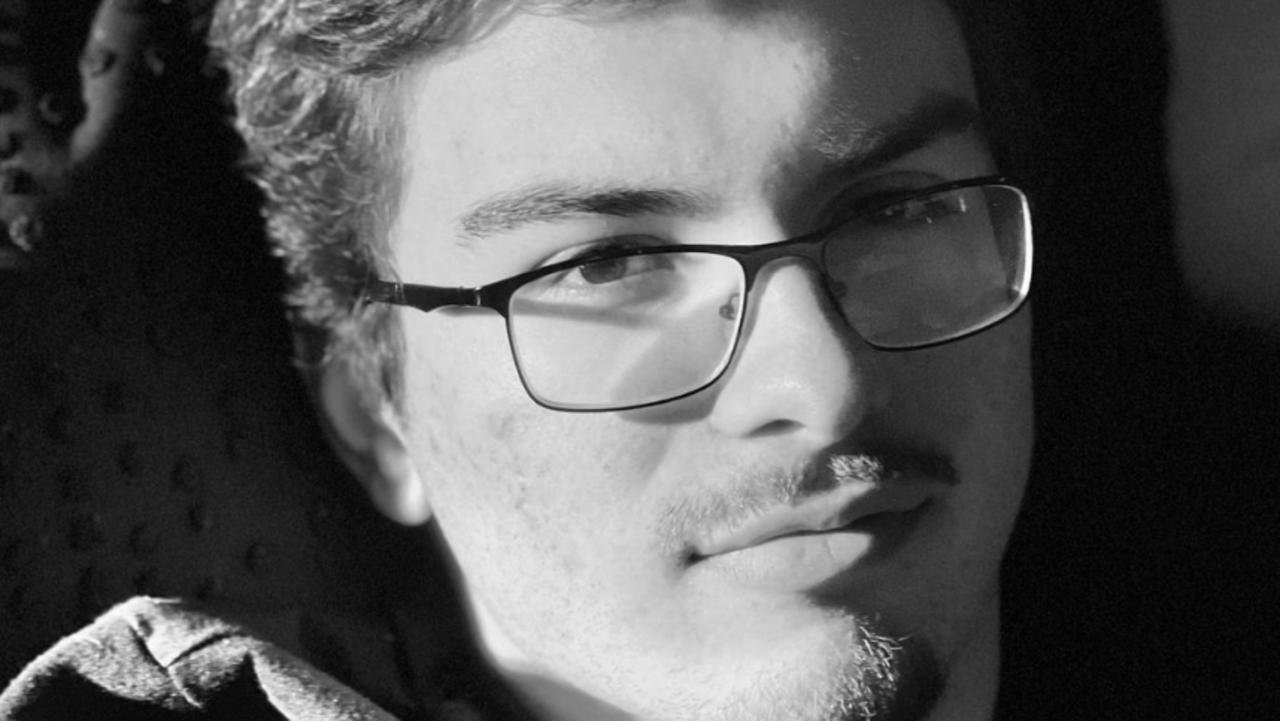
    On a Saturday afternoon in Melbourne, a routine day of pop culture celebration outside the Supanova Comic Con & Gaming convention turned into an unthinkable tragedy, leaving a beloved young man dead and a tight-knit community grappling with sudden loss.

    Around 5 p.m. local time, a vehicle mounted the kerb on Langs Road, directly outside the Melbourne Showgrounds where the convention was being held. The car struck three pedestrians, among them 20-year-old Volkan Aksoy, who died at the scene of the crash. A second 20-year-old suffered severe lower-body injuries and was rushed to a nearby hospital for urgent treatment, while the third person was discharged after receiving care for acute shock.

    According to local broadcaster 9News, Aksoy had spent the entire day enjoying the annual convention, a popular gathering for gaming and comic book fans, before the fatal incident. His family has opened up about their overwhelming grief in the wake of the accident, describing the young man as a warm, gentle presence who loved deeply.

    “He was a kind and compassionate young man who cherished time with his friends and family, whom he loved deeply,” Aksoy’s mother told 9News. “He had a beautiful spirit, he was very much loved and will be profoundly missed by all who knew him. His life was taken far too soon.” The family added that they are still unable to process the sudden loss.

    Aksoy worked at a fast-food outlet in Keysborough, a south-eastern Melbourne suburb, where colleagues and friends remembered him as a bright, optimistic young person with big ambitions. “He had big dreams, he was very intellectual,” said Hasha Kong, a friend and co-worker. “That’s what I’m going to miss the most about him. The team are still distraught. He would always come in with a smile on his face. Now he’s watching from above.”

    Following the incident, Victoria Police arrested 33-year-old Awer Dau, who has been charged with two counts of dangerous driving causing death and culpable driving causing death. Dau appeared via video link at the Melbourne Magistrates’ Court on Sunday, joining the hearing from the Melbourne West Police Station. During the brief hearing, he was not required to enter a plea, and sat hunched with his arms resting on his knees. His lawyer confirmed to the court that Dau would not be applying for bail at this stage.

    The court was informed that key investigative evidence, including a toxicological report, forensic examination of the involved vehicle, mechanical reconstruction of the crash, and review of CCTV footage and witness statements, is still being collected and prepared for the case. Investigators also confirmed that Dau was already out on bail at the time of the alleged crash. He is scheduled to return to court for a further hearing on September 15.

    In the aftermath of the tragedy, Supanova event organizers held a minute of silence at midday on Sunday to honor Aksoy’s memory. “We here at Supanova Comic Con & Gaming are deeply saddened and distressed by the incident that occurred outside the Melbourne Showgrounds this evening,” organizers said in an official statement shared to social media. “Our thoughts and prayers go out to all those affected by the unspeakable tragedy that has happened on our doorstep.”

    Organizers noted that as the incident occurred outside the Showgrounds event precinct and remains an active police investigation, they do not currently have additional details to share. “We will not enter into any speculation regarding this appalling situation until all the facts come to light,” the statement added. Tributes continue to flow from across the community for Aksoy, as loved ones hold space for their grief.

  • Elon Musk summoned by French prosecutors amid ongoing X probe

    Elon Musk summoned by French prosecutors amid ongoing X probe

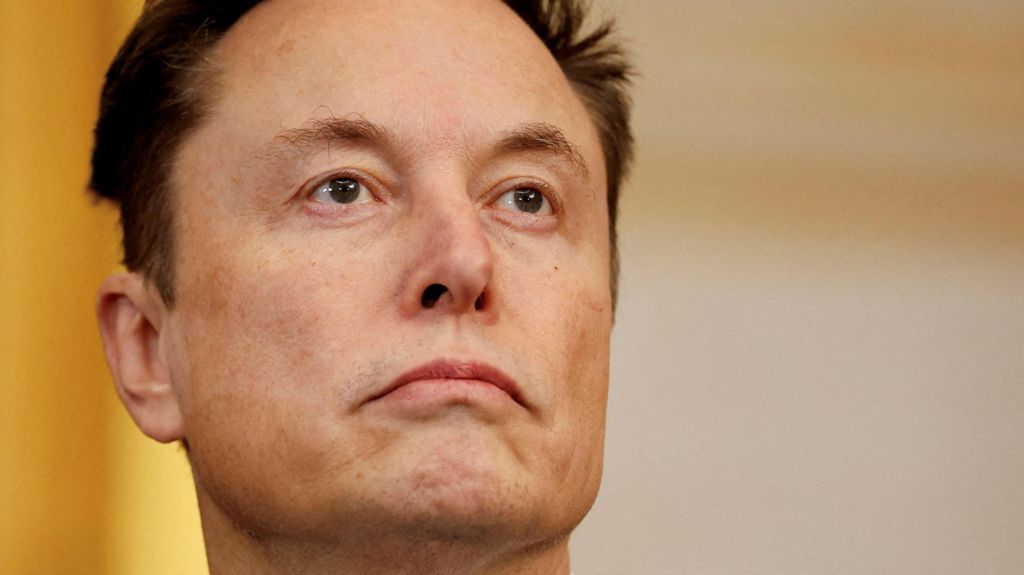
    A high-stakes legal and regulatory clash over Elon Musk’s social media platform X has entered a new phase, with French authorities calling both the tech billionaire and X’s former CEO Linda Yaccarino to appear for a voluntary interview in Paris this Monday. As the investigation into alleged criminal activity on the platform stretches into its second year, uncertainty lingers over whether Musk will comply with the summons, following a well-documented pattern of him declining to appear for official questioning in the past.

    The probe first launched in January 2025, after French prosecutors received multiple formal reports flagging harmful content circulating on X’s recommendation algorithm. Just one month later, in February 2026, cybercrime units from the Paris prosecutor’s office executed raids on X’s French offices as the scope of the inquiry expanded. The investigation now encompasses serious new allegations tied to Grok, X’s controversial in-house AI chatbot. Prosecutors suspect Grok has been leveraged to generate non-consensual sexual deepfake imagery, including manipulated content targeting women and reportedly even underage individuals.

    The list of suspected offences being probed extends far beyond deepfake misuse. French investigators are also examining claims that X facilitated complicity in the possession and organized distribution of child sexual abuse material (CSAM), violated personal image rights through non-consensual explicit synthetic content, and carried out fraudulent large-scale data extraction via an organized criminal network.

    This latest summons follows a reported diplomatic rift between French and U.S. justice authorities. The Wall Street Journal revealed over the weekend that the U.S. Department of Justice sent an official letter to French prosecutors declining to assist with the X investigation, and accusing French officials of misusing the U.S. legal system to advance their inquiry. Musk quickly weighed in on the report via a post on his own platform, writing simply, “indeed, this needs to stop.”

    Musk and X’s leadership have repeatedly framed the entire investigation as a politically motivated attack rather than a legitimate legal inquiry. Following the February office raids, X issued a formal statement denying all wrongdoing, dismissing the allegations as entirely baseless. The company argued that the raids amounted to a “staged” action that distorted French law, bypassed standard due process, and threatened protections for free speech. “X is committed to defending its fundamental rights and the rights of its users,” the company added in that statement.

    Yaccarino, who led X through the period when the alleged offences occurred, has echoed this hardline stance. She previously took to X to accuse French prosecutors of waging “a political vendetta against Americans.” Now, she joins Musk in being called to appear for voluntary questioning this month.

    A history of non-compliance has fueled speculation that Musk may skip the scheduled Monday interview, which was initially set by prosecutors back in February. In September 2024, the billionaire failed to appear for a court-ordered questioning as part of a U.S. Securities and Exchange Commission investigation into his 2022 takeover of the platform, then known as Twitter.

    The French investigation has already triggered a wave of additional legal and regulatory action against X and its parent AI firm xAI across the globe, including multiple probes launched by regulators in the United Kingdom and throughout the European Union. As of Monday morning, neither the Paris prosecutor’s office nor the U.S. Department of Justice has issued an updated comment on the case in response to requests from the BBC.

  • Bulgaria ex-president wins parliamentary majority

    Bulgaria ex-president wins parliamentary majority

    Nearly complete official results from Bulgaria’s snap parliamentary election confirm a historic landslide victory for former president Rumen Radev’s Progressive Bulgaria alliance, which has secured the first absolute parliamentary majority held by a single political bloc in the country since 1997. The outcome brings an end to nearly four years of chronic political instability that forced the Balkan nation to hold eight consecutive elections since 2021.

    The 62-year-old Radev, a former air force general who stepped down from the presidency earlier this year to run for a parliamentary seat, campaigned on a populist anti-corruption platform aimed at dismantling what he calls Bulgaria’s entrenched “oligarchic governance model”. His coalition captured 44.7 percent of the popular vote with 98.3 percent of ballots counted, putting it on track to control roughly 130 of the 240 seats in Bulgaria’s unicameral parliament. Turnout for Sunday’s vote hit the highest level recorded since 2021, reflecting broad cross-spectrum support for Radev’s pledge to break years of political gridlock.

    The election upends Bulgaria’s existing political order. Longtime pro-EU conservative leader Boyko Borissov’s GERB party, which dominated Bulgarian politics for nearly a decade before 2021, slumped to just 13.4 percent of the vote, barely edging out the liberal pro-EU PP-DB coalition which captured 12.7 percent. Both the far-right Vazrazhdane party and the MRF, a minority-focused party representing Bulgarian Turks and Roma communities, are projected to cross the electoral threshold to win parliamentary seats.

    In his victory address to reporters, Radev framed the win as a transformative shift for Bulgarian politics. “This is an unequivocal win for Progressive Bulgaria – a victory of hope over distrust, a victory of freedom over fear,” he stated. While Radev emphasized that Bulgaria will remain committed to its European integration path, he also pushed back against existing EU policy orthodoxy, noting: “A strong Bulgaria and a strong Europe need critical thinking and pragmatism. Europe has fallen victim to its own ambition to be a moral leader in a world with new rules.”

    Radev’s foreign policy positions have already drawn sharp attention from both Moscow and Brussels. A self-described pragmatist who has emerged as a vocal critic of EU policy, Radev has repeatedly called for the restoration of closer practical ties with Russia, based on mutual respect and equal dialogue. He has opposed Bulgaria’s existing policy of sending military arms to Ukraine, criticized the recent 10-year defense cooperation deal between Sofia and Kyiv, and has argued for a negotiated end to the ongoing conflict. Even so, he has pledged not to use Bulgaria’s EU veto power to block collective EU foreign policy decisions.

    The Kremlin quickly welcomed Radev’s election win. Kremlin spokesman Dmitry Peskov told reporters Monday that Moscow views Radev’s calls for closer ties with Moscow favorably, adding that the Kremlin also approves of his commitment to resolving international disputes through dialogue. For its part, the European Commission struck a measured tone in its initial reaction. European Commission President Ursula von der Leyen reaffirmed that “Bulgaria is a proud member of the European family and plays an important role in tackling our common challenges,” adding that she looks forward to working with the new government.

    Political analysts across Bulgaria have framed the result as a watershed moment, but warn that major questions remain about Radev’s ability to deliver on his core promises. Political analyst Teodor Slavev noted that while Radev’s bloc holds an absolute majority that allows it to govern alone, passing sweeping judicial and constitutional reforms required to root out high-level corruption will need a two-thirds parliamentary majority, forcing Radev to negotiate cross-party support. Daniel Smilov, a political scientist at Sofia’s Center for Liberal Strategies, added that Radev will face persistent pressure from Eurosceptic factions within his own bloc and the far-right opposition to shift Bulgaria toward a more openly anti-EU course. “His initial signals are that he will pursue a pro-European policy and will not block the EU… The whole question is whether those signals will actually be followed through,” Smilov told AFP.

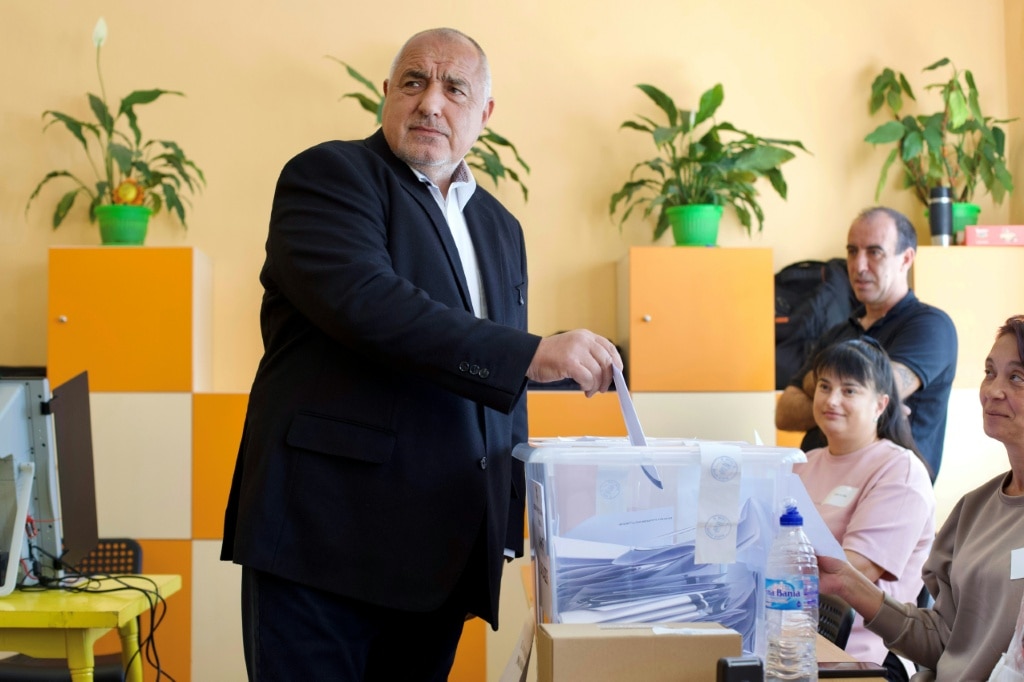
    Outgoing long-time prime minister Boyko Borissov congratulated Radev on his victory Sunday, but offered a cautious note: “Winning elections is one thing, governing is another.”

    The election was overshadowed by long-standing concerns about electoral fraud in Bulgaria. Political parties across the ideological spectrum urged voters to turn out to counter the widespread practice of vote buying. In pre-election anti-corruption raids, Bulgarian police seized more than 1 million euros in suspected vote-buying funds and detained hundreds of people, including sitting local councillors and municipal mayors.