博客

  • US-Iran ceasefire talks remain on shaky ground

    US-Iran ceasefire talks remain on shaky ground

    As a fragile two-week ceasefire between the United States and Iran is set to expire this Wednesday, plans for a second round of peace negotiations in Islamabad, Pakistan remain clouded in uncertainty after a recent maritime confrontation reignited tensions between the two long-time adversaries.

    The Associated Press, citing two unnamed Pakistani officials, reported Monday that Iranian authorities have signaled willingness to dispatch a delegation to the upcoming talks, though details remain undisclosed for security reasons. The officials warned that the negotiation schedule is still fluid and called on media outlets to avoid unfounded speculation. US President Donald Trump announced Sunday that Washington’s negotiating team would arrive in Islamabad on Monday to meet with Iranian representatives, but Iranian officials have not issued a direct confirmation of Trump’s statement.

    Escalating tensions in recent days have thrown the diplomatic process into doubt. Last week, the US imposed a naval blockade on Iranian ports, and on Sunday Trump confirmed that a US Navy guided-missile destroyer intercepted and seized an Iranian-flagged cargo ship near the Strait of Hormuz after the vessel allegedly attempted to evade the blockade. This marked the first confirmed interception since the blockade was implemented.

    Iran condemned the seizure as an act of “armed piracy” and launched retaliatory drone strikes on US military vessels in the region. Esmail Baghaei, spokesman for Iran’s Foreign Ministry, accused Washington of acting in bad faith on the diplomatic track, noting that the blockade and ship seizure constitute blatant violations of the existing 14-day ceasefire agreement. While Baghaei stated Iran has no “immediate plans” to proceed with new talks, he did not explicitly rule out future diplomatic engagement.

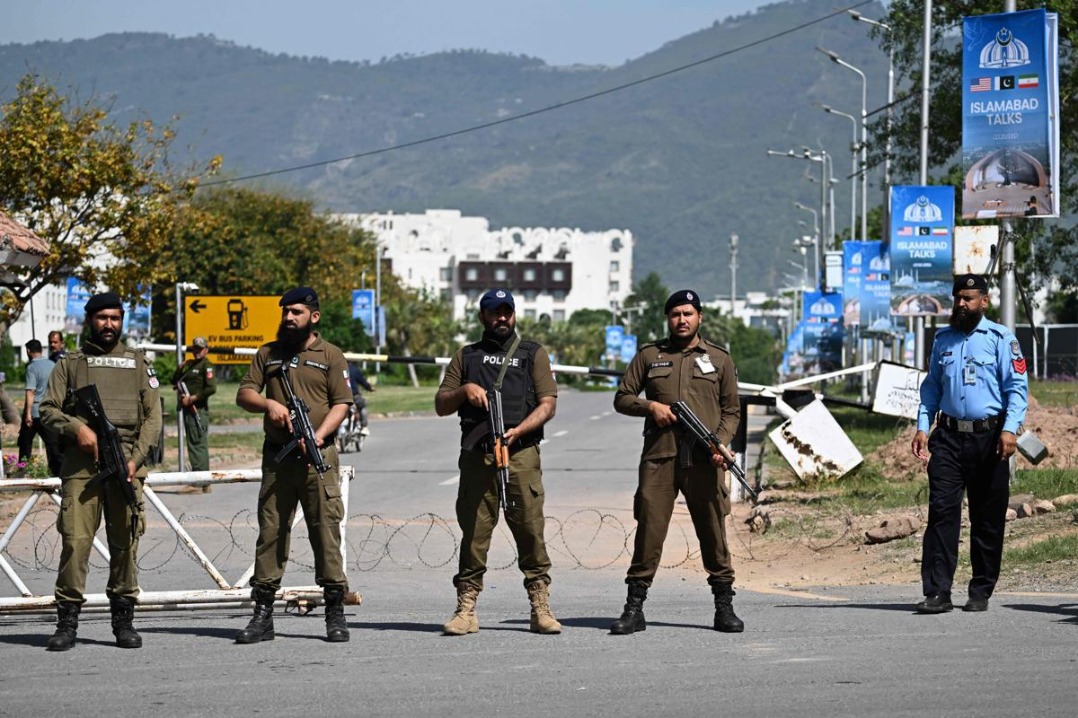
    Pakistan, which is serving as the neutral host for the negotiations, has already stepped up preparatory work. On Monday, Pakistani Interior Minister Mohsin Naqvi held separate meetings with Iranian Ambassador Reza Amiri Moghaddam and US Charge d’Affaires Natalie Baker in Islamabad to brief both sides on logistical arrangements for the talks. Naqvi was part of a Pakistani delegation that traveled to Tehran last week to advance the peace initiative. A statement from the Pakistani interior ministry confirmed that all parties reaffirmed their commitment to pursuing a lasting peaceful resolution through diplomatic dialogue to ease regional tensions. To safeguard the negotiating venue and participants, Pakistan has deployed nearly 20,000 security personnel drawn from national police, paramilitary forces and the regular army, and placed the entire capital city of Islamabad on high security alert.

    Alongside the maritime confrontation, the standoff over the Strait of Hormuz has already sent shockwaves through global energy markets. On Monday, international oil prices rose more than 5% amid disrupted shipping activity through the strategic waterway, which carries roughly a fifth of global oil supplies. Benchmark Brent crude traded around $95 per barrel, representing a more than 30% price increase since late February when the current conflict between the US and Iran began.

    Iran’s First Vice-President Mohammad Reza Aref emphasized the critical importance of regional security for global energy markets in a social media post Monday. “The security of the Strait of Hormuz is not free. The choice is clear: either a free oil market for all, or the risk of significant costs for everyone,” Aref wrote, adding that stable global fuel prices can only be guaranteed by a permanent end to all economic and military pressure on Iran and its regional allies.

    Beyond the Strait of Hormuz dispute, the Iranian nuclear program remains a core sticking point between the two sides. Last week, Trump stated that Washington is seeking a deal that would see Iran remove all of its enriched uranium stockpiles from the country. CNN, citing unnamed informed sources, reported that the US has offered to unfreeze $20 billion in Iranian overseas assets in exchange for Tehran handing over its entire enriched uranium reserve. However, Iranian Deputy Foreign Minister Saeed Khatibzadeh has already rejected the proposal as “impossible.”

    Many regional analysts warn that a sweeping, quick resolution to the decades-long conflict is out of reach. Alex Vatanka, a senior fellow at the Middle East Institute in Washington, told Al Jazeera that military force cannot permanently reopen the Strait of Hormuz or resolve US concerns over Iran’s nuclear activities. “The idea of a grand bargain in the short term is impossible to achieve,” Vatanka said. “The best you can do is reach some kind of an agreement of a basic framework. And then you have to go and quickly build on it. It will take at least months, if not years.”

    As of Monday, Iran has also released its first official death toll from the conflict that began on February 28. Iran’s forensic chief confirmed that at least 3,375 people have been killed since hostilities broke out, offering the most comprehensive public casualty count to date.

  • ‘Only incidental’: NRL provides clarity on high contact rulings following mixed messages from the Bunker

    ‘Only incidental’: NRL provides clarity on high contact rulings following mixed messages from the Bunker

    Rugby league fans, players and pundits are once again debating the consistency of officiating in the National Rugby League (NRL), after a contentious last-minute decision by the league’s video review system, the Bunker, triggered an official clarification on high contact rules that many are calling a potential defining moment for future officiating.

    The controversy unfolded during a tight clash between the Melbourne Storm and Canberra Raiders on Friday night. With just 66 seconds left on the clock, the Storm trailed by four points and held attacking position when winger Will Warbrick was struck across the face by Raiders halfback Ethan Sanders. No penalty was called by on-field officials, and Melbourne opted to use their captain’s challenge to overturn the call.

    However, Bunker official Liam Kennedy upheld the on-field decision, concluding the contact to Warbrick’s head was only incidental and dismissing the challenge. The ruling immediately sparked outrage, particularly when observers drew comparisons to a nearly identical incident just days earlier on Easter Monday, when Parramatta Eels captain Mitchell Moses secured a match-changing penalty after a successful challenge for a similar high contact.

    This inconsistent application of the high contact rule is far from an isolated case this season. Earlier in the year, Sydney Roosters captain James Tedesco successfully challenged for a penalty after a glancing high contact from Cronulla Sharks playmaker Braydon Trindall, resulting in a penalty that many argued was disproportionate given the minimal contact. Even more notably, two years ago, a high contact penalty against former Dolphins captain Jesse Bromwich for a hit on Manly Warringah Sea Eagles star Tom Trbojevic drew widespread public criticism over inconsistent officiating standards.

    Beyond the Warbrick incident, a second controversial call marred the closing stages of the Storm-Raiders clash. Melbourne fullback Sua Fa’alogo was forced off the field for a mandatory head injury assessment after a high hit from Raiders forward Hudson Young, yet Young was permitted to remain on the pitch for the rest of the match. The NRL later acknowledged that the officiating team made an error in not sin-binning Young, a mistake that cost the Storm a critical one-player advantage as they pushed for a game-winning try. Young was ultimately handed a two-match suspension for the hit.

    In response to the widespread backlash over the Warbrick decision, NRL officials have formally confirmed that Bunker officials retain discretionary authority to judge whether high contact warrants a penalty. Many in the rugby league community now view this clarification as a potential line-in-the-sand moment for officiating, setting a clear precedent that not all contact to the head will automatically result in a penalty. Supporters and players alike have stressed that their core demand moving forward is not stricter or more lenient calling, but consistent application of the rules, with officials weighing the force of contact rather than just penalizing every incidental touch to the head.

  • Renewable energies overtook global electricity demand last year, led by solar growth in China, India

    Renewable energies overtook global electricity demand last year, led by solar growth in China, India

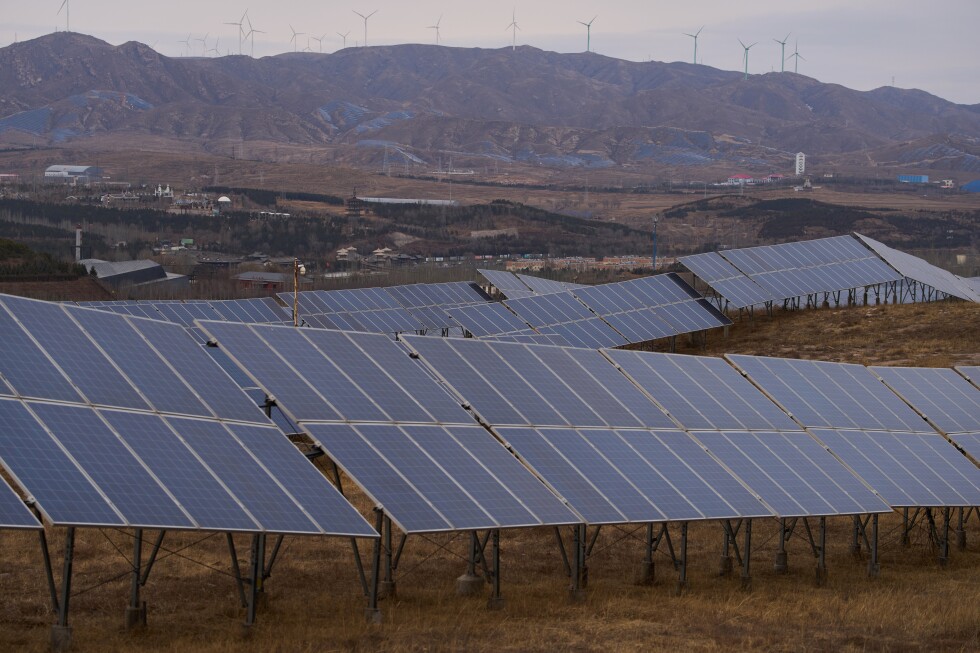
    A landmark 2025 analysis from global energy think tank Ember has revealed a defining turning point in the world’s transition away from fossil fuels: for the first time in modern history, clean renewable energy sources accounted for more than one-third of the entire global electricity mix, and expanded fast enough to fully outpace total growth in worldwide electricity demand.

    Released after midnight London time on Tuesday, Ember’s report draws on aggregated electricity data from 215 countries, with verified 2025 data from 91 nations covering 93% of global electricity demand. According to the analysis, total clean power generation expanded by 887 terawatt-hours (TWh) in 2025, easily exceeding the 849 TWh rise in overall global electricity demand. When aggregated across solar, wind, hydropower and other zero-emission sources, total renewable generation hit 10,730 TWh last year, pushing its global market share to 33.8% – a historic first. In a parallel milestone, coal-fired power generation dropped enough to push its share of global electricity below one-third for the first time in modern history, falling 0.6 percentage points to 32.9% at 10,630 TWh.

    Record-breaking solar expansion, concentrated in China and India, was the single biggest driver of this shift. Solar generation grew 30% globally in 2025, enough to meet 75% of the entire net rise in global electricity demand on its own. When combined with wind power, the two renewable sources covered 99% of 2025’s new electricity demand. Last year also marked the first time solar overtook wind power in total global generation, and Ember projects both wind and solar will overtake nuclear generation in 2026.

    Parallel to the solar boom, global battery storage capacity expanded 46% in 2025, spurred by a 45% drop in battery costs. The think tank estimates that 2025’s new battery storage capacity is enough to shift 14% of the year’s new solar generation from peak midday output to other hours of the day, solving a key challenge of solar energy’s intermittent nature.

    For the first time this century, both China and India – the world’s two most populous nations and historically the largest growth markets for fossil fuel power – saw absolute declines in fossil fuel generation in 2025. China cut fossil generation by 0.9% (56 TWh), while India reduced fossil output by 3.3% (also 56 TWh). China led the global solar boom, accounting for more than half of all new solar capacity and generation added worldwide last year, and also contributed the largest share of global wind growth, adding 138 TWh of new wind generation. India posted record increases in both solar and wind generation alongside strong hydropower output, with slower-than-average demand growth reversing years of post-pandemic fossil fuel expansion.

    Across other major markets, the U.S. added 85 TWh of new solar generation and Europe added 60 TWh, despite small increases in U.S. fossil generation driven by the Trump administration’s policy push to expand coal, oil and gas production and roll back support for renewables. Even with policy headwinds in the U.S. and global energy market volatility exacerbated by the U.S.-Iran war, the global energy transition continues to advance, the report confirms.

    Fossil fuel generation overall stalled in 2025, falling by 0.2% or 38 TWh – one of only a handful of times this century that fossil output has not increased year-over-year. Nicolas Fulghum, senior data analyst at Ember and lead author of the report, noted that the 2025 results mark a stark break from decades of past trends. “We’re coming from a period over the last few decades where new electricity demand growth meant growth in fossil generation,” Fulghum explained. “We’re now moving into a world where that’s no longer the case.”

    While the historic milestones are cause for cautious optimism, Fulghum emphasized that the transition is still in its early stages. “Milestones like renewables overtaking coal mark an occasion, but they don’t tell us everything about the story in the power sector,” he said. The biggest shift from 10 or 15 years ago, he added, is that government pledges to build out renewables are now far more credible than they once were. Looking ahead, Fulghum argued that clean energy is now positioned to structurally meet growing demand from electrification trends, including the expansion of electric vehicles, heat pumps and industrial electrification. “Despite the accelerated growth and electricity demand that comes with added electric vehicle build out, of heat pumps, industrial sector electrification, clean power will be able to structurally meet that increase in demand going into the next few years, before then bending the curve and reducing the amount of fossil generation we’re using,” he said. “And that is a stark departure from the last few decades.”

    Alexis Abramson, dean of the Columbia University Climate School who was not involved in the study, noted that current volatile oil prices driven by the U.S.-Iran war have reinforced the national security case for accelerating renewable adoption. “As we’re seeing the cost of oil be incredibly volatile right now because of the war, I think more and more people are looking to that national security argument as a reason to think about how we electrify more and how we’re able to take advantage of additional solar and wind, which does not rely on other countries,” she said.

    Abramson called the 2025 results an important milestone for global climate action. “We’ve really crossed this important threshold that clean energy now can meet rising demand economically and at the same time really help address national security concerns,” she said. “The next challenge is really turning that into a steady decline of fossil fuel use as well. So it’s a great step in the right direction.”

    The report arrives as the world grapples with accelerating climate change driven by decades of fossil fuel combustion to power economic growth, population expansion and rising electrification. The findings offer cautious optimism that the global energy transition is now moving past the planning stage and delivering measurable, structural change to the world’s power sector.

  • Amnesty International warns Australia is vulnerable to US, China’s ‘predatory’ behaviour

    Amnesty International warns Australia is vulnerable to US, China’s ‘predatory’ behaviour

    As ongoing conflicts in Ukraine and the Middle East steadily erode the long-standing rules-based global system, Australia faces a growing risk of exploitation through predatory behavior from major world superpowers, a landmark new human rights assessment has concluded.

    Amnesty International’s 2025 *State of the World’s Human Rights* report, which evaluates human rights conditions across 144 nations, sounded a stark alarm that the entire globe is teetering on the edge of a dangerous new era defined by eroded international cooperation and weakening legal guardrails.

    Kyinzom Dhongdue, Strategic Campaigns Manager for Amnesty International, argued that global leaders have adopted a dangerously passive stance when it comes to upholding international law. “Unless we stop appeasing these aggressors, the situation will only get worse,” she warned. “The vast majority of states have been either unwilling or incapable of calling out predatory actions carried out by the world’s most powerful actors.” For Australia, a nation that played a foundational role in building the modern international human rights framework, Dhongdue emphasized that defending the existing system, rejecting appeasement, and pushing back against mounting attacks on international law and global collaboration has never been more critical. She noted that the rules-based order has preserved global stability for 70 years, and its unraveling puts all nations at risk.

    Dhongdue specifically called out four major powers—the United States, Israel, China and Russia—for normalizing predatory behavior and enabling a global rise in authoritarianism. “This report clearly identifies these irresponsible, powerful actors, and whether it is the Chinese government, the Israeli government, or the US government, all share responsibility for eroding the international system,” she said, adding that it is past time for Australia to coordinate collective action with other like-minded nations to reverse the trend.

    Ahead of the report’s official release, Amnesty International Secretary General Agnes Callamard framed the current moment as the most challenging the world has faced in modern history. “Humanity is under attack from transnational anti-rights movements and predatory governments determined to assert their dominance through unlawful wars and brazen economic blackmail,” Callamard said. “To appease aggressors is to pour fuel on a fire that will burn us all and scorch the future for generations to come.”

    Released in the wake of Australian Prime Minister Anthony Albanese’s recent diplomatic tour of Southeast Asia, the report also turned a critical eye on two of Australia’s regional allies. In Singapore, authorities have waged a relentless crackdown on freedom of expression and peaceful assembly, with repressive legislation targeting activists, journalists, and political opposition figures, the report found. Migrant workers in the country face systematic exploitation, and Singapore has continued to carry out executions for drug offenses, most recently putting to death Malaysian national Pannir Selvam despite widespread international condemnation.

    In Malaysia, Albanese’s final stop on the tour, the report accuses authorities of using overly broad legislation to restrict freedom of speech and target government critics. Peaceful protests are regularly broken up, and activists and students face routine harassment, investigation, and arrest. While the report acknowledged small progress—including a slight drop in the death row population and growing public support for Indigenous rights recognition—it noted that LGBTQI people face targeted harassment and violence, and refugees and migrants are subject to indefinite detention.

    The report also leveled sharp criticism at the United States, highlighting an unprecedented nationwide crackdown on migrants, rolling back of legal protections for LGBTQI people and reproductive rights, systemic use of lethal force that disproportionately targets Black Americans, and the continued arbitrary detention of prisoners at the Guantanamo Bay facility. It added that despite persistent mass gun violence across the country, the Trump administration terminated federal programs designed to address the crisis, and rolled back critical environmental and climate regulations.

    A key section of the report is dedicated to Australia itself, focusing on the country’s recent world-first social media ban, a policy that a growing number of other nations—including France, Spain, and Malaysia—have already moved to emulate. While the assessment recognized that the ban reflects a genuine commitment to addressing harms posed by unregulated social media platforms, it argued that the restriction unnecessarily limits young people’s right to free expression and access to information, while failing to resolve the underlying systemic issues that create harm online.

    The report also outlines persistent human rights failures within Australia: it documents worsening socioeconomic inequality for Aboriginal and Torres Strait Islander people, alongside disproportionately high incarceration rates and ongoing deaths in custody. It also calls out Australia’s offshore refugee processing regime, noting that as of the report’s release, 90 asylum seekers remain stuck in processing limbo on Nauru, with more than 30 held in neighboring Papua New Guinea. On freedom of expression, the report alleges Australian authorities have repeatedly conflated peaceful protest activity with violent crime, and that Australian universities have systematically curtailed academic and political freedoms for students and staff.

  • AFL 2026: Western Bulldogs in race against clock to have two star players available

    AFL 2026: Western Bulldogs in race against clock to have two star players available

    The Western Bulldogs are facing a race against time to get two of their key stars, captain Marcus Bontempelli and veteran big man Rory Lobb, over the fitness line for their high-stakes Thursday night clash against the Sydney Swans, head coach Luke Beveridge has confirmed.

    With less than 48 hours until the first bounce, Beveridge revealed the club will give both Bontempelli, who is managing a knee complaint, and Lobb, who is carrying a hamstring knock, every possible minute to prove their match readiness, with the team list not due to be submitted until Wednesday. The coach emphasized that the club’s priority will always be player long-term health over short-term results, confirming no star will be risked if there is any chance of their existing soreness worsening into a more serious injury.

    “We’ll give him right up until the death,” Beveridge told reporters of Bontempelli’s fitness timeline, noting the team’s tight fixture schedule that has included two back-to-back six-day turnarounds between matches. “There’s a couple of boys who are sore and ultimately they’ll play if there is no risk that they’ll injure what they’re sore with anymore. But if there’s any concern they’ll be impeded or in discomfort that might turn into an injury, they won’t play. We won’t take any risk.”

    As of Tuesday training sessions, Bontempelli was moving better than Lobb during on-field run-throughs, but both remain in doubt for the encounter. A loss of Lobb would put particular pressure on the Bulldogs’ defensive unit, which is already reeling after season-ending injury to young key position player Sam Darcy, who suffered a ruptured ACL last week.

    Beveridge said Lobb responded well to initial treatment after his knock, and remains on track to push for selection. “He got a knock but he looks like he’s moving. There’s a couple of days to go and we don’t need to name a team until tomorrow. He’ll go to the line I think,” the coach said. He added that the club has adjusted its selection procedures this week to accommodate the injury delays: with VFL affiliate Footscray playing on Friday, the Bulldogs will be able to bring three emergency players to Thursday night’s fixture, creating flexibility for late selection changes if needed.

    Off the field, there is positive news around Darcy, who attended the club’s Whitten Oval base on Tuesday just days after scans confirmed his ACL rupture, which will rule him out of action for roughly 12 months. Beveridge said the young forward-key defender is in excellent spirits despite the devastating season-ending setback, with surgery scheduled for later this week once initial swelling subsides.

    “Darcy is a great character, as you know, so he’ll come back and be a player that will continue to improve and grow,” Beveridge said. “We’re going to miss him for a little while, but we’ve got to deal with that and others need to step up to fill the gap he leaves behind.”

    The club is also taking a cautious approach with hard-nosed midfielder Tom Liberatore, who sustained his fifth concussion in four seasons during last weekend’s match. Liberatore has pulled up well from the incident, reporting no lingering symptoms including headaches or sleep disruption, but remains in the league’s concussion protocols. Beveridge confirmed the club will not rush Liberatore’s return, even if that means sidelining him for additional matches beyond this week.

    “We’re pretty conservative looking after our players who have had a head knock or two,” Beveridge said. “if there’s any sign that Tom needs a bit longer, I am sure our medical crew won’t let him play. He seems to be OK, but he hasn’t been to any specialist concussion panel yet for full clearance.”

    Amid the raft of injury concerns, the Bulldogs have a potential boost on the way: veteran midfielder Adam Treloar is poised to return to the senior side after a strong performance in the VFL last weekend, where he collected 41 disposals. Treloar has missed the last several weeks with his own injury setback, and will only be selected if he gets through his final two training sessions without issue. If he passes that test, he will make an immediate return to the senior line-up for the Sydney clash.

  • Apple names new chief executive to replace Tim Cook

    Apple names new chief executive to replace Tim Cook

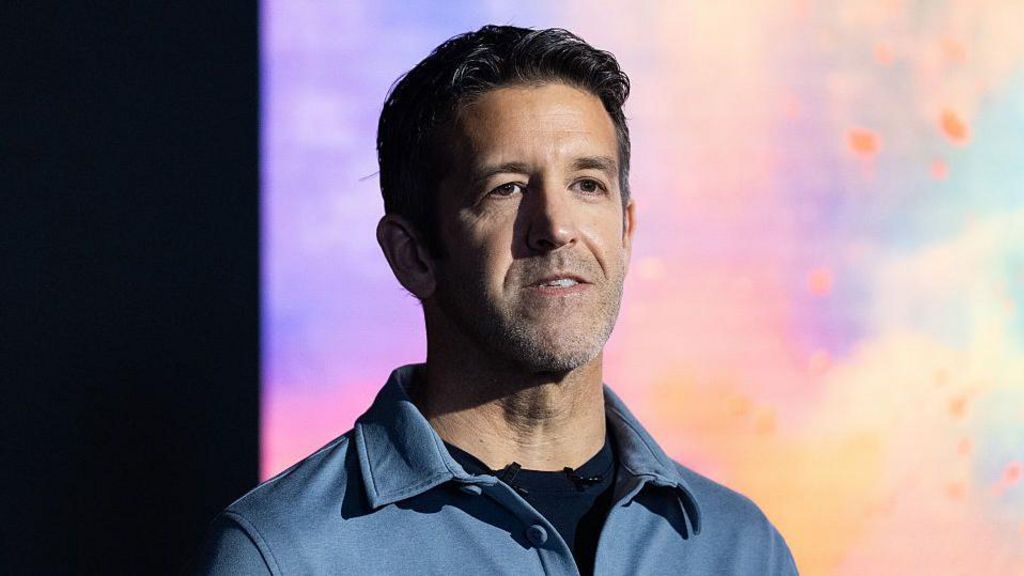
    In a historic leadership transition that marks a new chapter for one of the world’s most valuable technology companies, Apple has announced that longtime hardware engineering chief John Ternus will take the reins as chief executive officer this September, with current leader Tim Cook moving into the position of executive chairman.

    Ternus, who has built his 25-year career at Apple working on nearly every iconic product the firm has launched, will officially assume the CEO role on September 1. Cook will remain in the top position through the summer to oversee a smooth handover, before shifting to his new role where he will support strategic initiatives and lead the company’s global policy engagement. Cook took over as CEO in 2011, following the resignation of Apple co-founder Steve Jobs due to deteriorating health, who died six weeks after stepping down.

    Cook’s upcoming departure from the CEO post comes after months of widespread market and industry speculation about Apple’s plans for a leadership succession. Reflecting on his 15-year tenure, Cook called the role of Apple CEO “the greatest privilege of my life.” Under his leadership, Apple grew from a already successful technology firm into the world’s first $1 trillion publicly traded company in 2018, and today boasts a market valuation of $4 trillion, with four-fold growth in annual profit and a massive expansion of its global retail and supply chain footprint.

    Cook has thrown full support behind his successor, describing Ternus as a visionary leader who combines rigorous engineering expertise with a true innovative spirit, and leads with unwavering integrity. “He is without question the right person to lead Apple into the future,” Cook stated. Ternus, who even worked alongside Steve Jobs before his 2011 retirement, called Cook his mentor, and expressed confidence in Apple’s next chapter: “I am filled with optimism about what we can achieve in the years to come.”

    Ternus emerged as the clear front-runner for the top job last year, after another long-serving Apple executive, former chief operating officer Jeff Williams, departed the company. Over his 25-year tenure, Ternus has contributed to every generation of the iPad, multiple iterations of the iPhone, and led the development and launch of breakout new product lines including AirPods and the Apple Watch. He also oversaw the company’s landmark transition of Mac computers from Intel processors to Apple’s custom in-house silicon, a move that has reshaped the personal computer industry in recent years.

    Industry analysts say the appointment of a leader with a deep product and hardware engineering background signals Apple’s response to long-running criticism of Cook’s tenure: that while the company delivered unprecedented financial growth, its product line remained largely incremental, and the firm failed to launch a new category-defining product on par with the iPhone that would carry it through the next two decades of growth.

    Dipanjan Chatterjee, principal analyst at Forrester, noted that while Cook leaves Apple with unmatched financial stability, the company still remains structurally dependent on iPhone revenue as it searches for its next major growth engine. Chatterjee said Ternus’ appointment makes clear Apple is ready to pursue bold product differentiation, adding that the new CEO “must resist the temptation of incrementalism that has plagued Apple of late and escape the iPhone’s gravitational pull.”

    Gil Luria, managing director at DA Davidson & Co, echoed that sentiment, noting that putting a hardware-focused leader at the helm signals Apple will ramp up investment in next-generation product lines, including highly anticipated foldable iPhones and new wearable devices such as AR smart glasses.

    The leadership transition comes at a pivotal moment for Apple, as it navigates shifting global regulatory pressures, slowing smartphone market growth, and growing demand for breakthrough innovation that can open new revenue streams. For long-time Apple observers, the move returns a product-focused leader to the top role, echoing the company’s early roots under Steve Jobs, while building on the financial foundation Cook built over the past 15 years.

  • Apple’s Tim Cook to step down as CEO in September

    Apple’s Tim Cook to step down as CEO in September

    In a major leadership announcement that has sent ripples across the global tech industry, Apple confirmed on Monday that long-serving chief executive Tim Cook will step down from his post this coming September, handing the reins of the $4 trillion company to seasoned insider John Ternus. The long-awaited announcement puts to rest years of swirling speculation around a leadership transition for 65-year-old Cook, who will transition into the newly created role of executive chairman of the board after leaving the CEO office.

  • Lori Chavez-DeRemer out as US labour secretary

    Lori Chavez-DeRemer out as US labour secretary

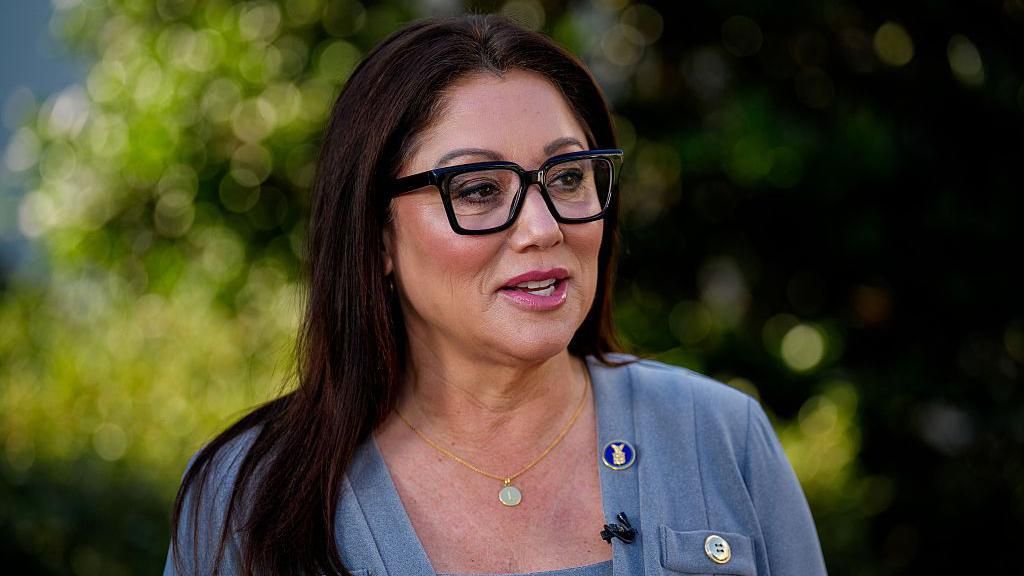
    In a sudden development announced by the White House on Monday, United States Labor Secretary Lori Chavez-DeRemer is stepping down from her cabinet post to accept a new role in the private sector. Her exit comes after months of growing public criticism and an ongoing internal probe into alleged improper conduct by the 58-year-old cabinet leader, whose department oversees federal workplace regulations and manages the national unemployment insurance system.

    The departure of Chavez-DeRemer marks the latest high-profile turnover in the Trump administration, following two other major cabinet shakeups in recent months: the removal of Pam Bondi from the post of Attorney General in early April, and the March firing of Homeland Security Secretary Kristi Noem, who led the administration’s restrictive immigration policy initiatives.

    In the official public statement shared Monday afternoon on the social platform X by White House Communications Director Steven Cheung, the administration highlighted what it framed as Chavez-DeRemer’s successful tenure. The statement praised her for doing a “phenomenal job” in the role, crediting her with protecting American workers, implementing equitable labor standards, and expanding upskilling opportunities to help US workers boost their long-term career prospects.

    Cheung also confirmed that Keith Sonderling will immediately step into the position of acting Labor Secretary to lead the department until a permanent successor is named.

    Reports of an investigation into Chavez-DeRemer first emerged in January, when the New York Post broke the news that the Labor Department’s independent inspector general had opened a probe into allegations of workplace misconduct against the secretary. As this is a developing breaking news story, additional details surrounding the investigation and the circumstances of the secretary’s departure are still emerging. Updates will be posted as more information becomes available, and readers can access real-time alerts by following BBC Breaking on X or downloading the BBC News mobile application.

  • Israeli strike kills 80-year-old Palestinian academic and former hijacker in Lebanon

    Israeli strike kills 80-year-old Palestinian academic and former hijacker in Lebanon

    An 80-year-old Palestinian academic and prominent activist, whose participation in one of the earliest recorded female-led plane hijacking attempts made her a notable figure in the Palestinian national movement, was killed in an Israeli airstrike on the southern Lebanese coastal city of Tyre, Lebanon’s official state news agency has confirmed. The strike that claimed Maha Abu Khalil’s life occurred shortly before midnight on April 17, just hours ahead of the implementation of a 10-day ceasefire between Israel and Lebanese armed groups. The deadly attack also left at least 13 other people dead, 35 more injured, and 15 individuals still unaccounted for as of the latest updates.

    Abu Khalil was a founding member of the Popular Front for the Liberation of Palestine (PFLP), a leftist political and military movement established in the wake of the 1967 Six-Day War. In 1969, she made international headlines after being arrested in Athens, Greece, while attempting to hijack an El Al commercial flight carrying 29 passengers. Contemporary reporting from The New York Times published that December documents that 22-year-old Abu Khalil, who was working as a schoolteacher at the time, alongside two co-defendants, pleaded not guilty to charges of unlawful possession of explosives, but openly acknowledged their plan to seize the aircraft. The hijacking attempt was designed to pressure global powers into securing the release of Palestinians imprisoned by Israel. Though the attempt failed, Abu Khalil was ultimately released from Greek custody in a prisoner exchange months after her arrest.

    Following her release, Abu Khalil built a decades-long career as an academic, community organizer and social worker based in Lebanon, according to statements from the PFLP. In an official memorial statement, the group honored Abu Khalil, framing her death as a profound loss to a movement centered on “feminism, patriotism, and humanitarianism.” “Maha Abu Khalil will remain present in the national memory and in the record of women fighters who gave their lives for freedom, justice, and human dignity,” the statement read.

    Founded by George Habash in 1967, the PFLP was established as a explicitly Marxist-Leninist political movement modeled after successful anti-imperialist struggles led by figures such as Che Guevara in Latin America and the National Liberation Front in Vietnam. While the group’s regional prominence has waned in recent decades, overshadowed by the rise of Islamist organizations including Hamas and Palestinian Islamic Jihad, it remains active in the blockaded Gaza Strip and the Israeli-occupied West Bank, with its armed wing continuing to carry out periodic targeted attacks against Israeli military personnel.

    Even after the formal ceasefire agreement went into force last Friday, Israel has continued systematic demolition of civilian residential and infrastructure across southern Lebanon, according to a new investigation published by Israeli independent newspaper Haaretz. The targeted destruction is concentrated south of the so-called “yellow line,” a demarcation drawn by Israel approximately 20 kilometers south of the Litani River. Under the terms of the current ceasefire agreement, Israeli military forces are prohibited from crossing this boundary.

    Unnamed military and political sources told Haaretz that a core goal of the ongoing demolition campaign is to create a permanent buffer zone by preventing Lebanese civilian residents from returning to their homes in border areas adjacent to Israel. The report also added that the Israeli military is using advanced digital tools, including purpose-built statistical tracking systems, to systematically map and measure the scale of destruction across every sector of southern Lebanon.

  • Israeli, Lebanese officials to meet Thursday for 2nd round of talks — Israeli state media

    Israeli, Lebanese officials to meet Thursday for 2nd round of talks — Israeli state media

    Weeks of intense cross-border conflict between Israel and the Lebanese militant group Hezbollah have given way to a fragile truce, and now officials from both nations are set to meet for a second round of direct negotiations aimed at locking in long-term stability along their shared border.

    A senior Israeli official, speaking on condition of anonymity to Xinhua News Agency on Monday, confirmed that the talks will take place Thursday in the U.S. capital Washington. While the official declined to share additional details about the negotiating agenda or expected outcomes, multiple sources have already confirmed leadership for both delegations.

    Israeli outlet Reuters, quoting an anonymous Israeli government source, reports that Yechiel Leiter, Israel’s ambassador to the United States who participated in the first round of talks held earlier this month, will lead the Israeli negotiating team this week. On the Lebanese side, the country’s presidency made an official announcement via social media platform X on Monday morning confirming that former Lebanese Ambassador to the U.S. Simon Karam will head the Lebanese delegation.

    The presidency emphasized in its statement that Karam is the sole authorized representative for Lebanon in these talks, noting that “No one else will participate on Lebanon’s behalf or take its place in this mission.” The talks are also structured as an independent negotiation track separate from any other ongoing diplomatic efforts between the two sides, the statement added.

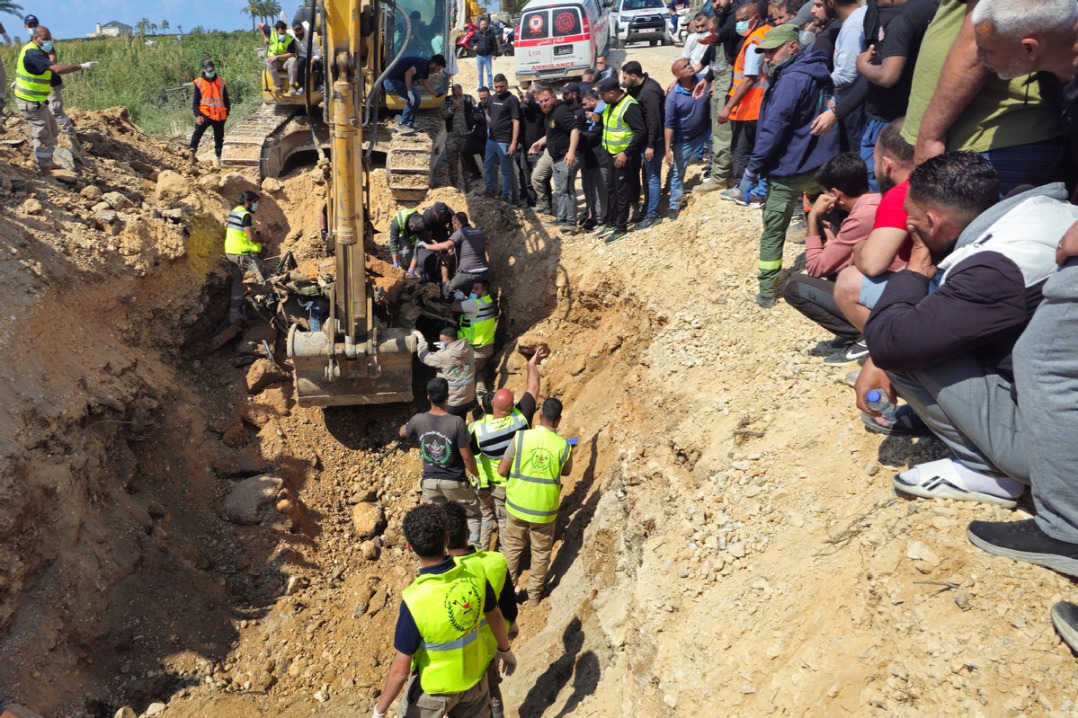
    This upcoming meeting marks the first formal negotiation between the two parties since the 10-day ceasefire agreement came into force at 2100 GMT on Thursday, ending weeks of deadly exchanges of fire that displaced tens of thousands of civilians on both sides of the border. Ahead of the ceasefire, an Israeli strike on a bridge in southern Lebanon’s Qasmiyeh region left two people dead, with rescuers working to recover their bodies just hours before the truce took hold, according to on-the-ground reports from April 20.

    Lebanon has laid out clear core objectives for the negotiations: the permanent end to all hostilities along the border, a full Israeli withdrawal from occupied southern Lebanese territories, and the deployment of the official Lebanese army to the country’s internationally recognized southern border. In its statement, the Lebanese presidency framed the current moment as a stark binary choice for all parties: either continue a prolonged conflict that would carry devastating humanitarian, social, economic, and national sovereignty costs, or work toward a lasting negotiated settlement that can end years of tensions along the border.