博客

  • A look at China’s behind-the-scenes role in Iran war diplomacy

    A look at China’s behind-the-scenes role in Iran war diplomacy

    BANGKOK – As the latest Middle East conflict roils global energy markets and upends regional security, China’s emergence as an informal behind-the-scenes mediator has captured international attention, marking a key milestone in Beijing’s push to frame itself as a responsible global power at a moment when U.S. policy has frayed long-standing American alliances.

    Over the past decade, China has deliberately expanded its diplomatic footprint across the globe, a sharp departure from its historic approach of avoiding deep involvement in conflicts far from its borders. Today, Beijing has positioned itself as a major diplomatic player, stepping in to facilitate de-escalation in disputes stretching from the Southeast Asian border to Eastern Europe. In the ongoing Iran conflict, while Beijing has not claimed the title of official mediator, both Washington and Tehran have acknowledged its meaningful contributions to cooling hostilities.

    Experts note that China’s mediation strategy across multiple conflicts follows a consistent pattern, with mixed results in shaping final negotiation outcomes. However, its current engagement in the Iran war comes at a uniquely opportune moment: the unilateral, alliance-straining policies of the Donald Trump administration have left traditional U.S. partners increasingly wary of American leadership, opening space for China to step into the diplomatic gap.

    In the Iran conflict specifically, China’s deep economic and political ties to Tehran grant it a rare level of influence, a particularly critical advantage at a time when fighting has disrupted global energy supplies, most acutely impacting Asian markets. Former President Trump has publicly stated he believes China pushed Iran to enter ceasefire negotiations, a step that led to the extended fragile truce currently in place. Unnamed diplomatic sources told the Associated Press that Beijing, which is the largest buyer of Iranian oil under international sanctions, used its economic leverage to encourage Iranian negotiators to attend the landmark face-to-face talks held in Pakistan earlier this month.

    Yaqi Li, a researcher at the S. Rajaratnam School of International Studies at Singapore’s Nanyang Technological University, explained that Beijing has not publicly confirmed this account, largely because it seeks to avoid being framed as a participant in a U.S.-led security architecture. Still, the move has been widely viewed as a pivotal moment for China, which has openly criticized the U.S.-Israeli military campaign against Iran.

    Since the conflict began with U.S.-Israeli strikes on February 28, senior Chinese diplomats have maintained intense outreach to all regional parties. Chinese Foreign Minister Wang Yi has held 30 phone calls with officials from Iran, Israel, Saudi Arabia, Bahrain, the United Arab Emirates, and other relevant stakeholders as of mid-April, according to official foreign ministry records. Wang also hosted his counterpart from Pakistan – which serves as the official lead mediator for the current talks – to unveil a five-point Chinese peace proposal that calls for an immediate end to hostilities and the full reopening of the strategic Strait of Hormuz.

    In an unusually public shift, Chinese President Xi Jinping has also taken an outspoken stance on the conflict. Last week, he warned against a global return to the “law of the jungle,” and this week he explicitly called for the Strait of Hormuz, a critical chokepoint for 20% of the world’s daily oil supply, to be reopened to commercial traffic.

    Analysts point out that China’s influence in the region stems directly from its status as an economic superpower. George Chen, a partner at the global consultancy The Asia Group, noted that China’s role in the Iran situation is functionally irreplaceable. As Tehran’s top oil customer, its diplomatic input carries far more weight than many other global actors, and it is one of the few major powers that has publicly expressed sympathy for Iran’s position at the United Nations. The U.S. government has also documented that Iran’s ballistic missile program was developed using Chinese technology, and China continues to sell dual-use industrial components that can be adapted for missile production.

    While China has not taken the lead in active on-the-ground mediation like Pakistan and key Gulf Arab states, it holds a unique position as a critical economic partner for nearly every major actor in the region. Tuvia Gering, a nonresident fellow at the Atlantic Council’s Global China Hub, explained that Beijing is uniquely able to offer Tehran tangible economic incentives that will matter greatly after the war ends, including pledges of reconstruction investment and commercial relief that few other countries can match. “It could be one of the few actors capable of giving Tehran both political cover and material incentives to accept constraints and stick to them,” Gering noted.

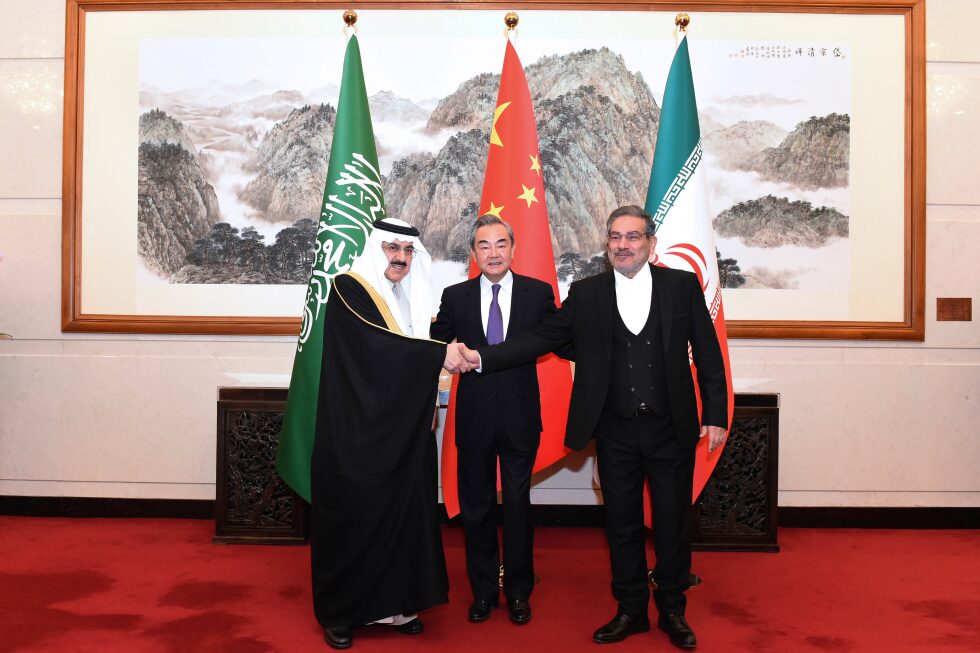
    This current mediation effort is just one part of a broader trend of growing Chinese global diplomatic engagement in recent years. One of Beijing’s most high-profile diplomatic successes came in 2023, when it helped broker the historic reconciliation between Saudi Arabia and Iran that restored official diplomatic ties between the two long-time rivals. The breakthrough was widely celebrated as a major geopolitical achievement that reduced the risk of open conflict across the Middle East.

    However, Muhammad Zulfikar Rakhmat, a researcher at the Center of Economic and Law Studies in Indonesia, pointed out that China carefully selects which conflicts it engages in, often stepping in only when conditions are already ripe for a deal. “Its mediation tends to be opportunistic and low-risk, often occurring when the parties themselves already have incentives to reach agreement,” Rakhmat explained.

    Beyond the Middle East, China has also tested its mediation model in other regional conflicts. It hosted multiple rounds of talks between Thailand and Cambodia during their 2024 border dispute, joined U.S. negotiators for initial ceasefire discussions in Malaysia, and helped broker a second truce after fighting reignited in December. Beijing has also put forward a formal peace proposal for the ongoing war in Ukraine, and even hosted the Ukrainian foreign minister for talks, despite its stated “no-limits” strategic partnership with Russia.

    Across all of these mediation efforts, experts note that China’s public messaging follows a consistent script, with heavy emphasis on upholding the United Nations Charter, respect for national sovereignty, and adherence to international law. In comments on the Iran conflict, Xi echoed this standard framework, calling for “upholding the principles of peaceful coexistence, upholding national sovereignty, upholding the rule of international law, and coordinating development and security.”

    Hoo Tiang Boon, a professor of Chinese foreign policy at Nanyang Technological University, noted that this consistent framing is a deliberate choice. “A lot of the points are remarkably consistent,” he said.

    Thitinan Pongsudhirak, a professor of international relations at Thailand’s Chulalongkorn University, argued that for China, engaging in distant conflicts carries low direct strategic risk but offers major reputational benefits, especially as the international community adjusts to the Trump administration’s unconventional negotiation approach. “What the U.S. is doing is deeply damaging, and everyone suffers from it … and China is displaying global leadership and exerting its global role by speaking to the rules-based international system,” he said. “It’s an inescapable contrast.”

    Leung contributed reporting from Hong Kong.
  • Residents in rural Sudan say the Iran war has made it harder to get medicines

    Residents in rural Sudan say the Iran war has made it harder to get medicines

    In the quiet, conflict-battered village of Qoz Nafisa on the outskirts of Sudan’s capital Khartoum, 61-year-old Abbas Awad faces a desperate daily battle to preserve his sight. For years, accessing the glaucoma medication he needs to avoid blindness has been an uphill climb, but the outbreak of war in Iran has turned that climb into a steep, almost insurmountable cliff. Today, Awad deliberately stretches out his doses, rationing each pill to stretch his current supply as far as it can go, terrified that when it runs out, he will neither find more on local markets nor afford whatever scarce stock remains.

    Awad’s struggle is far from an isolated case. It is a direct ripple effect of the new conflict unfolding thousands of kilometers away in the Middle East, a crisis that is compounding the damage of Sudan’s own three-year long civil war, which has already pushed the country into what global aid groups widely call the world’s worst humanitarian catastrophe.

    The International Rescue Committee (IRC), one of the few aid organizations still providing critical support to the Qoz Nafisa public health clinic that serves 5,000 vulnerable local residents, explains how the Iran conflict has shattered already fragile global supply chains for life-saving aid. Rising tensions between the United States and Iran have effectively closed off the Strait of Hormuz, one of the world’s most critical oil and commercial shipping chokepoints, and disrupted alternative logistics routes passing through major regional hubs like Dubai. Aid groups report that shipping costs for essential goods have jumped by as much as 20% according to United Nations estimates, driven by skyrocketing fuel prices and inflated insurance premiums for vessels traveling through conflict-affected waters. Many shipments that would normally move directly through the Persian Gulf are now being rerouted across long, inefficient alternative paths, causing massive delays that can stretch for weeks or even months.

    One clear example of this disruption is a $130,000 shipment of pharmaceuticals bound for Sudan, including critical antibiotics, painkillers, and basic medical equipment like stethoscopes. The shipment was originally meant to be flown from the United Arab Emirates directly to Port Sudan, but was stranded in Dubai for weeks. It was eventually forced to take a much longer, costlier route: overland by road to neighboring Oman, before being loaded onto a flight bound for Sudan. The shipment only just began moving toward the country after weeks of gridlock.

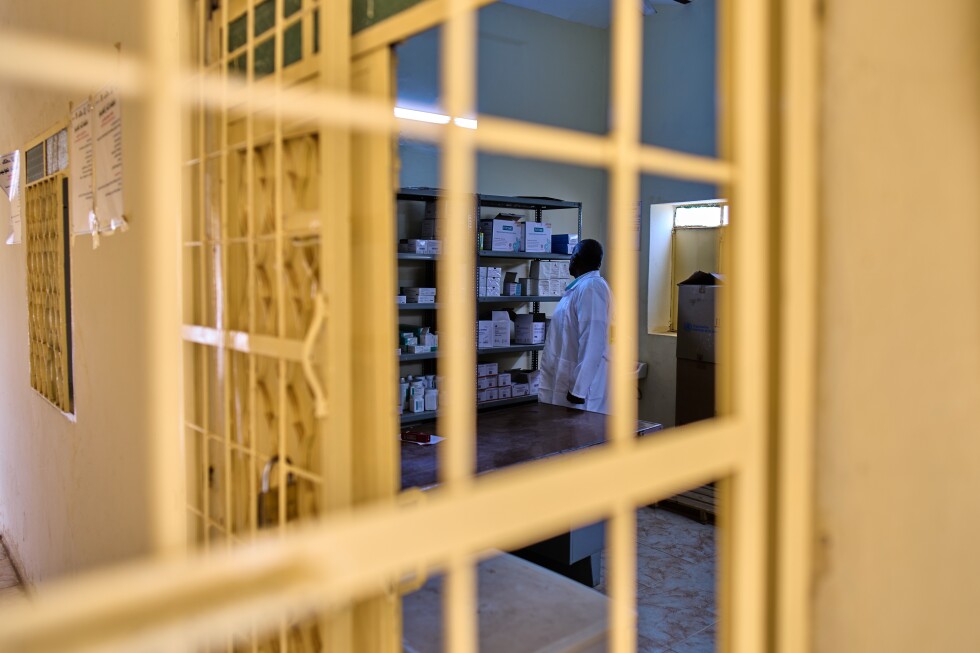
    At the Qoz Nafisa clinic, the impact of these delays is already being felt on a daily basis. Dr. Amira Sidig, the clinic’s medical director, told AP journalists during a recent visit that the facility has not received a scheduled supply shipment from the IRC since December. Planned shipments for February and April never arrived. While Sudan’s Ministry of Health has attempted to step in to fill the gap, it can only cover half of the clinic’s total needs, and the government itself is grappling with widespread shortages across the country. As a result, the clinic’s stock runs out almost as soon as new supplies arrive.

    Earlier this month, the clinic completely ran out of malaria treatment for several days. Half of all patients seeking care at the facility present with malaria, a life-threatening disease that is endemic to the region. Patients who cannot get free medication at the clinic are forced to travel to other facilities and pay for drugs out of pocket, a cost most of them simply cannot afford after three years of war that has gutted local livelihoods. Ahmed Ibrahim, a clinic staff member, says frustration is growing among residents who have nowhere else to turn for care. “When people come to the window, they say, ‘Why are you here and there is no medicine?’” he shared.

    Even though U.S. President Donald Trump announced an extension of a fragile ceasefire with Iran this week, aid leaders remain deeply concerned that the damage to supply chains will not reverse quickly. “There’s still a real lag in the system. Shipments remain blocked or delayed, and that’s deeply worrying,” said Madiha Raza, associate director for global public affairs and communications for the IRC. Raza emphasized that for a country already on the brink of collapse like Sudan, even small delays to food, medicine, and fuel shipments have catastrophic, irreversible consequences for millions of vulnerable people.

    This reporting is part of AP News’ Africa Pulse coverage, supported by a grant from the Gates Foundation. The AP maintains full independent editorial control over all content, with public transparency standards for philanthropic partnerships available on AP.org.

  • Samsung workers rally in South Korea, demanding higher pay and threatening to strike

    Samsung workers rally in South Korea, demanding higher pay and threatening to strike

    In the heart of Samsung Electronics’ flagship Pyeongtaek chip manufacturing complex in South Korea, tens of thousands of unionized workers gathered in a mass public rally on Thursday, throwing their weight behind demands for transparent compensation and higher performance bonuses amid an unprecedented AI-driven surge in global memory chip profits. Organizers said around 40,000 union members participated in the demonstration, where attendees carried hand-painted signs and unfurled large banners, chanting calls for the removal of arbitrary bonus caps while a large contingent of local police monitored the gathering to maintain order. Official crowd estimates from law enforcement were not released immediately after the event.

    The demonstration came just hours after Samsung’s cross-country competitor SK Hynix announced jaw-dropping quarterly financial results, posting all-time record highs for both revenue and operating profit in the first three months of the year. SK Hynix leadership directly attributed the explosive growth to soaring global demand for high-end memory chips, fueled by widespread investments in artificial intelligence infrastructure, including data centers that power large language models and generative AI services.

    Together, Samsung and SK Hynix control roughly two-thirds of the entire global memory chip market, placing the two South Korean firms at the center of the AI boom reshaping the global technology economy. Earlier this month, Samsung forecast its own first-quarter operating profit would hit a record 57.2 trillion South Korean won, equal to roughly $38.6 billion, outstripping the 37.6 trillion won ($25.4 billion) that SK Hynix reported Thursday. Samsung’s larger profit forecast also reflects its more diversified business portfolio, which includes leading market positions in consumer smartphones and home electronics beyond its semiconductor division.

    The Samsung Electronics union, which represents 74,000 workers across the company’s operations, has argued that frontline employees have been shut out of the massive windfall generated by the AI boom. Union leaders have rejected management’s current compensation proposal, which includes restricted stock as part of bonus packages, and are pushing hard to eliminate the formal cap the company places on performance-based bonus payouts.

    If negotiations between the union and Samsung management fail to resolve the dispute by mid-May, the union has threatened to launch an unprecedented 18-day full strike starting May 21. Union officials estimate that a sustained work stoppage would cost the company more than 1 trillion won, or roughly $676 million, in lost revenue every single day the strike continues. Speaking to the crowd from an elevated platform mounted on a crane, union leader Choi Seung-ho reaffirmed the group’s commitment to its demands, telling attendees, “We won’t stop this fight until our fair demands are met.”

    While the AI boom has delivered unprecedented profits to the world’s leading memory chip manufacturers, industry leaders still face growing uncertainty in the months ahead. Ongoing conflict in the Middle East has disrupted global supply chains for critical chipmaking inputs, most notably helium, and has pushed up global energy costs, casting a shadow over the strong short-term growth outlook for the sector.

  • Russian oil to Slovakia resumes flowing through pipeline that crosses Ukraine

    Russian oil to Slovakia resumes flowing through pipeline that crosses Ukraine

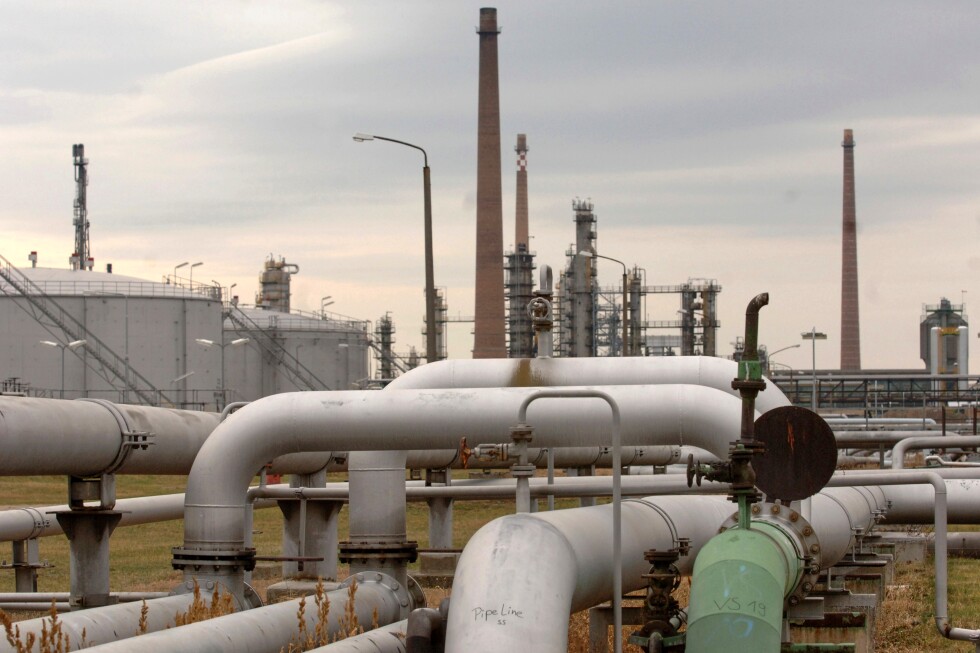
    BRATISLAVA, SLOVAKIA – Three months after Russian oil deliveries through the key Druzhba pipeline were unexpectedly halted, supplies have finally resumed flowing to Slovakia, the country’s economy chief confirmed Thursday. The resumption of oil transit, which got underway at 2 a.m. local time, brings an end to a tense standoff that has rippled across European Union politics and strained ties between Kyiv and two of its neighboring EU states. The disruption, which began back in January, put Hungary and Slovakia at sharp odds with Ukraine, worsening an already fraught geopolitical environment on the continent. Unlike the vast majority of European Union member states that have drastically cut their reliance on Russian fossil fuels since Russia’s full-scale invasion of Ukraine, both Central European nations have retained deep dependence on Russian crude for their domestic energy systems. When the cross-border pipeline crossing Ukrainian territory was shut down, the two governments quickly placed blame on Kyiv, accusing Ukrainian authorities of dragging their feet on repairs to the damaged section of infrastructure. The halt in deliveries triggered tangible political fallout across the bloc: Hungary moved to block a large-scale EU financial aid package designed to support Ukraine’s war effort, while Slovakia publicly refused to back a new round of proposed European sanctions targeting Moscow until pipeline operations returned to normal. After weeks of diplomatic wrangling and technical work, the flow of oil is once again moving along the strategic route, bringing a temporary resolution to a dispute that threatened to undermine EU unity on policy toward Russia.

  • UK, France agree three-year deal to stop migrant crossings

    UK, France agree three-year deal to stop migrant crossings

    After months of tense negotiations over border security, the United Kingdom and France have formally announced a new three-year bilateral agreement aimed at halting dangerous unauthorized migrant crossings of the English Channel in small vessels. The accord, which renewes and updates the 2018 Sandhurst Treaty set to expire this year, marks a major new step in addressing a long-running contentious issue that has roiled domestic politics on both sides of the Channel.

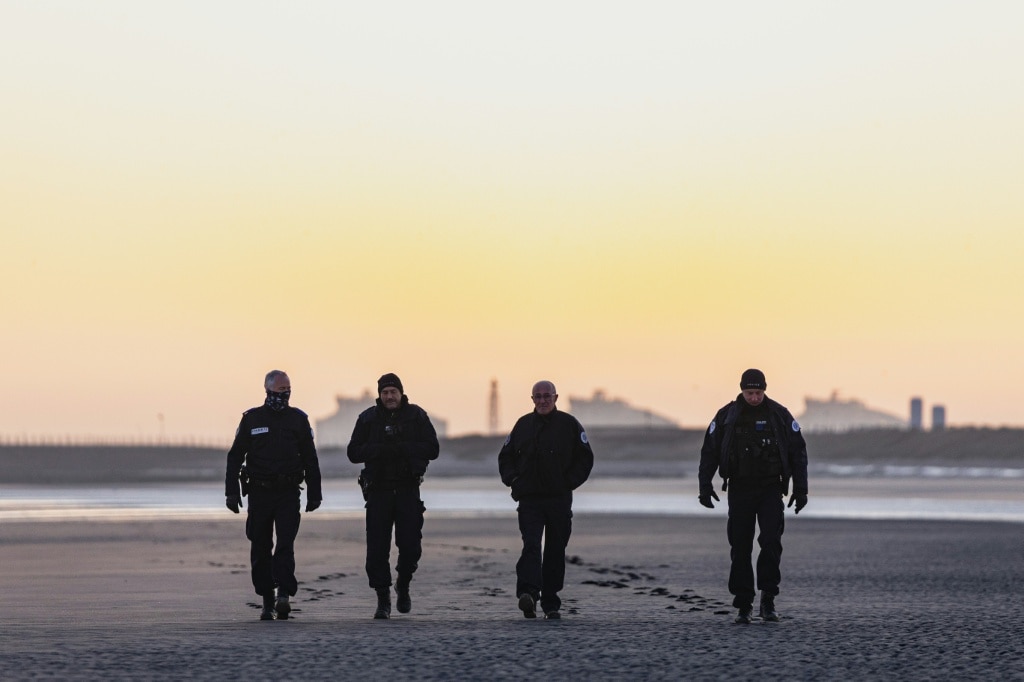
    Under the terms of the new deal, France has committed to expanding its coastal law enforcement presence by more than 50 percent, with a target of 1,400 active officers deployed to border patrols by 2029. To support these expanded efforts, the UK will provide up to 766 million euros (equivalent to $897 million) in funding, though roughly 24 percent of this total allocation is tied to performance conditions. Even if the conditional portion of funding is not released, the UK’s guaranteed core contribution of 580 million euros still represents a 40 million euro increase over the funding level agreed in the last iteration of the treaty.

    The months-long negotiation process was shaped by longstanding disagreements between the two neighboring countries. The UK has repeatedly criticized France for insufficient action to stop asylum seekers and irregular migrants from departing French shores, a gap that has allowed people smuggling networks to operate and pushed migrants to take increasingly life-threatening risks to avoid detection. Ahead of a new agreement, London insisted that any renewal of the Sandhurst Treaty would require the ability to attach performance conditions to how British taxpayer funds are used by French authorities.

    British Prime Minister Keir Starmer framed the agreement as a historic breakthrough for UK border security, noting that existing bilateral cooperation “already stopped tens of thousands of crossings.” He added that “this historic agreement means we can go further: ramping up intelligence, surveillance and boots on the ground to protect Britain’s borders.” UK Home Secretary Shabana Mahmood echoed that framing, stating that “This landmark deal will stop illegal migrants making the perilous journey and put people smugglers behind bars.” Mahmood and French Interior Minister Laurent Nunez are scheduled to unveil further operational details of the plan Thursday during a visit to the site of a planned deportation accommodation center in Loon-Plage, near Dunkirk.

    Per terms outlined in a French interior ministry document outlining the agreement, if the new measures fail to deliver “sufficient results” — as determined by a joint annual assessment — unspent conditional funding will be redirected to alternative anti-smuggling and border control initiatives.

    Beyond increased foot patrols, the deal’s roadmap outlines plans for France to deploy new technological resources, including drones, helicopters and digital surveillance tools, to disrupt smuggling operations before departures. The agreement reflects a key constraint of international maritime law: once a small vessel has left shore, authorities may only intervene to rescue migrants from drowning, rather than turning them back to France.

    The new deal comes at a critical political juncture for Prime Minister Starmer, who took office recently and faces intense domestic pressure to curb unauthorized immigration. His government is currently mired in a growing political scandal over the appointment of Peter Mandelson as UK ambassador to the United States, over Mandelson’s longstanding personal ties to the late convicted sex offender Jeffrey Epstein. Starmer’s political standing and the future of his Labour Party are widely seen as tied to the party’s performance in upcoming May local elections, with recent polling suggesting Labour faces significant projected losses.

    Official data underscores the scale of the challenge the new agreement aims to address. Official UK statistics show that 41,472 people crossed the Channel to reach the UK illegally via small boat in 2025, marking the second-highest annual total on record since large-scale crossings began in 2018. An AFP tally compiled from official French and British sources confirms that at least 29 migrants died attempting the crossing in 2025. French officials have pushed back against UK criticism, noting that unauthorized arrivals to the UK have halved in early 2026 compared to the same period in 2025, and that French law enforcement arrested roughly 480 suspected people smugglers across 2025.

  • ‘The Devil Wears Prada 2′ puts a spotlight on Italy’s fashion capital

    ‘The Devil Wears Prada 2′ puts a spotlight on Italy’s fashion capital

    MILAN (AP) — As ‘The Devil Wears Prada 2’ prepares for its Italian premiere in the country’s iconic fashion capital on Thursday, the luxury Italian brand Prada takes pride of place in the film’s title, while the global fashion industry steps into the broader spotlight and Milan itself claims a key supporting role. Though the motion picture draws its name from the legendary fashion house that has become inseparable from Milan’s identity, the story does not center on the century-old brand itself. To pay homage to the franchise’s deep ties to the label, both lead star Meryl Streep and Vogue editor-in-chief Anna Wintour donned Prada designs for a recent Vogue cover celebrating the new film, which follows the story of a notoriously demanding high-fashion editor.

  • 2 trains collide in Denmark, prompting a massive emergency response north of Copenhagen

    2 trains collide in Denmark, prompting a massive emergency response north of Copenhagen

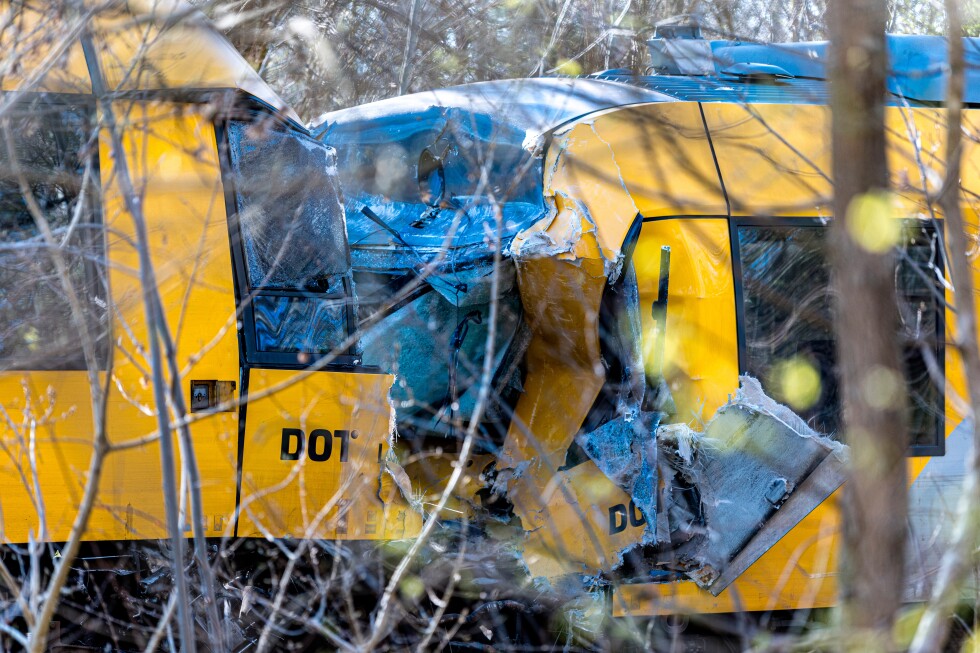
    A collision between two passenger trains in northern Denmark early Thursday has sparked a large-scale emergency deployment, with authorities describing the incident as a serious major accident. The crash unfolded at approximately 6:30 a.m. in the vicinity of Hillerød, a town located roughly 40 kilometers, or 25 miles, north of Denmark’s capital city Copenhagen.

    A spokesperson for North Zealand police confirmed that all passengers and crew have been successfully evacuated from both damaged trains. As of the latest update, officials have declined to release any information regarding the count of injured people or the severity of harm sustained by those involved in the collision.

    Visual imagery captured at the accident site shows significant destruction to the front carriages of both trains, with the crumpled front ends clearly visible. Despite the heavy impact, both trains have remained upright on their rail tracks, avoiding a more catastrophic derailment.

    Trine Egetved, mayor of the nearby municipality Gribskov, shared preliminary details about the incident in a public post on her official Facebook page. Egetved confirmed that a number of injured people from the crash were airlifted to nearby hospitals for urgent medical treatment. She also noted that the collision took place on a busy local commuter line that hundreds of Gribskov residents rely on daily, including commuting workers and students traveling to schools in the region. As of Thursday morning, no further details on the cause of the crash, identity of those involved, or updated injury counts had been released by investigating authorities.

  • Queensland Police recall service-issued Glock handguns after major safety malfunction detected

    Queensland Police recall service-issued Glock handguns after major safety malfunction detected

    Queensland Police Service (QPS) has announced a full recall of every service-issued Glock handgun across the entire state for urgent safety testing, after a potentially dangerous malfunction was uncovered during routine proactive weapons inspections. The safety review of the QPS’ entire firearms fleet was already in progress when inspectors identified the defect: under specific conditions, the weapon can discharge multiple rounds with a single trigger pull, a flaw that puts both officers and members of the public at unnecessary risk.

    In an official public statement, QPS confirmed that it has moved to accelerate expanded testing across every regional command and operational division, prioritizing the recall to guarantee that all weapons in active use meet mandatory safety standards. At the time of the announcement, the service stressed that no operational accidents or injuries have been linked to the weapon defect to date.

    The recall process will see all issued handguns collected for comprehensive testing. Firearms that pass the rigorous new inspection regime will be returned to frontline officers for active duty. Any weapons that fail to meet QPS safety requirements will be immediately withdrawn from service and retained by authorities. QPS added that it is already collaborating directly with Glock suppliers to develop a full resolution for the identified issue, aiming to restore the full complement of service weapons as quickly and safely as possible.

  • ‘Catastrophic’ Melbourne Airport near-misses only avoided by ‘good luck’ after international airliners take off metres from active worksite

    ‘Catastrophic’ Melbourne Airport near-misses only avoided by ‘good luck’ after international airliners take off metres from active worksite

    Australia’s aviation sector has been forced to confront critical gaps in safety protocols after a long-awaited official investigation concluded that two alarming near-collisions at one of the country’s busiest international hubs avoided catastrophe last year through nothing more than sheer good fortune. The Australian Transport Safety Bureau (ATSB) released its final public report on Thursday, detailing the two separate September 2023 incidents that unfolded at Melbourne Airport, Victoria’s primary international gateway, when runway construction work left a section of the takeoff strip drastically shortened.

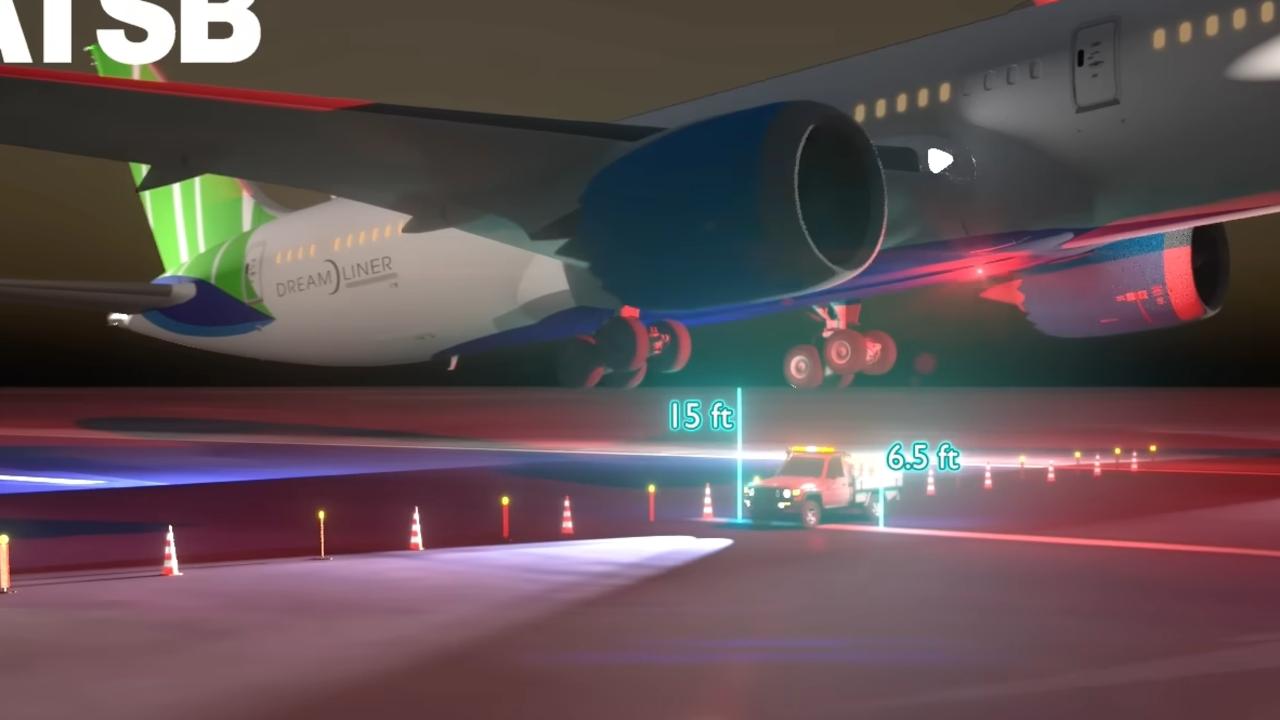
    The first incident occurred on September 7, when a Malaysia Airlines wide-body Airbus A330-300, bound for Kuala Lumpur with hundreds of passengers on board, exited the usable length of the temporary runway during its departure takeoff roll. After overshooting the marked end of the available runway, the large commercial jet climbed just 7 meters above an active construction worksite, where heavy machinery and ground personnel were working below.

    In response to this first close call, Melbourne Airport leadership launched an internal risk review and implemented incremental safety adjustments, including updating internal communication protocols and issuing a general safety alert to all airlines operating at the facility. But just 11 days later, a second nearly identical incident unfolded: a Bamboo Airways Boeing 787-9 en route to Hanoi also overran the same shortened runway, clearing the construction site by an even slimmer margin of only 5 meters.

    In its official statement accompanying the final report, the ATSB confirmed that on both occasions, powerful jet blast from the departing aircraft directly impacted the active work zone, where workers and heavy vehicles were present. While no ground personnel suffered physical injuries in either incident, one worker developed a stress-related injury following the second close call.

    Investigators found that information about the reduced runway length had been correctly distributed to the aviation community, including being broadcast over radio frequency and included in routine Automatic Terminal Information Service (ATIS) updates received by both flight crews. However, ATSB Chief Commissioner Angus Mitchell explained that neither flight crew recognized just how drastically the runway’s usable length had been reduced. “While both crews accessed a version of the ATIS that mentioned the shortened runway, they only noted to air traffic control the weather information from the ATIS, and not the reduced runway length,” Mitchell said.

    Further investigation revealed that while flight dispatchers at both airlines had adjusted their performance calculations to account for the shorter runway, the adjustment was not explicitly flagged in the pre-flight briefing materials provided to the operating crews. The ATSB noted this oversight was likely rooted in the fact that both aircraft were fully capable of departing safely from the shortened runway if correct power settings were applied. Nonetheless, the missed alert led both crews to plan their takeoffs using the original full runway length, and set reduced thrust settings for departure, resulting in the overruns.

    Legal experts have sharply criticized the systemic gaps exposed by the investigation. Peter Carter, director of Australian law firm Carter Capner Law, emphasized that the incidents exposed basic failures in core aviation safety procedures. “These are basic requirements even for day one students,” Carter said, noting that pilots are obligated to review NOTAMs (notices to airmen) and cross-check all ATIS safety information before departure. He added that a catastrophic collision would have killed more than 350 passengers and crew, along with any workers on the ground, and left a permanent stain on Australia’s already-tarnished aviation safety record. “A catastrophic event was avoided only by good luck,” Carter said. “It could have resulted in a 350-person fireball.”

    In the wake of the ATSB’s findings, both Malaysia Airlines and Bamboo Airways have committed to updating their internal flight dispatcher procedures and pre-flight briefing guidance to prevent similar oversights. Australia’s national air navigation provider Airservices Australia and the country’s civil aviation regulator Civil Aviation Safety Authority (CASA) have also proposed revisions to protocols for communicating safety-critical information related to runway construction projects.

    Mitchell closed by outlining long-term safety changes that could prevent similar near-misses globally, arguing that prominent visual markings, such as the signage proposed for inclusion in ICAO Annex 14, the international body’s standards for airport design, can serve as a critical final safety net to alert crews to changed runway conditions when the altered layout would otherwise look normal from the air. “Flight dispatchers, aircraft operators, airport operators, individual air traffic controllers, air traffic services providers and others can all contribute to ensuring pilots are aware of safety‑critical information when they need it,” Mitchell said.

  • Taiwan minister makes rare visit to disputed South China Sea island

    Taiwan minister makes rare visit to disputed South China Sea island

    Against a backdrop of escalating geopolitical friction across the South China Sea and adjacent waters, a senior Taiwanese official has carried out a high-profile, uncommon visit to Taiwan-controlled Itu Aba — also known as Taiping Island — to oversee regional coast guard training exercises.

    Ocean Affairs Minister Kuan Bi-ling personally oversaw two types of drills on the contested islet: humanitarian search-and-rescue operations and full-scale medical evacuation simulations. The training also included a live-interception scenario, where armed coast guard personnel responded to an unresponsive suspicious cargo vessel. Released coast guard footage shows heavily equipped special operations units breaching the vessel’s control room to secure the scene.

    Itu Aba, the largest naturally formed island in the Spratly Islands chain, spans 46 hectares and is currently home to a permanent population of roughly 200 residents. The islet hosts critical infrastructure including a working airstrip and a full-service hospital, but its status remains a flashpoint for competing territorial claims. In addition to Taiwan’s ongoing administration, Beijing, Hanoi and Manila all assert full sovereignty over the land feature.

    This visit unfolds at a moment of heightened regional military activity. At the time of Kuan’s trip, the United States and the Philippines were conducting their largest-ever joint military exercises across Philippine territory, a move that triggered sharp pushback from Beijing. In response to the US-Philippines drills, China deployed a newly commissioned amphibious warship to the South China Sea and sailed one of its active aircraft carriers through the nearby Taiwan Strait. Cross-Strait tensions also frame the dispute: China claims the self-governing island of Taiwan as an inalienable part of its territory, a position Taiwan’s government rejects outright.

    The 2016 international arbitration ruling initiated by the Philippines reclassified Itu Aba as a “rock” rather than a full island under the United Nations Convention on the Law of the Sea. This classification restricts claimed resource rights to just a 12-nautical-mile exclusive zone around the islet, instead of the 200-nautical-mile exclusive economic zone that would be granted if it were recognized as a full island. Both Taipei and Beijing rejected the ruling outright and have refused to recognize the arbitration outcome. In 2024, Taiwan’s then-foreign minister Joseph Wu issued a stark warning that China had already constructed large-scale military installations across areas surrounding Itu Aba, further shifting the regional military balance in Beijing’s favor.