博客

  • Chunk of glacier blocks route up Everest in peak climbing season

    Chunk of glacier blocks route up Everest in peak climbing season

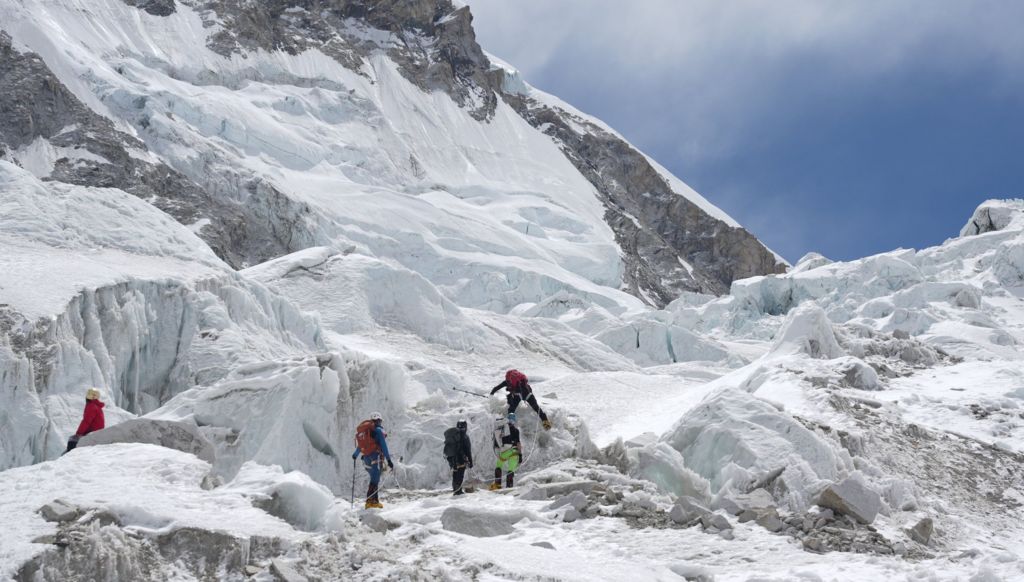
    As the annual spring climbing season on Mount Everest gets underway, a massive, unstable block of glacial ice has brought preparations to a standstill, threatening to spark repeated overcrowding issues that have plagued the world’s highest peak in recent years. The 100-foot (30-meter) serac sits just below Camp 1 on Nepal’s southern route, and the specialized team tasked with securing climbing paths, known as icefall doctors, has been unable to identify a safe detour around the obstruction.

    The icefall doctors, employed by the Sagarmatha Pollution Control Committee (SPCC) which manages route maintenance up to Camp 2 at 8,848.86 meters above sea level, arrived at Base Camp three weeks ago. In a typical April, the team would have already fixed ropes and ladders all the way to Camp 3, but the massive glacial chunk, located roughly 600 meters below Camp 1, has blocked all progress. Team representatives say there is no feasible artificial method to remove the block, leaving only one course of action: waiting for natural melting and collapse to clear the path.

    “We haven’t found artificial ways to melt it so far, so we don’t have any options other than waiting for it melting and crumbling itself,” SPCC Base Camp coordinator Tshering Tenzing Sherpa confirmed in an interview with the BBC.

    Veteran icefall doctor Ang Sarki Sherpa, who has worked on Everest routes for years, noted that the lower section of the serac is already weakening. The team first reached the obstruction on April 10, and subsequent observations show the crevasse beneath the block has continued melting, bringing the serac closer to collapse. After four days of scouting the surrounding terrain on both sides of the mountain, the team confirmed there is no safe alternate route to Camp 1 this season, and climbing directly over the unstable serac has been ruled out as too high-risk.

    Nepal’s Department of Tourism is now evaluating contingency plans, including the possibility of helicopter airlifts for the rope-fixing team and their equipment directly to Camp 2, allowing work to proceed on higher sections of the route while the team waits for the obstruction to clear.

    “We are thinking about airlifting the rope-fixing team and their logistics to Camp 2 by helicopter, so they can open the route above that altitude for now,” said Ram Krishna Lamichhane, the department’s director general. “We will wait for the ice to melt at the place where there is an obstruction and work there when everything is safe.”

    The narrow window of favorable climbing conditions on Everest only lasts through the end of May. SPCC teams hold cautious optimism that the serac will collapse within days, allowing route fixing to Camp 2 to finish quickly and the first summit attempts to proceed within a week. Still, the weeks-long delay has stoked widespread concern among climbers about a repeat of the dangerous summit “traffic jams” that have led to deaths and injuries in past seasons.

    Purnima Shrestha, a prominent Nepali climber and photographer who is currently acclimatizing at Base Camp ahead of her sixth Everest summit attempt, shared her perspective from the mountain. Normally during acclimatization, climbers rotate repeatedly between Base Camp, Camp 1, Camp 2, and Camp 3 to build tolerance to high altitude, but the route delay has already disrupted this process.

    “I am not worried that the route won’t open because we still have time for that. But the window could be narrow – with lots of climbers having to make their attempts in a short period of time,” Shrestha explained. Even if the serac clears in the coming days, the reduced climbing window will force hundreds of permitted climbers to compress their summit attempts into a much shorter timeframe, increasing the risk of deadly overcrowding.

    Despite ongoing geopolitical instability from the Iran war, which has driven up fuel costs and disrupted international travel, demand for Everest summits remains strong this year. Dambar Parajuli, president of the Expedition Operators’ Association, noted that there has been only a small drop in numbers linked to flight disruptions, with mountaineering far less affected than lower-altitude trekking.

    To date, Nepal’s Department of Tourism has issued 367 climbing permits, with the majority going to Chinese climbers. This year, China has not issued permits for foreign climbers accessing Everest from the Tibetan side of the mountain, meaning nearly all summit attempts will follow the Nepali route. In 2025, more than 700 climbers and guides summited from Nepal, compared to just 100 from the Tibetan side.

    After viral images of massive summit queues in 2019 sparked global criticism of overcrowding and lax regulation, Nepal implemented strict reforms to its permit system, including sharp increases in climbing fees. This spring, permit costs for foreign climbers have risen to $15,000, up from $11,000, while fees for Nepali climbers have doubled to $1,000, in a bid to reduce overcrowding and fund better route management. Even with the price hikes, however, the unexpected glacial obstruction has put the 2026 season at risk of the same overcrowding issues regulators sought to prevent.

  • Hebei pupils embrace reading corners for World Book Day

    Hebei pupils embrace reading corners for World Book Day

    As the world prepares to mark World Book Day on Thursday, young pupils at No 1 Experimental Primary School in Guangping county, Handan City, Hebei Province have already turned specially designed campus reading corners into their favorite gathering spots during break periods.

    This grassroots reading initiative is not a one-off event for the annual celebration, but the newest addition to the region’s long-running “Bookish Campus” campaign, a multi-year effort that aims to embed a love of reading into daily school life across Guangping county.

    Local education authorities have noted that the steady push to upgrade campus reading spaces, paired with consistent, engaging literacy-focused activities over the years, has delivered tangible positive outcomes for students. Beyond just sparking greater curiosity and enthusiasm for reading among young learners, the campaign has also lifted overall academic performance across participating schools. More importantly, educators and officials emphasize that fostering a consistent reading habit from an early age builds a strong foundational cultural awareness that supports the holistic growth of students, preparing them for long-term learning and personal development.

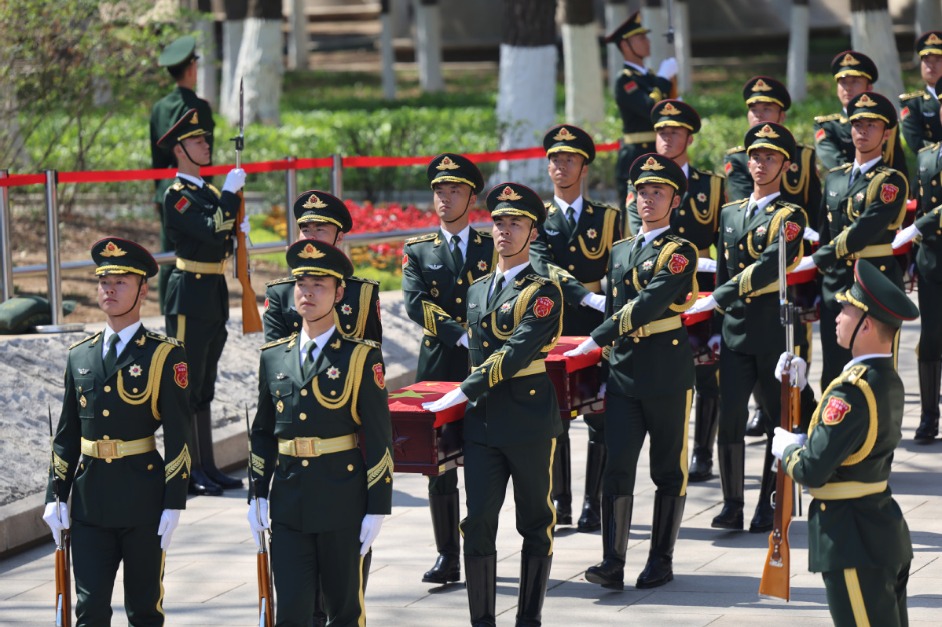
  • Remains of 12 Chinese martyrs from Korean War buried in homeland

    Remains of 12 Chinese martyrs from Korean War buried in homeland

    This page outlines key administrative and legal information for the digital content platform operated by China Daily Information Co (CDIC). First established with copyrighted protections in 1994, CDIC holds full intellectual property rights over all material published across its website, covering everything from written text and photographic assets to multimedia content. No part of this published content may be reproduced, redistributed or repurposed in any format without explicit written permission granted directly by CDIC.

    Beyond copyright regulations, the platform includes technical guidance for visitors, recommending that users access the site through a browser that supports a minimum screen resolution of 1024*768 or higher to ensure optimal display and functionality. Additional administrative details are also listed on the page: the platform holds an online multimedia publishing license numbered 0108263 and carries an official registration number of 130349.

    The page also provides navigation links for visitors seeking more information about the organization or engagement opportunities. These resources include an introductory page about China Daily, information on placing advertising campaigns on the site, official contact details for inquiries, open listings for available positions, and dedicated resources for expatriate job seekers. Finally, the page prompts visitors to connect with China Daily’s content across its social media channels to follow updated coverage.

  • South African police chief suspended over $20m health contract

    South African police chief suspended over $20m health contract

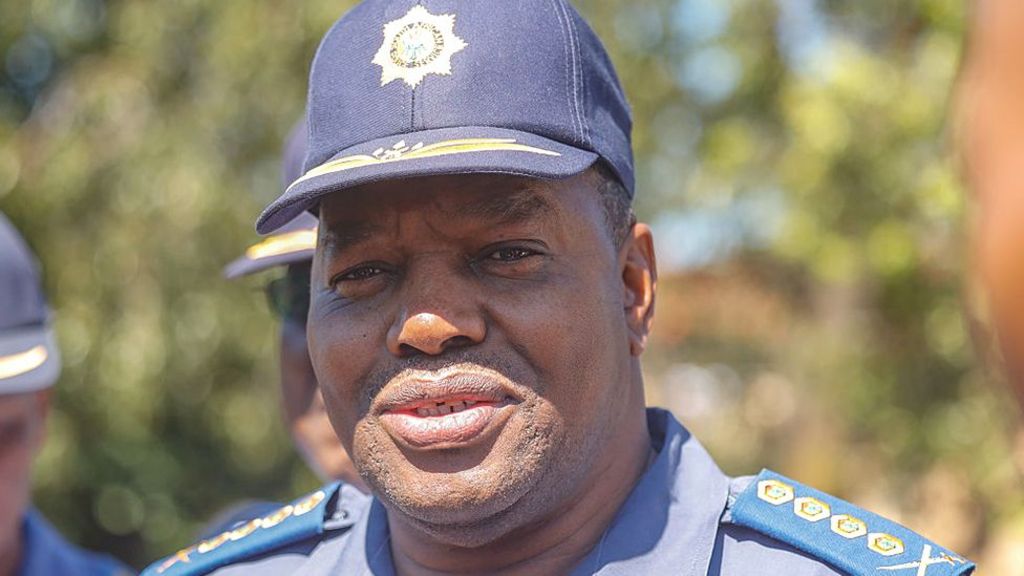
    In a significant move targeting institutional corruption within South Africa’s law enforcement apparatus, President Cyril Ramaphosa has ordered precautionary suspension for the country’s national police commissioner, General Fannie Masemola, just hours after the 62-year-old top officer was formally criminally charged in a Pretoria court this Tuesday.

    The charges against Masemola stem from a botched and highly controversial 2024 $21 million health tender awarded to a company tied to prominent businessman Vusimuzi “Cat” Matlala. The contract, which was intended to deliver on-site health services to South Africa’s police force, was cancelled in May 2025 after red flags over irregular awarding procedures emerged, triggering a wide-ranging criminal probe that has already swept up a dozen senior serving and former police officials.

    Unlike the other accused individuals, who face direct corruption charges for allegations of colluding with Matlala (who has also been charged in the case), Masemola has been cited on four counts of violating South Africa’s Public Finance Management Act. The legislation outlines mandatory oversight requirements for public officials to protect taxpayer funds from misallocation and misuse. Prosecutors allege Masemola failed to carry out his required oversight duties during the tender evaluation and awarding process, leaving him accountable for the irregular spending. None of the accused, including Masemola, have yet entered pleas in the ongoing court proceedings.

    Speaking to reporters following his initial court appearance, Masemola publicly denied all allegations against him. “I know that I’m not guilty, I’m not wrong, but the law must take its course,” he stated, maintaining his innocence as the judicial process moves forward.

    Ramaphosa announced the suspension decision during an official press briefing in the nation’s capital Pretoria, alongside Lieutenant-General Puleng Dimpane, who has been appointed to step in as acting national police commissioner for the duration of Masemola’s suspension, which will remain in place until the court case reaches a final conclusion.

    Explaining his decision, Ramaphosa cited the gravity of the charges and the central role the police commissioner holds in the country’s ongoing national fight against organized crime and public corruption. “It is vital for law enforcement agencies to be capable, ethical and effective, and to retain the confidence of the people of South Africa,” the president emphasized, noting his administration has faced mounting public pressure to root out graft within the police force.

    Masemola’s suspension marks a historic milestone: he is now the third sitting national police commissioner in South Africa to be subjected to a criminal investigation while holding office.

    Dimpane, Masemola’s interim replacement, brings nearly two decades of experience within the South African Police Service, having served as the service’s chief financial officer since 2018. Despite her long tenure in a senior financial oversight role, her appointment has already drawn public scrutiny, as she oversaw the police service’s finances throughout the period when the alleged irregularities around the health tender took place. Dimpane has previously issued public statements denying any personal involvement in corruption linked to the contract.

    The allegations of graft around the Medicare24 Tshwane District tender were first uncovered during public hearings of the Madlanga Commission, an inquiry launched by Ramaphosa last September specifically to investigate systemic corruption within South Africa’s police service. To date, the investigation has resulted in criminal charges against more than a dozen senior officials, in one of the highest-profile anti-corruption probes targeting South Africa’s law enforcement in recent years.

  • Sri Lanka investigates after hackers steal $2.5m

    Sri Lanka investigates after hackers steal $2.5m

    Sri Lankan authorities have launched a full criminal investigation after a sophisticated cyber attack on the nation’s finance ministry computer systems resulted in the theft of $2.5 million, funds that had been allocated for a bilateral debt repayment to Australia, senior government officials confirmed this week.

    The stolen sum was marked for a debt settlement scheduled for September 2025, and investigators have traced the unauthorized diversion of the funds to January of this year, though details of the breach have only recently come to light amid ongoing investigative work.

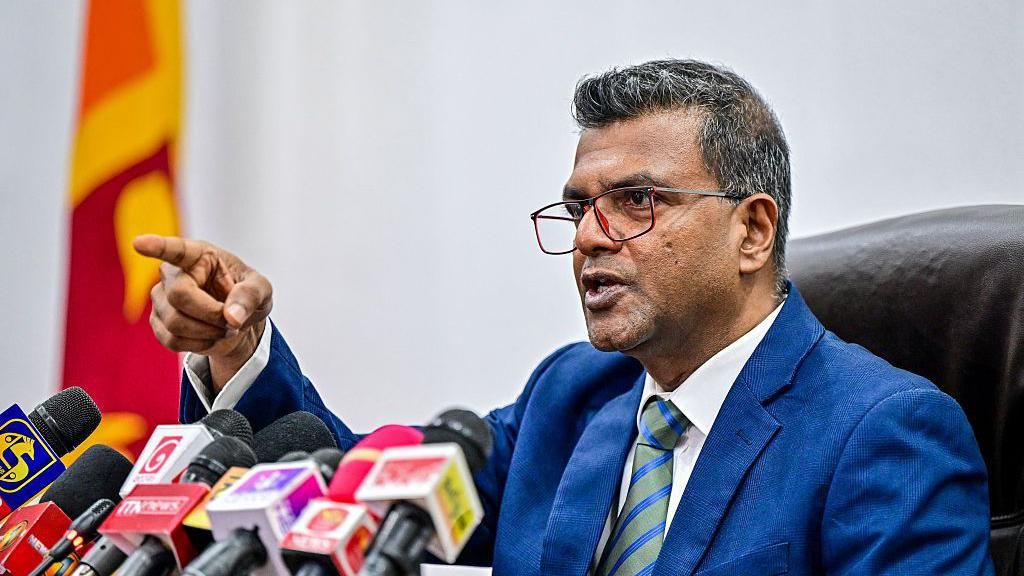
    Addressing reporters on Thursday, Harshana Suriyapperuma, secretary of Sri Lanka’s finance ministry, laid out the sequence of events: “Even though Sri Lanka had made the due payments, the cyber criminals had intervened and diverted it to other bank accounts, instead of the intended recipient.”

    In response to the breach, four senior officers from the nation’s Public Debt Management Office have been placed on suspension, and Sri Lankan authorities have requested support from international law enforcement agencies to track down the perpetrators and recover the stolen funds. While the full technical details of how hackers accessed the payment system remain unconfirmed, lead investigators believe the attackers altered email-based payment instructions embedded in the sovereign debt payment workflow.

    The missing funds went undetected until officials from the Australian creditor reached out to notify Sri Lankan authorities that the scheduled payment had never arrived in their account. Deputy finance minister Anil Jayantha Fernando added that the full scale of the heist only came into focus when the same cyber criminals attempted to alter payment details for a separate upcoming debt payment due to India, triggering internal red flags over the modified bank account information.

    This high-profile cyber attack comes as a major new setback for Sri Lanka, which is still in the slow process of recovering from a devastating 2022 economic collapse that pushed the nation to the brink of bankruptcy. During that crisis, Sri Lanka exhausted its foreign exchange reserves, defaulted on $46 billion in outstanding external debt, and was forced to ration critical imports including food, fuel, and pharmaceutical supplies. Widespread public anger over the shortages erupted into mass anti-government protests that forced the resignation and ousting of then-president Gotabaya Rajapaksa in July 2022.

    Matthew Duckworth, Australian High Commissioner to Sri Lanka, confirmed this week that Canberra has been notified of the irregularities in the debt payment process. “Sri Lankan authorities are investigating the matter and are coordinating with Australian officials, who are assisting the investigation,” Duckworth stated in a post on the social platform X.

    Notably, the breach comes just months after Sri Lanka’s central bank and finance ministry rolled out a national public awareness campaign in local newspapers, warning citizens and government stakeholders about the growing risk of cyber scams, according to reporting from Agence France-Presse. Investigators are currently conducting a full review of existing financial control mechanisms to identify gaps that allowed the heist to proceed undetected for months, while continuing efforts to trace and recover the stolen $2.5 million.

  • What the Iran-Iraq war taught today’s Iranian leaders – and why that matters

    What the Iran-Iraq war taught today’s Iranian leaders – and why that matters

    Forty-four years ago, in September 1980, Iraqi leader Saddam Hussein launched a coordinated full-scale ground and air invasion of neighboring Iran, confident his forces would capture the Iranian capital Tehran in a matter of weeks and secure a swift, decisive victory. What followed upended both leaders’ calculations: the conflict dragged on for nearly eight brutal years, claimed the lives of more than one million combatants and civilians, and left vast swathes of infrastructure and territory in ruin. Yet far from being a catastrophic footnote in Middle Eastern history, this devastating war fundamentally reshaped and solidified the Islamic Republic of Iran into the political and military entity it is today, casting a long shadow that continues to define Iran’s actions amid the 2025 US-Israeli military campaign against the country.

    The invasion came at a moment of unprecedented chaos for Iran. Just one year prior, the 1979 Islamic Revolution had ousted the Western-backed Shah, a key US and Israeli ally in the region, leaving the country’s new leadership scrambling to consolidate control. The pre-revolutionary Iranian military had fractured in the wake of the uprising, and a fragmented landscape of competing factions – nationalist groups, leftist movements, and moderate religious factions – vied for power against the ultraconservative clerical bloc led by Ayatollah Ruhollah Khomeini, Iran’s first supreme leader.

    Saddam’s gambit to topple Khomeini’s fragile new regime backfired spectacularly. Rather than weakening clerical rule, the invasion provided a catalyst for Khomeini’s faction to tighten its grip on power, eliminate political rivals, and entrench the core institutions of the Islamic Republic. For opposition figures, the conflict proved a perfect tool for authoritarian consolidation. “For a dictatorial regime, war is the best blessing because any dissenting voice can be silenced under its pretext and the foundations of totalitarianism can be strengthened,” explained Behrouz Farahani, a Paris-based Iranian opposition critic. This framing was explicitly embraced by Khomeini himself: the phrase “War is a blessing,” attributed to the supreme leader, was painted as graffiti on walls across Iranian cities throughout the conflict.

    When the war finally ended in 1988, Khomeini died just 12 months later, opening the door for Ayatollah Ali Khamenei – Iran’s current supreme leader – to consolidate power and launch full-scale national reconstruction. While the original “War is a blessing” graffiti faded from city walls, replaced by slogans from Khamenei, the core lessons the ruling clerical establishment drew from the 1980-1988 war have guided every major political and military decision Iran has made in the decades since.

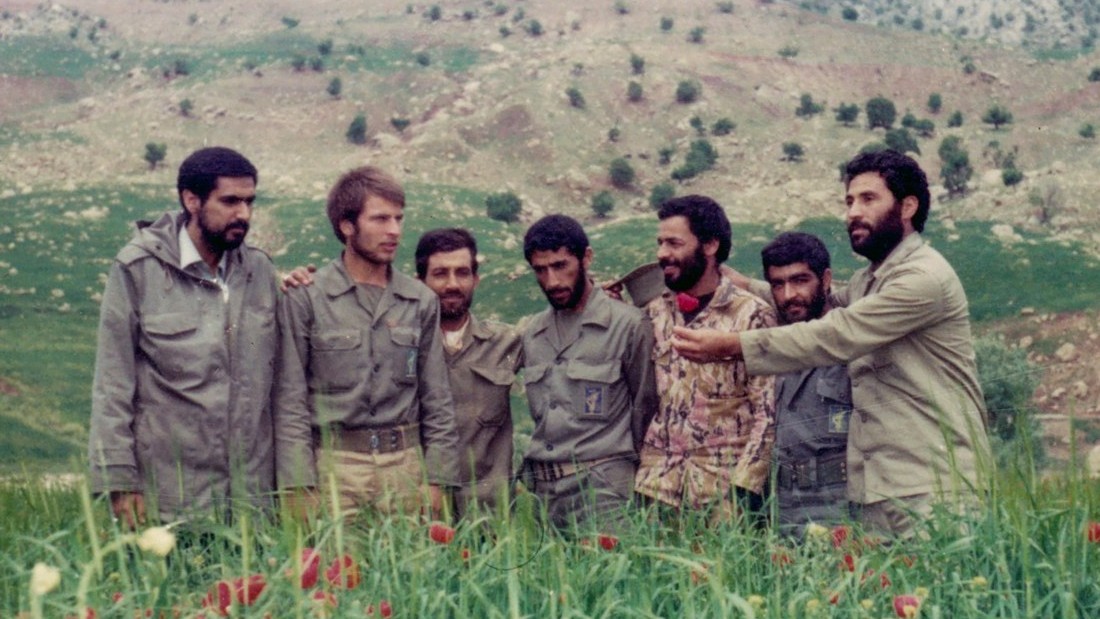
    Most notably, the vast majority of Iran’s most powerful contemporary political and military leaders cut their teeth in the Iran-Iraq War. The slain Quds Force commander Qassem Soleimani, his successor Esmail Qaani, former senior security official Ali Larijani (assassinated by Israel in March 2025), current foreign minister Abbas Araghchi – who led Iran’s negotiations with the US – and influential parliament speaker Mohammad Bagher Ghalibaf all served in the Islamic Revolutionary Guard Corps (IRGC) during the conflict, many remaining in military service for years after the ceasefire before transitioning to civilian politics.

    Against the backdrop of the February 2025 US-Israeli invasion of Iran, analysts argue the country’s current strategy is directly shaped by hard-won lessons from the 1980s conflict. The most foundational lesson was the imperative of self-reliance. When Saddam launched his invasion, Iran found itself almost entirely isolated on the international stage: Western powers backed Saddam, and nearly all regional Arab states (with the exceptions of Syria and occasional support from Libya) aligned against Iran. Its post-revolutionary military was in disarray, and it quickly lost control of parts of the oil-rich Khuzestan province. Yet despite the isolation, shortage of weapons, and internal chaos, Iranian forces managed to push Iraqi troops back within roughly a year.

    “While Iran was under attack by Iraq, they [the Iranian establishment] realised they were not going to receive any help from the outside, so they had to rely on themselves,” explained Maziar Behrooz, a leading scholar of contemporary Iranian history and author of *Iran at War: Interactions with the Modern World and the Struggle with Imperial Russia*. “The lesson from that war was missile technology, which they reverse-engineered and then improved. Today we see its result, both in Iran’s drone and missile technologies, which have inflicted substantial damage to those who have now attacked Iran.”

    A second critical lesson was the value of moving critical military infrastructure underground. In the years after the 1988 ceasefire, Iran built missile and drone production facilities deep inside mountain networks and relocated portions of its nuclear program underground to avoid targeted strikes. Analysts credit this shift, born of the Iran-Iraq war experience, for the failure of US and Israeli efforts to disable Iran’s strike capacity in the current conflict.

    This commitment to self-reliance extended far beyond the military, reshaping Iran’s entire political and economic approach. Before the 1979 revolution, Iran was heavily dependent on Western powers, particularly the US, for both military equipment and civilian infrastructure. That dynamic shifted permanently during and after the war. “The establishment realised it had to be independent and rely as much as possible on its own resources,” said Peyman Jafari, an Iranian historian and professor at the College of William & Mary in Virginia. “Reliance on their own initiatives and strategising their policies within this framework became of high importance for them in the military, industry, intelligence, and all other fields.”

    The war also reshaped how the clerical establishment consolidated domestic power. Just months before the invasion, the 1979 US embassy hostage crisis had already stoked widespread anti-American sentiment among the Iranian public, fueled by decades of resentment over the 1953 CIA-backed coup that restored the Shah to power after he ousted Iran’s democratically elected prime minister. The invasion allowed the new regime to tie together anti-Western sentiment and nationalist mobilization to crush internal opposition. Beginning in 1981, the Khomeini-led government moved rapidly to eliminate rival factions: it cracked down on the main opposition group the People’s Mojahedin Organisation, forced out the country’s first post-revolution president Abolhassan Banisadr, launched military campaigns against Kurdish separatist groups, and dismantled remaining leftist and nationalist factions. This process created a new post-revolutionary social order: while many Iranians supported the new regime, a large share of the population stepped back as bystanders, waiting out the conflict to see which faction would emerge victorious.

    This same dynamic is playing out in the 2025 conflict. After the Iranian government violently suppressed nationwide anti-establishment protests in January 2025, the incoming US-Israeli invasion allowed the regime to stoke nationalist sentiment to repair its standing with the public, while also cracking down further on dissent. Executions of imprisoned dissidents have risen, new stricter laws criminalizing “espionage” and “contact with foreign media” have been enacted, and arrests on these charges have become far more widespread.

    Beyond domestic consolidation, the Iran-Iraq War created a permanent shift in Iran’s governance structure: after the ceasefire, hundreds of senior and mid-level IRGC commanders transitioned into roles across politics, the economy, cultural institutions, and even sports administration. This process began during the war, but accelerated rapidly after 1988, as battlefield veterans were redirected into building new state institutions. Jafari argues this process was bonded by a shared experience of “army brotherhood” forged during eight years of brutal conflict. “Because that war lasted very long, that brotherhood was really forged in steel,” he noted. These deep, battle-tied bonds have created a highly organized, layered state system that has surprised Western and Israeli observers by its resilience in the current conflict. Many analysts had predicted that targeted assassinations of senior Iranian leadership would collapse the system, but the opposite has occurred, a failure Jafari attributes to outdated orientalist assumptions about Iran’s governance. “This is rooted in this slivery orientalist idea that these Iranians are kind of savages who cannot organise any modern state. This system is very organised, with layers of offices, a finance system, and planning for its own survival,” he explained.

    While the war taught the Islamic Republic how to survive external threats, it did not resolve deep-seated internal tensions – and analysts note the regime failed to learn one critical lesson from the conflict: repression alone cannot resolve public dissatisfaction, and over time it only deepens public discontent. Even during the war, there was underlying public discontent with Khomeini’s rule, but the regime enjoyed broader popular support and faced far fewer constraints on cracking down on dissent. Today, that balance has shifted, with a shrinking circle of power and growing distance between the state and Iranian society. “In undemocratic countries, the ability to listen to the base diminishes over time, and as repression intensifies, understanding what the base demands becomes increasingly impossible,” Behrooz noted. Jafari added that long-standing structural issues have left most Iranians disillusioned with the current system: “Because of the ideological, political and cultural restrictions, many citizens do not feel that they can be integrated in this system. Moreover, we have economic problems, poverty, mismanagement, and corruption, and that’s why the majority are fed up with the system.”

    This analysis was originally produced by Middle East Eye, an independent outlet specializing in coverage of the Middle East and North Africa.

  • ‘Pictures don’t do it justice’ – Giant ice chunks ram into Michigan homes

    ‘Pictures don’t do it justice’ – Giant ice chunks ram into Michigan homes

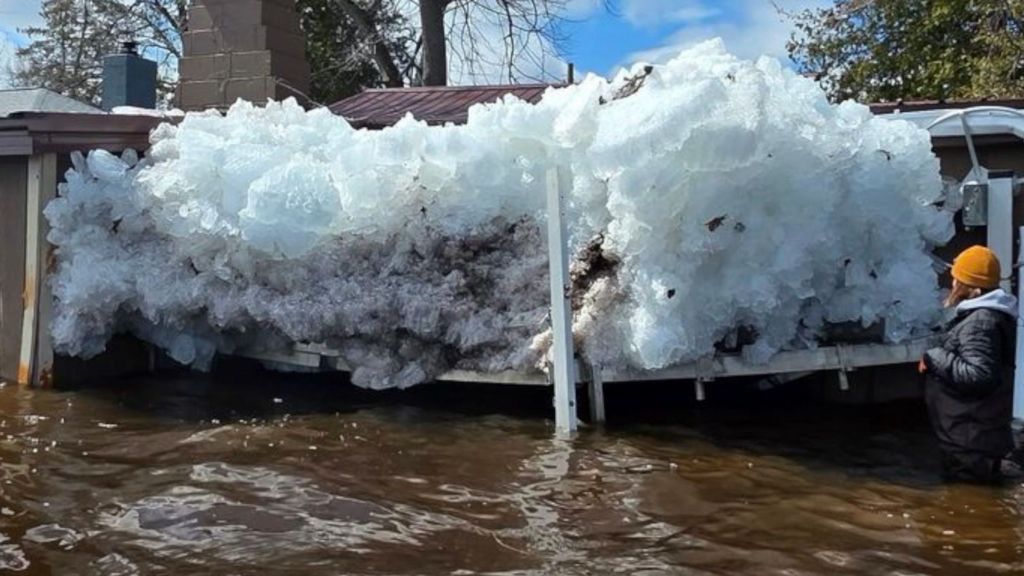
    Residents of lakeside neighborhoods near Michigan’s Black Lake are confronting unprecedented damage this spring, as unseasonably large ice chunks propelled by rising floodwaters have slammed into waterfront properties, leaving destruction that photographs cannot fully capture.

    The crisis began when a combination of sustained heavy spring rainfall and rapid snowmelt triggered a sharp rise in Black Lake’s water levels. As the ice covering the lake broke up, the swollen currents carried massive blocks of ice toward the shore, where they crashed into residential structures with enormous force.

    Local residents report that the sheer size and momentum of the ice chunks have caused structural damage to foundations, siding, and waterfront infrastructure that is far more severe than typical annual ice movement. Many homeowners have been forced to evacuate temporarily as floodwaters continue to surround their properties, while assessment teams work to document the full scope of the damage.

    Meteorologists link the event to this year’s late-season temperature swings, which kept the lake frozen longer than average before a sudden warm spell accelerated melting alongside spring rainstorms. Local emergency management officials have issued warnings for other waterfront communities across the region, urging residents to monitor water levels and prepare for potential evacuations if flooding and ice movement continue.

  • Trump tells BBC that King’s visit could ‘absolutely’ help repair relations with UK

    Trump tells BBC that King’s visit could ‘absolutely’ help repair relations with UK

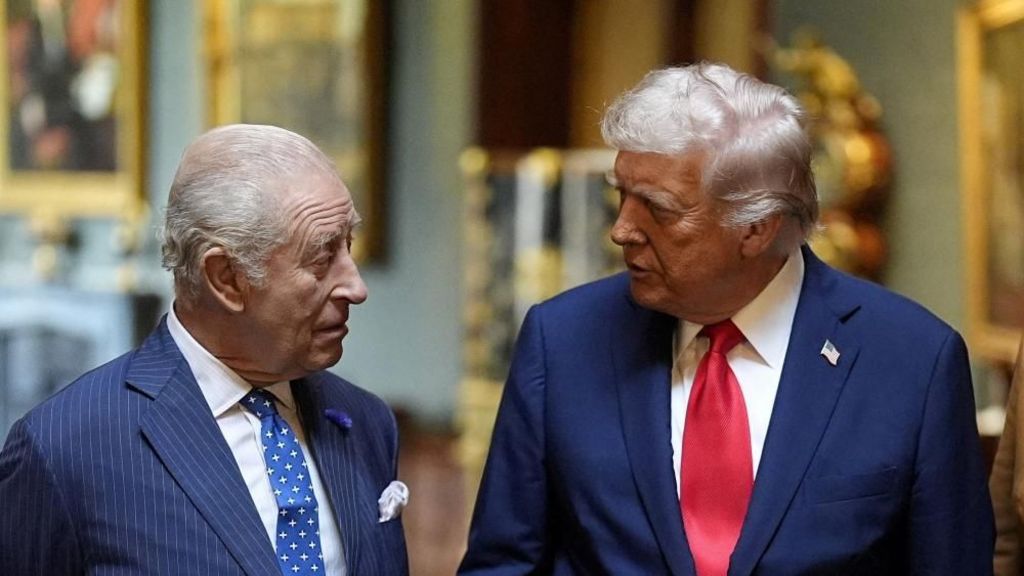
    In an exclusive phone interview with the BBC that was first reported by Reuters, U.S. President Donald Trump has expressed confidence that next week’s landmark four-day state visit by King Charles III and Queen Camilla will go a long way toward mending any recent strains in the bilateral relationship between the United States and the United Kingdom.

    When asked directly if the high-profile royal trip could help reset transatlantic ties, Trump offered an unreservedly positive response. “Absolutely. He’s fantastic. He’s a fantastic man. Absolutely the answer is yes,” the president told reporters, noting that he has built a long-standing personal rapport with the British monarch over many years. Calling Charles a brave and outstanding leader, Trump emphasized that the visit would without a doubt deliver positive outcomes for both nations.

    The royal tour is scheduled to kick off this coming Monday, with the King and Queen set to hold a private audience with President Trump at the White House shortly after their arrival in Washington D.C. Beyond the bilateral meeting, King Charles will also deliver a historic address to a joint session of the U.S. Congress, a rare honor reserved for visiting heads of state and global leaders. After wrapping up two days of engagements in the U.S. capital, the royal couple will travel onward to New York, Virginia, and Bermuda before returning to the United Kingdom at the end of the trip. According to the UK Foreign Office, the visit is timed to coincide with the 250th anniversary of U.S. independence, and is designed to celebrate the deep, long-standing partnership between the two countries rooted in shared history, mutual prosperity, and collective security.

    Beyond the royal visit, Trump also opened up about his tense relationship with UK Prime Minister Keir Starmer in the interview, conducted on Thursday. The two leaders have publicly clashed in recent weeks over multiple policy issues, most notably the ongoing conflict in Iran. Starmer has also faced growing domestic political pressure after his controversial appointment of Lord Mandelson as the new UK ambassador to the United States. Earlier this week, Trump took to his social platform Truth Social to slam the pick as “a really bad pick”, but added that Starmer still had “plenty of time to recover” his standing with the White House.

    Clarifying that comment during the BBC interview, Trump outlined the conditions under which he believes the UK prime minister can repair relations: Starmer would need to open up further North Sea oil and gas extraction for development – a policy Trump has repeatedly pushed for – and enact much stricter immigration controls, which Trump argued are currently lacking. “If he opened the North Sea and if his immigration policies became strong, which right now they’re not, he can recover, but if he doesn’t, I don’t think he has a chance,” Trump said.

    The president also addressed ongoing tensions over the Iran war, where he has openly criticized the UK and other U.S. allies for their limited level of military support. Starmer has repeatedly ruled out deploying UK troops to avoid expanding the conflict into a wider regional war. When asked why he had pushed allies to join the conflict, Trump pushed back on the idea that the U.S. needed additional military backing. “I didn’t need them at all but they should’ve been there. I didn’t need them, obviously,” he said. “We’ve wiped Iran’s military out. I didn’t need anybody. I wanted to see whether or not they would be involved,” Trump added, framing his repeated calls for allied support as “more of a test” of alliance commitments.

    Finally, Trump addressed widespread international backlash over his controversial threat earlier this month, when he warned that “a whole civilisation will die tonight” unless Iran agreed to a negotiated settlement. The comment drew widespread global condemnation, including public criticism from the Pope and the United Nations Secretary-General, with many observers speculating the comment referred to a potential nuclear strike. When asked if the threat was referencing nuclear weapons, Trump did not directly answer, instead arguing that his hardline rhetoric was yielding results. “The other side is dying to make a deal. So whatever I’m saying or whatever I’m doing, it seems to be working very well,” he concluded.

  • Scientists create largest-ever cosmological simulation, opening new window into universe

    Scientists create largest-ever cosmological simulation, opening new window into universe

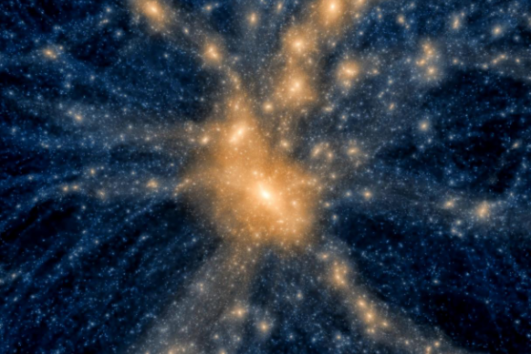
    For decades, cosmologists have grappled with a fundamental challenge: how to reconstruct 13.8 billion years of cosmic evolution to test leading theories about dark matter, dark energy, and the origins of the large-scale structures that fill our universe. Now, a Chinese-led international research collaboration has delivered a groundbreaking tool to address that gap, unveiling HyperMillennium, the largest and most detailed cosmological simulation ever created. The project, which has already drawn praise from leading global astrophysicists, promises to reshape the future of cosmological research and support next-generation sky survey missions around the world.

    HyperMillennium is far more than a simple digital model of the cosmos. Enclosed in a virtual cube measuring 12 billion light-years on each edge, the simulation tracks the gravitational interactions of 4.2 trillion virtual dark matter particles across 10 billion years of cosmic history. Using a well-established N-body numerical simulation technique, the team started their virtual model just moments after the Big Bang, then step-by-step traced how gravity pulled dark matter into the filamentous web of large-scale structures we observe in the modern universe. This digital replica of the cosmos allows researchers to rewind cosmic time, study the gradual formation of galaxies and galaxy clusters, and generate a comprehensive catalog of key galactic properties including positions, brightness, and structural traits when integrated with specialized galaxy formation physical models.

    According to Wang Qiao, a researcher at the National Astronomical Observatories of the Chinese Academy of Sciences (NAOC), the project breaks new ground in three critical areas: force resolution, time accuracy, and overall computational scale. Unlike previous smaller simulations, HyperMillennium retains strong statistical power across its entire volume while enabling researchers to examine extremely rare, massive cosmic structures in unprecedented fine detail. This makes it a uniquely valuable tool for testing core theories that have shaped modern cosmology.

    Pulling off a simulation of this magnitude required overcoming massive computational hurdles. Instead of relying on off-the-shelf software, the research team spent more than a decade developing and optimizing PhotoNs, a custom piece of code built specifically to run on China’s domestic supercomputing infrastructure. The final simulation ran on more than 10,000 accelerator cards, consuming over 100 million CPU core-hours and 10 million accelerator-card hours to generate roughly 13 petabytes of raw and processed data — a volume equivalent to thousands of high-definition feature films.

    The breakthrough has already earned widespread acclaim from the international scientific community. Mike Boylan-Kolchin, a professor of astronomy at the University of Texas at Austin, described HyperMillennium as a true computational marvel. He noted that its unprecedented size and resolution will position it as a foundational reference for cosmological research across the globe for decades to come, helping researchers finally unlock long-held mysteries about dark energy and the conditions of the early universe. Volker Springel, director of the Max Planck Institute for Astrophysics in Germany, added that the project redefines the outer limits of what is possible in numerical cosmology. Springel said he was extremely impressed by the team’s ability to deliver such a large, highly accurate simulation, which will enable new high-precision tests of the standard cosmological model — the leading framework for understanding the origin and evolution of the universe.

    The first peer-reviewed research paper from the HyperMillennium project was published recently in *Monthly Notices of the Royal Astronomical Society*, one of the field’s most prestigious journals. In a key validation test, the team compared the simulation’s output to real observational data of Abell 2744, a massive colliding galaxy cluster located roughly 4 billion light-years from Earth. The match between the simulation and real observation was remarkable, even down to the pixel level, confirming that the standard cosmological model holds up even in the most extreme, complex cosmic environments.

    In a move that opens the project up to researchers worldwide, NAOC has already released the first batch of HyperMillennium simulation data to the global scientific community via the National Astronomical Data Center, a public platform dedicated to supporting open astronomy research, education, and data-driven scientific innovation. This open access policy ensures that researchers across the world can leverage the unprecedented power of HyperMillennium to advance their own work into the origins and nature of our universe.

  • Warner Bros. Discovery shareholders back sale to Paramount Skydance

    Warner Bros. Discovery shareholders back sale to Paramount Skydance

    After months of high-stakes corporate maneuvering and industry debate, Warner Bros. Discovery (WBD) announced Thursday that its shareholders have formally greenlit the sale of the company to Paramount Skydance, clearing the biggest hurdle for a hostile merger that will reshape the global media and entertainment landscape while valuing the combined entity at $110 billion.

    The approval brings to a close a drawn-out takeover saga that began when Paramount Skydance launched an unsolicited bid for WBD, upending a pre-existing sales agreement between WBD and streaming giant Netflix. A subsequent bidding war concluded when Netflix declined to match Paramount’s offer, leaving the $31-per-share cash proposal as the final deal. The transaction values WBD’s outstanding equity at $81 billion, with the remaining $29 billion accounting for the substantial debt Paramount will assume as part of the acquisition.

    When complete, the merger will create one of the world’s largest entertainment powerhouses, bringing together iconic media properties spanning news, scripted content, children’s programming and blockbuster film franchises under one umbrella. The combined portfolio will include major outlets such as CNN and CBS, premium networks including HBO, children’s favorite Nickelodeon, and some of Hollywood’s most commercially valuable intellectual property: Harry Potter, *Game of Thrones*, the DC Extended Universe, *Mission: Impossible* and *SpongeBob SquarePants*, among others.

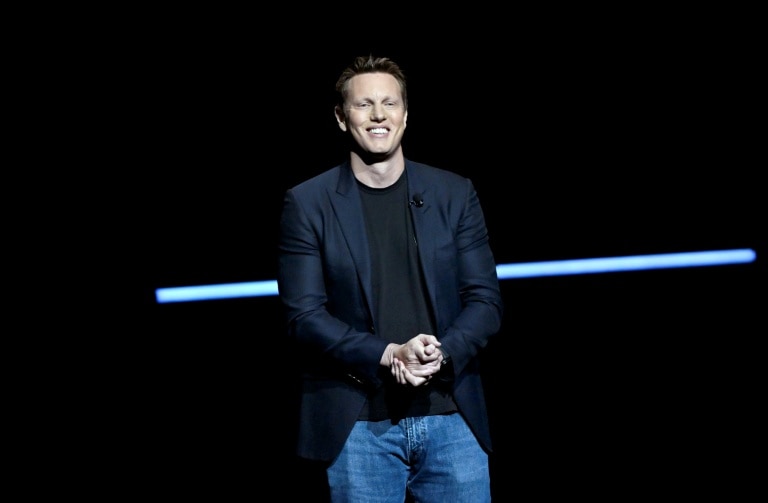
    In a formal statement following the shareholder vote, WBD CEO David Zaslav framed the approval as a critical milestone for the transformative transaction. “Today’s stockholder approval is another key milestone toward completing this historic transaction that will deliver exceptional value to our stockholders,” Zaslav said. “We will continue to work with Paramount to complete the remaining steps in this process that will create a leading, next-generation media and entertainment company.”

    While shareholders have backed the deal, a host of unanswered questions and regulatory hurdles remain before the merger can close. Much of the public scrutiny has centered on the Ellison family, which will control the newly merged media conglomerate. Oracle founder and billionaire Larry Ellison, a close long-time ally of former U.S. President Donald Trump, provided the core financing for the takeover, offering a financial guarantee that ultimately convinced WBD’s board to accept Paramount Skydance’s bid. His son David Ellison, the head of Paramount Skydance, is widely expected to lead the new company, and industry analysts anticipate he will implement deep cost-cutting measures to reduce the massive debt load taken on to fund the acquisition. Trump has already publicly stated he would weigh in on the deal’s approval, drawing extra attention to the family’s political ties.

    Additional scrutiny comes from the deal’s financing structure: three major Middle Eastern sovereign wealth funds from Saudi Arabia, Qatar and Abu Dhabi are contributing to the transaction, opening the door to potential national security reviews from U.S. regulators. Regulators on both sides of the Atlantic are already reviewing the merger: the European Commission has launched an assessment, and multiple U.S. states including California are also conducting their own reviews.

    Beyond regulatory and political scrutiny, the merger has drawn fierce opposition from hundreds of leading figures across Hollywood. Earlier this month, an open letter signed by more than 1,000 industry professionals – including A-list actors Jane Fonda, Joaquin Phoenix and Bryan Cranston, and acclaimed directors J.J. Abrams and Denis Villeneuve – was published to protest the combination of two of Hollywood’s most historic studios.

    The petition argues that the merger will further consolidate an already over-concentrated media landscape, reducing competition at a time when the industry and audiences can ill afford further contraction. “This transaction would further consolidate an already concentrated media landscape, reducing competition at a moment when our industries — and the audiences we serve — can least afford it,” the letter states. Critics warn the outcome will be fewer creative opportunities for emerging creators, widespread job losses across the film and television production ecosystem, higher consumer costs, and less diverse content choice for audiences globally.

    Opponents also highlight that the merger would reduce the number of major U.S. film studios from five to just four, accelerating a trend of industry consolidation that has reshaped Hollywood over the past decade. Many in the entertainment sector share fears that cost-cutting measures to pay down the deal’s enormous price tag will lead to widespread layoffs and reduced investment in original, diverse content. Paramount Skydance has sought to assuage these concerns, pledging to maintain a steady schedule of theatrical film releases following the merger’s completion.