博客

  • Russian strikes kill six across Ukraine

    Russian strikes kill six across Ukraine

    Fresh Russian aerial attacks across multiple regions of Ukraine left at least six civilians dead and dozens more injured on Saturday, marking another chapter of persistent targeting of civilian infrastructure in the 2-year full-scale invasion, Ukrainian officials have confirmed.

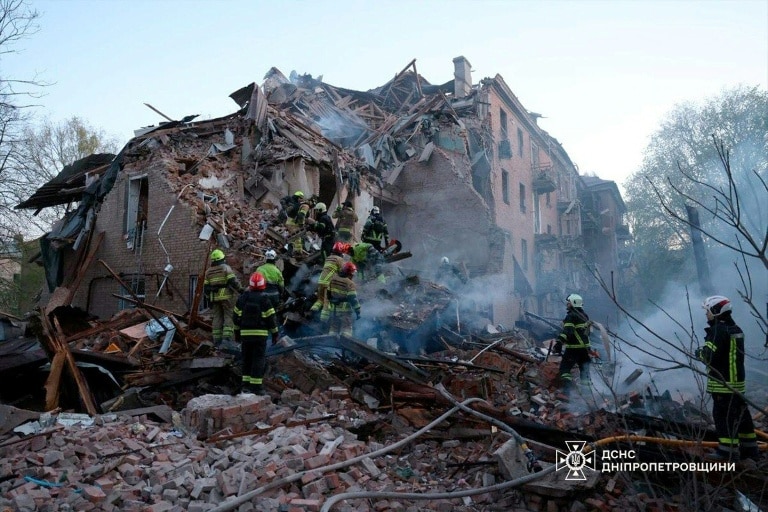
    The deadliest violence unfolded in the eastern industrial city of Dnipro, where two separate strikes hit the same residential neighborhood over a short period. First, an overnight strike on a multi-story apartment block claimed four lives and left 27 people injured, Oleksandr Ganzha, head of the Dnipropetrovsk regional military administration, announced via Telegram. A follow-up strike on a second residential building in the same area killed one additional civilian and wounded seven more, Ganzha added.

    Further south in the Zaporizhzhia region, a Russian drone strike struck a civilian minibus, killing one passenger and wounding four others, regional administration head Ivan Fedorov confirmed in a Telegram post.

    In a public address following the attacks, Ukrainian President Volodymyr Zelenskyy noted that Russian military tactics have not shifted throughout the conflict: Moscow relies on a combination of attack drones, cruise missiles, and large volumes of ballistic missiles, with most of its targets located in urban areas far from front lines. “Residential buildings, energy facilities and businesses have been damaged,” he said, adding that the unrelenting attacks on civilian populations demand a much stronger response from Ukraine’s international partners, particularly European nations.

    “Every such strike should serve as a reminder to our partners that the situation requires immediate and firm action, and the rapid strengthening of our air defence,” Zelenskyy stated, renewing his call for the European Union to ramp up punitive sanctions against Russia.

    The appeal came just two days after EU leaders finally approved the bloc’s 20th package of sanctions against Moscow, a measure that had been stalled for months by former Hungarian Prime Minister Viktor Orban, who left office two weeks ago. The new sanctions package targets Russia’s banking sector and tightens restrictions on Russian oil exports. Alongside the sanctions, the EU also approved a €90 billion ($105 billion) long-term loan for Ukraine, earmarked to reinforce the country’s air defense and cover core state budget expenses through 2027.

    Since Russia launched its full-scale invasion in February 2022, civilian casualties have become a daily occurrence across Ukraine, with bombardments hitting populated areas on an almost constant basis. Saturday’s attacks also drew a reciprocal response on Russian territory: one person was injured in a Ukrainian drone strike in Russia’s western Kursk region, which shares a border with Ukraine, regional governor Alexander Khinshtein announced Saturday. In neighboring Belgorod region, another series of Ukrainian drone strikes left one woman dead, a man with life-threatening injuries after an attack on a civilian car, and a second man wounded when his tractor was targeted, regional governor Vyacheslav Gladkov confirmed.

    Diplomatic efforts to resolve Europe’s deadliest conflict since World War II remain deadlocked. U.S. mediation efforts that once focused on negotiating a path to peace have been redirected to the ongoing outbreak of conflict in the Middle East, leaving no active negotiations toward a ceasefire or peace deal in place.


  • AFL 2026: Collingwood champion Scott Pendlebury likely to be rested after extraordinary Anzac Day

    AFL 2026: Collingwood champion Scott Pendlebury likely to be rested after extraordinary Anzac Day

    AFL fans witnessed a slice of history on Anzac Day at the Melbourne Cricket Ground, where Collingwood legend Scott Pendlebury delivered one of the finest performances of his 18-year career – a standout display that will likely lead to the 38-year-old being rested for the club’s critical upcoming clash with Hawthorn next Thursday.

    Facing off against traditional rival Essendon, Pendlebury put on a clinic that will be remembered in Anzac Day lore: the veteran playmaker finished the match with 43 disposals, 19 direct score involvements, and two crucial goals. This dominant outing earned Pendlebury a record-breaking fourth Anzac Day Medal, pushing him past former Essendon champion James Hird to claim the outright record for most medals awarded to the best on ground in the annual blockbuster fixture.

    Despite the career-topping performance, the tight five-day turnaround between the Anzac Day match and Collingwood’s next fixture against Hawthorn means Pendlebury is extremely unlikely to take the field next week. Collingwood head coach Craig McRae opened up about the planned rest in a post-match press conference alongside the star player, noting that the high volume of minutes Pendlebury logged during Saturday’s game puts unnecessary strain on the veteran ahead of the quick turnaround.

    “I won’t make that final decision now, but I would probably think you’re unlikely to play next week,” McRae said. “We’ve got a five-day break, we’ll make final decisions early in the week but we’ll see how he pulls up. We already had an initial conversation that it could go either way, but he logged so much time on the ground today, which was perfect for this game but creates challenges for next week. We’ll complete a full fitness assessment during the week before locking in a call.”

    McRae made no attempt to hide his admiration for the evergreen veteran, saying he remains constantly amazed by what Pendlebury can produce at an age when most AFL players have long retired.

    “He’s played many incredible games throughout his career, and statistically, this is one of the very best,” the coach said. “I told the players on the bench this, and I’ll say it openly: I don’t want to get older and take for granted what this man gives us. What we saw today just reaffirmed he’s a legend of this sport and a legend of this football club. To put in a performance like that at 38, there are no age barriers for him and no ceiling on what he can do. He’s remarkable, every time I watch him play I’m in awe.”

    Pendlebury, who has built his 431-game career as a versatile utility capable of slotting into any role the Magpies need, made a last-minute position shift late in the Anzac Day clash that led to his second goal – a change that sparked a raucous “Pendles” chant from the packed crowd of Collingwood supporters. The 38-year-old explained after the match he made the call to move into a deep forward role to grant young teammate Beau McCreery the chance to take over centre bounce duties, and also relished the personal matchup against young Essendon defender Archie Roberts.

    “It was actually Beau kept saying he wanted to take centre bounce, so I told him if he wanted it he could have it and I’d move forward,” Pendlebury said. “I actually coached Archie Roberts when I was at Haileybury four years ago, we won a premiership together. When I saw he was matched up on me, I decided I’d take him deep. The old APS school football community has already been talking about that matchup, so I won’t let Arch live that down anytime soon.”

    Pendlebury brushed off praise for his individual performance, attributing his stellar day to the team’s solid defensive structure and a bit of good fortune. “The way our team set up today, we defended really well, and I’m happy to just be a small cog in the machine that is this club,” he said. “I was saying to Jordy De Goey late in the game that even when I was trying to stay away from the footy, it still ended up finding me. It was just one of those days where everything bounced my way, and at 38, you definitely take those days.”

    The result of the Anzac Day clash sets up a critical round of AFL action, with Collingwood set to take on Hawthorn in a Thursday night fixture that could shape the remainder of the club’s season, as the side waits to confirm Pendlebury’s availability ahead of the match.

  • ‘Embarrassed’: Dean Young says major changes are needed at the Dragons, confirms Kade Reed will keep his starting spot

    ‘Embarrassed’: Dean Young says major changes are needed at the Dragons, confirms Kade Reed will keep his starting spot

    The St. George Illawarra Dragons entered the Anzac Day round already mired in crisis, and their latest outing only amplified the club’s struggles, delivering a 62-point thrashing at the hands of the Sydney Roosters that has left interim head coach Dean Young calling for widespread systemic changes. Still, Young found one silver lining amid the chaos: rookie halfback Kade Reed’s encouraging debut performance has earned him a guaranteed starting spot in the team’s next clash against the Newcastle Knights following the upcoming bye.

    The defeat capped a chaotic 7-day stretch for the Red V. The week began with the club parting ways with incumbent head coach Shane Flanagan, and ended just hours after the club announced the high-profile signing of fullback Scott Drinkwater, who will join the squad for the 2025 season. For Young, a club legend who stepped into the interim role, long-term roster moves for future seasons are not a priority right now. His sole focus is ending the Dragons’ historic winless drought to open the 2024 NRL campaign.

    The full-scale breakdown on Saturday left no doubt about how deep the Dragons’ issues run: two players were sin-binned, the defensive unit missed 36 tackles, and the team committed 13 unforced errors throughout the contest. “The first thing I did after the game was check in on the players, and every one of them is embarrassed by the performance we put out there,” Young told reporters post-match. “We started decently, going up 6-nil early, but when that lead was overturned, we completely folded under pressure. This was a tough week for the whole club, but we expected a far better response than this.”

    Against that backdrop of poor play, Reed’s performance stood out as the only bright spot for the Dragons. Making his first NRL start in front of a packed crowd at Allianz Stadium, the young playmaker showed no hesitation in attacking, testing the Roosters’ defensive line with creative passes and tactical kicking. He looked to have set up the opening try of the game with a long-range pass to Mat Feagai, only for an earlier error from a teammate to disallow the score. Later in the match, a late try he scored was also overturned for obstruction, but he consistently took on responsibility in both attack and defence, even as opponents targeted him as an obvious weak point.

    “I’m really proud of how he stepped up,” Young said, confirming his decision to retain Reed in the starting lineup. “It’s an enormous ask for a rookie to make his debut on Anzac Day, when we’re already 0-7 and carrying all that pressure. He still has a lot of development ahead of him, but there were enough positive signs to give him another start. Kade will be our starting halfback against the Knights.”

    Captain Clint Gutherson is expected to return from injury for the Knights clash, though Young has not yet confirmed what other changes he will make to the lineup. What the interim coach does know is that widespread changes to the club’s training and game operations are non-negotiable, given the 0-8 start to the season. “We have to change the way we run our programs, because what we’re doing right now is obviously not working, as everyone saw on Saturday,” he explained. “I can’t predict how quickly things will turn around. All I can do is focus on getting better one day at a time. We’ll do a full review on Wednesday, make sure we learn every possible lesson from this loss, and move forward from there.”

    Young has experience turning around a season on the brink: back in 2021, he was an assistant coach with the North Queensland Cowboys when the club dropped 10 consecutive matches to open the year. The side responded by signing experienced veterans Chad Townsend and Peta Hiku, and climbed into the top four of the ladder the following season. But turning around the Dragons’ current slump will first require rebuilding a playing group that has clearly lost confidence after eight straight losses.

    “Of course confidence is low right now — any group would be in this position, so I knew this wouldn’t be an easy fix,” Young said. “But I still expected a better fight than what we gave on Saturday. Right now, we’re not just playing against the opposition — we’re beating ourselves.”

  • Gunfire and blasts rock Mali as attackers hit capital and other cities, residents say

    Gunfire and blasts rock Mali as attackers hit capital and other cities, residents say

    Early on Saturday morning, a wave of synchronized armed assaults targeted multiple locations across Mali, including the capital city of Bamako and several urban centers in the country’s unstable northern region, leaving residents trapped in their homes and security forces locked in fierce firefights with assailants, according to official statements and on-the-ground accounts.

    In an official release, Mali’s military confirmed that “unidentified armed terrorist groups” launched targeted strikes against key infrastructure and military barracks within the capital, adding that troops had been deployed to the affected sites and were actively working to neutralize the remaining attackers.

    An Associated Press reporter based in Bamako reported hearing continuous volleys of heavy weapons and automatic rifle fire originating near Modibo Keïta International Airport, situated roughly 15 kilometers outside the capital’s central business district. The reporter also observed a military helicopter circling over residential neighborhoods adjacent to the airport, which shares a border with a key air base operated by the Malian Air Force. Local residents living in close proximity to the airport corroborated the reports of sustained gunfire, adding that three military helicopters were visible patrolling the area overhead.

    Accounts from residents in other cities across Mali confirmed outbreaks of gunfire and explosive blasts Saturday morning, reinforcing initial assessments that the attacks were a coordinated, multi-region operation planned by armed insurgent groups. A former mayor of the northeastern city of Kidal, who spoke to the AP on condition of anonymity over fears for his personal safety, confirmed that gunmen had entered the city, seized control of multiple residential neighborhoods, and engaged in open gun battles with Malian government forces.

    The long-running Azawad separatist movement has waged a years-long campaign to establish an independent state in northern Mali. The movement initially forced government security forces to withdraw from most of the region in the early 2010s, before a 2015 peace agreement was reached that saw former rebel fighters integrated into the national military. That peace deal has since collapsed, allowing unrest to reemerge across the north.

    Mohamed Elmaouloud Ramadane, a spokesperson for the Azawad Liberation Front, claimed in a Facebook post that the movement’s forces had seized control of multiple districts in both Kidal and Gao, a second major northeastern Malian city. The Associated Press has not been able to independently confirm the authenticity of this claim. A resident of Gao, who also requested anonymity due to safety concerns, told the AP that gunfire and explosive detonations began in the early hours of Saturday and were still audible more than six hours later. “The force of the blasts is shaking the doors and windows of my home,” the resident said. “I am absolutely terrified.” They added that all shooting originated near the adjacent army camp and airport on the city’s outskirts.

    Even in Kati, a small town just outside Bamako that hosts Mali’s largest central military base, a resident reported being woken before dawn by the sounds of explosions and automatic weapons fire.

    This latest outbreak of large-scale violence comes less than a year after an al-Qaida-linked insurgent group carried out a major assault on Bamako’s airport and a military training camp in the capital in 2024, an attack that left dozens of people dead.

    For more than a decade, Mali and its neighboring Sahel countries Niger and Burkina Faso have been locked in a persistent battle against insurgent groups affiliated with al-Qaida and the Islamic State, and the intensity of violence across the region has grown steadily over the past 10 years. Following a series of military coups that installed ruling juntas in all three nations, the new governments have cut traditional security ties with Western allies and turned to Russia for military support in countering the insurgency. Despite this shift, security analysts warn that the overall security landscape across the three countries has deteriorated sharply in recent months, with insurgent groups carrying out a record number of attacks against civilian and military targets. Government forces operating in the region have also faced widespread accusations of extrajudicial killings of civilians suspected of collaborating with armed militant groups.

    Associated Press reporter Mark Banchereau, based in Dakar, Senegal, contributed reporting to this article.

  • Russian attacks kill 3 and wound more than 20 in Ukraine’s Dnipro

    Russian attacks kill 3 and wound more than 20 in Ukraine’s Dnipro

    Overnight barrages of Russian drone and missile attacks targeting the central Ukrainian city of Dnipro have left at least three residents dead and 21 more injured, regional officials confirmed Saturday. Dnipropetrovsk regional governor Oleksandr Ganzha announced that rescue teams recovered the three fatalities from the collapsed rubble of a destroyed private home, warning that additional civilians may still be trapped beneath the debris.

    In a social media post on Telegram, Ganzha detailed that the sustained overnight assault ignited multiple fires across the city, damaging or partially destroying several multi-story apartment blocks, local commercial establishments, and one residential property. Ukrainian President Volodymyr Zelenskyy also confirmed Saturday that 11 of those injured remain hospitalized for treatment following the attack.

    Further south in Ukraine’s Odesa region, located along the Black Sea coast southwest of Dnipro, another overnight drone strike left two people wounded. Odesa regional governor Oleh Kiper stated that the attack damaged residential structures, critical port infrastructure, and multiple civilian vehicles in the southern part of the region.

    The wave of violence extended across the border into western Russia, where a drone strike in the Belgorod border region killed one civilian woman and left a civilian man with severe injuries, according to local Russian officials.

    These coordinated cross-border attacks came just 24 hours after Moscow and Kyiv completed a prisoner swap, exchanging 193 captured military personnel between the two warring sides. This recent exchange marks one of the rare constructive developments emerging from months of stagnant U.S.-brokered negotiations between Russia and Ukraine. Those talks have failed to deliver any meaningful progress on the core sticking points that have prevented a diplomatic end to Russia’s full-scale invasion of Ukraine, a conflict that has now entered its third year (correction of original typo for clarity).

  • Hubei to boost role in central region growth

    Hubei to boost role in central region growth

    At a press briefing held Friday in Wuhan, the capital of China’s Hubei province, senior regional officials outlined an ambitious 5-year strategy to leverage the province’s unique geographic advantage and integrated transport infrastructure to reinforce its role as a core driver for Central China’s rise, while expanding its contributions to both the national domestic market and the global economy through 2030.

    Governor Li Dianxun noted that during the 15th Five-Year Plan period (2026–2030), Hubei will combine the strengths of its comprehensive multi-modal transport network—covering inland waterways, high-speed and conventional rail, intercity highways, commercial aviation, and energy pipelines—to build one of the most efficient logistics and transport ecosystems in inland China. A standout asset in this network is Ezhou Huahu International Airport, Asia’s first purpose-built air cargo hub, which launched commercial operations four years ago and already boasts the largest number of air cargo routes across China.

    According to data from local newspaper Hubei Daily, the airport currently operates 117 cargo routes, 56 of which are international services connecting 57 destinations across five continents, establishing a robust global cargo connectivity framework for the region. Beyond infrastructure expansion, Li added that Hubei will target reduced logistics costs and improved operational efficiency by attracting leading modern logistics firms, streamlining processes across cargo collection, long-haul transport, centralized warehousing, and last-mile distribution, while partnering with international stakeholders to expand cross-border logistics networks.

    Executive Vice-Governor Zhang Wenbing pointed out that Hubei holds an unmatched geographic advantage, sitting at the natural intersection linking China’s economically developed eastern coast with the fast-growing western interior, and connecting the northern and southern regions of the country. Its multi-modal transport system has seen consistent upgrading in recent years, with Hubei’s total high-speed rail mileage ranking fifth nationwide. As of the end of the first quarter of 2026, Xinhua News Agency reports, the province’s operational high-speed rail network has expanded to 2,585 kilometers, enabling 1 to 2-hour rail connections from Wuhan to multiple neighboring provincial capitals including Changsha (Hunan), Nanchang (Jiangxi), Hefei (Anhui), and Zhengzhou (Henan).

    Under the new development plan, Zhang said Hubei will continue upgrading key inter-regional transport corridors, constructing large-scale integrated transport hubs, and strengthening the province’s end-to-end logistics system. Key projects include developing a modern international shipping center along the middle reaches of the Yangtze River, and establishing a national assembly and distribution center for China-Europe freight trains in Wuhan. In addition to expanding Huahu Airport’s cargo capacity, the province will also enhance the passenger service capabilities of Wuhan Tianhe International Airport to support growing business, tourism, and people-to-people exchange demand.

    Officials also emphasized that Hubei will deepen mutually beneficial practical cooperation with global partners across multiple sectors, including cross-border trade, direct investment, scientific and technological innovation, financial cooperation, and cultural exchange. Early signs of this growing global engagement are already visible: Wuhan-based construction firm China Construction Third Bureau First Engineering Co. reported strong overseas performance in the first quarter of 2026, with newly signed overseas contracts doubling year-on-year and overseas output value jumping 96 percent from the same period last year.

    Ma Yikui, general manager of the company’s international business division, said the firm has prioritized high-growth key markets including Malaysia, Cambodia, and Indonesia, establishing dedicated regional marketing centers and optimizing project development mechanisms to secure high-quality infrastructure projects and build long-term collaborative partnerships with major global clients. Leveraging the company’s technical and operational strengths in industrial facility construction and data center development, Ma added, the firm has captured nearly 40 percent of the total data center construction market in Southeast Asia, cementing Hubei enterprises’ growing footprint in global infrastructure development.

  • Tunisia suspends one of Africa’s oldest rights group as crackdown widens

    Tunisia suspends one of Africa’s oldest rights group as crackdown widens

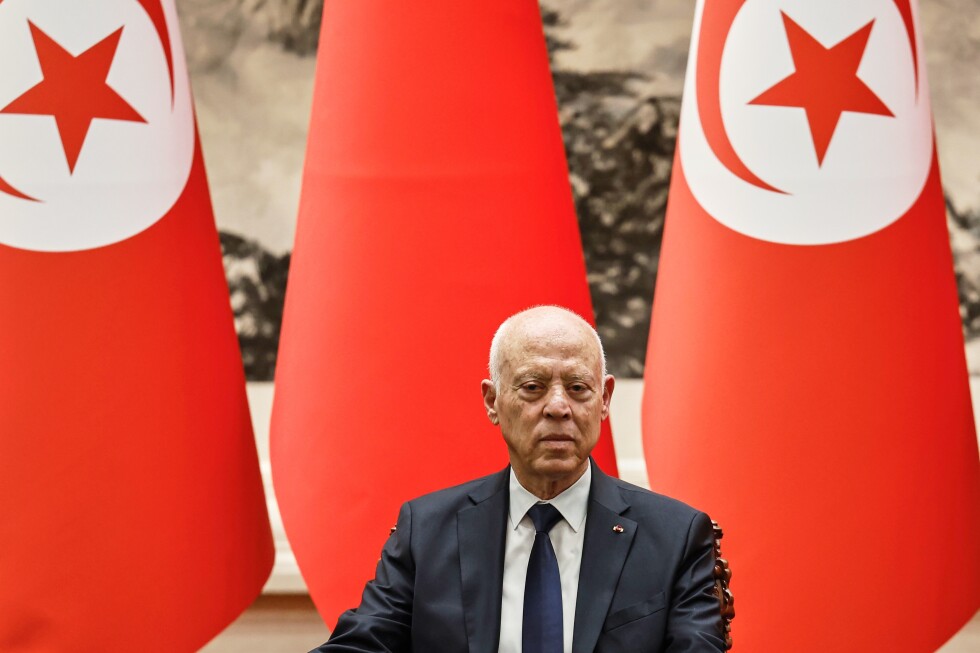
    TUNIS, Tunisia – Tunisian authorities have ordered a 30-day suspension of the Tunisian League for Human Rights, an organization with deep regional roots as one of the oldest human rights groups across Africa and the Arab world, and a core member of the National Dialogue Quartet that won the 2015 Nobel Peace Prize. The move is the latest development that has amplified international alarm over a growing crackdown on independent civil society in the North African nation.

    The league confirmed the suspension in an official statement released late Friday, condemning the order as a blatant, unjustified violation of the fundamental right to freedom of association. The group emphasized the decision constitutes a direct attack on one of the most pivotal democratic achievements Tunisia has secured since its 2011 revolution.

    For months, Tunisian President Kais Saied has framed foreign funding – a common revenue stream for many independent rights organizations – as a direct threat to national sovereignty. He has leaned heavily on this narrative to build populist support, repeatedly labeling political opponents and grassroots activists as foreign agents working to incite domestic unrest.

    In its statement, the league made clear that this suspension cannot be separated from a broader, systemic campaign of pressure targeting civil society and independent voices across Tunisia. The organization announced it would appeal the “unjust” ruling in national courts, and pledged to continue its core work defending victims of human rights abuses without discrimination of any kind.

    This latest order is not an isolated action: it follows a string of identical restrictive measures against independent rights groups over the past year. In 2024, Tunisian courts ordered 30-day activity halts for multiple high-profile non-governmental organizations, including leading groups advocating for migrant rights and gender equality.

    The suspension also coincides with growing repression of independent journalism and political dissent. Just this week, prominent journalist Zied El-Heni was taken into 48-hour police custody over content he posted to Facebook, part of a consistent pattern of arrests and legal pressure targeting critics of Saied’s administration.

    Mohamed Yassine Jlassi, former head of the Tunisian National Union of Journalists (SNJT), spoke to the Associated Press during a protest held in central Tunis Friday. He told reporters that hundreds of Tunisians are currently detained on charges linked solely to freedom of expression, including content shared on social media platforms.

    “Repression now touches every corner of public life,” Jlassi said. “Practicing journalism has been criminalized. Civil society work is treated as a crime. Political opposition has been effectively outlawed. People are increasingly being subjected to arbitrary prosecutions that lack even the most basic guarantees of a fair trial.”

    In another high-profile case targeting independent media, Tunisian investigative outlet Inkyfada is scheduled to appear in court on May 11, as authorities move forward with a legal push to dissolve Al Khatt, the non-profit association that publishes the outlet. Inkyfada’s team has stated publicly that it rejects the legal foundation of the government’s case, noting that the claims cited by authorities have not been reviewed by Tunisian courts at any point since 2024.

    These cumulative developments have deepened longstanding concerns among global and regional human rights advocates about accelerating restrictions on independent media, civil society, and all dissenting speech under Saied’s administration. Since seizing executive control and consolidating power in 2021, Saied has steadily expanded targeted action against groups he accuses of accepting foreign funding to destabilize Tunisia and undermine national interests.

  • Reading helps bridge world, civilizations

    Reading helps bridge world, civilizations

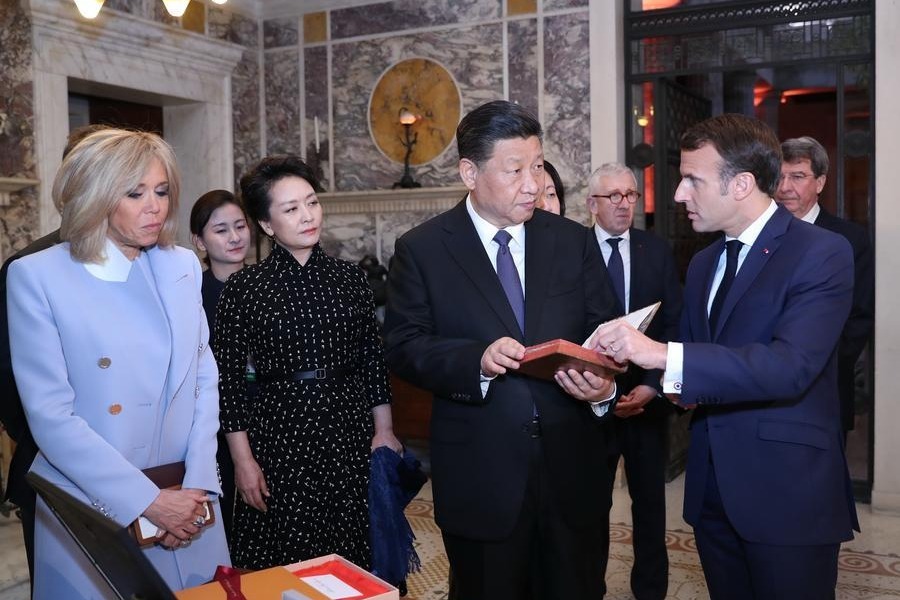
    Long cultivated as a deeply personal passion, reading has evolved into a foundational pillar of Chinese President Xi Jinping’s approach to governance and global diplomacy, serving as a unique bridge connecting Chinese civilization with the wider world and advancing cross-cultural dialogue. As Xi himself has noted, reading is far more than a casual pastime for him—it is an enduring way of life that continues to shape his perspective and policy philosophy.

  • Iran’s FM not to hold talks with US officials in Pakistan visit: media

    Iran’s FM not to hold talks with US officials in Pakistan visit: media

    In a clear formal statement released to regional media on Friday, Iran has definitively ruled out any planned negotiations between its foreign minister and United States officials during an official visit to Pakistan’s capital Islamabad, ending widespread speculation that a new round of peace talks would kick off this week.

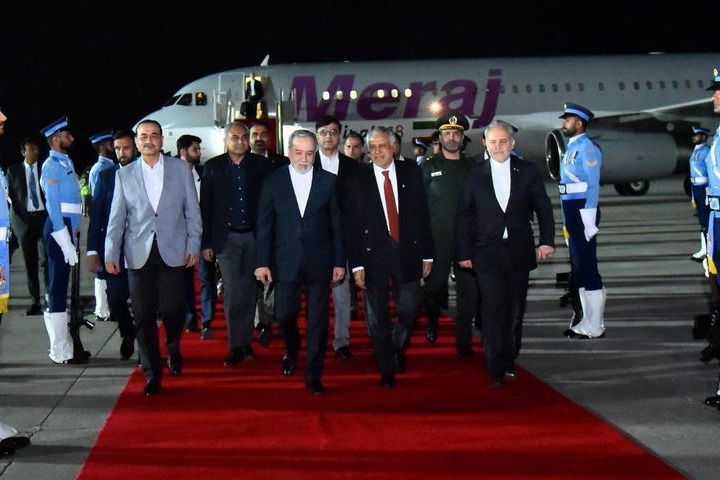
    Seyed Abbas Araghchi, Iran’s top diplomat, arrived in Islamabad on the night of April 24 alongside an official Iranian delegation, Pakistan’s Ministry of Foreign Affairs has publicly confirmed. Per reporting from Iran’s semi-official Tasnim News Agency, Araghchi’s agenda during the Pakistan leg of his multi-nation tour only includes bilateral discussions with Pakistani leadership, focused exclusively on sharing Iran’s official positions aimed at reaching a permanent end to ongoing conflict between Iran, the U.S. and Israel.

    Iran’s state-owned Islamic Republic of Iran Broadcasting (IRIB) further clarified that while no direct meeting between Araghchi and U.S. representatives is on the schedule, Pakistani officials will serve as a communication channel to relay Iran’s stances on conflict resolution to the American side. This arrangement builds on prior indirect diplomatic engagement that has used Islamabad as a neutral intermediary for talks between Tehran and Washington.

    Araghchi himself outlined the broader goals of his tour in a post on the social platform X Friday, confirming that after concluding engagements in Pakistan, he will travel onward to Oman and Russia. “Embarking on timely tour of Islamabad, Muscat, and Moscow,” he wrote. “Purpose of my visits is to closely coordinate with our partners on bilateral matters and consult on regional developments. Our neighbors are our priority.”

    In a separate development also reported by Tasnim on Friday, Iran’s Islamic Revolution Guard Corps (IRGC) seized a foreign vessel that the force says was caught conducting coordination activities with the U.S. military. The details of the seizure and vessel’s identity have not yet been fully released to the public.

    The current diplomatic standoff follows a 40-day period of active conflict that ended with a temporary ceasefire between Iran, the U.S. and Israel enacted on April 8. Two days after the ceasefire went into effect, Iranian and U.S. delegations held two days of direct talks in Islamabad between April 11 and 12, but those negotiations collapsed without reaching any binding agreement.

    Regional diplomatic sources had widely anticipated a second round of talks would be held in Pakistan this week, but Iran has declined to participate. Tehran cites the continuing American naval blockade in regional waters and what it describes as Washington’s excessive, unreasonable negotiating demands as the core reasons for its refusal to engage in new talks at this time.

  • Asian surnames fastest-growing in US

    Asian surnames fastest-growing in US

    Newly released demographic data from the US Census Bureau has uncovered a striking shift in the country’s surname landscape: between 2010 and 2020, three of the most common Chinese surnames claimed the top three spots on the ranking of fastest-growing last names among the 1,000 most frequent surnames across the United States.

    According to the census analysis, the population holding the surname Zhang grew by 74% over the decade, outpacing all other surnames. Liu followed with a 62% growth rate, and Wang rounded out the top three with a 54% increase. Beyond the top three, four additional common Chinese surnames secured spots in the top 12: Li, Lin, and Chen landed in the top 10, with growth rates ranging from 37% to 48%, while Wu and Huang claimed 11th and 12th place respectively, both with 36% growth.

    The census report notes that nearly all of the 15 fastest-growing surnames in the US over this period are primarily associated with people of Asian, Native Hawaiian, or Other Pacific Islander descent. The only exception is Ali, a name with broad diversity across Hispanic racial and origin groups. This concentrated growth pattern mirrors broader national demographic shifts recorded between 2010 and 2020, when the combined population of Asian, Native Hawaiian, and Other Pacific Islander communities expanded far more rapidly than the overall US population.

    Official census figures put the total growth of the Asian American population at 35.5% over the decade, pushing its share of the total US population from 4.8% in 2010 to 6% in 2020. This growth rate was higher than that of every other single racial group, outpaced only by the multiracial population category.

    Experts link the rapid rise of common Chinese surnames to the massive surge in Chinese student migration to the US during the 2010s. Data from the Open Doors report, a leading source of international student enrollment statistics, shows that the number of Chinese students studying in the US more than doubled over the decade, jumping from roughly 157,000 in 2010 to more than 372,500 in 2019. In total, more than half a million Chinese students arrived in the US to pursue education between 2010 and 2020, bringing with them the common surnames that dominate modern China’s population profile.

    Notably, the ranking of the fastest-growing Chinese surnames in the US closely aligns with the popularity ranking of surnames within China itself. Official Chinese demographic data lists Wang, Li, Zhang, and Liu as the four most common surnames in the country, with Chen, Wu, and Huang also ranking among the top 10 most frequent.

    Current US census data already reflects this dominance: eight of the top 10 most common surnames among people identifying as Asian, Native Hawaiian, or Other Pacific Islander in the US are ethnically Chinese surnames. The full top 10 list for this demographic group is Zhang, Huang, Kaur, Vang, Xiong, Xu, Zheng, Zhou, Zhao and Zhu, with only Kaur and Vang not being common Chinese surnames.

    Researchers do caution that direct headcount comparisons between older and newer Chinese surname entries are not straightforward, due to historic differences in romanization practices. Early waves of Chinese immigrants, the majority of whom originated from southern China, commonly spelled their surnames using regional dialect transliterations that differ from the standardized Mandarin pinyin system that has become the norm for new arrivals from mainland China over the past two decades.

    For example, the pinyin spelling Zhang is also commonly recorded as Chang in older records, while Chen may appear as Chan, Huang and Wang are often rendered as Wong, Zhou may be spelled Chou or Chow, Liu appears as Lau or Lew, and Wu can be recorded as Ng, Goh or Woo in historic data.