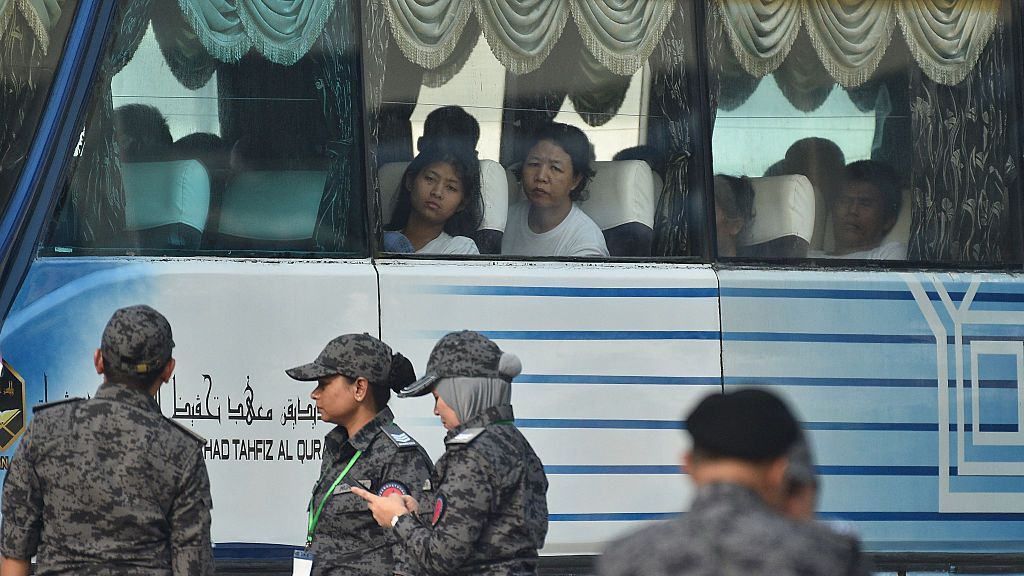
In a move that has sparked global condemnation from human rights advocates, Malaysia has begun the large-scale repatriation of roughly 5,000 Myanmar asylum seekers, including members of the persecuted Rohingya minority, under a controversial agreement struck with Myanmar’s military junta led by Min Aung Hlaing. Three Myanmar navy vessels are set to depart Malaysian ports on the day of this report, carrying the first group of 1,476 returnees back to conflict-ravaged Myanmar.
This repatriation marks a dramatic reversal of long-held policy by the administration of Malaysian Prime Minister Anwar Ibrahim, who once positioned himself as a vocal defender of human rights and a leading regional critic of Myanmar’s ruling military regime. For years, Malaysia under Anwar refused to recognize Min Aung Hlaing’s government and emerged as one of Southeast Asia’s strongest advocates for a negotiated end to Myanmar’s brutal ongoing civil war. Anwar has framed the current repatriation effort as a voluntary process, but has blocked access for the United Nations High Commissioner for Refugees (UNHCR) to meet with or screen the asylum seekers, all of whom have been held in Malaysian immigration detention centers for months.
Rohingya, a stateless Muslim minority, have been systematically displaced from Myanmar for decades, stripped of their citizenship by the Myanmar government and targeted in widespread military campaigns of ethnic cleansing. Following the 2017 Myanmar military crackdown that pushed more than 750,000 Rohingya across the border into Bangladesh, thousands more risked dangerous sea voyages to seek refuge and work in Malaysia. Today, an estimated 200,000 Rohingya reside in Malaysia, most working low-wage manual labor jobs and living in informal communities. For years, despite occasional efforts to block new arrivals, Malaysia tolerated the existing Rohingya population, with broad public sympathy for the displaced minority among Malaysian Muslims.
That public sentiment began to shift dramatically in the wake of the COVID-19 pandemic, which hit Malaysia’s lower-income households particularly hard. Economic strain fueled rising anti-immigrant resentment, and false accusations against Rohingya migrants spread rapidly across social media, leading successive Malaysian governments to tighten restrictions on refugee communities. The trend accelerated in 2026, when a viral false social media campaign claimed Rohingya leaders were demanding land and citizenship after a minor dispute over post-Eid al-Adha waste disposal. A subsequent petition calling for the expulsion of all Rohingya from Malaysia collected more than 400,000 signatures before it was removed from Change.org.
Anwar, who has seen his public approval ratings plummet sharply since taking office in 2022, says he has little choice but to act on growing public hostility. In a recent podcast interview, he acknowledged that Rohingya should be treated humanely, noting “We can arrest them, but do not beat, intimidate or humiliate them” — a statement that contradicts widespread allegations of abuse against detained refugees by Malaysian immigration officials. Even so, Anwar has insisted that the large Rohingya population has become a burden on the country, saying “They have clearly become a burden: a security burden, an economic burden and a source of hostility among the people.”
Political analysts warn the shift is driven primarily by domestic political pressure, not humanitarian or economic reality. Anwar took office in 2022 at the head of a fragile, uneasy coalition with his long-time political rivals, the United Malays National Organisation (UMNO), the ethnic Malay party that held a monopoly on Malaysian power for more than 60 years. The country has faced persistent political instability since the 2018 historic election that first ousted UMNO, leading to repeated turnovers of coalition governments. Anwar’s coalition has lost multiple local seats in recent elections, and he is required to call a general election by early 2028.
“He is in a corner, at his weakest point,” explained Tricia Yeoh, Director of the Asian Institute for Policy and Engagement at the University of Nottingham Malaysia. “He has been forced to make concessions to his UMNO partners… There have been several corruption scandals, and his own party is divided. And after four years of telling voters this is what is required to maintain his fragile coalition, they are no longer willing to go along with that narrative.”
Yeoh noted that UMNO has leaned into long-standing racial politics that frame ethnic Malays, who make up a majority of the electorate, as needing special state protection — a narrative that stokes fear of outsiders and claims that immigrants take local jobs and drain public resources. Many of Anwar’s long-time supporters, who once saw him as a champion of liberal democratic values, have accused him of betraying his core principles. Latheefa Koya, former head of the Malaysian Anti Corruption Commission, called Anwar’s decision “disgraceful, amoral, and shames the nation in the eyes of the international community.”
Human rights groups have universally condemned the repatriation, warning that all returnees face extreme danger in Myanmar. Nearly all of Rakhine State, the only region where Rohingya are legally permitted to reside, is currently controlled by the insurgent Arakan Army, and the Myanmar military has carried out sustained air bombardments across the region. Just one day before the first repatriation departed, two Myanmar air force bombs hit a market in Kyauktaw, killing 49 people. The only major population center still accessible to the junta, Rakhine’s capital Sittwe, is under siege and completely isolated, with Rohingya confined to overcrowded, under-resourced camps facing severe shortages of food and medicine. Rights groups also warn that working-age Rohingya men face high risk of forced conscription into the Myanmar military to fight in the country’s civil war.
Neither the Malaysian nor Myanmar governments have offered any public explanation for how they plan to address these massive humanitarian obstacles, or how the repatriation aligns with international humanitarian standards. For Rohingya advocates, the repatriation violates the core principle of voluntary, safe return that underpins global refugee protection norms. “We all dream of being able to return home one day,” said Nur Sadek, a Rohingya refugee rights advocate, “but we want to return because it is safe and because we choose to — not because we are forced. For me, the most important thing is that Rohingya and other refugees affected by this decision are listened to and treated with dignity.”