博客

  • French hub monitors Hormuz tensions from afar

    French hub monitors Hormuz tensions from afar

    Thousands of kilometers from the oil-rich waters of the Persian Gulf, a small team of 12 French naval analysts sits hunched over monitoring screens in a basement facility in Brest, tracking every blink of vessel activity signaling shifting danger near the strategic Strait of Hormuz. Since the outbreak of the Iran conflict in late February, this quiet outpost — the Maritime Information Cooperation and Awareness Center, or MICA Center — has become a critical lifeline for hundreds of civilian merchant vessels trapped in the Gulf amid escalating blockades and unpredictable attacks.

    Tensions between Iran and the United States have led to overlapping blockades of the narrow strait, a global energy chokepoint that carried roughly one-fifth of the world’s total crude oil and liquefied natural gas supplies before the conflict began. The standoff has left more than 750 civilian ships stranded on the Gulf side of the passage, with only a tiny number able to successfully exit in recent weeks.

    MICA’s core mission is to deliver real-time security alerts to commercial shipping operators across the globe. When the center’s team detects any sign of bombardment or imminent threat, it immediately dispatches an encrypted alert to all container ships, cargo vessels and cruise liners within a 50-nautical-mile radius of the danger zone. “We share the nature of the event, its context and exact position,” MICA’s commanding officer Thomas Scalabre told Agence France-Presse during an on-site interview. That advance warning allows vessels to react quickly: crews can steer clear of incoming fire or floating debris, or even disable their tracking transponders to avoid being targeted. For context, the strait measures just 29 nautical miles across at its narrowest point, making the 50-nautical-mile alert zone more than sufficient to cover the entire waterway.

    MICA’s monitoring data draws from multiple sources, combining high-resolution satellite imagery, automatic location signals transmitted by ship transponders, and on-the-ground reports shared directly by crews operating in high-risk waters. The center currently provides its monitoring and alert services to 85 major international maritime transport companies, including French shipping giant CMA CGM and Danish industry leader Maersk. While the Strait of Hormuz is currently MICA’s top priority, the facility also monitors security risks across all the world’s open waters, tracking Houthi rebel missile and drone attacks in the Red Sea, piracy operations off the coast of Somalia, and transnational drug smuggling routes.

    Since the outbreak of the conflict on February 28, Scalabre says MICA has documented roughly 40 separate security incidents in and around the Strait of Hormuz, 24 of which were direct attacks by Iranian forces on commercial vessels — some of which have resulted in fatalities.

    France and the United Kingdom have previously announced plans to form a multinational coalition to reopen the strait to safe commercial navigation, but the coalition will not be deployed until after a ceasefire is reached. To date, peace talks aimed at de-escalating the conflict have stalled in recent weeks, leaving merchant shipping in a state of ongoing uncertainty.

    In the absence of a clear resolution, “the rules Iran imposes on navigation remain very unclear and are constantly shifting,” Scalabre explained. This uncertainty extends to which vessels the Iranian Revolutionary Guards Corps (IRGC) may choose to target. “There isn’t necessarily any logic in the IRGC’s targeting policy. We’ve seen many different nationalities and types of vessels” targeted, he added.

    Even nations long viewed as friendly to Iran are not exempt from unprovoked attacks. According to security intelligence firm Vanguard Tech, IRGC gunboats opened fire on the India-flagged tanker Sanmar Herald on April 18 without any prior radio contact, despite India being counted among Iran’s close partners alongside China, Russia, Iraq and Pakistan. Iran has also publicly confirmed it has laid sea mines across the main channel of the strait.

    “What matters is the psychological effect. No one will take the risk of venturing there,” Scalabre said of the persistent threat. While Tehran retains the authority to grant individual ships permission to enter or exit the Gulf through the strait, even approved vessels are not guaranteed safe passage. “Even when they obtain it, the IRGC’s ‘mosquito fleet’ can emerge to block their way,” Scalabre added, referencing the IRGC’s fleet of small, fast attack speedboats that are used to intercept and harass commercial vessels.

    In his office, Scalabre pulled up a satellite image showing a swarm of these small craft moving in to intercept a target: a dozen patrol boats cutting through the water, leaving trails of white wake as they encircle and seize a commercial vessel before it can exit the Gulf. “They sometimes carry out indiscriminate attacks, whether the country is considered friendly or not,” the French naval officer said.

    For the Iranian government, controlling access to the Strait of Hormuz remains one of its most powerful leverage points, Scalabre noted: “For Tehran, controlling the Strait of Hormuz remains one of its trump cards to exert pressure and negotiate a way out of the conflict.”


  • ‘Dreams come true’ for singer joining Lady Gaga on Devil Wears Prada soundtrack

    ‘Dreams come true’ for singer joining Lady Gaga on Devil Wears Prada soundtrack

    Two decades after the release of the iconic 2006 comedy-drama *The Devil Wears Prada*, the long-awaited sequel has finally hit cinema screens worldwide, bringing back every fan-favorite member of the original cast for a new chapter of high-fashion drama. While the return of Meryl Streep’s sharp-witted, iconic editor Miranda Priestly has dominated early conversation, another element of the new release has quickly captured public attention: its all-female curated soundtrack, which pairs established A-list superstars with breakout emerging talent.

    Among the rising artists featured on the album is 20-something American singer Izzy Escobar, who marks her first major movie soundtrack placement with original track *Evergreen Avenue*, created specifically for the sequel. For Escobar, the opportunity to contribute to the follow-up to one of her all-time favorite films still feels surreal.

    “I’m still trying to wrap my head around it. This is my first time ever having a song in a major film, and it’s for *Devil Wears Prada*? Dreams really do come true,” Escobar shared in an exclusive interview with BBC Newsbeat. She described seeing her name credited alongside global superstars like Lady Gaga, Dua Lipa and Olivia Dean as a “pinch me” moment that feels like validation for her years of hard work, adding: “It’s such a clear sign I should just keep persevering.”

    The collaboration came about after *Devil Wears Prada 2* director David Frankel discovered Escobar’s 2025 breakout single *Sunny in London*, and reached out directly to invite her to join the soundtrack project. “He really loved the sonic palette of that song and wanted me to write something that was in a similar vein,” Escobar explained. Though this marked her first foray into film composition, she says the creative process aligned closely with her usual writing style.

    As a self-described visual storyteller, Escobar builds her tracks around vivid mental narratives: “I close my eyes when I sit down at my keyboard and make up a movie in my own mind, anyway.” To craft *Evergreen Avenue*, she did a deep dive into the established world of the *Devil Wears Prada* franchise, brainstorming concepts that would honor the original story while weaving in her distinct artistic voice.

    Escobar stayed tight-lipped to avoid plot spoilers, only sharing that her track appears during an emotional sequence late in the runtime of the sequel. “I don’t want to give too much away, but I’m on the radio in Anne Hathaway’s character’s house, which is pretty cool,” she teased. The singer got her first chance to see the track paired with the finished film at the sequel’s New York world premiere earlier this year, an experience she calls unforgettable.

    “To finally see it visualised on-screen with some of my favourite artists in the room, it was the best feeling in the world,” she said.

    For Escobar, the *Devil Wears Prada* franchise holds deep personal meaning, dating back to her childhood. Growing up, she explored self-expression through both music and fashion, and the original 2006 film resonated deeply with her. “When I saw it, I just remember thinking, ‘oh my gosh, this is another way of expressing yourself, just like music’”, she recalled.

    She also highlighted the ongoing interconnected relationship between the music and fashion industries, pointing to recent high-profile examples like Lady Gaga and Doechii’s collaborative track *Runway*. “I love the video that they did, incorporating all different types of fashion to let people express themselves, while singing a song that highlights feeling confident and empowered,” she said.

    As for what audiences can expect from the full *Devil Wears Prada 2* soundtrack, Escobar promises a dynamic, uplifting listening experience: “It’s going to make you dance and leave you feeling very, very empowered, inspired and excited.”

    *The Devil Wears Prada 2* arrives in United Kingdom cinemas this Friday.

  • UN troubled by rejected appeal of Cambodian opposition leader

    UN troubled by rejected appeal of Cambodian opposition leader

    In a move that has sparked widespread international condemnation from global human rights bodies, Cambodia’s appellate court has upheld a decades-long treason conviction for prominent opposition leader Kem Sokha, drawing sharp rebuke from the United Nations’ top human rights official.

    Seventy-two-year-old Kem Sokha, a co-founder of the now-banned Cambodia National Rescue Party (CNRP), was first found guilty of treason in 2023 on allegations that he plotted to overthrow the government of long-serving former prime minister Hun Sen — who remains a powerful, behind-the-scenes political figure despite handing the top leadership role to his son. The conviction carried a 27-year sentence, though Kem Sokha has been allowed to serve the term under court-supervised house arrest in Phnom Penh since the original ruling. He has continuously denied all charges against him, which date back to a 2013 speech delivered during a trip to Australia, four years before his initial 2017 arrest.

    On Friday, United Nations High Commissioner for Human Rights Volker Türk confirmed he was deeply troubled by the Phnom Penh Appeals Court’s decision Thursday to reject Kem Sokha’s appeal and leave the conviction intact. The UN human rights chief also raised urgent alarms over a separate court ruling handed down Wednesday that convicted 33 additional Cambodian nationals, including opposition activists, independent human rights defenders and social media commentators.

    According to the Office of the United Nations High Commissioner for Human Rights (OHCHR), the Phnom Penh First Instance Court handed down sentences ranging from 18-month suspended terms to two years of imprisonment. The charges stemmed from public comments the 33 individuals made in 2024 regarding the Cambodia-Laos-Vietnam Development Triangle Area, a regional cross-border infrastructure and development project.

    OHCHR spokesperson Jeremy Laurence told reporters at a Geneva press briefing that the rulings in both cases directly contradict established international human rights law. He warned that the convictions risk amplifying what is already a severe chilling effect on open discourse across Cambodia, brought by broad, vaguely worded national criminal statutes that are frequently enforced in an arbitrary manner targeting civil society members, independent journalists and ordinary citizens.

    “Kem Sokha and the other 33 individuals were all exercising their internationally protected rights to freedom of expression,” Laurence said. “Their trials also raise serious, well-founded concerns about widespread violations of due process and fundamental fair trial rights.”

    Türk has called on Cambodian authorities to enact meaningful reforms to bring the country’s legal practices in line with international human rights standards, urging the government to protect legitimate political criticism and free expression rather than criminalizing dissenting viewpoints. He also called for safeguards to protect judicial independence, preserve open civic space and guarantee fair trial protections for all defendants.

    Laurence reiterated the UN body’s core demand: Cambodian officials should immediately overturn the latest convictions and sentences, and unconditionally release Kem Sokha along with all other individuals detained arbitrarily for exercising their fundamental human rights.

    Global human rights organizations have long documented patterns of the Cambodian government using politicized legal proceedings to silence opposition voices and quash legitimate political dissent. OHCHR confirmed it has repeatedly raised these systemic concerns directly with Cambodian authorities, highlighting broader patterns of repression targeting core rights including freedom of speech, freedom of expression, freedom of association and freedom of peaceful assembly across the country.

  • Hegseth says clock paused on deadline to seek approval for Iran war

    Hegseth says clock paused on deadline to seek approval for Iran war

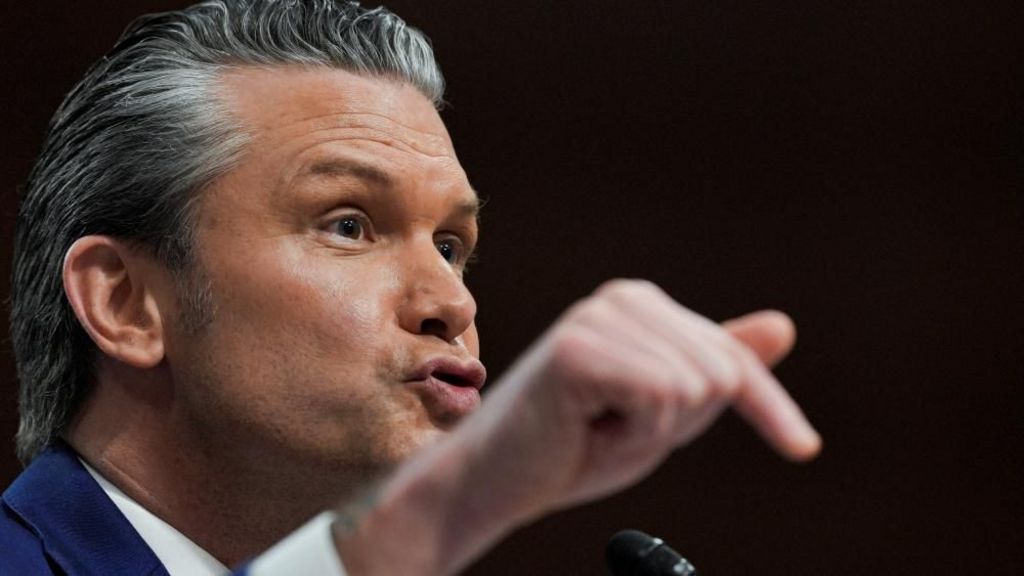
    A high-stakes legal and political battle has erupted in Washington over the Trump administration’s interpretation of long-standing war powers law, after US Defence Secretary Pete Hegseth claimed the 60-day congressional approval deadline for US military involvement in the US-Israeli conflict with Iran has been paused amid an ongoing ceasefire.

    Hegseth made the argument Thursday during a Senate questioning session, just one day ahead of the 60-day mark, which falls Friday. The clock began ticking March 2, when President Donald Trump formally notified Congress of the strikes against Iran that launched the open conflict. Under the 1973 War Powers Resolution — a law passed to rein in executive war authority after the Vietnam War — any president must end US military involvement within 60 days of formal notification unless Congress explicitly approves an extension or formally declares war.

    Top Trump administration officials have pushed back against suggestions the deadline will be breached, asserting that active hostilities against Iran have already ended. A senior anonymous administration official confirmed that no exchanges of fire between US and Iranian forces have occurred since April 7, after a ceasefire took effect in early April that has since been extended. Per the administration’s position, the existing ceasefire means the 60-day clock mandated by the War Powers Resolution is either paused or stopped entirely. Hegseth doubled down on this reading during Thursday’s hearing, telling senators “We are in a ceasefire right now, which our understanding means the 60-day clock pauses or stops in a ceasefire.”

    That interpretation has been rejected out of hand by Democratic Senator Tim Kaine, who led the questioning on the issue. Kaine pushed back immediately, arguing “I do not believe the statute would support that. I think the 60 days runs maybe tomorrow, and it’s going to pose a really important legal question for the administration there.”

    The conflict itself began in late February, when US and Israeli forces launched wide-ranging strikes on Iran that killed the country’s supreme leader. Iran responded with coordinated attacks on Israel and US-aligned Gulf states, raising tensions across the entire Middle East. The US and Israel have justified their military action by claiming Iran is actively pursuing a nuclear weapons capability — a charge Tehran has repeatedly and forcefully denied. Even after more than a month of ceasefire, no permanent peace deal has been reached through ongoing talks, and the strategic Strait of Hormuz, one of the world’s most critical energy shipping chokepoints, remains effectively closed, sending ripples of economic disruption through global energy markets that have pushed up fuel prices for consumers around the world, including in the United States.

    CBS News, the US partner of the BBC, has reported that White House and Pentagon officials are already holding active discussions with congressional members from both parties to secure formal authorization for continued military involvement. To date, every Democratic-led attempt in both the House and Senate to constrain Trump’s military action against Iran has failed, thanks to unified Republican opposition in most cases. Democratic lawmakers have vowed to continue pushing for votes and procedural actions, saying their efforts force lawmakers to put their positions on the record for constituents. While most Republican lawmakers have stood with the administration so far, some have signaled they may reconsider their stances once the 60-day deadline passes.

    The debate over the War Powers Resolution deadline comes one day after Hegseth faced sharp questioning during a House hearing on the conflict, where a top Pentagon official disclosed that US military operations in Iran have already cost taxpayers $25 billion, equivalent to roughly £18.5 billion. During that House hearing, many Republican committee members reiterated their support for the administration’s campaign. Florida Congressman Carlos Gimenez argued that Iran poses an existential threat to the US, saying “When someone tells me for 47 years that they want to kill us, I think I am going to take them at their word. I support our efforts to make sure that Iran never has a nuclear weapon.”

    US media have so far published conflicting reports about what options the Trump administration is currently weighing if Congress refuses to grant an extension, leaving the ultimate path forward for US military involvement in the region uncertain.

  • Oil steady after wild swing, stocks diverge in thin trading

    Oil steady after wild swing, stocks diverge in thin trading

    Global financial markets saw mixed movements on Friday as thin holiday trading amplified existing uncertainty, driven by simmering geopolitical tensions in the Middle East and ongoing digestion of the latest batch of corporate earnings results.

    Many of the world’s major financial centers remained closed for the May 1 international labor holiday, including key markets across mainland China, Hong Kong, France, and Germany, leaving thinner-than-usual trading volumes to amplify price swings across open venues. Among active exchanges, Japan’s Nikkei 225 closed up 0.4% at 59,513.12, while London’s FTSE 100 slipped 0.6% to 10,313.70, dragged down by NatWest. The British bank reported higher quarterly net profit but issued a cautionary note that domestic economic conditions are on track to deteriorate in coming months.

    Energy markets were the focal point of investor attention after a day of extreme volatility the previous session, with oil prices eventually stabilizing around $111 a barrel for international benchmark Brent crude. The wild swing was triggered by escalating fears of renewed hostilities between the United States and Iran, with no visible progress toward a diplomatic deal to de-escalate tensions. Investors are particularly concerned about the potential for a prolonged disruption to shipping through the Strait of Hormuz, a critical chokepoint that carries roughly one-fifth of the world’s daily global oil supplies.

    Earlier this week, Brent surged to a four-year high above $126 per barrel after Axios reported that former U.S. President Donald Trump would receive a briefing on potential new military strikes against Iran, compounding existing anxiety following warnings that a blockade of Iranian ports could last for months. This latest energy market shock has stoked broader fears of persistent global inflation, prompting major central banks around the world to hold interest rates steady this week as they monitor evolving economic risks. Both the European Central Bank and Bank of England kept borrowing costs unchanged on Thursday but left the door open for future rate hikes if inflation pressures do not abate, matching the cautious stance adopted this week by the U.S. Federal Reserve and Bank of Japan.

    Despite geopolitical headwinds, U.S. markets closed out Thursday at fresh record highs, with both the S&P 500 and Nasdaq notching new closing records, supported by stronger-than-expected corporate earnings and continued resilience in U.S. economic growth. “The latest U.S. earnings season has been robust, which has helped prevent global markets from suffering big losses despite the impact of the Iran conflict,” noted Russ Mould, investment director at AJ Bell. Big tech led the positive earnings momentum: Alphabet, Google’s parent company, jumped 10% after posting forecast-beating profits and solid revenue growth across all its core business units Wednesday, while Apple beat analyst expectations after Thursday’s market close, driven by surprisingly strong iPhone demand.

    In currency markets, the yen saw a slight weakening against the U.S. dollar one day after a sharp rally fueled by speculation that Japanese financial authorities had intervened in foreign exchange markets to prop up the slumping currency. Japanese officials have issued repeated public warnings in recent weeks about excessive yen depreciation, signaling their willingness to step in to stabilize valuations. As of 1025 GMT, Brent crude traded up 0.7% at $111.20 per barrel, while U.S. West Texas Intermediate crude gained 0.3% to hit $105.39 a barrel. The Dow Jones Industrial Average closed Thursday up 1.6% at 49,652.14, and the dollar traded at 156.50 yen, down slightly from 156.60 yen a day earlier.

    Analysts note that while near-term volatility is likely to continue as geopolitical risks unfold, strong corporate earnings have so far acted as a buffer for global equities. “If oil stays in the $100-a-barrel range for an extended period, the broader economic costs will eventually be harder to ignore,” said Matt Britzman, senior equity analyst at Hargreaves Lansdown. “But for now, earnings are the bigger fish, and markets are happy to keep swimming with the current.”

  • Israeli authorities taking 2 activists from a Gaza-bound flotilla to Israel for questioning

    Israeli authorities taking 2 activists from a Gaza-bound flotilla to Israel for questioning

    In an overnight operation between Wednesday and Thursday hundreds of kilometers from Israel and Gaza, Israeli naval forces intercepted a large humanitarian aid flotilla organized by the Global Sumud Flotilla coalition in international Mediterranean waters off the coast of Crete. The interception, which involved 22 vessels and 175 participating activists, has sparked a sharp international dispute over territorial norms, humanitarian access to blockaded Gaza, and allegations of excessive force by Israeli troops.

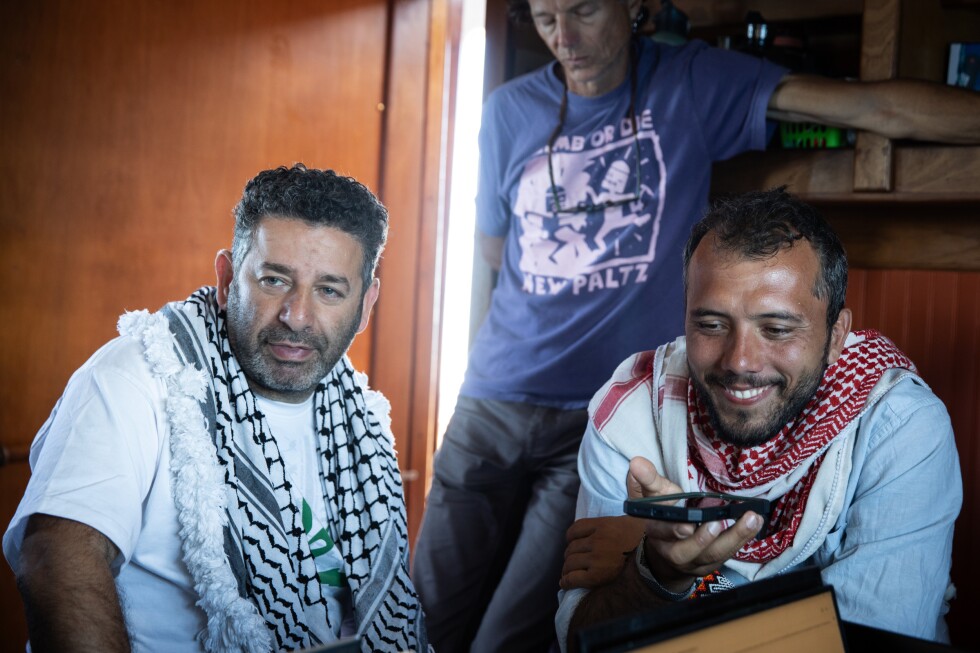
    Among those detained after the interception are two senior members of the flotilla’s steering committee: Saif Abukeshek, a Spanish-Swedish citizen of Palestinian descent, and Thiago Ávila, a Brazilian national. According to Israeli officials, the pair are being transferred to Israel for formal interrogation. Israeli authorities have leveled unsubstantiated claims that Abukeshek is linked to a terrorist organization, while Ávila has been labeled a suspect in unspecified illegal activity, with no supporting evidence released to the public as of Friday.

    Flotilla organizers have issued a scathing account of the Israeli operation, accusing commandos of storming participating vessels, damaging ship engines, and committing widespread abuse against detainees. In an official statement released Friday, the coalition claimed Israeli forces denied detained activists access to food and clean water, and intentionally flooded the floors where detainees were forced to sleep. When a group of activists resisted the removal of Abukeshek and Ávila, organizers say Israeli forces responded with brutal violence: participants were punched, kicked, dragged across decks with their hands bound behind their backs, and suffered serious injuries including broken noses, fractured ribs, and severe bruising from beatings. Organizers also claim gunshots were fired during the clash. In total, 34 activists holding citizenship from countries including the United States, Australia, Colombia, Italy, and Ukraine required hospital treatment for their injuries after disembarking in Crete.

    Israeli officials have defended the interception, saying early action was necessary to stop the flotilla before it could reach Israeli territorial waters, given the large number of vessels participating. Israeli Foreign Minister Gideon Saar claimed Thursday that all activists removed from the vessels were taken into custody unharmed, and authorities have not issued any formal response to the specific allegations of abuse and mistreatment. Prior to this operation, 53 vessels were part of the flotilla’s deployment, which launched earlier this month from Barcelona, Spain. Organizers note that 31 of those vessels have now reached safe international waters, and will continue their stated mission to break what they call Israel’s illegal naval blockade of Gaza.

    Diplomatic reactions to the incident have split along familiar geopolitical lines. Spanish Foreign Minister José Manuel Albares issued an immediate audio statement Friday calling for Abukeshek’s immediate and unconditional release, adding that roughly 30 other Spanish citizens who disembarked in Crete have already received consular support from the Spanish embassy in Greece. Greek authorities have confirmed they requested Israel withdraw its naval vessels from the interception area, and offered to facilitate the disembarkation and repatriation of remaining activists through diplomatic good offices. Lara Souza, Ávila’s wife, told reporters the pair’s current location remains unclear, with Brazilian officials warning that securing their release will become far more complicated if they are transferred into Israeli territory. The Brazilian Foreign Ministry has not yet responded to requests for comment from the Associated Press.

    The United States has publicly aligned with Israel in condemning the flotilla, characterizing the mission as a “pro-Hamas political stunt.” In a statement posted to the social platform X, the U.S. State Department said it expects all U.S. allies, particularly those that have endorsed former President Donald Trump’s 20-point ceasefire plan for Gaza, to take decisive action against the initiative, including denying the flotilla’s vessels access to national ports. Solidarity protests in support of the flotilla and detained activists have already broken out in major capitals across the globe, including Rome, Athens, and Istanbul.

    This is not the first time Israeli authorities have blocked the Global Sumud Flotilla’s efforts to deliver aid to Gaza. Less than a year ago, Israel intercepted an earlier mission involving roughly 50 vessels and 500 activists, including high-profile participants such as climate activist Greta Thunberg, Mandla Mandela (grandson of anti-apartheid leader Nelson Mandela), and multiple sitting lawmakers. All participants were arrested, detained, and eventually deported, including Ávila, who previously accused Israeli authorities of abusing him during detention — claims that Israeli officials have repeatedly denied.

  • What to know about the Eurovision Song Contest as it turns 70 with a Vienna extravaganza

    What to know about the Eurovision Song Contest as it turns 70 with a Vienna extravaganza

    As the Eurovision Song Contest marks its 70th anniversary this year, the iconic, glitter-fueled global musical gathering is balancing its long-running celebration of cross-cultural connection with growing political tensions ahead of its 2026 installment in Vienna, Austria. Running from May 12 to 16, this year’s event will bring 35 competing acts from across Europe and beyond to the stage, but the gathering is overshadowed by a high-profile boycott led by five nations protesting Israel’s eligibility to compete amid the ongoing Israel-Hamas war in Gaza.

    Founded in 1956 in the aftermath of World War II, Eurovision was originally conceived to test emerging live broadcast technology and rebuild continental unity across a war-scarred Europe. What began as a small contest with just seven competing nations has expanded into a global cultural phenomenon, now welcoming dozens of entries from across Europe and even non-European participants including Israel and Australia.

    Widely described as the “Olympics of pop music,” the contest has cultivated a massive global fanbase by blending campy theatricality, unapologetic pop joy, and unfiltered national pride. Last year’s installment drew a global audience of 162 million viewers, and organizers confirm fans from 75 countries have already purchased tickets for this year’s live shows at Vienna’s Wiener Stadthalle. Over its seven-decade history, Eurovision has launched the careers of some of the world’s biggest music stars, from 1974 winners ABBA to Celine Dion, who claimed victory for Switzerland in 1988, to more recent standouts including 2014 winner Conchita Wurst, 2021 champions Måneskin and 2022 winners Kalush Orchestra. Even its most famously silly entries, such as early winners “La, La, La” and “Boom Bang-a-Bang,” have become beloved parts of the contest’s quirky legacy.

    Though the contest’s official motto remains “United by Music,” politics have repeatedly intruded on its celebration in recent years. In 2022, Russia was expelled from the competition following its full-scale invasion of Ukraine, and the 2024 contest in Malmö and 2025 event in Basel both saw widespread pro-Palestinian demonstrations calling for Israel’s removal from the contest over its military campaign in Gaza and allegations of voting manipulation.

    Tensions boiled over in December 2025, when five countries – Iceland, Ireland, the Netherlands, Slovenia and Spain – announced their withdrawals from the 2026 contest after the European Broadcasting Union (EBU), which runs Eurovision, reaffirmed Israel’s eligibility to compete. Slovenia’s national broadcaster even went so far as to announce it would not broadcast this year’s contest in solidarity with the boycott. While Bulgaria, Moldova and Romania have rejoined the competition after skipping recent installments for financial or artistic reasons, the total number of 2026 participants sits at 35, down from 37 in 2025. Multiple pro-Palestinian protests are already scheduled to take place across Vienna during contest week.

    For fans focused on the music, this year’s lineup features a diverse range of acts spanning pop-opera, folk-infused dance, high-energy rock, and soulful ballads. Oddsmakers currently peg Finland’s “Liekinheitin” (“Flamethrower”), a high-octane collaboration between violinist Linda Lampenius and pop singer Pete Parkkonen, as the frontrunner to take home the trophy. Other top contenders include 17-year-old French singer Monroe’s pop-operatic ballad “Regarde!”, Denmark’s sultry jazz-tinged entry “Før Vi Går Hjem” (“Before We Go Home”), and Greece’s fan-favorite party-rap track “Ferto” (“Bring It”). Australia, a long-time enthusiastic non-European participant, has sent acclaimed star Delta Goodrem with the polished mid-tempo ballad “Eclipse,” while Cyprus’ folk-influenced dance-pop entry “Jalla” by Antigoni has already gone viral on YouTube and earned a positive nod from Eurovision experts. Israeli crooner Noam Bettan will compete with his ballad “Michelle,” while tiny San Marino’s entry “Superstar” features a surprise guest appearance from 1980s pop icon Boy George.

    Eurovision expert Paul Jordan, known professionally as Dr. Eurovision, notes that the contest has long outgrown its old reputation for formulaic cheesy pop. “There’s not a lot of cheesy pop numbers this year,” he explained. “There’s such diversity that I don’t think there is such a thing as a ‘Eurovision sound’ anymore.”

    Following longstanding tradition, 2026’s contest is hosted by 2025’s winner, Austrian singer JJ, marking the third time Vienna has hosted the event. The competition kicks off with two semi-finals on May 12 and 14, which will narrow the field to 25 finalists who will compete in the grand final on May 16, hosted by Austrian singer and business heir Victoria Swarovski and actor Michael Ostrowski. The contest will broadcast on national public broadcasters across participating countries, stream on Peacock in the United States, and air via the official Eurovision YouTube channel in many other regions.

    Voting, which combines public votes and scores from national expert juries, has been updated this year to address repeated allegations of vote rigging. The EBU has cut the maximum number of votes per purchase in half to 10 and implemented new safeguards to block suspicious or coordinated voting activity. Viewers in participating countries can vote via phone or text during the live final (though they are prohibited from voting for their home country’s act), while fans in non-participating nations including the U.S. can cast votes online via the official Eurovision voting website. After all votes are tallied, the act with the highest combined score claims the win, with the slow, dramatic reveal of scores keeping global audiences on the edge of their seats.

    The 2026 boycott has sparked new questions about Eurovision’s future, particularly at a time when many European public broadcasters face crippling funding cuts and younger audiences increasingly turn to social media for entertainment. The withdrawal of two longstanding core participants – seven-time winner Ireland and Spain, one of the five largest funding contributors to the contest – is a significant blow to the event’s stability. Still, Eurovision leadership is looking to expand globally, with the first-ever Eurovision Song Contest Asia scheduled to launch in Bangkok this November.

    Jordan remains optimistic that the 70-year-old institution can weather this latest period of tension. “At 70, Eurovision is part of our European culture,” he said. “It still gets people talking. It still brings us all together. It still gets huge viewing figures, it’s still creating hits. At a time when broadcasting is changing, people still make a date with their television set on that Saturday night.”

  • An angry crowd riots outside Australian hospital treating suspect in 5-year-old girl’s death

    An angry crowd riots outside Australian hospital treating suspect in 5-year-old girl’s death

    In the remote Australian Outback, a shocking wave of public anger has boiled over into violent unrest outside a major regional hospital, triggered by the brutal murder of a young Indigenous child. The incident unfolded over four days starting on a weekend in the area surrounding Alice Springs, a remote hub in central Australia’s Northern Territory.

    Authorities allege that Jefferson Lewis, the 55-year-old primary suspect, abducted the 5-year-old child from her home in a nearby Indigenous community. Per cultural customs of the local First Nations people, a strict ban prohibits publicly naming deceased community members, so the young victim has been identified publicly only as Kumanjayi Little Baby. Her body was discovered by search teams on Thursday, four days after she was reported missing, sparking immediate, raw outrage across the local Indigenous community.

    Before law enforcement could take Lewis into custody, a large group of community members tracked the suspect down and beat him until he lost consciousness, in an act of vigilante justice. When police arrived at the scene to intervene, they extracted the unconscious suspect and rushed him to Alice Springs Hospital for emergency medical treatment.

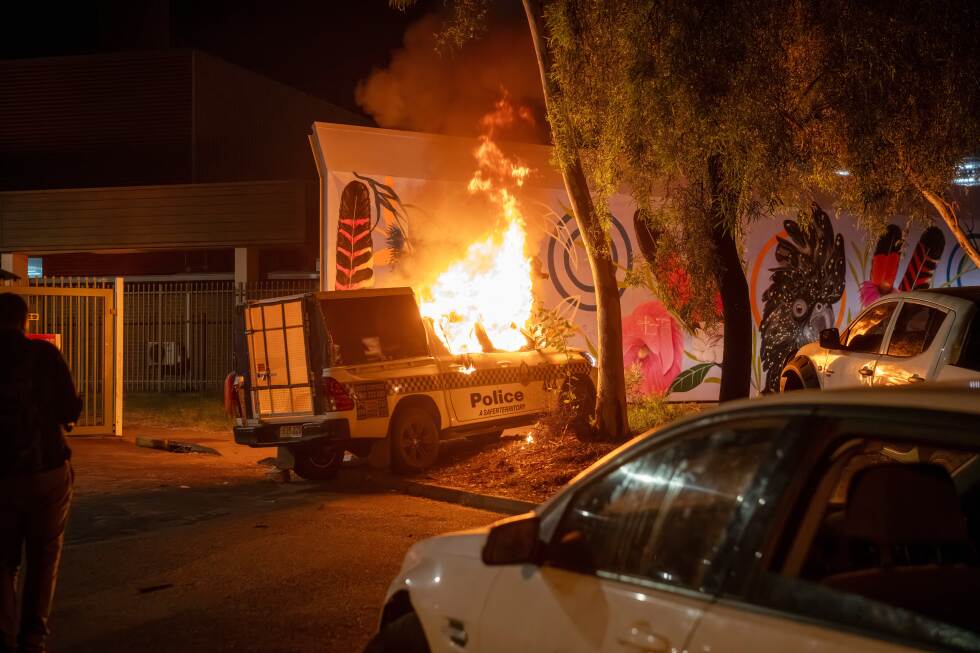
    That evening, hundreds of angry local residents gathered outside the hospital’s entrance to protest his presence there. Many in the crowd pushed for Lewis to be subjected to “payback,” a traditional form of customary Indigenous justice that can include corporal punishment such as beating or spearing. As the crowd refused to disperse and tensions escalated into rioting, law enforcement deployed less-lethal crowd control measures: officers fired rubber bullets and released tear gas to push the crowd back. In the chaos of the unrest, multiple police vehicles were damaged by members of the crowd.

    To de-escalate the situation and protect Lewis from further harm, hospital staff cleared him for transport into police custody shortly after the riot broke out. Authorities immediately arranged an air transfer 1,500 kilometers (more than 900 miles) north to Darwin, the capital of the Northern Territory, where Lewis will remain in pre-charge detention. Prosecutors confirm that formal charges against the suspect are expected to be filed on Friday.

    The incident has thrown a harsh spotlight on the deep tensions between formal Australian state law and traditional Indigenous customary justice in remote central Australian communities, where many First Nations residents continue to prioritize traditional governance systems for addressing serious harm.

  • US imposes sanctions on DR Congo ex-President Kabila alleging rebel support

    US imposes sanctions on DR Congo ex-President Kabila alleging rebel support

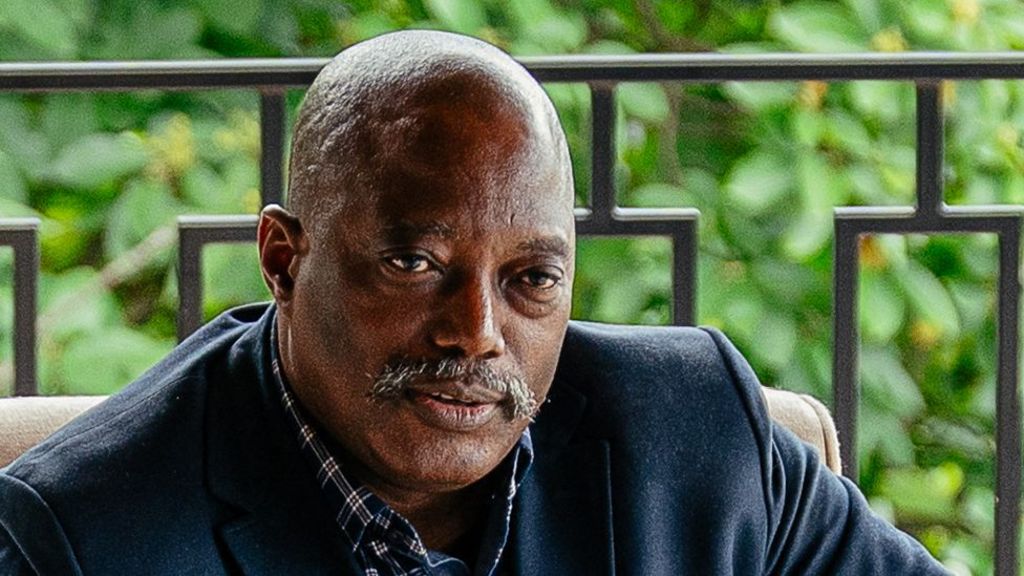
    The United States has announced wide-ranging sanctions against former Democratic Republic of Congo (DRC) President Joseph Kabila, leveling serious accusations that the long-time former leader has provided direct support to the M23 rebel group active in eastern DRC.

    According to U.S. officials, Kabila has delivered critical financial backing to the insurgent group, encouraged defections from the official Congolese national army, and even plotted to launch coordinated attacks against Congolese military forces from his base outside the country. The 54-year-old ex-president, who held the DRC’s highest office for 18 years starting in 2001, has not issued any public response after the BBC reached out for comment on the new sanctions. Kabila’s current location remains unconfirmed publicly, though he entered self-imposed exile in South Africa in 2023; he was last spotted publicly one year ago in Goma, a major eastern DRC city that is currently controlled by M23 forces.

    This latest punitive action by Washington is framed as a key component of its broader efforts to uphold the 2024 peace deal between DRC and neighboring Rwanda that the U.S. helped broker. The U.S. has long alleged that Rwanda provides military and logistical support to M23, a claim that Kigali has repeatedly denied despite overwhelming independent evidence to the contrary. Rwandan officials maintain that any military presence they have in the border region is strictly a defensive measure to counter cross-border security threats from armed groups based in eastern DRC. Washington previously sanctioned top Rwandan army commanders over their ties to M23 back in March 2025.

    In its official statement announcing the sanctions, the U.S. Treasury Department claims Kabila’s ultimate goal is to destabilize the current DRC government based in Kinshasa, clearing the way for an allied opposition candidate to seize power and restore his political control over the country. Under the newly imposed measures, all assets owned by Kabila that fall under U.S. jurisdiction are immediately frozen, and any U.S. citizen or registered company is prohibited from conducting financial or commercial activity with the former president. Global financial institutions and foreign business partners have also received formal warnings against engaging in even indirect transactions with Kabila, with violations carrying severe civil and criminal penalties. U.S. officials note the sanctions serve both as a punitive measure and a tool to force a change in Kabila’s behavior, sending a clear signal that Washington is prepared to target even former heads of state accused of fueling deadly conflict in central Africa.

    Eastern DRC has been plagued by persistent armed conflict for decades, with dozens of competing armed groups vying for control of the region’s resource-rich territory. M23 launched major offensive operations in early 2025, seizing large swathes of land and multiple major population centers in the area. Beyond advancing regional peace and security goals, the U.S. says the new sanctions against Kabila will also strengthen a recent regional economic agreement focused on improving transparency in global critical mineral supply chains. Last December, the U.S. and DRC formalized a bilateral partnership to expand U.S. access to DRC’s massive reserves of strategically critical minerals, including cobalt, coltan, and copper, all of which are core inputs for global clean energy and electronics manufacturing.

    The punitive actions against Kabila are not limited to international sanctions: last September, a Congolese military court sentenced the former leader to death in absentia after convicting him of war crimes and treason tied to his alleged support for M23. Kabila rejected the charges as politically motivated and arbitrary, and refused to appear in court to mount a defense against the accusations.

  • Vonn still in ‘survival mode’ after Olympic crash

    Vonn still in ‘survival mode’ after Olympic crash

    One of the most decorated alpine skiers in history, American downhill legend Lindsey Vonn is not ready to call time on her competitive career just yet – but she also refuses to rule out permanent retirement, three weeks after a devastating crash at the 2026 Cortina Winter Olympics left her on the brink of leg amputation.

    The 41-year-old 2010 Olympic downhill champion has undergone eight invasive surgeries since the high-speed accident on February 8, where she crashed just 13 seconds into her downhill run after striking a gate, rupturing ligaments in her left knee and sustaining a complex tibia fracture. What makes this injury far more severe than any she has dealt with over her decades-long career, Vonn says, is that multiple medical procedures were required to save her leg from amputation.

    In an interview with the Associated Press, Vonn acknowledged she is still navigating the acute recovery phase, describing her current mindset as being in “survival mode” that leaves her emotionally unready to commit to a final decision about her career. “I just don’t want to jump to any conclusions or even speculate on what I might do,” she explained. “I may retire. I may never race again and that would be completely fine, but I’m not in a position emotionally to make that decision at this point.”

    Vonn’s recovery road stretches far into the future, with one more major procedure already scheduled: the upcoming surgery will remove existing metal hardware from her injury site and perform a replacement for her torn anterior cruciate ligament (ACL). After that operation, she faces another six months of structured rehabilitation, meaning she will need at least 18 months of progressive recovery before she could return to full fitness even for off-slope gym training, let alone competitive racing.

    This is not Vonn’s first run with career-threatening injury: the skier, who holds 82 World Cup race wins – the second-most all time among female alpine skiers, trailing only fellow American Mikaela Shiffrin – initially retired from professional competition in 2019 after a string of serious leg injuries. She stunned the skiing world with a comeback announcement in 2024, after recovering from a partial right knee replacement, and entered her fifth Olympic Games as a medal contender, even competing through an ACL injury she sustained in the final pre-Olympic World Cup race in Switzerland.

    That pre-Games injury, she says, pales in comparison to the damage sustained in Cortina. “It’s much different than any injury I’ve ever had, in terms of the severity of the injury and understanding that I could have lost my leg and how bad things were,” Vonn said. “I can deal with a lot of pain, but this was so extreme. It’s not even been in the universe of pain as what I’ve had before.”

    Vonn, who returned to her home in the United States in mid-February after initial treatment in Italy, has continued to post incremental progress updates after each round of surgery. For now, her priority is pushing through the grueling initial recovery phase, rather than locking in a career choice. “I’m still in survival mode. I just want to get through this phase and be able to assess where I am in my life,” she said. “I don’t want to make a decision now because I think that would be rash and probably too emotional and I don’t want to make a mistake.”