博客

  • Spain readies for evacuations as a hantavirus-hit cruise ship heads for the Canary Islands

    Spain readies for evacuations as a hantavirus-hit cruise ship heads for the Canary Islands

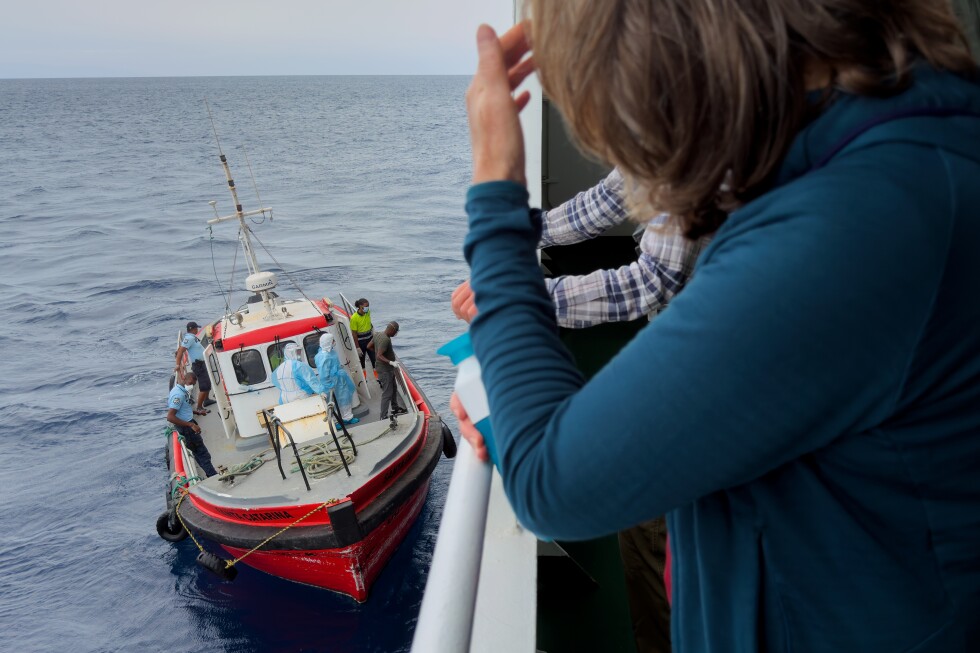
    As the Dutch-flagged cruise vessel MV Hondius, which has been hit by a deadly hantavirus outbreak, prepares to dock off the coast of Tenerife in Spain’s Canary Islands this Sunday, emergency and public health teams across the globe are scrambling to coordinate evacuation protocols and track down potentially exposed passengers who left the ship before the outbreak was confirmed.

    Three fatalities have already been linked to the outbreak, and five passengers who disembarked the ship earlier have tested positive for the virus, according to cruise operator Oceanwide Expeditions. The company confirmed Friday that no remaining passengers or crew members currently show visible signs of hantavirus infection, even as preparations for a controlled, phased evacuation move forward.

    Spain’s emergency services chief Virginia Barcones outlined strict protocols for the arrival, stating that all people on board will be moved to a fully isolated, cordoned-off zone once the ship docks. Evacuation will proceed in small groups via shuttle boats, with passengers transported to cordoned-off sections of Tenerife’s airport in dedicated, guarded isolation vehicles only after their repatriation flights are fully ready for departure. Canary Islands public officials have moved quickly to reassure local residents that the broader population faces minimal exposure risk.

    The United States and United Kingdom have both arranged special charter flights to repatriate their citizens who remain on the vessel. The U.S. will fly roughly 17 American passengers back to Omaha, Nebraska, where they will be quarantined at the University of Nebraska Medical Center’s specialized National Quarantine Unit – a facility purpose-built to handle high-risk infectious diseases, previously used to treat Ebola and the earliest known COVID-19 cases in the U.S. “We are prepared for situations exactly like this,” noted Nebraska Medicine CEO Dr. Michael Ash, adding that none of the American passengers currently show symptoms. The UK will evacuate nearly 24 British nationals remaining on board via a chartered flight of its own.

    Global public health authorities have stressed that the overall risk of a widespread community outbreak from this event remains low. The World Health Organization (WHO) confirmed Friday that a KLM flight attendant who was feared to have contracted the virus after sharing a flight with an infected passenger has tested negative. WHO spokesperson Christian Lindmeier emphasized that this negative result should ease public anxiety, reiterating, “The risk remains absolutely low. This is not a new COVID.”

    Hantavirus is most commonly transmitted to humans through inhalation of air contaminated by rodent droppings, and does not spread easily between people. The Andes virus strain detected in this outbreak is a rare exception, with documented limited person-to-person transmission in uncommon circumstances. Symptoms typically develop between one and eight weeks after exposure, creating a challenge for contact tracers tracking potentially infected people who left the ship weeks ago.

    The outbreak’s slow detection created significant challenges for contact tracing efforts. The first passenger death on board occurred in mid-April, but nearly two dozen passengers from 12 different countries were allowed to disembark on April 24, before any official confirmation of hantavirus. It was not until May 2 that health authorities formally confirmed hantavirus in a passenger from the ship, prompting a global race to track down all people who may have been exposed.

    As of Friday, new suspected cases continued to emerge outside the vessel. UK health authorities reported a third suspected hantavirus case in a British former passenger currently on the remote South Atlantic territory of Tristan da Cunha, where the ship made a stop in April. In southeastern Spain, a former passenger in Alicante who shared a flight with an infected Dutch cruise passenger who later died in Johannesburg is currently undergoing testing for the virus. Two confirmed British cases are already hospitalized, one in the Netherlands and one in South Africa.

    South African health authorities are focusing contact tracing efforts on an April 25 flight from St. Helena to Johannesburg, which carried multiple passengers who disembarked the cruise ship at the remote South Atlantic island. U.S. health officials are monitoring a small number of former passengers who have already returned to the U.S., along with their close contacts, and have reported no symptomatic cases so far.

    For passengers still on board the MV Hondius, life has continued with relative calm in recent days, with many engaging in birdwatching, reading, or attending shipboard talks while adhering to masking and social distancing rules. But two Spanish passengers, who spoke to the Associated Press on condition of anonymity over fears they will face social ostracism after disembarking, said they fear the reaction they will face from the public. “We’re scared by all the news that’s coming out, by how people are going to receive us, by how people see us,” one passenger said. “We’re just normal people. We’ve heard that this is a millionaires’ cruise, and it’s the complete opposite of reality. And we’re scared by this.”

  • Rubio set to meet Italy’s Meloni as both sides seek to ease frictions over Iran war

    Rubio set to meet Italy’s Meloni as both sides seek to ease frictions over Iran war

    ROME — U.S. Secretary of State Marco Rubio launched a high-stakes diplomatic push on Friday for his second day of damage-control talks, kicking off the day’s schedule with a meeting with Italian Prime Minister Giorgia Meloni. The negotiations center on defusing mounting tensions between the two longstanding NATO allies over the ongoing U.S.-led conflict with Iran, alongside simmering disagreements over trade policy.

  • Family of imprisoned Chinese journalist pleads for his release over health concerns

    Family of imprisoned Chinese journalist pleads for his release over health concerns

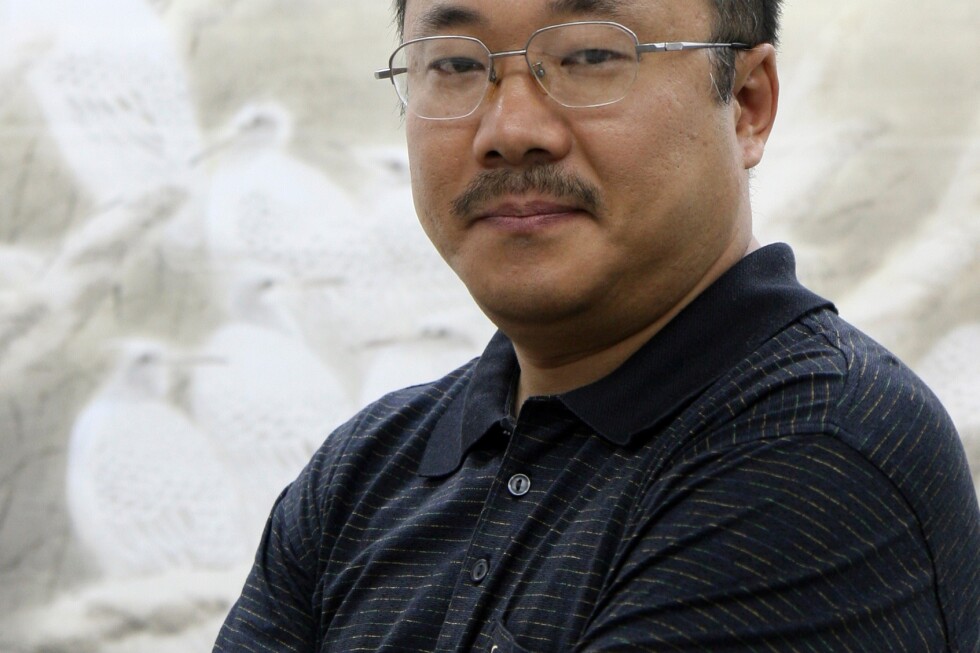
    BANGKOK, Associated Press – In a desperate new appeal, family members of Chinese journalist Dong Yuyu and international press freedom advocates are calling for the immediate release of the 7-year-sentenced editor, whose rapidly deteriorating health has put his life at imminent risk.

    Dong, a veteran editor at Beijing-based state-owned Guangming Daily who also contributed commentary to Chinese independent outlets and The New York Times’ Chinese-language platform, was detained in 2022 during a routine lunch meeting with a Japanese diplomat in Beijing. In 2024, Chinese courts convicted him of espionage charges and handed down a seven-year prison term.

    In a public statement released Thursday, Dong’s family warned that the journalist’s current condition amounts to a de facto death sentence. According to the family’s account, Dong was admitted to a prison-run hospital in Tianjin on April 27, where medical practitioners diagnosed him with heart arrhythmia and detected a lung tumor that the family suspects is cancerous. The family added that Dong has been forced to work long hours on garment production tasks during his incarceration, with no access to adequate rest to manage his worsening health.

    Speaking from the United States, where he has waged a sustained advocacy campaign for his father’s release, Dong Yuyu’s son Dong Yifu shared that he and his grandmother are overwhelmed by grief and anxiety over the rapidly unfolding situation.

    International press freedom organization Reporters Without Borders has joined the call for action, with Aleksandra Bielakowska, an activist with the group, urging the global community to ramp up diplomatic pressure on Beijing. The organization is pushing for Beijing to grant Dong medical parole, approve his travel to an overseas medical facility for urgent treatment, and allow him to reunite with his waiting family.

    Dong’s family has pinned additional hopes on the upcoming bilateral summit between U.S. President Donald Trump and Chinese President Xi Jinping next week, expressing optimism that world leaders will raise Dong’s case during high-level talks.

    Prior to his detention, Dong published commentary advocating for constitutional democracy, political liberalization, and greater government transparency – reform-minded positions that were once permitted for public discussion in Chinese media circles but have become heavily restricted and taboo in recent years under Beijing’s tightening ideological control.

  • Dozens killed in jihadist attacks on villages in central Mali

    Dozens killed in jihadist attacks on villages in central Mali

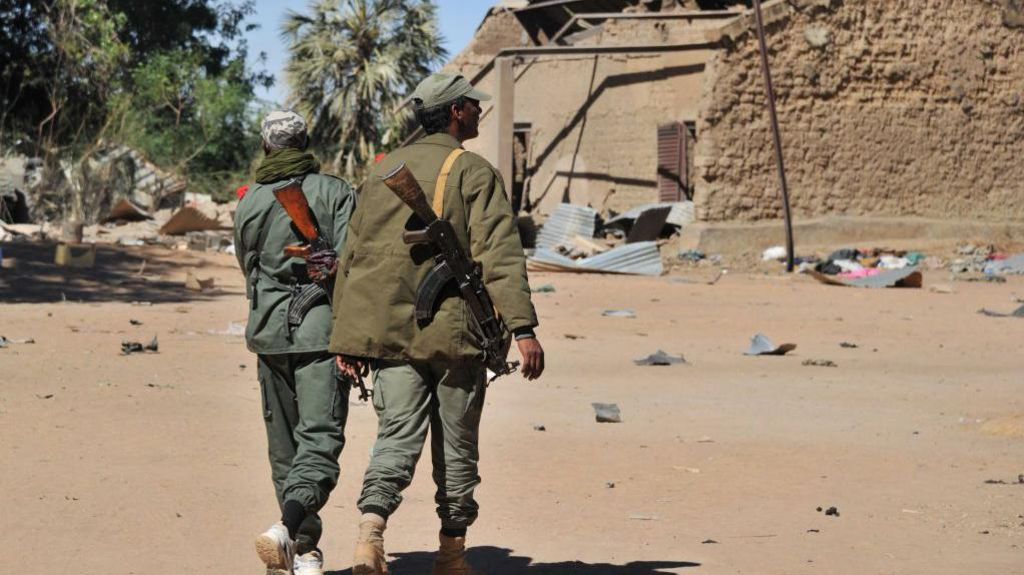
    More than a decade of rolling insurgency has reached a new brutal peak in central Mali, after coordinated simultaneous attacks on two rural villages left dozens of civilians and militiamen dead this week — marking the deadliest single assault since jihadist and separatist groups launched a nationwide coordinated offensive last month.

    The al-Qaeda-affiliated militant group Jama’at Nusrat al-Islam wal-Muslimin (JNIM) has officially claimed responsibility for the Wednesday night raids on the villages of Korikori and Gomossogou, located in Mali’s volatile central Mopti Region. Initial casualty counts from sources quoted by Agence France-Presse (AFP) put the death toll at 30, but separate accounts from diplomatic and humanitarian sources speaking to Reuters and regional security journalism collective West African Network for Peace and Security (WAMAPS) have revised the provisional number of fatalities to at least 50. Multiple residents and local sources confirm that while most victims were members of local self-defense militias, the death toll also includes teenage civilians and young children, with an unknown number of residents still unaccounted for in the wake of the assault.

    Local witnesses describe attackers entering the villages under cover of night, opening indiscriminate fire on residents, ransacking and looting residential and community structures, and setting multiple properties ablaze. A security source told AFP the attacks were carried out in retaliation for recent operations by Dan Na Ambassagou, a community-organized self-defense militia formed to counter years of persistent militant violence in central Mali.

    Mali’s military junta, led by General Assimi Goïta — who seized power in a 2020 coup — has responded to the assault with immediate counteroperations. Military officials confirmed that a “targeted strike” was launched in the attack area, with roughly a dozen jihadist fighters “neutralized” in the operation. Bandiagara Region Governor condemned the violence in an official Thursday statement, labeling the coordinated assaults “despicable and inhumane acts.” A subsequent military update clarified that nearly 10 additional “terrorist” fighters were killed and an insurgent logistical base was destroyed during further counteroffensive actions.

    The latest attack comes against a backdrop of rapidly escalating instability that has gripped Mali since April, when an alliance of jihadist militants and separatist rebels from the Azawad Liberation Front (FLA) launched a coordinated nationwide offensive aimed at ousting Goïta’s military regime. That opening wave of attacks included a suicide truck bombing targeting the residence of Malian Defense Minister Sadio Camara near the capital Bamako that killed the top security official. Just this week, Goïta announced he would fill the vacant defense minister post, with support from army chief of staff General Oumar Diarra.

    Speaking at a Wednesday press briefing in the capital, Malian army commander Djibrilla Maiga acknowledged that insurgent groups have been working to regroup and rearm in the weeks following the April offensive, warning that “the threat is still present” and confirming that military forces are working to disrupt further militant advances.

    Unlike previous deployments, when Mali relied on United Nations peacekeepers and French counterinsurgency forces, Goïta’s junta has partnered with the Russia-linked Africa Corps, a paramilitary force that grew out of the now-fractured Wagner Group, to combat the insurgency. Even with this support, the FLA-led offensive has forced Russian fighters to withdraw from the key northern city of Kidal, which is now fully under separatist control. The FLA has since announced plans to advance on other northern population centers and issued an explicit demand for the full withdrawal of Africa Corps forces from all Malian territory. Beyond territorial gains, insurgents have also tightened a blockade on Bamako, establishing a network of checkpoints on all major road arteries leading into the capital to cut off supply lines.

    Mali’s ongoing crisis traces its roots back to 2012, when a Tuareg separatist rebellion in northern Mali evolved into a full-scale Islamist insurgency that has since spread to central and eastern regions of the country. Today, large swathes of northern and eastern Mali remain completely outside of government control. When Goïta’s junta first seized power, it held broad popular support on a promise to end the decade-long security crisis. Following the coup, however, the new regime expelled UN peacekeeping forces and French counterinsurgency troops that had been deployed to stem the insurgency, clearing the way for the current surge in violence that has pushed the country to the brink of state collapse.

  • Trump’s tariffs hit Toyota profit, though its global sales grew

    Trump’s tariffs hit Toyota profit, though its global sales grew

    TOKYO – Japan’s leading automaker Toyota Motor Corporation has posted a sharp 19% decline in full-fiscal-year profit for the 12 months ending March 2025, with former U.S. President Donald Trump’s trade tariffs and unfavorable currency fluctuations identified as the primary drags on its bottom line.

    Released on Friday, the company’s financial results show net profit landed at 3.85 trillion Japanese yen, equivalent to roughly $25 billion, down from 4.8 trillion yen in the prior fiscal year. Toyota, which produces popular nameplates including the Camry sedan, Prius hybrid, and Lexus luxury line, estimated that Trump-era tariff policies alone carved 1.4 trillion yen ($9 billion) off its annual operating income. Unfavorable foreign exchange swings further compressed profit margins for the global manufacturer, which is headquartered in Toyota City, central Japan.

    Despite the profit decline, Toyota outperformed many analyst expectations in key operational metrics. Global vehicle sales rose to nearly 9.6 million units from 9.4 million in the previous year, while total annual revenue climbed 5.5% to 50.7 trillion yen ($323 billion), up from 48 trillion yen a year prior. On a quarterly basis, the brand closed out the fiscal year with strong momentum: January to March profit jumped 23% year-over-year to 817 billion yen ($5.2 billion), from 664 billion yen, while quarterly sales edged up nearly 2% to 12.6 trillion yen ($80 billion).

    Looking ahead to the current fiscal year running through March 2026, Toyota is maintaining a cautious outlook amid escalating geopolitical risk in the Middle East. The company projects it will again sell 9.6 million vehicles globally, while forecasting a relatively modest annual profit of 3 trillion yen ($19 billion). The ongoing conflict between Iran and Israel, which has effectively closed the Strait of Hormuz — a critical global shipping chokepoint for energy and trade — has created significant uncertainty for the manufacturer. Toyota expects persistent supply chain disruptions from the strait closure, and has already recorded a drop in regional vehicle sales across the Middle East.

    As Japan relies on imports for nearly 100% of its oil, much of which comes from Middle Eastern producers, the conflict has driven sharp increases in oil and raw material prices. Additionally, rerouting cargo to avoid the Strait of Hormuz adds substantial fuel and labor costs to Japanese importers, a pass-through expense that hits manufacturing giants like Toyota directly.

    Beyond near-term financial headwinds, Toyota reaffirmed its long-term strategic vision to transition from a traditional automaker to a diversified mobility company. The brand confirmed plans to expand its product portfolio beyond passenger vehicles to include personal watercraft and small aircraft, alongside innovation in adjacent industrial and service sectors. Current development projects include robotic arms designed to restock retail store shelves and autonomous transport devices for medical equipment in hospitals. To support this transformation, Toyota announced it will streamline operations, rationalize its vehicle model lineup, increase local component sourcing to cut supply chain risk, and implement company-wide cost reduction initiatives.

    Following the release of the earnings report, Toyota’s share price declined 2.2% in Tuesday trading in Tokyo.

  • Political uncertainty in India state as film star winner falls short of majority

    Political uncertainty in India state as film star winner falls short of majority

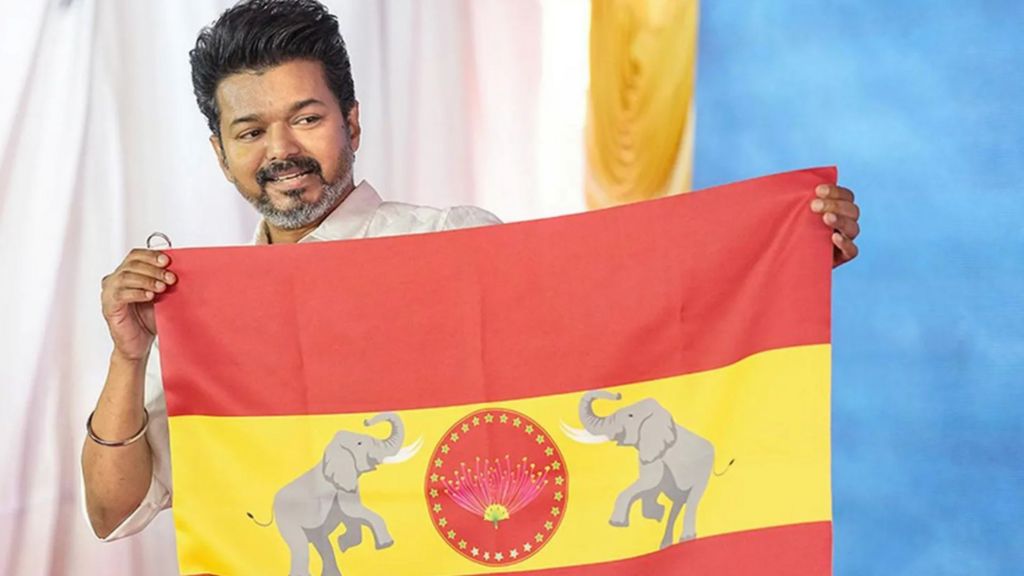
    In a political upheaval that has rewritten decades of electoral history in the southern Indian state of Tamil Nadu, film superstar-turned-politician C. Joseph Vijay’s newly launched Tamilaga Vettri Kazhagam (TVK) has emerged as the single largest party in the 234-member state legislative assembly, shattering the long-standing duopoly of the Dravida Munnetra Kazhagam (DMK) and All India Anna Dravida Munnetra Kazhagam (AIADMK). But five days after vote counting concluded, the state remains mired in political uncertainty, with no clear timeline for the formation of a new government and competing constitutional debates over who should get the first chance to take power.

    Vijay, a 51-year-old megastar popularly known by his fan nickname ‘Thalapathy’, led his fledgling party to a stunning 108 seats in the election, defeating the incumbent DMK government led by Chief Minister MK Stalin. The result leaves TVK just 10 seats short of the 118-seat majority required to form a government on its own. So far, India’s main national opposition party, the Congress, has pledged its five seats to Vijay’s bloc, leaving the celebrity politician just five legislators short of the required threshold.

    Two days after the vote count, Vijay met with Tamil Nadu Governor Rajendra Vishwanath Arlekar twice to formally stake his claim as the leader of the single largest party to form the next administration. Following the second meeting on Thursday, however, the Governor’s office released a statement rejecting the claim, noting that Vijay had not yet demonstrated he holds the requisite majority support to form a stable government. The Governor has insisted that Vijay submit documented proof of the 118 committed legislators before being invited to form government, a move that has drawn sharp criticism from TVK leaders and their backers.

    Constitutional experts are divided over the Governor’s decision. Many point to well-established constitutional precedent that grants the leader of the single largest party the first opportunity to form government, with a floor test of majority held after the government takes office. They argue that denying Vijay this opportunity is procedurally unfair. Analysts defending the Governor’s position note that his primary mandate is to ensure the formation of a stable administration that can survive a confidence vote, rather than inviting a minority government that could collapse shortly after taking office.

    Vijay’s rapid rise to the top of Tamil Nadu politics has drawn widespread comparisons to MG Ramachandran, another iconic matinee idol who split from the DMK in 1977 to form the AIADMK and went on to become the state’s Chief Minister. For nearly half a century, Tamil Nadu’s politics have been dominated by a two-party system between the DMK and AIADMK, a status quo that TVK has already overturned with its election performance. Unlike Ramachandran and his successor J Jayalalithaa — another film star who led the state for decades — Vijay enters politics with no prior elected experience, though he followed the traditional path of celebrity-turned-politician by retiring from his 69-film acting career full-time after launching TVK in 2024.

    As political uncertainty drags on, Indian media outlets have floated a range of hypothetical coalition scenarios, including a shocking power-sharing agreement between the bitter long-time rivals DMK and AIADMK to block TVK from power. Still, many analysts remain optimistic that Vijay can cobble together the required support from smaller regional parties and independent candidates to hit the 118-seat magic number and form the next government, closing out one of the most dramatic political upsets in recent Indian electoral history.

  • Inside the jails where Russia breaks Ukraine prisoners ‘like dogs’

    Inside the jails where Russia breaks Ukraine prisoners ‘like dogs’

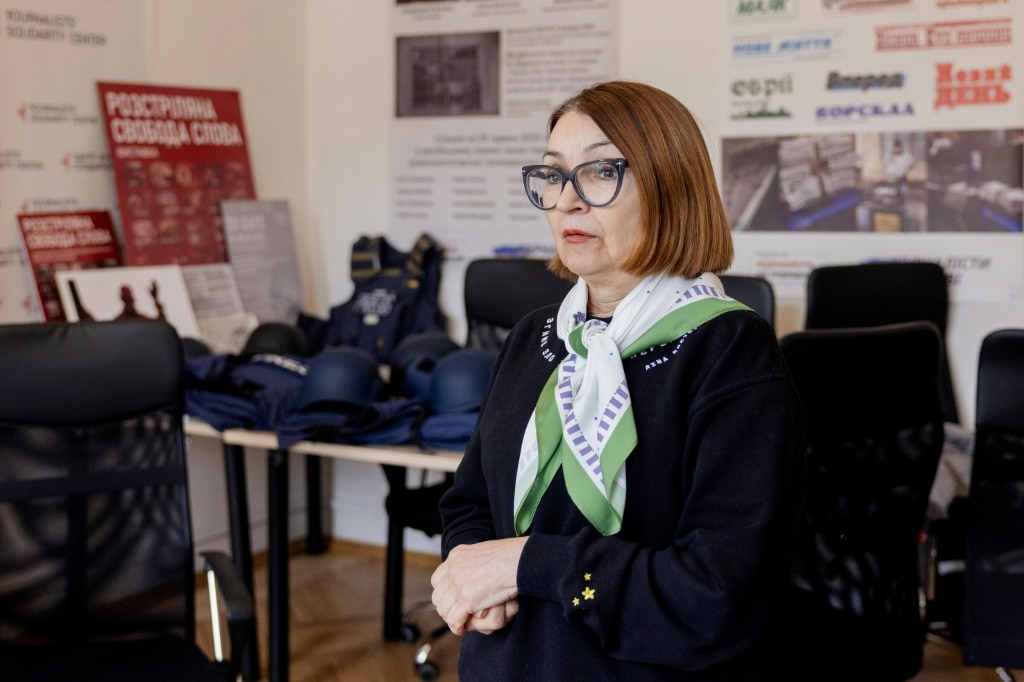
    A bombshell investigation by Agence France-Presse (AFP), built on first-hand testimonies from three former Russian prison staff, surviving Ukrainian detainees and family members of the missing, has pulled back the curtain on a widespread, state-backed system of brutality inflicted on thousands of Ukrainian prisoners of war and civilian detainees held in Russian-controlled detention facilities.

    The harrowing accounts paint a picture of routine, unpunished abuse that senior Russian leadership explicitly authorized, with detainees describing even the most physically and psychologically resilient men being “broken like dogs” under relentless violence and dehumanization. AFP has verified the identities of the former prison officers, who have all fled Russia since speaking out, and changed their names in reporting to protect their safety.

    Multiple sources confirm that the scale of abuse exploded after Russia’s full-scale invasion of Ukraine in February 2022, following years of mistreatment that began when conflict broke out in eastern Ukraine in 2014. As of early 2024, Ukrainian data puts the number of Ukrainian prisoners of war held by Russia at roughly 7,000, with an additional 15,378 civilians illegally detained across Russian territory and occupied Ukrainian lands. The Ukrainian Prosecutor General’s Office has recorded at least 143 Ukrainian detainee deaths in Russian custody over the past four years.

    One anonymous former Russian special forces prison officer, Sergei, who resigned and left Russia after refusing to participate in the violence, told AFP that senior commanders explicitly stripped away all operational rules for guards interacting with Ukrainian detainees ahead of the invasion. “Before the first mission, the head of our territorial group gathered the staff and said that the existing rules would no longer apply when dealing with prisoners of war,” he recalled. “In other words, he gave us carte blanche to use physical force without restriction. And no one would be held responsible. The boss told us: ‘Be severe, fear nothing anymore.’” Sergei added that many of his colleagues embraced the open permission for brutality, acting on unchecked sadistic impulses without any documentation of violence. To hide the abuse, unit members did not wear identification tags or use body cameras when interacting with Ukrainian detainees, and no incident reports were ever filed after violent crackdowns.

    Alexei, a former medic at a Russian prison infirmary, described one particularly horrific case: a young Ukrainian lieutenant who was beaten nearly to death for talking back to his captors, left with extensive festering bruises across his lower body, and denied any meaningful medical care. He died of gangrene in October 2022, likely buried in an unmarked grave, and Alexei never even learned his name. Alexei confirmed that Ukrainian prisoners who resisted breaking under abuse were regularly beaten with rigid polypropylene heating pipes, and even medical staff were complicit in the mistreatment. Survivors are only given superficial wound care after beatings, and are required to publicly thank the Russian Federation for the treatment, he said. Independent investigations have documented even more extreme medical complicity: during a surgery on a Ukrainian prisoner, Russian medical staff carved the slogan “Glory to Russia” into his abdomen; the text had to be surgically removed after he was released in a prisoner exchange.

    Surviving detainee Yaroslav Rumyantsev, a 30-year-old former Ukrainian marine who surrendered at the besieged Azovstal plant in Mariupol in May 2022, shared his own first-hand experience of the systematic campaign to break detainees. After surviving a deadly explosion at Olenivka prison that killed at least 50 Ukrainian detainees, Rumyantsev was transferred to Remand Centre Number 2 in Taganrog, southwestern Russia, widely known as one of the harshest torture facilities for Ukrainian prisoners. Upon arrival, he and 250 other new detainees were bound and blindfolded, then beaten on all sides by a “reception committee” of guards with batons — a brutal tactic first used in Chechnya’s filtration camps during the Second Chechen War.

    Abuse was constant, Rumyantsev said, leaving even the strongest men cowering like beaten animals. “Men who defended their land, who went to the gym — strong men — were broken like dogs. They destroy them,” he explained. Brutal torture methods documented by the Organization for Security and Co-operation in Europe (OSCE) include rape, mock executions, simulated hangings, electric shocks (including to genitalia), forced prolonged standing in painful positions, and punitive group torture: Rumyantsev described being forced to hold hands with other prisoners while guards ran electricity through the line to test how many people would feel the pain.

    Food deprivation is used as a tool of dehumanization. Rumyantsev said he was often given just two minutes to eat a meal under threat of additional beating, and other former detainees told rights groups that extreme hunger forced them to eat caught cockroaches and raw mice found in their cells. Additional arbitrary rules strip away any remaining dignity: prisoners are banned from looking guards in the eye, and Rumyantsev recalled being forced to stand in a group for 16 consecutive hours without access to a toilet, leaving many detainees to urinate on themselves.

    Beyond physical violence, the system is designed to psychologically break detainees through forced re-education and total isolation from the outside world. Detainees are regularly forced to sing Soviet songs, with punishment for singing too softly or off-key. Most are cut off from all contact with family, mirroring the isolation of Stalin-era gulags. Rumyantsev received only one letter from home shortly before his 2024 release, and said it was the only time he allowed himself to cry in captivity. “I saw those first warm words… and my eyes filled with tears. I was shaking and my friend put his hand on my shoulder and said, ‘That means you’re still a human being,’” he recalled.

    Vladimir Osechkin, director of the Russian rights group Gulagu.net (which documents abuse in Russia’s prison system and helped share two of the former officers’ testimonies with AFP), explained that the torture regime is jointly run by Russia’s FSB security service and federal prison authorities, with the complicity of the Russian judicial system. To hide the abuse, Osechkin said, Ukrainian detainees are deliberately made “invisible” within the penal system: their names are sometimes changed, they are held in segregated facilities — including entire prisons emptied of other inmates to eliminate witnesses — and their whereabouts are kept hidden from international monitors and family members.

    This isolation leaves thousands of families in agonizing limbo, waiting for any word of missing loved ones. Natalia Kravtsova’s son Artem, an Azov brigade fighter captured in Mariupol in 2022, was confirmed to be in Russian custody by the Red Cross a year after his capture, but she has had no contact with him since. She is not even sure he is still alive, and every prisoner exchange announcement brings a burst of hope that quickly shatters. “Even if you’re calm on the outside, inside you’re burning,” she said.

    Civilians are not spared the systematic brutality. In occupied Melitopol, 62-year-old schoolteacher Olga Baranevska was abducted in May 2024 for refusing to cooperate with Russian occupation authorities, and sentenced to six years in prison on fabricated explosives charges that her family calls completely baseless. Her daughter Aksinia Bobruiko, a refugee in Germany, only learned two months after her arrest that she was alive, and has almost no additional information. Bobruiko now works with the grassroots NGO “Numo, Sestry!” (“Come on, my sisters!”) founded by former detainee Liudmyla Guseynova, who spent three years in pro-Russian detention after being arrested for supporting Ukraine in 2019. Guseynova described being held in 50 days of isolated confinement in a dungeon, forced to stand all day with a bag over her head, and held in a cramped, filthy cell shared with 20 other detainees that had only a hole in the floor for a toilet and insect-infested mattresses. She recalled investigators refusing to approach her because of the stench and bedbugs covering her body.

    Official data from an October 2023 OSCE report, drawing on Ukrainian official records, found that 9 out of 10 Ukrainian detainees report being ill-treated, with 42% reporting sexual violence. Most released detainees are severely emaciated after months or years of mistreatment. Russian President Vladimir Putin has repeatedly claimed that Russia treats detainees humanely, and Russia’s federal prison administration did not respond to AFP’s requests for comment on the investigation.

    Rights campaigners are calling for all those responsible for the systematic abuse to be held accountable before an international court. “We will find them and punish them all,” vowed Sergei, the former Russian prison special forces officer who blew the whistle on the system.

  • Indonesia volcanic eruption kills three hikers: officials

    Indonesia volcanic eruption kills three hikers: officials

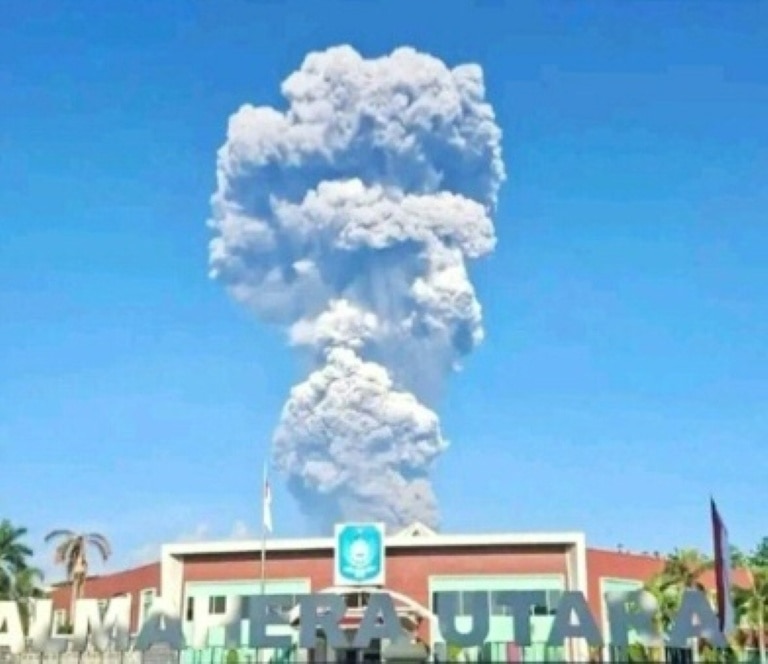
    A devastating volcanic eruption on Indonesia’s Halmahera Island has claimed three lives and left 10 hikers unaccounted for, local authorities confirmed Friday. Mount Dukono, one of the Southeast Asian nation’s nearly 130 active volcanoes, burst into activity early Friday, blasting a dense column of ash 10 kilometers into the sky.

    Among the three fatalities are two foreign hikers and one local resident from the nearby island of Ternate, North Halmahera Police Chief Erlichson Pasaribu told Indonesia’s Kompas TV. Seven hikers managed to descend the mountain safely, while five others suffered injuries in the blast, according to Indonesia’s National Disaster Mitigation Agency (BNPB).

    What makes this incident particularly sobering is that the entire area surrounding the volcano was officially designated off-limits to visitors last month, after vulcanologists detected a sharp uptick in volcanic activity. Pasaribu confirmed that the group of hikers deliberately ignored multiple warnings, including public appeals on social media and physical barricades posted at the trailhead. “Local residents understand the risk and avoid climbing,” he said. “Many of these hikers are foreign tourists looking to create social media content.”

    Joint rescue teams from the regional disaster management agency BPBD and the National Search and Rescue Agency Basarnas have been deployed to conduct search operations and evacuate stranded climbers, but the mission has faced significant challenges. The mountain’s rugged terrain is only accessible by vehicle for the lower portion of the climb, forcing rescuers to carry stretchers the rest of the way. Persistent volcanic rumbling and ongoing unstable activity have further slowed progress, Pasaribu added.

    Lana Saria, head of Indonesia’s government Geology Agency, noted that the early-morning eruption was accompanied by loud booming explosions, with ash drifting predominantly northward. She warned that nearby residential areas and the city of Tobelo must remain on high alert for falling volcanic ash, which poses risks to public health and can disrupt local air and ground transportation.

    Indonesia, an archipelagic nation spanning thousands of islands across Southeast Asia, sits on the Pacific “Ring of Fire”, a geologically active zone where frequent collisions between tectonic plates create regular seismic and volcanic activity. Mount Dukono currently stands at level two on Indonesia’s four-tiered volcanic alert system. Since December, the Center for Volcanology and Geological Hazard Mitigation (PVMBG) has maintained a mandatory exclusion zone banning all visitors within four kilometers of the volcano’s active Malupang Warirang Crater.

  • Caged and fed ‘cookies’: Rescuing Armenia’s captive bears

    Caged and fed ‘cookies’: Rescuing Armenia’s captive bears

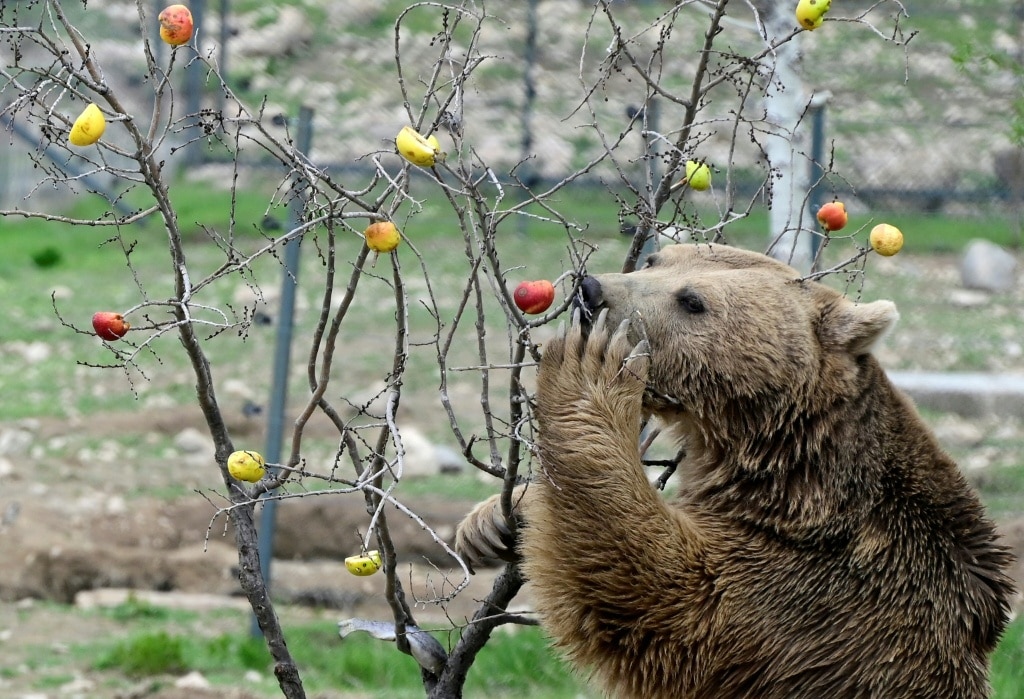
    High in the misty Caucasus highlands of Armenia, three Syrian brown bears — Nairi, Aram, and their young cub Lola — now roam spacious, natural mountain enclosures, digging dens and foraging for fresh produce that mimics their wild diet. It is a stark contrast to the life they escaped just over a year ago: confined to a cramped three-meter cage in the heart of Armenia’s capital Yerevan, forced to sit in their own waste and fed a steady diet of sugary junk food. For these three bears, the rescue was a life-changing second chance, but conservationists warn that as many as 20 more bears remain trapped in inhumane captivity across the country, held as luxury status symbols by the nation’s wealthy elite.

    The problem of captive wild predators in Armenia is not a new one, rooted in long-standing patterns of illegal wildlife trafficking and elite trophy collecting that have persisted since the collapse of the Soviet Union. Strategically positioned at the crossroads of Asia and Europe, Armenia has become a key transit and destination hub for illegal wildlife trafficking, according to global crime research. A 2023 Global Organized Crime Index report identifies persistent demand for rare and dangerous wild animals among the country’s ultra-wealthy, where owning large predators has become a display of power and social status.

    High-profile cases have brought the issue into public view for decades. In 2015, an Armenian member of parliament drew widespread international criticism after publicly acknowledging he kept six endangered Siberian tigers on his private property. The crisis reached a breaking point in 2016, when a private zoo owned by a businessman in the northern city of Gyumri collapsed into insolvency, leaving dozens of caged animals — including lions and bears — to starve to death behind locked gates.

    Today, the Frontline for the rescue mission is run by the Foundation for the Preservation of Wildlife and Cultural Assets (FPWC), a local non-profit that operates Armenia’s only dedicated bear rehabilitation center on a remote mountainside an hour outside Yerevan. Rescuers have documented appalling conditions across the country’s unregulated captive sites: bears are confined to tiny concrete cages at hotels, private backyards, and even roadside petrol stations, denied access to natural sunlight and the ability to hibernate, a critical biological need for the species. Many suffer from severe health issues caused by inappropriate diets, with widespread rotting teeth resulting from being fed cookies, sugary snacks, and even Coca-Cola by their untrained owners.

    “It became clear the moment we mapped the scale of the crisis that we needed a dedicated rescue and rehabilitation space,” explained Tsovinar Hovhannisyan, FPWC’s conservation manager. The three bears Nairi, Aram and Lola were among the most high-profile rescue operations the group has ever completed. Their owner refused to hand the animals over, claiming the bears were “happy” living with him and accusing rescuers of threatening their lives. The team waited more than eight hours in heavy rain for a court order to enter the property and seize the animals. When they finally entered the cage, Hovhannisyan recalled, the space was caked in layers of filth and reeked of waste: “It was horrible, those are memories I will not forget.”

    Now, with Armenia scheduled to host a major UN COP summit on biodiversity this October, the FPWC team is racing against time to rescue the remaining 20 known captive bears across the country. But the mission faces a critical barrier: the rehabilitation center is already at maximum capacity, home to 32 bears that can never be released back into the wild after a lifetime of captivity left them unable to hunt. The organization is currently fundraising to expand its enclosures to accommodate more rescued animals.

    Wealthy owners often see large predators like bears as a bragging right, says FPWC communications manager Ani Poghosyan. “It is a status symbol for them. Something to brag about, especially owning a big predator — it is a way to prove their power and masculinity.” Even when owners initially agree to surrender the animals, many change their mind at the last minute, leaving rescuers empty-handed after traveling to remote properties.

    For the bears that do make it to the center, the team works to recreate as wild an environment as possible. Enclosures are large enough for the animals to roam, dig their own winter dens, and climb trees, and staff provide live prey to encourage natural foraging behaviors. After years trapped in tiny cages, many newly rescued bears are initially afraid to explore the full space of their new enclosures, used to being confined to a few square meters. But over time, most begin to exhibit natural behaviors, including hibernation, something they were never able to do in their former cages.

    While the bears will never be able to survive in the wild, the center’s mission is simple: give them the chance to live out the rest of their lives as bears. “They need to dig, they need to climb, they need to smell wild plants and feel free,” said Narine Piloyan, the center’s coordinator. “They need to feel that they are wild.”

  • Ethiopian woman’s joy at rare quintuplets after 12 years trying for a baby

    Ethiopian woman’s joy at rare quintuplets after 12 years trying for a baby

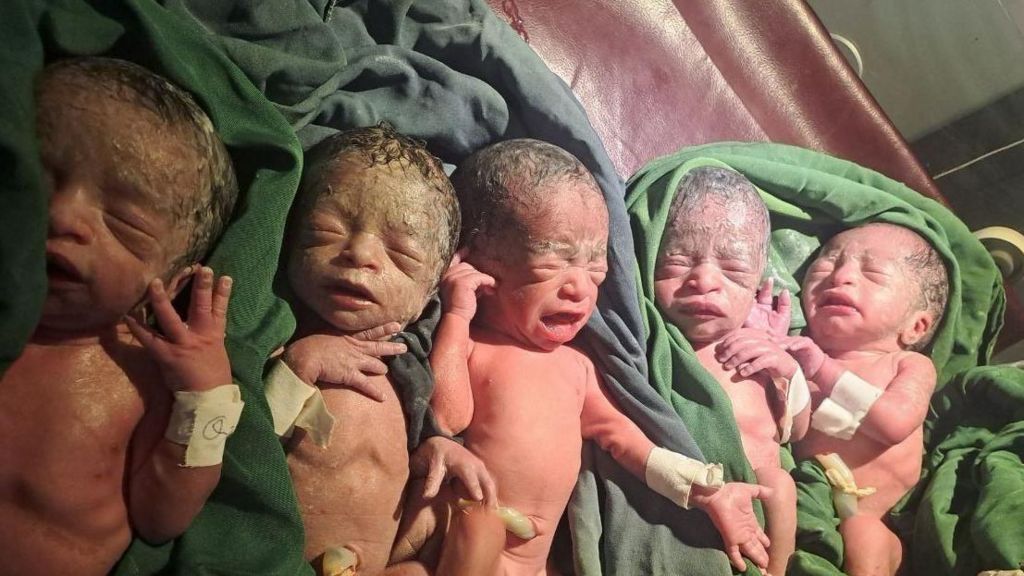
    After 12 years of hoping and praying for a child, a 35-year-old Ethiopian woman has made medical history with an extremely rare birth: a set of naturally conceived quintuplets, all born healthy in the country’s Harari Regional State.

    Bedriya Adem, a subsistence farmer from the region, described herself and her husband as overjoyed by the unexpected gift of five babies four boys and one girl at once. For more than a decade, Bedriya navigated the social stigma of infertility in her community, enduring years of emotional and psychological pain even as her husband reassured her that his child from a previous marriage was enough to complete their family. “Deep inside I was suffering, as the entire village questioned my inability to give birth,” she shared in an interview with the BBC. “I spent 12 years in pain, hiding myself, and praying constantly for children at last, my prayers were answered.”

    The historic delivery took place via Caesarean section on a Tuesday evening at Harari’s Hiwot Fana Specialised Hospital, where both mother and the newborns remain under routine observation for continued good health. Dr Mohammed Nur Abdulahi, the hospital’s medical director, confirmed that all five infants are in full health, weighing between 1.3 and 1.4 kilograms each. Medical guidelines note that newborns weighing more than one kilogram have a very high probability of surviving and growing into healthy children, a benchmark all five of Bedriya’s babies meet.

    What makes the birth even more extraordinary is that Bedriya conceived without any reproductive assistance like in vitro fertilization, a procedure not available at Hiwot Fana Specialised Hospital. IVF is widely known to increase the risk of multiple births when multiple embryos are transferred to the uterus, but naturally conceived quintuplets are a one-in-55-million event, according to global fertility data.

    In a surprising twist, Bedriya was only expecting four babies throughout her prenatal care, which she received consistently from the hospital’s medical team. It was only at the time of delivery that the medical team discovered a fifth baby the healthy little girl the couple have named Nazira, alongside her four brothers Naif, Ammar, Munzir, and Ansar. The couple have dubbed their five new arrivals the “five blessings”, a nod to their long wait and joyful surprise.

    While Bedriya acknowledges that her new role as a mother of five will bring financial challenges as a low-income subsistence farmer, she says she remains optimistic about the future. “I believe Allah will provide, through the support of my community and the government,” she said. For the first-time mother, the years of pain and stigma she endured now feel like a distant, unwanted memory, replaced by the overwhelming joy of welcoming the family she spent 12 years dreaming of.