博客

  • ‘Market is cooked’: Housing Minister backs tax changes amid Labor poll shock

    ‘Market is cooked’: Housing Minister backs tax changes amid Labor poll shock

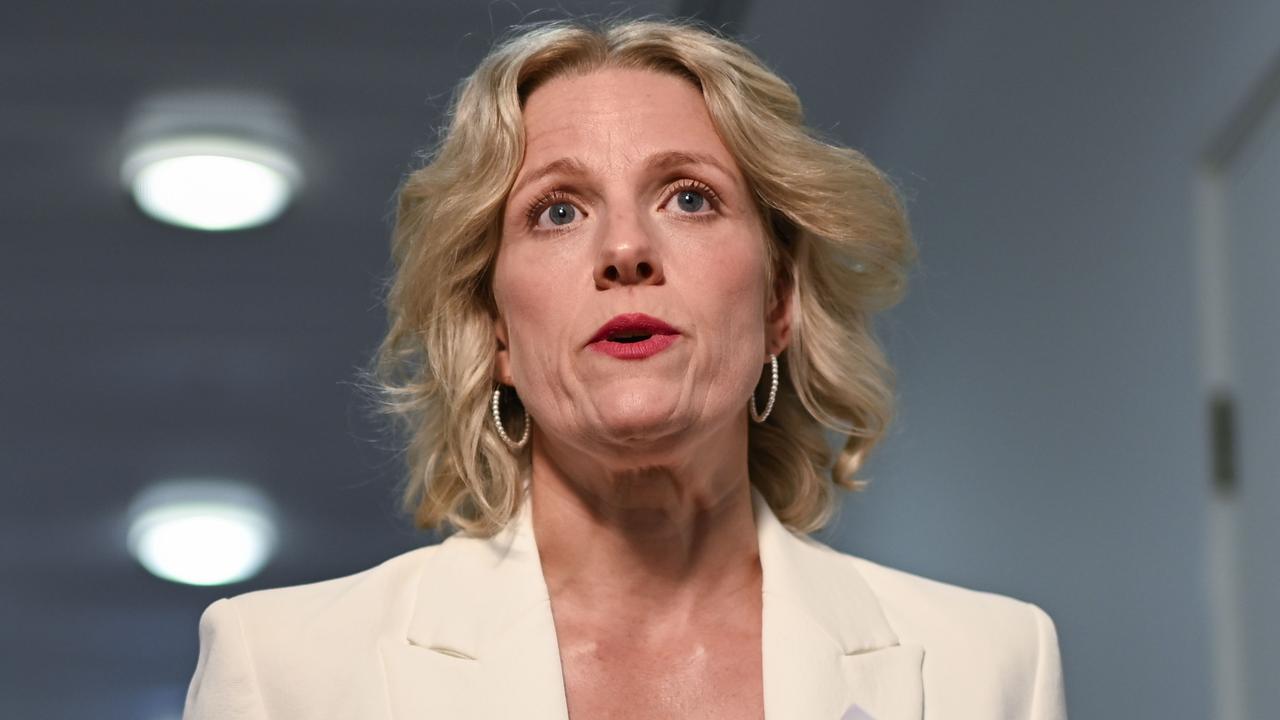
    Australia’s housing market is fundamentally broken and failing to deliver accessible homeownership for ordinary working people, according to the nation’s Housing Minister Clare O’Neil, as the center-left Albanese Labor government pushes forward with high-stakes tax reforms targeting the sector, despite early polling that suggests the move could cost it support to the benefit of right-wing populist party One Nation.

    In an interview with Sky News on Sunday, O’Neil delivered a blunt assessment of Australia’s decades-long housing affordability crisis, stating plainly: “This market is cooked. It’s not serving the Australian people anymore … We want people on normal incomes around our nation to have a fair shot at getting into housing.”

    The federal government’s planned reforms, set to be formally introduced following the release of the 2026-27 May federal budget, roll back the 50% capital gains tax discount for existing properties and restrict negative gearing — a tax break for property investors that allows rental losses to be offset against other income — to only newly constructed housing and properties already held by investors (grandfathered assets). O’Neil emphasized that the changes will not resolve the nation’s housing shortage overnight, but framed them as a critical, balanced step toward redressing systemic housing inequality, paired with a suite of additional policies designed to increase overall housing supply.

    Treasury modelling cited by O’Neil projects the reforms will help roughly 75,000 current renter households transition into first home ownership, by gently cooling the rapid pace of national house price growth. While prices will continue to rise under the policy framework, modelling predicts growth will moderate enough to deliver an average $20,000 reduction in the final purchase price for first-time buyers, striking a balance between inaction on affordability and overly drastic intervention that would disrupt market stability. “We’ve got the balance right,” O’Neil said, noting that demand for reform extends far beyond young aspiring buyers: “I am just as likely to get stopped in the street by a grandparent or a parent who is desperately concerned about their kids and their ability for their kids to set down roots, grow wealth, and raise a family in this country.”

    The government’s priority on expanding first home ownership comes as it faces early political headwinds from the changes. The first major public polling released since the policy was unveiled, conducted by Roy Morgan, shows One Nation has pulled ahead of Labor on primary votes in a key contested area, representing a significant threat to Labor’s electoral standing. Dismissing the poll result, Treasurer Jim Chalmers told the ABC the government did not advance the reforms to earn short-term polling gains, but to deliver long-term progress for younger Australians locked out of homeownership by decades of policy failure.

    Chalmers also defended the government’s decision to apply the capital gains tax changes to shares as well as property, noting that 90% of Australians under 25 hold no equities. He argued the current tax system is distorted, overfavoring investment in existing housing while underinvesting in new supply and other asset classes. The reforms will create a far fairer, more neutral capital gains tax regime, he said, correcting a broken status quo that has locked millions out of the market. “Some people will pretend that the current arrangements in the housing market and the tax system are working just fine. We don’t agree. We think the status quo is broken and that’s why we’re fixing it,” Chalmers said.

    To pass the Senate, the government will need support from either the center-right opposition Coalition or the left-wing Greens, neither of which have signaled they will back the changes. Opposition Leader Angus Taylor has already announced the Coalition would scrap most of Labor’s core housing policies if elected, and has proposed a new policy that would peg annual net overseas migration levels directly to the number of new housing completions each year. Taylor criticized Labor for setting migration targets without accounting for existing housing supply, public services, and infrastructure, telling Sky News: “This must change, and what we’re proposing here is each year the housing minister would say we’ve built this many houses and so the immigration number, the net overseas migration number, can be X.”

  • The girl group who’ve sold out venues and toured the world – without releasing a record

    The girl group who’ve sold out venues and toured the world – without releasing a record

    It’s hard to believe that just two years ago, the 11 members of all-female Irish traditional music supergroup BIIRD had never played a full set together. Many had only met hours before they stepped onto London’s Trafalgar Square stage on St. Patrick’s Day 2024, dressed in bold, theatrical costumes, to perform for a crowd of 10,000. Today, they’ve sold out headline venues across the UK and Ireland, opened for global pop star Ed Sheeran on stadium tour dates across three continents, and built a devoted worldwide fanbase — all before releasing their first studio record. This staggering, organic rise has been fueled almost entirely by electric live performances and word-of-mouth buzz, a testament to the group’s one-of-a-kind energy and vision.

    For Miadhachlughain O’Donnell, a County Down-based singer and flautist, the group’s current trajectory felt entirely unthinkable in the chaotic aftermath of that first show. “It was mental, to be honest,” she shared in an interview. “It all came together in the blink of an eye… We didn’t have another gig lined up for a couple of months, and I had no idea where it would go from there.”

    While the group’s early path was uncertain for its members, BIIRD’s founder Lisa Canny, a seven-time All Ireland champion for harp and banjo from County Mayo, had nurtured the concept for a full decade. Often described as a rule-breaker in the traditional Irish music scene, Canny set out to create what fans now call the “Spice Girls of trad”: a collective that reimagines what women in traditional Irish music can look like and sound like.

    “Beyond creating incredible music, our core mission is to reframe the narrative and image surrounding women in trad and folk music,” Canny explained. “Big global Irish productions like Riverdance, Celtic Woman, and Lord of the Dance have brought so much attention to our art form, but their representation of women still relies on outdated, one-dimensional tropes that don’t reflect the modern reality of female musicians in this space.”

    Unlike many musical collectives built through formal auditions and strategic casting, BIIRD grew organically out of Canny’s existing professional network in the Irish traditional music world. Every member was hand-picked for their unique voice and talent, and the group’s size — which fluctuates between 8 and 11 performers depending on the show — was never part of the original plan. As Cavan-based concertina player Zoran Donohoe put it: “Once she handpicked all of us, we got to 11 and she just said, ‘We’re keeping all of them — every one of these women deserves a spot on this stage.’ We’re all so different, with our own individual projects and styles, and she wanted all of those voices to be heard.”

    What stands out to audiences as much as the group’s size and all-female lineup is their intentional, boundary-pushing aesthetic. Partnering exclusively with Irish fashion designers including Simone Rocha, Paul Costelloe, and Sara O’Neill, the group prioritizes sustainable, dramatic couture that stands in stark contrast to the understated, casual look long associated with traditional Irish folk performance. Corsets, glitter, heavy eyeliner, and dark moody palettes shocked the traditional music world when the group released their first promotional photos. “I won’t say we broke the internet, but everyone in the trad community was asking ‘what is happening here?’” Donohoe recalled. “None of us were used to dressing like this — I’d always worn trackies to gigs before, it was a total learning curve. But now we love it; every show feels like putting on a performance from the moment we get dressed.”

    Despite their modern styling and contemporary edge, BIIRD’s sound remains firmly rooted in Irish tradition. Their high-energy sets blend classic trad instrumentation — fiddles, flutes, harps, banjos, cellos, and concertinas — with Irish lilting and a pop-infused energy that comes from years of playing intimate pub céilís, house parties, and regional folk festivals. “We’re not here to reinvent traditional Irish music,” O’Donnell emphasized. “We’re just here to bring a new perspective to it.”

    Their big break into mainstream fame came by chance, during an impromptu jam session at a County Wexford pub during the 2024 Fleadh Cheoil na hÉireann, where Ed Sheeran caught their set. Sheeran, who famously collaborated with Irish trad group Beoga on his hit “Galway Girl”, immediately invited BIIRD to join his ongoing *Loop* world tour as opening acts, alongside other up-and-coming Irish artists. “He just came up to us after the jam and said, ‘You guys are incredible, come on tour — what do you need from me?’ It was surreal,” Donohoe said.

    Since then, the group has joined Sheeran for sell-out stadium runs across the UK, Europe, Australia, and New Zealand, and is set to join the tour for North American dates later in 2026. Between tour stops, they’ve been recording their debut album of original compositions at the iconic Decoy Studios in Melton, England, with the project on track for release in the near future. Donohoe says the recording process has been seamless, thanks to the close bond the group has built over two years of touring: “We’re all used to each other now, we can be honest about what works and what doesn’t, and it just flows.”

    For the members of BIIRD, the success they’ve found is about more than sold-out shows and global tours: it’s about paving the way for the next generation of female traditional Irish musicians. O’Donnell says young girls have already reached out to the group to say they’ve been inspired to pick up traditional instruments after seeing BIIRD perform. “I hope we’re laying the groundwork for something that lasts longer than our time as a group,” she said. “In 10 or 20 years, there might be new groups like BIIRD taking this space, and that’s exactly what we want. Our mission was never just about us — it was about changing the scene for good.”

  • Foreign tourists are falling out of love with Goa – here’s why

    Foreign tourists are falling out of love with Goa – here’s why

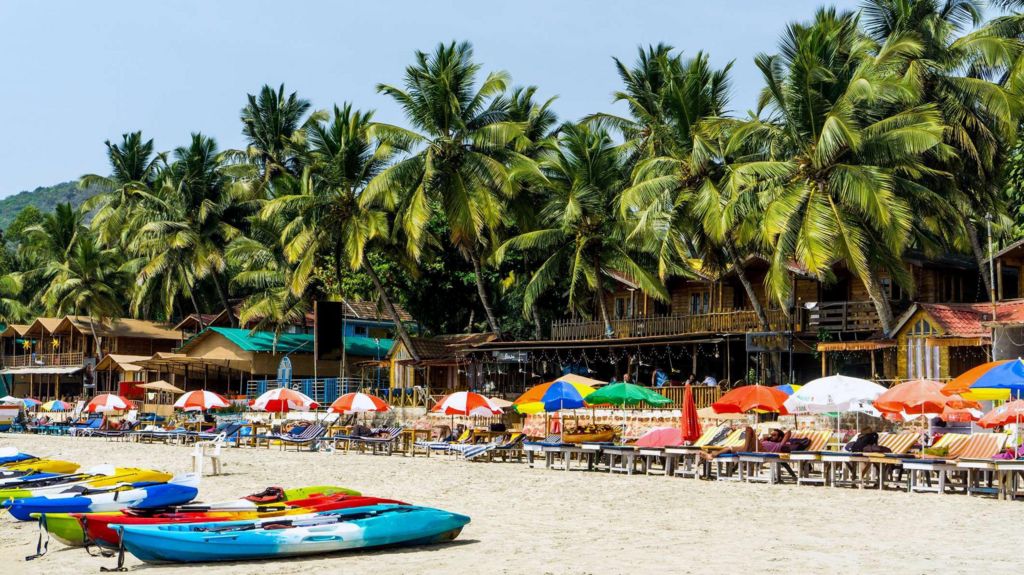
    On a blazing midday at crescent-shaped Palolem Beach, tucked along the southern edge of Goa’s sweeping sun-kissed coastline, crowds still jostle for space on the sand and cool off in the gentle Arabian Sea waves. Beachside food shacks and budget-friendly backpacker hostels that line the bay of India’s self-styled party capital are at full capacity. The biggest shift from a decade ago, however, is striking: the crowds of European and Russian travelers that once packed these shoreline villages are nowhere to be found. Today, nearly every visitor is domestic, a visible marker of a dramatic shift in Goa’s decades-old tourism economy.

    Official data from Goa’s state tourism department quantifies this stark divide. In 2017, the state welcomed nearly 900,000 international tourists, a pre-pandemic peak. By 2025, that number has fallen to roughly 500,000 – a drop of nearly 45% that cuts the international visitor count in half. The reverse trend holds for domestic travel: domestic tourist arrivals have surged from 6.8 million in 2016 to more than 10 million in 2024, as growing numbers of travelers from across India turn to Goa for their coastal getaways.

    State officials have cited ongoing global geopolitical volatility as a core headwind slowing international arrivals, but industry insiders and long-time visitors note the decline began well before recent global conflicts. A range of interconnected challenges have eroded Goa’s long-held appeal for international travelers, who have flocked to the state’s laid-back, budget-friendly shores since the hippie movement of the 1960s and 1970s.

    Economic pressure tops the list of barriers. Multiple foreign visitors interviewed by the BBC point to widespread post-pandemic cost-of-living crises across Europe and Russia, combined with spiking airfare driven by global energy instability and Middle East tensions, that have put long-haul trips to Goa out of reach for many. “Some of my friends are choosing Turkey or Egypt over Goa this year because it’s closer to home and cheaper,” explained Sophie, a Russian ballet dancer on her fifth visit to the state. Rico, a regular visitor from Newcastle, United Kingdom, added that most Europeans now prioritize domestic holidays to cut costs.

    Beyond rising travel costs, cumbersome and increasingly expensive visa processes are another major deterrent. Many international travelers blame extended processing wait times and a recent hike in five-year visa fees for pushing them to choose alternative destinations. Ernest Dias, a member of Goa’s tourism advisory committee and owner of a large travel charter firm, notes that rival destinations across South and Southeast Asia – including Sri Lanka and Vietnam – offer convenient on-arrival visas that cater to modern travelers’ preference for spontaneous, last-minute getaways. Just this year, a large Russian charter group canceled a planned Goa trip and rebooked to Vietnam, where inbound travel demand has skyrocketed, Dias confirmed.

    Affordability of accommodation is another key pain point. The boom in domestic tourism and the fast-growing MICE (meetings, incentives, conferences, exhibitions) sector has driven up prices for three- and four-star hotels, pricing out many budget-focused international travelers. Compared to regional competitors like Thailand, Sri Lanka and Vietnam, Goa also has far less supply of low-cost beachfront resorts, where all-inclusive package deals can cost half as much as comparable stays in Goa. The cancellation of a direct Air India route between London Gatwick and Goa has compounded these issues, forcing many European travelers to arrange inconvenient layovers in Mumbai that detract from their trip experience.

    Infrastructure and cleanliness gaps have also pushed visitors away. While the state government has increased efforts to clear litter from Goa’s beaches, many access roads remain blighted by uncollected garbage – an unwelcome sight for international travelers who prioritize high cleanliness standards. Prohibitively expensive taxi fares, driven by local union opposition to app-based ride-hailing services that would offer transparent, competitive pricing, create another persistent headache for visitors. “It’s like living in the Stone Age,” Dias noted, explaining that travelers cannot book rides through popular apps due to aggressive pushback from local taxi associations.

    These challenges have hit Goa’s tourism-dependent local economy hard. Shervyn Lobo, who operates a 100-room hotel near popular Baga Beach, reports international footfall has dropped by at least 10% at his property. While strong domestic demand has offset revenue losses, international travelers are far more valuable to local businesses: they typically stay longer, fill hotel rooms during off-peak periods, and spend more on local excursions, motorbike rentals and meals at independent beach shacks, unlike many domestic travelers who opt for all-inclusive package deals. This shift means the drop in international visitors ripples through the entire local tourism ecosystem, from small street vendors to activity operators.

    State officials have acknowledged the problem after years of inaction, and have launched new efforts to win back international travelers. The tourism department is hosting international promotional road shows in emerging source markets, with recent events in Poland and upcoming outreach across Scandinavia. Officials are also targeting new non-European source markets in Asia and Africa to diversify Goa’s international visitor base. Even so, the challenge is steep: as regional competitors offer cheaper, cleaner, and more traveler-friendly experiences, Goa will need to enact major reforms to reclaim its status as a top global budget beach destination and win back the international travelers that built its global reputation.

  • Venezuela says it deported a close ally of Maduro to face judicial proceedings in US

    Venezuela says it deported a close ally of Maduro to face judicial proceedings in US

    MIAMI — In a striking political shift that caps years of international legal wrangling, Venezuela’s transitional government confirmed Saturday it has deported Alex Saab, a once-powerful close associate of ousted Venezuelan leader Nicolás Maduro, to the United States to face federal criminal proceedings. The move comes less than three years after Saab was pardoned by U.S. President Joe Biden as part of a high-stakes prisoner exchange between the two nations.

    The 54-year-old Colombian-born businessman has long been labeled by U.S. officials as Maduro’s personal “bag man,” and his deportation marks a dramatic reversal of fortune. Just years ago, Maduro mounted an aggressive, all-out diplomatic and legal campaign to secure Saab’s release after his initial 2020 international arrest. Today, Saab’s transfer opens the door for U.S. prosecutors to compel his testimony against Maduro himself, who was captured in a surprise U.S. military raid in January and is currently awaiting trial on federal drug trafficking charges in a Manhattan courtroom.

    In a brief official statement released Saturday, Venezuela’s national immigration authority did not explicitly name the country Saab was sent to, but confirmed the deportation order was issued in direct response to multiple active criminal investigations being conducted by U.S. authorities. The statement’s choice to identify Saab solely as a “Colombian citizen” is widely viewed as a deliberate workaround of Venezuelan national law, which explicitly bans the extradition of Venezuelan-born citizens. This framing also marks a sharp break from the previous Maduro administration’s claims, when officials including then-acting President Delcy Rodríguez (now Venezuela’s current transitional leader) insisted Saab was a Venezuelan diplomat carrying out an urgent humanitarian mission to Iran when he was detained during a refueling stop in 2020.

    U.S. federal prosecutors have been scrutinizing Saab’s role in an alleged bribery and kickback conspiracy tied to Venezuelan government food import contracts for months, The Associated Press has confirmed. The investigation traces back to a 2021 federal prosecution filed in Miami against Saab’s long-time business partner, Alvaro Pulido, according to a former U.S. law enforcement official familiar with the case. The probe centers on activities tied to the CLAP program, a signature Maduro administration initiative launched to distribute subsidized staple goods including rice, corn flour and cooking oil to low-income Venezuelans grappling with devastating hyperinflation and a collapsed national economy.

    Saab amassed a massive personal fortune through his exclusive access to Venezuelan government contracts during Maduro’s tenure, but he fell out of favor rapidly following Maduro’s ouster in January. Since taking office as the head of Venezuela’s new transitional government on January 3, Rodríguez has moved systematically to cut Saab from power: he was removed from the cabinet, stripped of his influential position as the primary gatekeeper for foreign companies seeking investment access to Venezuela, and has been the subject of conflicting reports for months claiming he was either imprisoned or placed under house arrest.

    As of Saturday evening, the U.S. Department of Justice had not issued an immediate response to requests for comment on Saab’s deportation. Associated Press reporter Eric Tucker contributed additional reporting for this story from Washington, D.C.

  • ‘Price you pay’: Immigrants facing citizenship ‘choice’ under Coalition benefits plan

    ‘Price you pay’: Immigrants facing citizenship ‘choice’ under Coalition benefits plan

    Australia’s federal opposition leader, Angus Taylor, has sparked fierce political debate by announcing a hardline new immigration policy that would bar permanent residents who do not pursue Australian citizenship from accessing the National Disability Insurance Scheme (NDIS) and 17 other key social welfare programs. Under the plan, Taylor confirms, there is a tangible consequence for permanent residents who choose not to take up citizenship.

    The proposal formed a core plank of Taylor’s budget reply speech delivered to Parliament Thursday, where the Liberal-National Coalition also outlined two other flagship policies: linking annual net overseas migration levels directly to national housing construction completion rates, and indexing Australia’s two lowest income tax brackets to inflation to offset bracket creep. If the Coalition wins the upcoming federal election, the citizenship-linked benefit restrictions will go into effect.

    Appearing on SkyNews Sunday, Taylor pushed back against criticism that the policy would coerce long-term permanent residents – some of whom have lived in Australia for decades – into naturalizing. He framed the change as a matter of personal choice, not coercion. “It is their choice to become an Australian citizen,” Taylor said. “But if you don’t want to become a citizen, there is a price you pay for that. Australian citizenship has to matter. We live in one of the greatest countries in the world, and those who come here and decline citizenship still reap enormous benefits from being part of this nation.”

    The policy has drawn particular concern from Chinese Australian and Indian Australian communities, whose home countries do not recognize dual citizenship. For permanent residents from these nations, taking up Australian citizenship would require them to renounce their original citizenship, a step many are unwilling to take. Taylor rejected claims the policy targets any specific national group, noting that Australia itself permits dual citizenship, and restrictions on dual nationality are choices made by other governments that Canberra cannot control.

    “Other countries make choices about that, we don’t control that. That is up to them. But we must attach privileges to Australian citizenship. That’s what we’re proposing here,” Taylor said. He added that while Australia will continue to recognize dual citizenship for those who are eligible, some permanent residents from non-dual citizenship countries will ultimately have to decide whether they want to access full social benefits and commit to Australia.

    Taylor also dismissed suggestions the policy shift was a response to surging support for the right-wing One Nation party, arguing the Coalition’s agenda is driven by anger at the incumbent Labor government’s policy failures, not a panic over competing right-wing parties. “We are upset and deeply, deeply concerned by the failures of this Labor government. That’s the real issue,” he said.

    Beyond the citizenship policy, key details of the Coalition’s immigration and fiscal plans remain undisclosed. Taylor has yet to confirm a specific numerical target for net migration, nor has he released full costings for the proposed social benefit changes. He did confirm the policy changes would generate “many billions of dollars” in savings, and pledged to release full costings before the election in line with standard political convention, per Australia’s pre-election transparency norms.

    On migration levels, which the Coalition will tie directly to how many new homes are completed each year, Taylor said the plan would cut net migration by at least 70 percent from the peak levels recorded under the Labor government, pushing annual numbers well below 200,000. Responding to concerns that lower overall migration would worsen existing skilled labor shortages in the trades sector, Taylor argued the Coalition’s policy would focus not just on cutting total numbers but also on raising quality standards to ensure migrants bring the skills Australia actually needs.

    In a move that avoids immediate parliamentary conflict, Taylor confirmed the Coalition will not oppose Labor’s proposed $250 Working Australians Tax Offset in the Senate, guaranteeing the legislation will pass through both houses of parliament and become law.

    Treasurer Jim Chalmers, the incumbent Labor government’s top finance minister, has lambasted Taylor’s budget reply as the “least responsible” he has ever witnessed in Australian politics. Chalmers argued that indexing the lower tax brackets to inflation, the Coalition’s signature fiscal proposal, would add a quarter of a trillion dollars in cumulative national debt over a 10-year period. He criticized the plan for injecting massive new stimulus into the Australian economy at a time when inflation remains elevated, warning it would drive up cost of living pressures further.

    Chalmers countered that the Labor government is already committed to addressing bracket creep – the phenomenon where inflation pushes workers into higher tax brackets even as their real wage growth stalls – noting the recent federal budget created fiscal space to deliver relief in the future in a responsible and economically sustainable way.

  • ‘Momentum is building’: Labor leader Steven Miles’ boast after claiming knife-edge victory in Stafford by-election

    ‘Momentum is building’: Labor leader Steven Miles’ boast after claiming knife-edge victory in Stafford by-election

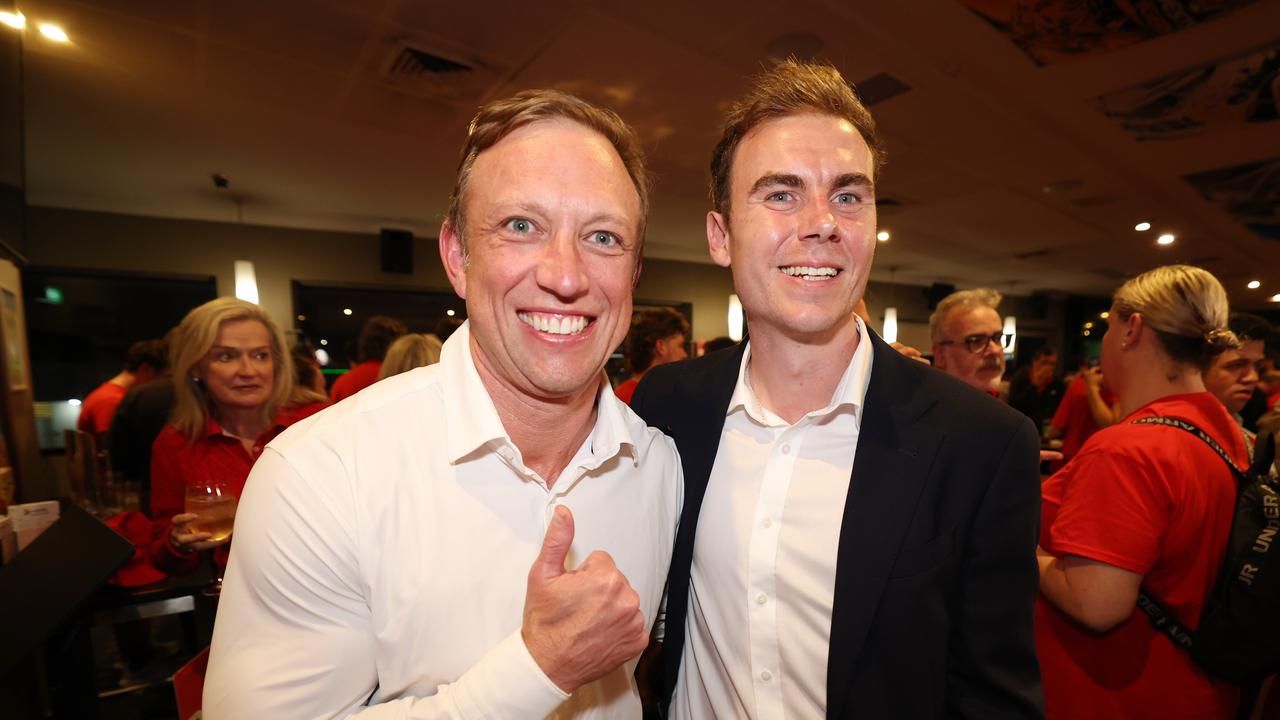
    Queensland’s political landscape has been left reeling after a tight and high-stakes by-election in the northern Brisbane seat of Stafford, where the state opposition Labor party has claimed a narrow victory despite a substantial swing toward the incumbent Liberal National Party (LNP) government.

    The contest, triggered by the sudden passing of former member Jimmy Sullivan in April 2024, was widely framed as an early test of leadership for new Labor opposition leader Steven Miles, coming just months after Labor suffered a bruising defeat at the 2024 Queensland state election. Sullivan, a 44-year-old who had been sitting on the crossbench after expulsion from Labor’s caucus over personal scrutiny, died of non-suspicious causes at his Brisbane home earlier this year, vacating the seat that Labor has held almost continuously since 2015.

    Latest official data from the Queensland Electoral Commission shows Labor candidate Luke Richmond holds a slim two-party-preferred lead of 51.2 per cent over LNP challenger Fiona Hammond, a former Brisbane City Councillor, who trails on 48.8 per cent. After all preferences are distributed, just over 700 votes separate the two front-running candidates. While the result still leaves Richmond ahead, the LNP secured a 4.1 per cent swing away from Labor in the historically safe Labor seat, which only fell to the LNP once before, during the party’s 2012 state landslide victory.

    Despite the narrow margin, LNP Premier David Crisafulli publicly conceded defeat to a gathering of party supporters in Brisbane’s Fortitude Valley on Saturday night. Acknowledging the result would leave the government “agonisingly short”, Crisafulli nonetheless celebrated the swing his party achieved, noting the outcome exceeded internal party expectations. “If you had said to me at the start of this that we will be here with a result like this, I think it is probably beyond all of our dreams,” he told attendees.

    For Labor, however, the narrow win is being framed as a sign of growing momentum ahead of the 2028 state election. In a victory statement Saturday night, Miles drew clear battle lines for the next statewide poll, pointing to the massive grassroots campaign Labor ran to hold the seat. “We have seen that momentum right here on the ground in Stafford, and tonight has drawn the battle lines for the 2028 election,” Miles said. He went on to note that the campaign marked the largest grassroots organising effort in Queensland Labor history, with volunteers knocking on more than 34,000 doors and making more than 27,000 direct voter calls.

    Miles also highlighted unusual context that benefited the LNP in the by-election, noting the party gained its modest swing after the government spent hundreds of thousands of dollars in taxpayer funds on political advertising, and struck a deal with One Nation that saw the right-wing party avoid running a candidate and openly endorse Hammond. Miles also praised Hammond for running what he called a respectful campaign.

    The seat of Stafford covers Brisbane’s inner-northern suburbs including Stafford, Chermside and Kedron, and has been held by Labor continuously since Anthony Lynham reclaimed it for the party in the 2015 state election. Sullivan succeeded Lynham as the member in 2020, before his expulsion from the Labor caucus and subsequent death earlier this year. While official formal declaration of the result is still pending, both major parties have already positioned the razor-thin outcome as a sign of shifting political tides in Queensland ahead of the next state poll.

  • Two dead and four injured in crash in Donegal

    Two dead and four injured in crash in Donegal

    A serious road traffic collision in the west of Ireland’s County Donegal has left two men dead and four other people injured, after a crash between two vehicles on Saturday afternoon. The tragedy unfolded just after 2:00 PM local time on the N15, a key arterial route connecting the towns of Donegal and Ballybofey, at the Birchhill stretch of the highway. The two victims, one man in his 20s and a second man in his 30s, were both occupants of the same vehicle. Emergency responders arriving at the scene pronounced both men dead shortly after the incident. Four additional people involved in the collision sustained non-life-threatening injuries, according to initial updates from Irish law enforcement. The injured group comprises two pairs: a young man and woman in their 20s, and an adult man and woman in their 40s. All four have been transported to Letterkenny University Hospital to receive ongoing medical care for their wounds. In the immediate aftermath of the crash, An Garda Síochána, Ireland’s national police service, confirmed that it has launched a full investigation into the cause of the incident. Forensic and collision investigation teams have carried out a detailed forensic examination of the crash site, and the entire N15 route through Birchhill remains closed to all traffic to preserve evidence while the investigation proceeds. Police have issued a public appeal for any witnesses who were traveling through the area at the time of the collision to come forward with information. Investigators are particularly eager to review dash-cam footage captured by any drivers who passed the location shortly before or after the crash, which could provide critical context for determining the sequence of events that led to the fatal incident.

  • Trump left China empty‑handed – but avoided something worse

    Trump left China empty‑handed – but avoided something worse

    Looking back at Britain’s first official diplomatic expedition to Qing Dynasty China in 1793, expedition participant Peter Auber left behind a telling observation: the delegation had been “received with the utmost politeness, treated with the utmost hospitality, watched with the utmost vigilance and dismissed with the utmost civility.” That centuries-old line came to mind as international relations expert Kerry Brown watched Donald Trump’s two-day 2025 state visit to China unfold, drawing clear parallels between two landmark diplomatic engagements separated by more than 200 years.

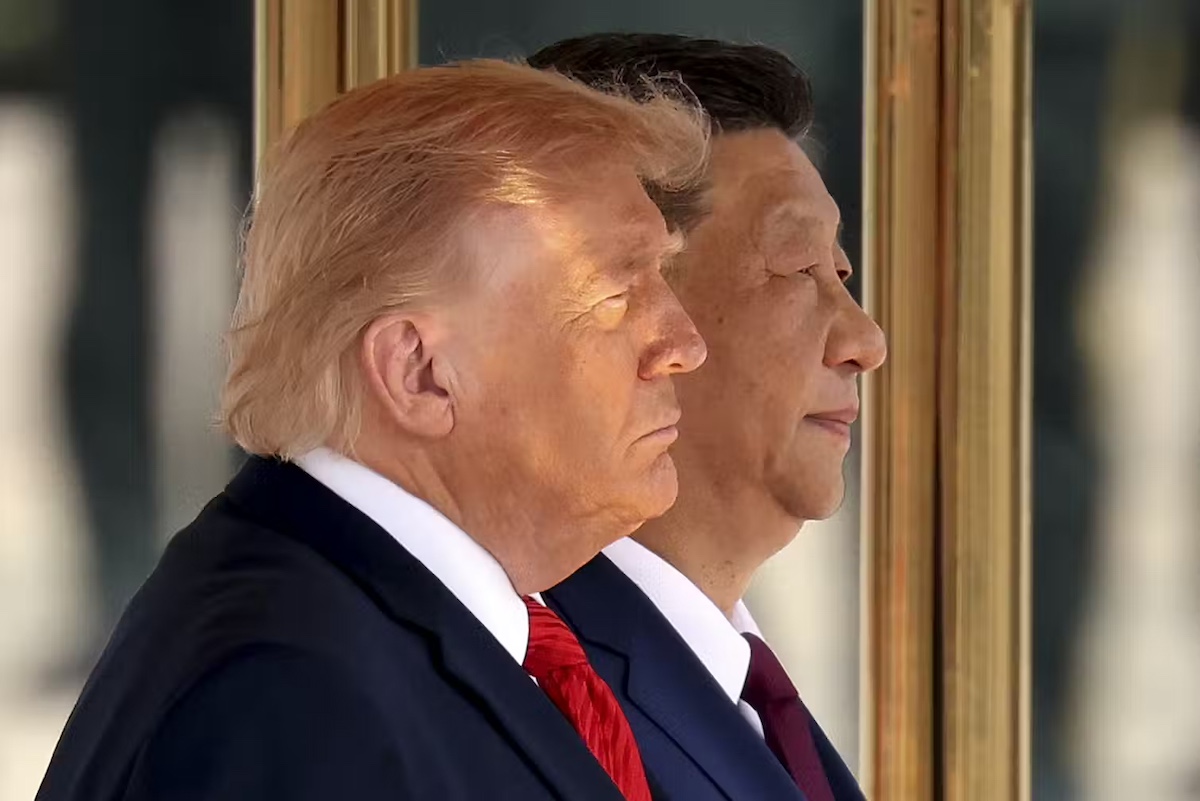
    Just like the 1793 British mission that sought to open new trade routes and establish a permanent diplomatic outpost in Beijing, Trump’s 2025 visit opened with elaborate ceremony and warm public gestures from both sides. Chinese President Xi Jinping opened the summit by welcoming his U.S. counterpart with conciliatory remarks, framing the bilateral relationship as “the most consequential in the world.” He even drew a connection between Trump’s signature political slogan, “Make America Great Again,” noting that U.S. growth aligned with China’s own development goals. Trump returned the praise in kind: in a social media post during his flight to Beijing, he wrote that President Xi commanded “respect from all,” and opened direct talks by telling Xi “You’re a great leader.”

    Beyond these carefully calibrated diplomatic niceties and mutual compliments, however, the visit produced far fewer concrete breakthroughs than many observers anticipated. Correcting the persistent bilateral trade imbalance has been a core policy goal for Trump across both of his presidential terms. 2025 trade data underscores the scale of the gap: the U.S. exported just $106 billion in goods to China, while importing $308 billion in Chinese products, leaving a roughly $200 billion trade deficit. During Trump’s 2017 state visit to China, Beijing agreed to expand purchases of U.S. soybeans as a major confidence-building measure. On this 2025 visit, the only high-profile trade deal announced was an agreement for China to purchase 200 Boeing aircraft. Even that announcement fell short of market expectations: Boeing’s share price dropped 4% immediately after the deal was made public, as analysts had projected a far larger order. Trump also confirmed that China had agreed in principle to purchase U.S. crude oil, but no concrete timeline or volume commitments were released.

    For the cohort of top U.S. tech CEOs that accompanied Trump on the trip—including Tesla’s Elon Musk, Nvidia’s Jensen Huang, and Apple’s Tim Cook—the visit delivered no major policy wins. China has long pursued a clear strategy of building up domestic indigenous technology capacity, a priority formalized in its latest 15th Five-Year Plan that reaffirms government support for homegrown innovation and domestic tech firms. With this strategic commitment in place, China made no major concessions to open its market further to U.S. tech firms during the summit.

    While tangible economic outcomes were limited, the visit produced more meaningful, if less visible, progress in geopolitical management and great power dialogue. President Xi emphasized that even when the two powers disagree on core issues, global stability depends on their ability to engage pragmatically. The Taiwan issue, long the most sensitive flashpoint in bilateral relations, saw both sides reaffirm their core red lines without escalating tensions. Xi repeated China’s longstanding demand for U.S. non-interference in the Taiwan issue, a clear implicit warning against planned U.S. arms sales to the island, which Beijing considers an inalienable part of its territory. For his part, Trump told reporters he had not yet made a final decision on moving forward with the proposed arms package, and the U.S. delegation reaffirmed the longstanding U.S. policy position, in place since the 1970s, that the issue must be resolved peacefully through cross-strait dialogue. In the context of widespread global geopolitical turbulence, maintaining the status quo on Taiwan, while unremarkable, counts as a constructive outcome. On the ongoing Iran conflict, Xi offered Chinese mediation assistance to help de-escalate tensions between the U.S. and Iran. China has little interest in taking on a high-profile frontline mediation role, given the risk of being drawn into the region’s persistent instability. Instead, Beijing’s core goal is a long-term truce that allows both Washington and Tehran to claim victory without a decisive, disruptive war—an outcome that aligns with China’s interest in avoiding prolonged economic disruption from regional conflict, hence its offer of limited diplomatic support.

    Looking back, history will likely frame this visit as another milestone in the gradual global shift toward a system where China holds greater international influence, while still acknowledging and respecting the U.S.’s current position as the world’s leading economic and military power. While Trump returned to Washington without a landmark policy win, it is a well-established truth of diplomacy that avoiding conflict and keeping dialogue open can be a positive outcome in itself. That the two leaders met, built a constructive personal rapport, avoided public clashes, and agreed to continue high-level talks may not be a transformative achievement, but in an era of unprecedented global instability, it is still a net positive for bilateral relations and global order.

  • Arrests made as Tommy Robinson’s far-right supporters rally in central London

    Arrests made as Tommy Robinson’s far-right supporters rally in central London

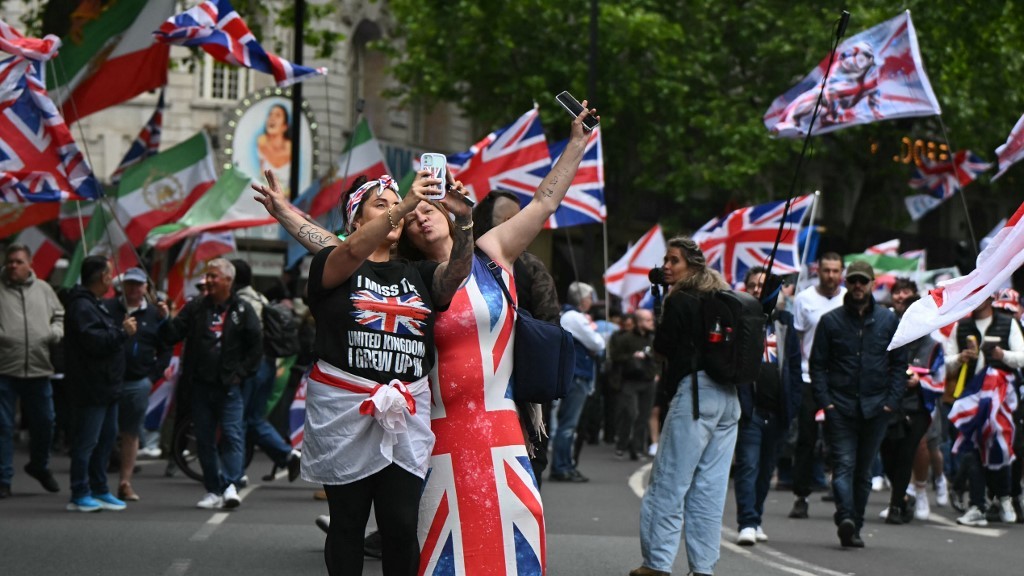
    On Saturday, thousands of far-right supporters gathered in central London for Tommy Robinson’s ‘Unite the Kingdom’ rally, a gathering marked by inflammatory rhetoric, hate messaging, and a massive coordinated police deployment that included the first use of live facial recognition technology for a UK public order operation. The event, organized by the convicted British far-right figure whose legal name is Stephen Yaxley-Lennon, drew attendees draped in Union Flags, alongside a wide array of symbols tied to both domestic extremism and international right-wing aligned movements.

    Attendees at the rally carried numerous placards targeting UK Prime Minister Keir Starmer, as well as materials carrying explicit anti-immigrant, Islamophobic, and antisemitic messaging. Beyond the official flags of the UK’s four constituent nations, attendees displayed Israeli flags and banners linked to the Iranian monarchist movement, one of several international political causes that drew support from the crowd. Video footage shared on social media showed participants carrying wooden crosses, with many banners featuring explicit Christian nationalist slogans.

    In what was one of the largest UK police deployments in recent memory for a series of public events, approximately 4,000 officers were assigned to monitor three simultaneous major gatherings: Robinson’s far-right rally, a parallel pro-Palestine demonstration, and the FA Cup Final held between Manchester City and Chelsea at London’s Wembley Stadium. Law enforcement deployed armoured vehicles, surveillance drones, and helicopters, and introduced a new operational tool: live facial recognition cameras, marking the first time the technology has been used to manage a public order event in the UK.

    Two arrests were announced by police early Saturday, carried out near Euston Station as the pair were traveling to the rally. In an official statement, police confirmed that one of the two men was taken into custody in connection with a high-profile earlier incident in Birmingham where a man was killed by being run over. The second arrested man was already wanted on an outstanding warrant for a separate charge of encouraging others to attack a police officer.

    Robinson framed the 2026 rally as an attempt to match the turnout of his September 2025 demonstration, which drew an estimated 150,000 attendees to central London and pushed a toxic mix of anti-Muslim bigotry, white supremacism, and Christian nationalist ideology. Human rights watchdog Amnesty International issued a sharp rebuke of the Saturday gathering, saying the rally “brings racism, violence and fear to the streets of London.”

    The event featured speeches from several high-profile conservative commentators, including former reality TV personality Katie Hopkins and Sharon Osbourne, wife of the late heavy metal icon Ozzy Osbourne. In his address to the crowd, Robinson called for his supporters to shift strategy from street demonstrations to systematic infiltration of mainstream and minor right-wing political parties. “We have to get political, we have to get involved,” he said. “I’m not going to tell you which political party you need to join. We’re a cultural movement. I’m going to tell you that you have to join a political party. I don’t care if it’s Reform, if it’s Advance, or it’s Restore, or it’s the Conservative party. We have to locally get involved in politics.”

    The rally drew together a broad coalition of far-right and extreme nationalist actors from across global political movements. Some attendees wore ‘Mega hats’, a UK spin on former U.S. President Donald Trump’s ‘Make America Great Again’ movement, while many Iranian monarchist attendees publicly expressed support for exiled leader Reza Pahlavi and called for the overthrow of Iran’s Islamic Republic. Multiple attendees told on-site reporters they sought a return of the Pahlavi monarchy, echoing chants and messaging seen in recent Iranian opposition protests.

    Robinson, who has multiple prior criminal convictions for violence, fraud, and contempt of court, had urged his supporters ahead of the rally to avoid wearing masks and to limit alcohol consumption during the event. The rally comes at a tense moment for UK politics, just one week after the right-wing anti-immigration party Reform UK secured major gains in local council elections across the country. Though Reform UK leader Nigel Farage has publicly distanced his party from Robinson and the rally, the timing of the event has raised concerns about the growing normalization of far-right ideology in UK mainstream political discourse.

    Ahead of the gathering, the UK government confirmed that it had barred 11 ‘foreign far-right agitators’ from entering the country to attend the rally, among them Colombian-American anti-Muslim campaigner Valentina Gomez.

  • Republican senator who voted to convict Trump battles for re-election

    Republican senator who voted to convict Trump battles for re-election

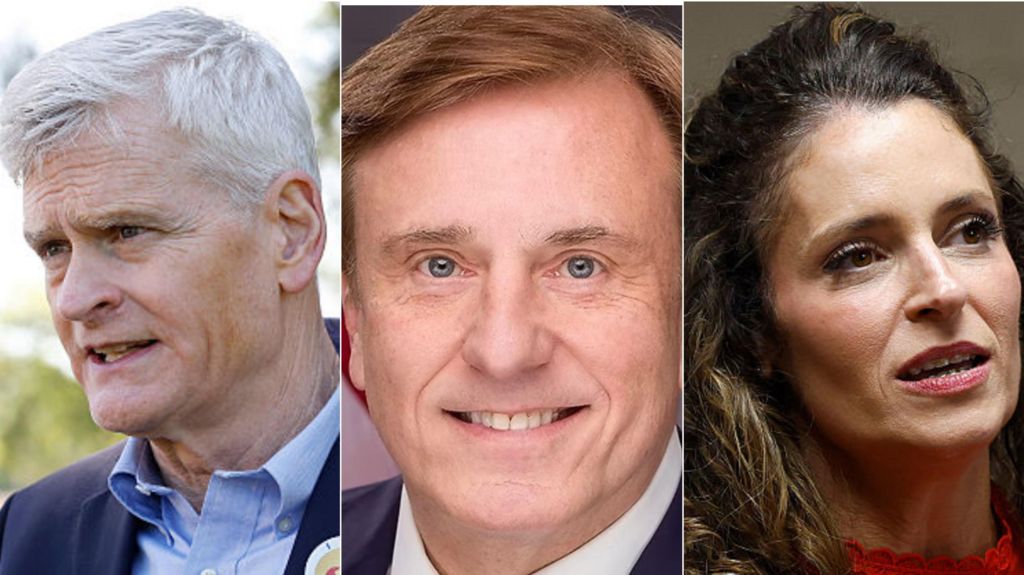
    As Louisiana voters head to the polls Saturday for a pivotal Republican Senate primary, one of the last remaining Senate Republicans who broke with former President Donald Trump over the 2021 Capitol riot impeachment faces a make-or-break fight to keep his seat.