博客

  • NSW Liberal defector Hollie Hughes refuses to rule out state, federal run for One Nation

    NSW Liberal defector Hollie Hughes refuses to rule out state, federal run for One Nation

    In a significant political shakeup that boosts right-wing populist leader Pauline Hanson’s One Nation, two senior former members of Australia’s centre-right Liberal Party have announced their departure to join the minor party, with one ex-federal senator declining to close the door on a future parliamentary run.

    Hanson revealed the defections of former Liberal Senator Hollie Hughes and ex-Liberal Party Vice President Teena McQueen during a public gathering at a regional pub in Rydal, located in New South Wales’ Blue Mountains, on Saturday. The arrivals mark the latest high-profile gains for One Nation, which has already welcomed former Nationals MP Barnaby Joyce and ex-South Australian Senator Cory Bernardi in recent months.

    Hughes, who lost her Senate seat in the 2025 federal election, spoke to media on Sunday, confirming she had stepped down from the Liberal Party back in November. In her explanation for the switch, she said she could no longer recognize the party she once belonged to, claiming it has lost clear ideological direction. “I don’t think they know what they stand for anymore,” Hughes stated.

    By contrast, she praised One Nation for retaining consistent core values over decades. “They stood by their convictions even when they were being dismissed and being quite frankly abused and treated incredibly poorly, and it’s been something I’ve been talking about with Pauline for quite some time,” she added.

    When pressed repeatedly on whether she would contest a future state or federal parliamentary seat, just one year after exiting politics, Hughes refused to confirm or rule out a run. “I’m not ruling anything in and I’m not ruling anything out,” she said, adding “there has been absolutely no decision made about what that might look like in the future.”

    She pushed back against suggestions she was hiding her plans, saying “I’m not trying to play possum. I haven’t made a decision at all. I really don’t know what I’m doing. So, when it comes to what I do moving forward, I may or may not run in the future and it may or may not be state or it may or may not not be federal.” Hughes noted that since news of her defection broke, her phone has been flooded with messages from supporters and commentators.

    On policy issues, Hughes threw her support behind the federal Coalition’s proposal to cut welfare access for permanent residents, arguing most Australians are unaware of how much public benefit non-citizens currently receive. She also emphasized the need for Australia to prioritize quality migration over quantity, saying the country needs the “right sort of migrants … not people just making up the numbers and boosting GDP per capita so it doesn’t look like we’re in a recession.” She also drew attention to the ongoing issues surrounding the temporary closure of the Great Western Highway, a key transport route in regional NSW.

    McQueen, the other defector, is known as an outspoken public supporter of former U.S. President and 2024 Republican presidential nominee Donald Trump. For her part, Hughes has a history of internal Liberal Party tensions: she previously backed Sussan Ley in a leadership contest and has been openly critical of current Opposition Leader Angus Taylor, after she was removed from a winnable NSW Senate ticket ahead of the 2025 election.

    When asked for comment on the defections, Taylor downplayed their significance, framing the move as a matter of personal choice in Australia’s democratic system. “Oh, that’s their choice,” he told Sky News. Pressed for further reaction, he added, “It’s their choice. I mean, I can, you know, I love the fact in this country we have democracy in choice. It’s a great thing.”

  • WHO declares global health emergency over Ebola outbreak in Congo and Uganda

    WHO declares global health emergency over Ebola outbreak in Congo and Uganda

    On Sunday, World Health Organization Director-General Tedros Adhanom Ghebreyesus issued the highest global alert level for an ongoing Ebola outbreak spanning the Democratic Republic of the Congo and neighboring Uganda, following a surge in suspected infections that has already claimed 88 lives. As of the latest official count, more than 300 suspected cases have been documented across the two East-Central African nations.

    In a public update posted to the social platform X, the WHO moved quickly to clarify that the outbreak does not qualify for a pandemic-level classification on par with the COVID-19 crisis, and explicitly recommended against nations closing international borders to contain the spread.

    Ebola is a severe, highly contagious viral disease that spreads through direct contact with infected bodily fluids, including blood, vomit and semen. While outbreaks of the disease remain relatively rare, infections frequently result in death for affected patients. What makes the current crisis particularly challenging for global health authorities is that it is driven by the Bundibugyo variant — a rare strain of Ebola for which no approved vaccines or targeted treatments currently exist.

    According to WHO data, the overwhelming majority of cases are concentrated in the Democratic Republic of the Congo, with only two confirmed cases detected across the border in Uganda. The outbreak was first officially reported last Friday, originating in the DRC’s eastern Ituri Province, a border region adjacent to both Uganda and South Sudan. By the following day, the Africa Centres for Disease Control and Prevention had logged 336 suspected cases and 87 confirmed deaths.

    Ugandan health authorities confirmed their first imported case from the DRC on Saturday; that patient later died in a Kampala hospital, and a second case was shortly after confirmed in the capital. WHO officials noted that the two Ugandan cases have no known epidemiological links to one another, and both patients had recently traveled from the DRC.

    Tedros acknowledged deep uncertainties surrounding the full scope of the crisis, telling reporters: “There are significant uncertainties to the true number of infected persons and geographic spread associated with this event at the present time. In addition, there is limited understanding of the epidemiological links with known or suspected cases.”

    This is only the third documented outbreak of the Bundibugyo variant in recorded history. The strain was first identified during a 2007-2008 outbreak in Uganda’s Bundibugyo District, which infected 149 people and killed 37. The second outbreak occurred in 2012 in Isiro, DRC, where 57 cases were reported and 29 people died from the infection. More than 20 Ebola outbreaks of various strains have occurred across the DRC and Uganda in modern history.

    The WHO’s declaration of a Public Health Emergency of International Concern, or PHEIC, is formally intended to accelerate international action and mobilize funding, supplies and coordination from donor nations and global aid agencies. But the move has drawn scrutiny amid a mixed track record for past emergency declarations. When the organization declared mpox outbreaks across the DRC and other African nations a global PHEIC in 2024, public health experts criticized the global response for failing to rapidly deliver critical supplies including diagnostic tests, therapeutics and vaccines to affected regions.

  • Ngannou tells Jones to exit UFC contract after quick KO

    Ngannou tells Jones to exit UFC contract after quick KO

    The landscape of mixed martial arts reached a potential turning point this weekend, as one of the sport’s most recognizable heavyweights delivered a devastating reminder of his dominance on the first MMA card ever broadcast live on Netflix.

    Headlining the undercard for the highly anticipated Ronda Rousey-Gina Carano main event at Los Angeles’ Intuit Dome, Francis Ngannou, the 39-year-old Cameroonian powerhouse, lived up to his billing with a clinical first-round knockout of Brazil’s Philipe Lins. Staged by Most Valuable Promotions, the event marked a landmark moment for MMA, opening the door for a potential challenge to the UFC’s long-standing dominance of the sport if regular streamed events continue under the new model.

    Ngannou, who left the UFC as the promotion’s reigning heavyweight champion in 2023, came into the bout with a eight-fight winning streak, seven of which ended in knockout. He made short work of Lins, who was returning to the heavyweight division after three years competing at light-heavyweight and entered the contest 30 pounds lighter than Ngannou. From the opening bell, Ngannou imposed his will, landing a thudding early leg kick before wearing down his opponent with his signature heavy strikes. As the first round wound down, Lins made a desperate, wild swing, and Ngannou capitalized with a flush, fight-ending left hook that dropped his opponent instantly. Confident the contest was over, Ngannou chose not to follow Lins to the canvas to add further damage, standing over his fallen opponent as the referee stopped the fight.

    The win improves Ngannou’s professional MMA record to 19 wins against just 3 losses, and he used his post-fight interview to push for the biggest bout in the sport: a matchup against former UFC legend Jon Jones, who worked as part of Netflix’s broadcast team for the event. Calling Jones one of the greatest MMA fighters of all time, Ngannou said the fight must happen before both athletes retire, adding a jab that Jones still has room to learn from Ngannou’s business acumen.

    Jones, who retired from active competition in 2025, has expressed enthusiasm for the bout, but significant obstacles stand in the way of the matchup becoming reality. Jones remains bound by his contract with the UFC, and the long-standing frosty relationship between UFC leadership and Ngannou means a sanctioned bout under the promotion’s banner is off the table. Jones noted that the only path forward would be to finalize his exit from his UFC contract and stage the event through Most Valuable Promotions, adding: “If this fight is going to happen, I don’t think Dana [White] is going to do any business with Francis [Ngannou], so doing it with MVP is the only way.”

    Despite the UFC crowning two new heavyweight champions since Ngannou’s departure, a large segment of MMA fans and analysts still recognize Ngannou as the best heavyweight in the world, making his signing with MVP a major breakthrough for the upstart promotion. After the bout, Ngannou doubled down on his claim to the throne, saying: “If someone doesn’t remember who I am, they must have amnesia or something because I made a statement here tonight again.”

    The card’s co-feature, billed by fans as the “people’s main event”, delivered a similarly action-packed result, as American welterweight Mike Perry defeated fan favorite Nate Diaz when the bout was stopped at the end of the second round. Perry dominated the contest from start to finish, landing a barrage of punches, knees and elbows that opened a deep cut above Diaz’s eye, leaving the veteran unable to see as blood poured down his face. The ringside doctor determined Diaz could not continue, bringing the fight to a premature end.

    Diaz, 41, a cult hero among MMA fans for his 15-year UFC career and rebellious persona, ended his tenure with the promotion in 2022 after submitting Tony Ferguson, and spent the intervening years testing the waters in professional boxing. He returned to MMA for the bout seeking high-profile matchups, but was hindered by an early injury. “I think I broke my finger in the first two seconds, and I spent too much time worrying about that rather than focusing on the animal that I am,” Diaz said after the fight, acknowledging the referee’s stoppage was the correct call. “I had blood in my eye. I couldn’t see anything, I wasn’t going to do anything but next time he’s not going to be able to do anything.”

  • WHO declares Ebola outbreak in DR Congo a global health emergency

    WHO declares Ebola outbreak in DR Congo a global health emergency

    The World Health Organization (WHO) has issued its highest-level alert for the ongoing Ebola outbreak spreading across eastern Democratic Republic of the Congo (DRC), classifying the event as a Public Health Emergency of International Concern (PHEIC). As of the latest official update, the outbreak — which is caused by the rare Bundibugyo Ebola strain — has recorded roughly 246 suspected cases and 80 confirmed deaths across the region, though global health officials stress that the event does not rise to the level of a pandemic emergency.\n\nIn an official statement, WHO Director-General Dr Tedros Adhanom Ghebreyesus highlighted critical gaps in current outbreak data, noting that “significant uncertainties remain around the true size of the infected population and the full geographic scope of the virus’s spread.” Unlike more common Ebola strains, for which multiple approved vaccines and antiviral treatments exist, there are currently no licensed medical countermeasures for the Bundibugyo strain, raising additional concerns for frontline response teams.\n\nTo date, eight cases have been definitively confirmed through laboratory testing. Infections and suspected deaths have been recorded across three high-risk health zones: Bunia, the provincial capital of Ituri; Mongwalu, a major gold-mining hub; and Rwampara, another mining-focused town. Alarmingly, the virus has already crossed international borders, with two confirmed cases detected in neighboring Uganda. Ugandan health authorities confirmed that one of those cases, a 59-year-old man, died from the virus earlier this week.\n\nThe WHO warns that all countries sharing a border with the DRC face elevated risk of further spread, driven by high volumes of cross-border population movement, routine trade activity, and regular travel between affected and unaffected regions. In response to the outbreak, the global health body has issued a series of formal guidance for affected and at-risk nations. It has called on the DRC and Uganda to immediately activate emergency operations centers, tasked with scaling up case monitoring, contact tracing, and evidence-based infection prevention protocols. To curb transmission, the WHO recommends that all confirmed cases be isolated immediately and receive clinical care until two consecutive Bundibugyo-specific PCR tests, collected at least 48 hours apart, return negative results.\n\nFor neighboring countries that have not yet recorded cases, the WHO advises strengthening routine disease surveillance and improving real-time public health reporting to detect imported cases early. The agency has also pushed back against overly restrictive public health measures, emphasizing that countries outside the affected region have no scientific justification for closing borders or imposing broad bans on travel and trade, noting that such actions are typically driven by public fear rather than data.\n\nFirst identified in 1976 in what is now the DRC, Ebola is a zoonotic virus believed to originate in bat populations, and this current event marks the 17th Ebola outbreak the country has faced since the virus was first discovered. The pathogen spreads through direct contact with infected bodily fluids or broken skin, and causes progressive illness that often leads to severe internal bleeding and multiple organ failure. Early, non-specific symptoms include fever, muscle aches, extreme fatigue, headache, and sore throat, which quickly progress to vomiting, diarrhea, widespread rash, and abnormal bleeding. The WHO reports that the average global fatality rate for Ebola sits around 50%, and no universal curative treatment has been fully validated for all strains to date.\n\nThe Africa Centres for Disease Control and Prevention (Africa CDC) has previously echoed the WHO’s concern over the outbreak’s trajectory, pointing to multiple elevated risk factors that could drive rapid spread. These include the presence of transmission in densely populated urban areas of Rwampara and Bunia, as well as informal, mobile workforces in Mongwalu’s gold mining sector that make contact tracing extremely challenging. Africa CDC Executive Director Dr Jean Kaseya emphasized that large-scale cross-border population movement between affected DRC regions and neighboring countries means coordinated regional action is non-negotiable to contain the outbreak.\n\nOver the past 50 years since Ebola was first discovered, approximately 15,000 people across African nations have died from the virus. The DRC’s deadliest Ebola outbreak on record occurred between 2018 and 2020, when nearly 2,300 people lost their lives to the disease. Just last year, another smaller outbreak in a remote DRC region killed 45 people before it was fully contained.

  • Former Canada coach Priestman leads Phoenix to final in return from drone spying ban

    Former Canada coach Priestman leads Phoenix to final in return from drone spying ban

    WELLINGTON, New Zealand — Disgraced former Canadian women’s national soccer head coach Bev Priestman has turned in a remarkable first performance since her one-year FIFA suspension ended, guiding the Wellington Phoenix women’s squad to its first-ever Australian A-League Women grand final, marking a stunning turnaround for both the coach and the underperforming club.

    Priestman’s new side ultimately fell 3-1 to Melbourne Victory in Saturday’s championship decider, but the result masks extraordinary progress that few predicted before the season began. The Phoenix have struggled consistently across their four prior campaigns in the 11-team A-League, finishing dead last in their debut two seasons, then placing eighth and ninth in the following two years. This run to the final represents a quantum leap for the expansion side.

    The Wellington Phoenix head coaching role is Priestman’s first senior position since she completed her 12-month ban from international football handed down by FIFA for violating fair play principles amid a 2024 Paris Olympics drone espionage scandal.

    The England-born coach previously claimed Olympic glory, leading Canada to a gold medal at the 2021 Tokyo Games. But her career hit a crisis ahead of Canada’s opening 2024 Paris Olympic match against New Zealand, when an unauthorized drone was captured flying over a closed New Zealand team training session, in an incident that sparked global condemnation.

    Two Canadian support staff were immediately sent home from the Games, and Priestman voluntarily stepped away from her coaching duties ahead of the team’s first match. Canada Soccer subsequently suspended her, launched a formal investigation, and ultimately terminated her contract as head coach. FIFA later issued a one-year ban over what it called “offensive behavior and violation of the principles of fair play.”

    Priestman received a second chance thousands of miles from her former post, with New Zealand’s Wellington Phoenix offering her a two-year contract to rebuild their underperforming women’s program. At her introductory press conference after signing, the coach expressed gratitude for the opportunity to restart her career.
    “I want to thank the club for having faith in me to return to the game,” Priestman said at the time. “For me, coming back has felt like the right move. Today is a good day.”

    Speaking after Saturday’s final loss, Priestman reflected on a surprisingly successful first season back in top-level soccer, saying the campaign had been an overwhelmingly positive experience. She added that the hunger she witnessed from her young squad had been one of the highlights of the season, and that the narrow defeat would only fuel the team’s ambition for the next campaign.
    “Losing leaves a little bit on us. And in many ways, it might help us next year to push to another level,” Priestman said. “I’ve got an ambitious club. I’m at my best in these moments; the hunger, the desire to push forward. I think everybody will channel that now. When we turn up in pre-season, we’ll all know what could have been.”

  • Order, character and time preserved in China’s classical furniture

    Order, character and time preserved in China’s classical furniture

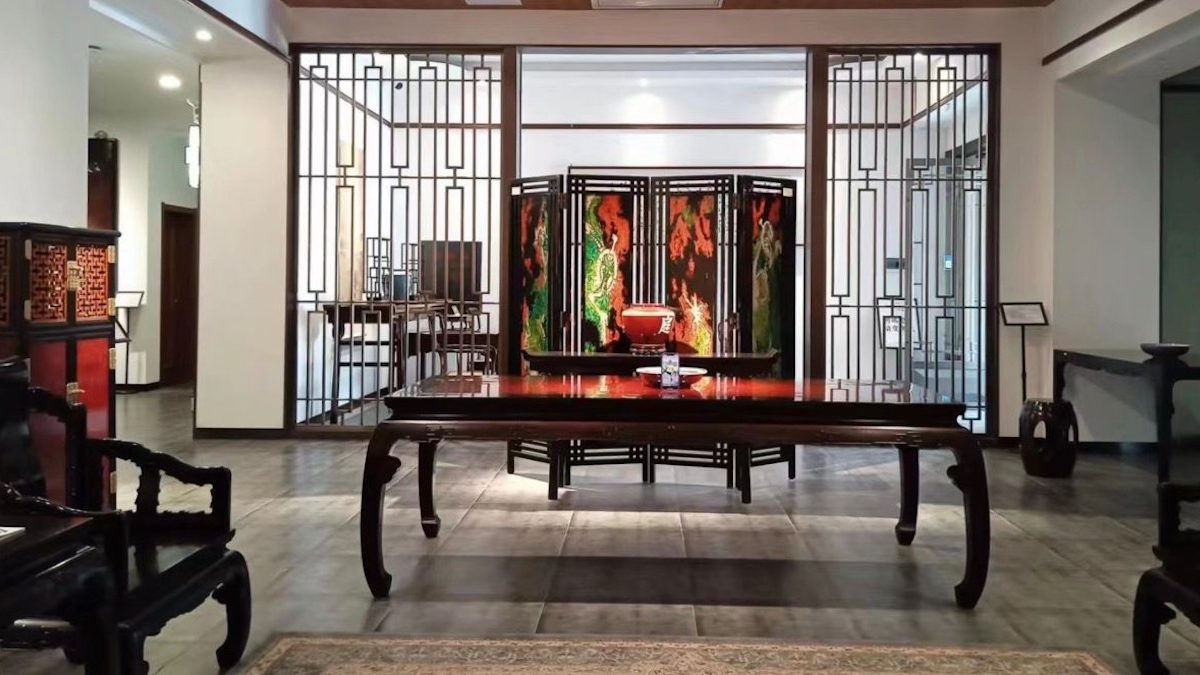
    Stepping into the presence of an authentic Ming horseshoe-back armchair for the first time, a striking dissonance quickly settles in: this centuries-old object does not read like an antique. It feels like a masterpiece of modern design, crafted centuries ahead of its time.

    Unlike the ornate, heavily decorated furniture that defined later Qing Dynasty tastes, Ming-style pieces reject over-the-top ornamentation, flashy inlays of mother-of-pearl, gilded accents, or bulky construction meant to signal status. It stands on four solid legs, with arms that curve gently outward and a back that arcs with deliberate, understated restraint. Bathed in light, the natural grain of the wood seems to shift and breathe, and while the piece remains silent, its intentional structure, balanced proportion, and layered hierarchy speak volumes.

    The enduring value of Chinese classical furniture does not stem from a vague label of “exotic Eastern style.” It emerges from the way that raw timber, generations of craftsmanship, human scale, traditional spatial etiquette, and centuries of collecting history converge in a single everyday object, elevating it to a tangible expression of Chinese civilization.

    ### The Foundation: Precious Tribute Woods
    At the core of this craft lies the choice of wood. According to Shi Hao, founder and director of Wuhan’s Donghu Rosewood Museum, Ming and Qing Dynasty imperial furniture relied on three legendary tribute hardwoods, sourced and offered to the imperial court by local authorities and tributary states. Ranked by value as “first yellow, second purple, third red,” they are huanghuali, zitan, and dahong suanzhi. Each carries distinct qualities that have made them prized for centuries: huanghuali is celebrated for its warm tone and dynamic grain; zitan for its unmatched density, deep dark hue, and imposing gravity; and dahong suanzhi for its rich crimson color, hardness, and dimensional stability.

    Among all Ming-style furniture, huanghuali holds a unique place of honor. The finest old-growth huanghuali from Hainan Island glows with layered hues of amber, honey, and warm reddish-brown, with grain patterns that evoke rolling mountains, flowing rivers, or drifting clouds. Its most iconic markings are the rare guilian (or limian) patterns, widely known as “ghost faces”—dark brown organic clusters that can resemble theatrical masks, leopard spots, or stacks of ancient bronze coins. Across the surface of a chair back or tabletop, these half-formed shapes emerge: half-face, half-shadow, always organic. Unlike carved decorations, these patterns grow naturally from within the wood, leading craftsmen and collectors to describe huanghuali as a living material.

    This reverence for the wood’s inherent beauty explains the iconic plain surfaces of Ming furniture. The lack of elaborate carving is not a failure of craftsmanship—it is an act of respect. The wood already holds its own landscapes and patterns; excessive ornamentation would only disrupt the natural painting that forms within its grain.

    From the mid-to-late Ming Dynasty onward, premium hardwoods flowed into elite Chinese circles through southern overland trade and maritime commerce, fueled by the booming consumer culture of the Jiangnan region. As slow-growing old-growth huanghuali became increasingly scarce, it earned its reputation as “gold among woods.” Jiangnan literati of the era favored its unadorned beauty, arguing that the natural grain alone was enough to make a piece extraordinary.

    Today, institutions like the 2,000-square-meter Donghu Rosewood Museum, which holds more than 400 pieces of rare classical rosewood furniture, are working to preserve and revitalize this lost material knowledge. In collaboration with expert teams from the Palace Museum and Shanghai Museum, the museum revives traditional Suzhou craftsmanship to bring the quiet elegance of Ming furniture back to contemporary audiences. This work extends far beyond a single institution: it signals that Ming-style furniture is no longer merely a collectible category for antique markets. It has reclaimed its place in academic material studies, craft history, museum research, and modern public aesthetic education.

    ### The Hidden Genius: Structure and Proportion
    After material, the defining strength of Chinese classical furniture lies in its hidden structural mastery, most visible in its iconic mortise-and-tenon joinery. This technique is far more than the romantic idea of “furniture built without nails.” It is a sophisticated structural system designed to accommodate the natural expansion and contraction of wood with changes in humidity, distribute weight evenly, and guarantee long-term stability. Metal nails would damage the wood’s natural integrity, but mortise-and-tenon joints allow the wood to “breathe” within controlled limits—a key reason so many Ming pieces have remained intact for more than 500 years.

    To truly understand a Ming horseshoe-back armchair, one must look beyond its graceful outer silhouette. You have to examine how the arms extend seamlessly from the backrest, how the curved splat is shaped to fit the human spine, how the legs splay just enough to balance stability and lightness, how the stretchers distribute weight across the frame, and how aprons and open spaces balance structural support with visual rhythm. Terms like luoguo stretchers, ba wang stretchers, mitered floating panels, waisted construction, and foot supports are not just jargon for antique dealers—they are the grammatical building blocks of Ming furniture design.

    Proportion is everything to the spirit of a Ming piece. If proportions are off, the entire object loses its soul. An armrest set too high feels uncomfortable to the body; a backrest too straight makes sitting uninviting; legs too thick erase the signature lightness of Ming design. Ming furniture is not simply “minimalist”—it is precise, intentional simplicity earned through centuries of refinement. A stripped-back appearance is only surface deep; precision is its true essence.

    In traditional Chinese craft, dimensions were never arbitrary. Ming carpenters, particularly in Jiangnan, relied on the Luban ruler (also called the menguang or bazi ruler) to set measurements for all furniture, doors, and structural elements. Named for Gongshu Ban (better known as Luban), the legendary 5th-century BCE craftsman from the Spring and Autumn period, this tool wove together technical measurement and traditional symbolic order centuries before modern design standards emerged.

    The Luban ruler divides all measurements into auspicious and inausicious categories, with favorable markers for wealth, status, righteousness, and good fortune, and unfavorable markers tied to illness, loss, and calamity. A traditional saying from the *Luban Jing Jiangjia Jing*, Luban’s classic text on craft, holds: “Beds do not leave seven, tables do not leave nine, stools do not leave three, doors do not leave five”—a rule that held that final dimensions should not only serve functional use, but also align with auspicious symbolism.

    From a modern perspective, this belongs to traditional feng shui and cultural belief. Within the context of pre-modern Chinese society, it reveals that furniture making was never just manual labor. It integrated human scale, domestic harmony, and psychological order into a single craft discipline. Imperial architecture and court furniture took this commitment to measured, symbolic proportion even further: the Qing Dynasty’s official building standards, the *Gongbu Gongcheng Zuofa Zeli*, devotes entire sections to door dimensions aligned with auspicious Luban positions, categorized by names like “wealth-increasing doors” and “fortune and virtue doors.”

    For traditional Chinese craftsmen, a table, chair, or bed was never just shaped timber. It carried expectations of household stability, intergenerational good fortune, and maintained social order. The balanced proportions of classical Chinese furniture come not just from the trained eye and hand of the carpenter, but from thousands of years of inherited measurement culture. This design logic is exactly why Ming furniture fits so seamlessly into modern 21st-century spaces. Modernist design prioritizes structural honesty, respect for material, functional clarity, and formal restraint—and Ming furniture achieved all of these principles centuries earlier. It lacks the cold rigidity of mass-produced industrial design, but it holds the core of modern design spirit at its center: it does not hide its structure, it does not overindulge in unnecessary decoration, and it does not use bulk to signal authority.

    A well-preserved Ming chair sits naturally in a modern apartment, contemporary gallery, or private study alongside stone accents, concrete walls, abstract painting, and modern lighting without feeling out of place. Its outline is clean, its scale controlled, its material unobscured, its structure obvious.

    ### Furniture as Spatial and Social Order
    Even so, Ming furniture is far more than just timeless design. In the elite literati culture of the late Ming, furniture shaped the entire spatial and social order of the home. A painting table was not merely a surface to work on—it was the central gathering point for reading, writing, appreciating art, burning incense, and receiving guests. A horseshoe-back armchair dictated posture, line of sight, the ritual distance between host and guest, and even the bearing of the person sitting in it. A small incense stand might hold nothing more than a burner, a small vase, or a scholar’s rock, but it gave an entire room room to breathe. A luohan bed functioned as a cross between a bed, couch, and seating piece, used for reclining, conversing, drinking tea, reading, or resting, occupying the gentle space between private leisure and social interaction.

    Furniture for entrance halls prioritized order and ritual; furniture for studies prioritized solitude and self-cultivation; beds and couches connected the daily needs of the body to the inner life of the mind. The placement, scale, and grouping of furniture formed a quiet social language, and Ming design placed unique value on empty space. Emptiness here is not absence—it is intentional control. It creates distance between objects, leaving room for light, air, and movement. A sophisticated Ming-style room is never cluttered with valuable objects; it is a space where every object knows its place.

    ### Value, Authenticity, and the Market
    This holistic framework also shapes how collectors judge the value of classical Chinese furniture. The market price of a piece is never determined by the type of wood alone—wood is only the starting threshold for value. What gives a piece its scholarly and market worth is a combination of age, form, proportion, craftsmanship, condition, provenance, publication history, exhibition record, and collecting pedigree.

    The international auction market has long recognized the value of top-tier classical Chinese furniture. Christie’s has recorded landmark sales: a 16th–17th century huanghuali circular incense stand sold for $5.8475 million, while an 18th-century zitan luohan bed fetched $3.6075 million. These results confirm that top-tier Chinese classical furniture is no longer categorized internationally as mere decorative antique. It is a high-value fine art asset that combines material rarity, technical refinement, aesthetic distinction, and centuries of collecting history.

    When evaluating a huanghuali piece, experts ask a series of critical questions: Is the timber authentic old-growth material? Does the form align with period conventions? Are the mortise-and-tenon joints original, or have components been replaced? Is the patina natural, or has the surface been over-polished, re-waxed, or re-colored? Has the structure undergone major structural alteration? Have dimensions been changed? Is the provenance clearly documented? Has the piece been previously held in significant collections, included in exhibitions, or listed in scholarly catalogues?

    Provenance is particularly critical for high-end pieces. Without a clear documented history, even a piece with beautiful timber will have limited market value. With a verified collecting record, publication history, and scholarly provenance, an old piece of furniture becomes a tested cultural asset, vetted by time, connoisseurship, and the market.

    Authenticity is the skill that demands the most hands-on experience. Classical Chinese furniture cannot be judged by a quick glance at how old it looks: old timber can be used to make new forgeries, new furniture can be artificially aged, old components can be reassembled into fake period pieces, and partial restoration can completely alter the value of an intact original. True authentication depends on verifying that all elements of the piece—wood, structure, proportion, tool marks, patina, wear patterns, and functional logic—align with each other.

    Naturally aged furniture wears unevenly, in patterns shaped by use: armrests grow smooth where generations of hands have rested, seats develop subtle wear from constant body contact, lower legs hold faint traces of centuries of contact with the floor, and drawer edges round softly from repeated opening and closing. Natural wear is never uniform; if a piece looks evenly aged from top to bottom, it is almost certainly a forgery.

    Patina, too, is often misunderstood: it is not just a shiny surface. It is a complex surface condition built up over centuries from contact with hands, air, light, dust, and daily use. Good patina is calm, warm, and layered. Over-polishing erases the evidence of time, while artificial aging fabricates a false history. Old furniture faces two great risks: being over-restored to look like new, or being artificially treated to look falsely old. One destroys authentic historical evidence; the other invents a fake history.

    ### The Imperial Footnote: The Carpenter Emperor of Late Ming
    No discussion of late Ming furniture culture is complete without mentioning the Tianqi Emperor Zhu Youxiao, who reigned from 1620 to 1627 CE. So deeply devoted was he to woodworking that he is widely remembered as the “carpenter emperor”—the most hands-on imperial craftsman in Chinese history. This title is far more than a trivial historical anecdote: it places the extraordinary refinement and popularity of late Ming woodworking alongside the accelerating political decay of the Ming court, creating one of the most haunting contradictions in Chinese dynastic history.

    According to the *Ming Shi* (the official History of the Ming Dynasty) and *Zhuozhong zhi*, a detailed first-person account of late Ming court life by eunuch Liu Ruoyu, Zhu Youxiao was obsessed with carpentry. He personally crafted miniature palace models, folding beds, small screens, lacquered objects, and even mechanical wooden contraptions, often forgetting to eat or sleep when absorbed in his work. Even the most skilled court craftsmen acknowledged the exceptional refinement of his work. Histories even record that he had eunuchs sell his handmade pieces outside the palace, adding an oddly mundane layer to his story: an emperor who did not just admire woodworking, but personally sawed, planed, carved, and shaped timber into finished objects.

    The story quickly takes a dark turn. The emperor’s total absorption in carpentry created a power vacuum that was filled by the powerful, corrupt eunuch Wei Zhongxian, who held key positions including head of the imperial secret police. When Wei would bring state memorials to the emperor for approval while Zhu Youxiao was working on wood, the emperor would repeatedly reply: “I understand the matter fully, handle it as you see fit.” All state affairs quickly fell into the hands of Wei and his faction, leading to widespread court corruption, unpaid military salaries, growing frontier threats, and spreading popular unrest across the empire.

    On one side lay sawdust, shavings, precise mortise-and-tenon joints, lacquer, and exquisitely crafted furniture. On the other lay court corruption, eunuch tyranny, and the slow collapse of the Ming dynasty. The Tianqi Emperor did not create Ming-style furniture, but he became the most extraordinary historical footnote to late Ming wood culture. The fact that an emperor could master woodworking well enough to earn the admiration of professional craftsmen proves how mature and advanced the Ming craft system had become by the early 17th century. The fact that the same emperor abandoned all state affairs to pursue his obsession casts an unavoidable shadow of political contradiction over this chapter of furniture history.

    The maturity of Ming furniture did not come from the Tianqi Emperor alone. It emerged from the growing wealth of Jiangnan, maritime trade that brought precious hardwoods to China, the refined taste of literati elites, imperial demand, and a centuries-old developed craft system. Zhu Youxiao’s legacy lies in the contradiction he embodies: woodworking had become so refined that it could capture the full attention of an emperor, while the dynasty he ruled had become so fragile that it could be undone by abandoned authority. Behind every folding bed, miniature palace, and lacquered mechanism crafted in his era lies not just extraordinary skill, but the deep imbalance of a dying age.

    ### Conclusion
    Chinese classical furniture deserves to be understood through this broad, holistic lens. It is not merely a category of collectible antiques. It is a complete cross-section of Chinese civilization. Its materials come from nature and centuries of trade; its structure from generations of craft experience; its proportion from human scale and traditional measurement culture; its spatial logic from literati social life; its value from centuries of collecting history; its authenticity from trained connoisseurship. It sits at the intersection of technical history, aesthetic history, the global art market, and the larger narrative of dynastic rise and fall in China.

    Truly exceptional classical Chinese furniture does not rely on massive size to intimidate, nor on gold and jewels to seduce. It hides the entire structure of a civilization in its joinery, social status in its balanced proportion, and thousands of years of history in its wood grain. It gives a simple everyday object layers of practical, aesthetic, ritual, and spiritual meaning. Beauty does not need to shout to be felt. Power does not always need to sit on a gilded throne. Sometimes, a single piece of wood, shaped by careful eyes, precise hands, symbolic measurement, and centuries of time, is enough to preserve an entire civilization’s core wisdom.


  • Lights, camera, Bangaranga: Highlights from Eurovision

    Lights, camera, Bangaranga: Highlights from Eurovision

    The world’s most flamboyant and widely watched live music competition, the Eurovision Song Contest, delivered another year of breathtaking performances, viral moments, and surprise outcomes that had global audiences talking for days after the final curtain fell. Among the dozens of talented acts representing nations from across Europe and beyond, two stand-out achievements captured the public’s attention more than any other, cementing their place in Eurovision’s decades-long history.

    First, Bulgaria’s rising pop sensation Dara delivered a powerhouse, electrifying performance of her entry *Bangaranga* that resonated with both the viewing public and the professional juries voting across the competition. Her dynamic stage presence, catchy original production, and seamless vocal control set her apart from a crowded field of competitors, ultimately earning her enough top points to claim the contest’s coveted first-place trophy. The win marks Bulgaria’s first major Eurovision victory in nearly two decades of participation, sending shockwaves of celebration across the Balkan nation.

    But Dara’s triumph was not the only record-breaking moment of the week. In a stunning display of vocal stamina that left the live arena audience and global viewers stunned, Ukraine’s competing act broke a long-standing Guinness World Record for the longest continuous note ever sung in the history of the Eurovision Song Contest. The unprecedented feat, which lasted more than 25 seconds, went viral within hours of the performance, drawing praise from vocal coaches and music fans worldwide for the singer’s exceptional breath control and technical skill. While Ukraine’s act ultimately finished outside the top three, the record-breaking moment will be remembered as one of the most iconic individual achievements in the contest’s modern era.

    For fans who tuned in from across the globe, this year’s Eurovision delivered exactly what it promises every year: a celebration of cultural diversity, musical creativity, and unforgettable live entertainment that brings hundreds of millions of people together across borders. This year’s highlights, from Dara’s breakthrough win to Ukraine’s historic vocal accomplishment, have already set high expectations for next year’s contest, set to be hosted in Bulgaria as a result of Dara’s victory.

  • ‘Look Mum, one point’: Why does the UK keep getting Eurovision wrong?

    ‘Look Mum, one point’: Why does the UK keep getting Eurovision wrong?

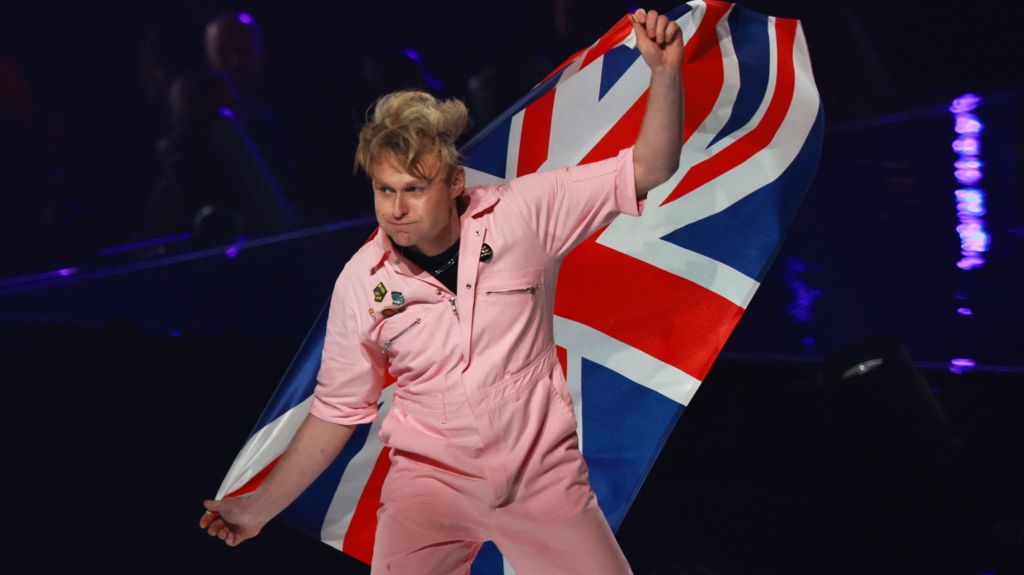
    For the fourth year running, the United Kingdom is grappling with another disappointing Eurovision result, after eccentric independent artist Sam Battle — known professionally as Look Mum No Computer — placed dead last at the 2026 contest with just one single point from jury votes and zero public votes. This marks the UK’s third bottom-of-the-table finish since 2020, and only one top 10 ranking across 16 years dating back to 2010, leaving fans and industry observers questioning the country’s long-standing slump in the global song contest.

    Battle entered the competition with his unapologetically quirky synth-pop track *Eins, Zwei, Drei*, a high-energy track about leaving a 9-to-5 office job to move to Germany that he performed in a bright pink boiler suit, bringing an unfiltered, distinctly British eccentricity to the Eurovision stage. Pre-contest predictions were already grim for the entry, but even so, Battle gave an unforgettable, high-octane performance that commentators framed as a welcome break from the UK’s history of safe, generic polished pop entries.

    Adrian Bradley, a commentator for the Eurovision-focused *Euro Trip* podcast, praised the BBC’s ambitious choice to select an unconventional act. “They took a risk on something that maybe people won’t like, but which some people might pick up the phone and vote for,” he noted. Satoshi, this year’s Moldovan contest representative, echoed that praise, pointing out that the track’s distorted vocals and unique synth work carried a clear, authentic British creative identity — even if it was never going to appeal to every voter across Europe. Battle himself acknowledged the gamble ahead of the final, comparing his entry to Marmite: “You either love it or hate it – but I think there’s a slot open for our sort of thing.” Ultimately, that open slot never materialized, as the track’s hiccuping beat and quirky British cultural references left European voters and juries bewildered.

    Many critics point to deep structural issues that have held the UK back for decades. Established British recording artists widely view representing the UK at Eurovision as a “poisoned chalice,” fearing a poor result will damage their mainstream careers. When established stars do participate, they often face harsh backlash: 2024 entrant Olly Alexander finished 18th with 46 total points, receiving zero public votes, and later called the experience “brutal,” advising future participants to seek mental health support after going into debt to fund his staging. This reputation has pushed the BBC to rely on emerging independent artists without major label backing, like Battle and 2025’s Remember Monday, leaving entries without the industry support that many competing countries enjoy.

    International contestants and Eurovision insiders say the UK could turn its fortunes around by looking to Finland, which overcame a 15-year post-victory slump after 2006’s win by Lordi to reemerge as a consistent top contender. After the 2020 breakthrough of pop star Erika Vikman at Finland’s national selection contest Uuden Musiikin Kilpailu (UMK), a growing number of established Finnish artists have embraced the contest, creating a self-reinforcing cycle of success. Finland now leans into its unique creative identity, leading to viral breakout hits like 2023’s runner-up *Cha Cha Cha* by Käärijä, which cemented the country’s new reputation for bold, memorable entries.

    Matti Myllyaho, Finland’s Eurovision show producer and organizer of UMK, says the key to Finland’s turnaround was embracing national quirkiness rather than shying away from it. When asked what advice he would give the UK, he noted: “In Finland, we started to realise our strengths, and own our slight weirdness. It’s hard to speak for the UK, but I think the path I’d recommend any Eurovision project to follow would be to, like, just own your quirkiness.”

    Still, Battle’s bold quirky entry failed to deliver a better result, leading observers to note that a successful Eurovision bid requires far more than a unique identity: it needs alignment across 10 key factors, from a strong accessible song and a seasoned performer to impressive staging, pre-show promotion, favorable running order placement, and a dose of good luck. The BBC has consistently come close to putting all the pieces together, only to miss critical elements that sink its entry year after year.

    With the good will built by 2022’s runner-up finish from Sam Ryder — the UK’s only major success in over a decade — now faded, the BBC faces the daunting task of rebuilding its Eurovision strategy. Recommendations from pundits and fans include courting major labels and established songwriters year-round instead of relying on outside collaborators, bringing in heads of music from UK’s leading radio networks to leverage their industry insight and connections, and adopting an open national selection format similar to Finland’s UMK or Sweden’s Melodifestivalen to draw broader public and industry engagement. Fans on the ground in Vienna offered their own takes, calling for bigger, more engaging stage productions, viral-friendly hooks, better embrace of multiple languages, and even a return of legendary British contest participants like Cliff Richard.

    As the BBC begins preparations for 2027, the question remains: can the UK reverse its long Eurovision slump, or will last place finishes become the norm for one of the world’s most influential music industries?

  • Anthony Albanese to receive ‘global citizen’ award at United Nations

    Anthony Albanese to receive ‘global citizen’ award at United Nations

    Australian Prime Minister Anthony Albanese is scheduled to receive one of the international community’s most high-profile global leadership honors this September, when he accepts the Atlantic Council’s Global Citizens Award on the sidelines of the United Nations General Assembly in New York.

    The award, an annual honor granted by the nonpartisan Washington D.C.-based global think tank, recognizes current and emerging leaders whose work advances solutions to pressing cross-border challenges. The awarding ceremony has long been framed by the Atlantic Council as a leading convening space that brings together sitting heads of state, senior diplomats, top corporate executives, philanthropic leaders, and figures from the entertainment and social impact sectors.

    Albanese will join a long and diverse roster of past honorees that spans global politics, entertainment, sports governance and public service. Recent and past recipients include Argentine libertarian President Javier Milei, French President Emmanuel Macron, FIFA President Gianni Infantino, Italian Prime Minister Giorgia Meloni, Ukrainian President Volodymyr Zelenskyy, Black Eyed Peas frontman and innovator will.i.am, former Israeli President Shimon Peres, Academy Award-winning actor Robert De Niro, and former U.S. President Bill Clinton, who received the organization’s separate Distinguished International Leadership Award in 2010.

    According to initial reporting from the Australian Broadcasting Corporation, which first broke news of Albanese’s selection, the think tank selected the Australian prime minister for the honor in recognition of three key areas of his leadership: his direction of Australia’s national government, his longstanding commitment to shoring up the AUKUS security partnership and expanding collective security cooperation across the Indo-Pacific, and his sustained efforts to deepen diplomatic and economic engagement with nations across Southeast Asia and the Pacific Islands region.

    The award announcement comes as Albanese prepares to address world leaders at the annual UN General Assembly, a key global diplomatic gathering that draws heads of state from across the globe to address shared challenges from climate change to geopolitical instability.

  • Bangaranga! Bulgaria wins Eurovision – but UK comes last

    Bangaranga! Bulgaria wins Eurovision – but UK comes last

    The 2026 Eurovision Song Contest, held in Vienna to mark the iconic competition’s 70th platinum anniversary, delivered a stunning upset when Bulgarian pop star Dara claimed the nation’s first ever victory with her high-energy dance track *Bangaranga* — a surprise win that capped a night of political tension, unexpected results, and memorable live performances.

    Going into the grand final, Dara was far from the favorite to win, with bookmakers having favored Finnish duo Pete Parkkonen and Linda Lampenius for weeks and many commentators tipping Australian star Delta Goodrem to take the trophy. But the 27-year-old Bulgarian talent, already a household name in her home country with more than 80 million combined streams and views and a coaching role on Bulgaria’s *The Voice*, defied all pre-contest expectations. She dominated both the jury and public vote to finish with a massive 516 points, a nearly 200-point lead over second-place finisher Israel’s Noam Bettan. Third place went to Romania’s Alexandra Căpitănescu, followed by Goodrem and Italy’s Sal Da Vinci to round out the top five.

    Beyond its catchy, unforgettable chorus and high-impact choreography, *Bangaranga* carries a deeply personal meaning for Dara. The track’s title, often mislabeled as just another whimsical Eurovision nonsensical phrase, translates to “uproar” in Jamaican patois, and its lyrics explore her journey managing anxiety and ADHD, a diagnosis she received just one year prior. Her dynamic performance drew inspiration from Bulgaria’s ancient Kukeri tradition, where masked performers drive out evil spirits, with whiplash-inducing choreography that earned her the pre-final award for best staging, voted on by contest commentators including the UK’s Graham Norton. After accepting the crystal microphone trophy, Dara told backstage reporters: “I want to thank everybody who felt the Bangaranga and felt connected to the force.” Bulgarian National Television has since confirmed that the 2027 Eurovision contest will be hosted in the country’s capital, Sofia.

    This year’s contest was overshadowed by significant political controversy surrounding Israel’s participation, sparked by widespread anger over the Gaza war’s civilian death toll. Five countries including Spain, Iceland and seven-time winners Ireland boycotted the event, and large public protests were held in central Vienna in the lead-up to the grand final. Anti-Israel chants interrupted Bettan’s semi-final performance, and the singer was booed during the final when he briefly held the top spot on the leaderboard, though no major disruptions marred his performance of the heartfelt Mediterranean love song *Michelle*. Bettan ultimately held on to secure second place.

    For the United Kingdom, the contest brought another disappointing result, marking the third time since 2020 that the nation has finished in last place. UK entry Look Mum No Computer, a YouTube creator best known for building unusual musical contraptions, earned just one single point for his synth-driven track *Eins, Zwei, Drei*. The artist had pre-emptively acknowledged the song’s divisive appeal, calling it “Marmite — you either love it or hate it”, and maintained a positive attitude after the results, saying “I always say to expect nothing, because if you expect nothing, you lose nothing.” Norton noted after the final that “He gave it his all, it just clearly didn’t shine with the audiences across Europe.”

    Several other unexpected moments shaped the night’s competition. Pre-contest favorites Parkkonen and Lampenius failed to meet expectations, their duet *Liekinheitin (Flamethrower)* finishing in sixth place, outside the top five. Goodrem, tipped to become Australia’s first ever Eurovision champion, delivered a viral vocal performance of her power ballad *Eclipse* from a stage platform borrowed from Beyoncé, but the track was ultimately seen as too dated to claim the top spot, finishing fourth. Romania’s Căpitănescu faced controversy over her track *Choke Me*, with campaigners accusing the song of glorifying sexual violence, but the artist explained the track is actually about the suffocating weight of self-doubt. Her nu metal-influenced performance resonated with voters, pushing her to a surprise third-place finish.

    A minor technical disruption interrupted Czech entrant Daniel Žižka’s performance, when a camera error distorted the video feed and briefly cut away from the singer. Žižka requested an opportunity to restart his performance, but contest organizers declined, noting that the audio and core performance had not been affected by the “small camera issue”.

    To mark the 70th anniversary of the contest, which launched in 1956 as the European Grand Prix with just seven participating nations, organizers put together a star-studded tribute to seven decades of iconic Eurovision music. Former winners joined special guests to reimagine classic hits: Finnish rock winners Lordi performed a heavy metal rework of Brotherhood of Man’s *Save Your Kisses For Me*, Ukrainian icon Verka Serduchka delivered a playful version of Sandie Shaw’s *Puppet On A String* accompanied by an Oompah band, Finnish star Erika Vikman recreated ABBA’s iconic 1974 winning performance of *Waterloo*, and Norwegian winner Alexander Rybak gave Cliff Richard’s *Congratulations* a hoedown twist. The tribute closed with a mass audience singalong of *Nel blu, dipinto di blu*, the 1958 Italian winner that has sold more than 18 million copies worldwide, and remains the only Eurovision track to ever top the US Billboard charts.

    Across the 26 competing entries, the 2026 final showcased a wide range of themes and styles, from the opening number from Denmark’s Søren Torpegaard Lund that set a tone of raw passion, to Croatia’s folk band Lelek, who told the untold story of Catholic women’s resistance during the Ottoman Empire through haunting harmonies and symbolic face paint. Lithuania’s Lion Ceccah delivered a commentary on algorithmic culture, painting his entire body silver to illustrate his message of reclaiming humanity from digital systems, while Greece’s Akylas wove a sweet story of working to lift his parents out of poverty into a high-energy techno performance full of theatrical stunts.