博客

  • Zelenskyy says peace proposals to end the war in Ukraine could be presented to Russia within days

    Zelenskyy says peace proposals to end the war in Ukraine could be presented to Russia within days

    KYIV, Ukraine — A potential breakthrough in the protracted conflict between Ukraine and Russia appears imminent as diplomatic efforts intensify. Ukrainian President Volodymyr Zelenskyy revealed that peace proposals developed in coordination with U.S. officials could be finalized within days, marking a significant development in the nearly four-year war.

    Following extensive negotiations in Berlin on Monday, Zelenskyy characterized the U.S.-authored draft peace plan as “highly workable” while addressing journalists. The American diplomatic team is expected to present these proposals to the Kremlin before potential high-level meetings in the United States scheduled for the coming weekend.

    Despite notable progress, substantial hurdles remain unresolved, particularly regarding the status of Ukrainian territories currently under Russian occupation. U.S. officials indicated that approximately 90% of the peace framework has garnered consensus from both Ukrainian and European partners, with President Donald Trump noting, “We’re closer now than we have been, ever” to a settlement.

    The negotiation process faces its most formidable challenge in addressing territorial disputes. Zelenskyy firmly reiterated Ukraine’s position against recognizing Moscow’s control over any portion of the Donbas region, despite Russian forces not having achieved full control over either Luhansk or Donetsk. The U.S. has proposed establishing a “free economic zone” in the Donbas as a potential compromise, which Zelenskyy emphasized must not imply Russian dominion over the area.

    Russian President Vladimir Putin maintains demands for international recognition of seized territories, including four key regions and the Crimean Peninsula, which Russia annexed in 2014 in violation of international law.

    Zelenskyy warned that should diplomatic efforts collapse, Ukraine would expect increased Western pressure on Moscow through enhanced sanctions and additional military support, including advanced air defense systems and long-range weaponry. The ongoing preparations include up to five documents related to the peace framework, with several focusing on security guarantees for Ukraine.

    The Ukrainian leader expressed optimism about the Berlin discussions, noting “a demonstration of unity” that reflected “the unity of the U.S., Europe, and Ukraine” in pursuing a peaceful resolution to the conflict.

  • Chinese rapper’s Lingnan-rooted hip-hop a big draw in US

    Chinese rapper’s Lingnan-rooted hip-hop a big draw in US

    A new wave of cultural exchange is resonating across North American venues as Chinese rapper Lan Lao, professionally known as Skai Isyourgod, completes a massively successful tour through over ten cities in the United States and Canada. The 27-year-old artist, renowned for his unique fusion of American hip-hop rhythms with the rich cultural tapestry of China’s Lingnan region, has consistently drawn packed audiences, with many shows selling out entirely.

    Lingnan culture, originating from South China and encompassing Guangdong, Guangxi, Hainan, Hong Kong, and Macao, provides the foundational narrative and sonic landscape for Lan Lao’s music. His distinct style combines elements of Memphis rap with accented Mandarin delivery and culturally specific references, creating a sound that is both authentically Chinese and globally accessible. His 2024 album ‘Ba Fang Lai Cai’ (Stacks from All Sides) has been particularly instrumental in this cross-cultural appeal, generating billions of monthly streams on international platforms and establishing him as one of the most-streamed Mandarin-language artists overseas.

    In exclusive commentary, Lan Lao reflects on his unexpected global reach: ‘I’m just an ordinary guy telling stories about where I’m from. The internet has created this amazing opportunity for work to be shared with much larger audiences.’ He emphasizes that his artistic mission transcends mere musicality, viewing his work as a vehicle for genuine cultural confidence. ‘Using my own language already shows our cultural confidence. Some cultural elements show up in my music, and I think that’s part of what makes the world diverse.’

    The reception among North American audiences has been notably enthusiastic. B Dowling, a Chinese hip-hop enthusiast and linguistics researcher from Wisconsin, notes: ‘Lan Lao’s style represents a sophisticated localization of global hip-hop traditions. He made it Chinese, and he did it really well. Chinese hip-hop is going strong and deserves worldwide attention.’ New York attendee Sierra Flournoy adds: ‘Everything connects back to where he’s from. He’s very specific about that, very grounded in reality.’

    This musical phenomenon signals a significant shift in global cultural dynamics, where regional Chinese art forms are finding receptive international audiences. As Lan Lao’s tour demonstrates, the universal language of music continues to bridge geographical and cultural divides, creating new pathways for cross-cultural appreciation and understanding in the contemporary entertainment landscape.

  • Trump sues BBC for defamation over editing his speech, seeking billions in damages

    Trump sues BBC for defamation over editing his speech, seeking billions in damages

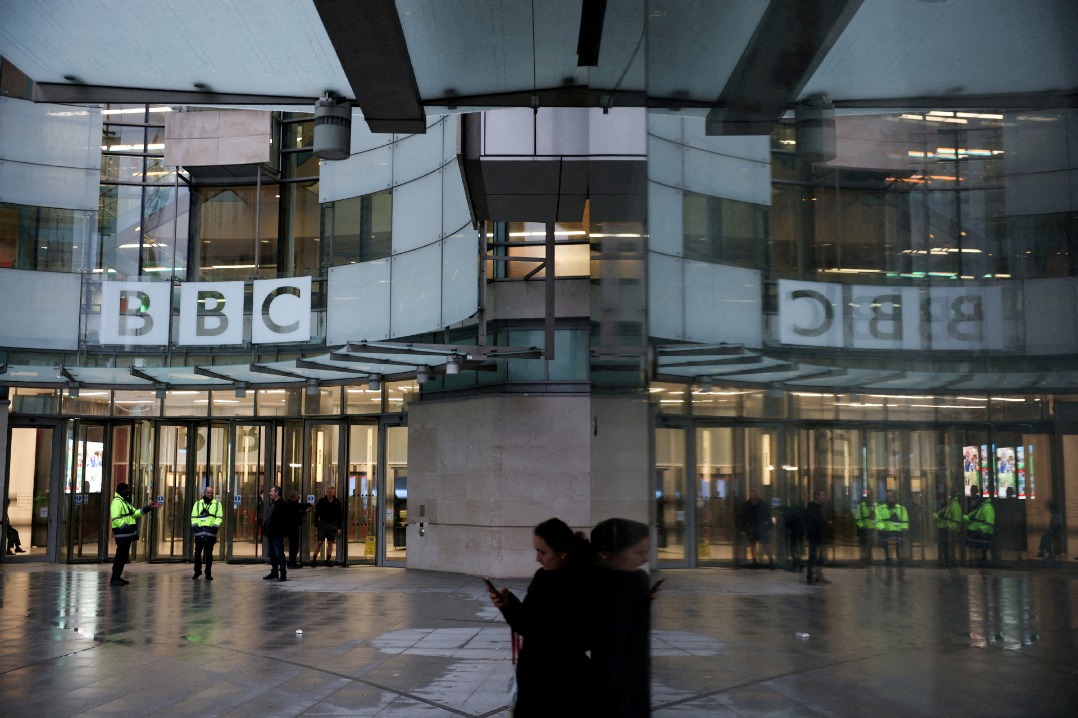
    Former U.S. President Donald Trump has initiated a high-stakes legal battle against the British Broadcasting Corporation (BBC), filing a defamation lawsuit seeking substantial financial damages. The legal action centers on allegations that the broadcaster manipulated footage of Trump’s January 6th Capitol riot speech in a documentary that aired shortly before the 2024 presidential election.

    The lawsuit, submitted to the U.S. District Court for the Southern District of Florida’s Miami division, contends that the BBC’s Panorama documentary titled ‘Trump: A Second Chance’ presented a deliberately misleading portrayal of the former president. Legal documents allege the production team spliced together two separate segments from Trump’s January 2021 address, creating the false impression that he directly instructed supporters to engage in violent behavior.

    According to court filings, the documentary inappropriately combined footage from the beginning of Trump’s speech with remarks delivered nearly an hour later, while simultaneously omitting portions where the former president advocated for peaceful demonstration. The lawsuit specifically challenges the presentation of a composite quote suggesting Trump told supporters: ‘We’re going to walk down to the Capitol and I’ll be there with you. And we fight. We fight like hell and if you don’t fight like hell, you’re not going to have a country anymore.’

    The legal action seeks $5 billion in damages for each alleged violation, citing both defamation and breaches of Florida’s Deceptive and Unfair Trade Practices Act. Trump’s legal team argues the timing of the documentary’s release—one week before the 2024 election—constituted a deliberate attempt to influence electoral outcomes.

    In response to the controversy, BBC leadership has undergone significant changes. Chair Samir Shah issued an apology describing the editing decision as an ‘error of judgment,’ while Director-General Tim Davie and News CEO Deborah Turness both resigned from their positions. The broadcaster has committed to permanently removing the documentary from all platforms and distribution channels.

    Despite acknowledging editorial misjudgment, the BBC maintains in an official statement that no legal basis exists for the defamation claim. The organization confirmed that Shah had sent a personal letter to the White House expressing regret over the editing controversy.

    This lawsuit represents the latest in a series of legal actions Trump has pursued against major media organizations, including previous cases against ABC News, CBS News, The Wall Street Journal, and The New York Times.

  • Police to release man held over US university shooting

    Police to release man held over US university shooting

    In a dramatic reversal, law enforcement officials announced Sunday night they will release the only individual detained in connection with the Brown University shooting that left two students dead and nine injured. The decision came after authorities determined insufficient evidence existed to continue holding the person.

    The development represents a significant setback in the investigation into Saturday’s violence that erupted at the Ivy League campus during final exam preparations. Officials had initially believed they made a breakthrough when apprehending a suspect at a Rhode Island hotel, only to have their investigative progress unravel hours later.

    While multiple U.S. media outlets identified the detained individual as 24-year-old Benjamin Erickson, a former U.S. Army infantryman who served from 2021 to 2024, military officials confirmed to Reuters they could not verify whether he was indeed the person taken into custody. Erickson had achieved the rank of specialist but was never deployed during his military service.

    With no current suspects in custody, Providence Police Chief Oscar Perez pledged intensified investigative efforts, emphasizing the collection of surveillance footage and physical evidence. ‘We’re in the process of collecting evidence and seizing items that we need to seize, search locations that we need to search,’ Chief Perez stated.

    The shooting occurred approximately at 4 p.m. Saturday within the Barus and Holley building, which contains engineering and physics classrooms and laboratories. According to law enforcement sources, the assailant discharged more than 40 rounds from a 9mm handgun inside an engineering classroom.

    In response to the tragedy, Brown University canceled all remaining academic activities for the semester, including classes, examinations, and projects. President Donald Trump characterized the incident as ‘a terrible thing’ while extending his ‘deepest regards and respect’ to grieving families and wishes for recovery to the wounded.

    On Sunday evening, the Providence community transformed a scheduled holiday celebration into a vigil honoring the victims. Mayor Brett Smiley reflected on the significance of gathering during Hanukkah, noting ‘if we can come together as a community to shine a little bit of light tonight, there’s nothing better that we can be doing.’

  • Horsemen safeguard remote borders

    Horsemen safeguard remote borders

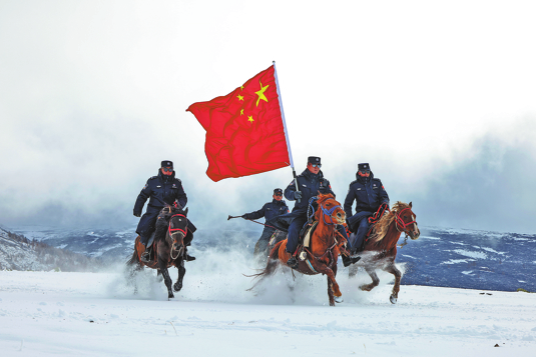
    In the formidable Altay Mountains of China’s Xinjiang Uygur Autonomous Region, a specialized unit of border police has adapted to one of the country’s most challenging environments through an unexpected tool: horses. Operating from the Kanas Scenic Area Border Police Station at 1,324 meters above sea level, these officers patrol 817.63 square kilometers of rugged terrain bordering Kazakhstan, Russia, and Mongolia.

    The region transforms into a treacherous winter landscape for half the year, with temperatures plunging to -30°C and snowdrifts reaching three meters deep. Under these extreme conditions, conventional vehicles become useless, forcing officers to rely on equestrian patrols to maintain border security and provide emergency services.

    Station chief Zhu Peicai, a 15-year veteran of these harsh conditions, emphasizes that ‘riding a horse is as essential for us as driving a police car.’ His team of 24 officers and seven auxiliary personnel—with an average age of 29—serves a diverse community of 1,037 residents from six ethnic groups, approximately 80% of whom are Mongolian.

    The dangers these officers face are substantial. Beyond the constant threat of avalanches and hidden crevasses, they regularly rescue tourists lured by the area’s spectacular winter beauty but unprepared for its dangers. In October alone, the station rescued over 140 stranded visitors, including a major operation on October 1 when 110 tourists became trapped in the remote Black Lake area without communication capabilities.

    Officer Wang Yicheng describes the patrols as essential preventive measures: ‘Once the snow falls and freezes, the trail often becomes a death trap. Without a telephone signal, anyone stranded faces hypothermia within hours.’

    The physical toll on officers is severe, with some experiencing such intense saddle sores from extended missions that they must sleep on their stomachs for days. The team also recalls near-fatal incidents, including a harrowing avalanche in January last year that buried 200 meters of road and trapped over 1,000 tourists.

    Beyond emergency response, the officers serve as community mediators and grassroots administrators. A simple wooden table outside their station has become a hub for dispute resolution, with a remarkable 100% mediation success rate. Their annual accomplishments include handling over 900 rescue calls, saving more than 300 tourists and herders, and recovering approximately 4 million yuan in economic losses.

    Despite the isolation and danger, these officers have developed a profound commitment to their mission. As Political Commissar Wang Jia expressed after planting the national flag at the China-Russia border marker: ‘Standing there, seeing the flag flutter against the snow, every ache is worth it.’

  • Yoon planned martial law early on: Probe team

    Yoon planned martial law early on: Probe team

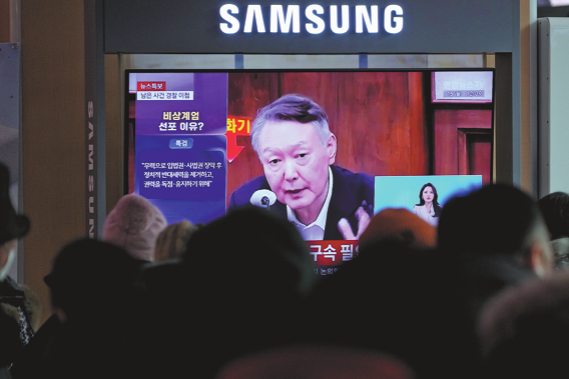
    A comprehensive 180-day investigation by South Korea’s special counsel has uncovered that ousted President Yoon Suk-yeol orchestrated preparations for martial law implementation for over a year before his controversial decree on December 3, 2024. The findings, announced by special counsel leader Cho Eun-suk on Monday, detail a systematic plan to neutralize political opposition through military force.

    According to the investigation, Yoon and his associates initiated martial law preparations as early as October 2023. The scheme involved using military power to paralyze the National Assembly and seize both legislative and judicial authority, fundamentally aiming to eliminate political adversaries and consolidate power indefinitely. The probe further revealed that Yoon authorized unusual military operations intended to provoke an armed response from North Korea (DPRK), which ultimately failed when no military reaction materialized.

    Faced with this failure, Yoon’s administration allegedly categorized routine political activities within the National Assembly as “anti-state acts” and “insurrection plots” to justify the emergency martial law declaration. Although announced on December 3 last year, the decree was rescinded mere hours later following overwhelming opposition from the legislature.

    The constitutional consequences were severe: in April 2025, South Korea’s Constitutional Court upheld parliament’s impeachment vote, resulting in Yoon’s removal from office. The investigation has led to indictments against 24 individuals, including former Prime Minister Han Duck-soo, former Interior Minister Lee Sang-min, and former Defense Minister Kim Yong-hyun. Yoon and several key associates remain in custody pending trial.

    Evidence supporting these findings includes seized notes from former Defense Intelligence Commander Noh Sang-won, phone memoranda from former counterintelligence chief Yeo In-hyung, and testimonies from multiple witnesses. The investigation also uncovered Yoon’s longstanding hostility toward the Democratic Party, dating back to his tenure as prosecutor general. During a November 2022 meeting with People Power Party leadership, Yoon reportedly vowed to “sweep the DP away” even if it meant being “shot to death,” given emergency powers.

    In related developments, the Seoul Central District Court sentenced former commander Noh to two years imprisonment for unlawfully collecting military intelligence officers’ personal information connected to the martial law scheme. Additionally, the Constitutional Court announced it will deliver its impeachment ruling on Thursday regarding National Police Agency chief Cho Ji-ho, accused of blocking lawmakers’ assembly access during the crisis.

  • China’s economic agenda hailed

    China’s economic agenda hailed

    Analysts across Asia are recognizing significant regional economic implications from China’s newly announced economic priorities. The conclusion of China’s Central Economic Work Conference on December 11 has set the stage for substantial domestic market enhancement strategies that promise to create stabilizing effects throughout Asian supply chains.

    Economic experts note that China’s commitment to strengthening internal consumption mechanisms arrives at a critical juncture for export-dependent Asian economies facing constrained global trading conditions. The policy direction emphasizes consumption stimulation initiatives, urban-rural income augmentation programs, and the elimination of regulatory barriers that currently inhibit consumer activity.

    Reuben Mondejar, economics professor at IESE Business School in Spain, observed that while China’s agenda primarily addresses domestic economic dynamics, the resulting increase in Chinese import capacity will inevitably produce positive spillover effects across Asian trading partners.

    Singapore-based researcher Amitendu Palit from the National University of Singapore highlighted China’s evolution from primarily a manufacturing exporter to a substantial consumption market. “Global attention has traditionally focused on China’s production capabilities,” Palit noted, “while underestimating its remarkable potential as a consumer market.”

    The strategic shift assumes greater importance considering current U.S. tariff policies affecting numerous trading nations. Malaysia-based investment specialist Ian Yoong Kah Yin suggested that China’s market expansion could catalyze more structured economic integration between China and ASEAN members, potentially leading to enhanced manufacturing partnerships specifically targeting Chinese consumer demand.

    Financial analysts from Nomura confirmed that domestic demand stimulation remains Beijing’s consistent policy priority, maintaining the emphasis established in previous year’s economic planning sessions. China’s substantial foreign exchange reserves and rising living standards provide strong fundamentals for this consumer-focused approach.

    The conference outcomes also reaffirmed China’s commitment to institutional opening-up and service sector liberalization, measures that economists believe will stabilize global supply chains and reduce vulnerability to unilateral economic pressures from dominant global powers.

  • Scientists alter mast cells to fight cancerous tumors

    Scientists alter mast cells to fight cancerous tumors

    In a revolutionary approach to cancer treatment, researchers at Zhejiang University have successfully transformed mast cells—typically known for triggering allergic responses—into precision weapons against cancerous tumors. This innovative strategy merges targeted immune system activation with advanced drug delivery mechanisms.

    The research, published in the prestigious journal Cell, represents a collaboration between Professors Gu Zhen and Yu Jicheng of Zhejiang University and Professor Liu Fujian of China Medical University. Their work focuses on repurposing mast cells, a type of white blood cell traditionally associated with allergic reactions such as hay fever or food sensitivities, into specialized carriers for oncolytic viruses designed to eliminate cancer cells.

    The scientific breakthrough involves equipping mast cells with immunoglobulin E (IgE) antibodies specifically engineered to recognize unique protein markers on tumor cells. This biological reprogramming effectively converts these cells into precision-guided vehicles that seek out and infiltrate cancerous growths.

    Once these modified mast cells reach their target, they unleash their therapeutic payload through a controlled release mechanism reminiscent of an allergic reaction. This process delivers a concentrated dose of cancer-killing viruses directly to the tumor site while simultaneously activating additional immune defenses, including CD8+ T cells, to join the attack.

    In preclinical studies involving mouse models of melanoma, breast cancer, and metastatic lung cancer, the approach demonstrated significant tumor growth suppression and improved survival rates. Notably, in experiments using patient-derived tumor models with elevated HER2 protein levels (common in certain breast cancers), the treatment triggered robust immune responses and substantial tumor reduction.

    The platform’s adaptability allows for personalized cancer treatment by tailoring IgE antibodies to target patient-specific tumor proteins. Researchers suggest this mast cell technology could also be adapted to deliver other therapeutic agents, including small-molecule drugs or antibodies.

    The research team is currently advancing the technology toward clinical applications, focusing on optimizing production processes, selecting patient-specific IgE antibodies, and exploring combination therapies with existing immunotherapies.

  • La Nina conditions may hit rain, lead to drought

    La Nina conditions may hit rain, lead to drought

    Meteorological authorities warn that eastern and southern regions of China face heightened drought risks throughout winter and into spring 2026 due to persistent La Nina conditions in the equatorial Pacific. While climate experts confirm the unlikely development of a full-scale La Nina event, the existing oceanic cooling pattern continues to disrupt normal precipitation distribution across affected regions.

    The National Climate Center’s monitoring data indicates that La Nina conditions became established in October 2025, characterized by unusually cool sea surface temperatures across the central and eastern equatorial Pacific. According to Zhang Daquan, Deputy Director of the center’s climate prediction division, meteorologists utilize the Nino 3.4 index as the standard measurement for such phenomena, with values dropping below -0.5°C indicating La Nina conditions.

    Climate scientists emphasize the critical distinction between La Nina conditions and official La Nina events. The latter requires the Nino 3.4 index to remain below the -0.5°C threshold for five consecutive months—a duration not expected in the current scenario. Forecast models project the cooling pattern will persist for two to three months before transitioning toward neutral conditions around February or March 2026.

    The meteorological mechanism involves La Nina generating cyclonic circulation anomalies over the western North Pacific and South China Sea. This atmospheric configuration produces prevailing northeasterly winds that impede moisture transport from tropical regions—China’s primary winter vapor source. Consequently, precipitation deficits are anticipated across eastern and southern provinces.

    Contrary to public assumptions linking La Nina with severe winter cold, temperature projections indicate near-average or slightly above-average winter temperatures nationwide. Zhang clarified that multiple factors beyond La Nina—including Arctic sea ice coverage, Eurasian snow accumulation, and natural atmospheric variability—collectively influence China’s seasonal climate patterns.

    The National Climate Center anticipates increased temperature volatility throughout winter, featuring more pronounced alternations between cold spells and warm periods. This variability occurs alongside the predicted precipitation reduction, creating complex weather challenges for agricultural and water resource management sectors.

  • Zelenskyy and some 30 countries to approve compensation body for Ukraine damages

    Zelenskyy and some 30 countries to approve compensation body for Ukraine damages

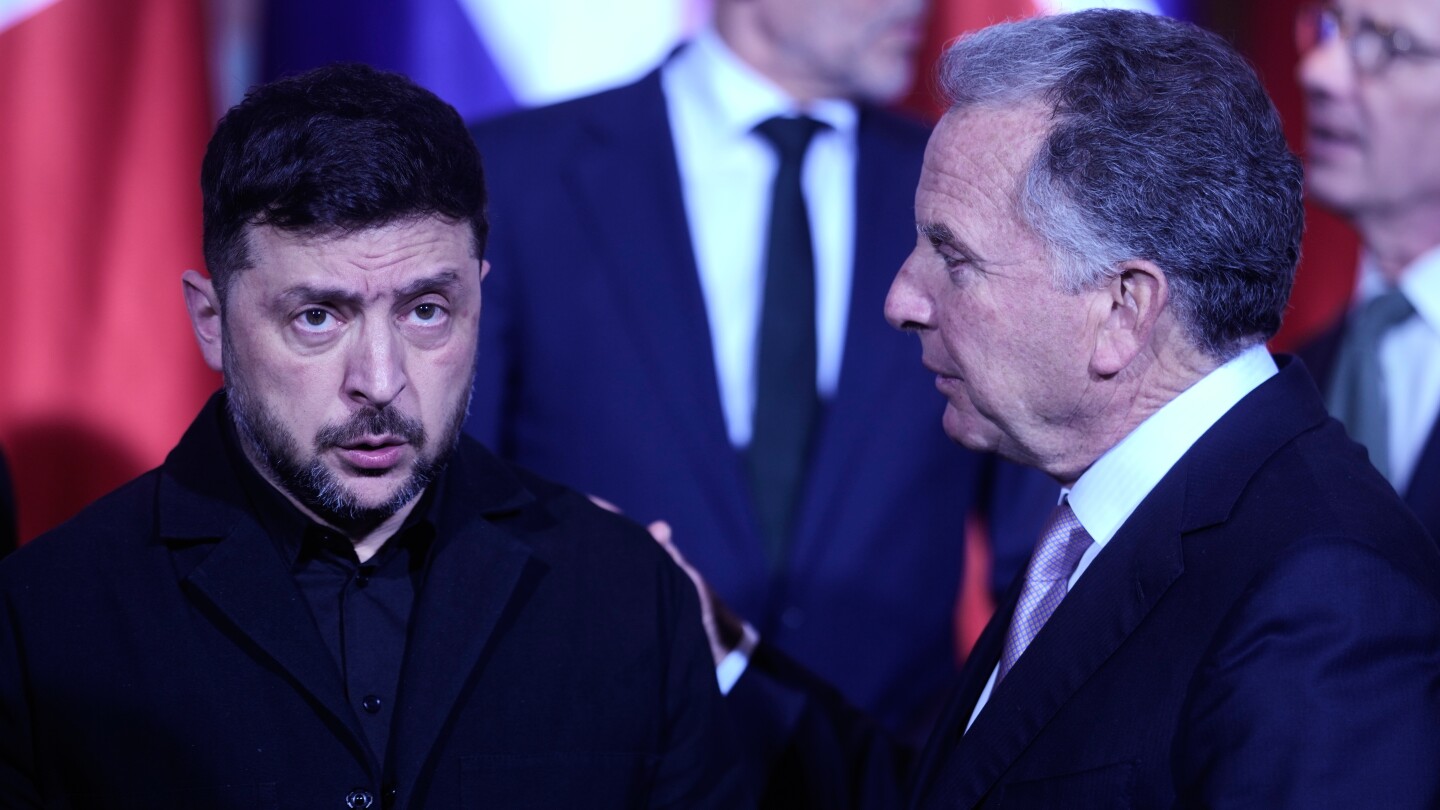
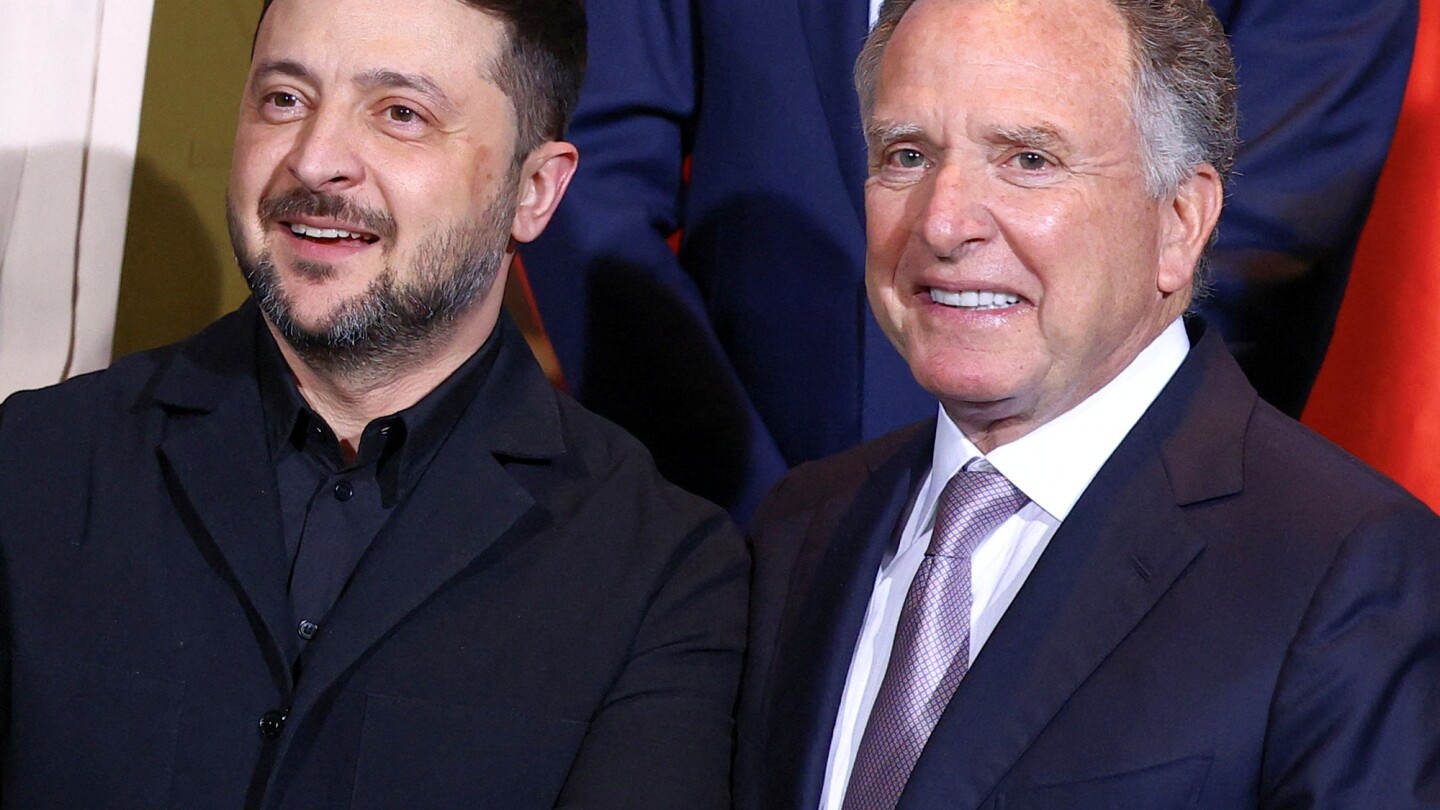
    THE HAGUE, Netherlands — In a significant multilateral development, Ukrainian President Volodymyr Zelenskyy alongside representatives from approximately thirty nations is poised to formally establish an international compensation body to address damages resulting from Russia’s invasion of Ukraine. The ceremonial signing in The Hague occurs amidst complex diplomatic maneuvers, including recent peace discussions involving U.S. special envoy Steve Witkoff, Jared Kushner, and German Chancellor Friedrich Merz.

    President Zelenskyy demonstrated strategic flexibility by expressing willingness to suspend Ukraine’s NATO membership aspirations in exchange for concrete Western security guarantees, though he firmly rejected territorial concessions to Russia. “These security arrangements represent a viable mechanism to deter future Russian aggression,” Zelenskyy stated during a press interaction. “This position itself constitutes a substantial compromise from our perspective.”

    The newly formed International Claims Commission, operating under the auspices of the Council of Europe’s human rights framework, will process Ukrainian claims for compensation regarding damages, losses, or injuries sustained since Russia’s full-scale invasion commenced in February 2022. This mechanism builds upon the existing Register of Damage for Ukraine established during the 2023 Council of Europe summit in Iceland, which has already cataloged approximately 80,000 claims.

    Despite the political consensus, critical funding questions remain unresolved. While the Council of Europe maintains that Russia should ultimately bear financial responsibility, no clear enforcement mechanism exists to compel Moscow’s compliance. One prominent proposal involves utilizing frozen Russian assets worth tens of billions of dollars currently held in European jurisdictions.

    The commission requires ratification from twenty-five nations to become operational, though over thirty countries—including European nations, Mexico, Japan, and Canada—are expected to participate initially, representing unprecedented support for a Council of Europe treaty initiative. The European Union has additionally indicated its intention to join the compensation framework.

    Parallel to these reparations efforts, many participating nations have endorsed the establishment of a specialized international court under Council of Europe jurisdiction to prosecute senior Russian officials alleged to have committed crimes during the invasion. President Zelenskyy’s diplomatic agenda in the Netherlands further includes addressing the Dutch parliament and meeting with King Willem-Alexander.