博客

  • Bondi Beach shooting: Police probing gunmen’s visit to Philippines before deadly attack

    Bondi Beach shooting: Police probing gunmen’s visit to Philippines before deadly attack

    Australian law enforcement officials have launched an international investigation into the activities of two gunmen prior to the deadly Bondi Beach shooting incident that shocked the nation. New South Wales Police Commissioner Mal Lanyon confirmed Tuesday that authorities are examining the father and son’s travel to the Philippines approximately one month before they carried out the mass shooting.

    Commissioner Lanyon stated during a press briefing that the precise motives behind their Philippine journey remain unclear and constitute a critical component of the ongoing investigation. “The reasons why the father and son went to the Philippines—including their specific purpose and destinations—are under active investigation at this time,” Lanyon told reporters.

    The investigation seeks to determine whether the Philippines trip involved weapons acquisition, training activities, or other preparations that might have facilitated the subsequent attack. Australian authorities are coordinating with international counterparts, including Philippine law enforcement agencies, to trace the suspects’ movements and contacts during their overseas visit.

    This development adds an international dimension to the tragedy that unfolded at one of Australia’s most iconic beaches, raising questions about cross-border security cooperation and the monitoring of potential threats. The investigation represents one of the most complex multinational law enforcement operations Australia has undertaken in recent years regarding domestic security incidents.

    Forensic teams continue to examine evidence from the shooting scene while behavioral analysis units work to reconstruct the perpetrators’ activities and motivations in the weeks leading up to the attack. The timing of the Philippines visit—approximately 30 days before the shooting—suggests potential premeditation and planning that authorities are urgently working to understand.

  • China’s big layoff wave now buffeting its tech sector

    China’s big layoff wave now buffeting its tech sector

    China’s prolonged corporate downsizing trend has now expanded beyond manufacturing and property sectors into its once-booming technology industry. Major firms including Baidu, Lenovo, and Alibaba are implementing significant workforce reductions as core business operations weaken and artificial intelligence growth proves insufficient to compensate for broader economic challenges.

    Recent developments reveal technology companies are no longer immune to China’s economic slowdown. Baidu initiated year-end workforce adjustments in late November affecting multiple business units, with some non-core departments facing layoff ratios of 20-30%. The company offered severance packages ranging from n+3 to n+5 months’ salary, where ‘n’ represents years of service, with affected employees required to complete handovers by December’s end.

    These cuts followed Baidu’s disappointing third-quarter performance, particularly in its core advertising business. Online marketing revenue declined 18% year-on-year to 15.3 billion yuan ($2.16 billion), exceeding market expectations despite a 1% increase in monthly active users. Meanwhile, AI-related revenue including cloud services and autonomous driving unit Apollo Go grew 21% to 9.3 billion yuan, though this represented a significant slowdown from 34% growth in the previous quarter.

    Simultaneously, Lenovo’s Infrastructure Solutions Group (ISG) implemented mass layoffs affecting approximately 270 employees across Shanghai, Beijing, Tianjin, and Shenzhen locations. The company’s strategic shift toward globally centralized research and development has favored expansion in India’s Bangalore research center while targeting higher-cost Chinese software teams for optimization. Despite ISG revenue surging 63% to a record $14.5 billion, the division recorded its third consecutive half-year operating loss of $118 million.

    Industry analysts note that Lenovo’s profitability challenges stem from lacking proprietary technologies, with key AI solution components including chips and large language models relying heavily on external partners. The company faces intense competition across multiple fronts without clear innovation advantages.

    The technology sector layoffs occur against a backdrop of concerning youth unemployment data. China’s jobless rate for 16-to-24-year-olds (excluding college students) stood at 17.3% in October, while the rate for 25-to-29-year-olds remained unchanged at 7.2%. These figures demonstrate the challenging employment environment facing younger workers.

    Alibaba Group exemplifies the broader transformation, reducing its workforce from approximately 250,000 to under 200,000 employees through both layoffs and subsidiary sales. The company’s aggressive AI adoption has replaced approximately half of Taobao’s customer service workforce while Cainiao’s unmanned warehouses have improved efficiency by over 40%.

    The trend reflects a broader industry realization that manpower alone no longer creates competitive advantages, particularly when comparing Alibaba’s staffing to Pinduoduo’s ability to generate comparable gross merchandise volume with just 8,000 employees. Even senior technical roles are becoming vulnerable, with Tencent’s P8-level engineers—typically earning 750,000 to over 1.18 million yuan annually—becoming layoff targets as AI tools reduce needs for senior planning and coordination.

    This technology sector contraction follows years of steady shrinkage in China’s property and manufacturing sectors, with many electronics producers shifting capacity to Southeast Asia to cut costs and avoid US tariffs. The cumulative job losses across multiple sectors have squeezed household incomes and consumption, increasing pressure on internet and technology companies that rely on advertising and discretionary spending.

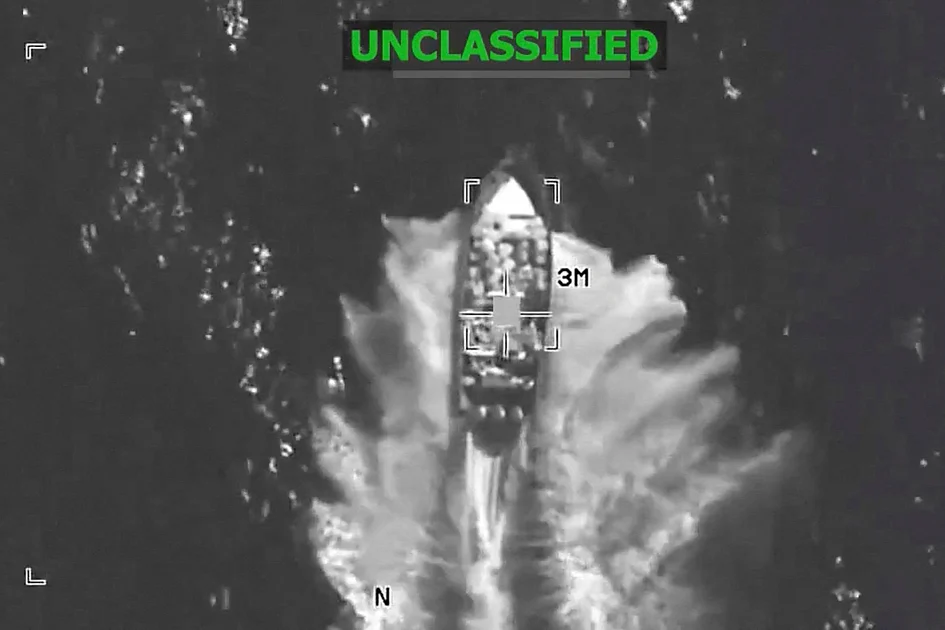
  • 8 killed in US military strikes on three vessels in eastern Pacific

    8 killed in US military strikes on three vessels in eastern Pacific

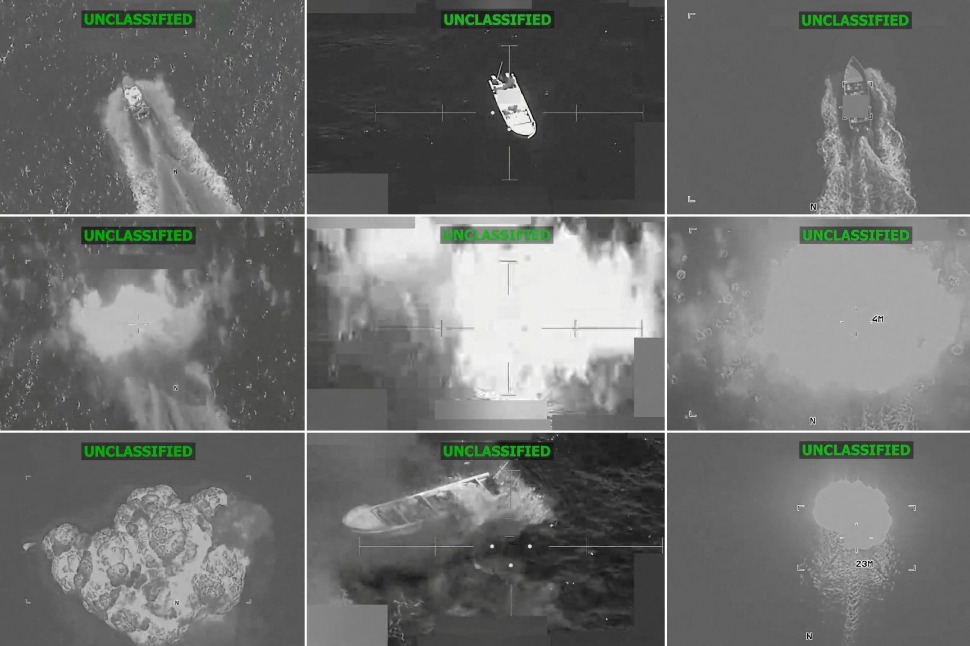
    In a significant escalation of anti-narcotics operations, the United States Southern Command confirmed conducting military strikes on three vessels in international waters of the Eastern Pacific on Monday, resulting in eight fatalities. According to military authorities, intelligence assessments indicated the targeted vessels were traversing established narco-trafficking corridors and actively participating in illicit drug transportation.

    This operation forms part of a broader military campaign initiated by the Trump administration against drug smuggling networks originating from the Venezuela region. To date, U.S. forces have targeted over 20 vessels across both the Pacific Ocean and Caribbean Sea, resulting in approximately 90 suspected drug traffickers killed during these engagements.

    The tactical approach represents a substantial departure from traditional U.S. counter-narcotics protocols, which typically emphasized law enforcement cooperation and judicial processes rather than direct military engagement. This shift has prompted scrutiny from legal experts who question the operations’ compliance with international law, with some characterizing the actions as extrajudicial killings.

    Pentagon Press Secretary Kingsley Wilson recently defended the legality of these operations, stating, ‘Our operations in the Southcom region are lawful under both U.S. and international law, with all actions in compliance with the Law of Armed Conflict.’

    Analysts view these maritime strikes as potentially preceding more extensive ground operations against Venezuela, which President Trump has indicated may commence imminently. The developments mark a notable intensification in the administration’s approach to combating drug trafficking networks in the Western Hemisphere.

  • Trump sues BBC for $10 billion over documentary speech edit

    Trump sues BBC for $10 billion over documentary speech edit

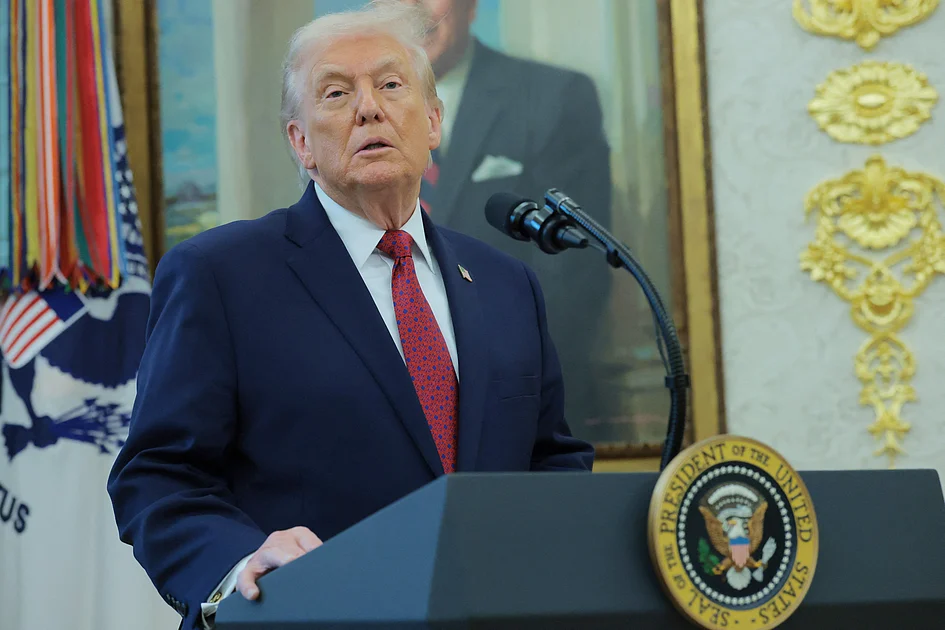
    Former US President Donald Trump has initiated a monumental $10 billion legal action against the British Broadcasting Corporation (BBC), alleging deliberate manipulation of his January 2021 speech preceding the Capitol riot. The lawsuit, filed in Miami’s federal court on December 15, 2025, accuses the broadcaster of deceptive editing practices that allegedly distorted Trump’s remarks to suggest he explicitly incited violence.

    The legal challenge centers on a documentary aired on BBC’s flagship ‘Panorama’ program shortly before the 2024 presidential election. According to court documents, producers spliced together disparate segments of Trump’s address, creating the false impression that he directly encouraged supporters to storm the Capitol building where legislators were certifying President Biden’s electoral victory.

    Trump’s legal representatives characterized the broadcast as “intentionally malicious and deceptive” editing designed to influence electoral outcomes. The 79-year-old former president previously suggested the broadcaster might have employed artificial intelligence technologies to alter his statements, though no evidence supports this claim.

    The controversy has triggered significant organizational upheaval at the BBC, culminating in the resignation of both the director-general and top news executive following internal disclosures about the editing process. While BBC chairman Samir Shah has issued a formal apology and acknowledged the corporation’s delayed response to addressing the error, the organization maintains its position that the broadcast did not constitute legal defamation.

    This litigation represents the latest in a series of high-profile legal actions Trump has pursued against media organizations, several of which have resulted in multimillion-dollar settlements. The case raises fundamental questions about media ethics, political broadcasting standards, and the legal boundaries of editorial discretion in election coverage.

  • Shanghai, New York deepen partnership at river-themed dialogue

    Shanghai, New York deepen partnership at river-themed dialogue

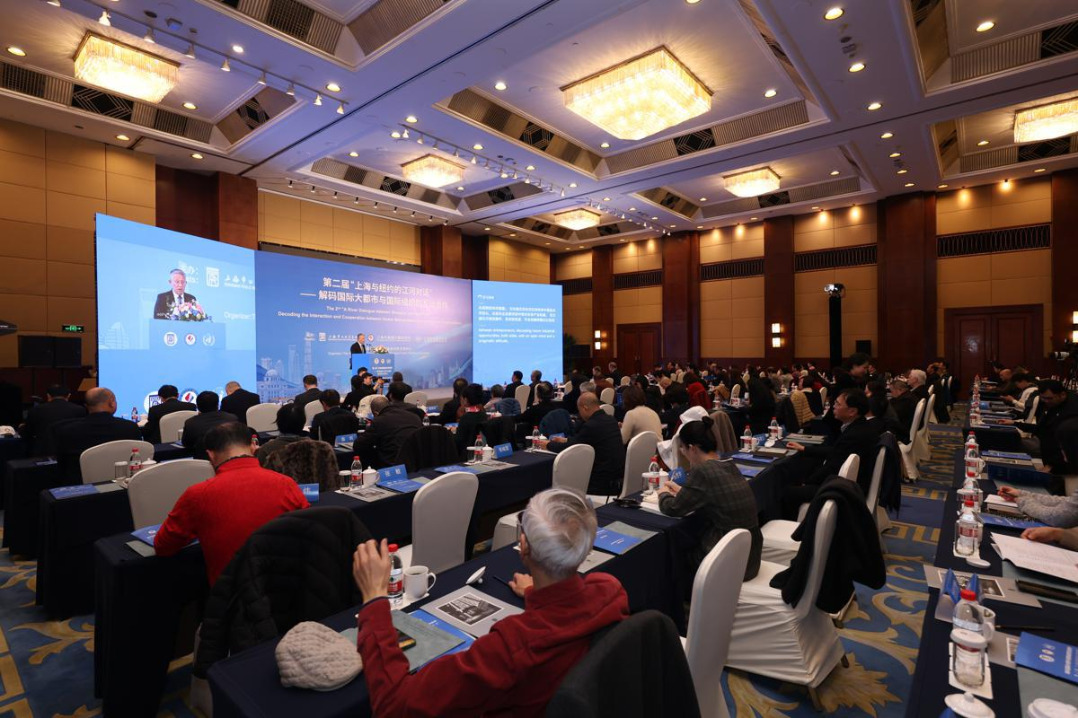
    Shanghai hosted a significant bilateral forum on Monday, December 16, 2025, centered around river-themed cooperation between global metropolitan centers and international organizations. The event marked the second edition of the river dialogue between Shanghai and New York, drawing inspiration from both cities’ iconic waterways—the Huangpu and Hudson rivers respectively.

    The forum brought together representatives from United Nations agencies, business leaders, and cross-cultural experts from both nations to explore collaborative opportunities across economic, trade, and cultural dimensions. Sha Hailin, President of the Shanghai Public Relations Association, emphasized the historical transformation of both rivers from industrial arteries to urban landmarks, noting that sustained civilian bonds between the cities provide essential stability for China-US relations.

    Jeffrey Lehman, Executive Vice Chancellor of NYU Shanghai and Chair of the AmCham Shanghai board of governors, highlighted the parallel roles both cities play as global connection points. “Both rivers anchor their respective cities and serve as vital connection points while defining urban identity,” Lehman observed. “New York connects the United States to the world economically, culturally and politically, while people in China look outward from Shanghai to connect to the rest of the world.”

    Noah Fraser, Senior Vice President of China Operations at the US-China Business Council, underscored Shanghai’s strategic importance to American businesses, with over 6,000 US companies maintaining operations in the city. Fraser identified three priority areas: maintaining competitive business environments, deepening market openness, and enhancing people-to-people exchanges.

    The event was jointly organized by the Shanghai Public Relations Association, the Shanghai Institute of American Studies, and the Shanghai UN Research Association, signaling institutional commitment to strengthening bilateral ties through multilateral engagement frameworks.

  • Thousands flock to a Tokyo zoo to see the last 2 pandas in Japan before their return to China

    Thousands flock to a Tokyo zoo to see the last 2 pandas in Japan before their return to China

    Tokyo’s Ueno Zoological Gardens is witnessing emotional farewells as thousands of visitors queue for hours to bid farewell to giant panda twins Xiao Xiao and Lei Lei before their scheduled return to China in late January. The four-year-old siblings, born at the zoo in June 2021, will make their final public appearance on January 25th, marking the end of an era as Japan faces its first panda-free period in over fifty years.

    The departure coincides with significantly deteriorated diplomatic relations between Tokyo and Beijing. Tensions escalated sharply in early November when Japanese Prime Minister Sanae Takaichi suggested potential military involvement should China impose naval blockades against Taiwan. Subsequent Chinese restrictions on tourism to Japan and cancellation of cultural exchanges have been followed by recent military provocations, including Chinese aircraft carrier drills near southern Japan and radar-locking incidents targeting Japanese aircraft.

    Panda diplomacy, a longstanding symbol of Sino-Japanese relations since the first pandas arrived in 1972 to commemorate normalized diplomatic ties, now faces uncertainty. While Chief Cabinet Secretary Minoru Kihara expressed hope for continued panda exchange programs, zoo officials acknowledge the challenging prospects for replacement pandas given current political realities.

    Visitors like Yuki Imai from Kanagawa prefecture expressed shock at the sudden departure announcement, while Kazuhiro Yamamoto and his wife Hiroko waited over two hours for their one-minute viewing window, speculating about the connection between diplomatic tensions and the accelerated return timeline.

    The zoo has implemented new viewing restrictions, limiting access to 4,800 pre-registered visitors weekly for one-minute slots. Curator Hitoshi Suzuki acknowledged the challenges of raising the twins but emphasized the “great delight” they brought to visitors. The zoo will maintain panda facilities in anticipation of future arrivals while promoting other animals during the interim period.

  • US military reports strikes on 3 vessels in intl waters, killing 8

    US military reports strikes on 3 vessels in intl waters, killing 8

    WASHINGTON — In a significant maritime operation, United States military forces conducted targeted strikes against three vessels navigating international waters in the Eastern Pacific Ocean on Monday, resulting in the deaths of eight individuals alleged to be involved in narcotics trafficking.

    The US Southern Command (SOUTHCOM) publicly detailed the operation through an official statement on the social media platform X. The command asserted that actionable intelligence had confirmed the vessels were actively transiting along routes notoriously used for illicit drug smuggling. The military intervention was characterized as a direct response to this illegal activity.

    “Our forces executed these strikes following confirmed intelligence that the vessels were operating on known narco-trafficking corridors and were engaged in trafficking activities,” the command’s statement read. The operation underscores the ongoing and intensified efforts by the US military to disrupt and dismantle transnational criminal organizations that utilize maritime routes for drug distribution.

    This incident highlights the complex and often aggressive measures employed by international powers to combat the global drug trade in international waters, where jurisdictional boundaries can be ambiguous. The decision to employ lethal force indicates the high priority placed on interdicting narcotics shipments deemed a threat to regional security and stability. The statement did not specify the nationalities of the vessels or the deceased individuals, nor did it elaborate on the specific type of military assets used in the operation.

  • Dashcam video shows couple trying to stop gunman before being killed in Bondi attack

    Dashcam video shows couple trying to stop gunman before being killed in Bondi attack

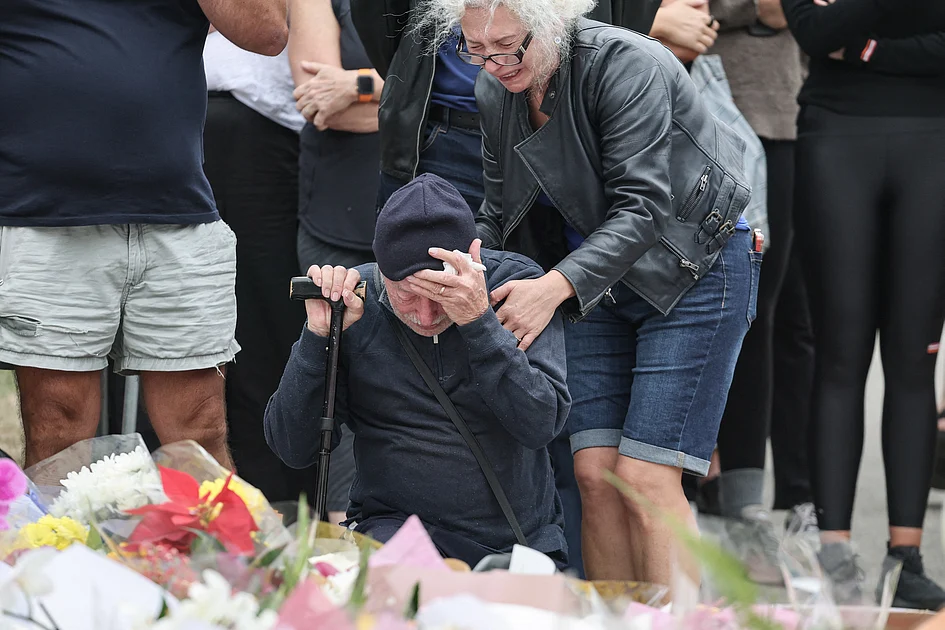
    Dramatic dashcam footage has emerged capturing the final heroic moments of Boris and Sofia Gurman, a married couple who attempted to disarm a gunman during the Bondi Beach shooting that claimed 15 lives. The video evidence shows 69-year-old Boris Gurman, a retired mechanic, physically engaging with one alleged attacker and successfully wresting a firearm away from him during Sunday’s attack at a Hanukkah celebration event.

    The footage reveals Mr. Gurman knocking the suspect to the ground before striking him with the confiscated weapon. Tragically, the assailant reportedly produced another firearm and shot both Boris and his 61-year-old wife Sofia, who worked at Australia Post. The couple, who were Jewish and had been married for 34 years, became the first confirmed fatalities in the devastating attack.

    In an emotional statement, the Gurman family expressed both profound grief and immense pride in the couple’s selfless actions. ‘While nothing can lessen the pain of losing Boris and Sofia, we feel an overwhelming sense of pride in their bravery and selflessness,’ the statement read. ‘This encapsulates who Boris and Sofia were – people who instinctively and selflessly tried to help others.’

    Witnesses have unanimously described Mr. Gurman as a hero who deliberately confronted danger rather than fleeing. The owner of the dashcam footage told Reuters that Mr. Gurman ‘charged straight toward the danger, using all his strength trying to wrestle away the gun and fighting to the death.’ Another eyewitness told 9News: ‘He was a hero. He tried, he tried. Everyone needs to know what he did because it was right in the beginning. He put himself in the face of danger.’

    The attack, which police allege was carried out by 50-year-old Sajid Akram and his 24-year-old son Naveed Akram, claimed victims ranging in age from 10 to 87. Among those killed were a 10-year-old girl, a British-born rabbi, a retired police officer, and a Holocaust survivor. The Gurmans were due to celebrate their 35th wedding anniversary in January, with their family remembering them as ‘the heart of our family’ whose absence has ‘left an immeasurable void.’

  • Teen donates to preserve war truths in Nanjing

    Teen donates to preserve war truths in Nanjing

    In an extraordinary act of historical preservation, 15-year-old Yu Ningpeng from Xuzhou, Jiangsu province has donated significant wartime artifacts to the Memorial Hall of the Victims in Nanjing Massacre by Japanese Invaders. The high school student, who began collecting historical items at age six, has dedicated nine years to assembling evidence countering Japanese right-wing attempts to distort invasion history.

    The donated materials include two particularly revealing documents: a December 18, 1937 battlefield letter sent by a Japanese lieutenant to Fukushima prefecture, bearing a distinctive ‘Nanjing Fall Memorial’ postmark, and a photographic album from the Japanese military’s Hanami unit containing 44 rare images documenting a field hospital establishment in Tianjin.

    The lieutenant’s correspondence vividly describes the capture of Nanjing: ‘Our destination, the capital Nanjing, was finally captured by us on the 13th. On the 17th, we held a grand entry ceremony for the military commander and received a review.’ Meanwhile, the photo album provides unprecedented visual evidence of military medical operations, showing hospital layouts, laboratory facilities, supply rooms, and patient wards.

    Yu acquired these artifacts through secondary trading platforms at considerable personal expense, investing over 20,000 yuan without parental financial support. ‘All the expenses for the collection were earned through my own insight and knowledge,’ the teen collector revealed.

    The donation ceremony on December 5 marked Yu’s seventh visit to the memorial hall since its 2007 reopening, though his first as an official donor. His contribution comes amid increased public engagement with historical preservation, as the museum has received 573 artifacts this year alone—a 30% increase over previous years.

    Yu emphasizes that historical remembrance serves educational rather than retaliatory purposes: ‘Remembering history is not about perpetuating hatred, but about learning from it.’ The aspiring archaeologist advocates for Sino-Japanese youth exchanges grounded in historical accuracy, stating that friendship should not come at the expense of truth. His ultimate goal remains clear: ‘We must work hard to learn skills and make the country stronger so that historical tragedies do not repeat themselves.’

  • China and US anti-narcotics agencies cooperate to crack a cocaine smuggling case

    China and US anti-narcotics agencies cooperate to crack a cocaine smuggling case

    In a significant demonstration of cross-border law enforcement cooperation, Chinese and United States narcotics control agencies have jointly dismantled an international cocaine trafficking operation. The successful operation, concluded in mid-December 2025, represents a breakthrough in bilateral anti-drug collaboration despite ongoing geopolitical tensions between the two nations.

    The coordinated effort involved sophisticated intelligence sharing and simultaneous operational activities across multiple jurisdictions. According to official sources, the investigation uncovered a sophisticated smuggling network that attempted to exploit commercial shipping channels between North America and Asian markets. The operation resulted in multiple arrests across both countries and the seizure of substantial quantities of cocaine with an estimated street value running into millions of dollars.

    This joint operation builds upon previous cooperation frameworks established through bilateral agreements on narcotics control. Law enforcement officials from both countries emphasized that drug trafficking represents a transnational challenge that requires international collaboration regardless of political differences. The successful takedown of this smuggling network demonstrates the operational effectiveness of US-China cooperation in combating organized crime.

    Anti-narcotics experts note that such collaborations have become increasingly important as criminal organizations continue to develop more sophisticated methods to circumvent border controls and law enforcement measures. The operation signals both nations’ commitment to addressing the global drug trade through shared intelligence and coordinated enforcement actions.