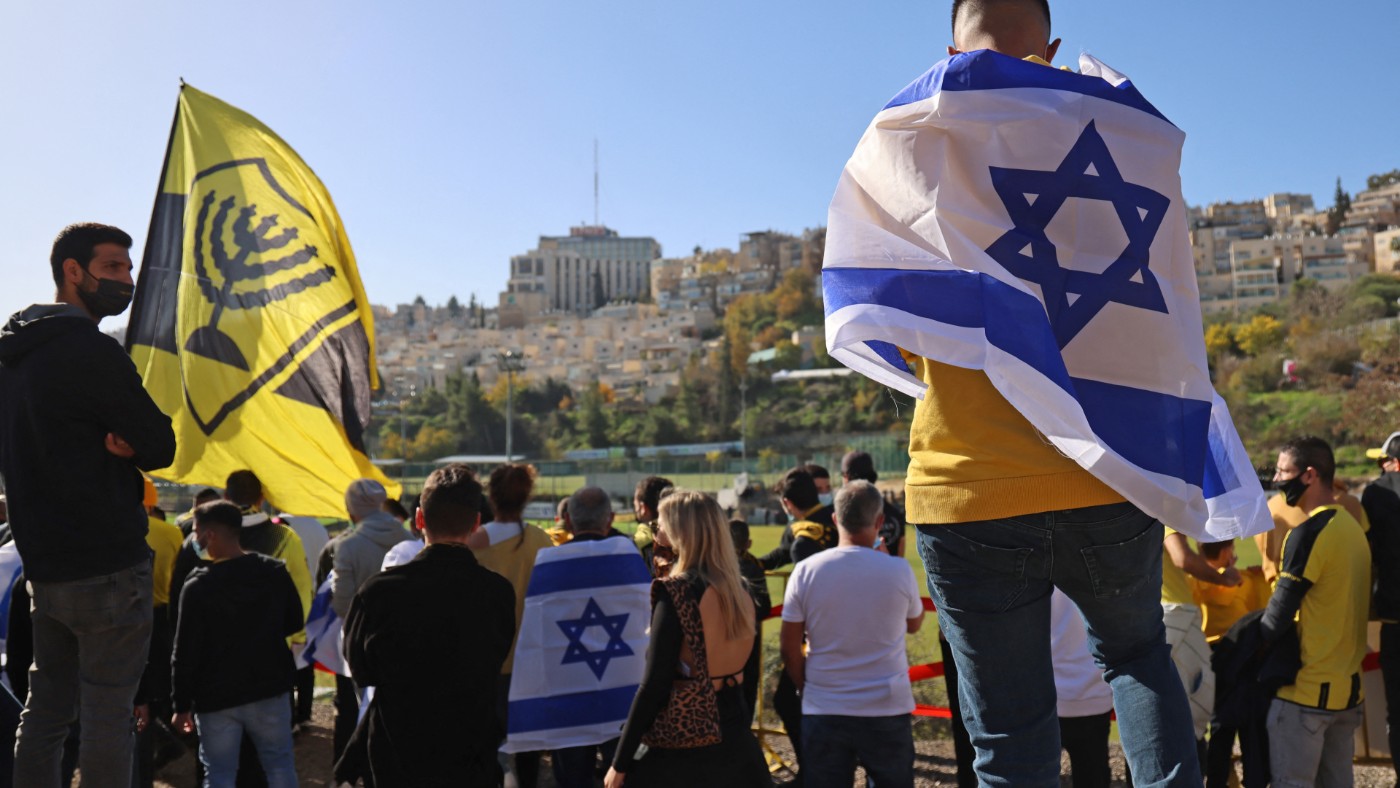
World football’s governing body FIFA has issued a formal condemnation of the Israel Football Association (IFA) for implementing what it describes as a “de facto system of segregation” against Palestinian players within Israeli settlement football infrastructure. The groundbreaking report, released Thursday, represents FIFA’s most direct confrontation with systemic discrimination within Israeli football.
The investigation determined that the IFA consistently failed to address “persistent and well-documented racist behavior” within Israeli football, particularly regarding the notorious Beitar Jerusalem club. This organization maintains an explicit ban on Palestinian and Arab players among its fanbase and has repeatedly engaged in racist chanting, including phrases such as “Let the IDF win and fuck the Arabs” and “Here comes the most racist team in the country.”
FIFA’s disciplinary committee stated that the IFA’s “inaction in the face of entrenched discriminatory conduct and its failure to condemn or distance itself from politicized and militaristic messaging have collectively undermined the ethical foundation of the sport of football.” The committee further concluded that these actions had “brought football into disrepute, both domestically and internationally, and has damaged public trust in the sport’s ability to serve as a force for peace and inclusion.”
Despite the severity of these findings, FIFA imposed relatively modest sanctions: a 150,000 Swiss franc ($190,700) fine and a requirement for the IFA to display anti-discrimination banners during its next three home matches. The governing body declined to implement more severe measures such as suspension or expulsion from international competitions.
The investigation was triggered by a formal complaint from the Palestinian Football Association (PFA) in March 2024, which alleged systematic discrimination by the IFA, the participation of Israeli teams in illegal settlements, and violations of international law in occupied Palestinian territories. These claims were substantiated by an October 2023 Amnesty International report documenting at least six settlement clubs operating in violation of both international law and FIFA regulations.
Human rights advocates expressed disappointment with FIFA’s response. Nicholas McGeehan of FairSquare noted the disparity between FIFA’s strong language and minimal action, stating: “Fifa does not want to sanction Israel but is bound by rules that require it to do so.” This decision stands in contrast to FIFA’s immediate suspension of Russian teams following the invasion of Ukraine in 2022.
The ongoing conflict has claimed the lives of over 800 Palestinian athletes, including footballer Hani al-Masdar, during what international authorities have described as genocide in Gaza. Despite these developments, Israeli teams continue to participate in international competitions while the participation of other nations affected by geopolitical conflicts, particularly Iran, remains uncertain for the upcoming World Cup in North America.