博客

  • Trump told Taiwan not to ‘go independent’ – but does it want to?

    Trump told Taiwan not to ‘go independent’ – but does it want to?

    Weeks after his high-profile meeting with Chinese President Xi Jinping in Beijing, former and current U.S. President Donald Trump has delivered an unprecedented public warning to Taiwan against moving toward formal independence, triggering immediate reactions from Taipei and sparking widespread debate over the future of U.S. policy in the Indo-Pacific.

    In an interview with Fox News that aired Friday, Trump made his stance clear: “I’m not looking to have somebody go independent. And, you know, we’re supposed to travel 9,500 miles to fight a war. I’m not looking for that. I want them to cool down. I want China to cool down.” These remarks mark the most direct public pressure a sitting U.S. president has ever placed on Taiwan regarding its sovereignty status, leading to a quick response from Taipei.

    Taiwanese officials reiterated their long-held position that the island sees no need for a formal declaration of independence, a stance that aligns with mainstream public sentiment on the self-governing island. To understand the stakes of this exchange, it is necessary to contextualize the decades-long historical and geopolitical backdrop of the Taiwan issue.

    Following the 1949 conclusion of China’s civil war, the defeated Kuomintang government relocated to Taiwan, while the Chinese Communist Party established control over the mainland. Beijing has claimed the island as an inalienable part of its territory ever since, and Taiwan independence has stood as the most sensitive red line for Chinese leadership. Since President Xi Jinping took office, Beijing has ramped up its efforts to suppress perceived separatist activity, framing unification with Taiwan as an “unstoppable” historical priority. In recent years, this pressure has translated into regular military drills near the island, diplomatic campaigns to cut Taiwan’s global recognition, and persistent greyzone incursions into Taiwan’s airspace and territorial waters.

    During his recent summit with Trump, Xi emphasized that the Taiwan question is the single most critical issue shaping U.S.-China relations, warning that mishandling the topic could lead to direct conflict. For decades, global observers have warned that any Chinese military move against Taiwan would likely draw in the U.S., which is legally bound by the 1979 Taiwan Relations Act to provide the island with defensive military capabilities. Under China’s 2005 Anti-Secession Law, Beijing retains the right to use “non-peaceful means” to assert its territorial claims if Taiwan formally declares independence or all options for peaceful unification are exhausted, making any move toward formal independence a potential trigger for regional war.

    Today, most Taiwan residents, who live under a thriving democratic system distinct from mainland China’s increasingly authoritarian rule, support maintaining the status quo—neither formal independence nor unification with Beijing. This position is reflected in the official policy of the Democratic Progressive Party (DPP), which has governed Taiwan since 2016. Current President Lai Ching-te, like his predecessor Tsai Ing-wen, has argued that Taiwan already functions as an independent sovereign state, so no formal declaration is necessary—a carefully calibrated approach designed to assert Taiwanese autonomy without crossing Beijing’s explicit red line. A formal declaration of independence would also require constitutional amendment approved by Taiwan’s legislature and a majority public vote in a referendum, making it logistically difficult for any administration to pursue even if it wanted to. Even so, Beijing remains deeply suspicious of the DPP, which historically advocated for formal sovereignty, and has repeatedly labeled Lai a dangerous separatist, accusing his administration of hijacking public opinion to push an independence agenda and building up military capabilities for confrontation. Lai has pushed back on these claims, noting that military strengthening is only a defensive measure in response to growing Chinese pressure.

    Trump’s recent comments have upended long-standing expectations around U.S. policy on Taiwan. No U.S. administration has ever explicitly supported Taiwanese independence, and for decades Washington has maintained a carefully calibrated “strategic ambiguity” policy, neither confirming nor denying whether it would intervene militarily to defend the island. This policy emerged after 1979, when the U.S. severed formal diplomatic ties with Taiwan to establish relations with Beijing, acknowledging the one-China principle, while passing the Taiwan Relations Act to enshrine U.S. commitments to Taiwan’s defense. The act authorizes ongoing arms sales to Taiwan to support its self-defense capabilities.

    Trump’s remarks have left analysts divided. During his summit, Trump noted that Xi “doesn’t want a movement for independence” in Taiwan, adding that he “heard him out” but did not offer a formal response. While Trump later stressed that “nothing’s changed” in U.S. policy and expressed openness to speaking directly with Lai— a move that would almost certainly draw fierce condemnation from Beijing, as it did when Trump spoke with a Taiwanese president early in his first term—many observers see his warning to Taiwan as an unusual break from past U.S. framing. Ryan Hass, a senior analyst at the Brookings Institution, argues that Trump’s “visible sympathy for Xi’s framing on Taiwan will embolden Beijing to increase pressure on Taipei, and elevated the risk of confrontation.”

    All eyes are now turning to a pending $14 billion U.S. arms package for Taiwan, which follows an $11 billion weapons sale approved in December. After the Beijing summit, Trump declined to commit to finalizing the new package, telling Fox News the decision “depends on China” and that the proposal “is a very good negotiating chip for us frankly.” He later added that he would make a decision “over the next fairly short period.” This is not the first time a U.S. president has shaken up long-standing Taiwan policy rhetoric: former President Joe Biden twice publicly stated the U.S. would defend Taiwan if attacked, appearing to move away from strategic ambiguity, only for his administration to walk back the comments and clarify that official policy had not changed. For decades, U.S. policy on Taiwan has remained fundamentally consistent despite shifts in rhetoric. Now, regional and global powers are closely watching Trump’s next moves to see if the long-standing U.S. balancing act on the Taiwan issue is finally shifting.

  • Trump administration plans to admit more white South Africans as refugees this year

    Trump administration plans to admit more white South Africans as refugees this year

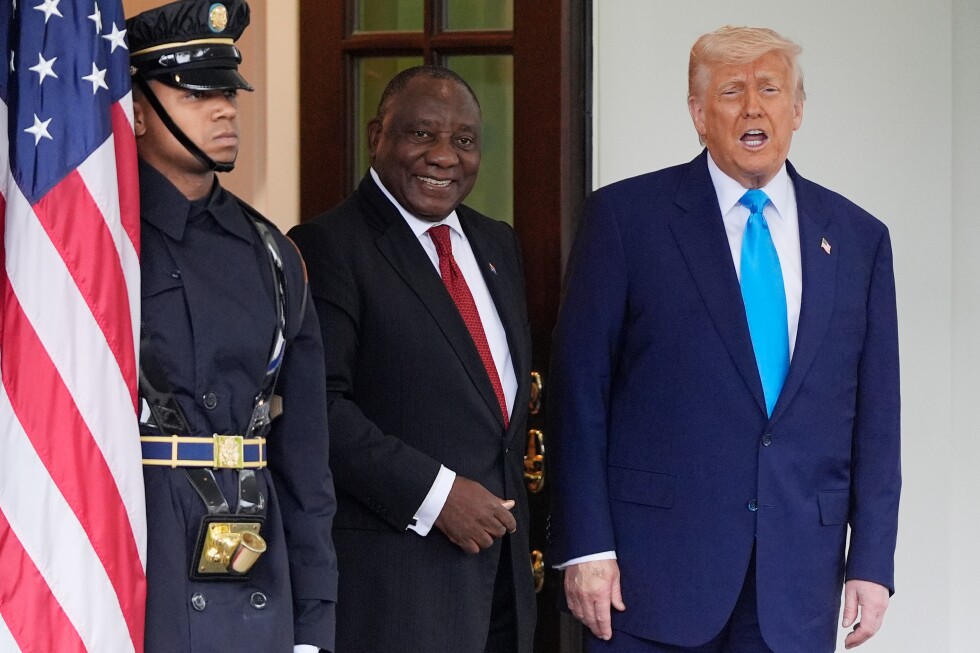
    In a sudden policy shift that has reignited a high-stakes diplomatic dispute between Washington and Pretoria, the Trump administration announced Monday it will nearly double the number of white South African Afrikaner refugees admitted to the United States by the end of the current fiscal year in September, allowing up to 10,000 additional arrivals beyond an initial cap.

    The emergency adjustment, outlined in a classified State Department notice to Congress obtained by The Associated Press and first reported by CNN, brings the total planned resettlement of Afrikaners to 17,500 for the 2025 fiscal year. The administration initially set a total cap of 7,500 for mostly Afrikaner refugees last year, a figure that already stood as the lowest annual refugee admissions target in U.S. history dating back to the program’s launch in 1980.

    The White House has framed the expansion as a response to an urgent humanitarian crisis, claiming the white Afrikaner minority — descendants of 17th-century Dutch settlers in South Africa — faces systemic, state-backed racial discrimination and targeted violence, particularly against members of the country’s white farming community. President Trump has repeatedly amplified these claims, turning the issue into a major flashpoint in bilateral relations over the past year. The dispute has already led the Trump administration to cut bilateral aid to South Africa, sparked a heated face-to-face confrontation between Trump and South African President Cyril Ramaphosa in the Oval Office last year, and prompted Trump to boycott the 2024 Group of 20 summit hosted in Johannesburg.

    In its Monday notice, the State Department argued that escalating tensions from South African government pushback against the resettlement program has created a new emergency that puts Afrikaners at greater risk. “This escalating hostility heightens the risks to Afrikaners in South Africa, who are already subject to far-reaching government-sponsored race-based discrimination,” the department wrote. Officials specifically pointed to public criticism of the U.S. resettlement plan from Ramaphosa and multiple South African political parties across the ideological spectrum, as well as a December 2024 raid by South African authorities on a U.S.-run refugee processing center operating inside the country — an action the U.S. previously labeled “unacceptable.”

    The South African government has flatly rejected the Trump administration’s claims of systematic anti-white discrimination as entirely baseless. During his 2024 Oval Office visit, Ramaphosa pushed back forcefully against Trump’s allegations, telling the U.S. president that South African government policy explicitly condemns the violent rhetoric Trump highlighted, and that targeted persecution of white Afrikaners is not a reality in the country. Experts on South African crime and politics confirm there is no credible evidence to support the claim that white farmers are specifically targeted for violence because of their race. While South Africa faces a national crisis of violent crime that impacts farmers of all racial backgrounds consistently, analysts say there is no data to back up the narrative of systemic, state-tolerated anti-white violence pushed by the Trump administration.

    The additional 10,000 resettlement slots will carry an estimated $100 million price tag for relocation and integration support, according to State Department estimates. Under U.S. refugee law, the administration is required to notify and consult with congressional lawmakers before finalizing annual refugee admission levels. A anonymous congressional aide confirmed that administration officials are scheduled to hold a formal consultation meeting with congressional leaders later this week to review the new policy.

    The latest move on Afrikaner resettlement aligns with a broader restructuring of U.S. refugee policy under the Trump administration, which has drastically cut overall refugee admissions compared to prior Democratic and Republican administrations, while prioritizing certain groups aligned with the president’s political and policy priorities.

  • Hawthorn coach likens AFL’s Tasmania decision to being ‘kicked out of home’

    Hawthorn coach likens AFL’s Tasmania decision to being ‘kicked out of home’

    After more than two decades of calling northern Tasmania home, Australian Football League (AFL) side Hawthorn FC is facing an uncertain future for its Tasmanian membership and local staff, after the governing body ordered the club to cede all of its Tasmanian match rights to the newly admitted Tasmania Devils expansion team ahead of the Devils’ 2028 debut.

    For years, Hawthorn has hosted four annual home-and-away fixtures and one pre-season match in Launceston, building deep roots in the northern Tasmanian community and creating some of the club’s most iconic on-field memories – including Lance Franklin’s legendary 13-goal performance against North Melbourne in 2012. The club had argued to retain its Launceston matches after the Devils’ entry, noting the expansion side would base its operations out of southern Tasmania’s Hobart. But AFL confirmed in an official announcement Tuesday morning that the new franchise will receive exclusive rights to host matches across the entire state, ending Hawthorn’s long-standing Tasmanian partnership.

    Hawthorn president Andy Gowers confirmed the club has already entered discussions with AFL to relocate the five displaced matches, with the club’s top priority being securing four extra home games at the Melbourne Cricket Ground (MCG), the league’s premier venue. Gowers also acknowledged the significant financial and community impact of the decision, noting that the Launceston games have long been a major contributor to the club’s bottom line. “I am not going to talk exact numbers (money lost), but what I will say is it is a significant factor in our bottom line and has been for a number of years. That’s part of our disappointment,” Gowers told reporters Tuesday.

    The biggest immediate concern for the club is the future of its 8,000 local members and full-time Tasmanian-based staff, who have been core to Hawthorn’s presence in the region for decades. “That is clearly one of our major considerations. Members down there on the ground but also staff, we’ve got full-time staff who work there. We feel for them and we’ll be communicating with every member, all of our staff, all of the people down there who have supported us and got involved in the football program down there – we feel for them,” Gowers said. When asked whether AFL would assist displaced Launceston-based staff with re-employment in Tasmania, Gowers said he could not confirm any support arrangements at this time.

    Hawthorn head coach Sam Mitchell echoed the club’s widespread disappointment, framing the decision as an unexpected loss of a second home for the club’s players and staff. “You know the people at the coffee shop, the hotels and go on the same sort of walks and around the same sort of people all the time. It feels like we’ve sort of been kicked out of a home and I understand, I guess, from the AFL’s perspective,” Mitchell said. “I mean it’s easy to group all of Tassie together, but we’ve spent the vast majority of our time in Launceston and we’ve loved our time there. We’re enormously disappointed we won’t get the opportunity to continue to be a part of that community.”

    Despite the disappointment, Mitchell noted the club remains focused on its remaining 2024 season fixtures, with the team set to play its next scheduled Launceston match this Thursday night. “Having said that, we’ve still got seven games to go, so we’ll do our best to show how much they mean to us on Thursday night,” Mitchell added.

  • AFL 2026: Hawthorn star Will Day will make his long-awaited return this weekend

    AFL 2026: Hawthorn star Will Day will make his long-awaited return this weekend

    After months of sidelined frustration and a years-long streak of cruel injury setbacks, the wait for Hawthorn Football Club and its star Will Day is finally drawing to a close. The talented 24-year-old is set to make his first competitive appearance of 2026 this Friday, stepping onto the field for the Box Hill Hawks in the Victorian Football League (VFL) as part of a carefully structured comeback plan, putting him in line for a potential return to the top-tier AFL squad as early as next week.

    Day’s path back to competitive football has been marked by repeated heartbreak. The young star has not seen a single minute of senior action in 2026, after damaging his shoulder during the club’s pre-season training camp. This latest injury blow follows a 2025 campaign cut short by a persistent foot injury, which itself came after a collarbone issue ended his 2024 season prematurely. Three straight years of season-interrupting injuries have kept one of the club’s most exciting prospects off the field far more than he has been on it, leaving fans hungry for his return.

    Hawthorn head coach Sam Mitchell confirmed the comeback news in an upbeat briefing this week, noting that Day has passed every fitness benchmark after two full weeks of full training with the senior squad. “He’ll play this week, he’ll play some limited minutes on Friday night with Box Hill,” Mitchell said. “It’s pretty exciting, pretty exciting for Will and I think for all of us. He’s obviously a very high-profile player to be getting back and playing some VFL time.”

    To protect Day from re-injury as he regains match sharpness, the club will manage his minutes very carefully in Friday’s outing. Mitchell outlined that the 24-year-old will start on the bench for each quarter to ease him back into the physical intensity of competitive play, and made clear that Day is not yet expected to be ready for full AFL-level action this weekend. “He certainly won’t be ready for AFL footy at this stage,” Mitchell added.

    The coach did, however, hint that Day could be recalled to the senior side much faster than most injured players, thanks to the nature of his recovery. Unlike lower-body injuries that force athletes to spend weeks building back cardiovascular fitness, a shoulder injury allowed Day to maintain his conditioning throughout his recovery. “He’s obviously coming back from a shoulder which means he’s fitter, you can get a lot more physical work in, your physical profile, they can work pretty hard. So he’s going to be ready for AFL footy at a high level straight away. Sometimes when you get back from a foot or a lower leg injury, it’s hard to get the fitness base needed,” Mitchell explained.

    Day’s potential comeback comes at a key juncture for Hawthorn, who are currently in the middle of their fixture run in Tasmania, with a match against Adelaide kicking off in Launceston this Thursday night, one of the club’s final seven scheduled games at the Apple Isle. Fans have long remembered Day’s standout performance in last year’s opening round, where he led the Hawks to a victory over Sydney at the Sydney Cricket Ground, a display that cemented his status as one of the club’s most promising young talents.

    Mitchell said the club will not push Day to replicate that electric form straight away, but he is confident the young star will be able to contribute from his first minutes back on the field. The timeline for his senior return will depend on how Day pulls up after Friday’s VFL outing, with assessments of his movement, fitness and confidence set to dictate next steps. “To be determined, we’ll see how he goes this week, see how his movement is, how his confidence is,” Mitchell said. “When he gets back, stay back. That’s the aim, it could be as early as next week or it could be longer than that.”

    For long-suffering Hawthorn fans who have followed Day’s injury battle over the past three seasons, Friday’s limited appearance will mark a small but incredibly exciting step forward for one of the club’s brightest stars.

  • IEA chief: Only weeks of oil inventories left thanks to Iran war

    IEA chief: Only weeks of oil inventories left thanks to Iran war

    As the ongoing crisis in the Strait of Hormuz—sparked by the United States’ conflict with Iran—shows no sign of de-escalation, top energy and economic officials are sounding the alarm over imminent threats to global energy security, spiraling inflation, and a potential worldwide recession.

    Speaking to reporters on the sidelines of this week’s G7 summit in Paris on Monday, International Energy Agency (IEA) Executive Director Fatih Birol warned that global oil reserves are dwindling at a dangerous pace, with only weeks of strategic and commercial inventories remaining to offset the current supply disruption. Birol noted that oil stockpiles are “declining rapidly,” and highlighted a critical misalignment between physical and financial energy markets: futures prices have not yet adjusted to reflect the impending supply crunch, leaving markets underprepared for sudden volatility.

    The supply disruption extends far beyond oil, Birol added, with fertilizer shortages—also rooted in the conflict—set to drive a fresh wave of food price hikes that will push global inflation even higher. “That might give a big push to inflation numbers,” he warned.

    His warnings echo a recent analysis from the *Financial Times*, which reported Sunday that global energy markets are nearing a critical “tipping point” that could trigger another sudden price surge, tipping the already fragile global economy into recession. Paul Diggle, chief economist at asset management firm Aberdeen, told the outlet his team is modeling the economic fallout of oil prices spiking to $180 per barrel—a scenario that would ignite a full-blown global inflation crisis. “We are taking that outcome very seriously,” Diggle said. “We are living on borrowed time.”

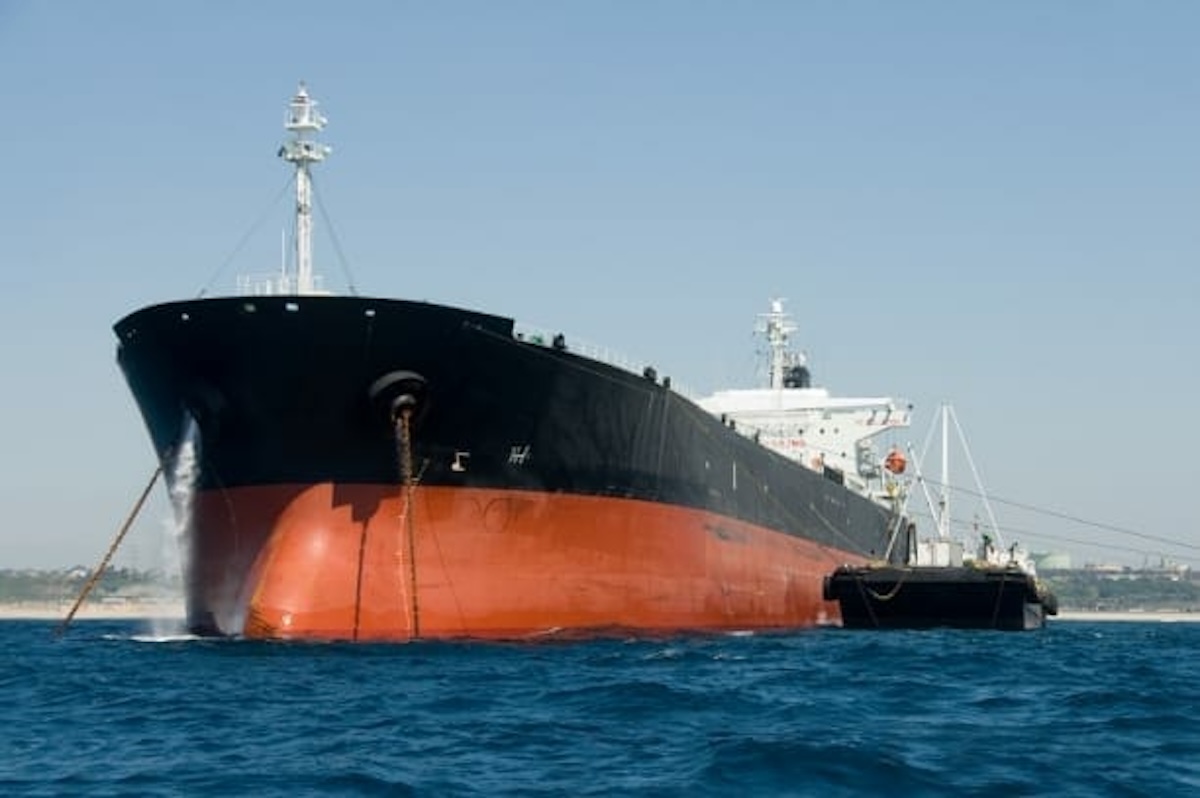
    The current standoff stems from Iran’s closure of the Strait of Hormuz, a critical chokepoint through which roughly 20% of global oil supplies pass, implemented in retaliation for US-Israeli military strikes on the country. A temporary ceasefire announced between Washington and Tehran last month briefly pulled oil prices lower, but the strait has remained closed throughout the truce, and tensions are now rapidly escalating as President Donald Trump has threatened to resume offensive operations if no deal to reopen the waterway is reached quickly.

    In a Sunday post on his Truth Social platform, Trump issued a stark new threat to Iran, promising the country would be completely destroyed if it did not meet his demands. “For Iran, the Clock is Ticking, and they better get moving, FAST, or there won’t be anything left of them,” Trump wrote. “TIME IS OF THE ESSENCE!”

    Last week, Trump rejected Iran’s latest peace proposal. Tehran has offered major concessions on uranium enrichment, but has demanded that broader nuclear negotiations be delayed until after a peace deal is reached and the Strait of Hormuz is reopened. Since the start of the conflict, Trump has demanded Iran fully dismantle both its missile program and its nuclear activities— which Iran insists are entirely peaceful—and cut all diplomatic and military ties to its regional allies. In a report Sunday, Iran’s state-owned Mehr News Agency argued that Washington has offered “no tangible concessions” in return for Iran’s proposed compromises, leaving negotiations deadlocked. “The United States wants to obtain concessions that it failed to obtain during the war, which will lead to an impasse in the negotiations,” the outlet noted.

    Speaking to Fox News during a visit to Beijing over the weekend, Trump defended his rejection of the proposal, claiming “the Iranians are crazy, and you know what? Because of that, they cannot have a nuclear weapon.” He added that he finds it unacceptable to delay nuclear talks until after a peace deal is finalized.

    Multiple reports confirm Trump spoke with Israeli Prime Minister Benjamin Netanyahu on Sunday about resuming offensive strikes on Iran, a move that would end the month-long ceasefire. Security analysts say the only path to a diplomatic breakthrough requires Washington to compromise on Tehran’s core priorities. “Iran’s priorities remain consistent: ending what it views as economic siege conditions, reopening maritime access and reducing pressure in the Gulf, negotiating an end to the broader conflict, and only afterward addressing the nuclear issue,” explained Danny Citrinowicz, a senior researcher at Israel’s Institute for National Security Studies. “At the present moment, it is difficult to see the Iranian leadership agreeing to any framework that does not meaningfully engage with those core demands.”

    Iranian officials have pushed back hard against Trump’s latest threats, which come after he previously declared in April that he would destroy Iran’s entire entire civilization “never to be brought back again,” and recently posted an image of himself on a military ship with the caption “It was the calm before the storm.” Abolfazl Shakarchi, a spokesperson for Iran’s armed forces, told Mehr that any new aggression to compensate for the US’s failure in the conflict will only result in harsher retaliation. “Repeating any folly to compensate for America’s disgrace in the Third Imposed War against Iran will result in nothing but receiving more crushing and severe blows,” he said.

    Almigdad Alruhaid, a correspondent for Al Jazeera reporting from Tehran, noted that Trump’s inflammatory rhetoric has only galvanized Iranian public defiance, even as observers acknowledge the window for diplomatic resolution is rapidly closing. “The kind of language displayed by Trump on Sunday is not acceptable here in Tehran. They are projecting defiance rather than [giving] an immediate response to this kind of rhetoric,” Alruhaid said. “Behind all of this rhetoric, there is awareness that the diplomatic window right now is narrowing.”

    Not all US voices are pushing for escalation. Senior Republican Senator Lindsey Graham of South Carolina has publicly urged Trump to follow through on his threats to bomb Iran’s energy infrastructure, but foreign policy experts warn such a move would trigger catastrophic global consequences. Trita Parsi, executive vice president of the Quincy Institute for Responsible Statecraft, explained why Trump has so far refrained from launching such strikes: “Tehran would retaliate and take out the energy infrastructure in the [Gulf Cooperation Council] states. This would lead to a far worse oil crisis—one rooted in production problems, not just a bottleneck in the Persian Gulf. The global economy would be thrown into a deep recession. Fuel shortages would lead to food shortages worldwide. Trump’s presidency would be destroyed,” Parsi said. “None of this matters to Lindsey. He’ll burn the entire planet as long as he gets his war. Trump’s biggest mistake has been to listen to Lindsey and his allies.”

  • As bee population collapses, US apiarists fear research cuts

    As bee population collapses, US apiarists fear research cuts

    Nestled in a lot behind an abandoned gas station at the foot of Appalachia’s rolling mountains in West Virginia, a dozen apiarists gather around veteran commercial beekeeper Roy Funkhouser, the air thick with the low buzz of thousands of honeybees. What began as a regular monthly meeting for the group — a mix of casual hobbyists and full-time commercial operators — has shifted from a skill-sharing workshop to a forum for growing anxiety: as U.S. bee populations collapse to historic levels, a looming federal funding cut threatens to shutter the nation’s oldest bee research lab, a 100-year-old institution that has led global efforts to combat the threats facing honeybees.

    For Funkhouser, the crisis is not an abstract policy debate — it is a devastating collapse of the livelihood he has built over decades. Where he once tended roughly 1,200 hives, fewer than 200 remain active this year. “It’s a real struggle,” he told Agence France-Presse. “The parasites that we’ve got now, the mites and everything — more viruses and more pesticide exposures, more chemical exposures — everything is just more of a struggle today than what it was in the past.”

    Funkhouser’s experience is far from unique. The latest data from Apiary Inspectors of America shows that U.S. beekeepers lost more than half of all their managed colonies in the 12-month period ending April 2025, marking the worst annual loss rate since the organization began tracking colony health decades ago.

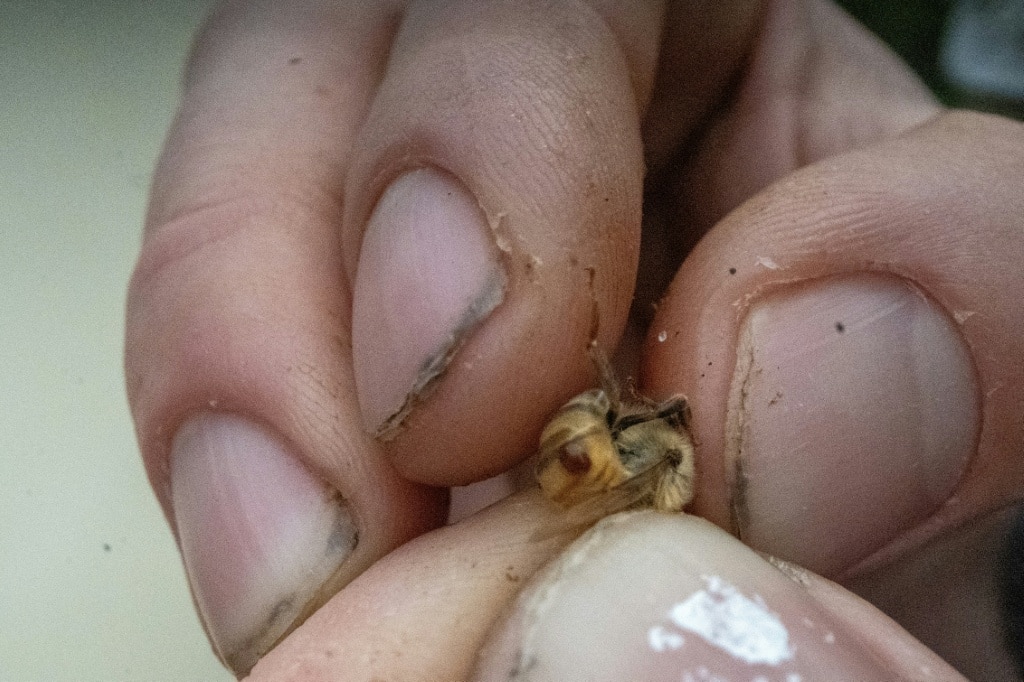
    At the top of the list of threats facing colonies is *Varroa destructor*, a tiny 1.5-millimeter parasitic mite that the U.S. Department of Agriculture (USDA) recognizes as the single most damaging honeybee pest in the country, inflicting higher economic damage than all other apicultural diseases combined. The crab-like parasites feed on honeybee tissue and fat stores, and spread a debilitating, wing-deforming virus that can wipe out entire colonies in months. Beyond threatening apiculture, the mites put critical agricultural pollination at risk: commercial beekeepers like Funkhouser truck their colonies across the country to pollinate high-value crops, from California’s vast almond orchards to fruit farms across the Midwest. Without sufficient healthy bee populations, crop yields drop sharply, threatening food supplies and raising prices for consumers.

    For years, Funkhouser and his fellow beekeepers have turned to researchers at the USDA’s Beltsville Agricultural Research Center (BARC) — home to the nation’s oldest bee lab — for evidence-based guidance to fight the mite crisis. Zac Lamas, one of the lead entomologists at the BARC bee lab, has worked directly with West Virginia beekeepers to sample colonies, test for genetic markers of disease and pesticide exposure, and develop tailored mitigation strategies.

    “It’s not that we’re working with one beekeeper,” Lamas explained during a field training session with beekeepers. “We might be working with several million dollars’ worth of colonies, or several million dollars’ worth of pollination services that won’t exist because these colonies are at risk.”

    But that support is now at risk of disappearing entirely. As part of a cost-cutting plan driven by congressional funding cuts that reduced USDA agricultural research budgets by more than $32 million in key priority areas, the agency is moving forward with plans to close the entire BARC facility. While some research programs will be redistributed to other federal facilities across the country, the fate of the iconic bee lab remains unclear, and the USDA has not responded to questions about where or if bee research operations will be reestablished.

    Lamas, who has already accepted a new position at a local university after facing layoff from the lab, argues that the closure is a short-sighted decision that undermines decades of progress. The entire bee lab program costs just $3.2 million annually, he says, a tiny fraction of the $600 million in annual economic losses that bee colony collapse currently inflicts on U.S. agriculture. “The idea that we’re redundant and expensive isn’t a good way to generalize the value of this lab or the cost of this lab,” he noted.

    Beyond the direct funding gap, Lamas warns that breaking up the lab will erase irreplaceable institutional knowledge. For a century, BARC has assembled a team of specialists with overlapping skills focused entirely on protecting bee health and supporting national food security. “When we have a new problem, multiple people with complementary skills can work on it quickly,” he said. That collaborative capacity will be lost if the team is scattered, he added.

    For beekeepers already grappling with record losses, the impending closure comes as a devastating blow. Just as researchers are beginning to untangle the complex mix of parasites, viruses, and environmental stressors driving colony collapse, the cut threatens to halt progress. “We’ve got results from a lot of our testing and figured out a lot of the things that are going wrong,” Funkhouser said. “The unfortunate thing is, it seems like when you figure out one thing the next year, it’s something else. Without the lab, we’ll be flying blind.”

  • Putin visits China to reaffirm Russia ties as Xi also seeks stable US relations after Trump summit

    Putin visits China to reaffirm Russia ties as Xi also seeks stable US relations after Trump summit

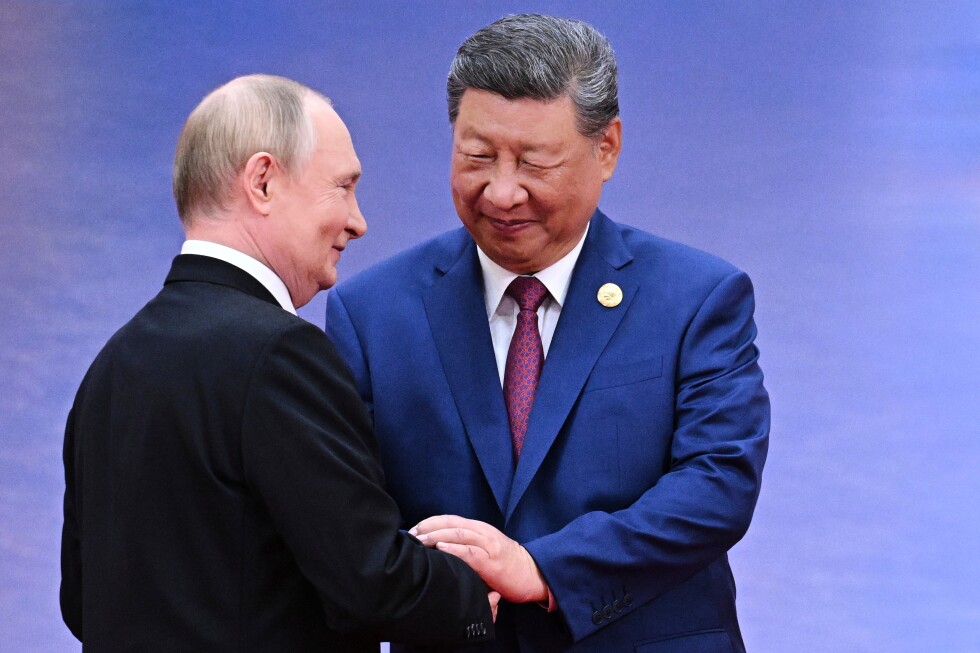
    Just six days after former U.S. President Donald Trump concluded his high-stakes diplomatic trip to Beijing, Russian President Vladimir Putin is set to arrive in China for two days of bilateral talks with Chinese leader Xi Jinping, a diplomatic scheduling that has drawn close global attention to Beijing’s careful balancing act between major powers.

    Scheduled for Tuesday and Wednesday, Putin’s visit comes as Beijing pursues two parallel diplomatic goals: forging stable, constructive relations with Washington while cementing its decades-long strategic partnership with Moscow. Experts note these two policy tracks are not contradictory for Chinese diplomacy. This year also marks the 25th anniversary of the landmark 2001 Sino-Russian Treaty of Friendship, adding symbolic weight to the summit.

    The Kremlin has confirmed that the two leaders will cover a wide agenda, ranging from deepening bilateral economic and energy cooperation to addressing pressing global and regional security challenges. Kremlin spokesman Dmitry Peskov added that the trip will also create a critical opportunity for Russia to get direct, first-hand updates from China on recent U.S.-China talks, opening space for a frank exchange of views between Moscow and Beijing.

    This is not Putin’s first visit to China in recent years. In September 2025, he traveled to Tianjin to attend the annual Shanghai Cooperation Organization summit, attended a military parade marking the 80th anniversary of the end of World War II, and held one-on-one talks with Xi. During that meeting, the two leaders openly referred to one another as friends: Xi called Putin an “old friend”, while Putin addressed Xi as “dear friend”. Just months earlier, in April 2025, Russian Foreign Minister Sergey Lavrov also traveled to Beijing for talks with Xi, who described the Sino-Russian bilateral relationship as “precious” amid the current fractured global context. Xi stressed at that time that Beijing and Moscow must strengthen strategic coordination to defend their shared legitimate interests and protect the collective unity of Global South nations.

    During Trump’s recent Beijing visit, Xi framed the U.S.-China bilateral relationship as the most consequential in the world, urging both sides to embrace a partner mindset rather than framing one another as rivals. By the close of the two-day summit, the two nations announced they would work toward a new framework to guide a “constructive China-U.S. relationship of strategic stability”.

    For observers, Putin’s trip serves as a clear reinforcement of the Sino-Russian partnership, which has grown significantly deeper since 2022, when Russia launched its full-scale invasion of Ukraine. China has maintained an official neutral stance on the conflict while continuing to expand trade ties with Moscow, despite sweeping economic and financial sanctions imposed on Russia by the U.S. and the European Union.

    Today, China stands as Russia’s largest single trading partner, and is the top buyer of Russian crude oil and natural gas. Moscow has projected that regional tensions stemming from the war in Iran will further boost demand for Russian energy exports to China. China has also rejected Western demands to halt exports of high-tech components to Russia’s defense sector, a move that has drawn criticism from Western capitals.

    Earlier this month, Putin highlighted that Moscow and Beijing have already made major progress in advancing energy cooperation. “We have reached agreement on practically all the key issues in the oil and gas sector,” Putin said. “If we can finalize the remaining details and conclude these agreements during my upcoming visit, I will be extremely pleased.”

    Putin has also framed the Sino-Russian relationship as a critical balancing force for global order. “Interaction between such large nations as China and Russia undoubtedly acts as a factor of deterrence and global stability,” he noted. The Russian leader added that Moscow welcomes the recent dialogue between Beijing and Washington, viewing it as an additional stabilizing force for the global economy. “We only stand to benefit from stability and constructive engagement between the U.S. and China,” he said.

    Wang Zichen, deputy secretary-general of the Beijing-based Center for China & Globalization, summed up Beijing’s diplomatic strategy: “The Trump visit focused on stabilizing the world’s most important bilateral relationship; the Putin visit is about reassuring a long-standing strategic partner. For China, these two tracks are not mutually exclusive. Beijing wants stable relations with the West, continued strategic trust with Moscow, and enough diplomatic space to position itself as an unbiased major power capable of engaging all sides.”

  • Three killed in suspected hate crime at San Diego mosque

    Three killed in suspected hate crime at San Diego mosque

    On a Monday morning in San Diego, California, a brutal shooting at the Islamic Center of San Diego left three people dead, in what federal authorities are investigating as a targeted hate crime. The two attackers, a 17-year-old and an 18-year-old, died from self-inflicted gunshot wounds shortly after the assault, law enforcement officials confirmed.

    The tragic sequence of events unfolded nearly two hours before the mosque attack, when the mother of one of the teens placed an emergency call to local police. She reported that her son had fled home, taken multiple of her firearms and her car, and left behind a handwritten note filled with generalized hate rhetoric. She added that her son was accompanied by another young person, and both were wearing full camouflage clothing. Initially dispatched to follow up on a report of a potentially suicidal runaway, investigators quickly noted the teen’s behavior did not align with the profile of a person in acute suicidal crisis, and began searching local sites including the high school where one of the suspects was enrolled and a shopping mall where the vehicle had last been spotted.

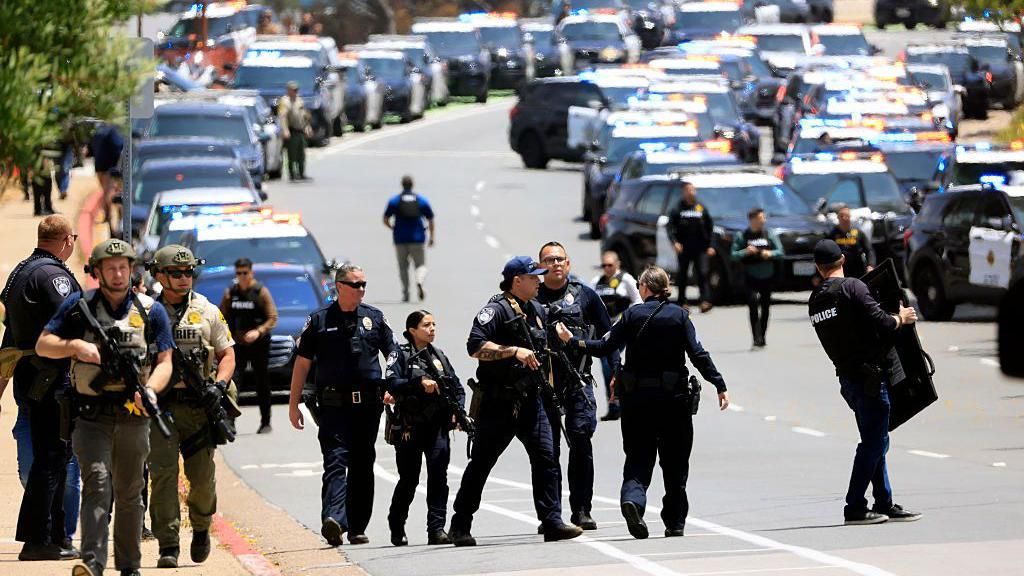
    At 11:43 a.m. local time, as responding officers were still interviewing the suspect’s mother just blocks from the Islamic Center, dispatch received a new call reporting an active shooting at the mosque. Arriving officers found three fatally shot victims lying outside the building’s entrance. Among the deceased was an on-site security guard who law enforcement credits with heroic action that prevented a higher death toll, though no additional details on his intervention have been released at this time. No officers fired their weapons during the response, and no active shooter was found on the premises when police swept the building per active shooter protocol.

    Minutes after officers secured the mosque, a second report of gunfire came in from a nearby location. The two suspects had opened fire from their vehicle on a local landscaper working in the area. Miraculously, the landscaper escaped without injury; law enforcement says preliminary reports suggest a bullet aimed at his head was deflected by his protective hard hat, though this detail is still under verification. When officers arrived at the second scene, they found both suspects already dead from self-inflicted gunshot wounds.

    The Islamic Center of San Diego campus is also home to the Al Rashid School, which offers religious and language instruction, meaning children were present on the grounds when the attack began. Aerial footage captured by local news outlets shows children being escorted hand-in-hand out of the campus by emergency personnel through the center’s parking lot, while all nearby schools were immediately placed on full lockdown as a safety precaution.

    The Federal Bureau of Investigation confirmed it is treating the incident as a hate crime, after the handwritten note left by one suspect was recovered. San Diego Police Chief Scott Wahl told reporters that while the note contained no explicit threat targeting the mosque or any other specific site or individual, the targeting of a major Islamic place of worship, combined with the hate-filled content of the note, leads investigators to presume the attack was motivated by bias.

    One retired local witness, who was eating lunch at his home near the mosque when the shooting began, told reporters he counted roughly 30 shots total from what he described as a semi-automatic weapon, split between two bursts of around a dozen shots separated by a short pause. He noted that the mosque is far more crowded on Fridays and during major religious holidays, saying “It’s a good thing it didn’t happen on a Friday, because the streets would be full of people.”

    The attack comes just days before Eid al-Adha, the “Festival of Sacrifice,” one of the two holiest major holidays in the Islamic faith, when Muslim communities gather with family to commemorate the prophet Ibrahim’s obedience to God. Imam Taha Hassane, director of the Islamic Center of San Diego, called the attack on a house of worship “extremely outrageous” in a press conference, emphasizing “this facility is a house of worship, not a battlefield.”

    California Governor Gavin Newsom released a statement condemning the violence, saying he was horrified by the attack on a space where “families and children gather, and neighbors worship in peace and fellowship.” He added that the state of California “will not tolerate acts of terror or intimidation against communities of faith.” At an unrelated White House event Monday, US President Donald Trump called the shooting a “terrible situation,” saying he had received early briefings and that authorities would conduct a full, thorough review of the incident.

    As of Monday, the investigation remains ongoing, and the FBI has issued a public call for any member of the community with relevant information, including photos or video from the area taken that morning, to contact investigators to assist with the case.

  • UAE and Israel established fund for joint defence acquisition, sources say

    UAE and Israel established fund for joint defence acquisition, sources say

    Amid ongoing regional volatility sparked by the U.S.-Israeli campaign against Iran, the United Arab Emirates and Israel have established a joint investment fund dedicated to the co-acquisition and development of advanced defense systems, multiple current and former U.S. officials confirmed to Middle East Eye in exclusive reporting. This new initiative marks the deepest level of defense cooperation between Israel and an Arab nation to date, cemented during a visit to Abu Dhabi by Israeli Prime Minister Benjamin Netanyahu amid active hostilities against Iran.

    The current U.S. official, who spoke on condition of anonymity due to the sensitivity of the arrangements, outlined that the partnership will center on joint weapons procurement, with the UAE poised to inject capital into the advancement of Israeli air defense technologies. Specific areas of focus include Counter-Unmanned Aircraft Systems (C-UAS) and other integrated air defense platforms, and the former U.S. official added that a substantial sum of capital has already been committed to the fund, with future purchases expected to expand beyond air defense into other defense sectors.

    Notably, Netanyahu’s office publicly confirmed the visit, but Abu Dhabi issued a rare denial of the trip, and as of publication, neither the UAE nor Israeli embassies in Washington had responded to requests for comment from Middle East Eye.

    The new fund builds on already unprecedented security coordination between the two countries that unfolded after Iran launched a massive wave of drone and missile strikes across the Gulf in response to the February U.S.-Israeli attack on Iranian targets. The UAE bore the brunt of this retaliation, with nearly 3,000 Iranian projectiles targeting its territory, and U.S. Ambassador to Israel Mike Huckabee confirmed in May that Israel deployed Iron Dome air defense batteries and operating personnel to the UAE during the conflict to bolster its defensive capabilities.

    Regional security analysts describe the joint defense fund as a natural next step in the deepening bilateral relationship, which was normalized under the 2020 Abraham Accords — a deal whose supporters long cited expanded defense cooperation as a core strategic benefit. “Israel will need UAE money. We have the technology, but we lack the resources. The UAE has the resources, but lacks the technology,” explained Yoel Guzansky, a senior Gulf-focused fellow at Tel Aviv’s Institute for National Security Studies.

    Unlike multi-national defense procurement projects in Europe that have faced significant bureaucratic and political headwinds in efforts to coordinate spending against Russian threats, funding is far more straightforward for the UAE, an absolute monarchy that does not publicly disclose its full defense budget. Independent estimates place the UAE’s 2026 defense spending at approximately $27 billion, equal to 5% of its total gross domestic product, and diplomats and defense industry sources expect all Gulf Cooperation Council states to ramp up defense outlays in the wake of Iran’s large-scale strikes. Abu Dhabi, the UAE’s wealthiest and most powerful emirate, alone controls nearly $2 trillion in assets through its sovereign wealth funds and holds the majority of the country’s oil reserves, giving it vast capital to deploy for defense investment.

    The joint initiative also follows a string of already growing defense-industry ties between the two nations: in June 2025, UAE defense conglomerate Edge Group acquired a 30% stake in Israel’s Thirdeye Systems, an AI-powered drone technology firm. Princeton University Near Eastern studies professor Bernard Haykel called the new fund a logical continuation of existing defense cooperation, noting that it addresses shifting strategic financial realities for Israel. For decades, Israel has relied heavily on U.S. military financing, receiving roughly $3 billion in annual foreign military aid plus an additional $21 billion in defense funding through September 2025, according to Brown University’s Costs of War Project. But support for unrestricted U.S. military aid to Israel has plummeted among American voters, particularly younger generations across the political spectrum, and Netanyahu himself has publicly acknowledged Israel may need to phase out U.S. aid over time.

    “The UAE has money. This is a time when US money is being threatened, so why not switch to the UAE? [Israel] needs to diversify,” Haykel told Middle East Eye.

    The closer defense alignment between Abu Dhabi and Jerusalem comes amid divergent post-conflict strategies among Gulf nations, even as all three major Gulf states — the UAE, Saudi Arabia, and Qatar — initially opposed the U.S. war on Iran. After hostilities began, Saudi Arabia and the UAE both granted expanded basing and overflight access to U.S. forces and joined in limited strikes against Iran, per Reuters reporting. But Saudi Arabia has since pivoted to backing Pakistani-led mediation efforts to end the conflict, while the UAE has actively worked to derail peace talks and lobbied heavily for the U.S. to continue its military campaign against Iran.

    Firas Maksad, Middle East and North Africa managing director at Eurasia Group, explained that Abu Dhabi fears any nuclear-focused peace deal struck by the Trump administration with Tehran will leave Gulf states facing an emboldened Iran without addressing the core threats the UAE prioritizes: Iran’s regional proxy networks, ballistic missile program, and long-range drone capabilities. “The Gulf states believe they are going to be left holding the bag on any deal the Trump administration strikes with Iran, which is focused on the nuclear file and Strait of Hormuz. The Gulf states need to address Iran’s proxies, ballistic missiles and drones,” Maksad said.

    Unlike Saudi Arabia, which has responded to growing uncertainty over the long-term reliability of the U.S. security umbrella by deepening security ties with Pakistan, Turkey, and Egypt — a move that included Pakistan deploying 8,000 troops, a fighter jet squadron, and a Chinese-built air defense system to the kingdom in recent weeks — the UAE has taken a vastly different approach.

    “The Emiratis will not be part of that construct,” Maksad said. “Their means of leverage with the Iranians is their relationship with Israel. The more adversarial the relationship is with Iran, the closer the UAE will draw to Israel and develop those security ties.”

  • Arsenal on the brink of Premier League title after nervy Burnley win

    Arsenal on the brink of Premier League title after nervy Burnley win

    The 2023-2024 English Premier League title race has entered its final, nail-biting stretch, with Mikel Arteta’s Arsenal side moving to the cusp of ending a two-decade-plus championship drought courtesy of a tense 1-0 victory over already-relegated Burnley at the Emirates Stadium on Monday.

    Kai Havertz’s 37th-minute header from a Bukayo Saka corner proved the difference on the night, pushing the Gunners five points clear of defending champions Manchester City at the top of the table. Havertz’s goal marked Arsenal’s 18th Premier League goal scored from set pieces this season, a testament to the club’s well-honed tactical strength in dead-ball situations.

    However, the result could have been drastically different. In the second half, Havertz mistimed a challenge that raked his studs down Burnley midfielder Lesley Ugochukwu’s calf, an incident that went to a VAR review for potential dismissal. In a call that kept Arsenal at full strength, referees opted to retain the original yellow card decision rather than upgrade it to a red card that would have left Arteta’s side to defend their narrow lead with 10 men for the final 25 minutes of play. Havertz was shortly substituted off for new signing Viktor Gyokeres, though the Swedish forward’s introduction did not unlock a second wind for Arsenal’s attack.

    The match was far from the dominant victory many fans and pundits predicted. Buoyed by a sold-out home crowd for their final home fixture of the season, Arsenal were widely expected to cruise past a Burnley side that had claimed just two points from their previous 10 outings. But the already-relegated Clarets put up a staunch defensive fight, forcing the Gunners into a tense finale that kept spectators on edge until the final whistle. Before Havertz’s winning goal, Leandro Trossard hit the outside of the post from the edge of the penalty area, and a first-half penalty appeal from Bukayo Saka was turned away by officials.

    The narrow win leaves Arsenal on the brink of their first Premier League title since 2001-2002, ending a 22-year wait. The Gunners could even lift the trophy as early as Tuesday, if Manchester City fails to secure three points away to Bournemouth. Even if City maintains its title push by beating Bournemouth and wrapping up its final two fixtures against Bournemouth and Aston Villa, Arsenal only needs one more win away to Crystal Palace this coming Sunday to seal the championship. A draw at Selhurst Park would open the door for City to claim the title on goal difference if Pep Guardiola’s side wins both of their remaining matches.

    Speaking after the final whistle, Arteta emphasized that his side had completed everything within their control to put themselves in a winning position. “One more to go. We have done our job, what is in our hands. We have to wait and see what is going to happen tomorrow and then it’s time to prepare for the Palace game,” the Arsenal manager said. Acknowledging the narrow margin of victory, he added, “The margin should have been bigger but we haven’t achieved that. We have shown what we have shown all season that when we need to defend and get through the game, we can do it in an efficient way.”

    That defensive efficiency has been key to Arsenal’s recent run: since their loss to City last month, the Gunners have kept four consecutive clean sheets in Premier League play, a solid foundation that has allowed them to extend their lead at the top of the table. The narrow result, however, still leaves a narrow opening for City to clinch a fourth consecutive Premier League title. Adding further drama to the final days of the season, multiple reports emerged on Monday that Guardiola is set to depart Manchester City after a trophy-laden 10-year tenure following the club’s final home match against Aston Villa on Sunday.