博客

  • Two dead in Spain shooting, with babies reportedly among injured

    Two dead in Spain shooting, with babies reportedly among injured

    A shocking act of gun violence has rocked the small southern Spanish town of El Ejido, located near the city of Almería, leaving two people dead and four others seriously wounded. Spain’s national law enforcement agency, the Guardia Civil, has confirmed that a 25-year-old man has been taken into custody on suspicion of carrying out the fatal attack that targeted his own parents and several other victims.

    Local emergency dispatch received the first report of the shooting at 23:00 local time on Monday evening, which equates to 22:00 British Summer Time. Emergency responders quickly arrived at the scene, and all four injured victims were immediately transported to area hospitals for urgent medical care. Among those hurt are two young children, a 60-year-old man, and an additional adult, according to unofficial local media accounts. One of the injured children is the 25-year-old suspect’s own seven-month-old son, while the other injured child is an 18-month-old toddler, the reports add.

    As of Tuesday, Spanish authorities have not released the formal identities of the suspect or the two slain victims, citing ongoing investigative procedures. Following the shooting, the suspect fled the scene and was briefly at large before turning himself in voluntarily at a local police precinct, according to Spanish news agency Europa Press.

    Guardia Civil officials have confirmed that they have launched a full investigation into the attack, with investigators currently working to piece together a clear motive for the violence. What makes this attack particularly notable for Spain is that mass shootings remain an extremely rare occurrence in the country. Data from Project Insight, an organization that tracks gun violence across the European continent, shows that only four mass shootings were recorded in Spain between 2000 and 2023, making this incident an anomaly for the nation’s typically low rates of mass gun crime.

  • Finnish divers recover 2 of the dead Italians from an underwater cave in the Maldives

    Finnish divers recover 2 of the dead Italians from an underwater cave in the Maldives

    A tragic diving disaster in the Maldives has moved one step closer to resolution, as a team of expert Finnish divers has recovered the remains of two of the four Italian divers who died deep inside a remote Vaavu Atoll underwater cave, a Maldivian government official confirmed Tuesday. The recovery mission, one of the most high-risk search operations in the Indian Ocean nation in recent years, follows a series of deadly setbacks that paused recovery efforts earlier this month. All four lost divers were located deep inside the cave system on Monday by the Finnish team, as search operations restarted after a suspension prompted by the death of a Maldivian military diver during a previous attempt to reach the trapped bodies. The tragedy unfolded last Thursday, when five Italian divers set out to explore the unregulated underwater cave system off the Maldivian coast. One of the five, a diving instructor, was recovered the same day he was reported missing, found just outside the cave’s entrance. The other four remained trapped deep in the cave’s third and largest segment, out of reach of initial local search teams. After the fatal accident that claimed the life of the local military diver, authorities suspended the search and called in international specialized expertise. The Divers’ Alert Network Europe deployed three Finnish technical and cave diving specialists with extensive experience in high-risk recovery operations, including deep dives in confined overhead environments that exceed the limits of standard recreational diving. Supported on-site by Maldivian police and military personnel, the Finnish team located all four bodies in the deepest, innermost section of the cave, with all four remains found grouped closely together. The bodies rest at an approximate depth of 60 meters, twice the maximum legal limit for recreational diving in the Maldives, which is set at 30 meters. To complete the mission, the team used specialized advanced diving technology, including closed-circuit rebreathers — systems that recycle exhaled breathing gas after filtering out carbon dioxide, allowing divers to stay submerged far longer than they could with standard open-circuit diving equipment. Initial search teams had previously mapped the cave entrance, but the extreme depth and narrow confined passages prevented early teams from reaching the trapped divers. Presidential spokesperson Mohamed Hussain Shareef made the official announcement of Tuesday’s successful recovery of two of the four bodies, with authorities confirming that recovery operations for the two remaining remains are scheduled to continue on Wednesday. Italy’s Foreign Ministry has confirmed that the five divers were conducting an exploratory dive at roughly 50 meters when the accident occurred, a depth that already far exceeds the regulated limit for recreational diving in the country, raising questions about the safety practices that led to the disaster.

  • ASX bounces back after Monday’s ‘poleaxing’, banks and Woolworths lead gains

    ASX bounces back after Monday’s ‘poleaxing’, banks and Woolworths lead gains

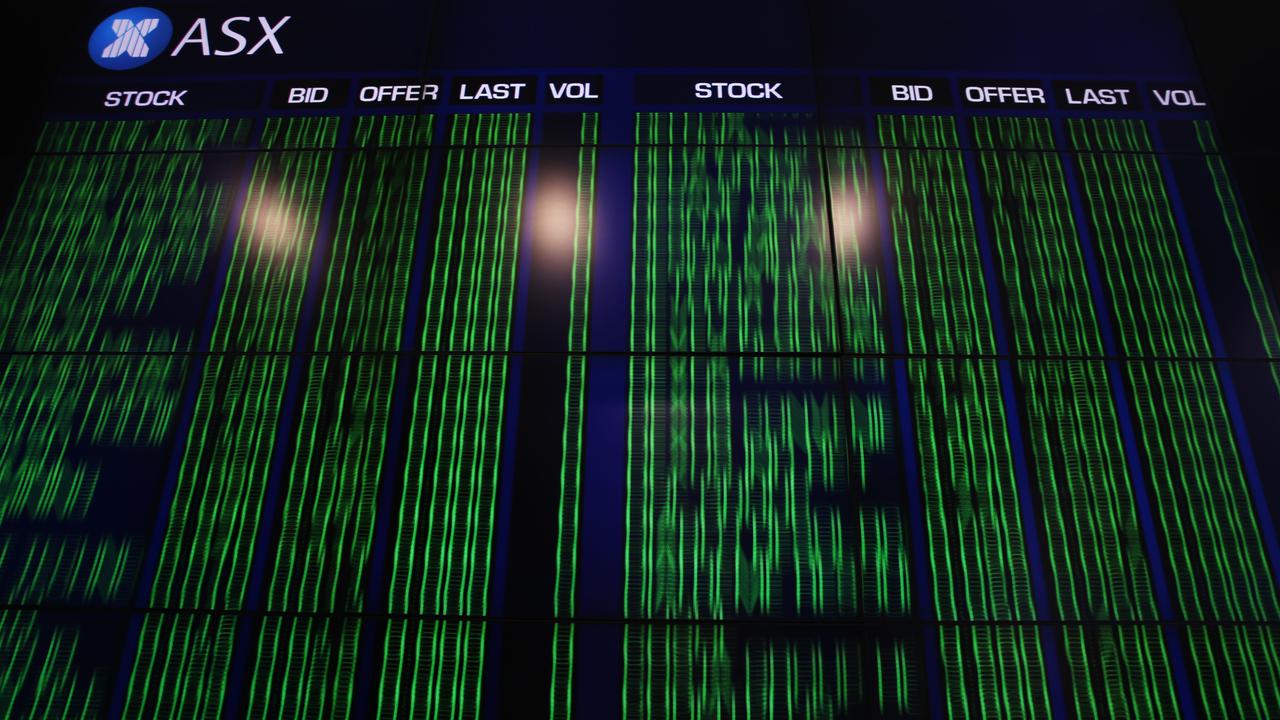
    After suffering steep single-day losses on Monday, Australia’s domestic sharemarket staged a notable rebound on Wednesday, clawing back most of its earlier decline as broad-based sector growth was supported by a global drop in crude oil prices tied to easing geopolitical tensions in the Middle East.

    Nine out of 11 tracked market sectors posted gains by the close of trading, with only the technology sector edging 0.4% lower and the materials sector holding steady amid stagnant iron ore prices. The benchmark ASX 200 index climbed 99.4 points, or 1.17%, to settle at 8604.7, while the broader All Ordinaries index rose 1.08% overall. The Australian dollar dipped slightly to around 71.3 US cents amid concurrent strengthening of the US dollar.

    Leading the session’s gains was the consumer staples sector, lifted after banking giant JPMorgan upgraded its rating on supermarket giant Woolworths. The upgrade pushed Woolworths shares up 3.7% for the day, pulling the entire sector upward alongside it. “The ASX200 has bounced back from yesterday’s poleaxing in a solid fashion, regaining a good chunk of the 105 points lost in yesterday’s demolition derby,” explained Tony Sycamore, a market analyst with international trading firm IG.

    The drop in global oil prices that supported market sentiment came after former US President Donald Trump announced he would postpone a planned military strike on Iran, a decision made at the request of major Middle Eastern oil producers Saudi Arabia, Qatar, and the United Arab Emirates. Trump also confirmed that “serious negotiations are now taking place” with Iranian officials to de-escalate regional tensions, though Sycamore noted market analysts remain skeptical of a quick, lasting peace deal. “Frankly, we’re not overly convinced about the near-term prospects of a peace deal and suspect the motivation to hold fire stemmed from the weekend’s fresh drone attacks on the UAE and Saudi Arabia,” he added.

    The de-escalation of geopolitical risk calmed global bond markets and pulled crude prices lower: international benchmark Brent Crude fell 1.3% on the day, while US West Texas Intermediate futures dropped 0.9%. For Australia’s materials sector, a concurrent slip in iron ore futures erased potential gains, leaving the sector flat overall. Mining giant BHP dipped 0.1%, Fortescue Metals fell 0.3%, and rare earths producer Lynas Rare Earths dropped 4.3%.

    Notable outliers in the resources space included Perth-based Northern Minerals, whose shares surged 21.7% after the company confirmed it would comply with Treasurer Jim Chalmers’ order requiring Chinese investors to divest their stakes amid a months-long boardroom takeover conflict. Mineral Resources also posted a 2.6% gain after announcing it would restart its Western Australia-based lithium mine in response to recovering global lithium prices. Bellevue Gold added 2% after extracting the first batch of ore from its new high-grade Deacon North mine in Western Australia.
    Across the financial sector, Australia’s big four major banks all recorded gains between 1.3% and 2%, while QBE Insurance climbed 2.9% and insurance broker Steadfast rose 3.7%. Real estate stocks also recovered from Monday’s broad sell-off: industrial property giant Goodman Group gained 1.8%, shopping centre operator Scentre Group added 1.4%, and diversified developer Stockland rose 3.1%.

    In the telecommunications space, the sector as a whole climbed 2.7% to hit a six-month high. National carrier Telstra gained 2.6%, CAR Group rose 3.7%, and employment platform Seek added 3.4%. Infrastructure owner Tuas, which saw its shares crash 63% on Monday, rebounded 17.6% in Wednesday’s trading.

    In corporate news, Geelong-based carbon fibre wheel manufacturer Carbon Revolution announced that creditors had approved a restructuring deal that will allow the firm to exit voluntary administration. The company, which was originally listed on the ASX before being delisted from the NASDAQ in February, produces lightweight wheels that deliver significant efficiency gains for heavy electric vehicles, but intense competition from Chinese EV manufacturers eroded its market valuation from a peak of AU$500 million to just AU$30,000 in recent years.

  • New Zealand’s government plans to cut 14% of public sector jobs to slash spending

    New Zealand’s government plans to cut 14% of public sector jobs to slash spending

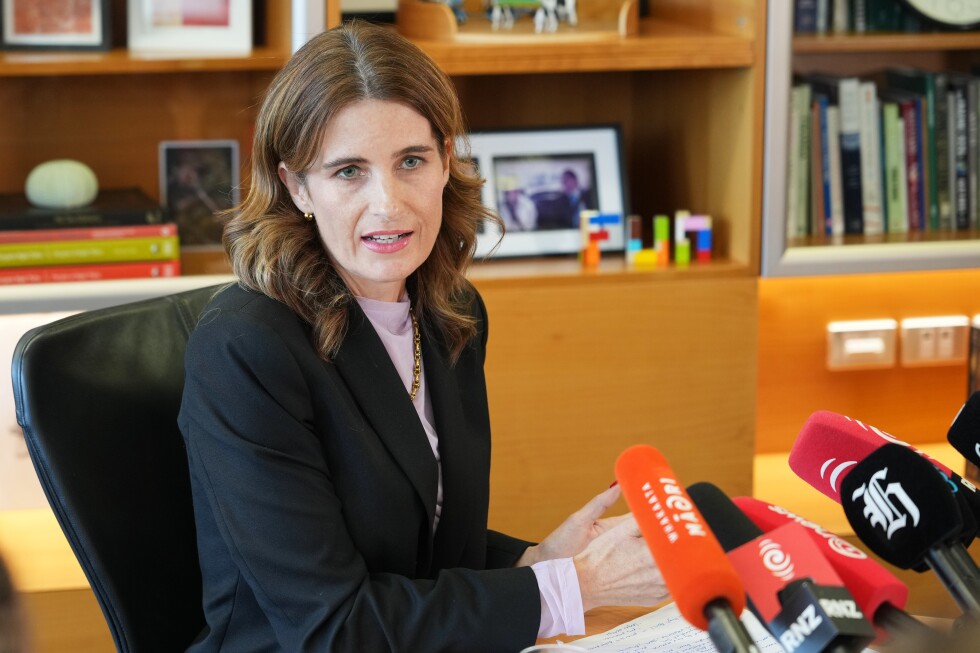
    AUCKLAND, New Zealand – New Zealand’s incumbent center-right National Party government has announced a far-reaching plan to downsize the country’s public sector, slashing nearly 9,000 positions — equivalent to 14% of the current public workforce — by mid-2029 in a push to cut billions in government spending, Finance Minister Nicola Willis revealed Tuesday during a speech to a business audience in Auckland, the nation’s largest city.

    Under the proposal, the cuts will bring the total public service workforce in Wellington, the country’s capital where most public servants are based, down to 55,000 from the projected 63,700 headcount in December 2025. This adjustment will reduce the share of public servants in New Zealand’s overall population from 1.2% to 1%, matching Willis’ stated goal of aligning the country’s public sector size with global benchmarks. “That’s unsustainable, it’s unaffordable and it’s out of step with international trends,” Willis told the gathering, adding that critical front-line roles including military personnel, primary and secondary school teachers, and hospital doctors will be fully exempt from the layoffs.

    Beyond workforce reductions, the plan includes a multi-year program of budget cuts for most public agencies, starting with an initial 2% funding trimming in the national budget set to be released at the end of May. If the National Party government secures re-election in the upcoming November general election, it will follow the initial cut with two additional 5% annual funding reductions for most departments. The government also intends to consolidate the public sector by significantly shrinking the current 39 government departments and agencies, though no final target number has been released. Additionally, Willis mandated that public services speed up adoption of artificial intelligence and digital tools, arguing the sector has fallen behind on modern technological integration.

    In total, the package of cutbacks is projected to save 2.4 billion New Zealand dollars ($1.4 billion USD) over the course of the restructuring period. The National Party, which has held power since 2023, campaigned in the last election on a platform of public sector downsizing, and has blamed the previous center-left Labour administration for the growth in public service headcount. During Labour’s time in office, the number of public servants grew from 48,000 to 63,000 after the party reversed a public sector job cap implemented by the prior National government. At the time, Labour argued the cap had forced agencies to overspend on external contractors and consultants to avoid hiring full-time employees, creating more costs than it saved.

    Notably, the layoffs will be phased gradually over multiple years, and Willis has not yet released details on how positions will be selected for elimination. Prime Minister Christopher Luxon, who has positioned his administration as a more responsible fiscal steward than its predecessor amid ongoing sluggish national economic growth, framed the plan as a step toward a more efficient, effective public sector. “The public service is not a make-work function,” Luxon said Tuesday, adding he found the prospect of a streamlined public sector “exciting.”

    The announcement has already drawn fierce pushback from opposition groups and public sector unions. Chris Hipkins, leader of the opposition Labour Party, warned that cutting such a large share of the public workforce would inevitably erode the quality of public services delivered to New Zealanders. Duane Leo, a spokesperson for the union representing tens of thousands of public servants, called the restructuring plan “an act of willful destruction.” Political analysts note the cuts come as the government works to demonstrate tangible progress on economic recovery ahead of the upcoming national election in November, when voters will decide whether to return the National Party administration to power.

  • Elon Musk just lost another lawsuit. Will he keep fighting?

    Elon Musk just lost another lawsuit. Will he keep fighting?

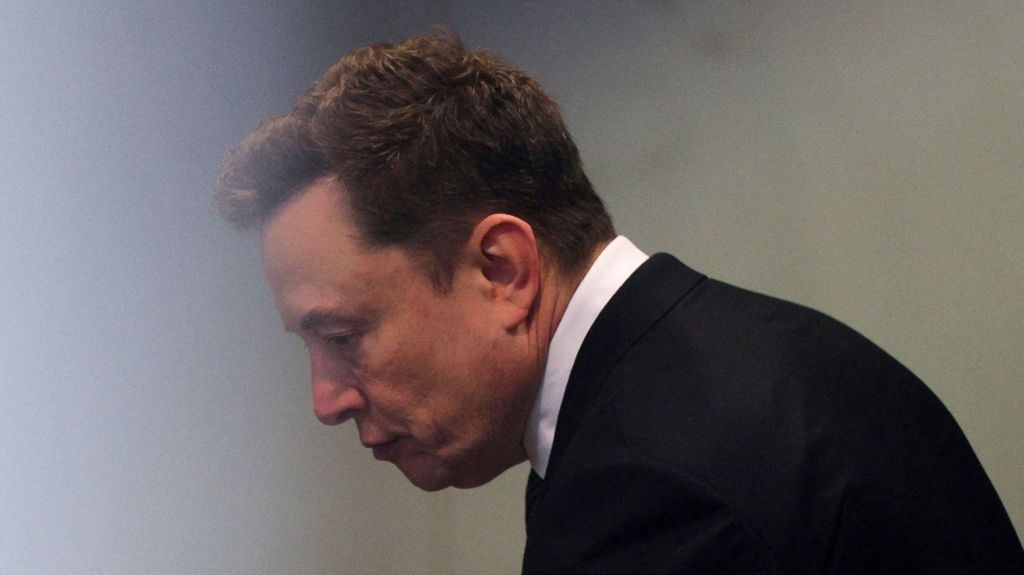
    Over the past year, billionaire entrepreneur Elon Musk has racked up a growing list of legal setbacks across his sprawling business empire, and his recent defeat in a high-profile lawsuit against OpenAI and its chief executive Sam Altman marks the latest in this string of unfavorable court outcomes.

    Monday’s ruling against Musk adds to a timeline of losses and costly settlements that stretches back to late 2024. That December, Musk agreed to resolve long-running disputes with former Twitter executives and thousands of ex-employees of the social platform, which he rebranded as X after his 2022 acquisition. He had spent years fighting to avoid paying the severance and negotiated damages the group was owed, ultimately walking away from the conflict with a settlement.

    Just three months later, in March 2025, a judge ruled against Musk in a lawsuit brought by Twitter investors, who alleged he had misled them with public statements he made during his $44 billion takeover of the platform. That same month, another judge dismissed a separate lawsuit Musk filed against major brands that pulled advertising from X following his acquisition. Earlier this month, a judge also overturned key funding cuts enacted by the Department of Government Efficiency (DOGE), the cost-cutting body Musk helped create and lead in 2024, ruling that the targeted grant reductions amounted to unconstitutional viewpoint discrimination.

    With Musk’s latest loss in the high-stakes OpenAI legal battle, industry observers and legal experts are debating whether this growing streak of defeats will push the world’s wealthiest person to dial back his reputation for aggressive litigation. “No one is invincible,” explained Shubha Ghosh, a law professor and practicing attorney at Syracuse University. Still, Ghosh notes that it would likely take far more substantial consequences than the losses Musk has sustained so far to push him to abandon his combative approach to legal disputes. “In a lot of ways, he is just another businessperson asserting his rights, I don’t think he’s abusing the legal system. Whether he uses it effectively, I’m not sure,” Ghosh added.

    Beyond his well-documented tendency to reject conventional business and legal norms, Musk also possesses unmatched financial resources that allow him to absorb the costs of repeated legal defeats. With his substantial stake in SpaceX, which is widely expected to go public in the near term, Musk is on track to become the world’s first trillionaire — a net worth so large that even cumulative legal fees, fines and settlement costs are unlikely to deter him from filing future lawsuits. For example, a $1.5 million fine levied by the U.S. Securities and Exchange Commission (SEC) for Musk’s failure to properly disclose his early accumulation of Twitter stock is functionally insignificant for someone with his fortune. When a judge invalidated Musk’s multi-billion dollar Tesla pay package in late 2024, he simply reincorporated the entire electric vehicle maker in Texas and secured shareholder approval for a new, even larger compensation package.

    “I don’t see him stopping,” said Dorothy Lund, a law professor at Columbia Law School. “It seems like there is no one who has been able to put real consequences on him or his actions. He does what he wants and sometimes gets a slap on the wrist, so why would he change?”

    Shortly after Monday’s ruling in the OpenAI case, Musk made his frustration public via a post on X, arguing the decision created “a free license to loot charities if you can keep the looting quiet for a few years!” He also publicly criticized the presiding judge, calling the jurist a “terrible activist” and pledged to file an appeal of the verdict.

    Ghosh points out that Musk’s outsized personality sets him apart from most other global business leaders. For example, Musk chose to proceed with his very public, high-profile legal fight against Altman — a one-time mentee who has become Musk’s public rival — even as SpaceX prepares for its upcoming public listing. Typically, when a private company prepares for an initial public offering (IPO), its leadership enters a regulatory quiet period mandated by the SEC, during which executives avoid making public statements that could improperly influence share pricing. Most CEOs curtail all non-essential public commentary during this window, but Musk has rejected this standard practice entirely.

    Lund notes that few business leaders share Musk’s willingness to continue fighting in court and the public sphere even after repeated setbacks. “He is not afraid of public opinion, he’s not afraid of taking big swings,” Lund said. She acknowledges that this willingness to disregard risk is a valuable trait for entrepreneurs, but it does not translate seamlessly to the legal system. Lund adds that even famously aggressive corporate figures like Carl Icahn, the activist investor who inspired the iconic greedy capitalist character Gordon Gekko in *Wall Street*, do not match Musk’s level of unapologetic brazenness.

    “If and when this will blow up for him, I don’t know,” Lund said. For Lund, the only public figure with a similar approach to conflict and legal action is former President Donald Trump, who is known for impulsive public comments and frequent lawsuits against perceived opponents. “Musk is a singular individual, but negative things never seem to stick to either of them,” Lund added.

  • Malians tell of torture and killings by army, Russian fighters

    Malians tell of torture and killings by army, Russian fighters

    Across windswept refugee camps in eastern Mauritania’s arid Hodh Chargui region, hundreds of thousands of Malians who fled years of unrelenting violence have shared harrowing firsthand accounts of murder, torture and collective cruelty at the hands of Malian government troops and Russian paramilitary fighters. These testimonies, collected by Agence France-Presse from 10 displaced civilians, paint a grim picture of widespread civilian harm that has followed the Malian junta’s deepening military partnership with Russian forces.

    For 62-year-old Cherifa — a pseudonym used to protect her from retaliation — the grief of losing her son remains raw and unhealed. Last summer, her son left their home to trade goods across central Mali, only to encounter a joint patrol of Malian soldiers and fighters from the Russia-controlled Africa Corps, the rebranded successor to the infamous Wagner Group mercenary force. Herders hiding in nearby dunes watched as the patrol detained Cherifa’s son and four other traveling companions, tied them up, beheaded them, and burned all their merchandise, Cherifa recounted. No community members dared return to collect the bodies for 24 hours, terrified of ambushes or hidden explosive traps.

    “His death is my greatest pain,” Cherifa said, her voice shaking as she sat in her spartan brick shelter in the refugee camp. “They pour their hatred on innocent, defenceless people.”

    Nomadic Fulani and Tuareg communities have borne the brunt of these abuses, according to multiple testimonies, with residents regularly targeted on unproven accusations of ties to jihadist insurgents or separatist movements. Mali’s ruling military junta, which seized control of the country in a 2020 coup, has turned to Russian paramilitaries to counter a decade-long jihadist insurgency that has destabilized large swathes of the Sahel nation. Rights organizations have repeatedly condemned the violent tactics employed by the joint forces, and data from conflict tracking project Armed Conflict Location & Event Data Project (ACLED) analyzed by AFP underscores the scope of civilian harm.

    Since the junta took power in 2020, government military operations have killed more than 8,500 people, nearly half of whom are civilians. When Russian fighters accompany Malian troops, 60 percent of those killed are unarmed civilians; when Russian forces operate independently, that share jumps to 90 percent.

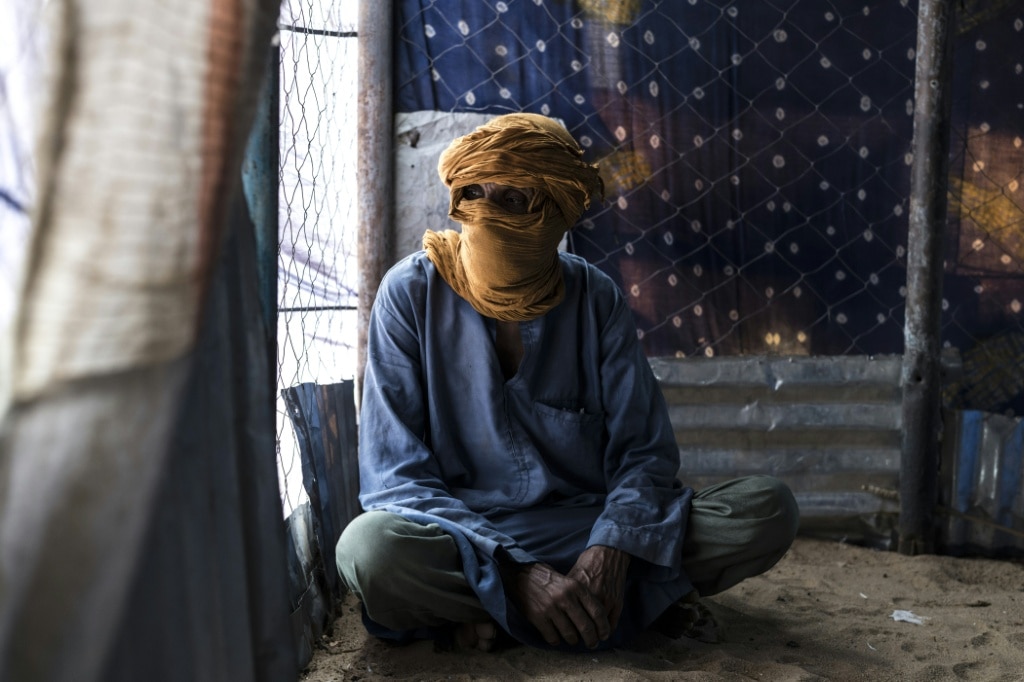
    Fear hangs over every conversation in the Mauritanian refugee camps, where even mentioning Russian fighters — still most commonly referred to by their former Wagner branding — triggers visible anxiety. Nedoune, a 50-year-old Tuareg herder, shared his own experience of arbitrary detention and torture that began when he was spotted fetching water two years ago in Mali’s northern Timbuktu region.

    After being beaten, bound, and forced to accompany the fighters for two days as they rounded up civilians and burned nomadic camps to the ground, Nedoune was transferred to a detention facility in central Mali, where he was tortured for four consecutive days during interrogations about alleged jihadist activity. “They pour water on your body, then put wires in your ears and send an electric current until you pass out,” he explained, his expression blank as he recalled that they burned all his belongings and slaughtered his entire herd. He was only released after his family paid a ransom of 310,000 CFA francs, roughly $550. Nedoune also witnessed other detainees being killed: he watched through a gap in his turban as one man was beaten nearly to death before his throat was cut and his body dumped from a moving military vehicle.

    Medical teams working with Doctors Without Borders (MSF), which provides care to traumatized refugees in border towns like Fassala, say they have collected even more alarming accounts of brutality. “We have testimonies of torture, including people who say they were buried alive,” said MSF coordinator Mayoury Savant. “We also see sexual violence, affecting both women and men.”

    More than 300,000 Malians have now fled across the border into Mauritania’s Hodh Chargui region to escape the ongoing violence. The conflict that has torn Mali apart since 2012 includes a jihadist insurgency by groups aligned with Al-Qaeda and the Islamic State, separatist unrest, and clashes between criminal gangs, but refugees say the worst abuse has come from joint Malian-Russian operations. In recent months, a fresh wave of refugees has arrived after jihadist groups issued ultimatums ordering civilians to leave targeted areas within 24 hours or face execution.

    Human rights groups have now brought a case before the African Union demanding accountability for the alleged abuses committed by Malian and Russian forces. Late last month, coordinated attacks by Tuareg separatists and jihadist fighters delivered a major setback to the junta, culminating in separatists capturing the key northern town of Kidal. For many refugees in Mauritania, most of whom support the Tuareg separatist movement, the subsequent withdrawal of Russian fighters from northern bases has sparked cautious hope that they may soon be able to return to their homes.

    Thirty-year-old Fatima, who fled her Timbuktu region village three years ago after government airstrikes, says many women who stayed behind have suffered unspeakable harm. “Everything happened to them except death… we know some were tortured,” she said. “Before the Russians came, we lived in peace. If they take back Timbuktu and the other towns, I can go home.”

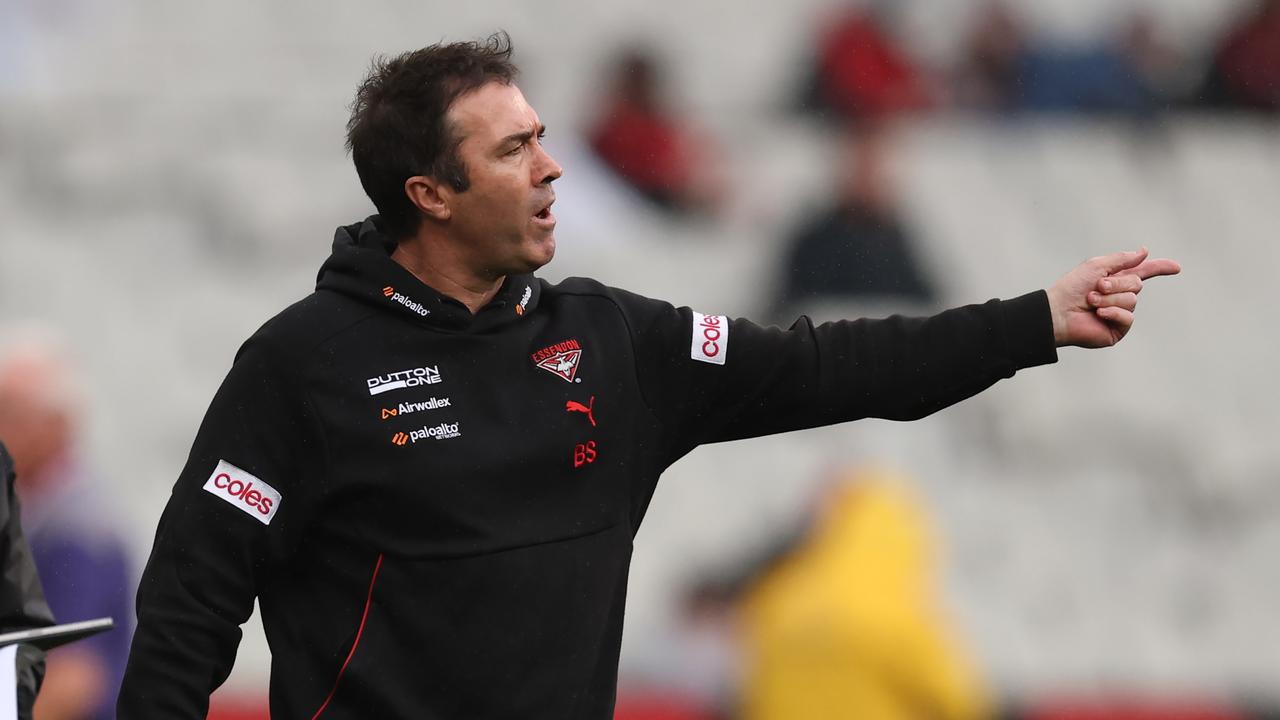
  • AFL 2026: Essendon defender Mason Redman has launched to the defence of coach Brad Scott

    AFL 2026: Essendon defender Mason Redman has launched to the defence of coach Brad Scott

    As AFL club Essendon grapples with one of the most underwhelming opening stretches in recent club history, key defender Mason Redman has publicly stood behind embattled head coach Brad Scott, insisting Scott remains the right leader to turn the club’s flagging season around.

    The Bombers have claimed just one victory from their first 10 matches of the 2026 campaign, leaving the side deep in the lower reaches of the premiership ladder and putting Scott under intense public and fan pressure. With two critical matches looming against Richmond and the West Coast Eagles in the coming fortnight, another slip-up—especially against an injury-ravaged Tigers side—would amplify the already growing scrutiny on Scott, just months after Essendon president Andrew Welsh publicly anointed the coach as the man who would lead the club to its next premiership.

    Speaking to reporters ahead of the annual Dreamtime at the ‘G clash, Redman made clear the playing group has not lost faith in Scott’s direction. “I think as players we’ve never wavered off the track we’re on,” Redman said. “Obviously performances haven’t necessarily been at the level we’ve wanted them to be this year, sitting at 1-9. Brad fills us with belief week in, week out and he’s the man for the job so yeah that’s how I see it.”

    Redman also addressed ongoing speculation surrounding star contracted midfielder Zach Merrett, who has been linked to a second move away from the club after an unsuccessful trade request to Hawthorn last season. Rumors have swirled in recent weeks that Merrett could renew his push for an exit, but Redman said he sees no indication that the club will entertain offers for the former captain, who remains on a binding contract with the Bombers. “I haven’t seen anything of the sort, I am sure Zach will cross that bridge when he gets to it,” he said. “Of course, he’s a contracted player so I imagine we’ll be looking at keeping him.”

    The defender’s vote of confidence comes after a tight but ultimately losing effort against Fremantle last Sunday, where both Redman and Scott earned praise for their intensity around the contest. Rather than blaming the club’s current system or coaching staff for the poor start, Redman said it is the playing group’s collective responsibility to lift their individual performance, especially the club’s established leaders. “It falls on us as individuals,” he explained. “Me personally, I’ve got a contest that I’ve got to be better at as a leader, the young guys have to look to us as leaders of the football club. We’ve got to be cracking in, leading the way. We’ve got guys like Sully Robey, putting his head over the ball, first-year guy, super impressive. We’ve got to get in behind that and get after it.”

  • Wall Street guru struck speechless by Trump insider stock trades

    Wall Street guru struck speechless by Trump insider stock trades

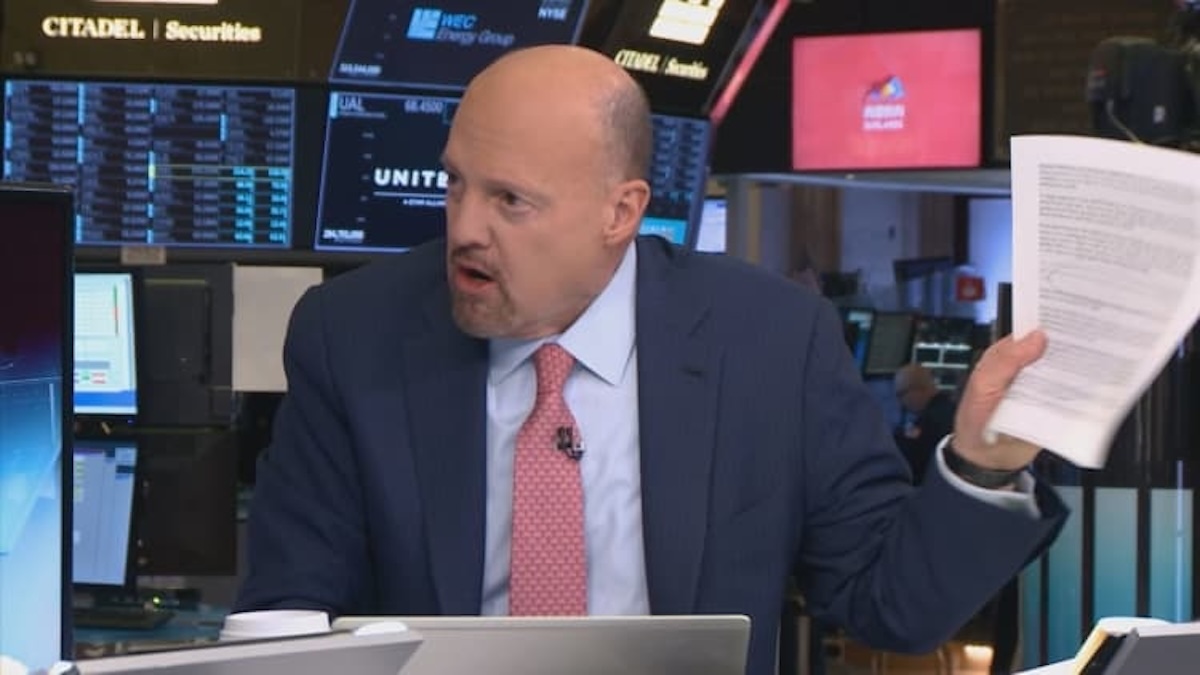
    On a live Monday broadcast of CNBC’s Squawk on the Street, one of Wall Street’s most high-profile media personalities, Jim Cramer, was left visibly stunned and speechless for 10 full seconds when a co-host brought up the staggering wave of stock trading executed by former President and current U.S. President Donald Trump in the first quarter of 2026. After Cramer’s prolonged incoherent mumbling left viewers confused, fellow co-host David Faber stepped in to clarify that the program was not experiencing any technical glitches — Cramer, it turned out, had simply been rendered speechless by the revelation of Trump’s controversial trading activity.

    The scope of Trump’s trading first came to light last week, when ethics disclosures published by the U.S. Office of Government Ethics confirmed that Trump completed more than 3,700 separate stock transactions between January and March 2026. Among these trades, more than 30 individual purchases each exceeded $1 million in value. The Financial Times first highlighted a striking connection: many of the top stocks Trump traded are owned by major corporations whose chief executives accompanied Trump on his official diplomatic trip to China just one week before the disclosures were released, including industry giants Tesla, Nvidia, Apple, Meta, Visa, Citi, Boeing, Qualcomm, and GE Aerospace.

    Independent journalists and ethics watchdogs have since uncovered multiple clear patterns that raise urgent red flags for potential illegal insider trading. In a detailed analysis published Monday, reporter Judd Legum documented multiple instances where Trump purchased shares in a company either immediately before or on the exact same day that he publicly praised the firm to move its share price. For example, Trump bought tens of thousands of dollars in stock of biotech manufacturer Thermo Fisher Scientific on the exact same day he toured one of the company’s production facilities. He acquired hundreds of thousands of dollars worth of Apple shares the same day he delivered a public speech lauding the firm as “a great company” and praising then-CEO Tim Cook. Just one day after purchasing a large stake in Micron Technology, Trump called the company “one of the hottest companies” during a national Fox News interview. Nine days after acquiring millions of dollars in Dell stock, Trump urged a crowd of supporters at a Georgia rally to “go out and buy a Dell computer.”

    Legum’s analysis emphasized that Trump has systematically dismantled every remaining ethical guardrail designed to prevent sitting U.S. presidents from using their public office for personal financial gain. Unlike previous presidents who have placed their assets in qualified blind trusts to remove themselves from active investment decision-making, Trump transferred his holdings to a trust controlled directly by his son, Donald Trump Jr., after returning to the White House. This structure leaves no legal or practical barriers to Trump directing trading activity based on non-public information he accesses as president.

    Investigative journalist Ryan Grim argued that Cramer’s stunned on-air reaction was entirely understandable, noting that many of the companies whose stock Trump traded have already directly profited from Trump’s controversial foreign policy decisions, including the ongoing military conflict with Iran that the Trump administration initiated. “Cramer here is having what should be the normal reaction to Trump actively insider trading on his own decisions,” Grim noted. “Just sputtering speechlessness.”

    New York Representative Dan Goldman, a Democrat, has already sounded the alarm over the trading activity, calling it “blatant and criminal insider trading.” In a social media post, Goldman warned all parties involved that records of the trades will eventually be subject to congressional investigation, noting that congressional Republicans have signaled they will ignore the scandal. “Anyone involved in these trades should preserve their records for my investigation in January 2027,” Goldman added.

    The stock trading scandal is not the only ethics controversy engulfing the Trump administration this week. On the same day Cramer’s viral on-air reaction made headlines, 93 House Democrats filed an official legal challenge to block a $1.77 billion taxpayer-funded settlement between the Trump administration and the Internal Revenue Service that critics say is a blatant grift to create a slush fund for Trump’s political allies.

    The settlement grew out of a $10 billion lawsuit Trump filed against the IRS after his personal tax returns were leaked during the 2024 campaign. As part of a deal to dismiss the lawsuit, the Trump administration created what it calls an “Anti-Weaponization Fund,” which the acting U.S. Attorney General Todd Blanche has framed as a mechanism to compensate what the administration calls “victims of lawfare” allegedly carried out by the Department of Justice during the prior Biden administration.

    But Democrats and ethics watchdogs have condemned the deal as an unprecedented abuse of power, noting that Trump is currently the head of the executive branch that oversees the IRS — meaning he is effectively both the plaintiff and the defendant in the lawsuit he arranged to “settle.” “No president can concoct a fake case for $10 billion in damages against the government so he can be plaintiff and defendant and then ‘settle’ his bogus case against himself as a judge,” said Jamie Raskin, Ranking Member of the House Judiciary Committee, calling the deal “pure fraud and highway robbery.” Raskin added that the fund is nothing more than a racket to divert taxpayer money to Trump’s most loyal supporters, including those convicted of violent felonies during the January 6, 2021 U.S. Capitol insurrection.

    The amicus brief filed by Democrats with the U.S. District Court for the Southern District of Florida, where the case is being heard by Judge Kathleen Williams, seeks to have the entire settlement thrown out. The filing notes that the fund could be used to compensate roughly 1,600 individuals already charged or convicted of crimes connected to the Capitol attack, including seditious conspiracy, assault on law enforcement, and other violent felonies.

    Richard Neal, Ranking Member of the House Ways and Means Committee, called the entire scheme “another self-enrichment scheme on the backs of hard-working taxpayers.” “Reporting detailing Trump’s interest in a billion-dollar slush fund for the J6 criminals and permanent immunity from any further IRS scrutiny only deepens the stench of corruption,” Neal added. Lawyers for the Democrats, Matt Platkin and Norm Eisen, noted that “it’s against the law for the president to in effect sue himself — and then settle for a huge sum. The court has the power to put a stop to these shenanigans and should do so.”

    This latest controversy follows a pattern of ethics violations from Trump since his return to the White House, where he issued blanket pardons to hundreds of January 6 rioters on his first day in office. According to the nonpartisan watchdog group Citizens for Responsibility and Ethics in Washington, dozens of those pardoned rioters have since been charged or convicted of additional serious crimes, including child sex offenses, rape, grand theft, burglary, illegal weapons possession, and threats against public officials.

    Progressive advocacy groups and legal ethics experts have joined Democrats in condemning both the stock trading scandal and the IRS settlement. “Donald Trump and his compromised Department of Justice have created a slush fund to make payouts to Trump supporters and cronies,” said Lisa Gilbert and Robert Weissman, co-presidents of the public interest group Public Citizen. “This scheme amounts to the creation of a January 6 payment fund.”

    Brett Edkins, managing director of policy and public affairs at the advocacy group Stand Up America, argued that the scandal lays bare the true nature of the Trump administration’s priorities at a time when many U.S. households are struggling with economic instability. “While Americans struggle with rising costs fueled by his economic mismanagement and war with Iran, Donald Trump is teaching a masterclass in grift,” Edkins said. “He’s negotiated with himself to create a $1.7 billion tax-dollar slush fund with no oversight, no transparency, and no accountability. In simple terms, Trump is stealing $1.7 billion in taxpayer dollars to hand out to himself, his cronies, his donors, or anyone he deems sufficiently loyal—including supporters who were convicted by juries of assaulting police officers on January 6, 2021. This is truly unprecedented corruption, and American taxpayers will foot the bill.”


  • ‘We’re here solely to play football,’ insists North Korean coach

    ‘We’re here solely to play football,’ insists North Korean coach

    In a landmark moment marking the first visit by a North Korean sports team to South Korea in eight years, the head coach of Naegohyang Women’s FC has doubled down on a singular focus: competitive football, not political or cross-border fanfare. The team will face off against South Korea’s Suwon FC Women on Wednesday in a high-stakes semi-final match of the Asian Women’s Champions League, hosted at Suwon Sports Complex.

    The rare inter-Korean football clash has sparked unprecedented public enthusiasm across South Korea. When general admission tickets went on sale last week, all 7,087 available seats sold out in just a few hours. Upon the team’s arrival at Incheon International Airport on Sunday, Naegohyang players and officials were immediately surrounded by crowds of journalists and local supporters holding handwritten welcome messages. Organizers estimate that around 3,000 spectators from South Korean civic groups, backed by Seoul’s Unification Ministry, will be in the stands to cheer on both squads.

    However, structural political divisions prevent any official away contingent for the North Korean side. Since the 1950-1953 Korean War ended in an armistice rather than a formal peace treaty, the two Koreas remain technically at war, and North Korean citizens are generally barred from entering South Korea. At a crowded pre-match press conference on Tuesday, head coach Ri Yu Il pushed aside repeated questions about whether he expected South Korean fans to support his team, emphasizing that off-pitch dynamics are irrelevant to his squad’s goals.

    “I’m not sure whether similar questions will continue to come up, but we are here solely to play football,” Ri told reporters. “Simply put, we will focus only on each match. Therefore, the issue of the supporters is not something I, as a coach, or our players need to concern ourselves with. We will concentrate exclusively on the game.” When asked about Naegohyang’s 3-0 group stage victory over Suwon earlier in the tournament, Ri dismissed the idea that the result would give his side any decisive advantage. “Just because they played in the group stage, it would be absolutely wrong to say that one team is stronger or weaker than another based solely on those results,” he said. “For us, our focus is simply on doing our best to achieve a good result in tomorrow’s match.”

    Suwon captain Ji So-yun, a former Chelsea midfielder, acknowledged that the hype around the match is unlike anything she has experienced in women’s football. Ji framed the upcoming game as a hard-fought competitive battle, noting that Naegohyang’s squad is widely considered nearly as strong as North Korea’s full national women’s team, one of the top-ranked sides in the world. “When North Korean players compete, they tend to be very physical and there is also a lot of verbal confrontation on the pitch,” Ji said. “So our players should not back down. If they challenge us, we will challenge them back. If they kick us, we will kick them back.”

    Context around the historic match reflects longstanding political divisions on the Korean peninsula. Under South Korea’s current President Lee Jae Myung, who has adopted a far more conciliatory stance toward Pyongyang than his conservative predecessor, Seoul has repeatedly proposed unconditional dialogue with North Korea — proposals that Pyongyang has yet to respond to. The Seoul government has allocated $200,000 to support the civic groups organizing cross-border cheering efforts, and local media reports that organizers have worked with authorities to establish cheering guidelines: under South Korea’s national security law, public displays of the North Korean national flag are banned, so groups have instead planned to wave unified flags depicting the entire Korean Peninsula, as was done in previous cross-border sporting events.

    Women’s football is a consistent strength for North Korean international sport, with the country’s senior women’s national team holding 11th place in the current FIFA World Rankings — a stark contrast to the men’s national side, which sits at 118th. The winner of Wednesday’s semi-final will advance to Saturday’s tournament final, also hosted in Suwon, where they will face the winner of the other semi-final between Australia’s Melbourne City and Japan’s Tokyo Verdy Beleza.

  • Aussie budget retailer Oz Goods Depot collapses into liquidation, leaves shoppers in refund limbo

    Aussie budget retailer Oz Goods Depot collapses into liquidation, leaves shoppers in refund limbo

    Australia’s budget e-commerce sector has been hit by a fresh business failure, with online discount retailer Oz Goods Depot announcing it has entered liquidation and will cease all operations immediately, leaving thousands of customers with unfulfilled orders locked out of refunds and direct support.

    The shutdown was formally confirmed in an official notice published by the Australian Securities and Investments Commission (ASIC) this Friday, which outlined that a shareholder general meeting held on May 15 passed a formal resolution to wind up the company. Industry insolvency expert Anthony John Warner from CRS Insolvency Services has been officially appointed to oversee the liquidation process.

    Operating as a dedicated Australian online discount retailer, Oz Goods Depot positioned itself as a one-stop shop for affordable home goods, stocking everything from garden furniture and large home appliances to pet supplies and everyday lifestyle essentials. Before its collapse, the retailer said it had fulfilled more than 25,000 orders across the country.

    In a public statement posted to the retailer’s website ahead of the formal liquidation filing, the company’s ownership team framed the decision to close as a difficult but necessary call. “After an incredible journey, Oz Goods Depot has made the difficult decision to cease trading and wind down operations,” the statement read. “We are proud to have shipped more than 25,000 orders to customers across Australia, and we sincerely thank every customer who supported us along the way.”

    As part of the formal wind-down, all unshipped and unfulfilled orders have been immediately cancelled, with no plans to complete outstanding purchases. The retailer confirmed that all business operations and customer support services have ceased, meaning customer service inboxes are no longer monitored or responded to. Instead of offering direct refunds, the company has advised affected customers to first reach out to their banks or payment providers to pursue payment reversals. Customers who cannot resolve their claims through payment providers have been told they can submit a formal debt claim to the appointed liquidator via a dedicated email contact.

    Notably, the liquidator cannot issue direct refunds to customers due to the company’s insolvent status, and submitting a claim only formalizes the recording of customer debt for the liquidation process. By Tuesday this week, all of Oz Goods Depot’s social media pages had already been taken down, cutting off another key channel for customers seeking support.

    The sudden collapse has already sparked widespread frustration from impacted buyers, who have taken to review platforms to share their experiences of lost funds and poor communication. One customer who paid for a garden shed reported receiving only a curt notification weeks after placing their order that the business was closing, with no path to a refund. Another customer said they had waited more than five weeks for a refund after being told their ordered product was out of stock, with no updates from the retailer before the shutdown announcement. Dozens of other customers have shared similar accounts of unfulfilled orders, unprocessed refunds, and a total lack of communication from the brand in the lead-up to its closure.