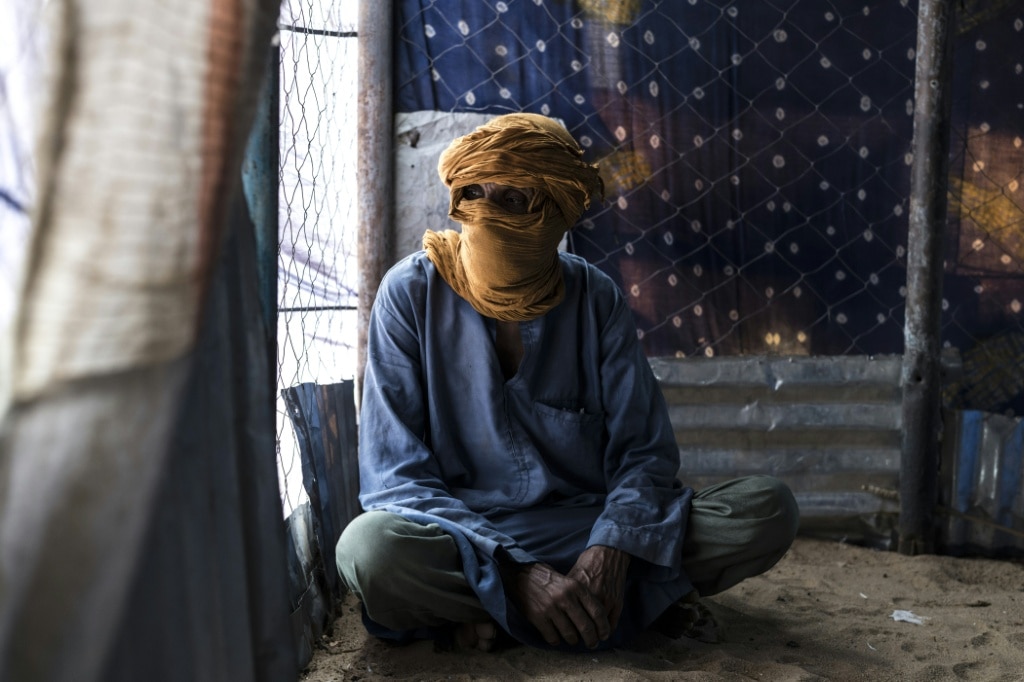
Across windswept refugee camps in eastern Mauritania’s arid Hodh Chargui region, hundreds of thousands of Malians who fled years of unrelenting violence have shared harrowing firsthand accounts of murder, torture and collective cruelty at the hands of Malian government troops and Russian paramilitary fighters. These testimonies, collected by Agence France-Presse from 10 displaced civilians, paint a grim picture of widespread civilian harm that has followed the Malian junta’s deepening military partnership with Russian forces.
For 62-year-old Cherifa — a pseudonym used to protect her from retaliation — the grief of losing her son remains raw and unhealed. Last summer, her son left their home to trade goods across central Mali, only to encounter a joint patrol of Malian soldiers and fighters from the Russia-controlled Africa Corps, the rebranded successor to the infamous Wagner Group mercenary force. Herders hiding in nearby dunes watched as the patrol detained Cherifa’s son and four other traveling companions, tied them up, beheaded them, and burned all their merchandise, Cherifa recounted. No community members dared return to collect the bodies for 24 hours, terrified of ambushes or hidden explosive traps.
“His death is my greatest pain,” Cherifa said, her voice shaking as she sat in her spartan brick shelter in the refugee camp. “They pour their hatred on innocent, defenceless people.”
Nomadic Fulani and Tuareg communities have borne the brunt of these abuses, according to multiple testimonies, with residents regularly targeted on unproven accusations of ties to jihadist insurgents or separatist movements. Mali’s ruling military junta, which seized control of the country in a 2020 coup, has turned to Russian paramilitaries to counter a decade-long jihadist insurgency that has destabilized large swathes of the Sahel nation. Rights organizations have repeatedly condemned the violent tactics employed by the joint forces, and data from conflict tracking project Armed Conflict Location & Event Data Project (ACLED) analyzed by AFP underscores the scope of civilian harm.
Since the junta took power in 2020, government military operations have killed more than 8,500 people, nearly half of whom are civilians. When Russian fighters accompany Malian troops, 60 percent of those killed are unarmed civilians; when Russian forces operate independently, that share jumps to 90 percent.
Fear hangs over every conversation in the Mauritanian refugee camps, where even mentioning Russian fighters — still most commonly referred to by their former Wagner branding — triggers visible anxiety. Nedoune, a 50-year-old Tuareg herder, shared his own experience of arbitrary detention and torture that began when he was spotted fetching water two years ago in Mali’s northern Timbuktu region.
After being beaten, bound, and forced to accompany the fighters for two days as they rounded up civilians and burned nomadic camps to the ground, Nedoune was transferred to a detention facility in central Mali, where he was tortured for four consecutive days during interrogations about alleged jihadist activity. “They pour water on your body, then put wires in your ears and send an electric current until you pass out,” he explained, his expression blank as he recalled that they burned all his belongings and slaughtered his entire herd. He was only released after his family paid a ransom of 310,000 CFA francs, roughly $550. Nedoune also witnessed other detainees being killed: he watched through a gap in his turban as one man was beaten nearly to death before his throat was cut and his body dumped from a moving military vehicle.
Medical teams working with Doctors Without Borders (MSF), which provides care to traumatized refugees in border towns like Fassala, say they have collected even more alarming accounts of brutality. “We have testimonies of torture, including people who say they were buried alive,” said MSF coordinator Mayoury Savant. “We also see sexual violence, affecting both women and men.”
More than 300,000 Malians have now fled across the border into Mauritania’s Hodh Chargui region to escape the ongoing violence. The conflict that has torn Mali apart since 2012 includes a jihadist insurgency by groups aligned with Al-Qaeda and the Islamic State, separatist unrest, and clashes between criminal gangs, but refugees say the worst abuse has come from joint Malian-Russian operations. In recent months, a fresh wave of refugees has arrived after jihadist groups issued ultimatums ordering civilians to leave targeted areas within 24 hours or face execution.
Human rights groups have now brought a case before the African Union demanding accountability for the alleged abuses committed by Malian and Russian forces. Late last month, coordinated attacks by Tuareg separatists and jihadist fighters delivered a major setback to the junta, culminating in separatists capturing the key northern town of Kidal. For many refugees in Mauritania, most of whom support the Tuareg separatist movement, the subsequent withdrawal of Russian fighters from northern bases has sparked cautious hope that they may soon be able to return to their homes.
Thirty-year-old Fatima, who fled her Timbuktu region village three years ago after government airstrikes, says many women who stayed behind have suffered unspeakable harm. “Everything happened to them except death… we know some were tortured,” she said. “Before the Russians came, we lived in peace. If they take back Timbuktu and the other towns, I can go home.”