博客

  • Rubio offers Cubans ‘new path’ in special video address

    Rubio offers Cubans ‘new path’ in special video address

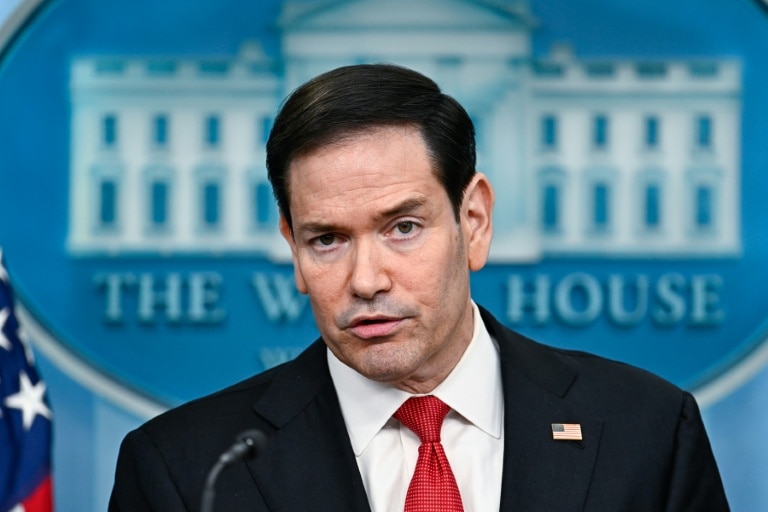
    In a pre-announcement video address delivered Wednesday, U.S. Secretary of State Marco Rubio, a second-generation Cuban-American, laid out a purported “new path” for the Cuban people, just hours before the U.S. Department of Justice was scheduled to unseal criminal indictments against former Cuban President Raul Castro.

    Speaking directly to Cuban citizens in Spanish, Rubio launched sharp criticism at Cuba’s ruling communist government, leveling accusations of systemic theft, deep-seated corruption, and widespread political oppression. As the child of Cuban immigrants who built a life in the United States, Rubio framed the proposal as an initiative backed by the Trump administration: “President Donald Trump is offering a new path between the U.S. and a new Cuba, a nation where you will hold the real power to choose your leaders, and vote them out if they fail to deliver for you.”

    Worsening bilateral friction has defined relations between Washington and Havana in recent months, sparked by two key escalations: a U.S.-backed military operation that ousted long-time Cuban ally Nicolas Maduro from Venezuela’s presidency, followed by a sweeping U.S. energy blockade that has compounded already severe economic struggles on the Caribbean island. Trump has repeatedly hinted that the current Cuban government is the next target for regime change, and earlier this month made an extraordinary public statement claiming the U.S. would “take over” the island — located just 90 miles off the coast of Florida — “almost immediately.”

    Per an official English translation of the speech released by the State Department, Rubio emphasized that Washington was prepared to reset relations between the two countries. “In the U.S., we are ready to open a new chapter in the relationship between our people and our countries, and currently, the only thing standing in the way of a better future are those who control your country,” he said.

    Rubio reserved particular criticism for GAESA, the military-linked business conglomerate that analysts estimate controls roughly 40 percent of Cuba’s total economic activity. He described the entity as a “state within the state” that operates with no accountability to the Cuban public, hoarding profits from its vast commercial holdings to benefit a tiny ruling elite while ordinary Cubans bear the cost. Rubio added that the nominal Cuban government’s primary function is to force continued public sacrifice and crack down on any dissenting voices that speak out against the status quo.

    The 94-year-old Raul Castro, who succeeded his older brother Fidel Castro as Cuba’s head of state and oversaw the landmark 2015 normalization of diplomatic relations with Washington under the Obama administration — a deal Trump reversed after taking office — was set to face criminal charges announced by the U.S. Justice Department Wednesday. According to reporting from CBS News, which cited unnamed U.S. officials briefed on the investigation, the pending indictment centers on the 1996 downing of two civilian aircraft flown by anti-Castro activists.

  • Up to 350 jobs under threat at Meta in Ireland

    Up to 350 jobs under threat at Meta in Ireland

    Tech conglomerate Meta, the parent company of major social platforms Facebook, Instagram and WhatsApp, is poised to cut hundreds of roles in Ireland as part of a sweeping global workforce restructuring driven by massive artificial intelligence investment. Approximately 350 positions based in the country are now at risk of redundancy, according to official filings and local media reports. Last month, Meta first announced to its global staff via internal memo that it would eliminate 10% of its total workforce – equaling around 8,000 employees worldwide – while also freezing hiring for thousands of additional unfilled roles across the company. Irish public broadcaster RTÉ confirmed that local staff received early-morning notifications alerting them to their potential inclusion in the latest round of cuts. The company has formally filed a collective redundancy notification with Ireland’s Department of Enterprise, Tourism and Employment, confirming the scope of the proposed job cuts for the region. Meta currently employs roughly 1,800 workers across its Irish operations, and the company has not yet issued additional public comment beyond the formal notification filing. Industry sources familiar with the company’s internal planning have confirmed that the core driver behind the latest layoffs is Meta’s push to redirect massive budgets toward AI research and development. The tech giant has earmarked a total of $135 billion (around £100 billion) for AI-related spending this year alone – a sum that matches the total amount Meta invested in the sector over the previous three years combined, according to an individual who reviewed the company’s internal memo. This latest round of job cuts marks a return to large-scale restructuring for Meta, which carried out multiple waves of layoffs starting in 2022 that eliminated tens of thousands of roles globally. After those initial cuts, the company resumed hiring activity through 2024, bringing its total headcount back to pre-layoff levels by the end of last year. The 2026 cuts are the largest single round of layoffs Meta has implemented since 2023, and align with a broader industry trend among major technology firms. Dozens of other leading tech companies that are pouring billions of dollars into developing AI tools and infrastructure have also announced widespread job cuts in 2026, as companies reorient their business models and spending priorities to prioritize AI development over traditional operational headcount.

  • Watch: Did Trump and Putin get the same treatment in China?

    Watch: Did Trump and Putin get the same treatment in China?

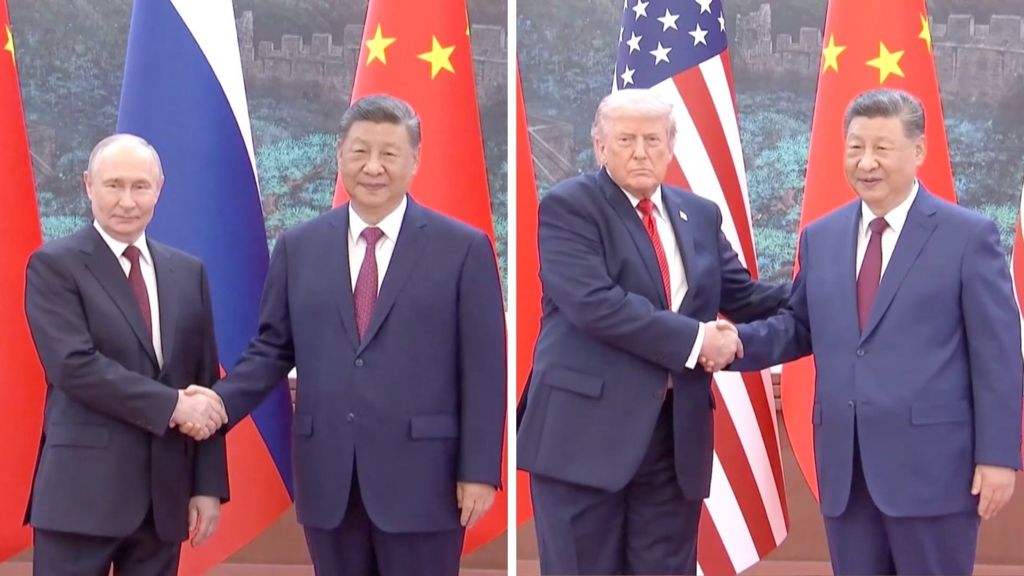
    When it comes to diplomatic protocol, the order of a state visit often follows established, consistent standards that apply equally to leaders from all major nations. Recent observations have highlighted that when Chinese President Xi Jinping welcomed Russian President Vladimir Ping to Beijing, the official welcoming ceremony bore a striking similarity to the one extended to former U.S. President Donald Trump during his visit just one week prior.

    Diplomatic analysts note that this level of uniformity in ceremonial arrangements is not unusual for Beijing’s hosting of foreign heads of state, as the country adheres to strict standardized protocols to ensure equal respect for every visiting leader, regardless of their country’s geopolitical alignment. The identical pageantry includes the same arrangement of honor guards, the same playing of national anthems, and the same formal welcoming process that marks a standard high-level state visit.

    This consistency in diplomatic practice underscores China’s commitment to upholding equal diplomatic treatment for all visiting world leaders, reflecting its long-standing approach to state-to-state interactions based on mutual respect and standardized protocol. Experts point out that such uniform ceremonies are a core part of diplomatic etiquette, designed to avoid any perception of preferential treatment or bias, and to maintain the dignity of all participating nations.

  • Poland welcomes U.S. statements that troop reduction there is temporary

    Poland welcomes U.S. statements that troop reduction there is temporary

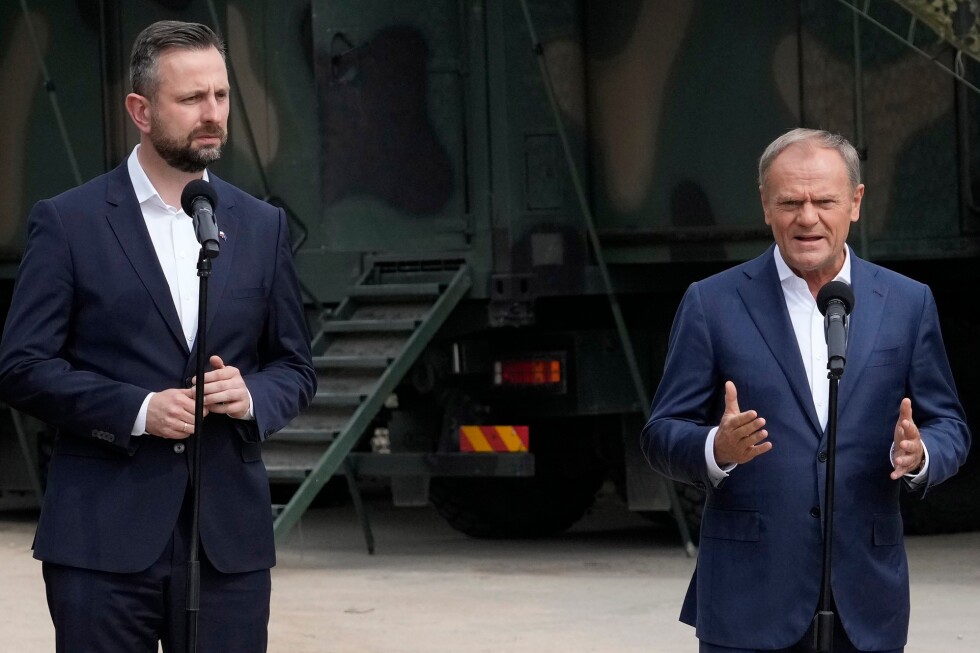
    In a development that reshapes current discussions of U.S. military posture across Europe, Polish government leaders confirmed Wednesday that they have accepted Washington’s clarification that the canceled deployment of 4,000 American troops to the Central European nation is only a temporary hold, rather than a permanent drawdown.

    The announcement came after a wave of surprise and unease rippled through Warsaw last week, when officials learned that the 2nd Armored Brigade Combat Team of the U.S. Army’s 1st Cavalry Division — originally scheduled to rotate into Poland, a frontline NATO member sharing a border with war-torn Ukraine — would not arrive as planned. The reaction set off heightened transatlantic tensions, coming on the heels of the Trump administration’s previously announced plan to cut U.S. troop levels stationed in Germany, a decision that already stirred criticism and anxiety on both sides of the Atlantic.

    By Tuesday evening, top U.S. defense officials moved to ease those concerns. Pentagon chief spokesperson Sean Parnell framed the halted deployment to Poland as a “temporary delay,” adding that Warsaw has long served as a “model U.S. ally” within the NATO alliance. Poland currently stands out among NATO members for its defense spending commitment, allocating roughly 4.7% of its national GDP to military outlays in 2025 — the highest proportional share of any alliance member.

    Parnell explained that the delay stems from a broader restructuring of U.S. ground forces in Europe, where the Pentagon is reducing the number of active brigade combat teams from four to three, and is still in the process of finalizing new basing assignments across the continent. U.S. Vice President JD Vance also pushed back against assumptions of a permanent drawdown in Poland, telling reporters Tuesday that “That’s not a reduction. That’s just a standard delay in rotation that sometimes happens in these situations.”

    Top Polish leaders echoed the U.S.’s framing on Wednesday. Prime Minister Donald Tusk said he was pleased to receive “Washington’s declaration that Poland will be treated as it deserves.” Polish Defense Minister Władysław Kosiniak-Kamysz, who held a call with U.S. Defense Secretary Pete Hegseth Tuesday night, noted that the updated U.S. assurances confirm that the overall “U.S. presence is maintained” in Poland. He added that shifting rotational deployments into a permanent U.S. troop presence has long been a Polish priority, and such an outcome would be “always much better.”

    Currently, around 10,000 U.S. troops are based in Poland, the vast majority of whom serve on rotational deployment cycles. Polish officials also confirmed that Warsaw will be included in all upcoming discussions about the ongoing restructuring of U.S. military forces across Europe. To date, U.S. officials have not publicly disclosed how long the deployment delay will last, and Kosiniak-Kamysz said he expects to receive additional clarification on the future U.S. troop footprint in the coming weeks.

    Even as Warsaw accepts the temporary delay, Tusk warned that European nations cannot afford to ignore the clear signal from Washington that the U.S. intends to reduce its long-term military footprint on the continent, and that European states must increase their own defense commitments to fill the gap.

    NATO Secretary-General Mark Rutte backed that assessment Wednesday, noting that alliance members have been aware for roughly a year of the Trump administration’s plan to withdraw some U.S. troops from Europe. Rutte said it is “rightly” expected that European nations and Canada will take on greater responsibility for conventional deterrence and defense across the NATO alliance, particularly in its European theater. While the U.S. “will stay involved” in transatlantic security, Rutte acknowledged that over time, Washington may reorient its military resources to other global hotspots.

    The Trump administration has repeatedly warned European allies in recent months that they must take greater ownership of their own security, including the defense of Ukraine against Russian aggression. The planned drawdown of at least 5,000 U.S. troops from Germany followed public comments from German Chancellor Friedrich Merz, who claimed the U.S. had been “humiliated” by Iran’s leadership and criticized what he called a U.S. “lack of strategy in the war” in the Middle East.

    Associated Press correspondent Lorne Cook contributed reporting from Brussels, Belgium.

  • Worried and under-equipped, Ebola-hit east DR Congo awaits medical aid

    Worried and under-equipped, Ebola-hit east DR Congo awaits medical aid

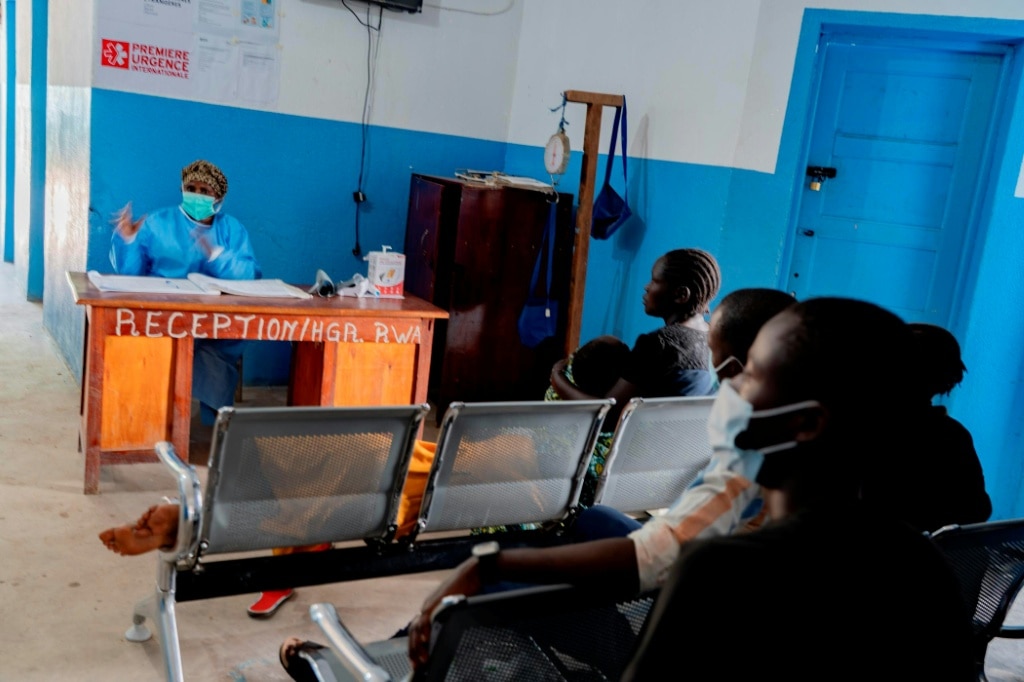
    A deadly Ebola outbreak has spread across hard-to-reach regions of eastern Democratic Republic of the Congo, leaving local communities and healthcare workers severely underprepared and facing a growing crisis as aid efforts move at a glacial pace. Rwampara, one of the outbreak’s current epicenters, illustrates the crippling gaps in the early response: at the area’s main hospital, a flimsy plastic strip is the only marker for a planned isolation ward that has yet to be constructed.

    This outbreak marks the 17th recorded flare-up of the highly contagious haemorrhagic fever in the DRC, and it has hit a region already destabilized by decades of armed conflict and widespread displacement. Even though Rwampara sits just 7.5 kilometers from Bunia, the largest city in violence-ravaged Ituri province, critical supplies for isolating and treating Ebola patients only began arriving on Monday, several days after the outbreak was officially declared.

    At the hospital entrance, a single masked guard struggles to monitor all visitor traffic. A small number of handwashing basins have been set up outside the blue-painted facility, which a local official confirms is already caring for around 100 suspected Ebola cases. Before Friday, even nursing staff on the front lines lacked full personal protective equipment (PPE) — and local residents performing high-risk tasks are far more exposed. Salama Bamunoba, a local youth organization representative, explained that community members have been digging and filling graves for Ebola victims without gloves or any protective gear at all.

    The current outbreak is caused by the Bundibugyo strain of Ebola, for which no targeted vaccine or specific antiviral treatment exists. Congolese authorities have reported that over 130 people are already suspected to have died from the virus, with containment efforts relying almost entirely on basic preventive measures and rapid case identification. Bamunoba called the government and its international partners out for significant delays, noting that establishing a proper triage and isolation zone has been the community’s top priority for days, with little action to show for it.

    Despite the escalating crisis, daily life continues on the dusty streets of Rwampara for the moment: markets remain open, motorcycles move through crowds, and schools have not been closed. But anxiety is rapidly spreading across Rwampara and surrounding villages, which are already home to more than a million permanent residents and tens of thousands of people displaced by ongoing conflict. Local resident Gims Maniwa said many residents initially dismissed the outbreak as a minor threat, but the situation has deteriorated quickly. “Here, in Congo, a lot of things are done carelessly and that’s not good,” he told reporters.

    Congolese officials have pushed back against criticism, with Health Minister Samuel Roger Kamaba claiming authorities already have all the supplies frontline healthcare workers need. The government’s spokesperson also emphasized this week that the DRC has decades of experience responding to Ebola outbreaks, most of which have been managed without widespread vaccine access. The country’s deadliest recent outbreak, which struck eastern DRC between 2018 and 2020, killed nearly 2,300 people out of more than 3,500 confirmed cases.

    In recent days, aid has finally begun moving into the affected region. At Bunia’s airport, dozens of World Health Organization (WHO) staff in high-visibility vests have been unloading 12 tonnes of medical supplies from cargo planes, including protective kits and temporary isolation tents, which the organization confirmed had arrived this Tuesday. Aid group Medecins Sans Frontieres (MSF) has also stockpiled tonnes of supplies, including critical PPE for frontline teams, in its Bunia warehouses.

    The response effort is facing headwinds from broader aid cuts, however. International funding for humanitarian work in the region has dropped sharply over the past year, particularly from the United States following Donald Trump’s return to the White House. Even with the new supply delivery, Trish Newport, MSF’s emergency programme manager, said the situation remains extremely strained. “Every facility our team called said: ‘We are full of suspect cases. We don’t have any space’,” Newport explained. “This gives you a vision of how crazy it is right now. What is really important is that we get material on the ground as quickly as possible,” she added, noting that the arrival of PPE will be a huge relief for overstretched staff.

  • Police officer catches baby dropped from window of burning home

    Police officer catches baby dropped from window of burning home

    Dramatic body-worn camera footage has captured a pulse-pounding act of bravery that unfolded during a devastating residential fire, where a quick-thinking police officer saved an infant’s life by catching the child after it was dropped from an upper-floor window of the burning building. The incident, which unfolded in real time as first responders raced against the clock to contain the blaze and evacuate trapped residents, has been hailed as a striking example of the split-second courage that law enforcement officers display in emergency situations. As smoke billowed from the scorched structure and flames licked at the home’s exterior, people trapped inside faced growing danger that left them with no safe route through the building’s stairwells or entryways. Desperate to save the young child, one person inside made the agonizing decision to lower and then drop the infant from the window, trusting that waiting first responders below would be able to catch them before the child hit the ground. The officer, who had positioned himself directly below the window moments earlier, reacted without hesitation, reaching up to secure the baby in his arms before the child could fall. Body cam footage released by the department chronicles the entire chaotic scene, from the roar of the fire and the shouts of emergency personnel to the split-second catch that ended with the infant safe in the officer’s arms. Neither the baby nor the officer suffered serious injuries in the incident, according to official updates. Multiple crews worked to extinguish the fire, and all residents of the home were eventually evacuated, with only minor injuries reported among other occupants. Investigators are still working to determine the cause of the blaze that destroyed the residence. This event has drawn widespread praise for the officer’s calm under pressure, with community members and law enforcement leadership highlighting his quick reflexes and willingness to put himself in harm’s way to save a vulnerable life.

  • Xi basks in spotlight as he hosts Putin days after Trump

    Xi basks in spotlight as he hosts Putin days after Trump

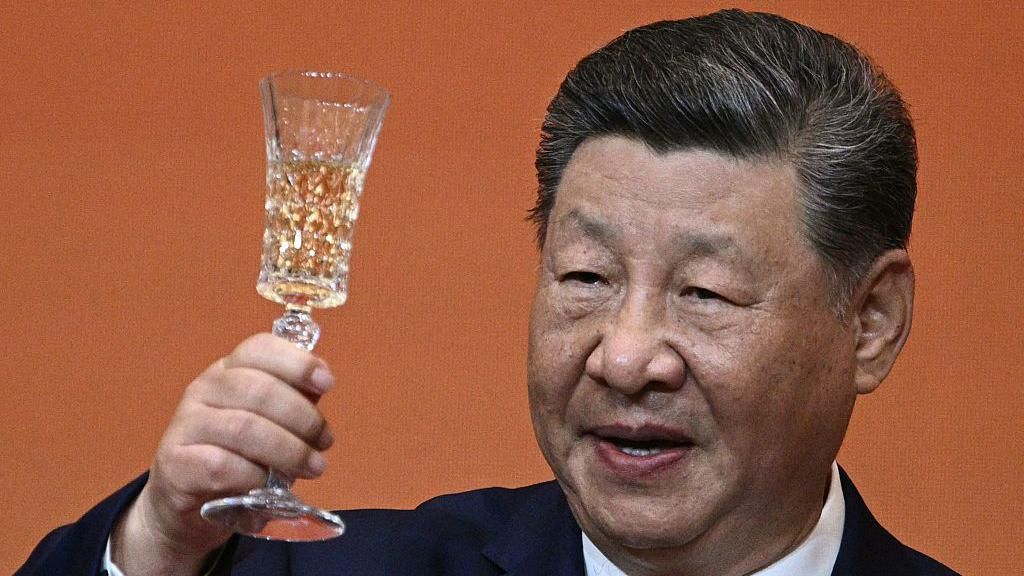
    Over the course of just seven days, Beijing rolled out the full red carpet for two consecutive heads of state: first former U.S. President Donald Trump, followed by Russian President Vladimir Putin. Each arrival mirrored the other in ceremonial grandeur: cheering crowds of schoolchildren, full military honor guards, cannon salutes, and marching bands escorting the visiting leaders to the Great Hall of the People. For China’s top leader Xi Jinping, this back-to-back display of high-profile diplomacy was far from a coincidence – it was a deliberate projection of a new global posture: Beijing is open to dialogue with all major powers, and bound to none.

  • US test fires mobile rocket system near Mount Fuji in rapid ‘shoot and scoot’ drill

    US test fires mobile rocket system near Mount Fuji in rapid ‘shoot and scoot’ drill

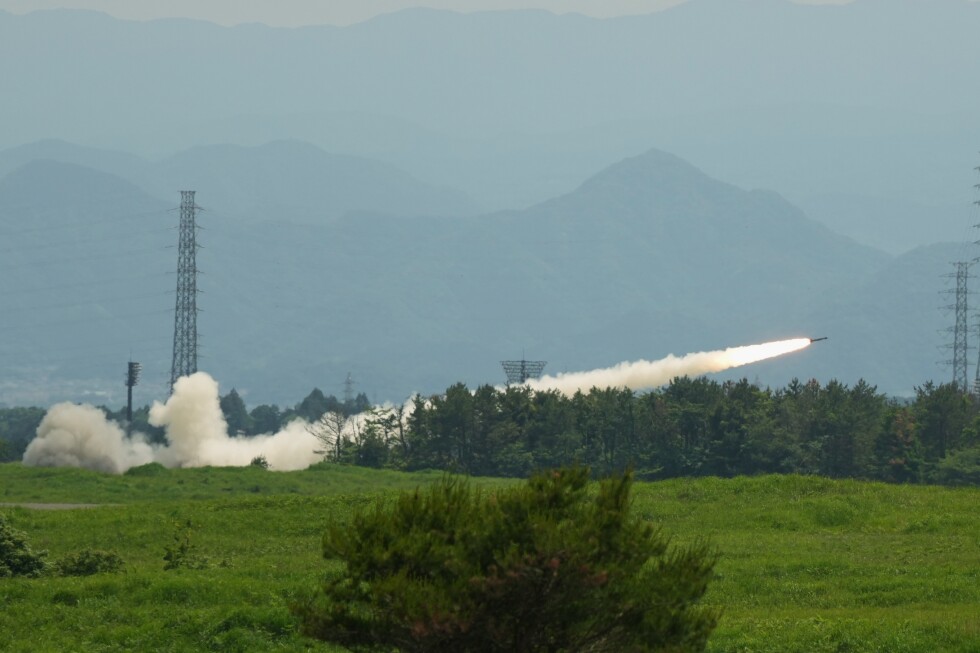
    GOTEMBA, Japan — In a high-stakes military demonstration focused on bolstering operational readiness in the Indo-Pacific, U.S. Marines carried out a test firing of 12 rockets from a mobile HIMARS launcher Wednesday at a training range tucked into the foothills of Mount Fuji, Japan’s most recognizable natural landmark. The exercise was designed to maintain proficiency with a weapons system that has rapidly grown in strategic importance for the United States military.

    The High Mobility Artillery Rocket System, better known as HIMARS, is a wheeled launcher mounted onto a heavy-duty military truck, engineered for rapid deployment and stealth operations. Its core tactical advantage lies in its ability to be pulled out of hidden cover, unleash its payload, and reposition to an alternative site in minutes to evade enemy counter-battery fire. This “shoot and scoot” strategy has grown even more critical in modern warfare, as the widespread use of reconnaissance drones on battlefields has left stationary artillery positions far more vulnerable to detection and attack.

    U.S. armed forces have already deployed HIMARS in combat operations across Iraq and Afghanistan. Most recently, U.S. Central Command confirmed the system was used in an opening strike against Iranian targets, where it utilized a new precision-guided long-range missile capable of hitting targets hundreds of miles away from its launch position.

    This live-fire exercise carries outsized strategic significance for the U.S. in the Pacific region, where Washington’s top defense priority is deterring a potential Chinese military operation to seize control of Taiwan. China claims the self-governing democratic island as an inalienable part of its territory and has repeatedly refused to rule out the use of force to achieve unification. If HIMARS systems equipped with the latest long-range missiles are deployed on Japanese territory or other nearby allied islands, the system would easily be able to strike targets across the entire Taiwan Strait, according to defense analysts.

    Despite this strategic context, the Camp Fuji exercise only utilized dummy projectiles, as the system is most commonly configured to field shorter-range rockets for standard training operations. Located roughly a two-hour drive from Tokyo, Camp Fuji is a permanent U.S. military training facility in Japan. This test marked only the second time U.S. forces have conducted HIMARS trials at the base, and the drill was planned and executed in close coordination with Japan’s Self-Defense Forces. As a safety precaution, local authorities closed a public roadway that ran between the launch site and the target impact zone for the duration of the exercise.

  • Arsenal players in dawn celebrations after winning Premier League

    Arsenal players in dawn celebrations after winning Premier League

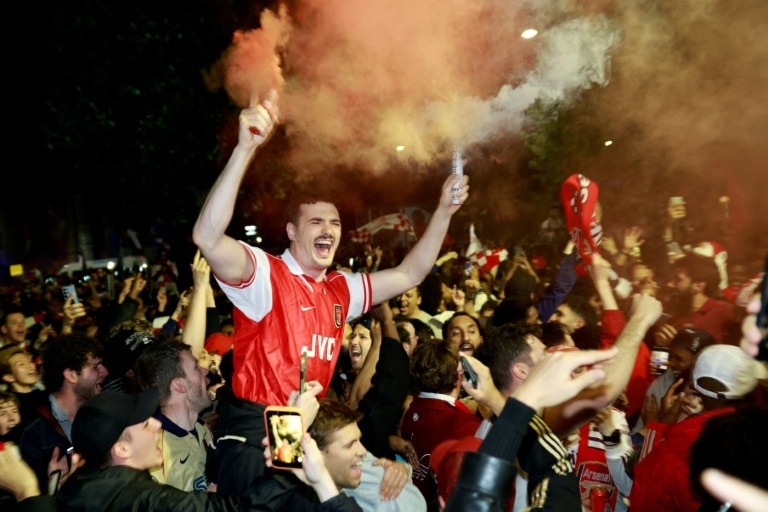
    For 22 long years, Arsenal football club and its global fanbase waited in the wings, enduring near-misses, criticism, and the weight of a title drought that stretched across generations. On Tuesday night, that wait finally ended, sending thousands of jubilant supporters flooding to the gates of Emirates Stadium before dawn to celebrate a historic Premier League crown that has eluded the club since the legendary Invincibles side of 2004.

    The title was secured in dramatic fashion, as Manchester City — the four-time defending champions who needed a victory at Bournemouth to keep their title hopes alive — dropped crucial points. While City fought back from an early Bournemouth lead to equalize in stoppage time, the final 1-1 draw left them one point short of Arsenal, handing the North London side the league trophy. Even as the match played out, fans began gathering outside Emirates Stadium, with crowds swelling as Bournemouth held on to their lead, and exploding in celebration when the final whistle confirmed Arsenal’s victory.

    By 5 a.m. Wednesday, Arsenal’s first-team players joined the throng of supporters to mark the occasion, after holding an initial private celebration with manager Mikel Arteta at the club’s London Colney training ground. Teammate Eberechi Eze shared early-hours images of star players Declan Rice, Bukayo Saka and Jurrien Timber celebrating with the crowd, while another video posted by Saka showed 19-year-old academy graduate Myles Lewis-Skelly brandishing a champagne bottle, poking fun at years of criticism that labelled Arsenal as “bottlers” for choking late in title races. “They called us bottlers,” Lewis-Skelly said in the clip. “And now we’re holding the bottle.”

    For Saka, the title win marks a full-circle moment for a side that finished as Premier League runners-up in each of the past three seasons, capping years of incremental progress under Arteta. Addressing critics who had mocked the club’s long drought, the England international stated, “Twenty-two years, 22 years. There was laughing, there was joking, they’re not laughing anymore.”

    Long-time supporters described the moment as surreal, decades in the making. “It doesn’t feel real. It feels like I’m going to wake up tomorrow and be like, yeah, it was a dream, but we did it. We actually did it. Wow. It’s going to be the best summer ever,” said 32-year-old fan George Owusu-Afriyie. Twenty-year-old supporter Julia Szumilas recalled the chaotic rush to the stadium after the final result was confirmed: “Everyone was running from all the pubs. We started running down to here. (Taking) bikes, running, driving their cars down… It was insane.”

    The celebration drew congratulations from Arsenal icons of the past. Arsene Wenger, the French manager who led the club to its last title in 2004’s undefeated Invincibles season, shared a heartfelt video message to the current squad posted on the club’s social media channels. “You did it! Champions go on when others stop. This is your time. Now, go on and enjoy every moment,” Wenger said. Club legend Ian Wright, who scored 185 goals during his time with the Gunners and was part of the 1998 domestic double-winning side, was mobbed by fans as he joined the celebrations outside the stadium.

    The side will formally receive the Premier League trophy on Sunday following their final regular season match against Crystal Palace. Beyond domestic glory, Arteta’s squad will now turn their full attention to a historic opportunity: the chance to claim the club’s first-ever UEFA Champions League title, when they face Paris Saint-Germain in the competition’s final in Budapest on May 30.

  • Whale of a time: Humpbacks set new distance record

    Whale of a time: Humpbacks set new distance record

    Marine biologists have announced an extraordinary discovery that rewrites our understanding of humpback whale migration: two individual humpbacks have completed unprecedented transoceanic journeys between Brazil and Australia, setting new world records for the longest recorded travel distance in the species. The international research team, whose findings are published in *Royal Society Open Science*, pieced together the whales’ multi-decade odysseys using unique identifying markings on their tail flukes, with contributions from both professional scientists and recreational amateur photographers who snapped photos decades apart. The study’s lead author, Cristina Castro, a marine biologist with the Pacific Whale Foundation based in Ecuador, shared that these open-ocean crossings are entirely unlike any movement previously documented for the species. While individual whales have occasionally been spotted straying slightly outside their established migratory paths, the scale of these journeys far exceeds any previously recorded deviation, Castro explained.

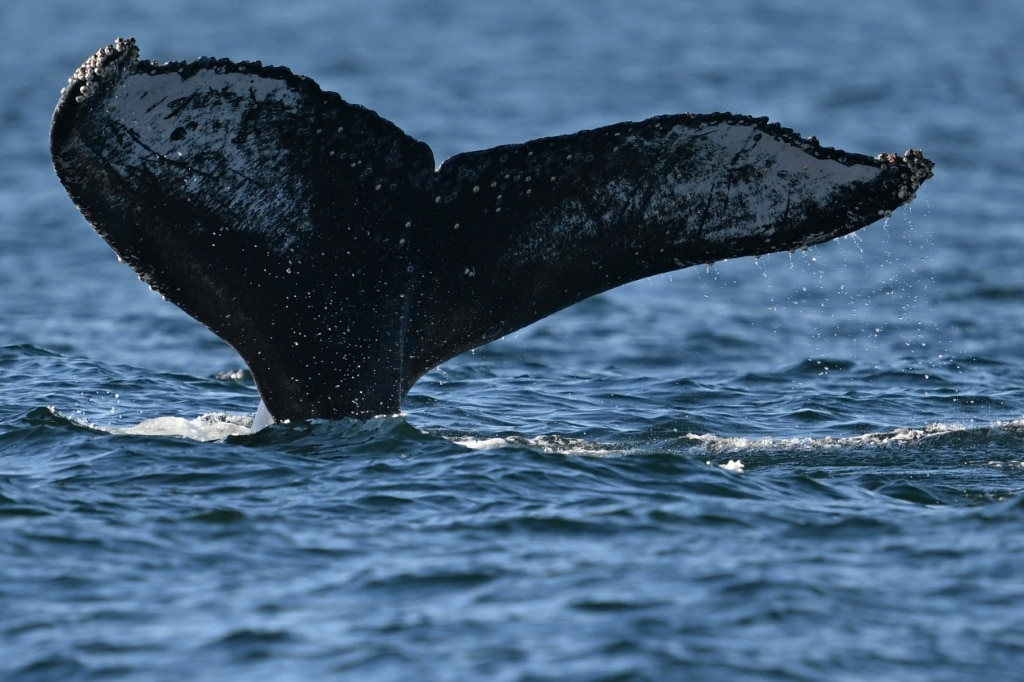
    What makes this tracking possible is the fact that every humpback whale bears a one-of-a-kind pigment pattern on the underside of its tail fluke, a natural marker as distinct as a human fingerprint that allows researchers to identify individual animals across decades and vast distances. To trace the two whales’ paths, the team analyzed more than 19,000 photos collected between 1984 and 2005 from locations across eastern Australia and Latin America, running the images through a custom image recognition algorithm to find potential matches, then manually verifying each candidate to confirm the identities of the wandering whales. The first of the two record-breaking whales was first photographed and documented in 2007 in Hervey Bay, a well-known humpback habitat on Queensland’s east coast, and spotted again at the same location in 2013. Six years after that second sighting, the same whale was photographed off the coast of São Paulo, Brazil’s most populous coastal state. The straight-line distance between the Australian and Brazilian sighting points measures approximately 14,200 kilometers, or 8,800 miles; researchers note that the whale’s actual total travel distance is likely even longer, as its exact route between the two points remains unknown. The second whale took the reverse route across the South Pacific: it was first photographed swimming alongside eight other adult humpbacks off the coast of Bahia, Brazil in 2003. Nearly 25 years later, in 2025, the same whale was spotted and confirmed in Hervey Bay, Australia, with a straight-line distance of 15,100 kilometers between the two sightings. This journey surpasses the previous record for the longest recorded humpback migration, which was set by a whale that traveled more than 13,000 kilometers from Colombia’s Pacific coast to Zanzibar off the eastern coast of Africa.

    For Southern Hemisphere humpback whales, migratory routes are deeply entrenched cultural behaviors. Most populations live in distinct, well-separated pods and follow the same fixed route year after year, moving between cold, nutrient-rich feeding grounds in polar waters and warm tropical breeding grounds where they give birth and mate. Castro notes that these routes are passed down socially: mother humpbacks teach the traditional migratory paths to their calves when they are young, cementing the patterns across generations. That makes these extraordinary deviations all the more surprising, and researchers are now exploring multiple potential explanations for why the two whales strayed so far from their expected paths. One leading hypothesis ties the unusual movement to human-driven climate change, which is altering ocean conditions, food availability, and traditional migration corridors in ways that are still not fully understood. Castro explains that increasing environmental pressure or disturbance to the whales’ original feeding and breeding habitats could push more individual animals to venture far beyond their traditional ranges in search of more suitable conditions, while changes in the distribution of their prey could also encourage long-distance exploration.

    Beyond rewriting what we know about humpback migration capacity, these long-distance crossings also carry ecological benefits for the species. After being hunted to the brink of extinction by commercial whaling in the 20th century, humpback whale populations have made a remarkable rebound across much of their global range over the past 50 years. When whales travel between previously isolated breeding populations, they introduce new genetic material that boosts overall genetic diversity, strengthening the long-term resilience of the species. The wandering whales may also drive cultural exchange among humpback populations: male humpback whales are famous for their long, complex songs, which spread rapidly through populations as individuals copy new melodies. If a male from one isolated breeding population travels to a new region and sings his native song, he can introduce entirely new musical themes that spread through the local population, creating a lasting cultural shift. Researchers say the discovery highlights the value of long-term photo identification projects that combine scientific data with contributions from citizen scientists, to reveal unexpected behaviors in one of the ocean’s most iconic inhabitants.