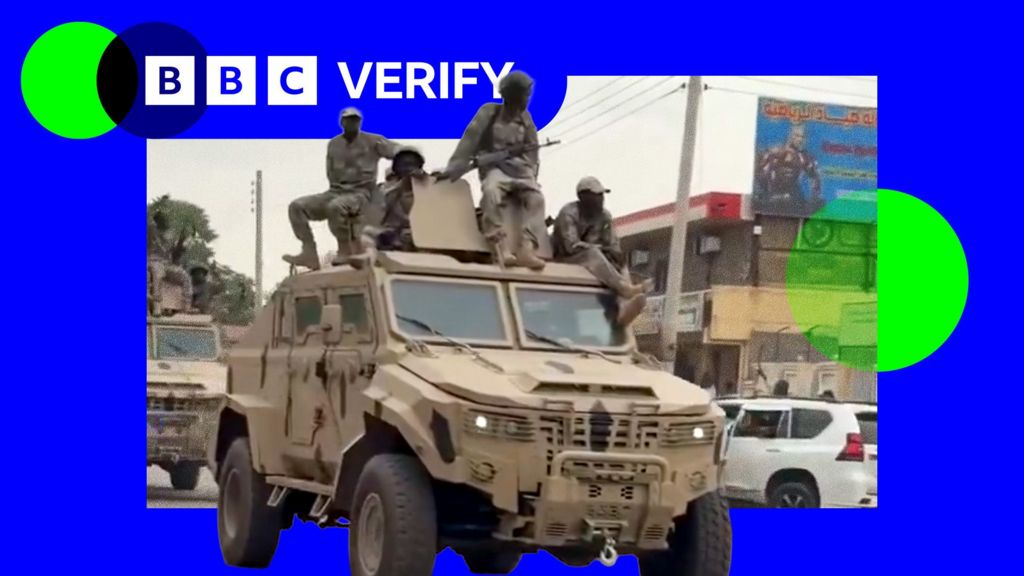
Two years into Sudan’s devastating civil war, the North Kordofan regional capital of el-Obeid has become the next flashpoint of catastrophic violence, with thousands of already displaced civilians trapped between advancing paramilitary forces and a looming threat of mass atrocities mirroring the 2024 el-Fasher massacre. What was once a relatively safe refuge for people fleeing conflict across surrounding areas now faces an imminent attack that could push an already desperate humanitarian crisis over the edge.
The ongoing power struggle between Sudan’s regular military, the Sudanese Armed Forces (SAF), and the paramilitary Rapid Support Forces (RSF) has escalated sharply in North Kordofan, a strategically critical territory that acts as a geographic gateway between opposing sides’ controlled lands. El-Obeid, currently held and heavily defended by the SAF, has drawn more than 83,000 displaced civilians fleeing violence in neighboring districts since fighting resumed in 2023, according to United Nations estimates.
Satellite imagery confirms that the city’s main displacement camp has expanded dramatically since March 2026, with hundreds of new tents erected to accommodate a steady stream of new arrivals. Aid workers on the ground report 80 to 100 new households arriving every day, many of whom have already been displaced multiple times from their original homes. “Families have run out of safe options to protect themselves,” explained Mohamed Refaat, IOM’s chief of mission in Sudan. “Many have already been displaced before and are once again forced to leave behind their homes, livelihoods and support networks.”
Warnings of an impending RSF assault have come from multiple global bodies, including the United Nations and G7 foreign ministers, who have raised urgent alarms that the paramilitary group is preparing to repeat the mass atrocities that unfolded in el-Fasher last October. When RSF forces overran the SAF-held city, thousands of civilians were killed in systematic mass executions, one of the worst single atrocities of Sudan’s ongoing civil war. Verified open-source footage now confirms dozens of heavily armed RSF fighters in armored vehicles are stationed in Nyala, a key RSF stronghold just 40 kilometers from el-Obeid, with multiple commanders publicly vowing to “liberate” the city from military control in videos posted to the group’s official channels.
According to conflict monitoring group Armed Conflict Location and Event Data (Acled), the RSF launched a record number of drone strikes on el-Obeid throughout June 2026. Analysts note the decline in attack frequency in July is not a de-escalation, but a temporary redirection of forces to counter SAF offensives elsewhere in the country.
As civilian numbers have swelled, living conditions in el-Obeid have deteriorated to catastrophic levels following months of RSF efforts to cut off all supply routes into the city, creating what one senior UN official has described as a “functional siege”. Last week, the UN warned that nearly 400,000 people in and around the city are facing acute food insecurity. Local residents report that overland supply convoys have been repeatedly targeted by drone strikes, and aid flights into el-Obeid’s airport have been completely halted, according to international charity Islamic Relief.
Critical infrastructure attacks by RSF drones have compounded shortages of food, clean water and fuel. Verified footage from last month captured a massive explosion at a central el-Obeid fuel station following a direct strike, and satellite analysis confirms visible damage to city power stations and aid supply warehouses located in the central market district. While a recent lull in drone strikes has allowed limited aid distribution and partial restoration of power, humanitarian workers emphasize the situation remains extremely volatile, with crippling fuel shortages still preventing large-scale relief efforts.
Tensions have also frayed within el-Obeid’s population. UN High Commissioner for Human Rights Volker Türk has documented growing hostility and suspicion toward displaced civilians, with local residents fearing RSF sympathizers have infiltrated the city alongside fleeing families.
To prepare for the coming assault, the SAF has constructed a large defensive earthen berm around el-Obeid’s perimeter, a defensive fortification designed to repel RSF attackers unlike the siege barrier the RSF built around el-Fasher that trapped civilians inside the city. Earlier this week, the SAF announced it had completed a military operation to secure the critical highway connecting el-Obeid to the capital Khartoum. In response, RSF leader Mohamed Hamdan Dagalo, commonly known as Hemedti, ordered his frontline commanders to “move straight forward. No more retreat. No more hesitation.”
Nohad Eltayeb, a senior research assistant at Acled, explained that el-Obeid’s strategic value makes it a make-or-break objective for both warring parties. “It is the critical juncture connecting RSF-controlled western territories with the military-held central and White Nile regions,” Eltayeb said. For the RSF, capturing the city would also help the group regain momentum after recent territorial losses in the eastern Blue Nile region, as well as ongoing internal instability and defections in its traditional Darfur strongholds.
In a joint statement, the EU and G7 have warned of impending mass atrocities and called on all external actors to suspend any armed, logistical, or financial support to either side of the conflict. Earlier this month, the European Parliament publicly named the United Arab Emirates as a key backer of the RSF, a claim Emirati officials have repeatedly denied. Alan Boswell, Horn of Africa Group director for the International Crisis Group, argues that the urgent international warnings stem from global regret over failing to prevent the el-Fasher massacre, which unfolded after months of gradual RSF buildup and siege. “Many are trying to turn up the volume on those warnings to prevent another round of mass atrocities in el-Obeid,” Boswell said. “The key is if world leaders will put enough pressure on the RSF and its main backer to make a difference this time.”