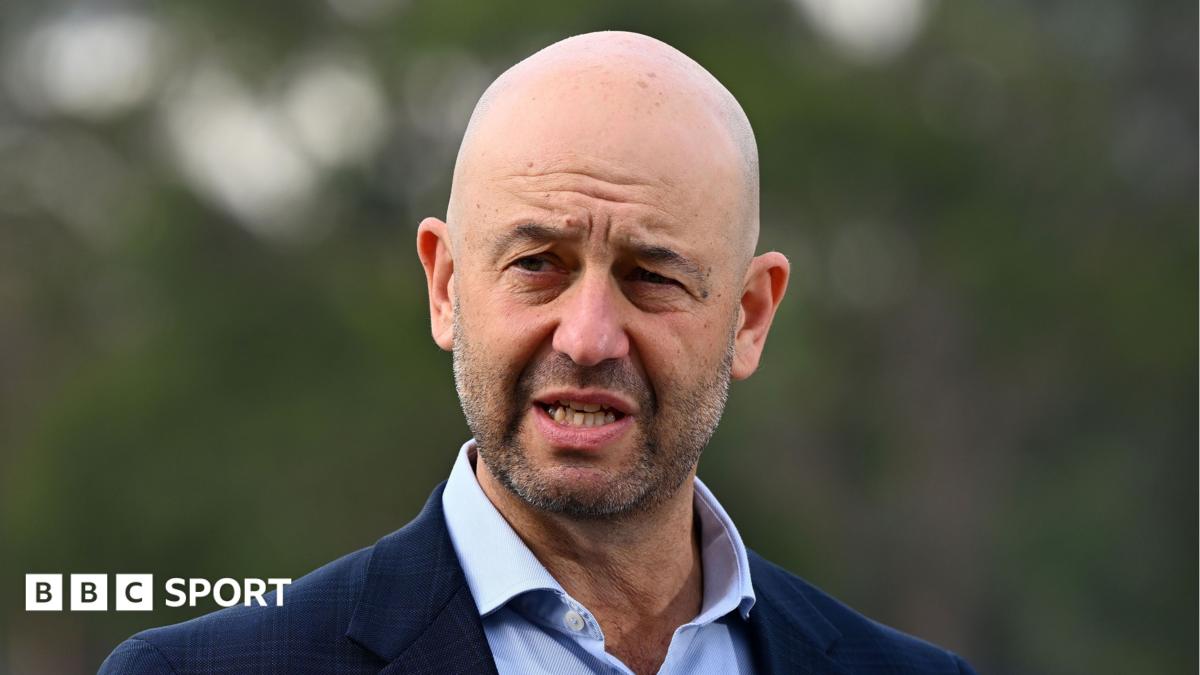
Nearly eight years after the explosive 2018 South Africa Test series ball-tampering scandal that became infamously known as “sandpapergate”, fresh claims from former Australia batter Usman Khawaja have reignited public debate over the full details of the incident, but top Cricket Australia leadership has firmly shut down calls for a formal re-investigation. Appointed as Cricket Australia’s chief executive in March 2025, Todd Greenberg addressed the swirling controversy in comments to Australian media outlet Sports Entertainment Network, stating there is no “compelling reason” to revisit the original 2018 probe that handed lengthy bans to then-captain Steve Smith, vice-captain David Warner, and batter Cameron Bancroft. Khawaja laid out his unflinching account of the events in a newly released autobiography, alleging that the entire Australian playing group was aware of the plan to use sandpaper to alter the cricket’s condition during the third Test in Cape Town, and that the unauthorised practice had also been deployed during the preceding second Test in Port Elizabeth. The original 2018 Cricket Australia inquiry had concluded that the national team’s bowling unit had no prior knowledge of the sandpaper scheme, a finding that the four leading fast bowlers of the era — Mitchell Starc, Pat Cummins, Josh Hazlewood, and Nathan Lyon — reaffirmed in a joint 2021 statement. Speaking at a recent domestic cricket season launch event in Sydney, star seamer Mitchell Starc expressed clear disappointment that the eight-year-old scandal is dominating headlines as the team prepares for a high-stakes home summer of international fixtures. Starc, who was on the field during the 2018 Cape Town Test, confirmed that he and his bowling teammates only learned of the sandpaper incident when footage of Bancroft tampering with the ball was broadcast on the stadium’s big screen, and that he had no prior awareness of any similar activity during the Port Elizabeth match. He noted that the entire playing group had faced rigorous questioning during and after the original 2018 investigation, and that his personal recollection of events remains unchanged from the 2021 joint statement. Banned for 12 months over his central role in the scandal, David Warner has since come out in full support of Khawaja’s account, describing his former teammate’s recollections as “100% accurate”. Greenberg acknowledged that Khawaja’s published account contains specific details that directly conflict with versions of events shared by other players in the years since the scandal broke, noting that he holds deep respect for Khawaja choosing to share his personal perspective of the incident. He explained that he has not yet read the full autobiography, and intends to review the full text carefully rather than reacting to sensationalised media headlines. The CEO added that all players were given repeated, explicit opportunities to come forward with new information in the eight years following the original investigation, and that Cricket Australia remains fully satisfied with the probe’s original outcomes. He also noted that conflicting personal accounts of the chaotic on-field moment make it impossible to reach a universally agreed, unified narrative of the events, and that reopening the investigation would yield no meaningful new benefit for the sport. Starc echoed that sentiment, noting that the current Australian Test squad has evolved dramatically in the years since 2018, and that the group is fully focused on upcoming competitive fixtures rather than revisiting past controversy.