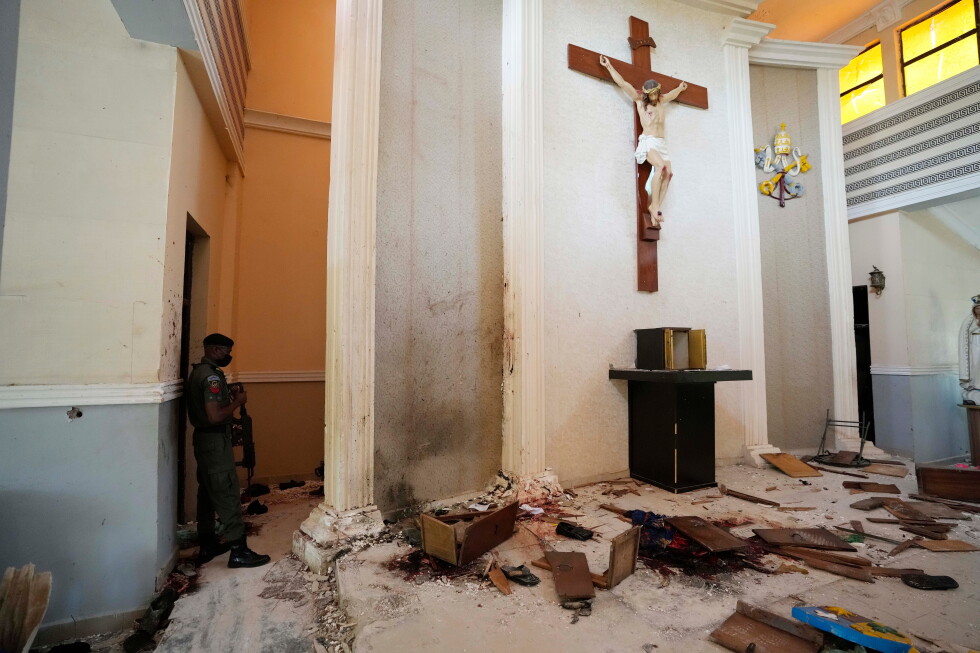
ABUJA, Nigeria – In a landmark ruling delivered Wednesday, a Nigerian federal court has sentenced four armed militants to death by hanging for their roles in the horrific 2022 terror attack on a Catholic church in southwestern Nigeria that left at least 50 people dead, including multiple children. The brutal assault unfolded on June 5, 2022, as worshippers were wrapping up Sunday mass at St. Francis Catholic Church in Owo, a small community located in Ondo State. In addition to the scores of fatalities, dozens more people suffered critical and minor injuries, pushing local hospital capacity to its breaking point and leaving medical staff scrambling to treat victims amid chaos.
All four convicted men were found guilty on multiple charges of terrorism. The judge also ruled in favor of the defense for a fifth co-defendant, dismissing all charges against them after prosecutors failed to present sufficient evidence tying the individual to the attack. According to case filings from prosecution teams, the four convicted attackers are confirmed members of the al-Shabab militant network, operating out of a hidden cell based in Kogi State, a north-central Nigerian region roughly 200 kilometers from the country’s capital Abuja.
Wednesday’s sentencing marks the latest high-profile conviction in Nigeria’s ongoing push to crack down on domestic terror activity. Earlier this year in April, the country concluded a sprawling four-day mass terrorism trial that resulted in convictions for more than 300 suspected militants connected to various insurgent groups across the nation.
The verdict comes as Nigeria continues to grapple with a persistent, multifaceted security crisis that has stretched across more than a decade, with the worst instability concentrated in the country’s northern regions. For over 10 years, a violent insurgency by non-state armed groups has simmered, with frequent attacks on civilian communities, government targets, and religious sites, alongside widespread kidnappings for ransom that have become a booming illicit enterprise for militant networks.
Several major Islamic extremist groups currently operate within Nigeria’s borders. The two most prominent are Boko Haram, the long-established insurgent movement, and its breakaway faction, the Islamic State West Africa Province (ISWAP), which is formally aligned with the global Islamic State terror network. In the country’s northwest, which shares a porous border with the Niger Republic, the IS-affiliated Lakurawa group has also expanded its control over remote border communities in recent years, carrying out repeated attacks on local security forces and civilian populations.