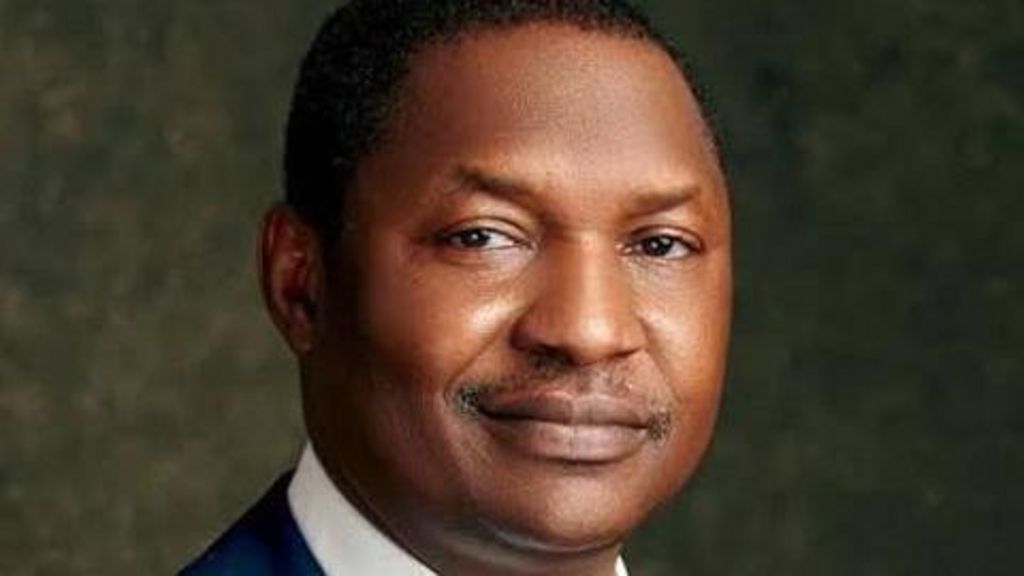
In a high-profile legal development that has gripped Nigerian political circles, federal authorities have withdrawn terrorism financing charges against former Nigerian Justice Minister Abubakar Malami and his son, leaving only an illegal firearms possession charge on the court docket.
Malami, 58, held the position of Justice Minister throughout former President Muhammadu Buhari’s two consecutive terms from 2015 to 2023. A close ally of the ex-president, he is married to Buhari’s daughter and was widely regarded as the most powerful and influential cabinet member in the previous administration. His standing in Nigerian politics has made this ongoing legal battle one of the most closely watched cases in the country this year.
During a court hearing held on Wednesday, lead prosecution counsel Akinlolu Kehinde, representing Nigeria’s Department of State Services (DSS), formally notified the presiding judge of the decision to drop the terrorism financing charges. The revised charge sheet now only alleges that Malami illegally possessed firearms and live ammunition, which authorities claim were recovered during a search of his private residence in Birnin Kebbi, located in Nigeria’s northwestern Kebbi State.
Both Abubakar Malami and his son Abdulaziz, who is also named in the revised charge, entered not guilty pleas to the remaining allegation. The defendants’ lead defense counsel Shaibu Aruwa confirmed that his clients had received and reviewed the amended charge sheet, and raised no objections to it being read aloud during the open court proceeding.
Presiding Justice Joyce Abdulmalik ruled that the existing bail conditions for the two defendants would remain in place. Each is required to maintain a 500 million naira bail bond (equivalent to approximately £260,000 or $350,000), and both have surrendered their international travel documents to the court to prevent any attempt to leave the country ahead of the trial. The case has been adjourned until May 26, when formal trial proceedings will get underway.
This legal matter is not the only challenge Malami currently faces. In a separate, ongoing case, he is also facing multi-count money laundering charges that name his wife and son as co-defendants.
Malami has repeatedly pushed back against all allegations against him, framing the entire prosecution as a politically motivated attack. He claims the charges stem directly from his decision to exit the ruling All Progressives Congress (APC), the party of current Nigerian President Bola Tinubu, and join the newly formed African Democratic Congress (ADC). The ADC has positioned itself as the primary opposition challenger to APC control ahead of upcoming national elections, making Malami’s defection a high-stakes political shift.
The overlapping legal cases against one of the Nigerian opposition’s most prominent new figures have drawn intense public scrutiny across the country, with political observers and citizens alike debating the motivations behind the prosecutions and their potential impact on Nigeria’s upcoming electoral cycle.