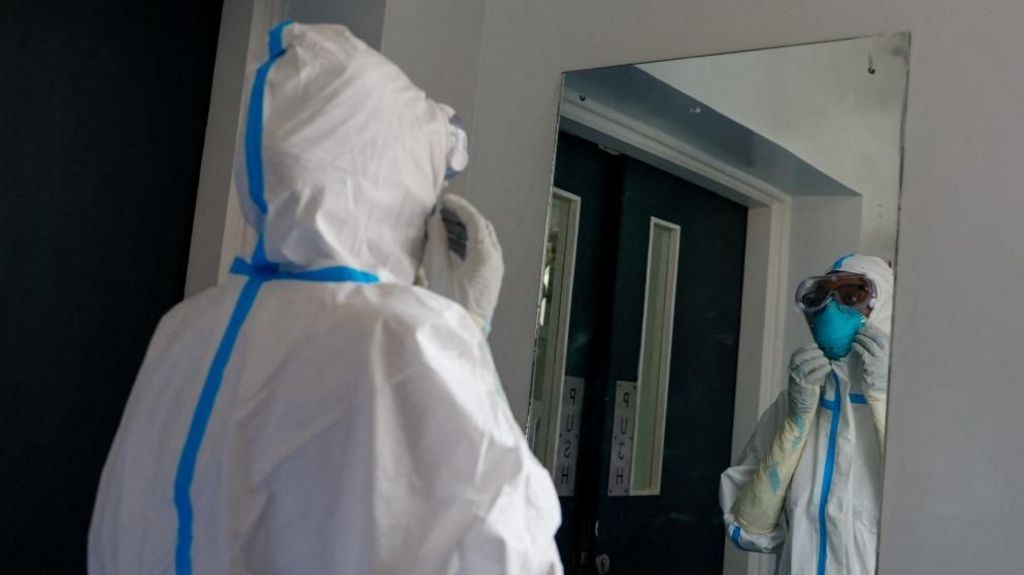
A new chapter of uncertainty has opened for public health authorities across West Africa after Nigeria confirmed its first case of Ebola, linked to the ongoing deadly outbreak that has swept through East and Central Africa since May this year. The infected patient, a female who traveled from Uganda to Nigeria’s capital city of Abuja, has received a formal diagnosis through definitive laboratory testing, Nigeria’s Health Minister Muhammad Ali Pate announced.
Following her admission to an Abuja hospital, the patient has been placed in isolation and is currently receiving targeted medical care. Local and national health teams have already launched urgent contact tracing operations to monitor individuals who have had close interactions with the infected woman, with 44 close contacts already identified for monitoring.
This development marks the first confirmed Ebola case in a West African nation connected to the current outbreak centered in Central and East Africa. Notably, Nigeria brings prior experience to its response: the country successfully contained and eliminated an Ebola outbreak in 2014 that resulted in at least eight deaths, giving public health teams a foundation of knowledge for this new response.
Ebola is a rare but severe viral disease with a high mortality rate. As symptoms progress, patients typically develop vomiting and diarrhea, which can progress to organ failure. While not all patients experience bleeding, many develop internal and external hemorrhaging as the illness advances. Transmission occurs through direct contact with bodily fluids — including blood and vomit — from an infected individual.
According to data from the European Centre for Disease Prevention and Control, the current outbreak, which originated in the Democratic Republic of Congo this past May, has already killed at least 4,600 people and recorded more than 9,500 confirmed cases. The outbreak is driven by the Bundibugyo strain of Ebola, an uncommon variant for which no specific vaccine or targeted treatment has yet received formal approval, though multiple clinical trials for countermeasures are currently in progress.
After the initial outbreak was declared in DRC, the virus spread to neighboring Uganda, where two people died from the disease. Uganda officially declared itself Ebola-free in August following the discharge of its last confirmed patient. The virus has since spread further to Kenya, where nine confirmed infections have been recorded. In response to the dual risks of Ebola and other security concerns, the United States issued a travel advisory on Monday urging its citizens to reconsider travel to Kenya due to elevated health risks.
In anticipation of a possible imported case, Nigeria had already ramped up cross-border and travel-related disease surveillance in recent months. The Nigeria Centre for Disease Control has issued clear public health guidance for international travelers, requiring anyone arriving from countries with active Ebola transmission to complete a mandatory health declaration form. Travelers from non-affected countries are currently exempt from this requirement. The agency has also urged all incoming travelers to remain alert for symptoms and seek immediate medical care if they develop any signs consistent with Ebola infection.