Across Africa’s largest economies, a transformative shift in transportation is underway as e-mobility companies establish local assembly operations for electric vehicles through strategic Chinese partnerships and innovative financing models. Nigeria and Kenya are emerging as continental leaders in this green transportation revolution, leveraging imported Chinese kits to build electric vans and taxis tailored for African markets.
In Nigeria, Saglev—a joint venture between Stallion Group and China’s Sokon Motor—has commenced assembly of 18-seater electric passenger vans using components from Dongfeng Motor Corp. The Lagos-based manufacturer aims to produce up to 2,500 vehicles annually, with plans to expand to 17 electric models for West African markets. CEO Olu Falaye heralded this development as “a major step in Nigeria’s transition toward clean, fossil-free transportation,” marking the first mass transit EV assembled locally in sub-Saharan Africa.
Simultaneously in Kenya, Rideence Africa has invested $2.46 million in a partnership with Associated Vehicle Assemblers (AVA) to produce electric taxis and minibuses using kits from Jiangsu Joylong Automobile and Beijing Henrey Automobile Technology. Managing Director Minnan Yu emphasized the company’s evolution “from operator to manufacturer,” with ambitions to create a “Kenya-rooted new-energy mobility company serving Africa.”
The economic advantages are substantial: EV charging costs average approximately $3 for 200 kilometers compared to over $15 for petrol equivalent distances. However, the transition faces infrastructure challenges, particularly regarding reliable power sources. Saglev addresses this by planning solar-powered charging stations to ensure consistent energy supply.
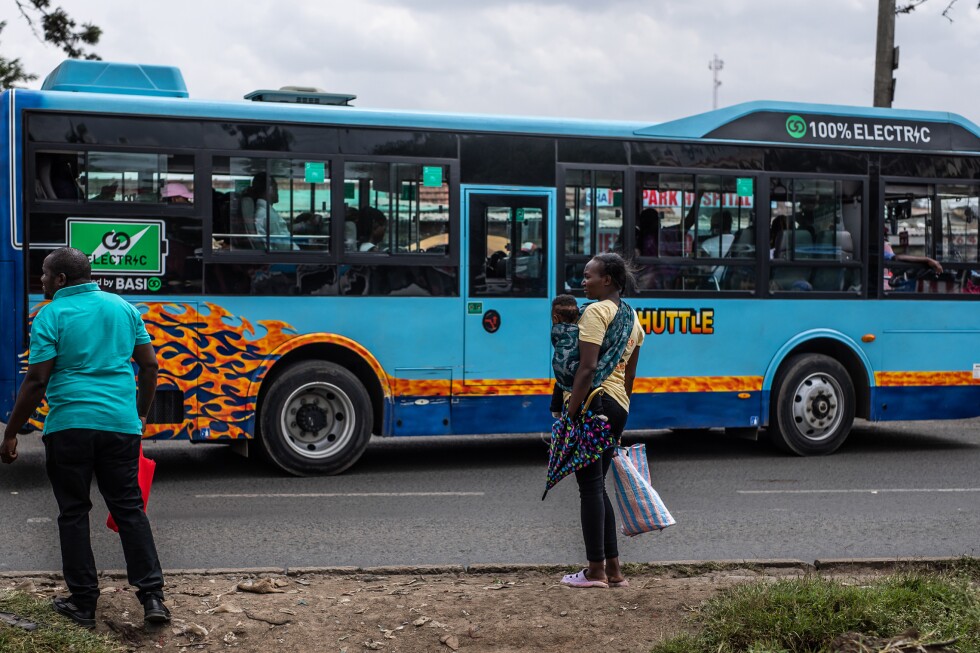
Innovative financing models are crucial to adoption. Rideence leases taxis to drivers for about $18 daily, while BasiGo-Kenya Vehicle Manufacturer requires a deposit plus 20 cents per kilometer driven. These pay-as-you-drive and lease-to-own options overcome financial barriers in markets where credit access is limited and upfront vehicle costs are prohibitive.
Despite progress, EVs remain a tiny fraction of Africa’s vehicle population—approximately 30,000 compared to millions of fossil-fuel vehicles. The continent produced just 1.1 million vehicles total in the previous year, with 90% manufactured in Morocco and South Africa. Nevertheless, industry experts like Dennis Wakaba of Kenya’s Electric Mobility Association note that scaling local assembly has already reduced costs, making EVs increasingly accessible to transport operators across the continent.