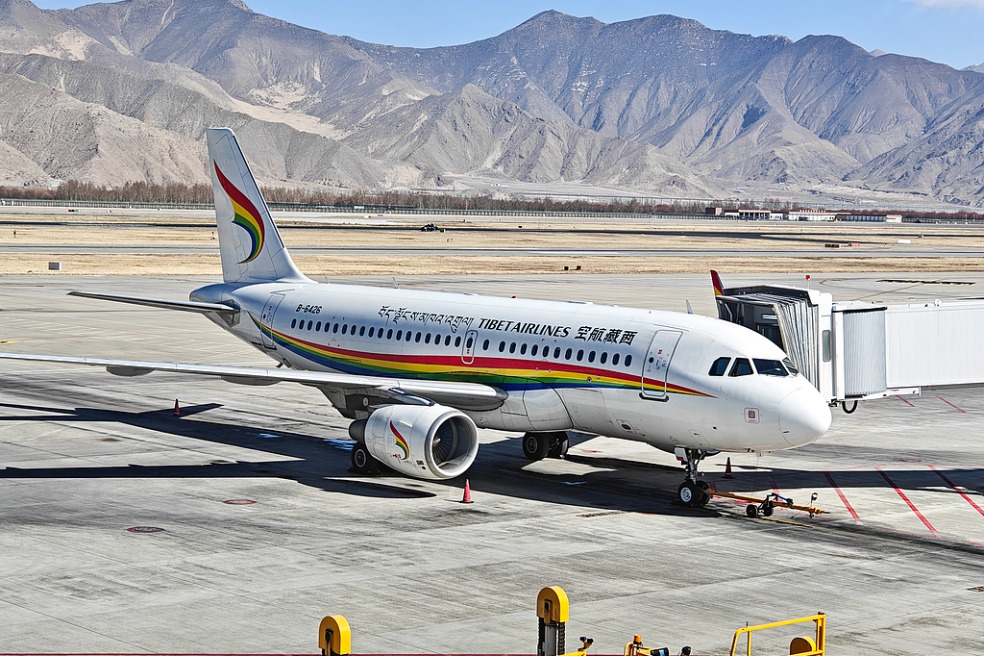
Xizang’s civil aviation sector achieved unprecedented growth in 2025, surpassing eight million annual passengers for the first time in history. According to regional aviation authorities, the autonomous region handled 71,000 flights throughout the year while moving 8.06 million passengers and 56,000 tons of cargo and mail. These figures represent substantial year-on-year increases of 6.9%, 6%, and 8% respectively, demonstrating remarkable expansion in regional air connectivity.
The growth trajectory—adding approximately one million passengers compared to 2024—has been fueled by strategic infrastructure development. The expansion centers around Lhasa Gonggar International Airport, supported by seven regional feeder airports. New routes connecting Lhasa with Chengdu and Guangzhou were established, alongside connections from Ngari prefecture and Lhokha to Chengdu. Authorities resumed popular routes linking Fujian and Chongqing with Lhasa while increasing flight frequencies to major hub cities including Chengdu, Chongqing, and Xi’an.
Xizang’s aviation network now encompasses 204 air routes operated by 12 airlines, connecting the region to 84 domestic and international destinations. This enhanced connectivity has significantly strengthened ties between Xizang and other Chinese regions while dramatically improving accessibility for residents in remote areas.
Technological advancements have played a crucial role in supporting this growth. Lhasa’s Terminal 3 has implemented paperless check-in systems, facial recognition boarding, and AI-assisted image screening technology. Additional passenger convenience measures include multilingual translation devices, priority security services, and expanded cabin options, collectively elevating the travel experience for the growing number of passengers.