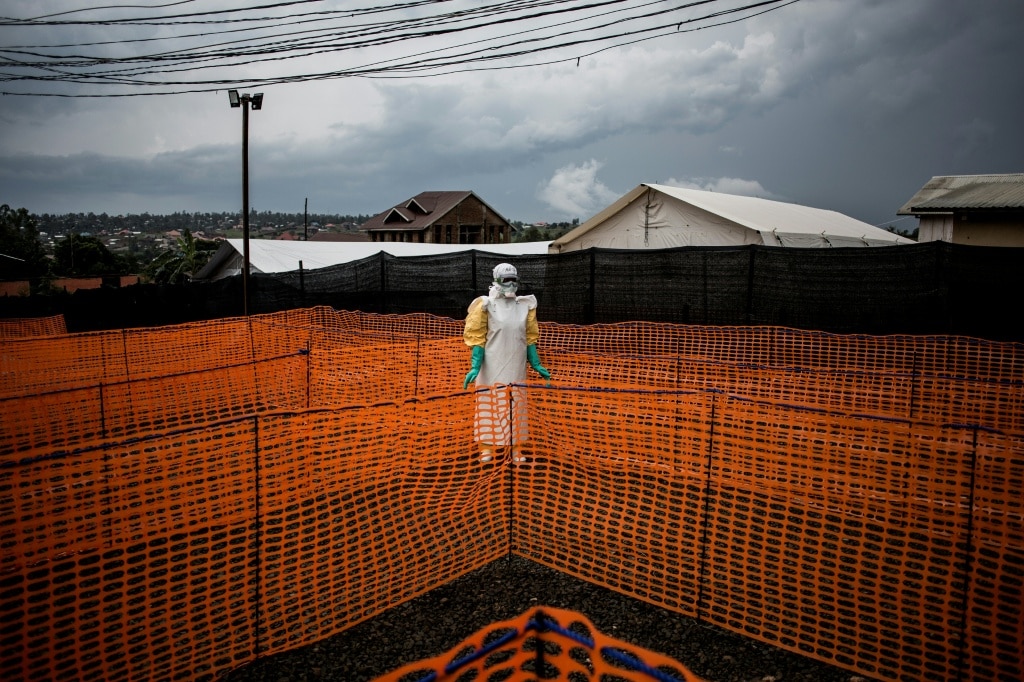
African public health authorities announced Friday the confirmation of a new Ebola outbreak in the northeastern Ituri Province of the Democratic Republic of the Congo (DRC), warning of heightened risks of widespread transmission due to long-running regional insecurity, unregulated cross-border movement, and strained local health infrastructure.
As of the latest update from the Africa Centres for Disease Control and Prevention (Africa CDC), the outbreak has already been linked to 65 deaths among 246 suspected cases, with preliminary lab results confirming Ebola infection in 13 tested samples, four of which were fatal. Suspected cases have also been detected in Bunia, Ituri’s provincial capital home to 300,000 residents, and confirmation testing is currently underway.
This new event marks the 17th recorded Ebola outbreak the DRC has faced since the virus was first identified in the region in 1976. The country’s most devastating outbreak, which ran from 2018 to 2020, claimed nearly 2,300 lives, while the prior outbreak, declared in August 2023 in central DRC, was only eradicated in December 2023 after killing at least 34 people.
Ituri Province, which shares borders with Uganda and South Sudan, presents unique challenges to outbreak response. The region’s gold-rich geology has drawn thousands of artisanal miners, creating constant, unregulated cross-border and internal population movement that can accelerate viral spread. For more than a decade, the area has also been roiled by recurring inter-militia violence, which has restricted access to remote communities and displaced tens of thousands of people into crowded urban settlements — conditions that dramatically increase the risk of person-to-person transmission.
Preliminary genetic analysis suggests the circulating strain is not the Zaire ebolavirus variant, the deadliest form of the disease with a case fatality rate of 80 to 90 percent, and the only strain for which an approved vaccine currently exists. Full genomic sequencing is still ongoing to confirm the strain’s identity to guide response efforts.
Local residents and community leaders report a sharp spike in unexplained deaths since mid-April, with some areas recording five to six fatalities per day. “For the past few weeks, the municipality of Mongbwalu has been recording a cascade of deaths, with at least five to six people dying every day in the streets,” local resident Gloire Mumbesa told Agence France-Presse. “We just dug graves to bury three people, but we don’t actually know what these people died of. We’re starting to be afraid of every possible case of illness,” added Salama Bamunoba, a civil society organizer in Rwampara health zone.
Confirmed and suspected patients are currently isolated in local health facilities, but an anonymous local health source confirmed that frontline workers are facing critical shortages of personal protective equipment and other essential supplies. Logistics also present a major barrier to response across the DRC, a country four times the size of France with sparse, poorly maintained road infrastructure that makes rapid delivery of medical supplies and personnel difficult.
Response teams from the World Health Organization and medical humanitarian organization Doctors Without Borders have already deployed to the affected region to conduct risk assessments, scale up testing, and support contact tracing efforts. Over the past 50 years, Ebola — a viral hemorrhagic fever spread through direct contact with infected bodily fluids that causes severe bleeding and organ failure — has killed an estimated 15,000 people across Africa, even with the development of effective vaccines and treatments for the Zaire strain. While recent outbreaks have been contained far more effectively than the 2014 West African epidemic that killed over 11,000 people, ongoing insecurity and weak health systems in central Africa continue to create risks of large-scale transmission.